



This work is accompanied by a certificate of authenticity which states:
Josina’s ceramics tell the Maralinga story. Maralinga was the site of British nuclear tests in the mid-1950s that covered an area of 3,300 square kilometres across the remote north of South Australia. The effects of Maralinga were severe and have had lasting impacts on the Anangu people whose lives, lands and livelihood were destroyed. “Maralinga hurt our lands and people and our story needs to be told,” said Josina.
Josina recounts how the Maralinga story is within all her people and that “we think about it all the time. Why did this happen to us?” Nearly 70 years on the damage still informs the lives of Anangu people on the APY Lands. Josina’s uncle Yami Lester was blinded by the nuclear testing and her grandparents often spoke about the impacts of the bombing and how so many people lost their land, homes and lives. Notably the welts and burns people suffered.
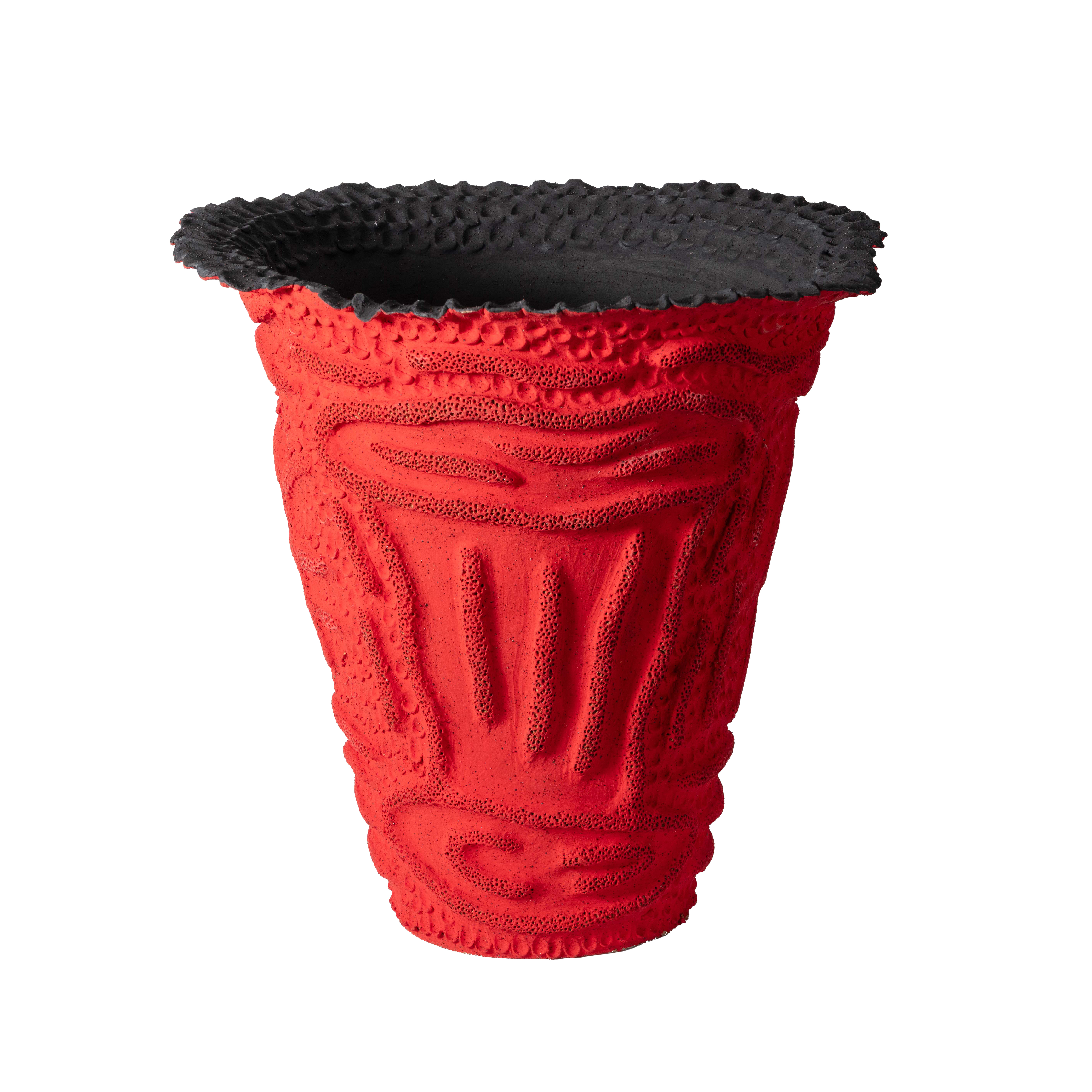
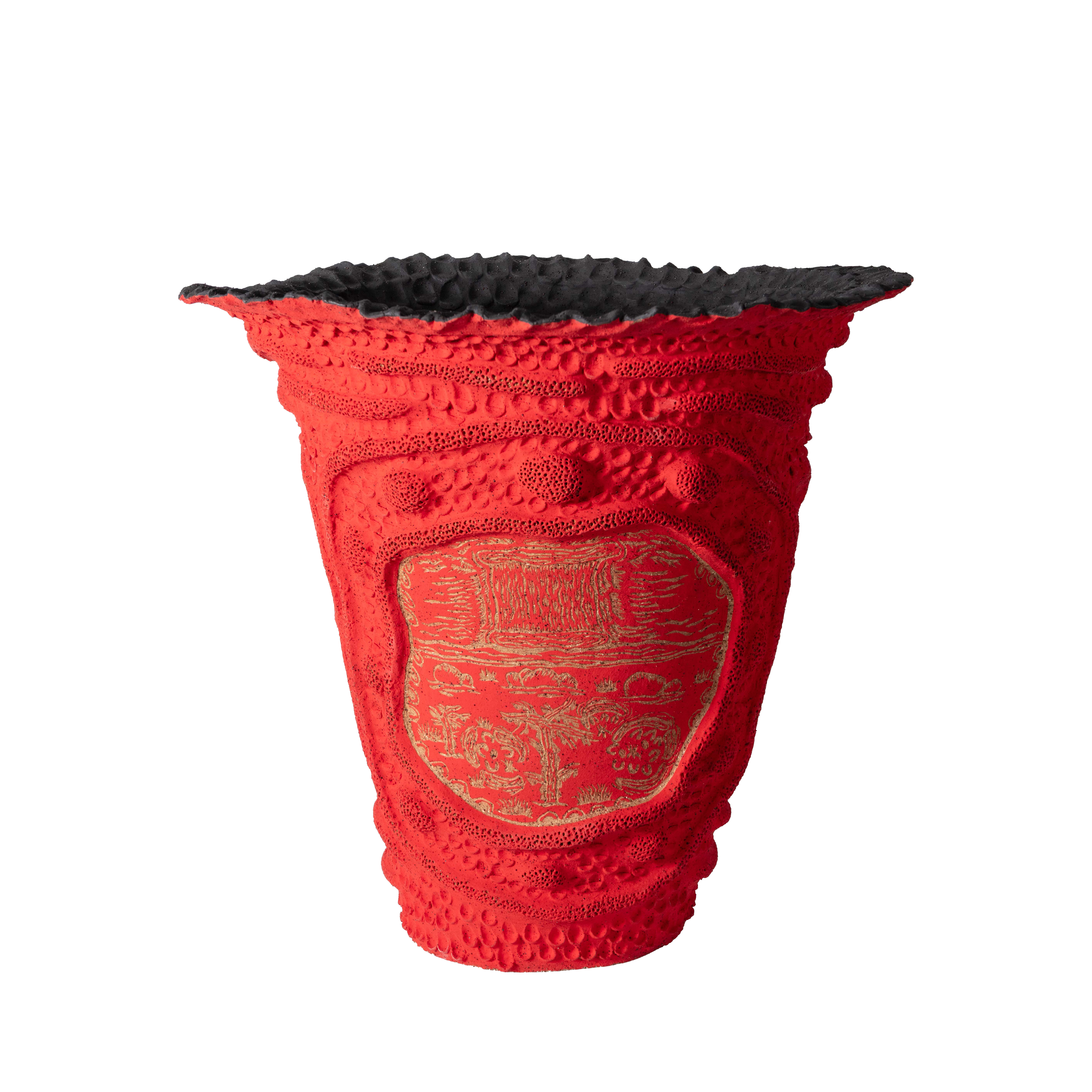
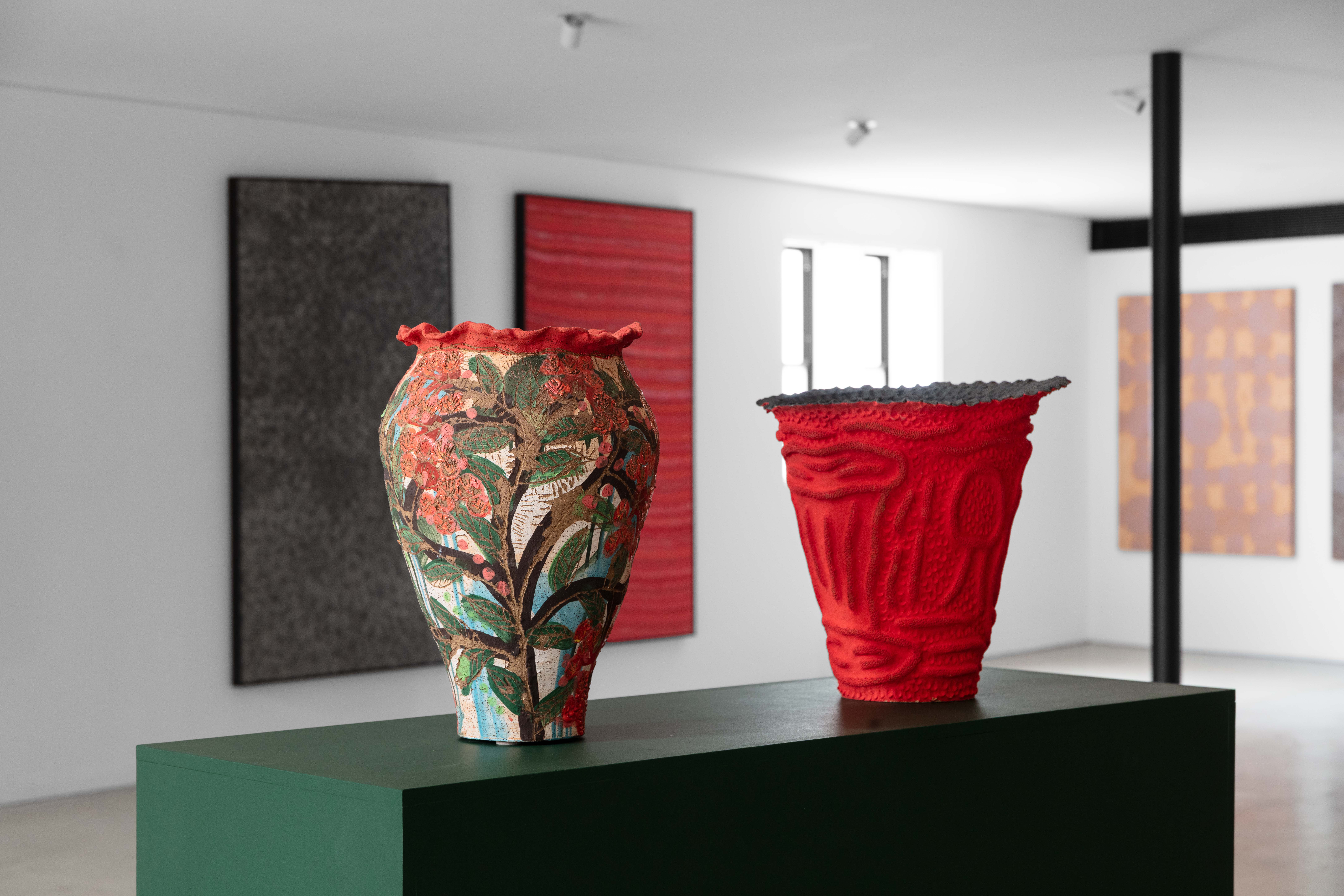
Josina hand built this pot. The red represents the fires the bombs caused and the grey represents the smoke. The texture and detail on the exterior of her pot conveys the story of the smoke and how it travelled and stretched across the APY Lands.
The APY Art Centre Collective is a social enterprise made up of South Australian Aboriginal owned and governed arts and culture organisations. As a collective, these organisations work to increase income for Aboriginal artists and support the important work of art centres in communities.
This artwork was made at the APY Art Centre Collective operated Adelaide Art Centre, which provides artists living ‘off country with a professional studio environment, the ability to generate independent income, alongside culturally appropriate support to access healthcare and the opportunity to maintain vital cultural community connections when in Adelaide.
untitled (Maralinga) (480-25), 2025
PROVENANCE
APY Gallery, South Australia, Australia
$4,200
In stock
This work is accompanied by a certificate of authenticity which states:
Josina’s ceramics tell the Maralinga story. Maralinga was the site of British nuclear tests in the mid-1950s that covered an area of 3,300 square kilometres across the remote north of South Australia. The effects of Maralinga were severe and have had lasting impacts on the Anangu people whose lives, lands and livelihood were destroyed. “Maralinga hurt our lands and people and our story needs to be told,” said Josina.
Josina recounts how the Maralinga story is within all her people and that “we think about it all the time. Why did this happen to us?” Nearly 70 years on the damage still informs the lives of Anangu people on the APY Lands. Josina’s uncle Yami Lester was blinded by the nuclear testing and her grandparents often spoke about the impacts of the bombing and how so many people lost their land, homes and lives. Notably the welts and burns people suffered.
Josina hand built this pot. The red represents the fires the bombs caused and the grey represents the smoke. The texture and detail on the exterior of her pot conveys the story of the smoke and how it travelled and stretched across the APY Lands.
The APY Art Centre Collective is a social enterprise made up of South Australian Aboriginal owned and governed arts and culture organisations. As a collective, these organisations work to increase income for Aboriginal artists and support the important work of art centres in communities.
This artwork was made at the APY Art Centre Collective operated Adelaide Art Centre, which provides artists living ‘off country with a professional studio environment, the ability to generate independent income, alongside culturally appropriate support to access healthcare and the opportunity to maintain vital cultural community connections when in Adelaide.