



MICHAEL REID BERLIN
KRISTIN SCHNELL
ARTIST PROFILE
Kristin Schnell | Artist Profile
- Kristin Schnell
- 21 Jan—27 Feb 2026
- Berlin
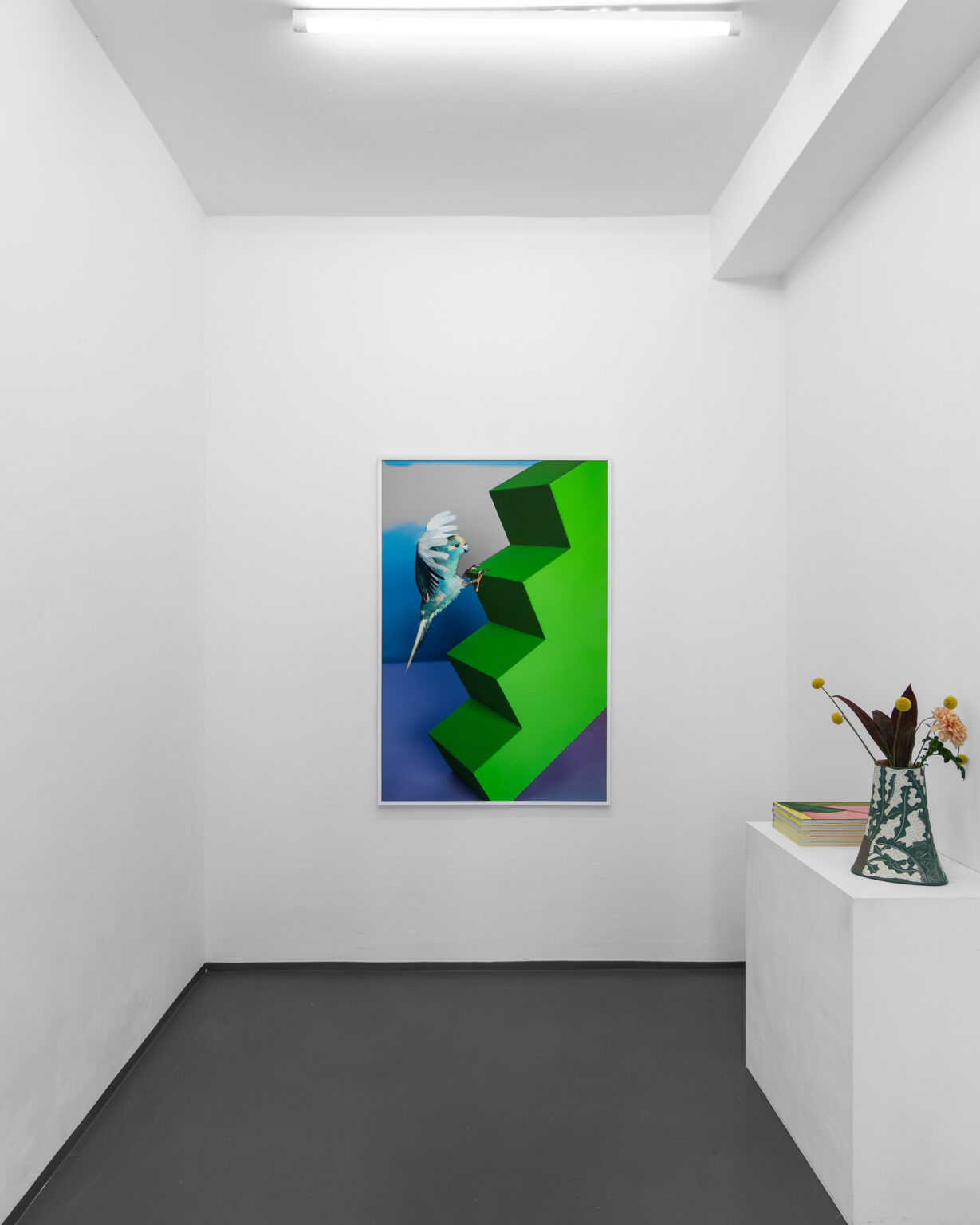
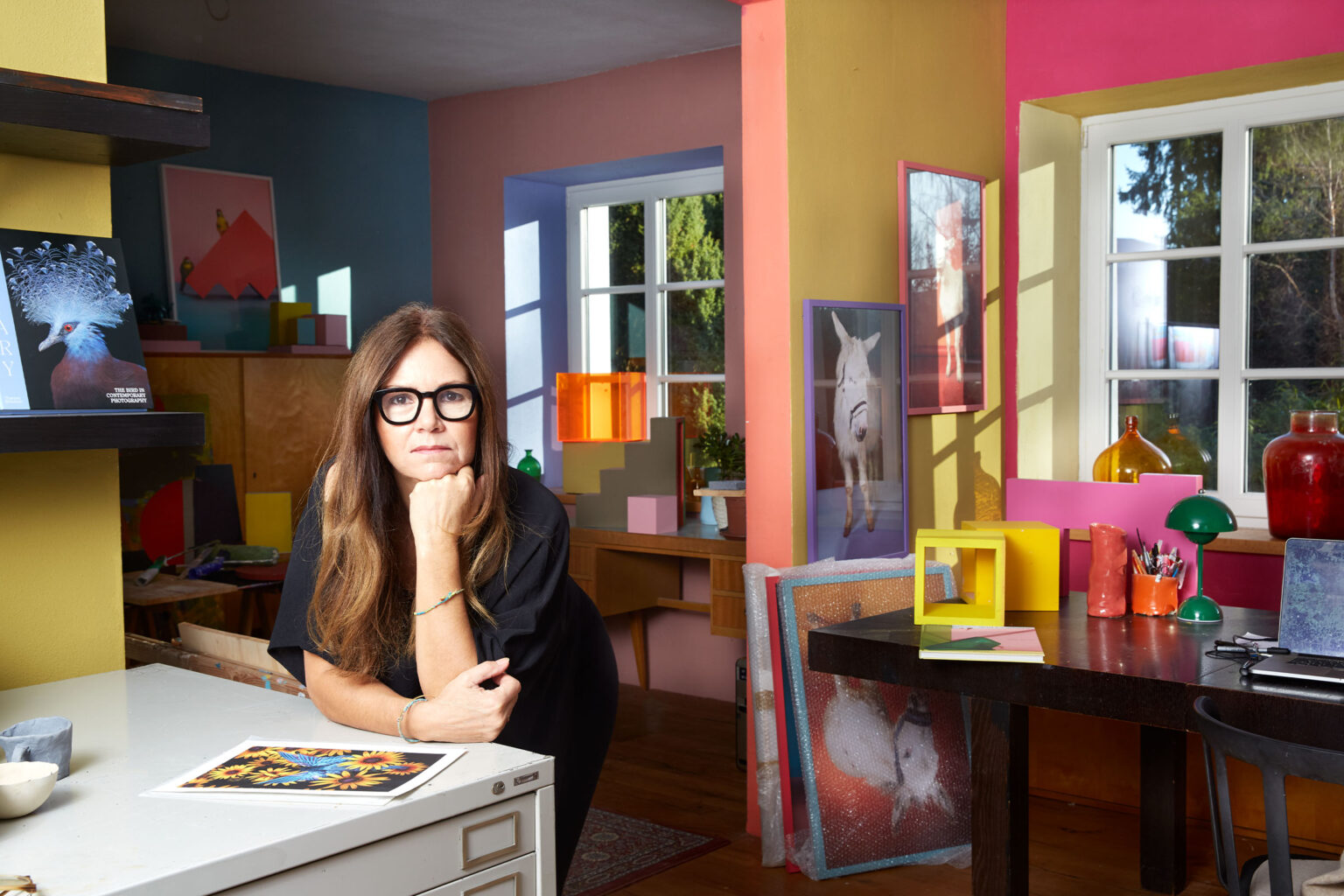
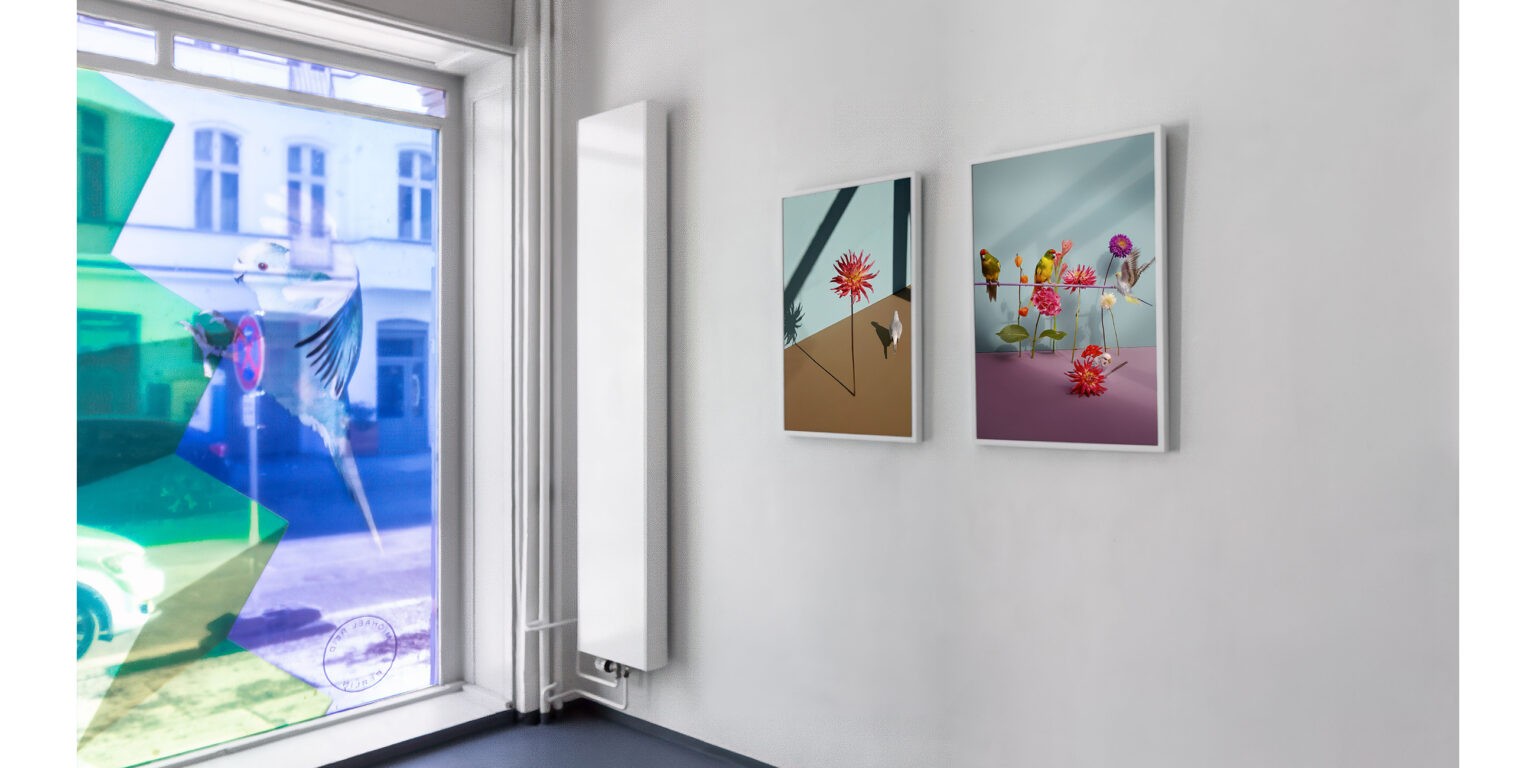
In the lead-up to our first solo exhibition from Kristin Schnell, Of Cages and Feathers – and ahead of our opening celebration at the gallery on Saturday, 24 January, where the artist will be on hand to offer insight into her works – the Michael Reid team sat down with the German-born, Baltic Sea-based artist to discuss the ideas, inspirations, creative approach and environmental themes that inform her vibrant photographic practice.
“The exhibition brings together several bodies of work that revolve around the same central questions: freedom and constraint, care and control, and the complex emotional space between humans and animals,” says Schnell, who recently exhibited her work Son and Father in Sydney as a finalist in the prestigious Head On Photo Awards. “My bird models are originally from Australia. Colonial trade carried their ancestors to Europe, and generations have lived behind bars, far from their natural habitats,” she notes. “With the Head On Festival exhibition, they return home – at least visually – and that makes me very happy.”
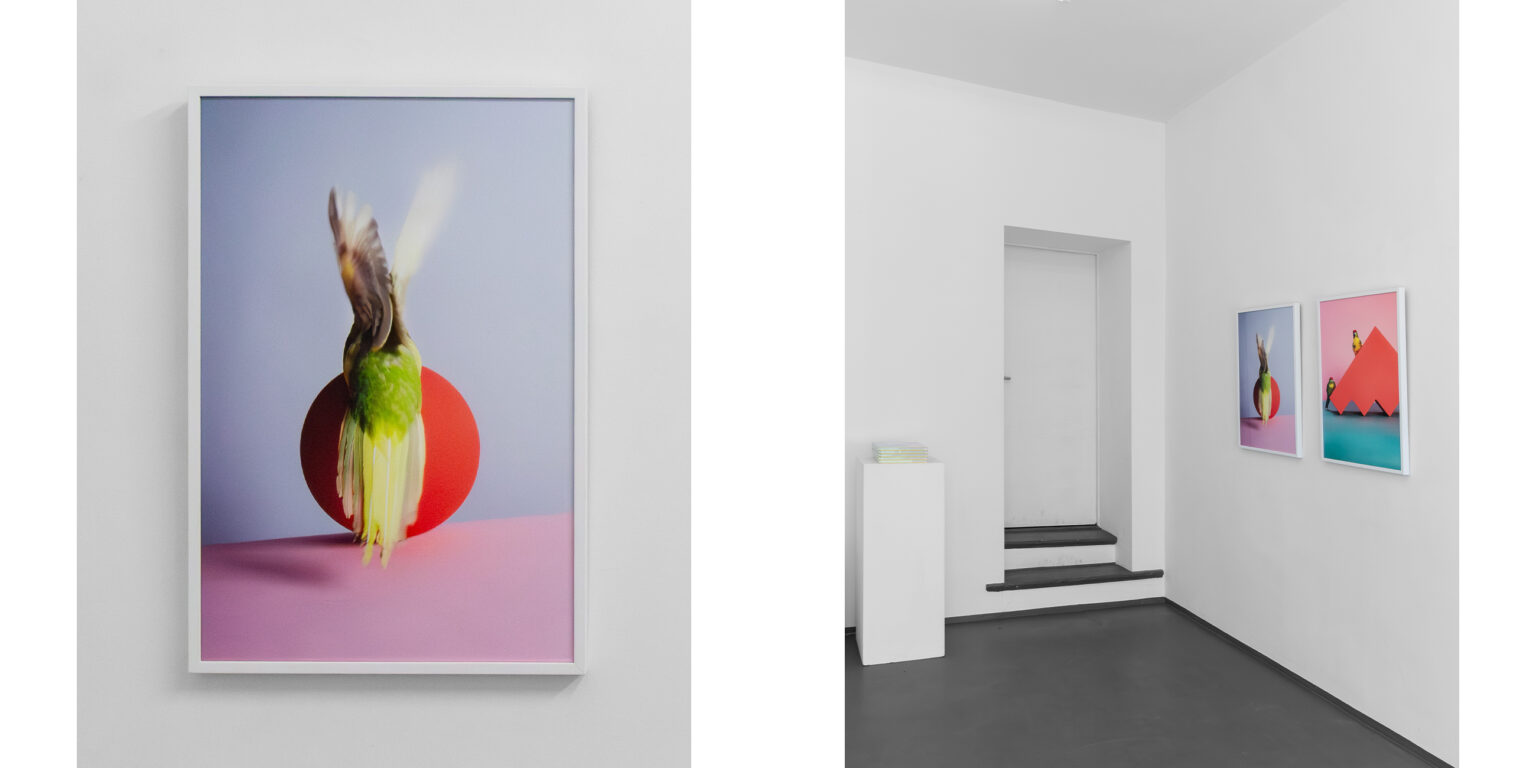
Read our interview with Kristin Schnell below. Of Cages and Feathers is on view at Michael Reid Berlin until Saturday, 28 February, and all works can be explored and acquired online, at the gallery and by request.
For enquiries, please email colinesoria@michaelreid.com.au
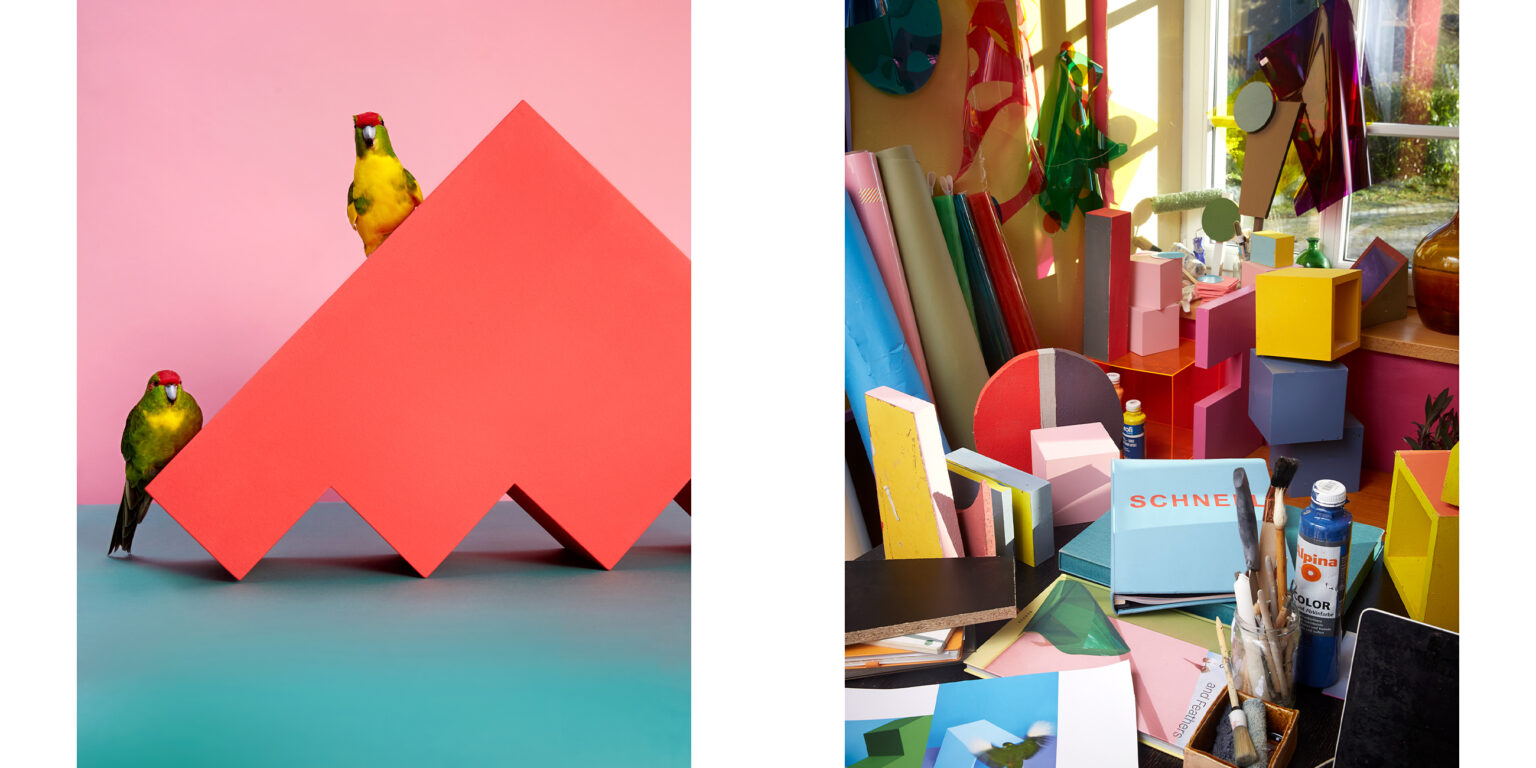
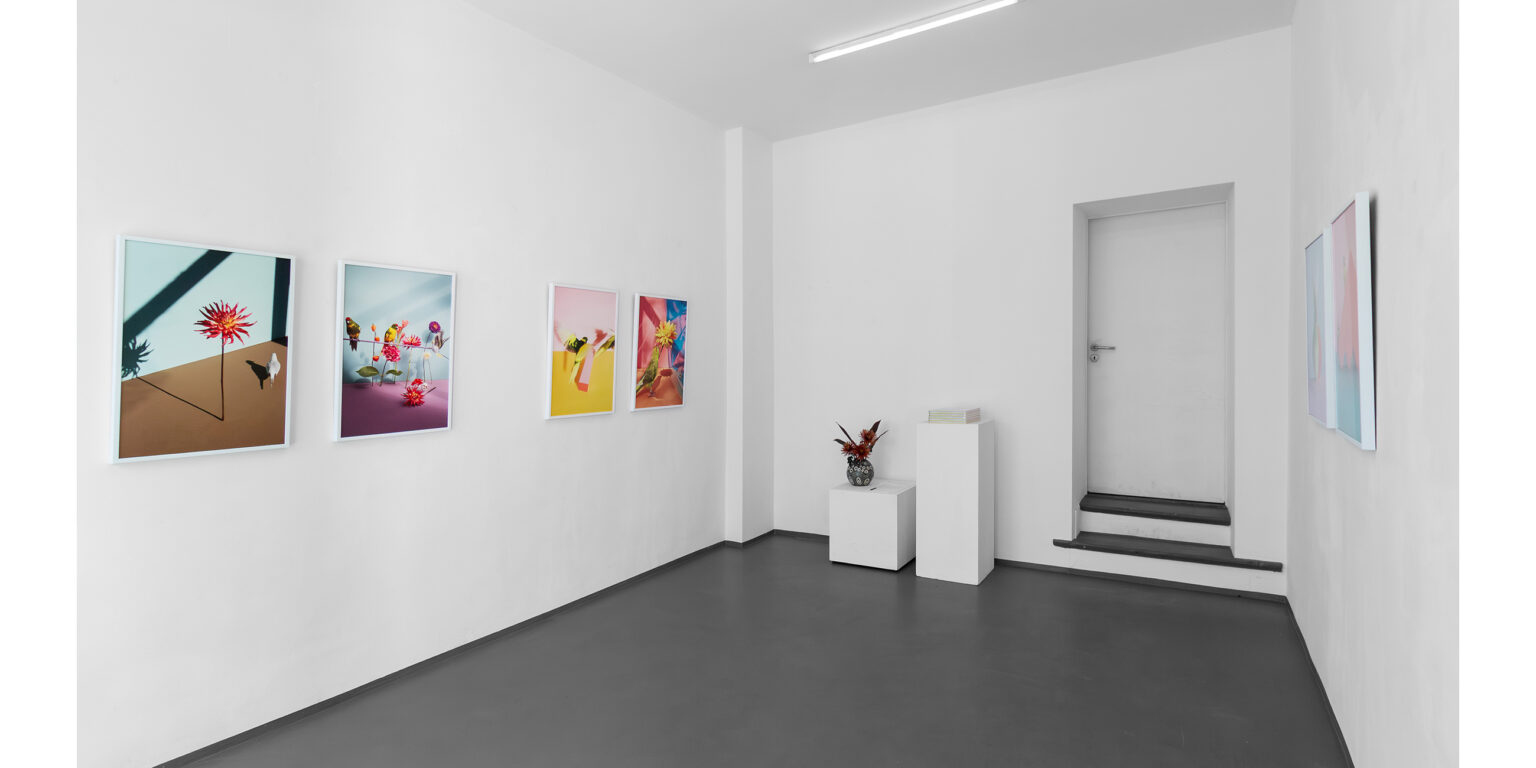
How did your career begin, and what key moments or decisions shaped your path as an artist?
My artistic career began relatively late and very consciously. In 2020, I decided to focus seriously on photography as an artistic practice and joined a LensCulture Masterclass in Amsterdam. That experience was a turning point – it helped me understand photography not just as an image, but as a language for thinking and questioning the world.
A key decision was to work long-term on a single subject instead of moving quickly from project to project. My ongoing work with birds became a way to explore themes of freedom, control, vulnerability, and the complex relationship between humans and nature. Building my own visual world – rather than responding to trends or expectations – was essential.
Another important moment was realising that artistic development requires patience and investment. The first years were not financially easy, but exhibitions, publications, and the growing international dialogue around my work confirmed that this path was the right one.
Looking back, the most formative choices were committing fully to the work, allowing it to evolve slowly, and trusting that depth and consistency would eventually find their audience.
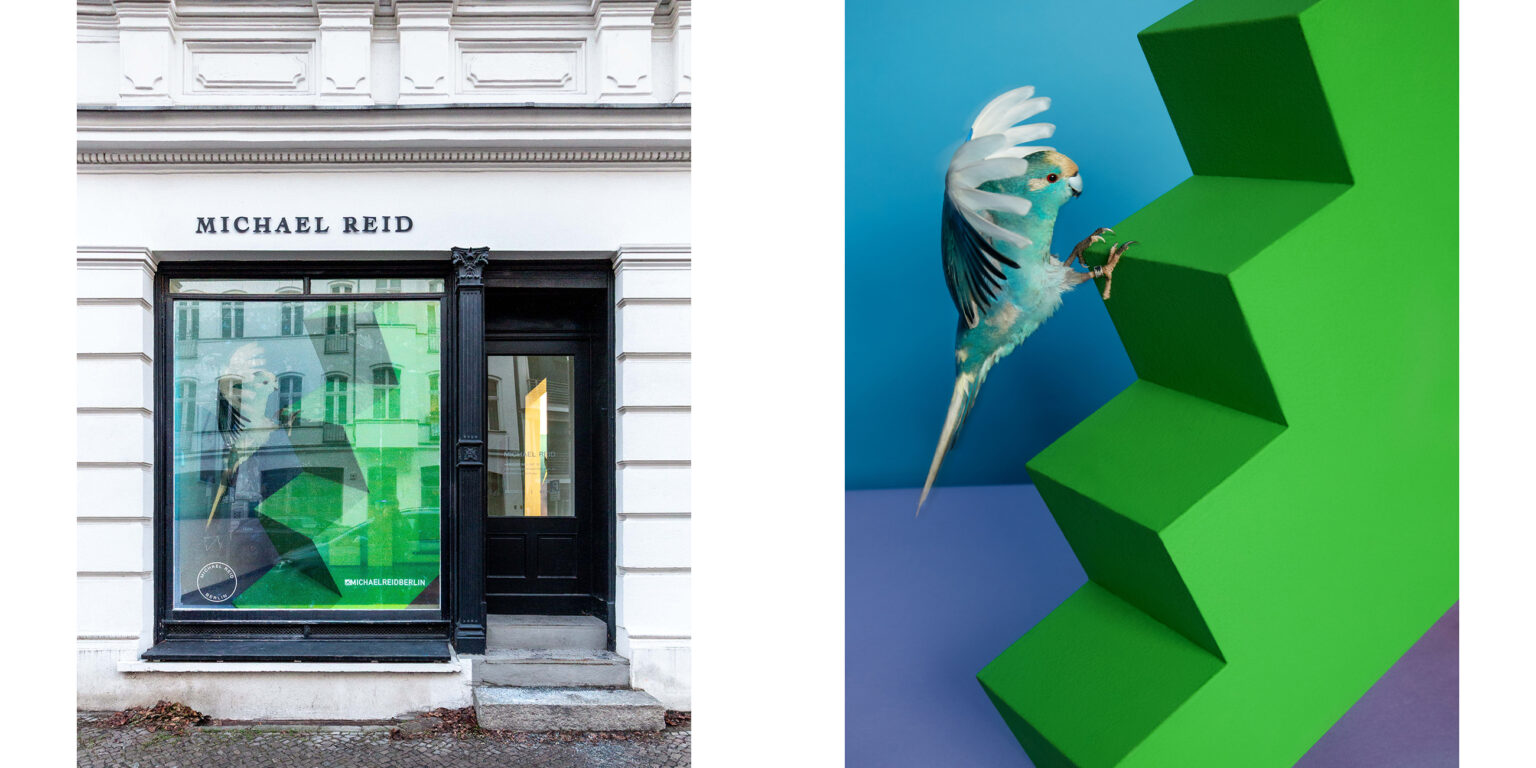
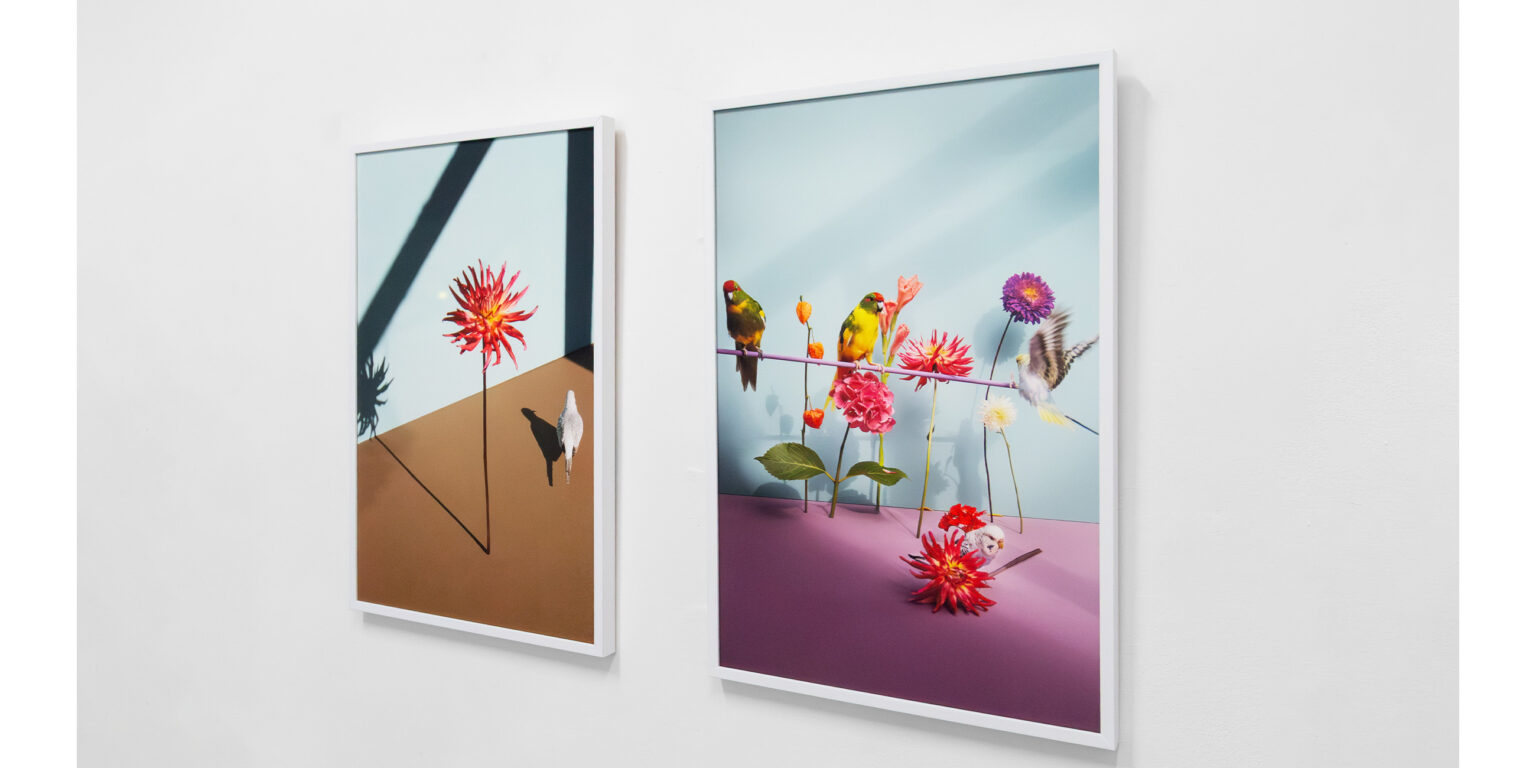
Can you describe your working process, from the initial idea to the final image?
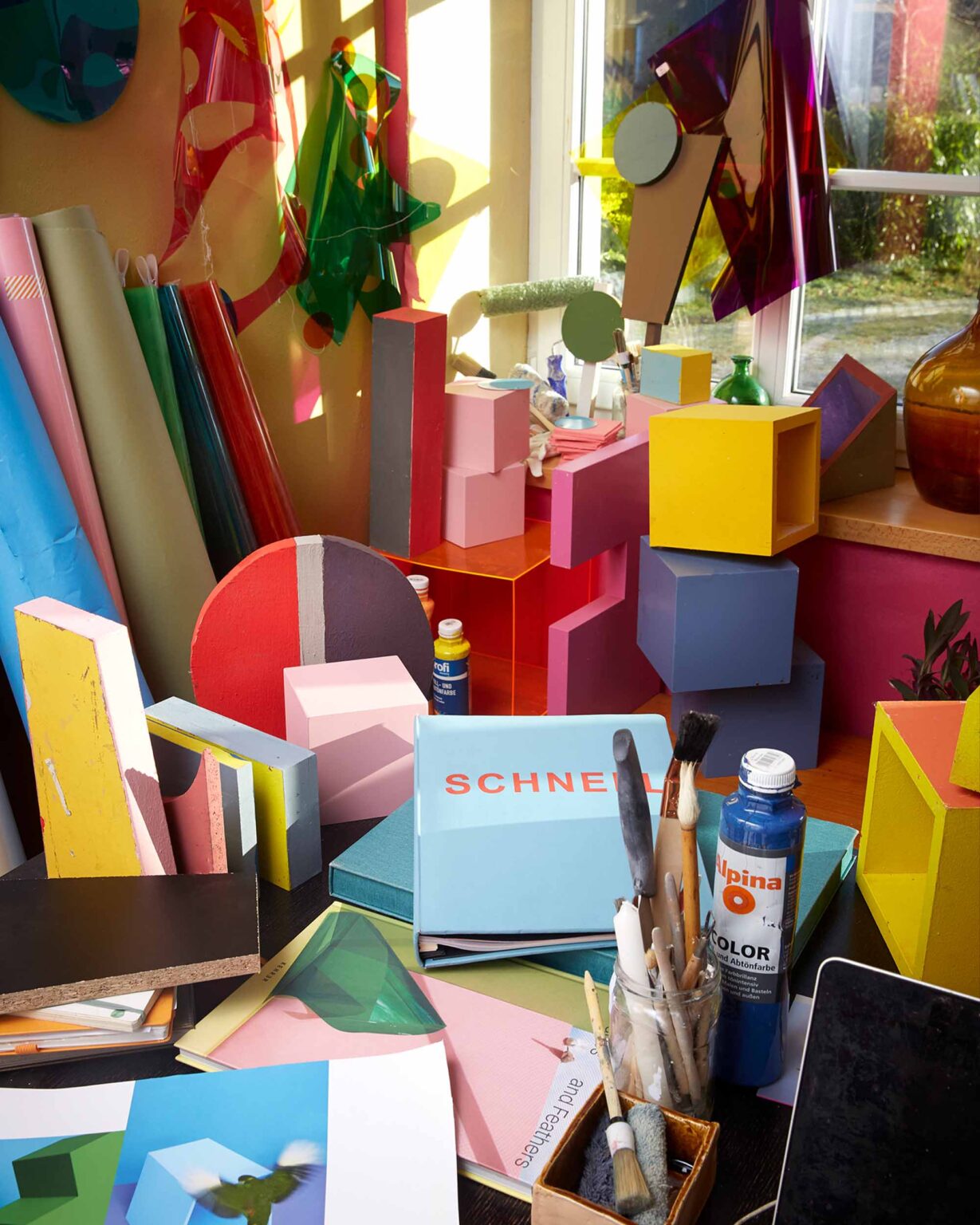
My working process usually begins with an idea or a question rather than a fixed image. I’m interested in states of tension – between freedom and control, nature and construction, intimacy and distance. From there, I start building a visual situation rather than staging a narrative.
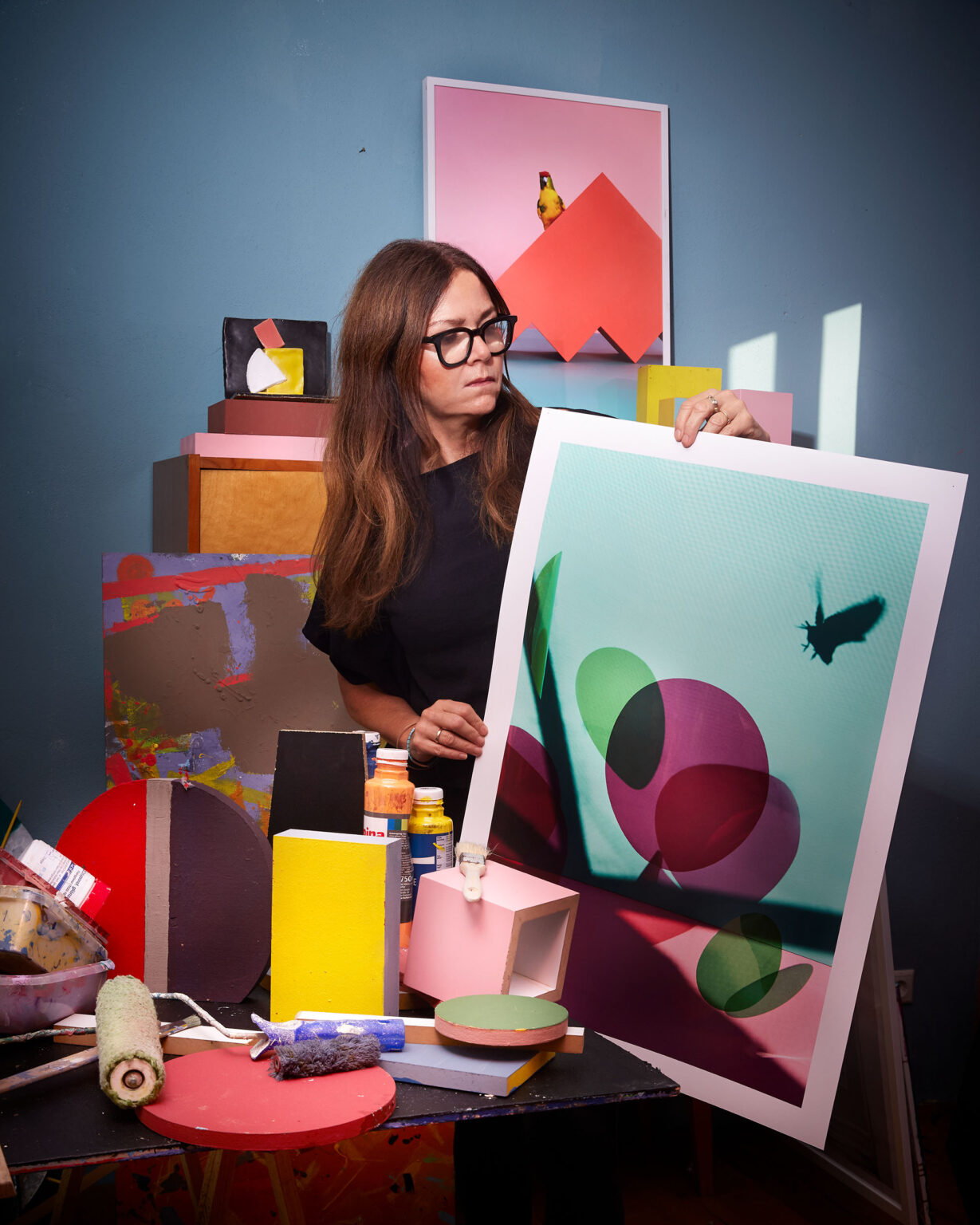
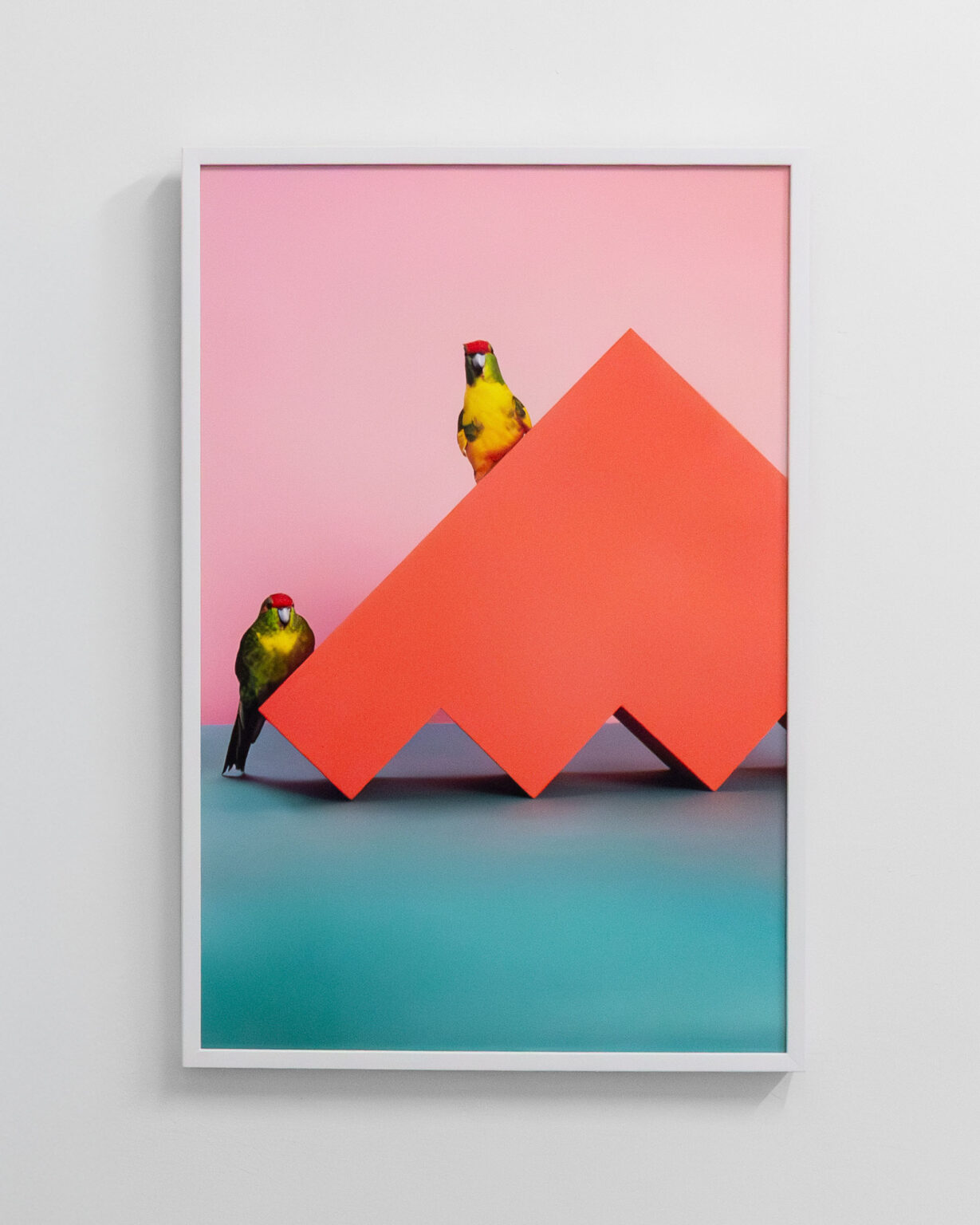
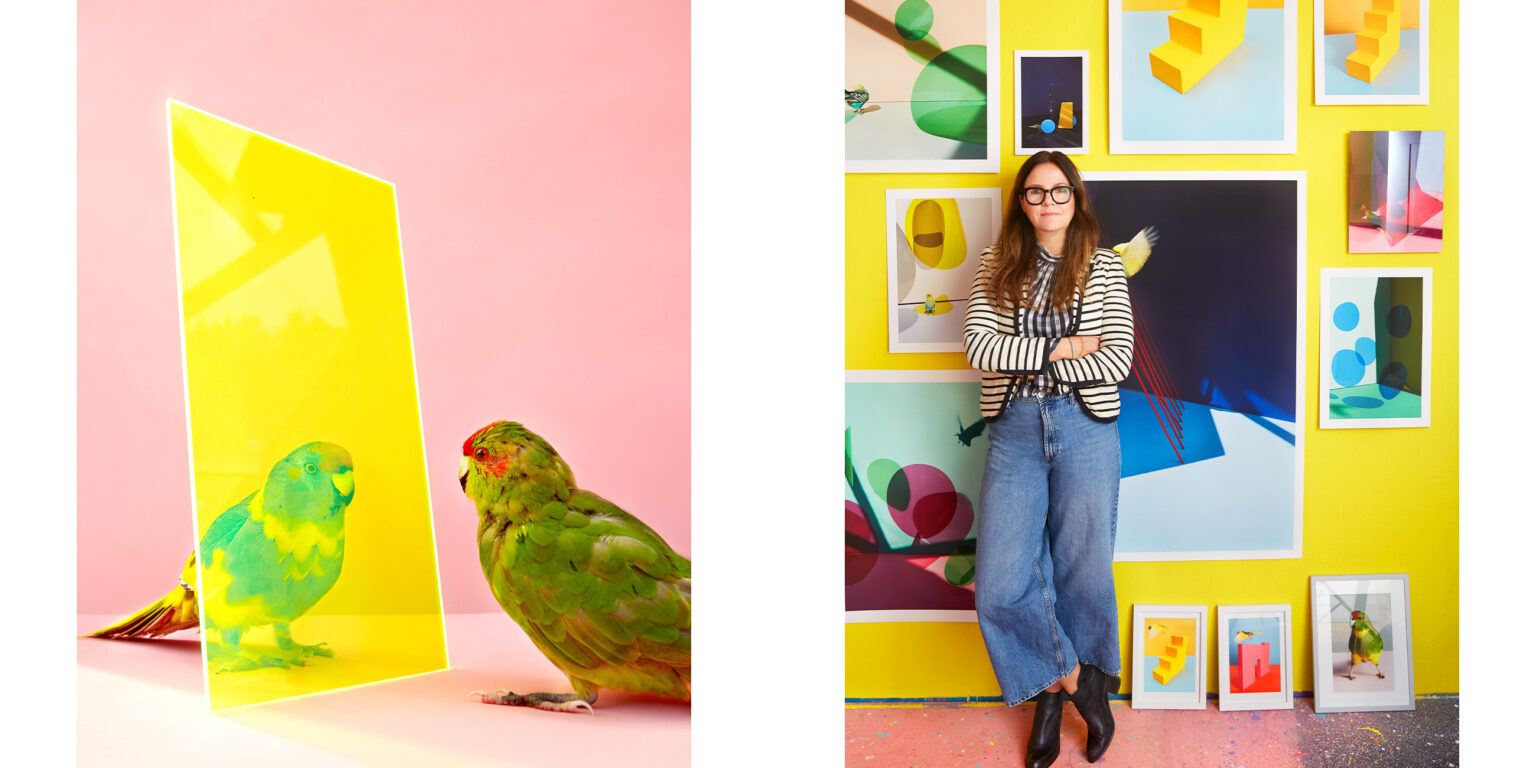
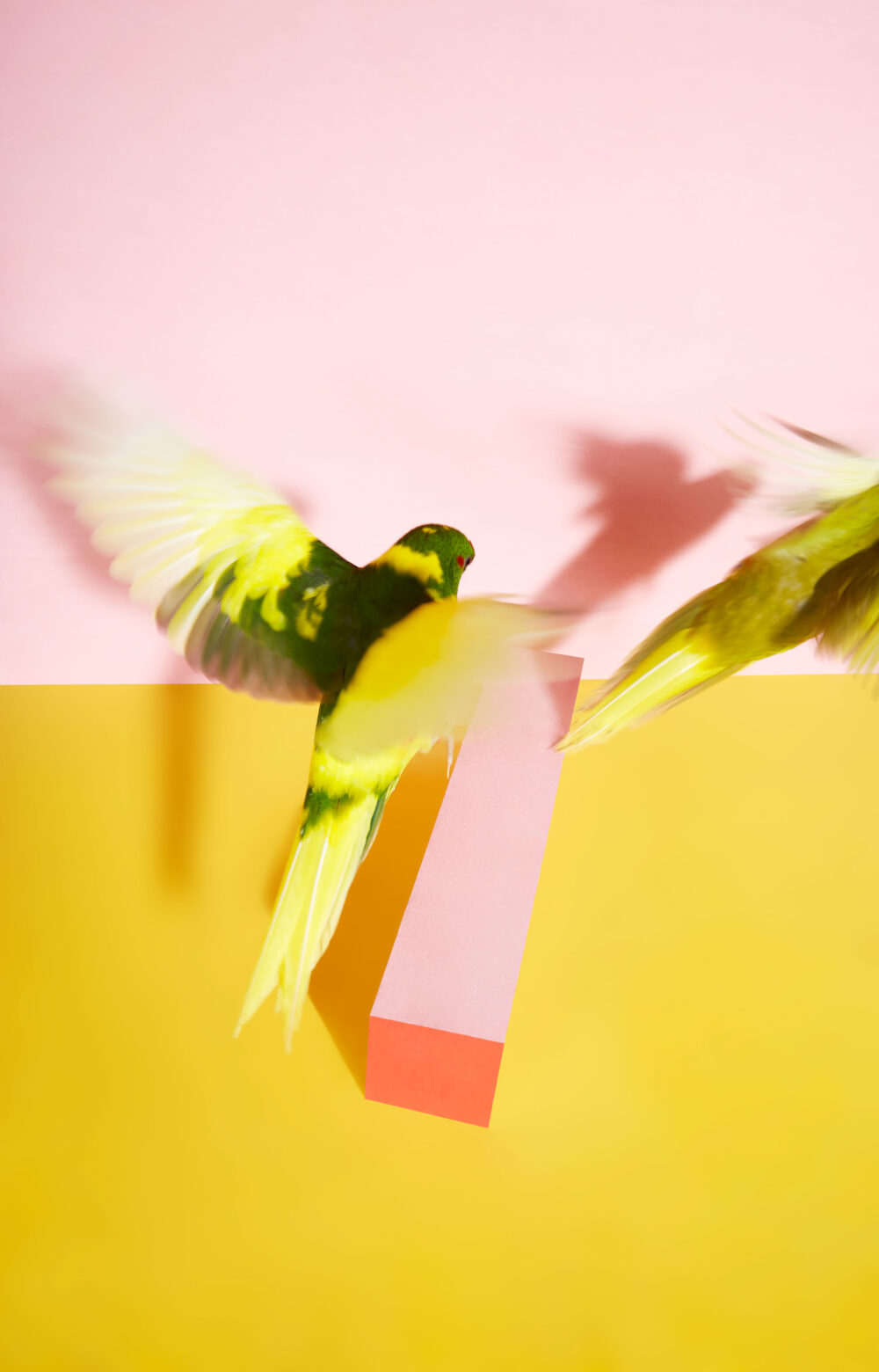
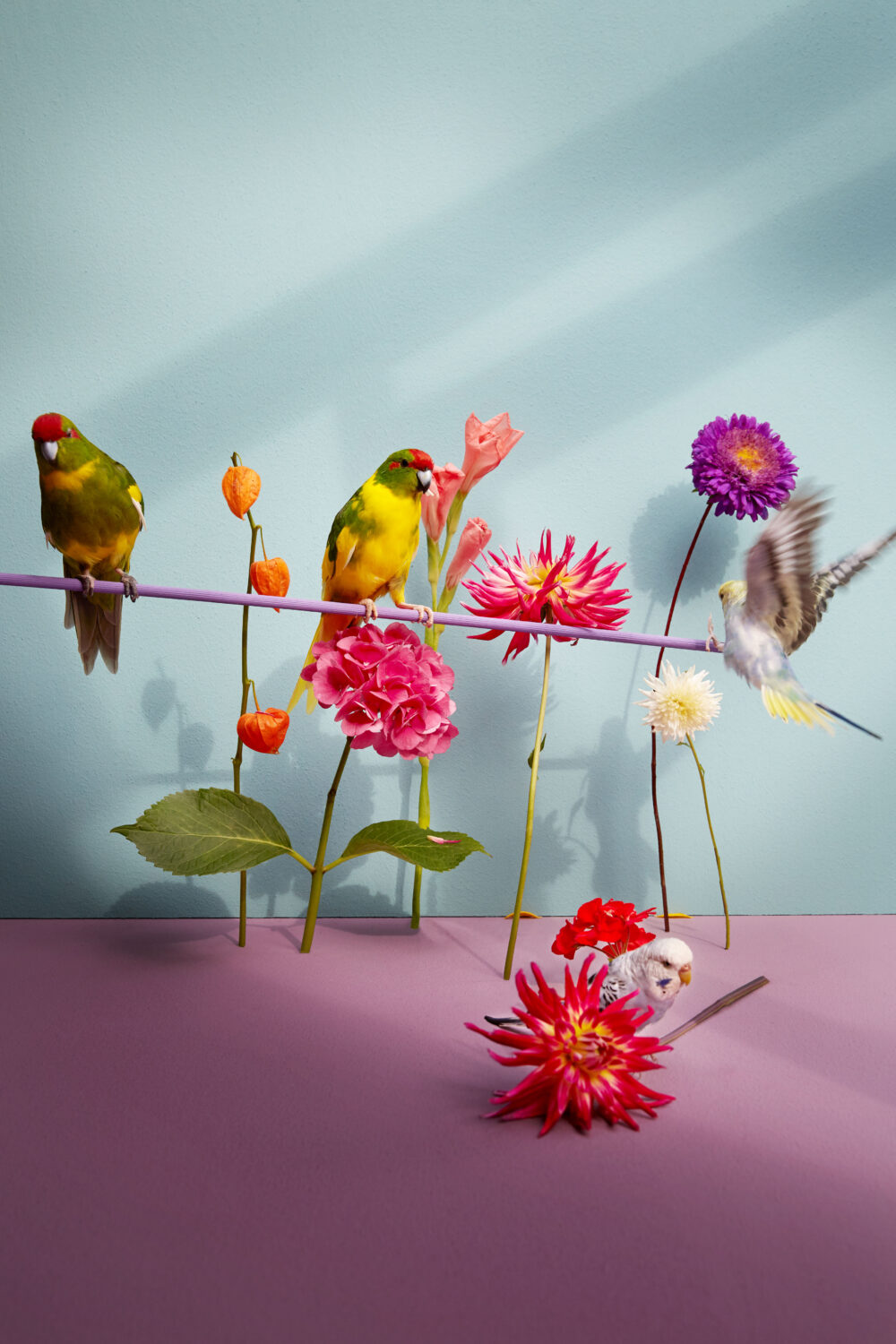
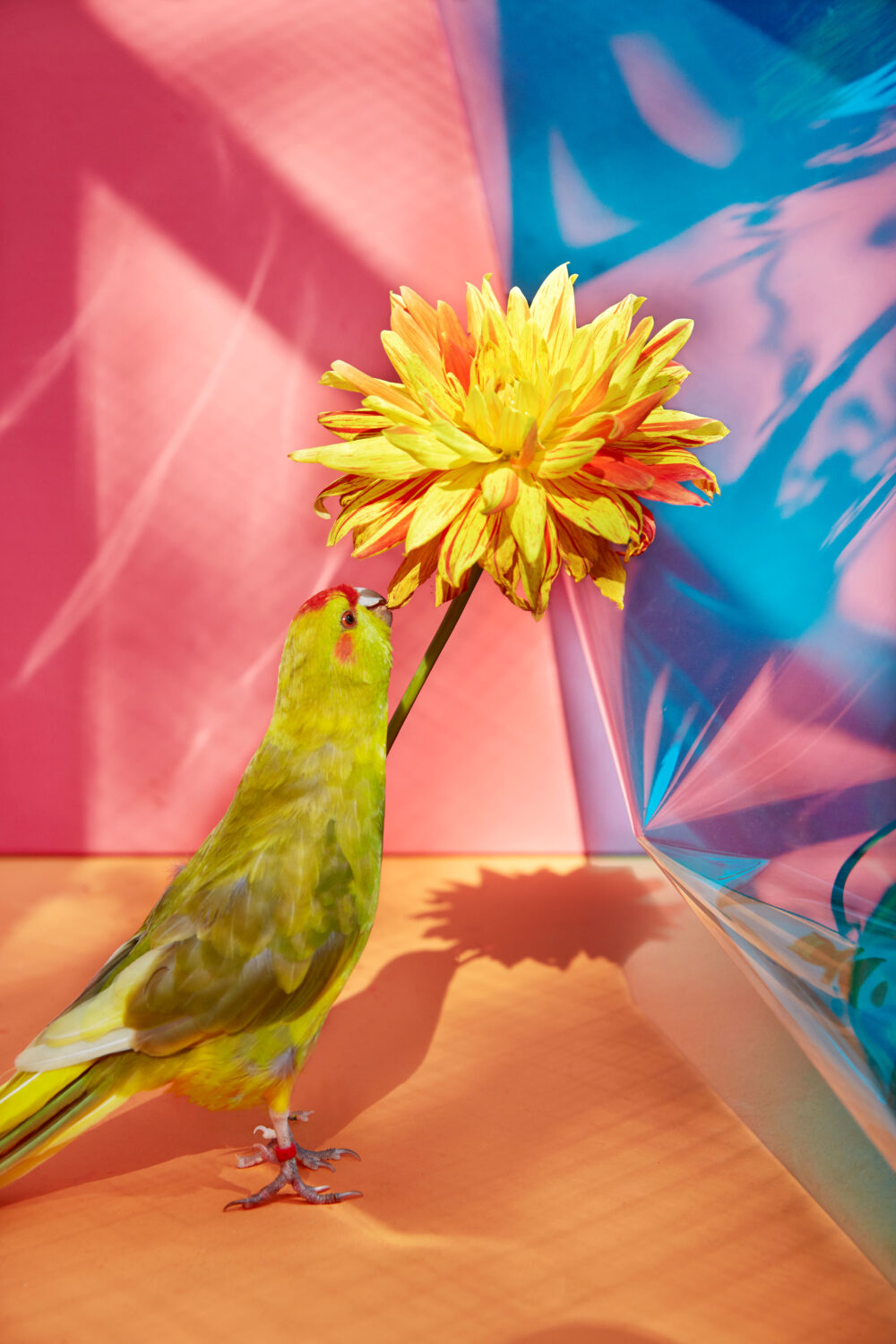
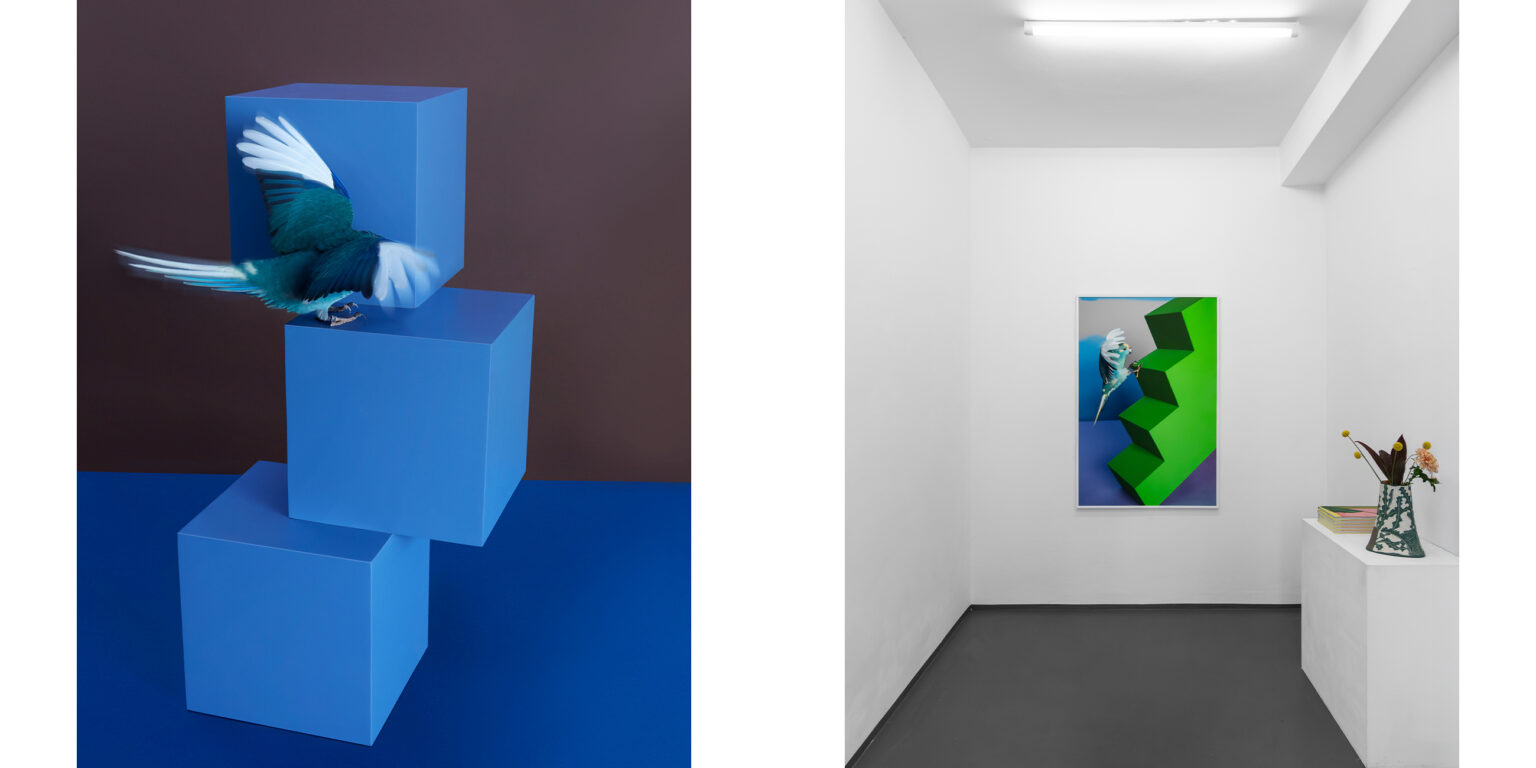
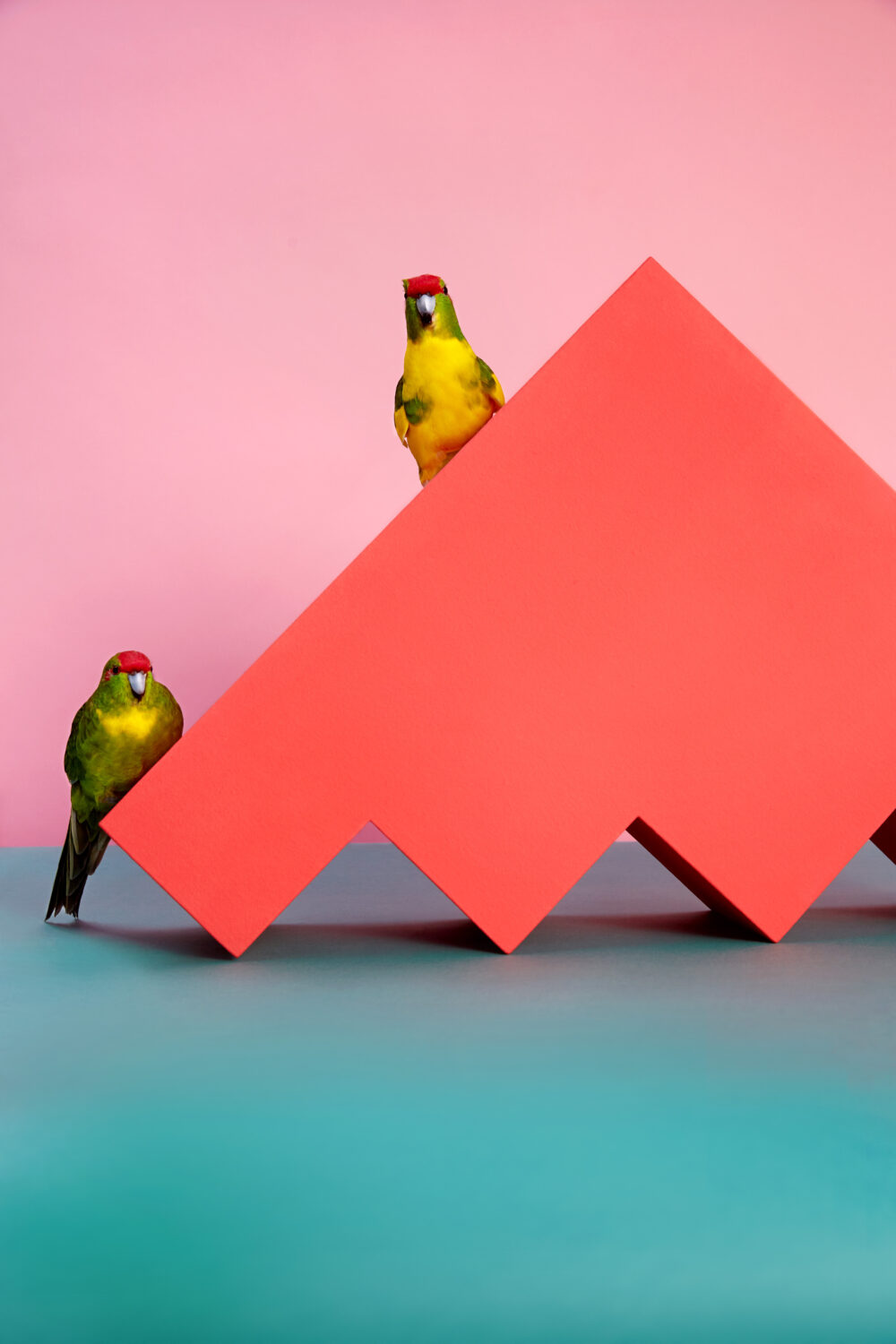
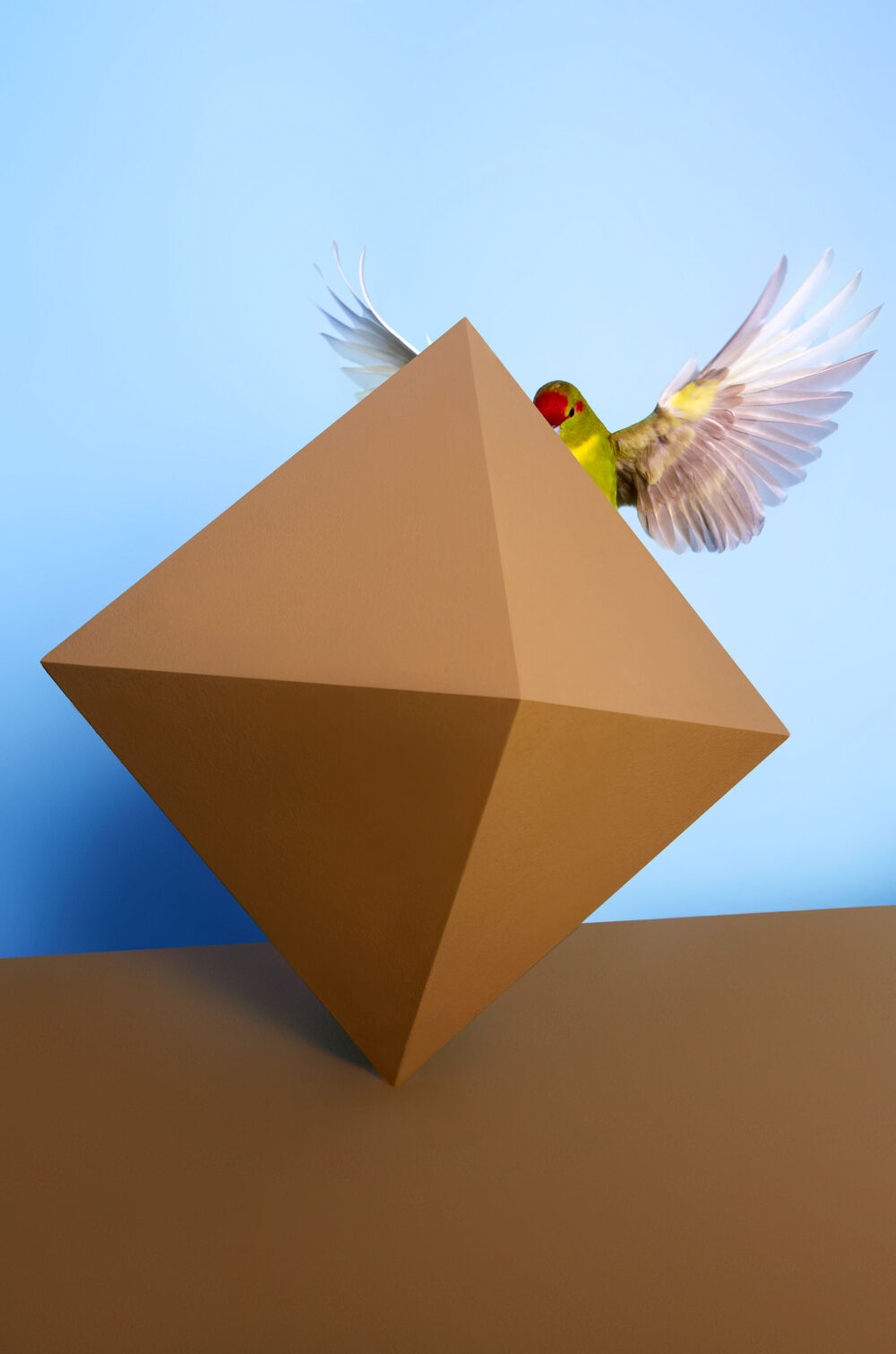
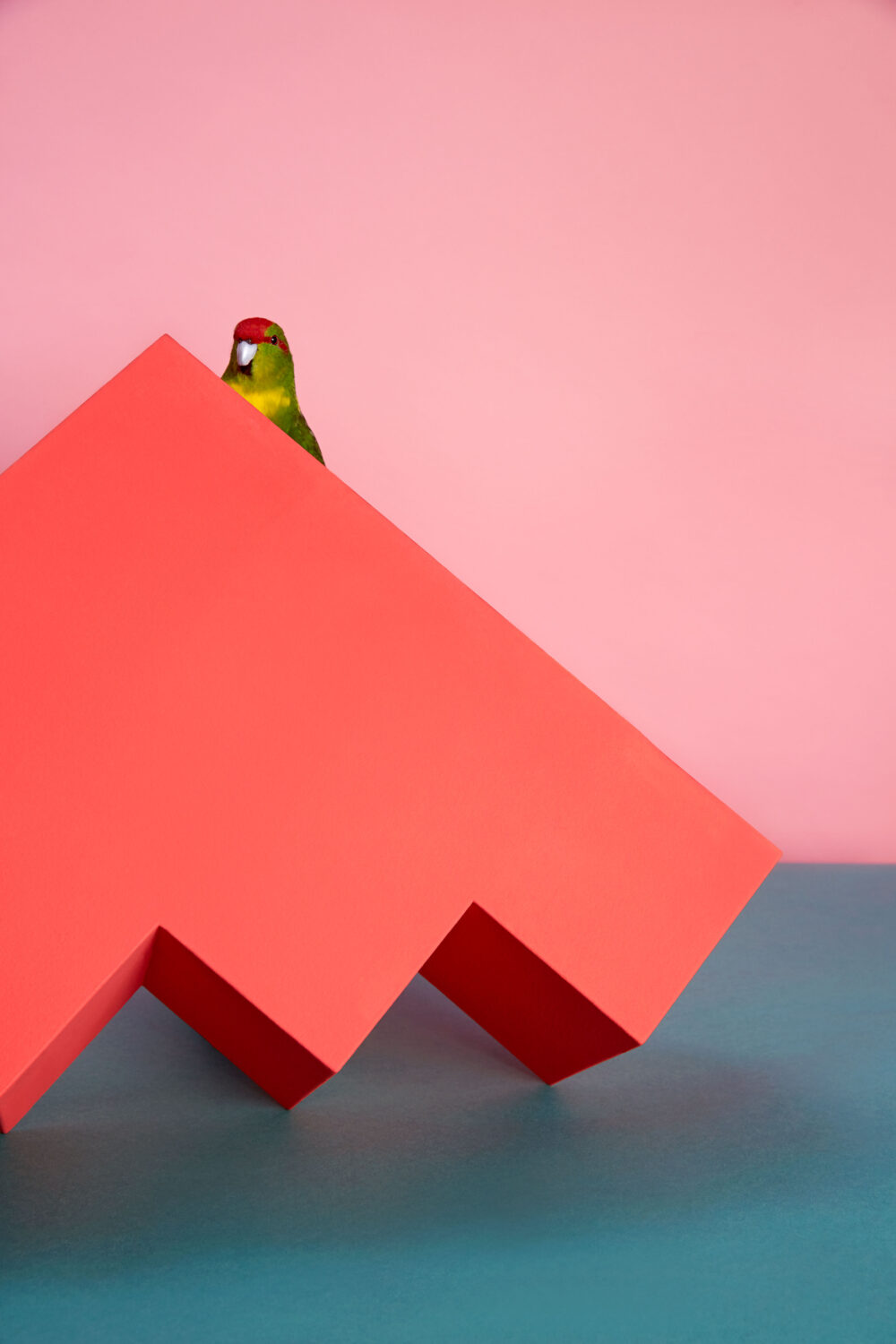
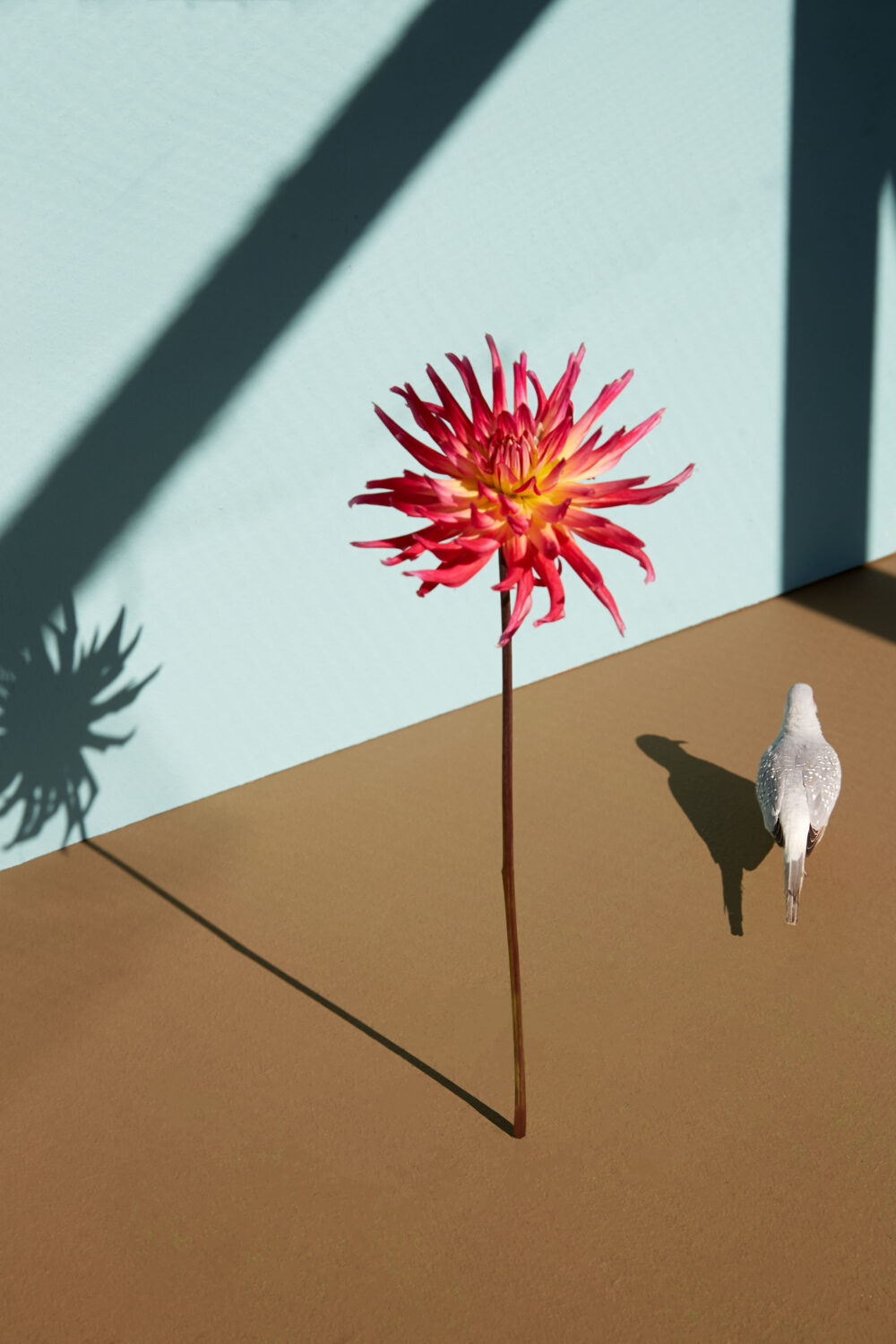
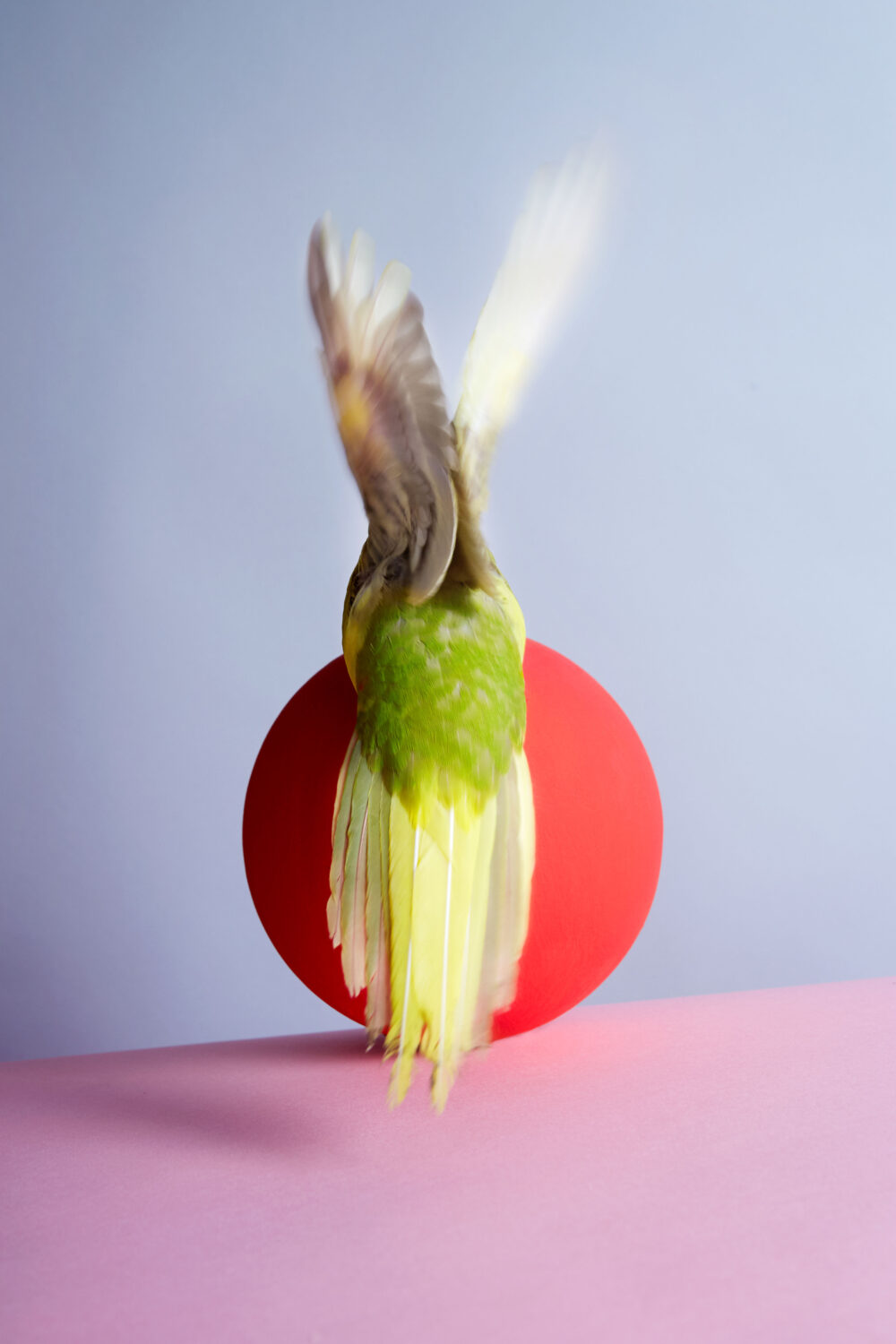
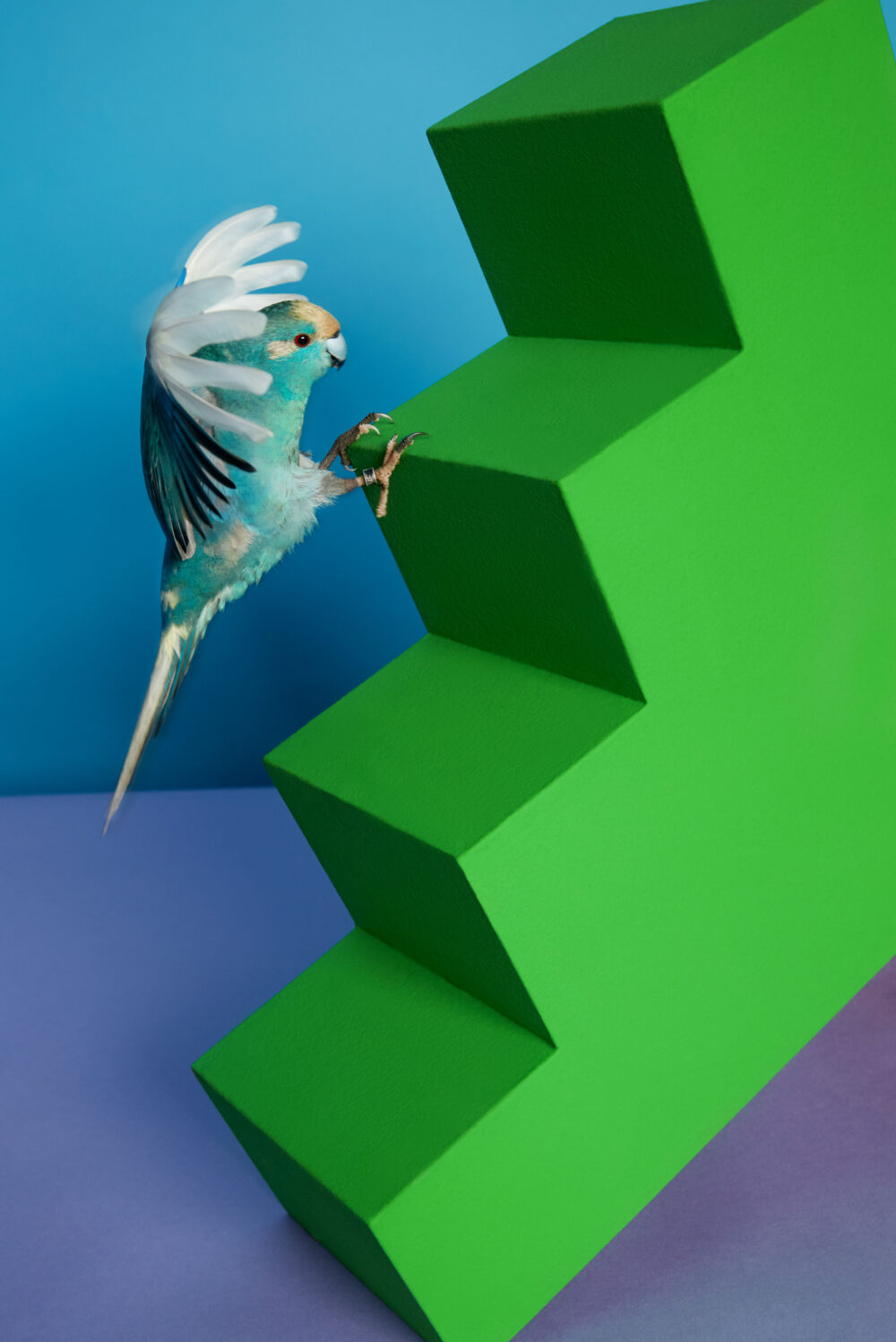
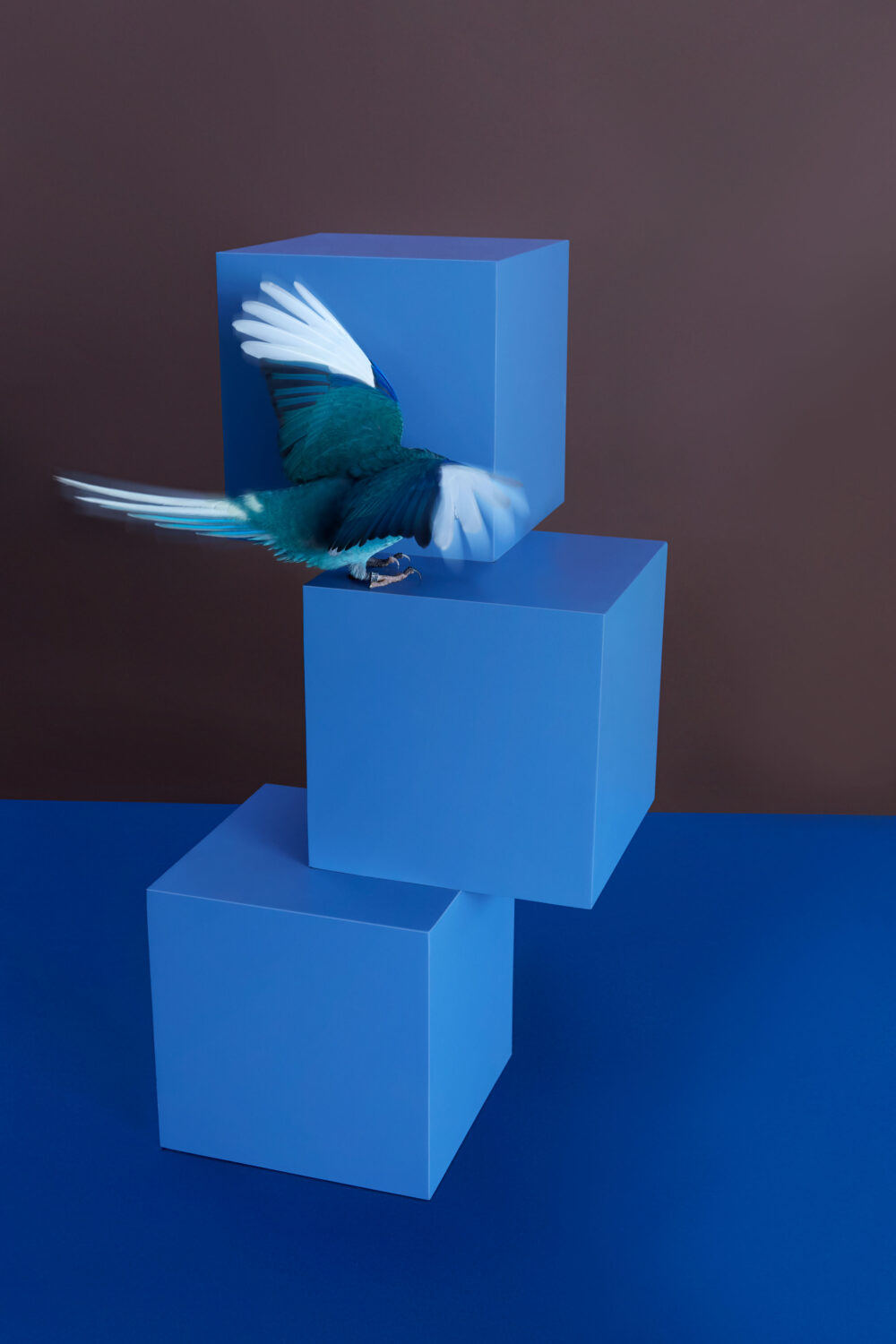
I work with carefully composed sets, colours, and geometric elements that create a kind of framework or stage. Within this constructed environment, chance plays an important role. The birds I photograph are never directed; their movements, pauses, and interactions introduce unpredictability and presence. I’m attentive to light, timing, and small shifts, allowing the image to emerge rather than forcing it.
The final image is the result of this balance between control and openness. I edit very carefully, choosing photographs that retain a sense of ambiguity – images that don’t explain themselves fully, but leave space for viewers to bring in their own emotions and interpretations.
What draws you to working with animals, particularly birds, as central subjects in your photographs?
I’m drawn to working with animals, and especially birds, because they exist at a powerful intersection of beauty, vulnerability, and symbolism. Birds are often associated with freedom, yet many live in conditions shaped or controlled by humans. That contradiction reflects broader questions about autonomy, care, and responsibility.
Working with birds allows me to speak about human conditions without directly depicting people. They become stand-ins through which themes of longing, confinement, tenderness, and projection can surface. At the same time, they remain fully themselves – unpredictable, present, and resistant to narrative.
Their presence introduces a form of truth into the image. No matter how carefully a scene is constructed, the animal cannot be fully controlled, and that tension is central to my work.
What have been some of your favourite career experiences?
Some of my favourite experiences have been moments when the work moved beyond the studio and entered a real dialogue with others. Seeing my photographs included in museum and institutional contexts was deeply affirming – not as validation, but as a sign that the work could hold meaning beyond my own intentions.
The publication of my first book, Of Cages and Feathers, was another important experience. Working closely with an editor and seeing the project take shape as a physical object clarified the long-term nature of my practice and how individual images relate to one another.
Equally meaningful have been conversations – with curators, editors, and viewers – where unexpected interpretations emerged. Those moments, when the work begins to live independently and provoke thought or emotion, are often more memorable to me than any single event.
What ideas and experiences have informed your more recent work?
My more recent work has been shaped by a growing awareness of responsibility – towards the animals I work with, toward the images I create, and toward the narratives they may generate. Over time, my focus has shifted from making single, resolved images to thinking more about relationships: between humans and animals, control and care, presence and absence.
Personal experiences have also deepened this shift. Living closely with animals has made me more attentive to subtle forms of communication, to trust, and to the ethics of proximity. I’m increasingly interested in moments that feel quiet or unresolved, where meaning emerges through restraint rather than spectacle.
At the same time, my work has become more open formally. I allow more space for chance, fragility, and imperfection – seeing these not as weaknesses, but as essential elements that mirror the complexity of the world we inhabit.
What questions are you most interested in exploring through your practice right now?
Right now, I’m most interested in questions around care, power, and responsibility – particularly in the relationships between humans and animals. I’m exploring how acts of protection can also become forms of control, and where the line lies between care and domination.
I’m also thinking a lot about projection: how humans assign meaning, emotion, and symbolism to animals, and what that reveals about ourselves. Working with birds allows me to approach these questions indirectly, through presence and gesture rather than narrative.
More broadly, I’m interested in how images can hold complexity without offering clear answers – how photography can create spaces for reflection rather than conclusion, and invite viewers into a more attentive way of looking
Can you tell us more about the works presented in this exhibition?
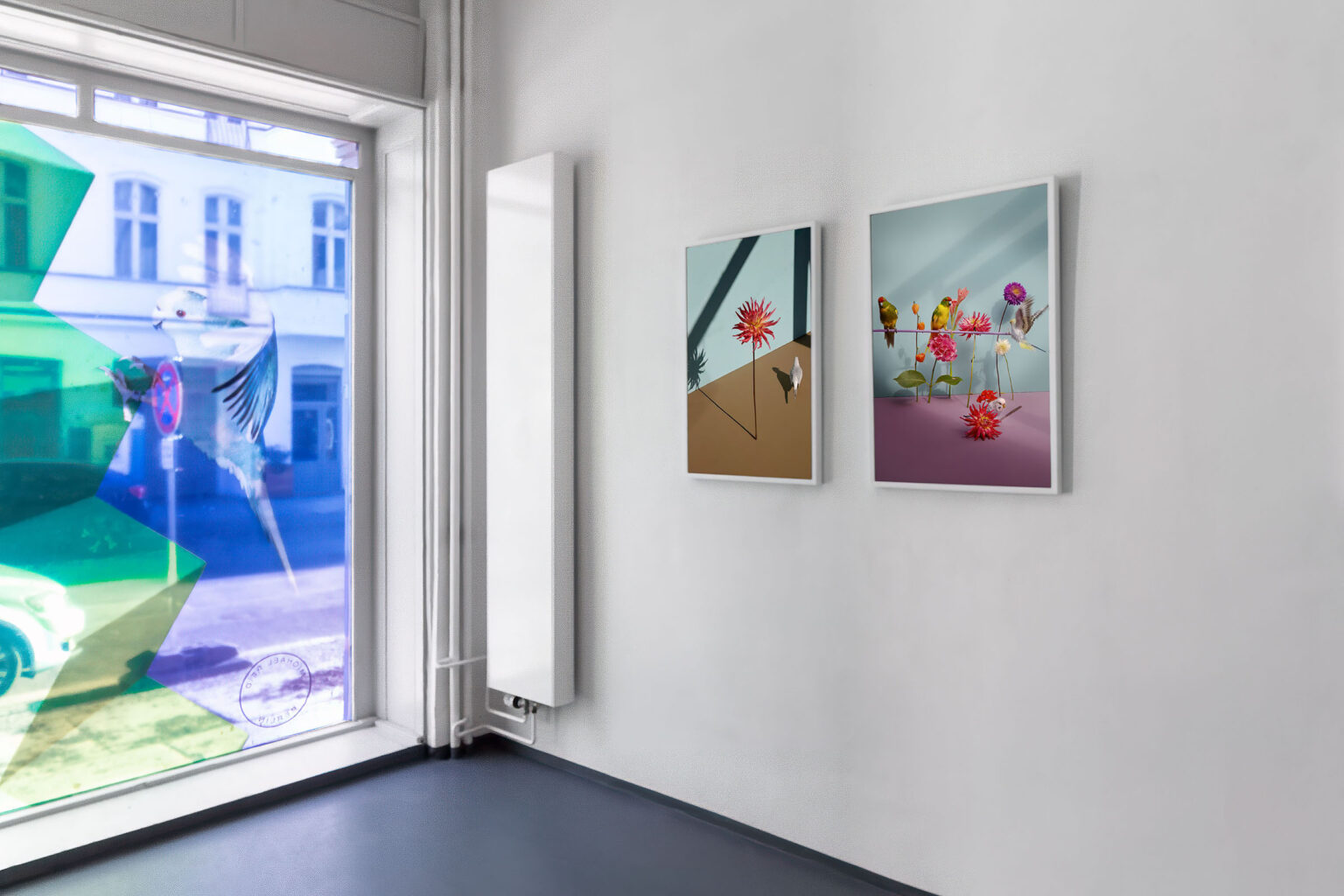
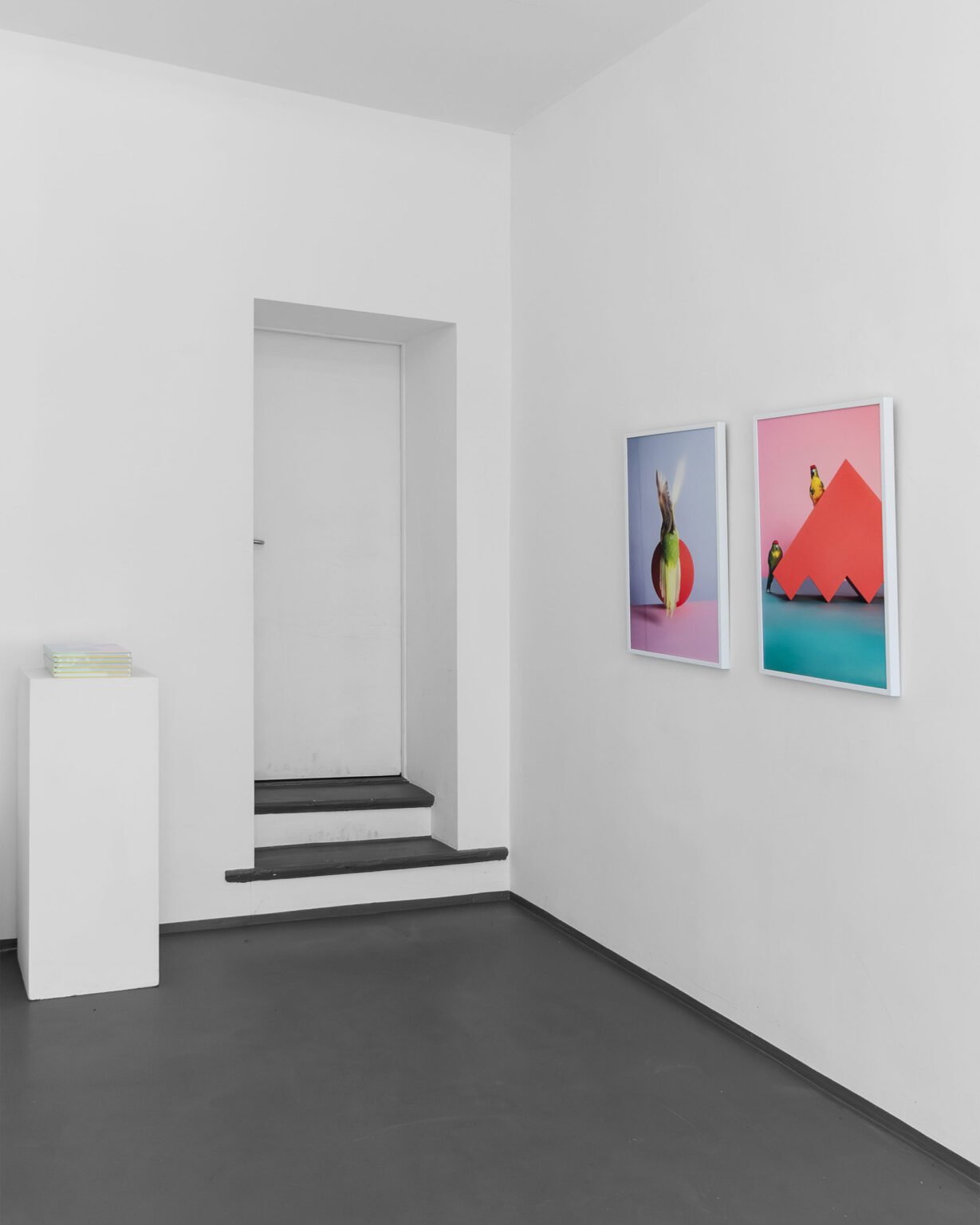
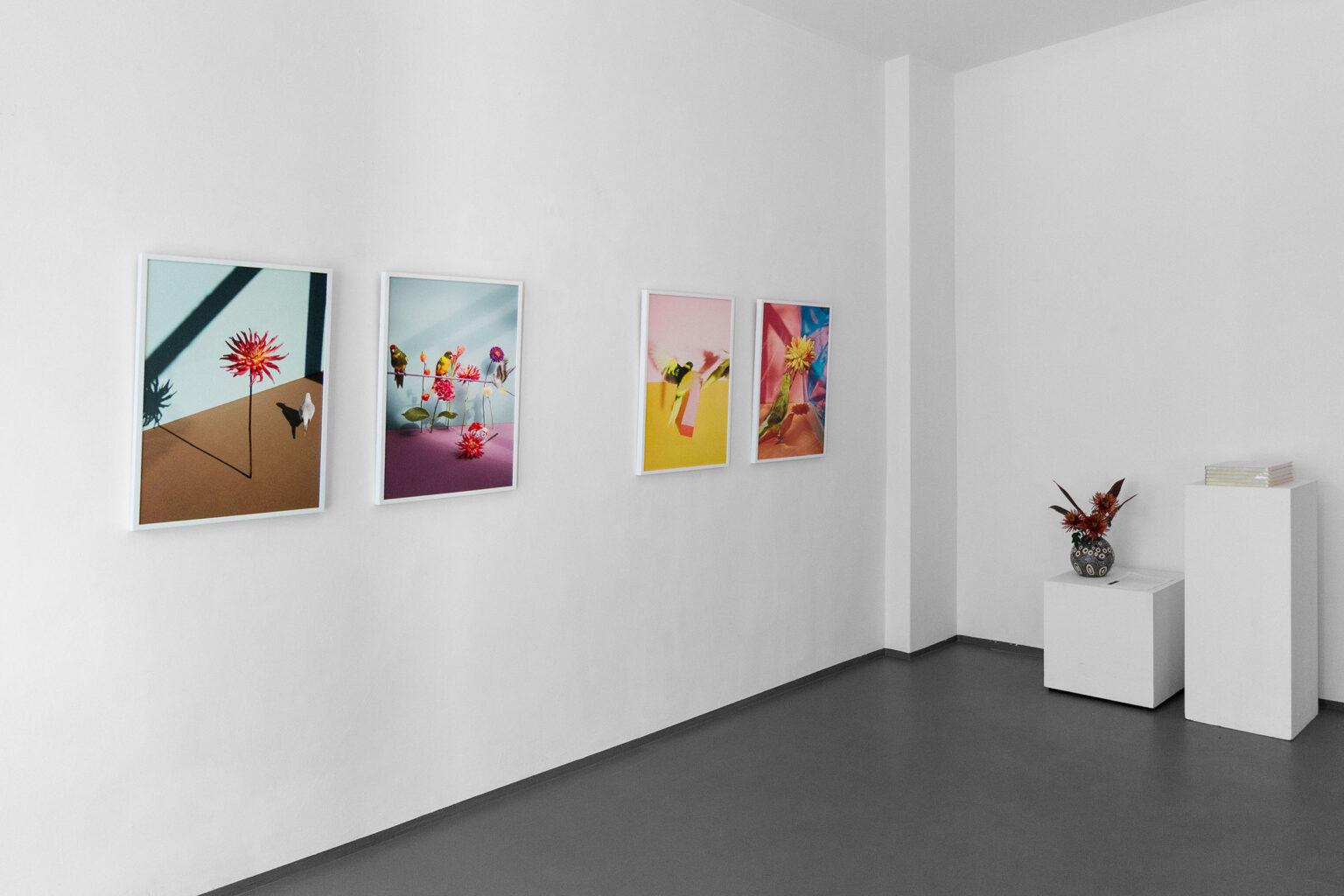
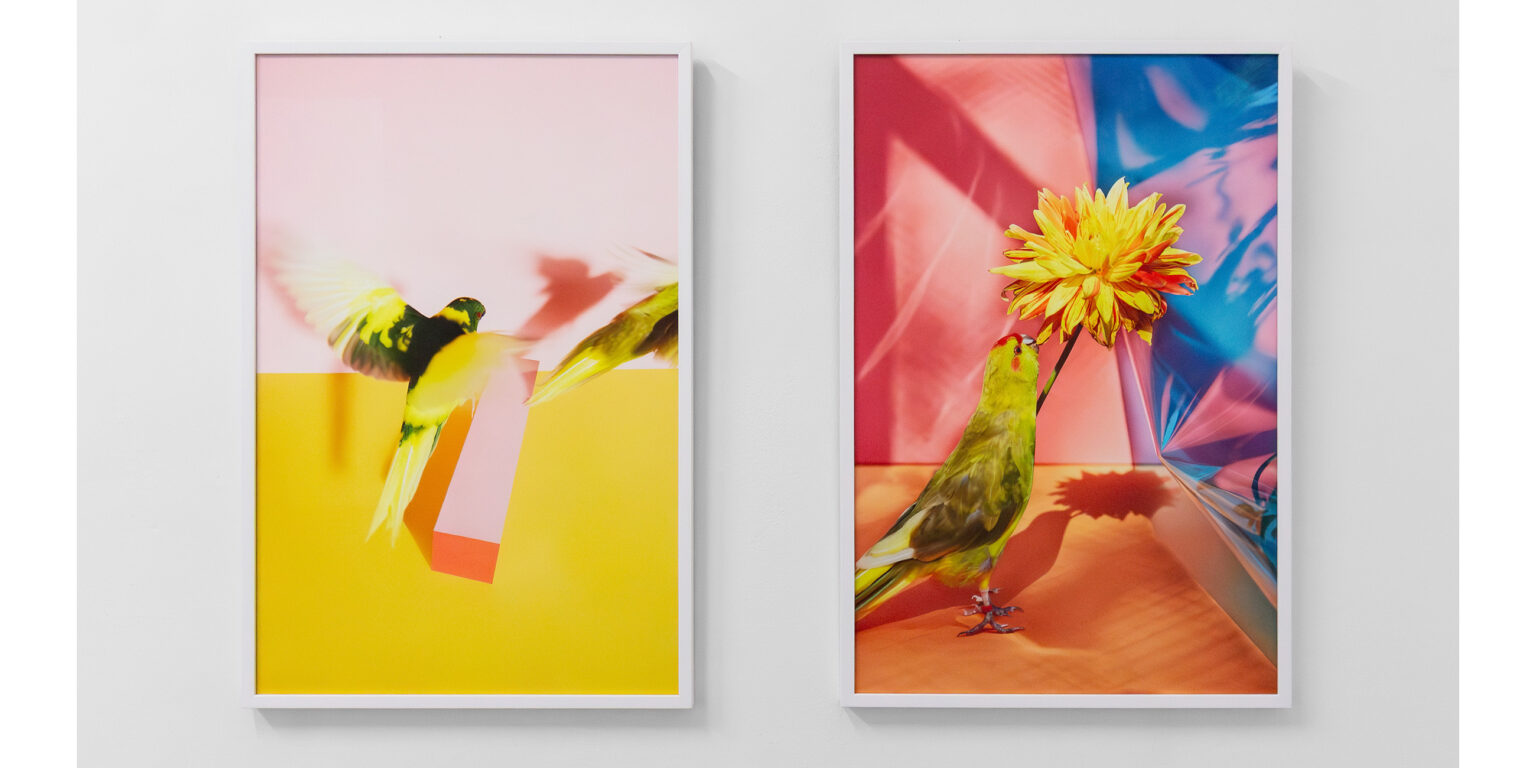
The works presented in this exhibition bring together several bodies of work that revolve around the same central questions: freedom and constraint, care and control, and the complex emotional space between humans and animals.
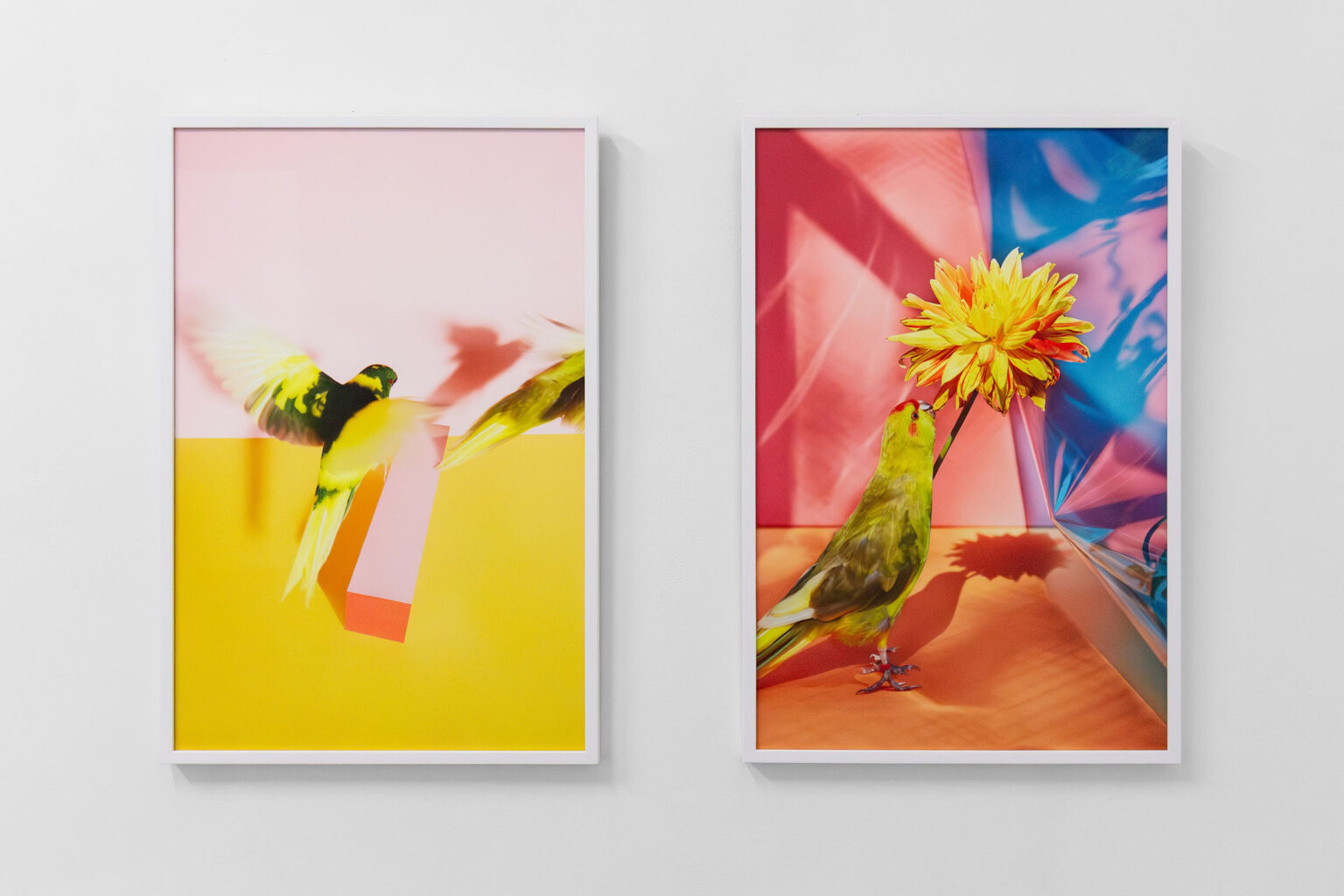
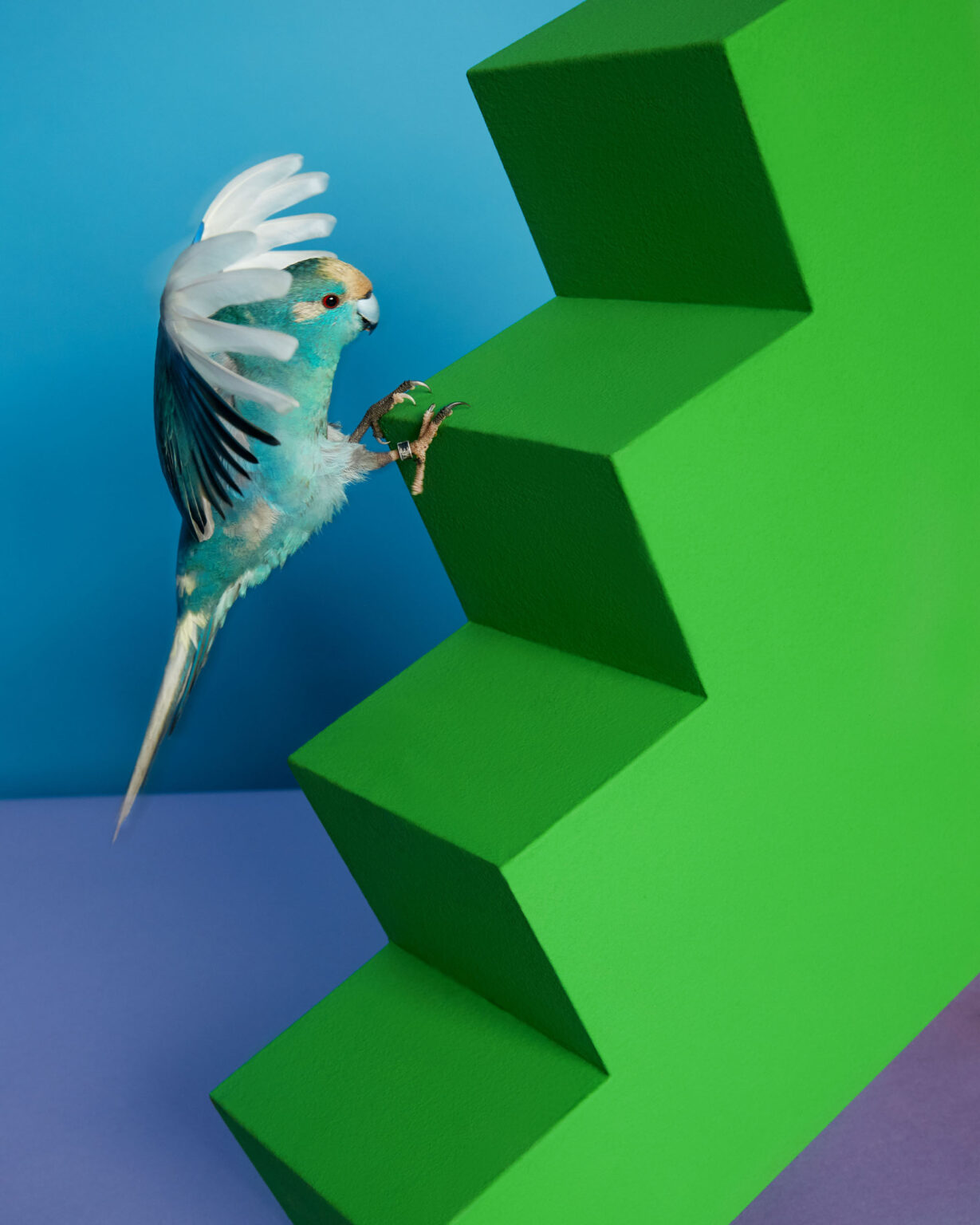
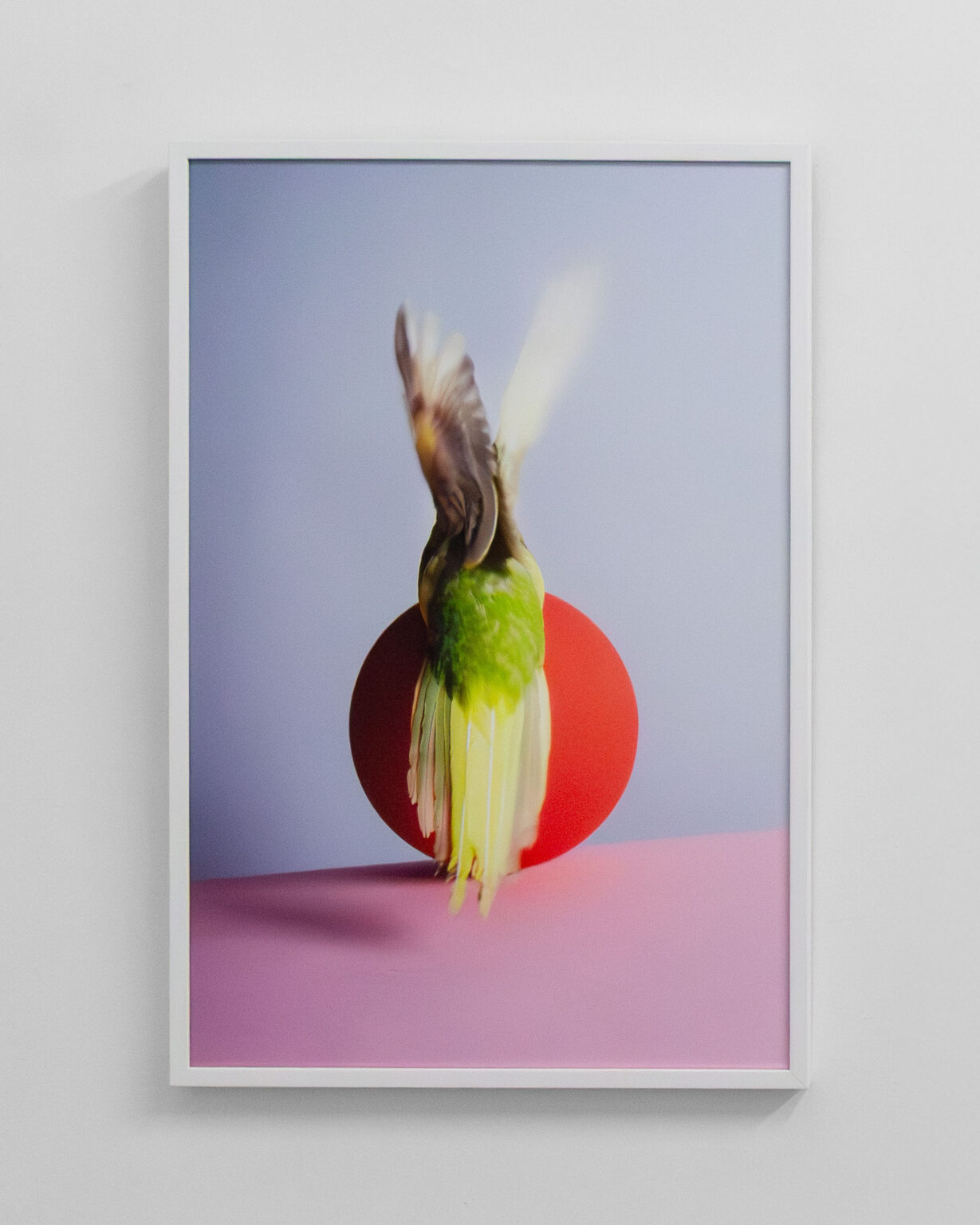
The photographs are carefully composed, often using strong colours and geometric elements to create a constructed environment. Within these settings, birds appear as living presences rather than symbols to be decoded. Their movements, stillness, and interactions introduce chance and vulnerability, subtly shifting the meaning of each image.
Some works feel more intimate and quiet, others more theatrical, but all share an interest in ambiguity. Rather than offering a single narrative, the exhibition invites viewers to move between images and form their own connections – allowing the works to resonate on both an emotional and reflective level.