





PAINTING NOW | Brenton Drechsler
- Brenton Drechsler
- 4—28 Dec 2025
- Download now
- Eora / Sydney
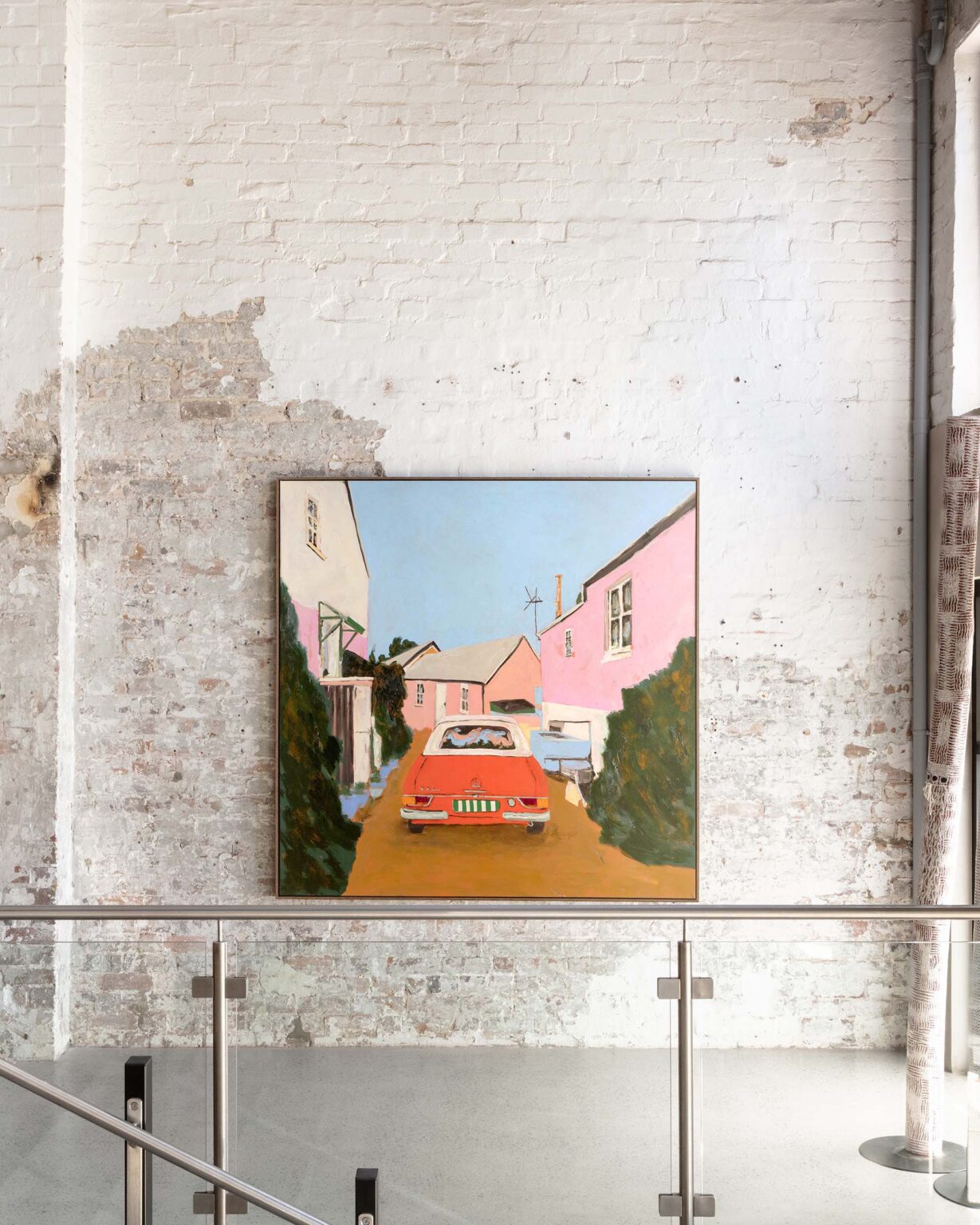
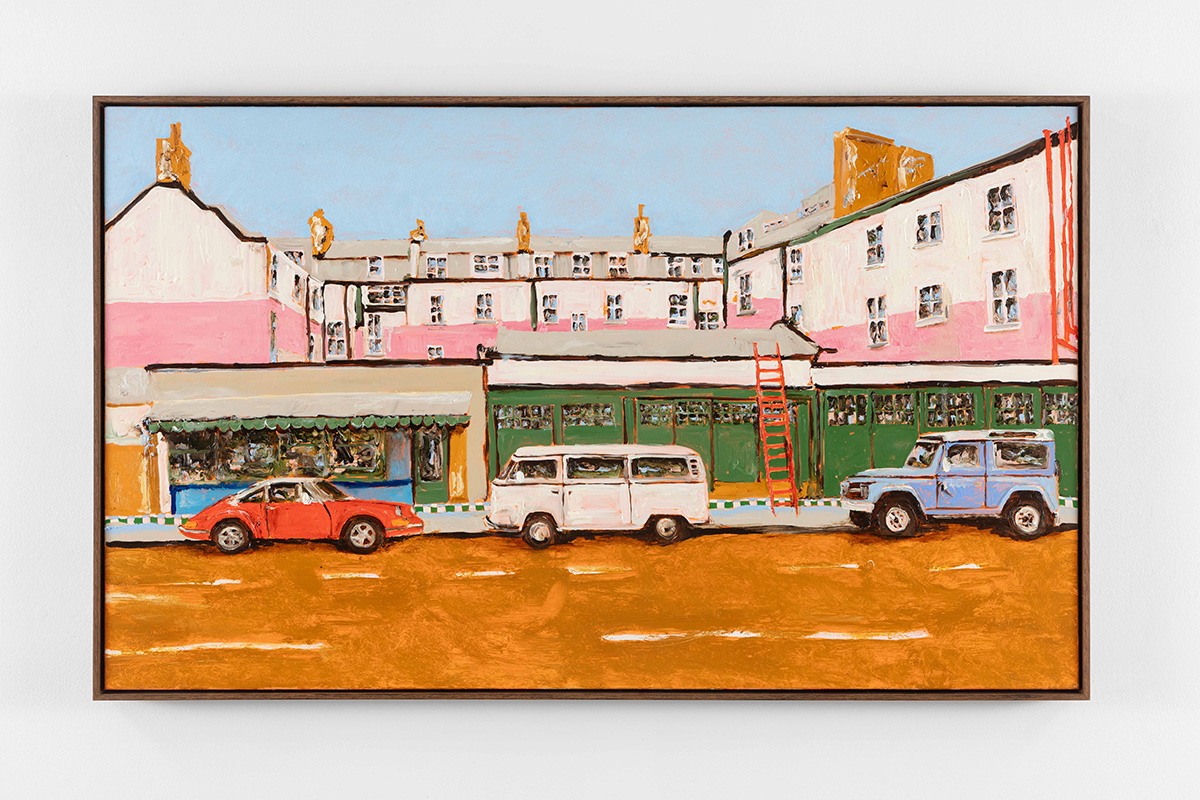
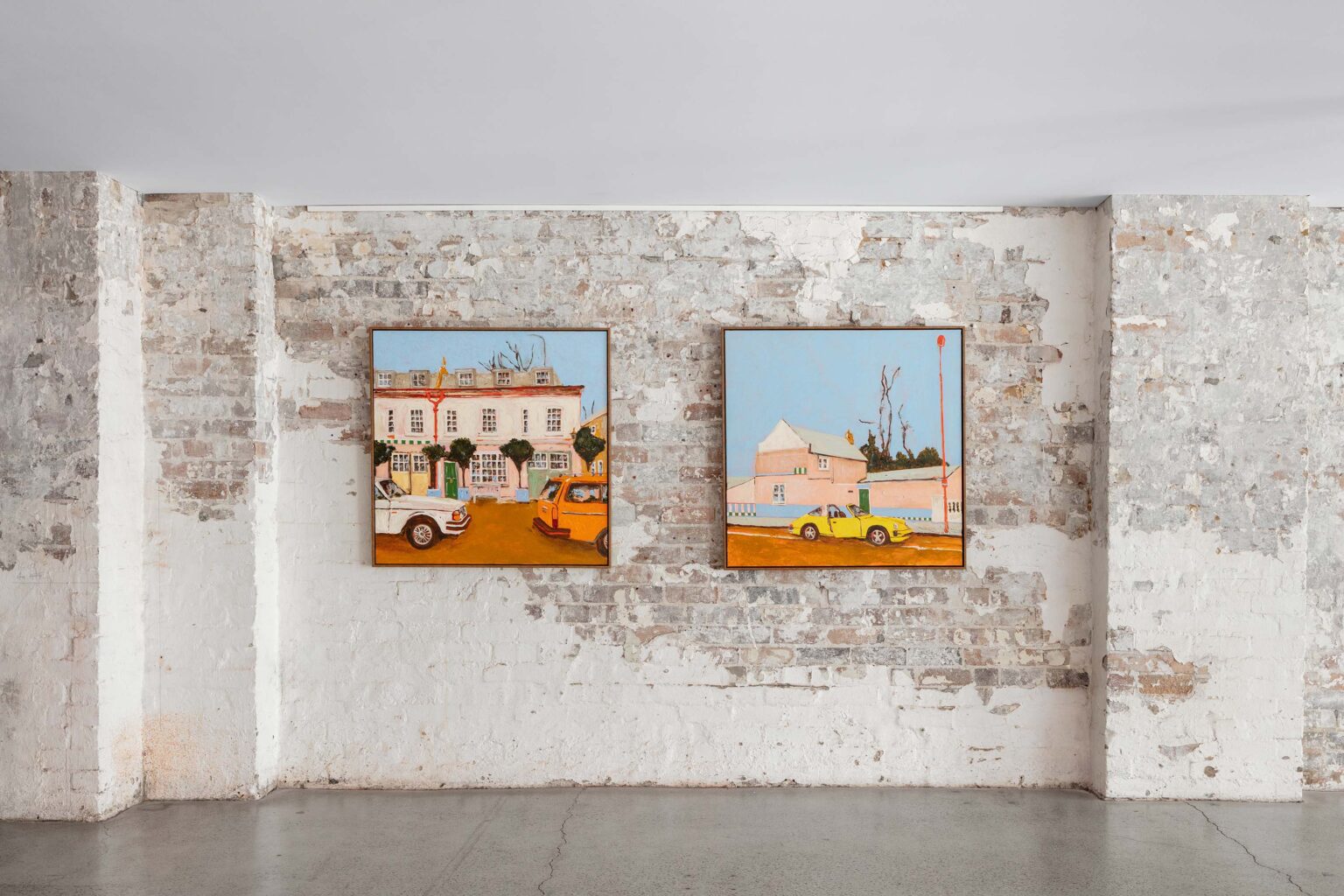
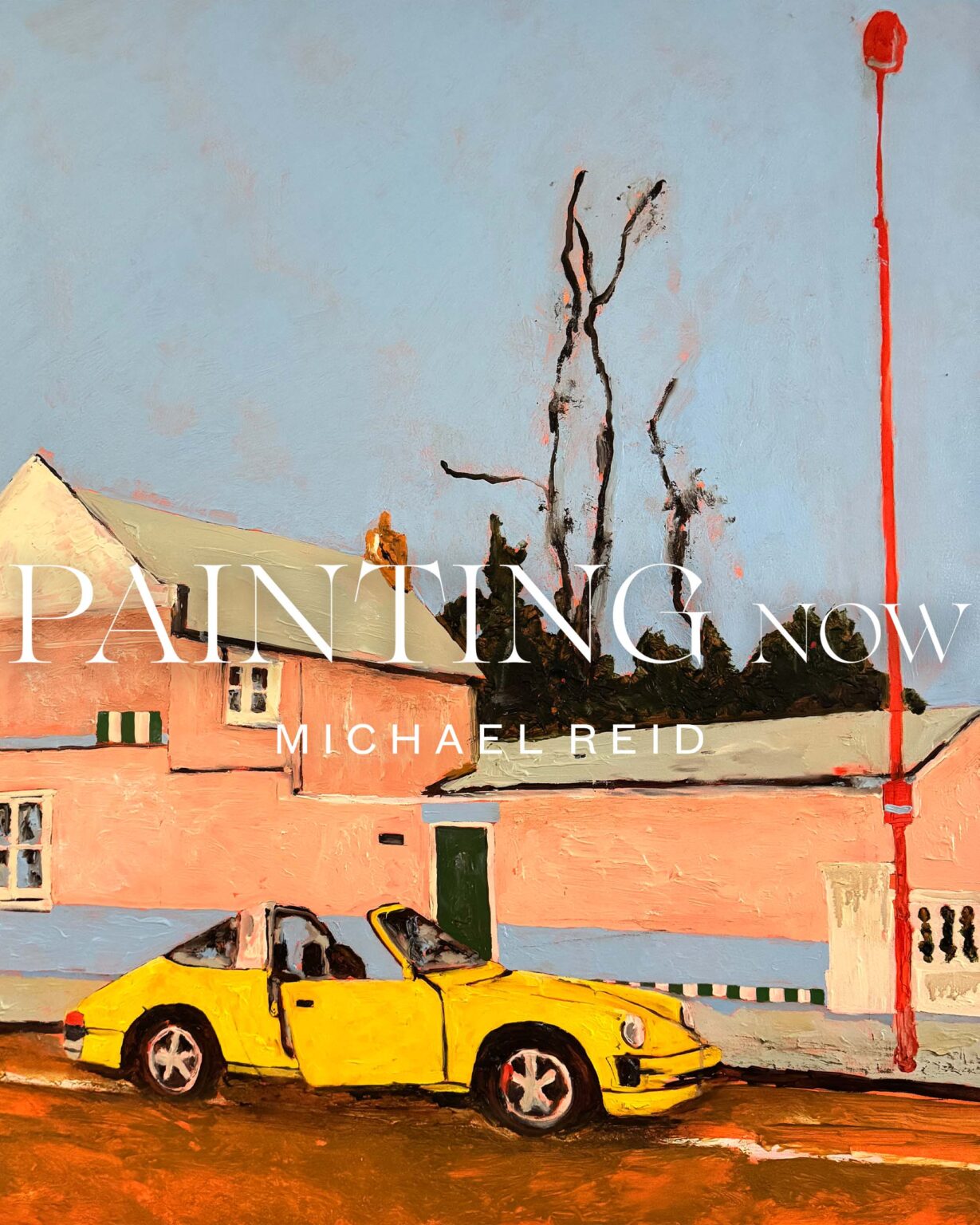
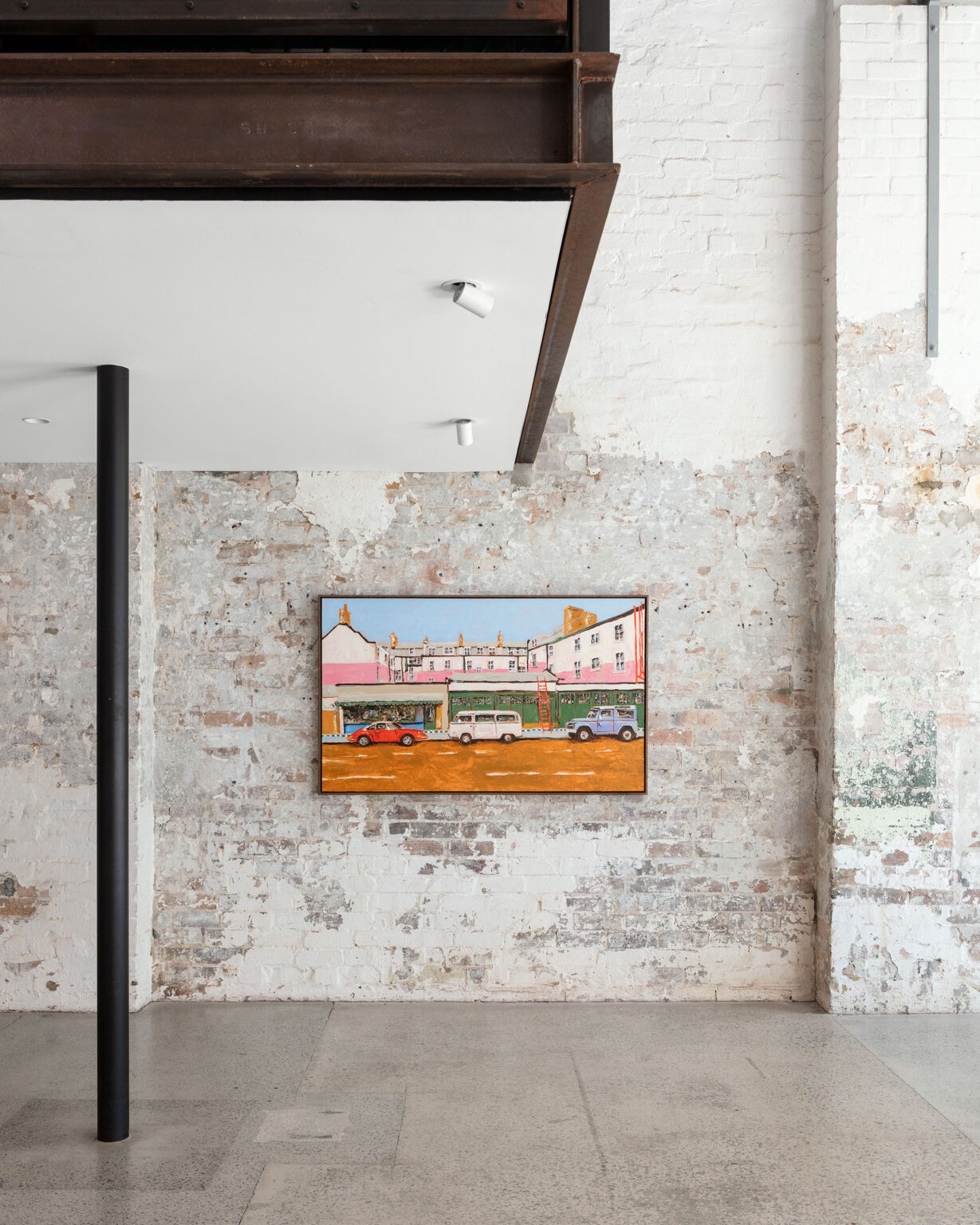
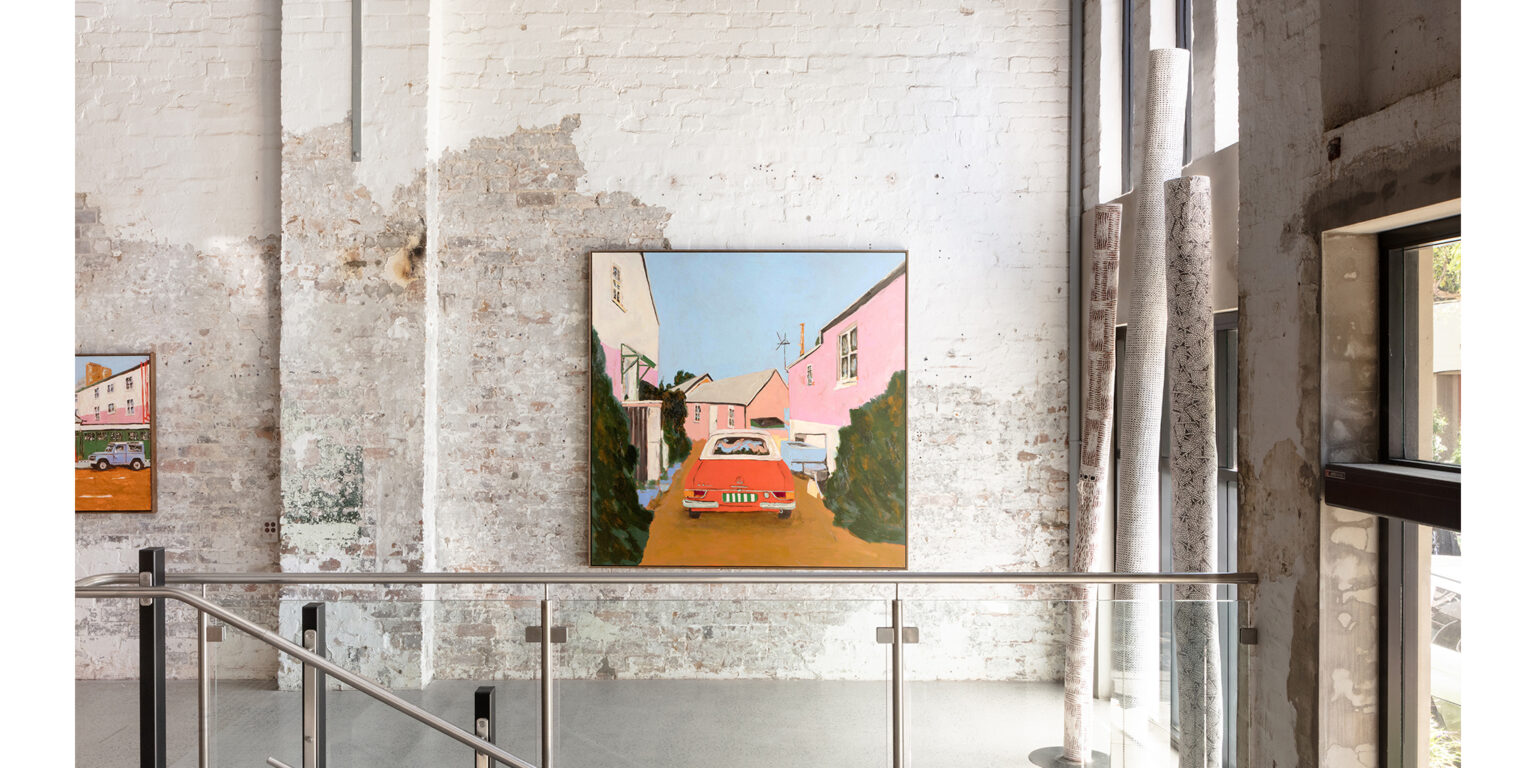
South Australian contemporary painter Brenton Drechsler joins Painting Now 2025 with his most ambitious body of work to date. A two-time National Emerging Art Prize finalist who recently joined the stable of artists represented by Michael Reid Northern Beaches and Southern Highlands after a succession of sold-out solo shows at both spaces, Drechsler has taken Painting Now as an opportunity to significantly dial up his work’s scale and scope while honing the distinctive visual language for which he is already widely celebrated. On his largest canvases yet, Drechsler’s work attains a newly cinematic heft, deepening the ongoing dialogue between visibility and concealment – belonging and displacement – that emerges from his queer subjectivity and animates his visually dazzling, conceptually rich practice.
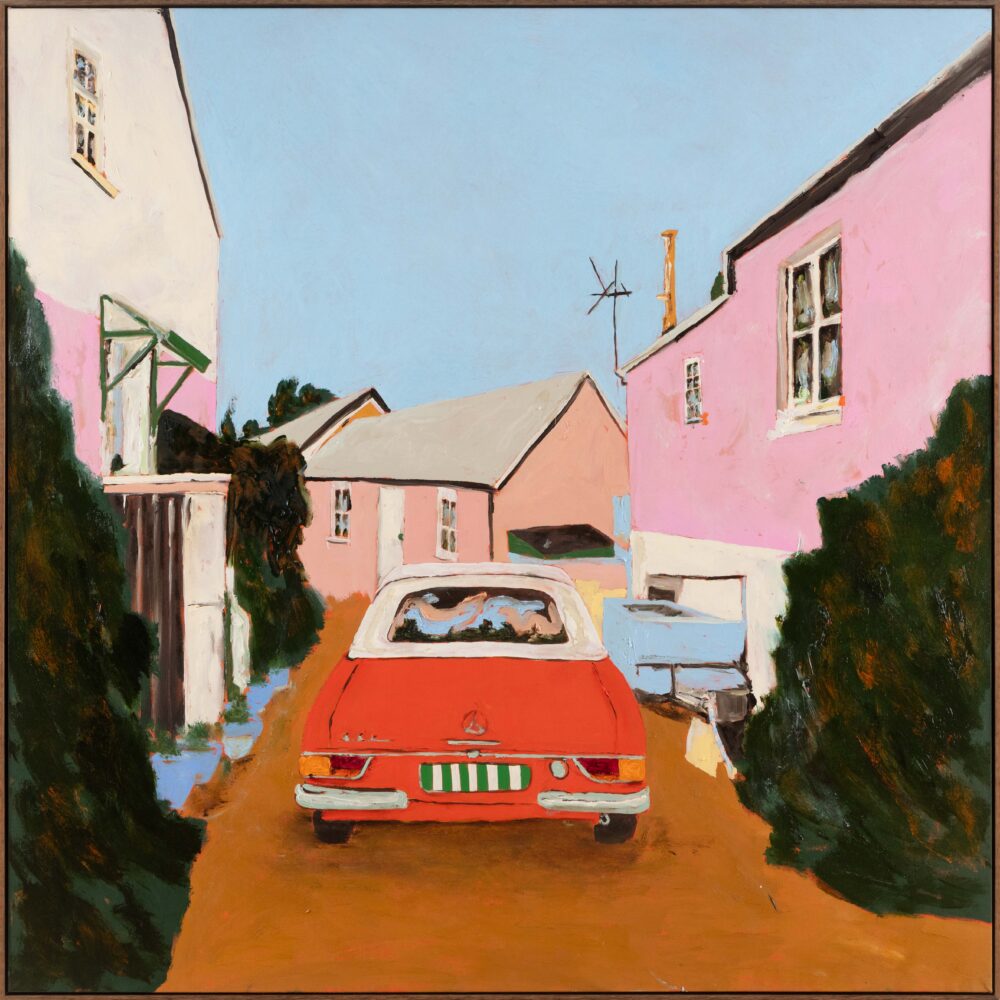
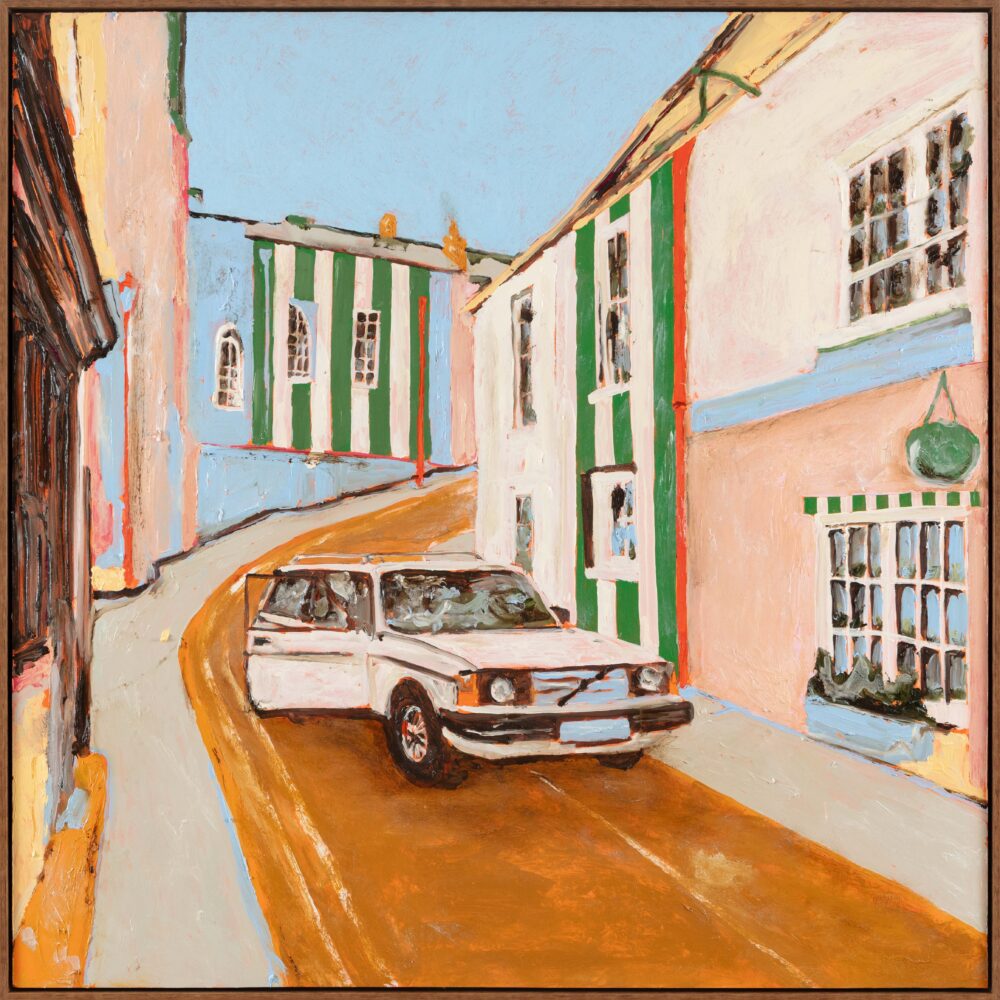
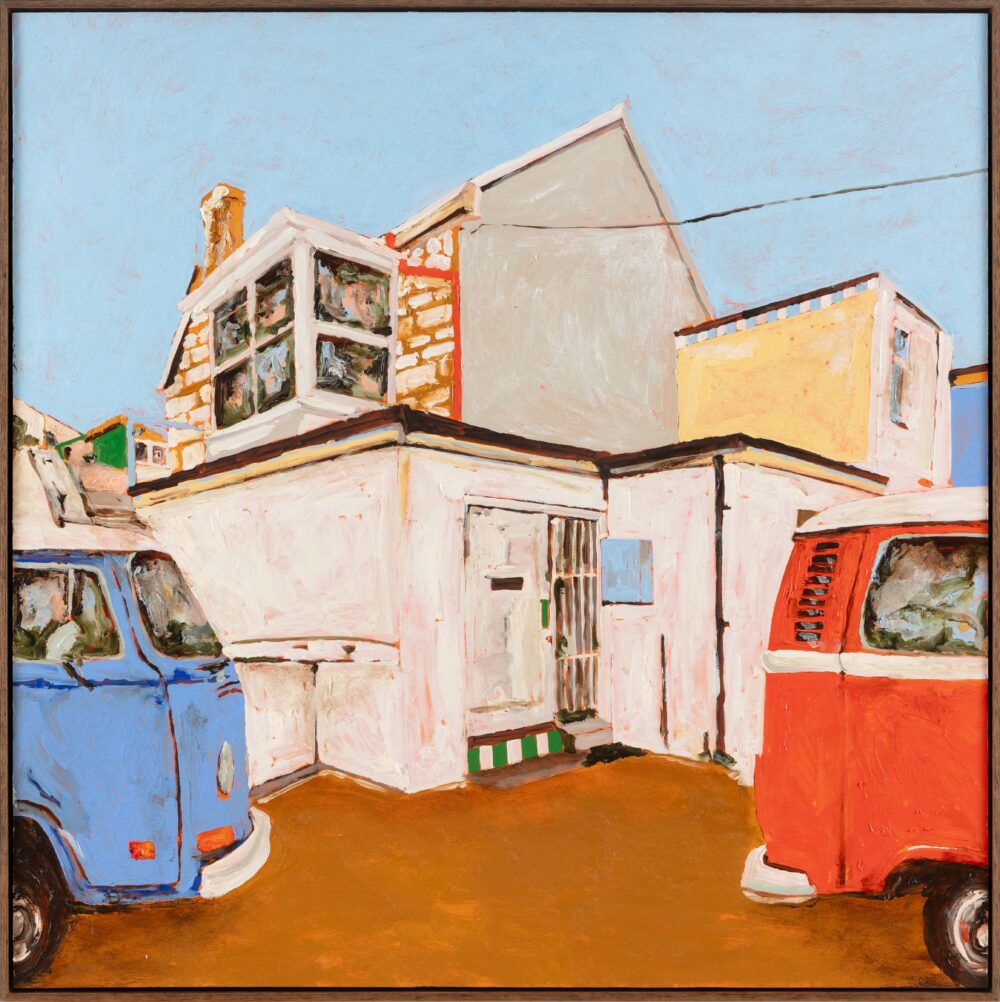
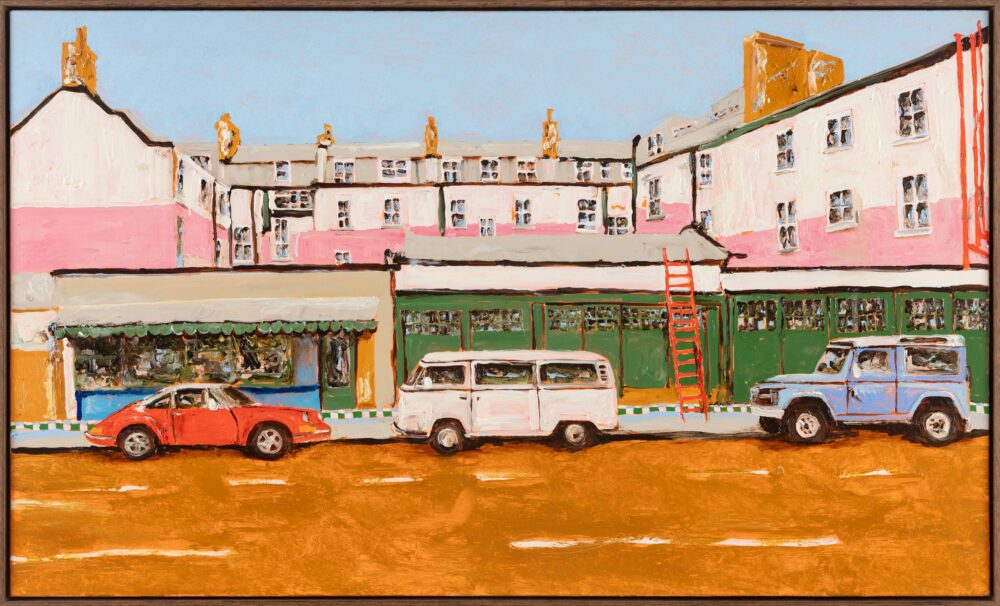
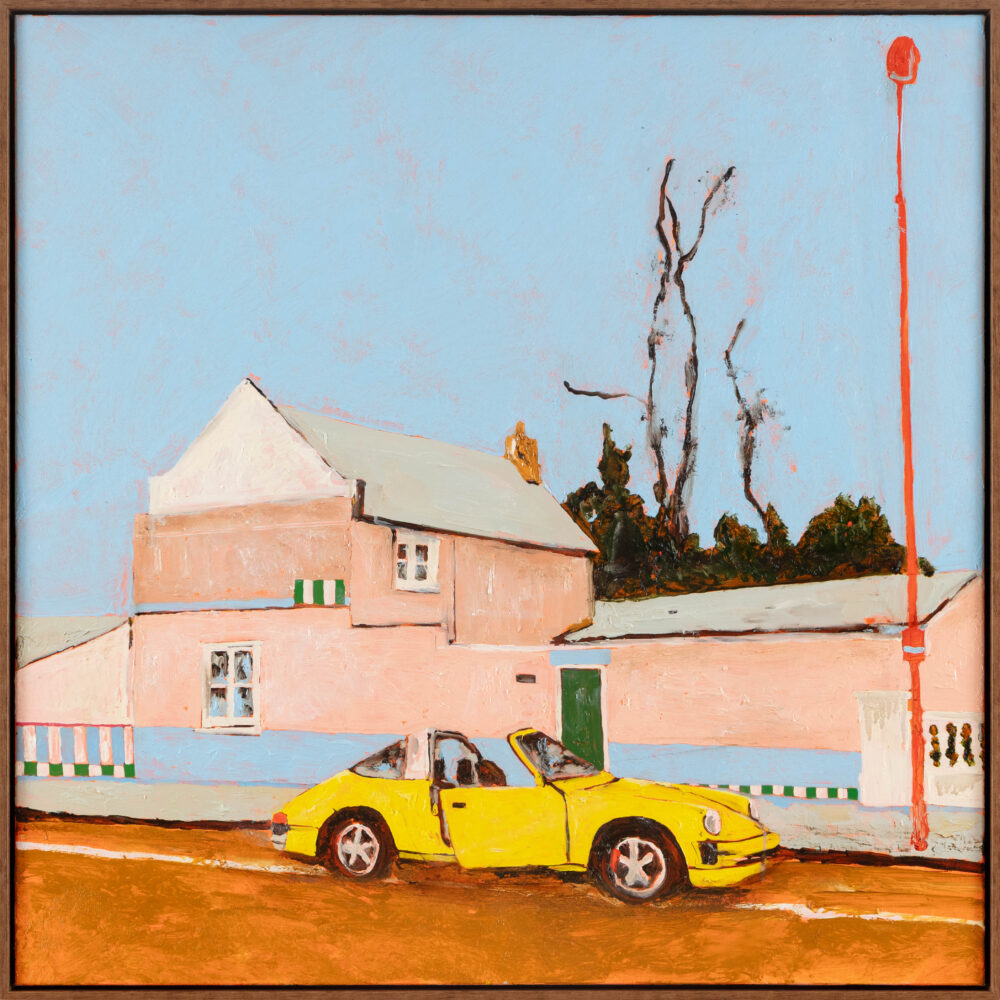
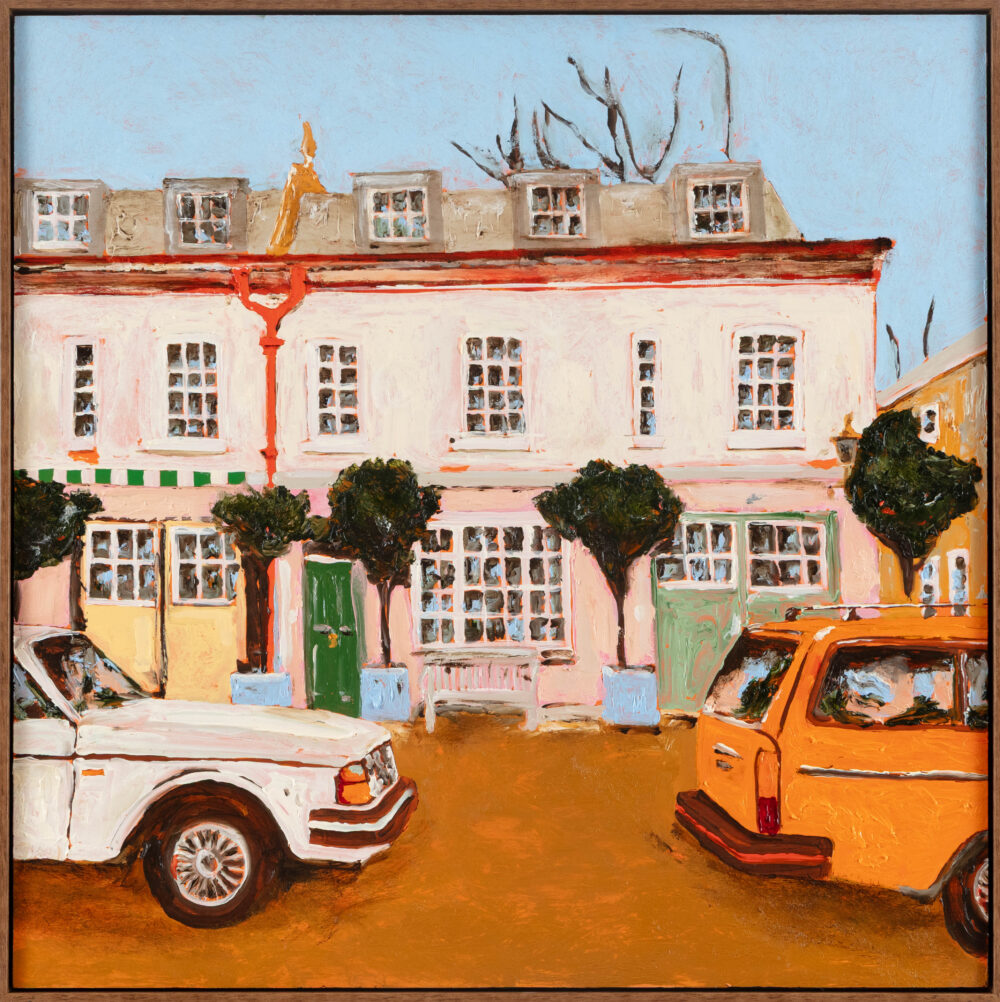
Within these expansive and arresting compositions, recurring motifs appear in deliberately “foreign” spaces: vintage cars, building facades and flashes of the artist’s trademark green-and-white stripe. “The stripes stand in for my physical self,” he says. “They take up space and attract attention – things that don’t come naturally to me.” That double movement – to stand out and blend in at once – threads through the series with quiet persistence.
A curatorial prompt to consider the visual language of auteurs such as Wes Anderson became a springboard for a bolder palette and dramatic sensibilities befitting the work’s broader scale. Here, punchy pinks and cardamom reds meet tender tonal harmonies, while precise drawing loosens into gestural passages; “mistakes” remain visible as signs of the artist’s hand. “Dean encouraged me to look at cinematic devices and framing,” says Drechsler. “It opened me up to composition in new ways – to big reds, saturated pinks and how colour can create mood.”
Drechsler describes these adventures in colour as both exciting and somewhat nerve-racking. “Are they too much?” he wonders. “Maybe. But that tension is part of what it means to make art as an emerging queer artist. The overarching message is that we all fit, wherever we are, and that we are valued and belong in any room we occupy. Painting taught me that.”
For enquiries, please email dean@michaelreid.com.au
Explore more from Painting Now HERE.
What were some of your earlier artistic influences?
My early influences and what got me interested in painting were the painters I admired in major state galleries, like Cecily Brown, Egon Schiele, Clarice Beckett and Marsden Hartley. As I moved deeper into my visual art studies, my influences became more contemporary. Artists such as Kym Luetwyler, Richard Lewer, Clara Adolphs, William McKinnon and Salman Toor continue to shape the way I use paint and how I think about storytelling in my work.
What initially drew you to painting and how has your approach developed over time?
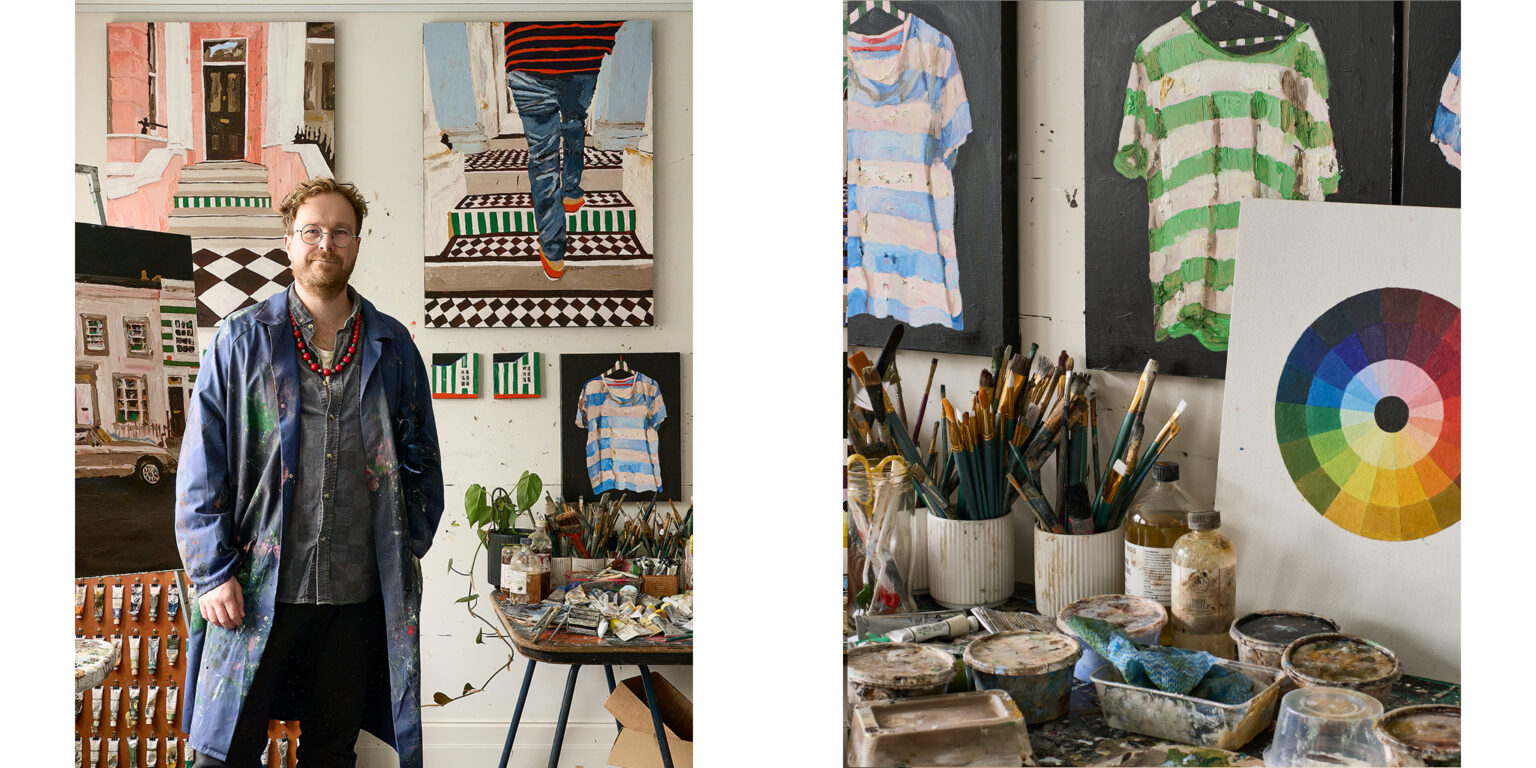
At first, I was drawn to the freedom of paint. I started my creative life in the fashion industry, where pattern making and sewing often came down to the millimetre. Throwing paint around felt like the opposite of that. My approach is rooted in queer phenomenology. I see the physical qualities of painting and the act of applying paint to canvas as an extension of my identity and sense of self. I can’t resist letting the paint guide its own outcome: thick here, transparent there. I’m also fond of leaving the “mistakes” visible on the canvas for others to enjoy, and some of the initial mark making in ink and charcoal, which speaks to opacity in queer storytelling.
What have been some of your favourite career experiences?
Graduating art school with First Class Honours was a major highlight, as was exhibiting in beautiful semi-rural communities like Ballina, Newport and, most recently, Mudgee. Engaging with community members and other artists is my jam. Finding people who speak a similar visual language and happily nerd out on all things paint is really cool.
A breakthrough in my practice came through repetition. Learning to recognise my own methods and what helps me achieve a resolved painting has been key to producing consistent work and building confidence in my abilities. It allowed me to find my voice, so to speak.
Could you tell us about the body of work you have created for Painting Now?
The works in Painting Now 2025 grew from a now much-cherished conversation I had on a windy, wintry day with Dean Andersen, the exhibition’s curator – me on the South Coast of South Australia and Dean in Sydney. Dean planted a seed for me: to research the cinematic worlds of Wes Anderson. He encouraged me to reflect on the visual devices and themes that appear in his films and how they might echo elements of my own practice. It turned out to be a gift that kept giving, widening my sense of palette, scale and composition.
Is there a narrative or throughline in your Painting Now series?
The narrative centres on recurring motifs placed in foreign spaces, which is a running trope in my practice. The vintage cars and the green-and-white stripe that appear in each composition speak to the experiences I’ve often had as a queer person trying to find a place within Australian heteronormative environments. Trying to stand out and blend in at the same time is a common contradictory thread that runs through each of my works.
How do you hope viewers will engage with your work in Painting Now?
Above all, I hope viewers enjoy a fresh painterly perspective and a playful use of bold colour. I have never gone this big before, so I hope viewers can enjoy the larger scale – especially Twickenham (The Art Teacher). The cadmium red and big saturated pinks in this series are both exciting and a little nerve-racking. Are they too much? Maybe. But maybe that tension is part of what it means to make art as an emerging queer artist.
I hope the series resonates with both collectors and the public, especially those who recognise the underlying narrative of holding your ground in uncomfortable environments. The overarching message is that we all fit, wherever we are, and that we are valued and belong in any room we occupy. Painting has taught me that.