



MICHAEL REID BEYOND
Tim Maguire
ARTIST PROFILE
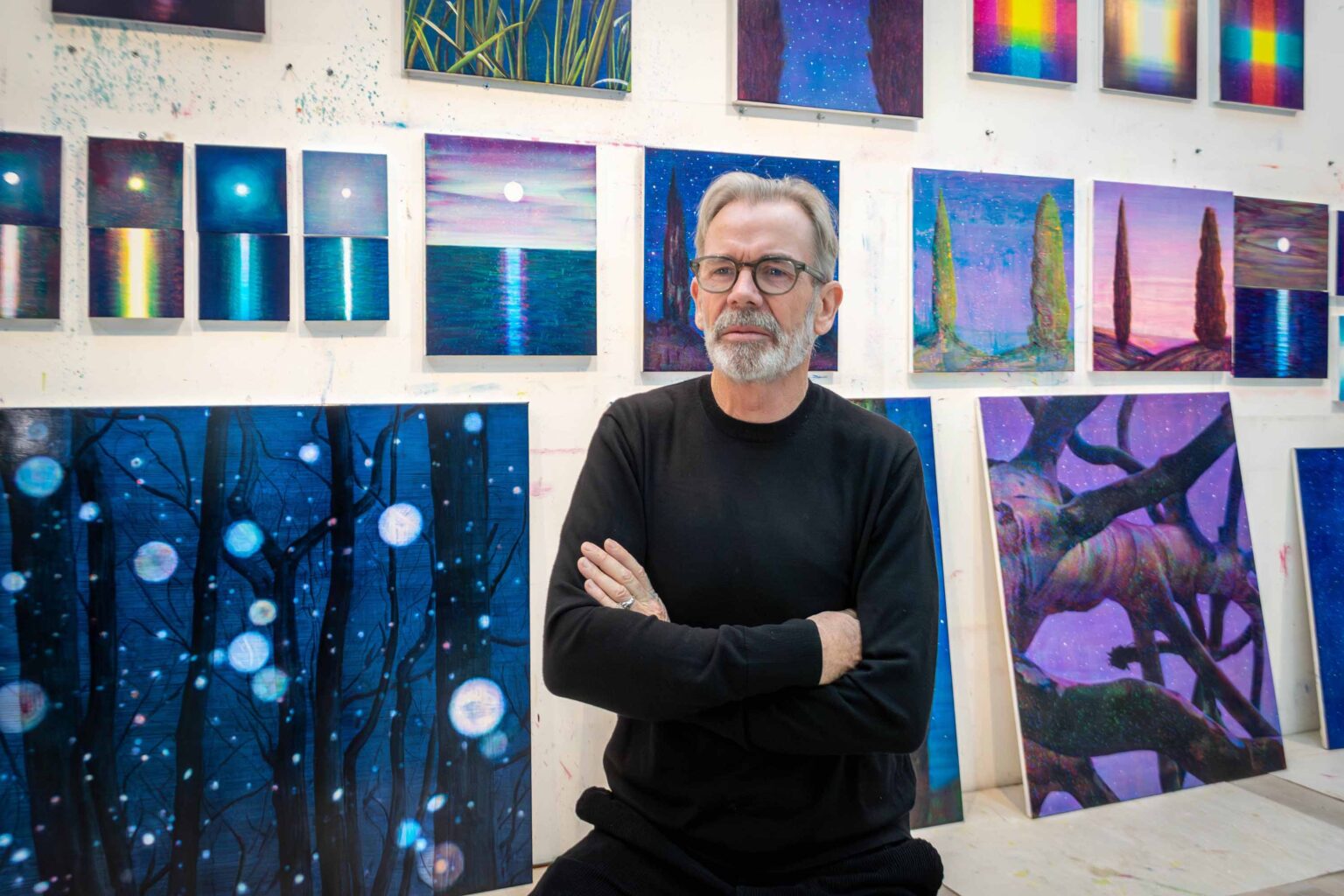
In the lead-up to the announcement of Tim Maguire’s representation by Michael Reid Sydney + Berlin, the gallery team sat down with the artist for a wide-ranging conversation exploring the ideas, processes and optical tensions that have shaped his internationally acclaimed practice across a career spanning close to four decades.
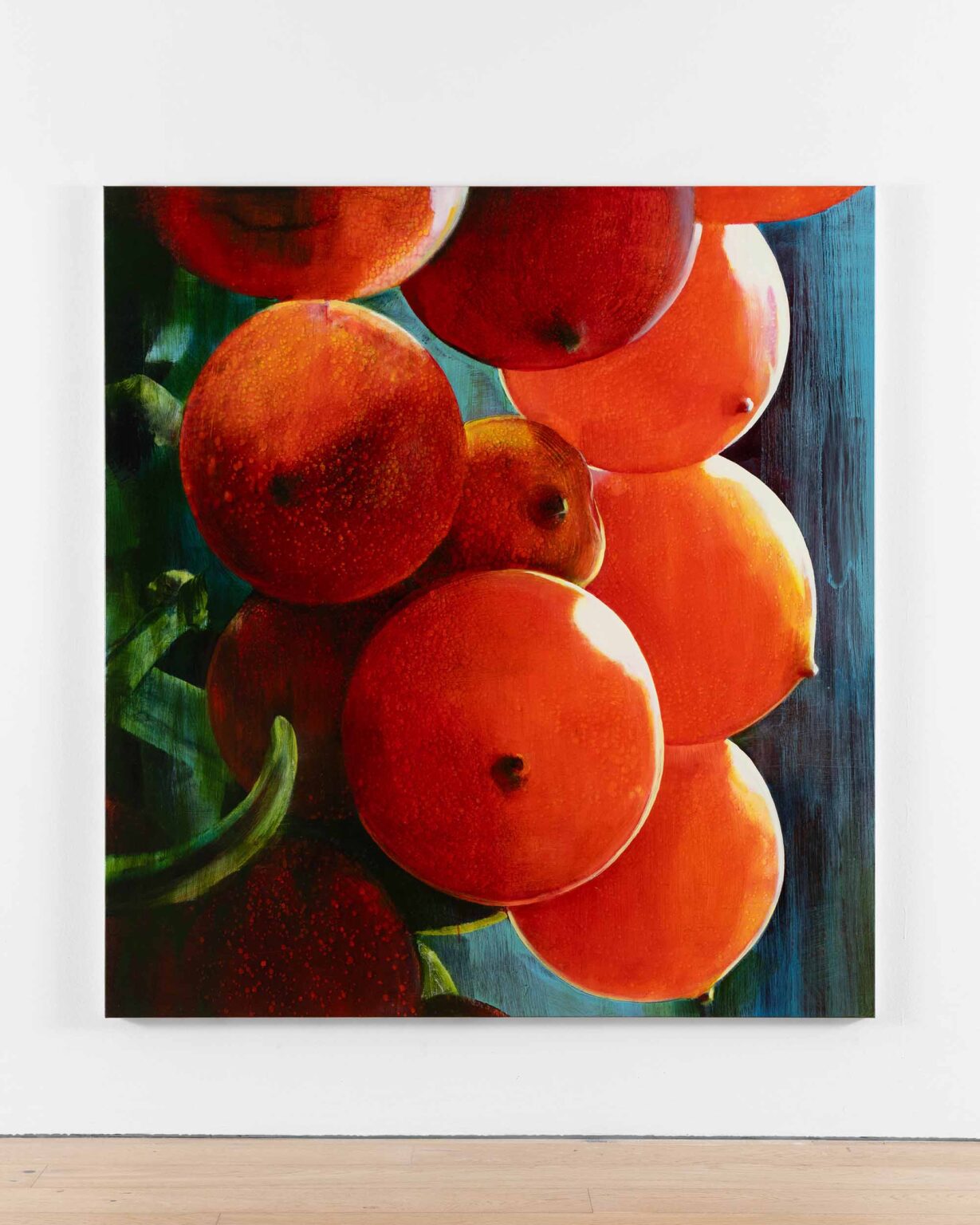
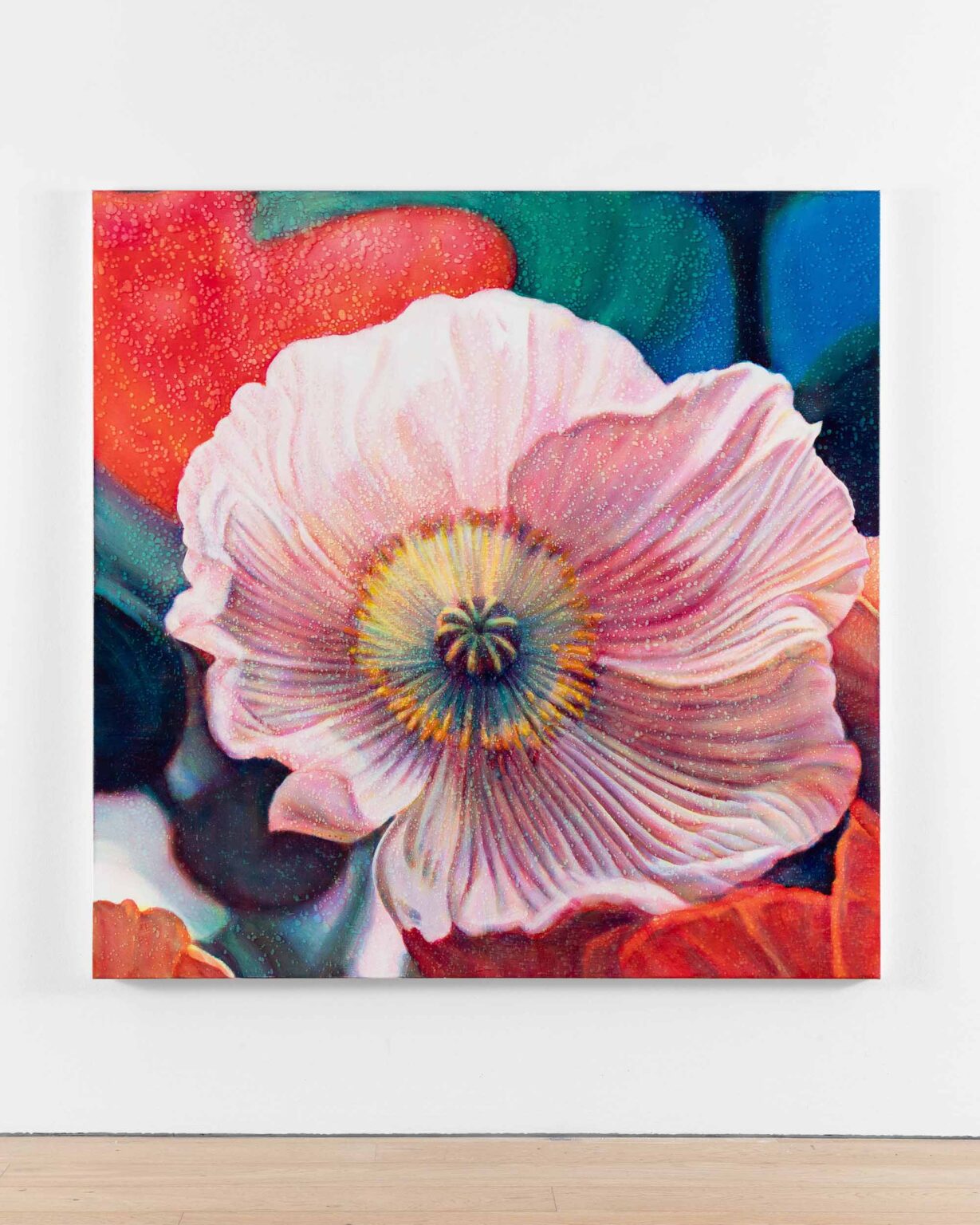
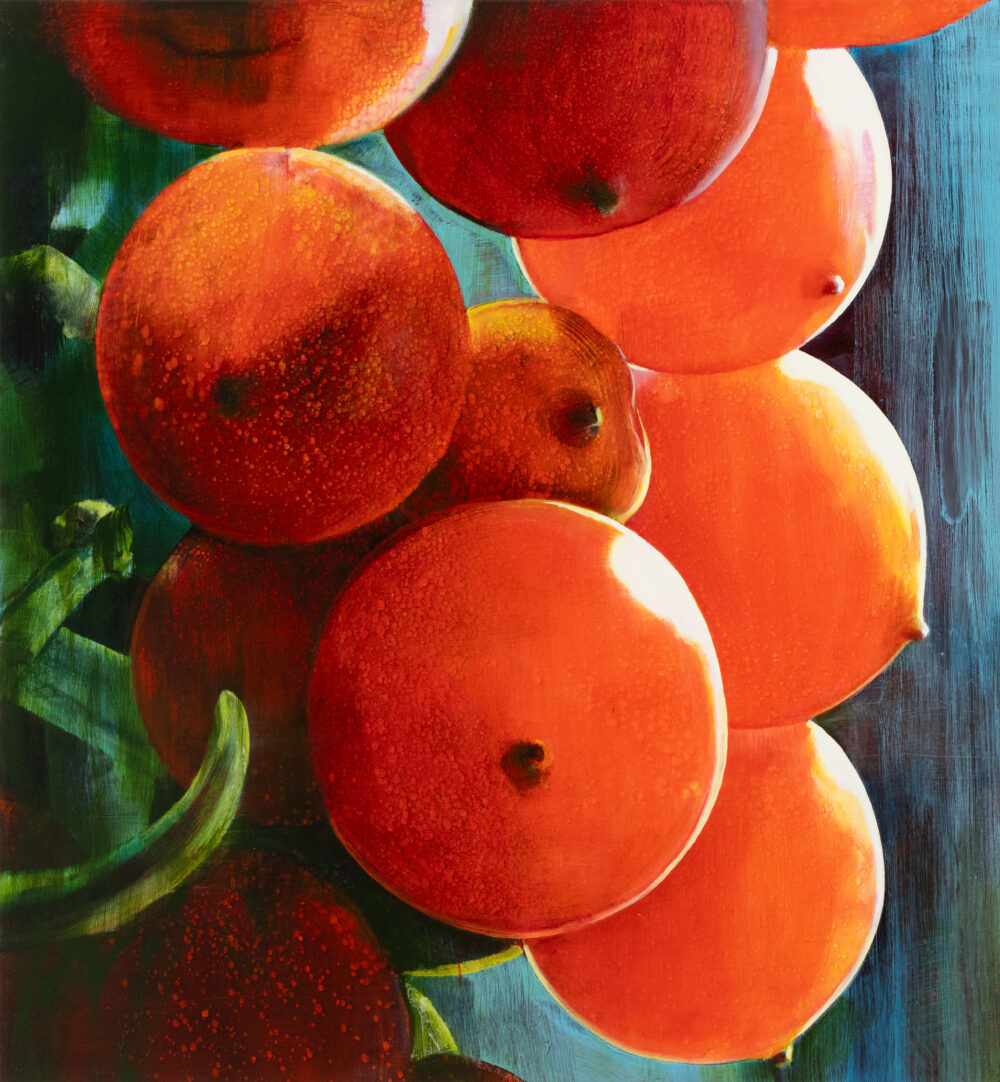
“No matter how naturalistic a painting appears, it’s still just a physical accumulation of paint on a surface – and yet we bring so much to it as viewers,” says Maguire. “I was always trying to make paintings where that tension becomes evident: where you think, ‘This really is just a whole lot of gloopy paint,’ and at the same time, from across the room, it looks like a photograph.”
Read the full conversation below alongside a curated selection of recent paintings by the artist, newly available through Michael Reid Sydney + Berlin.
For enquiries, please contact dean@michaelreid.com.au
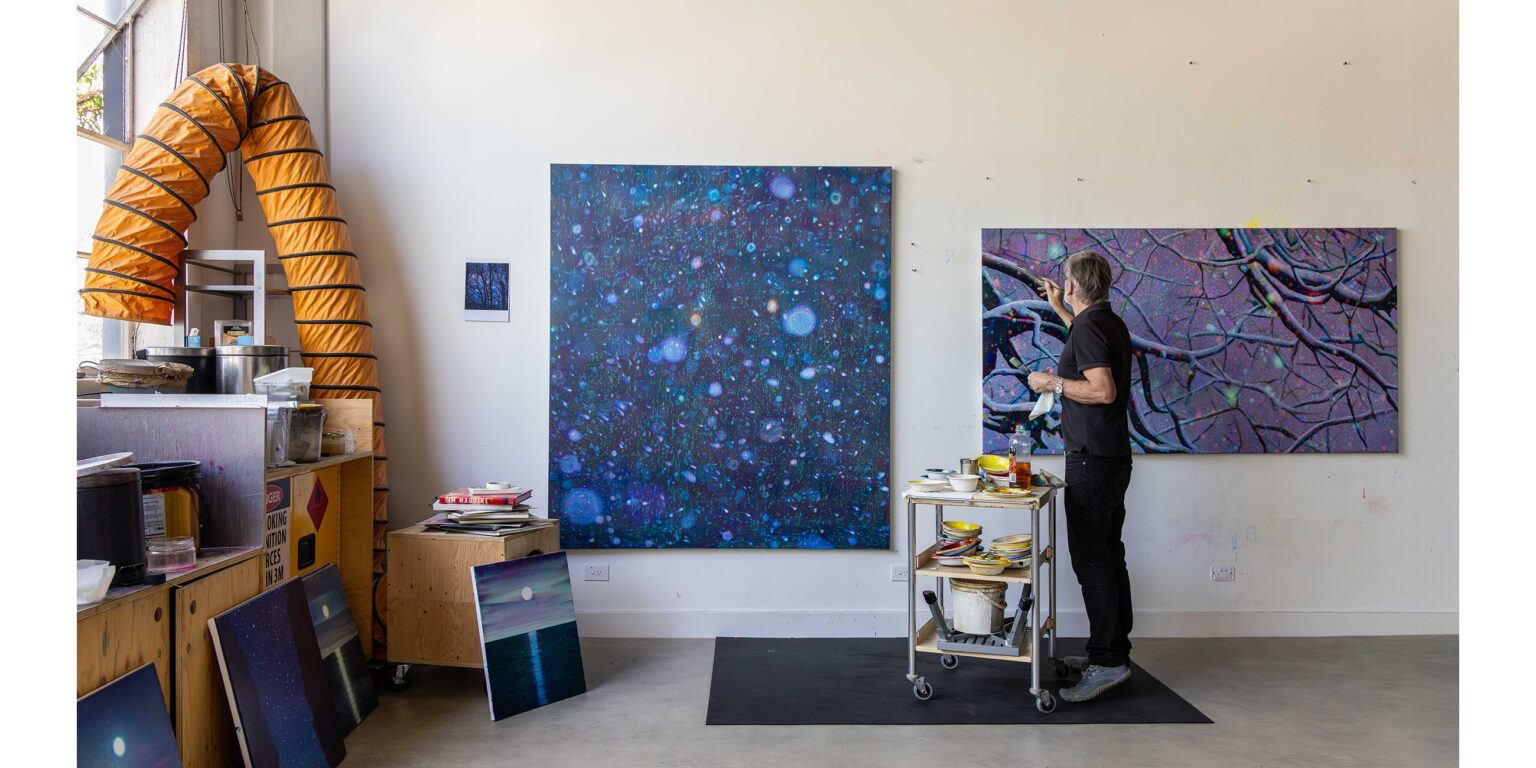
“There’s a play between the illusion of the image and the physicality of the paint. The ideal painting for me is one where, up close, you see nothing but paint and process and layers, and then, from far enough away, the whole thing resolves into a convincing illusion.”
TIM MAGUIRE
___
Your practice has encompassed various mediums across your career. How do you approach these distinct facets of your practice – painting, printmaking and photo-based work – and how has moving between different fields become embedded within your painting process and shaped your broader thinking about image-making?
I’m primarily known as a painter, but I see printmaking as being of equal importance in my practice. That’s not necessarily represented in the way my work is seen, because there aren’t necessarily the same opportunities to show the prints. But I do make a lot of prints, so it’s an ongoing practice.
It started in 1987, probably. I’d already started exhibiting – my first solo show was in 84 – but it was a breakthrough moment. I found myself working with a master printer who explained that you could build up colour through discrete layers of primary colour – yellow, red, blue, black – and that you could get all the colours through those three or four colours. The idea of working with transparent inks on white paper, and allowing the whiteness of the paper to illuminate the image and create this sense of luminosity, was also a revelation. I made a few prints with the Australian Print Workshop, but I also took those printmaking ideas back into the studio.
I was thinking, can I make paintings in the same way? That’s when I started working with transparent colour – not so much in layers, but certainly using transparent colour and the whiteness of the canvas to illuminate. Thin glazes and transparent pigments came out of printmaking. I had this idea that if you could get everything in the right position and the right level of transparency and intensity, you could create an image that way.
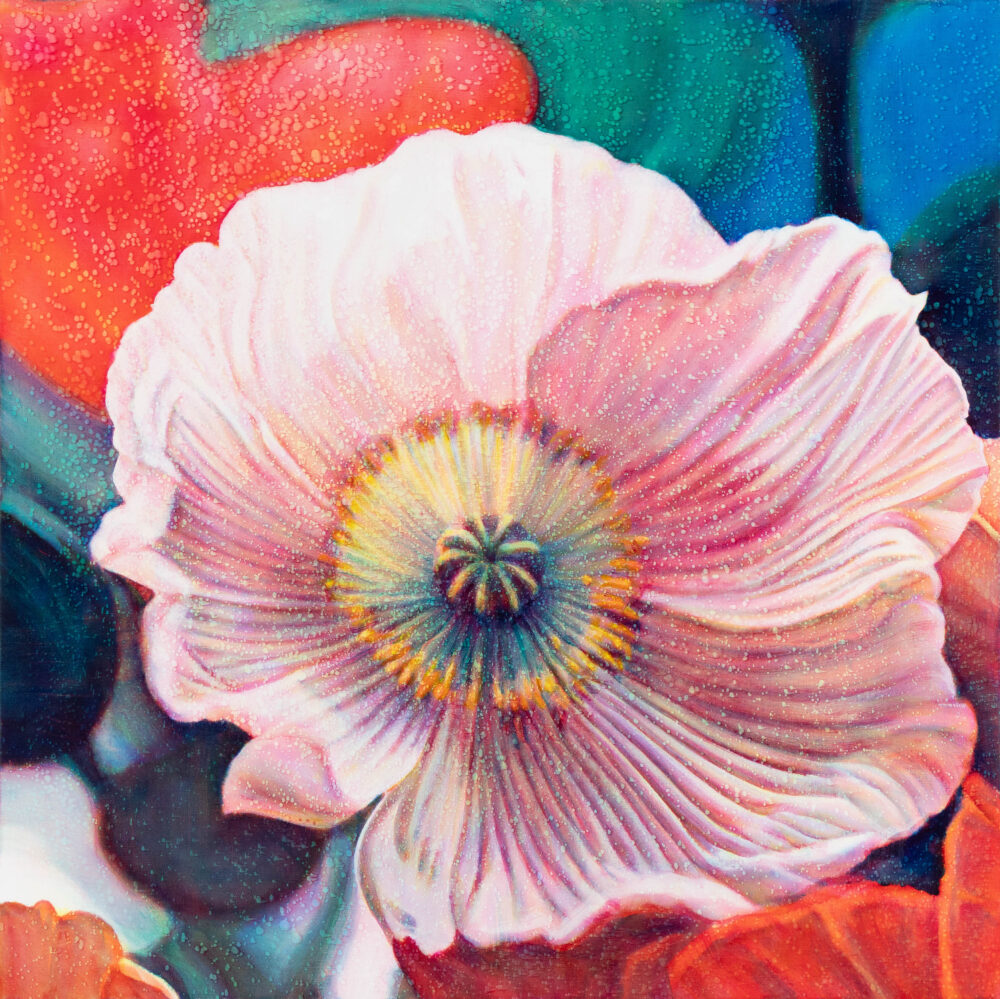
It was only some years later, when I stumbled across a process of splashing solvent into the colour layers to remove parts of each layer in a fairly random dot pattern, that I realised I could emulate the quality of pure points of colour sitting side by side. So that led to my colour separation paintings – which, of course, is a printmaking term.
Could you tell us about the colour-separation process – how has it developed across different bodies of work?
When I got to the point where I realised I could actually do it, the splashing of the solvent was a key component and quite random. I wanted each layer of colour to remain visible as an independent entity – to reveal the process itself. It was about the idea that you could make an image by pulling it apart and putting it back together again.
To do that, I needed to work quickly. It might be a four- or five-hour painting session, then splashing the solvent while the paint was still wet enough to react, but dry enough not to collapse into a mess. Timing was everything. I liked the idea that the image was brought together through a mechanical process largely determined by chance – how much solvent comes off the brush, how dry the paint is. The image comes together almost magically, which, for me, was one of the great attractions of printmaking.
Later I realised – particularly after a series of massive paintings in 2000 – that this approach had limits. Those works were about two-and-a-half metres by six metres, and I ended up needing serious physiotherapy. So I slowed down. It wasn’t essential to do everything in one session, and that allowed for more control. There’s a desire to master the challenges you set for yourself, and eventually you do.
In this process, any colour might be a combination of yellow, magenta and cyan. Gauging that while applying it is almost impossible. Often it’s only when you apply the third colour that you realise you’ve gone wrong with the first two. Those pitfalls are what keep it interesting. I’ve got to the point now where I’m pretty good at navigating them, so maybe it’s time to do something else. The last two shows I did were very ambitious, large diptychs. I could never have done those 25 years ago. It felt like the end of something.
You spoke about holding the image in a state of becoming – the work being less about representation and more about ‘imageness’ in a slightly dispassionate way.
For sure. It was coming out of postmodernism, and the idea that images were floating around – you could grab one from here, one from there – like slides on a screen, which is how we learned about art back then.
I was trying to make paintings that looked like that. They were flat, transparent, with no tactile physicality. The paint was a very thin veil – almost like a luminous projected image, closer to a cinema screen than a physical object. The images could be anything. The weirder the colour combinations, the better. I moved between representational and abstract things, and the common denominator was process.
There is a physicality to the way your paintings are experienced – both in their monumental scale and in the way a picture might cohere at a distance or dissolve into abstraction up close. How do you consider scale in the making of a work?
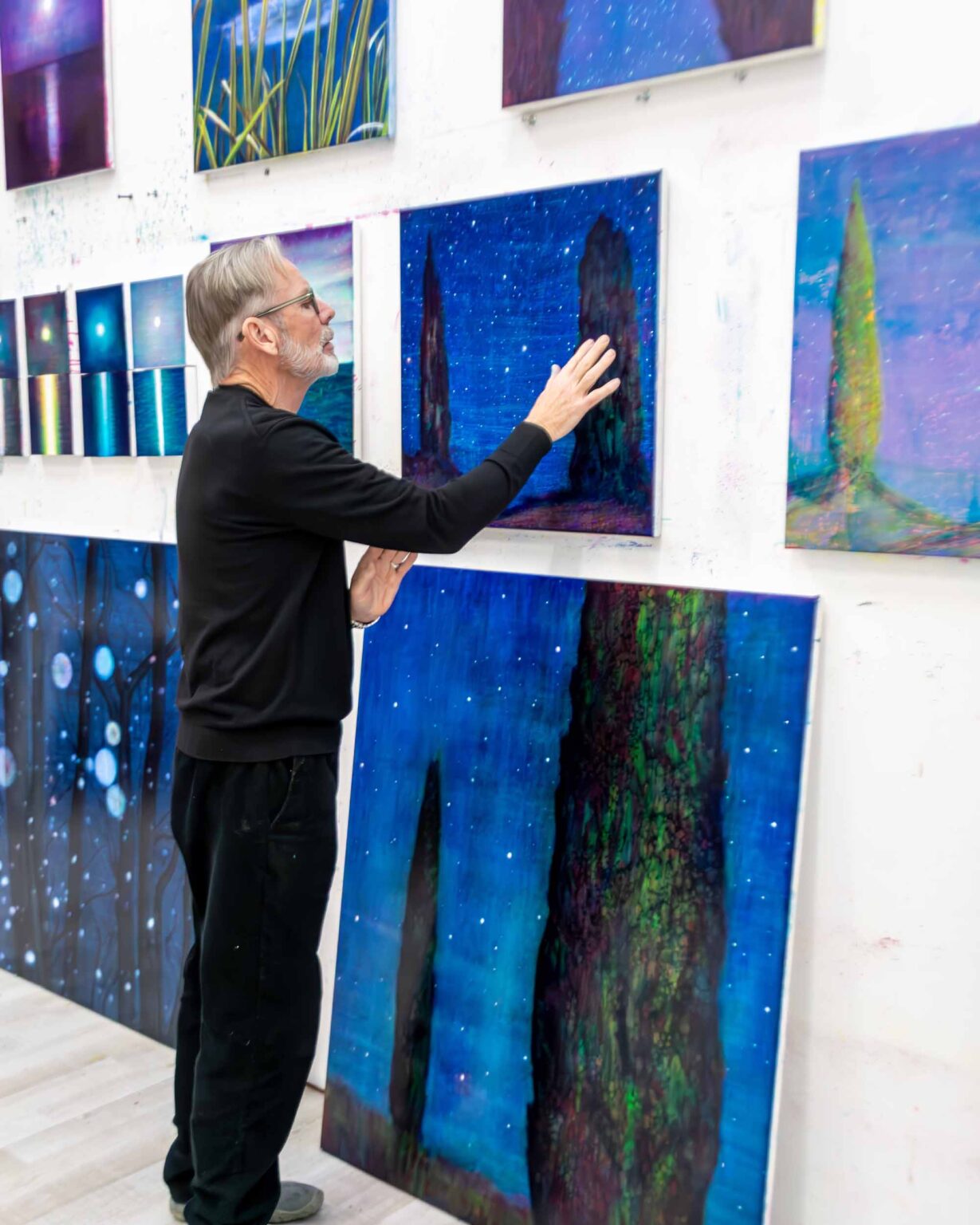
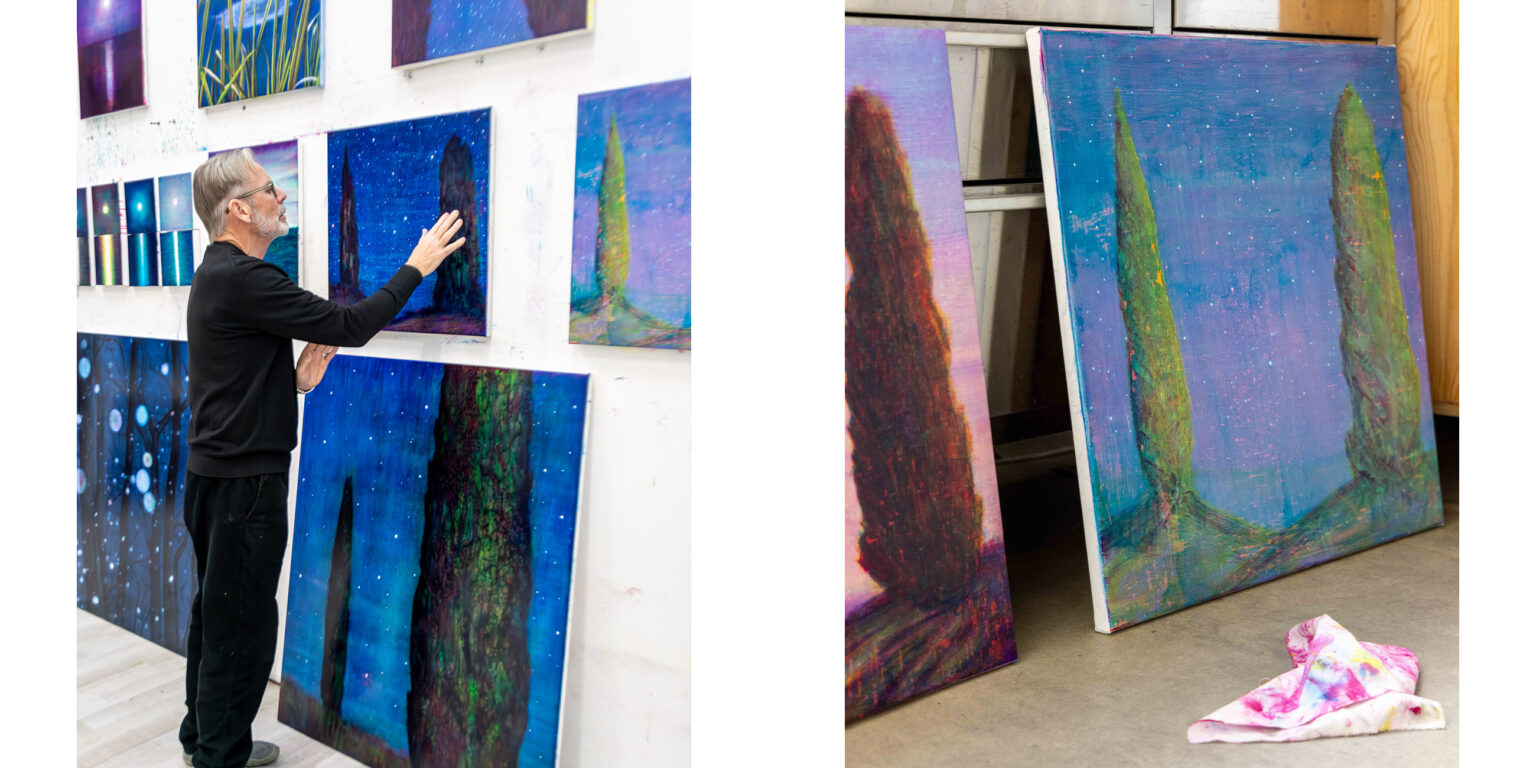
That transformation is really important. I always thought the great thing about large-scale works was that you could be incredibly loose at the coalface, and yet, if the viewer stepped back far enough, the image could come together.
There’s this play between the illusion of the image and the physicality of the paint. The ideal painting for me is one where, up close, you can’t see anything but paint and process and layers, and then from far enough away the whole thing resolves into a convincing illusion of something.
Ideally, the viewer is pulled towards the surface and back to the whole image – they’re moved back and forth, and you get that tension between the two states as extreme as possible. Like pulling on a rubber band. For me, that’s the magic of painting. No matter how naturalistic or detailed a painting is, it’s just a physical accumulation of paint on a surface. And yet we have this capacity as viewers to read things into it.
So I was always trying to make paintings where that became evident. Where you think, “Oh, this really is just a whole lot of gloopy paint,” and at the same time, from across the room, it looks like a photograph.
That sense of scale – of cropping and extrapolating source imagery into something cinematic – also transforms the subject. How do you think about beauty in your work, particularly when it’s pushed to extremes?
It’s tricky, because even to say your own paintings are beautiful sounds vain or arrogant. And for a long time there was an idea that aspiring to beauty was philosophically flawed – and it smacked of elitism or privilege. So it’s hard not to have an ambivalent relationship with it.
But if I look across my work, the aesthetic quality has always been a strong driver. The challenge is to create an image that holds your gaze, invites you in, and encourages you to look long enough for the image to start working on you. You begin to see it differently.
We’ve all had that experience where you hear a song for the first time and it sounds like nothing, and by the fiftieth time you love it. That’s hard to achieve with painting; we’re less and less trained to spend time with an image now. So making something beautiful can be a way of slowing down the viewing process. It’s not the end goal, but there’s something that holds my attention – often something I can’t quite articulate. A particular colour combination, a tonal shift, or an awkwardness that keeps you oscillating between irreconcilable positions.
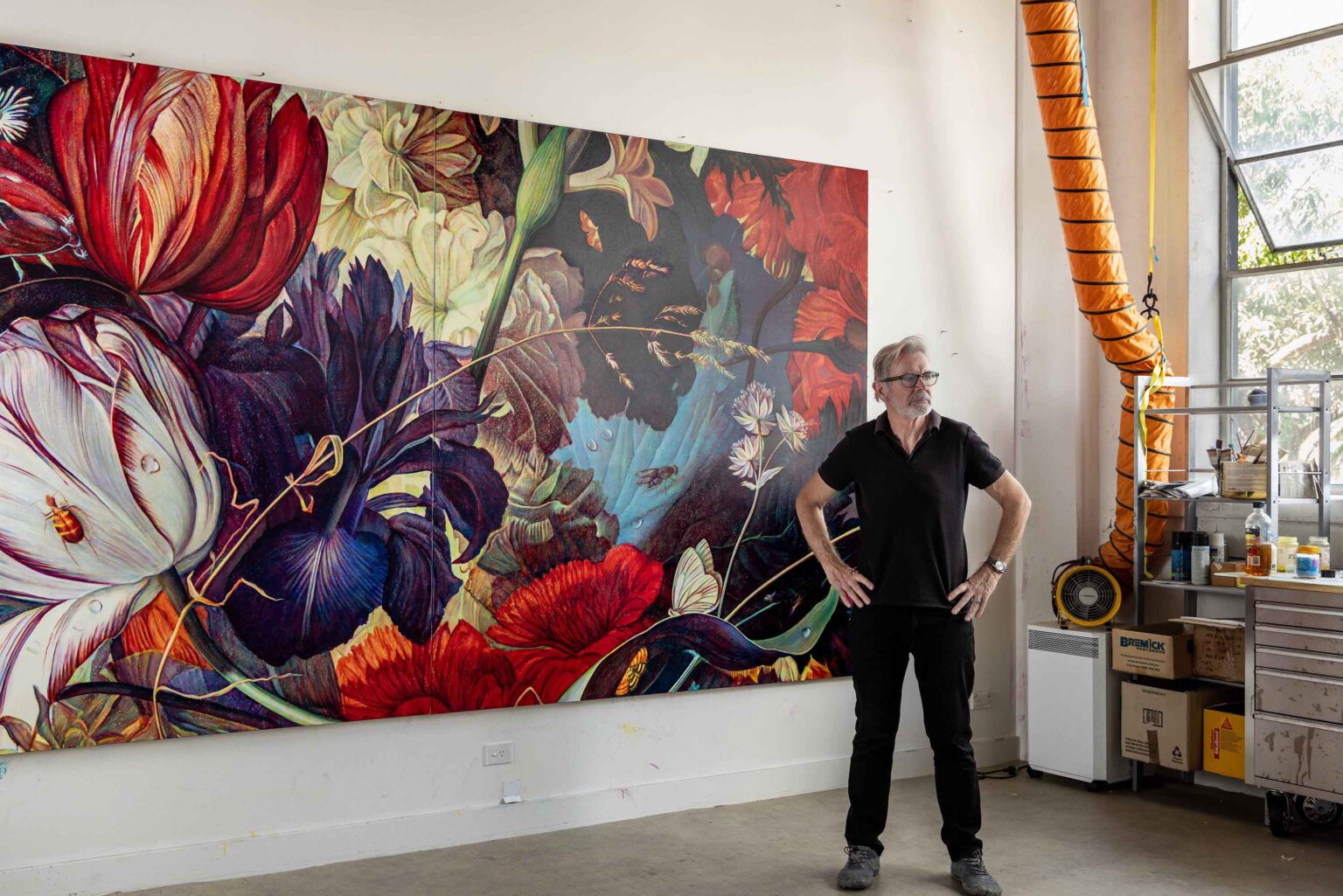
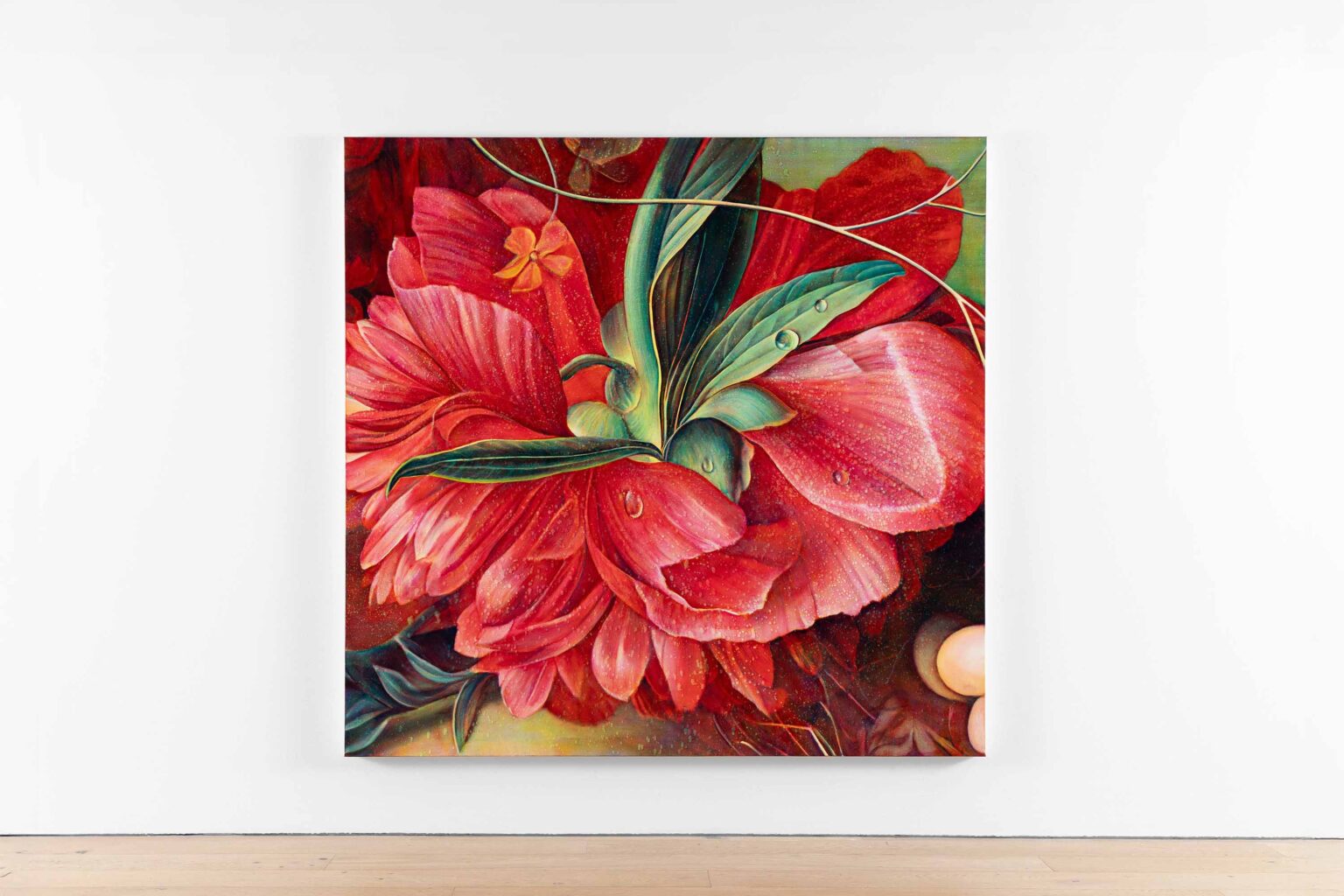
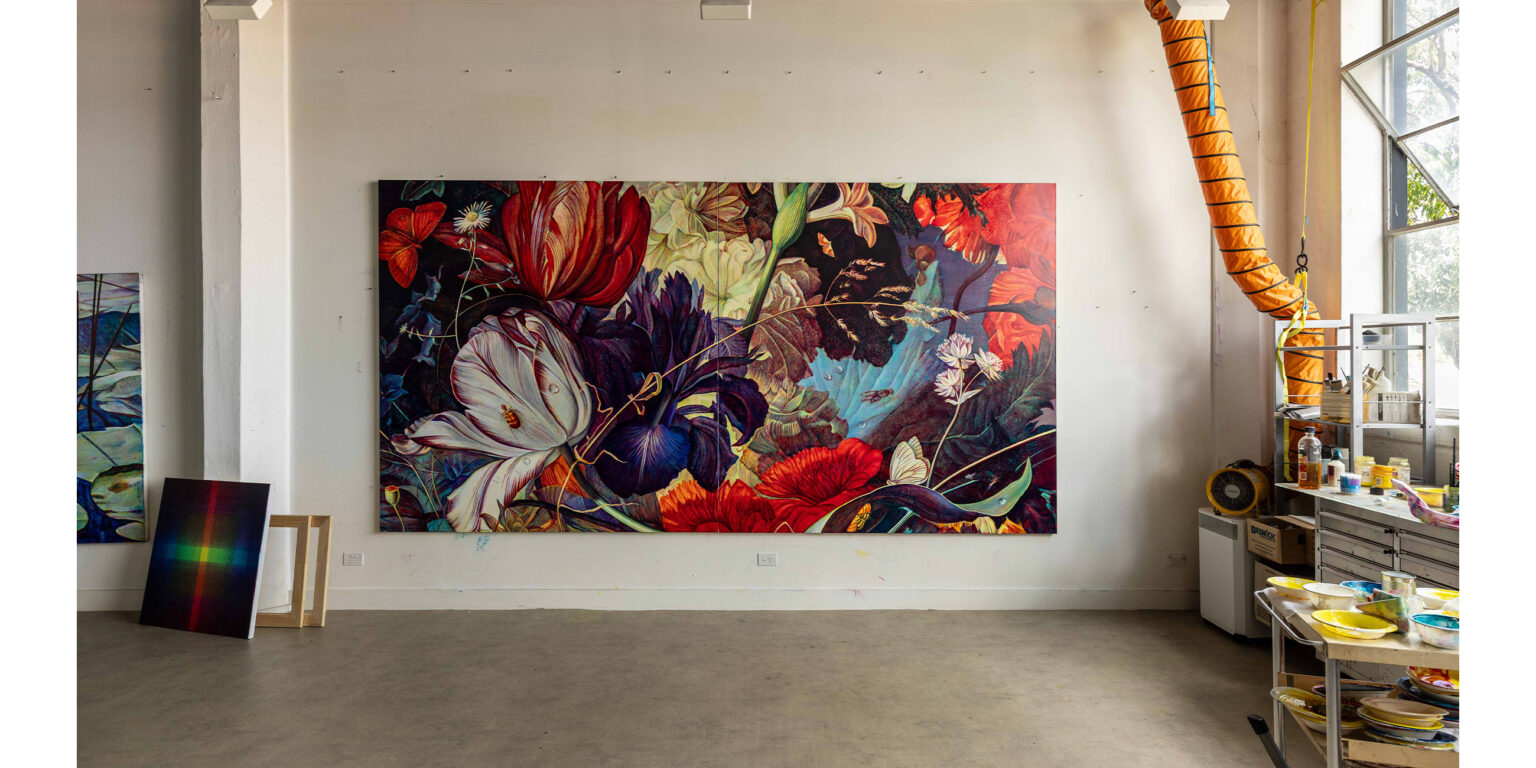
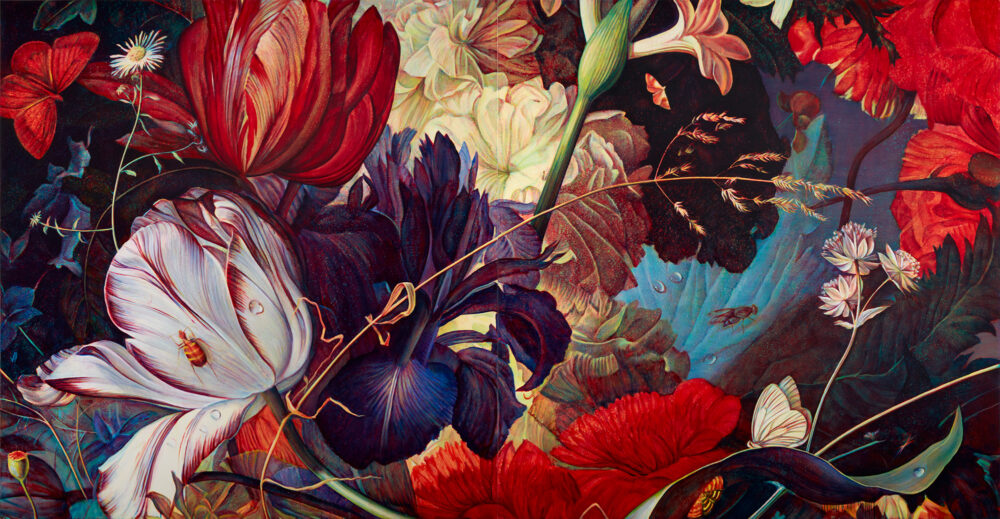
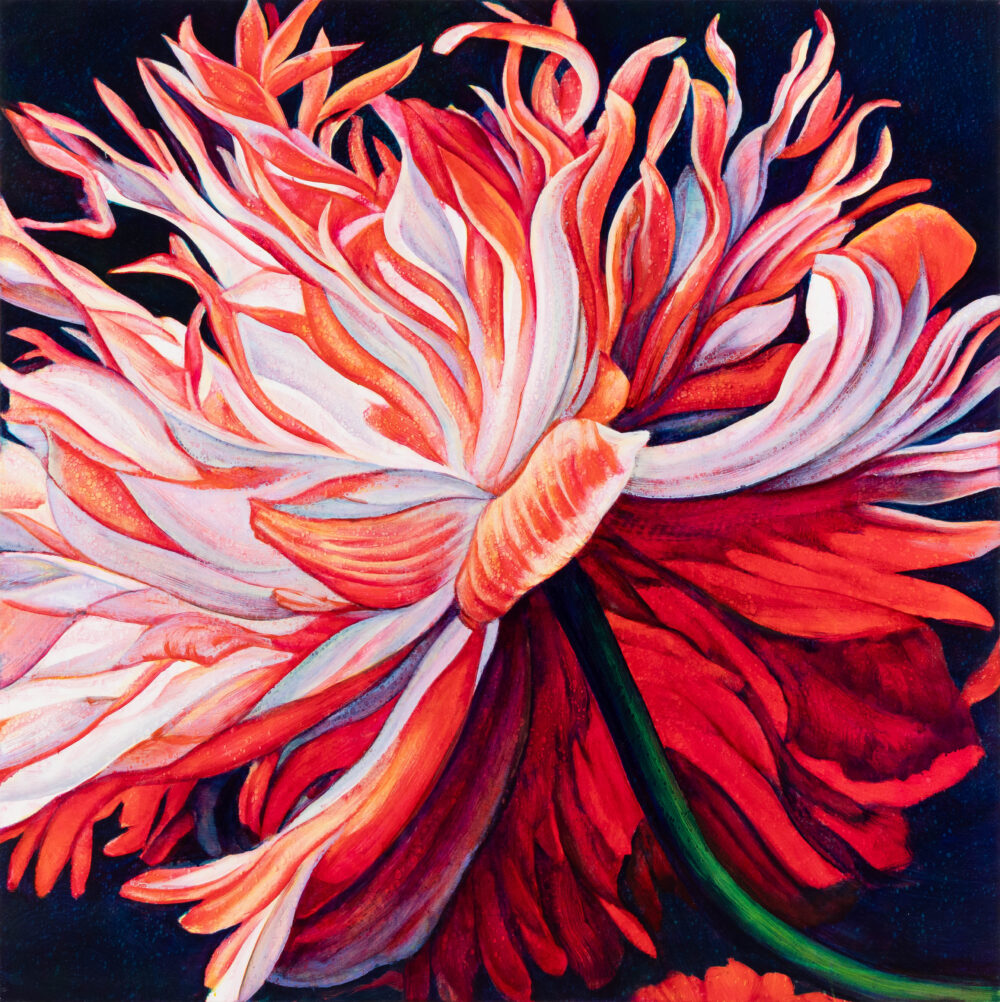
Flowers were annoying in that sense, because everyone assumes flowers are beautiful. It made it harder. I wasn’t that interested in prettiness. What interested me was the tradition – the philosophy behind Dutch still lifes, mortality, fleetingness. Another attraction was that you could zoom into a flower and find forms that were almost abstract – curves and dramas you couldn’t find in a portrait or a landscape. They had no top or bottom. They had the vigour and thrust of something like a Delacroix – movement, writhing energy. That’s what I was finding in those early works. Yes, they were flowers, but that wasn’t really the point.
I don’t really think about beauty per se. I see something in the world and think, I’d like to photograph that. Then I see something in the photograph that makes me think I could paint that. Often what you get is nothing. Sometimes you get something vaguely like what you expected and it’s not interesting. Sometimes you get something completely unexpected because something else happened along the way. That can set up a whole new series.
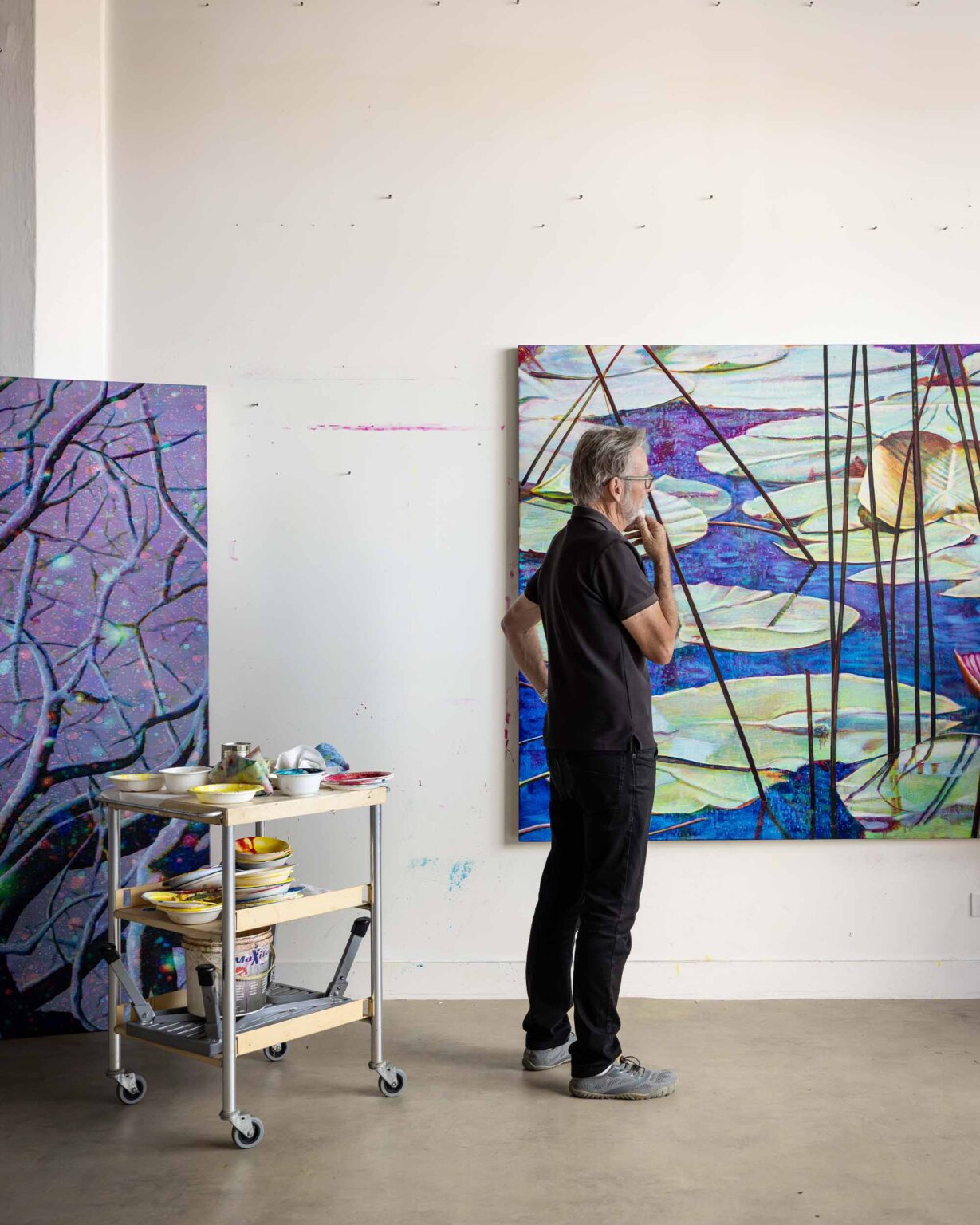
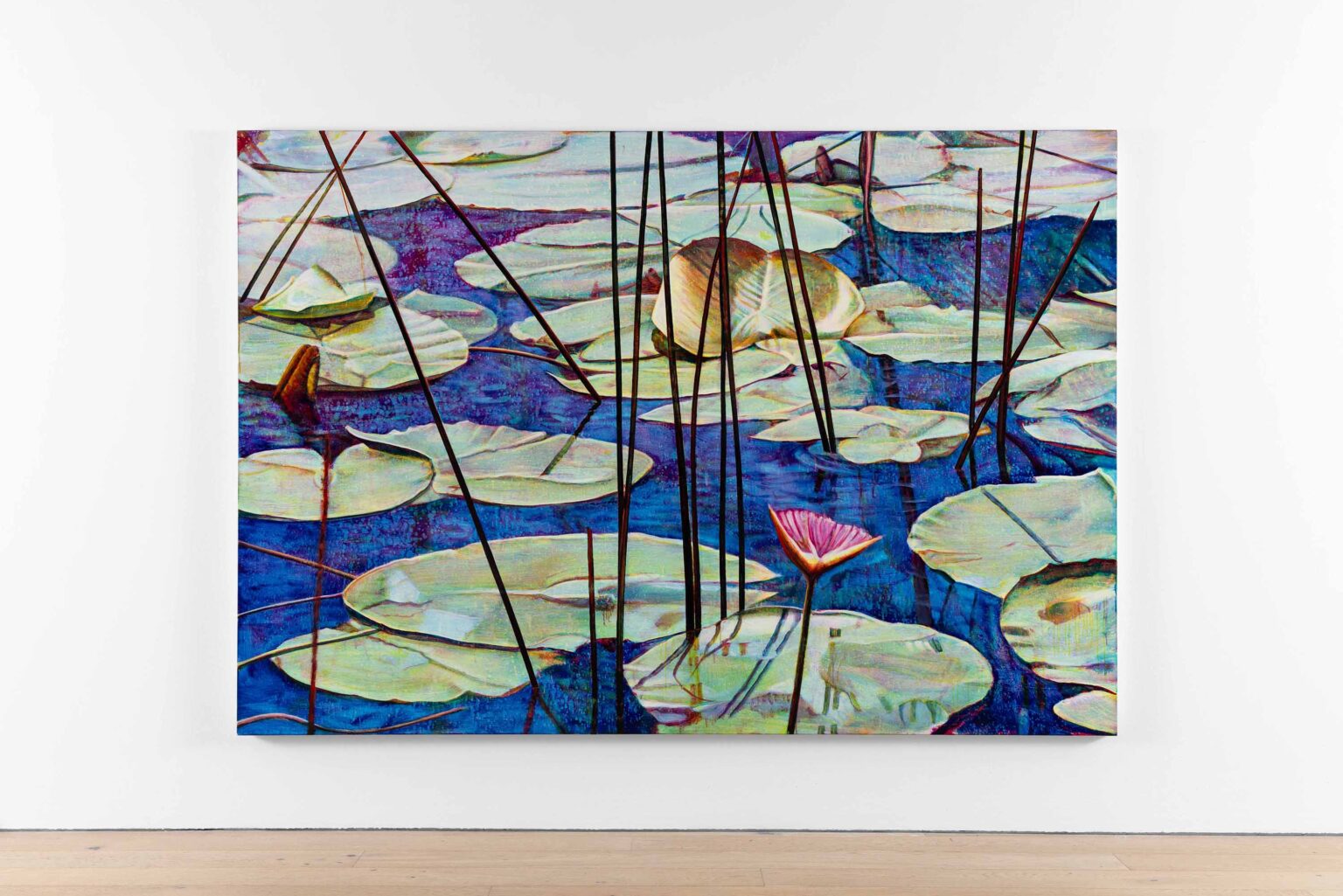
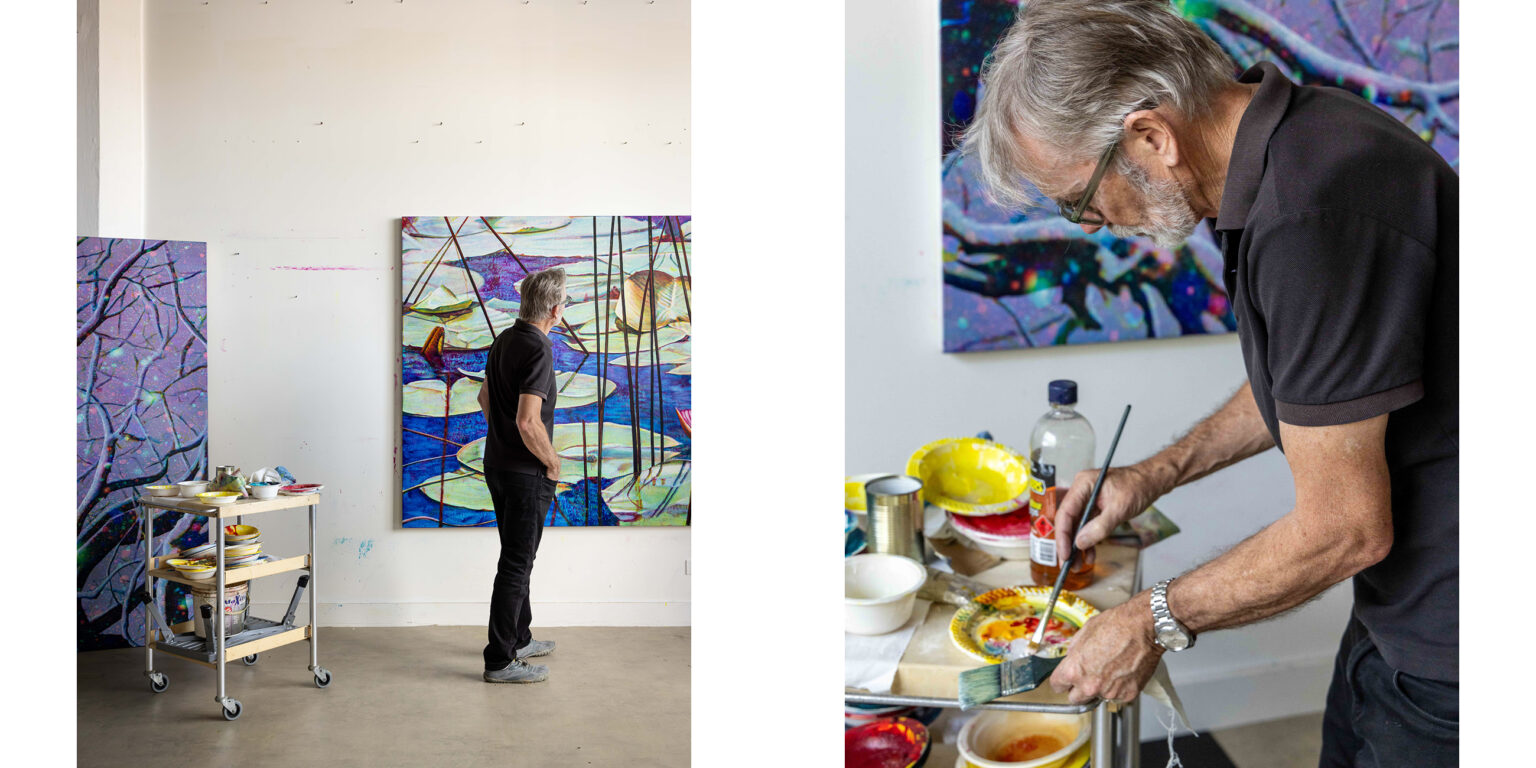
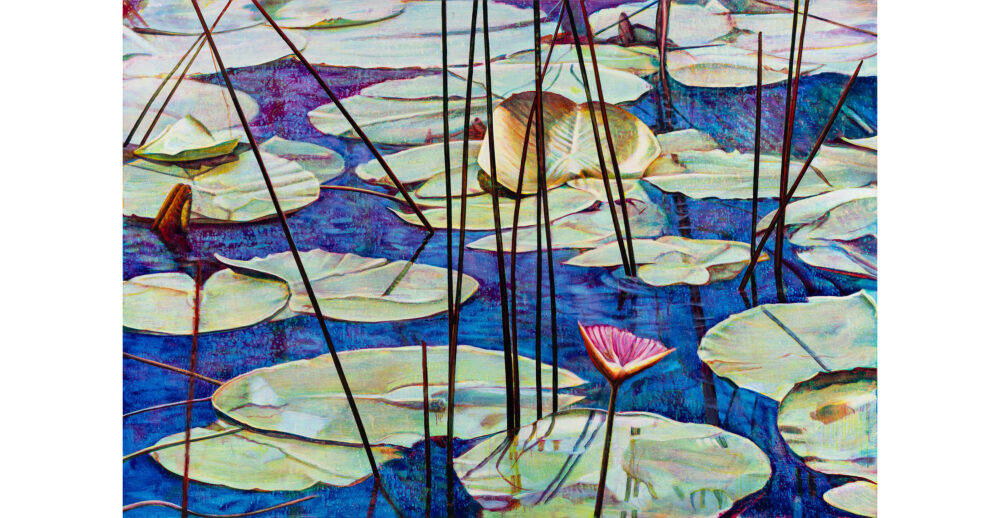
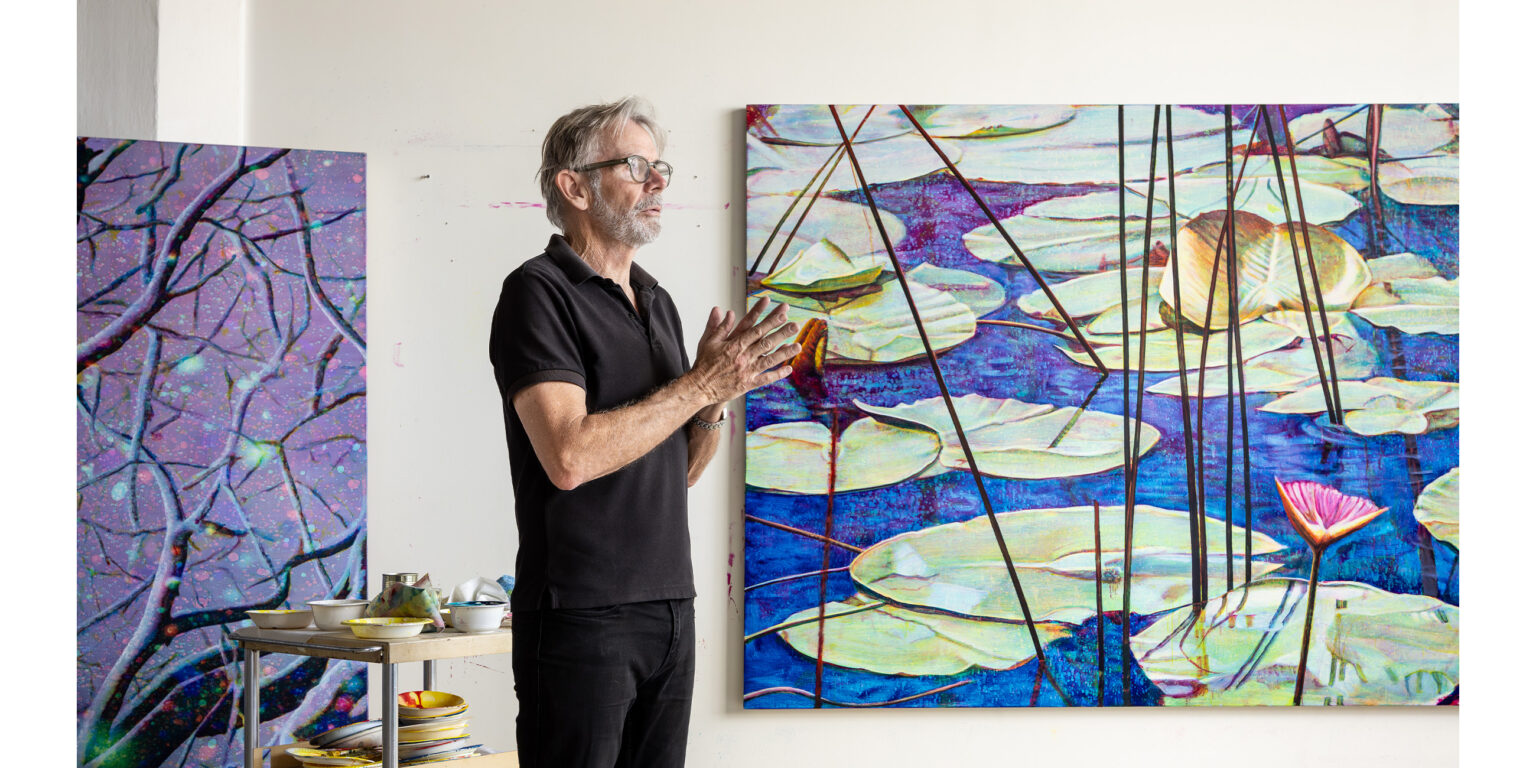
One of the big things in my work is the relationship between the abstract and the illusionistic. Monet’s water lilies are a good example. They’re almost abstract expressionist, but there’s a sense of space that’s both perspectival and flat. The water surface is frontal, but the space recedes. You never see the horizon.
That contradiction is what painting is. You look at a painting of a landscape and read it as space, but it’s flat in front of you. That’s titillating for the brain – two contradictory things at once. It’s like life. There’s no logic to it.
Your career has unfolded alongside a broader shift from analogue to digital. How has that transition influenced your thinking about images and surfaces?
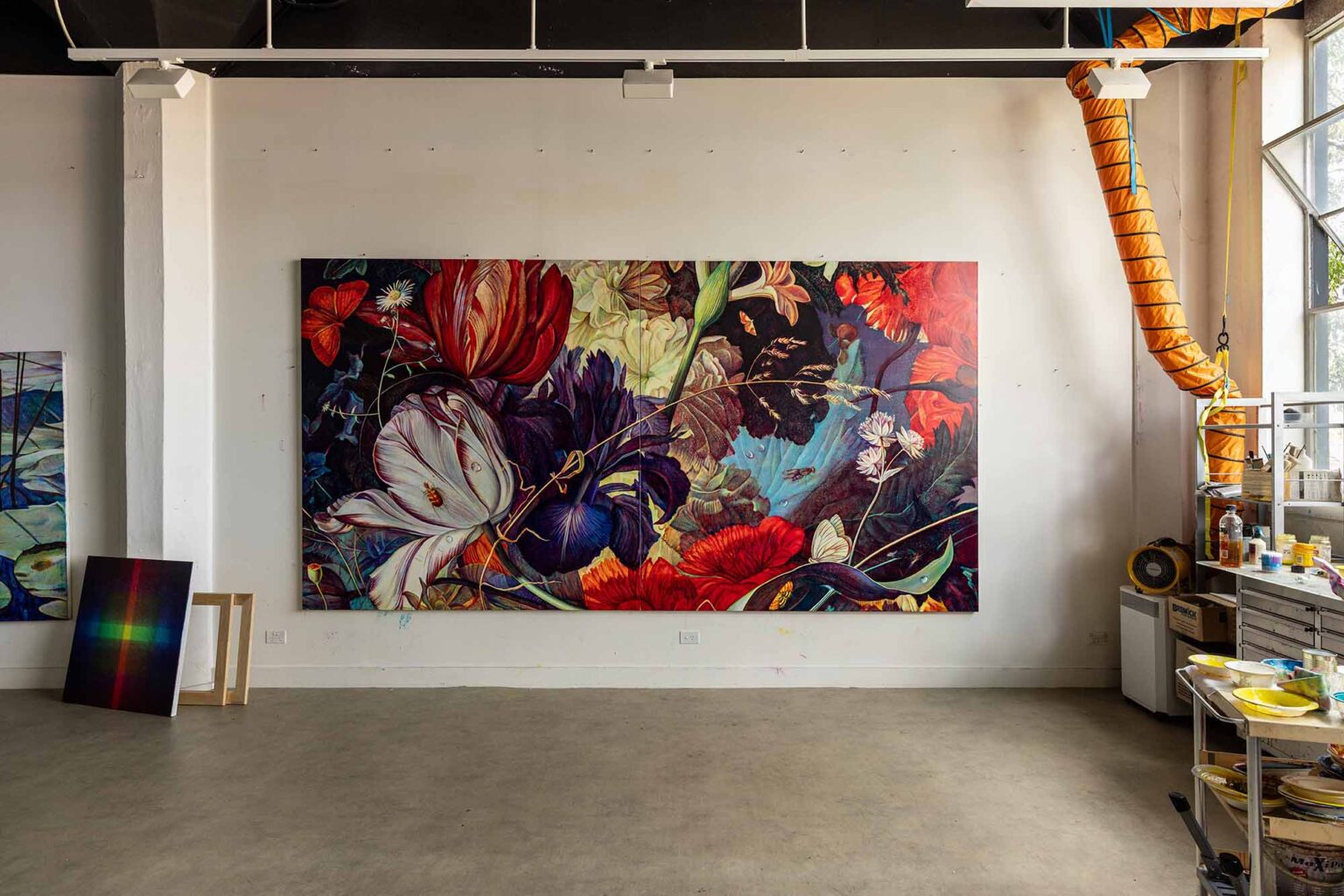
Even early on, if I was taking a detail from a Dutch still life, it was already an image that had passed through multiple stages. By the time I found it, the painting was 300 years old. It had been photographed, reproduced in a book, sat around for decades, then scanned – and from that fragment I was making this huge painting.
The idea of moving from analogue to digital and back to analogue – the oil painting – felt very comfortable. The same applied to photographing, manipulating images digitally, printing them out, then using them as the basis for paintings or lightboxes.
If I used the same image three times and painted it three times as colour separations, they would all end up looking different. No matter how good I got, I could do it for 100 years and be unable to make two the same. So this idea that everything is full of possibilities, everything is changing, there are no constants – that’s probably one of the themes behind the work.
Around that time, digital photography was emerging. I went to New York and came back with a Kodak digital camera. Because it was digital, I could take a thousand photos and find something later, put it on the screen, and it was incredibly luminescent – unlike images in books.
Early digital images had strange effects – weird colour fringes around forms – which I found fascinating. Everything was super low-grade, with weird glitches and strange colours. I saw the painterly potential in that. The question became how to do that in painting. That’s where colour separation came in.
It creates a glowing quality. With opaque paint, light bounces off the surface. With transparent pigment, light passes through, hits the white canvas, and comes back out – like stained glass. Everything becomes more glowy, more otherworldly.
So it might look like a painting of a flower, but really it’s a painting of a photograph of a flower. There was always a distance between me and the so-called subject.
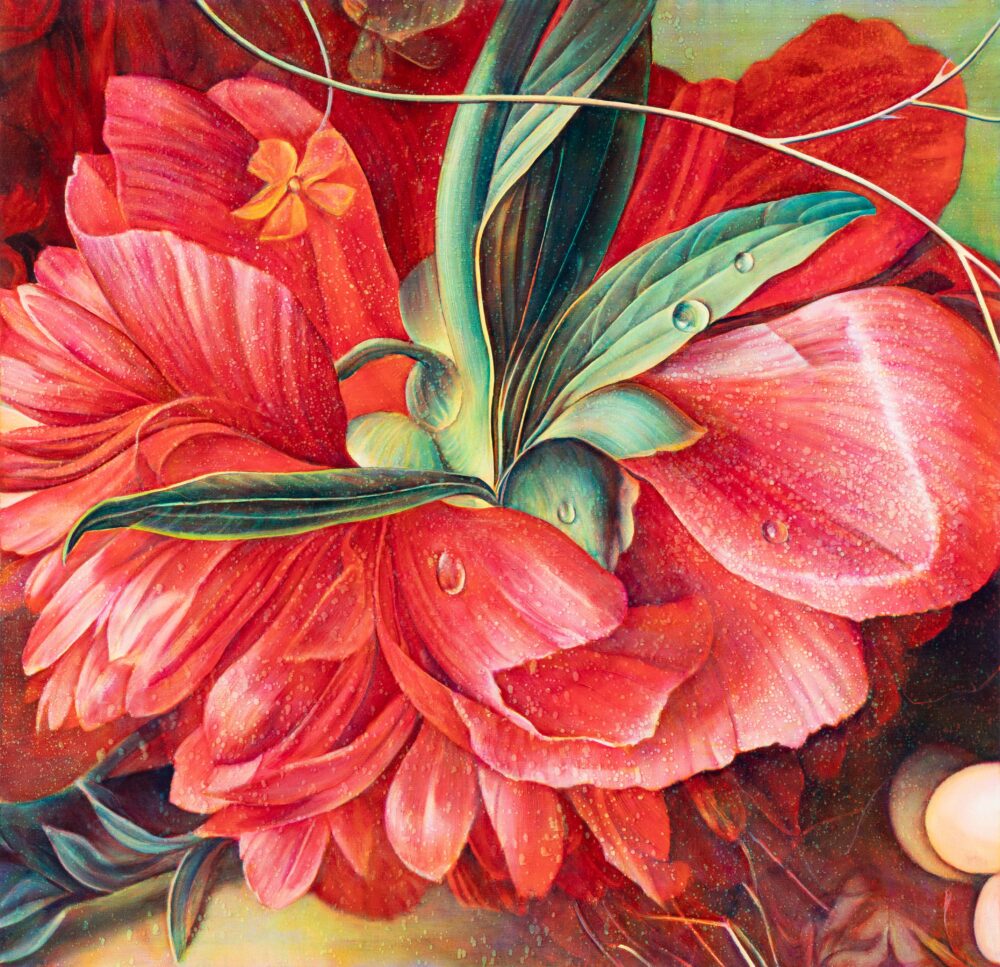
With recent series such as Small Worlds and Lost and Found, you returned to Dutch floral still lifes as source material. What prompted that return?
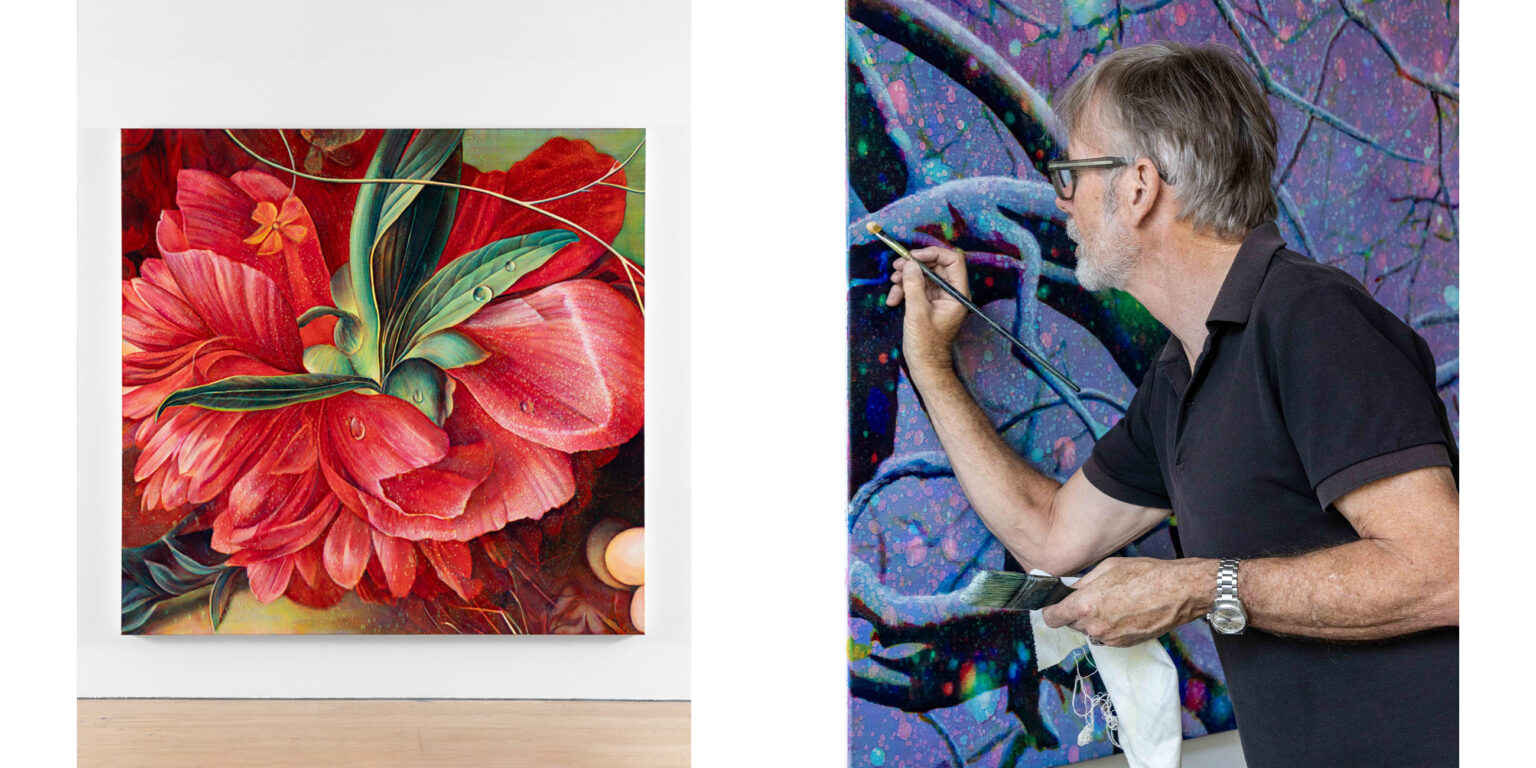
That was partly about accessibility. In the early 1990s, I was working from postcards or the occasional book. Now museums have incredibly high-resolution images you can zoom into endlessly. Suddenly there was all this material available, and I had the technical capacity to deal with it.
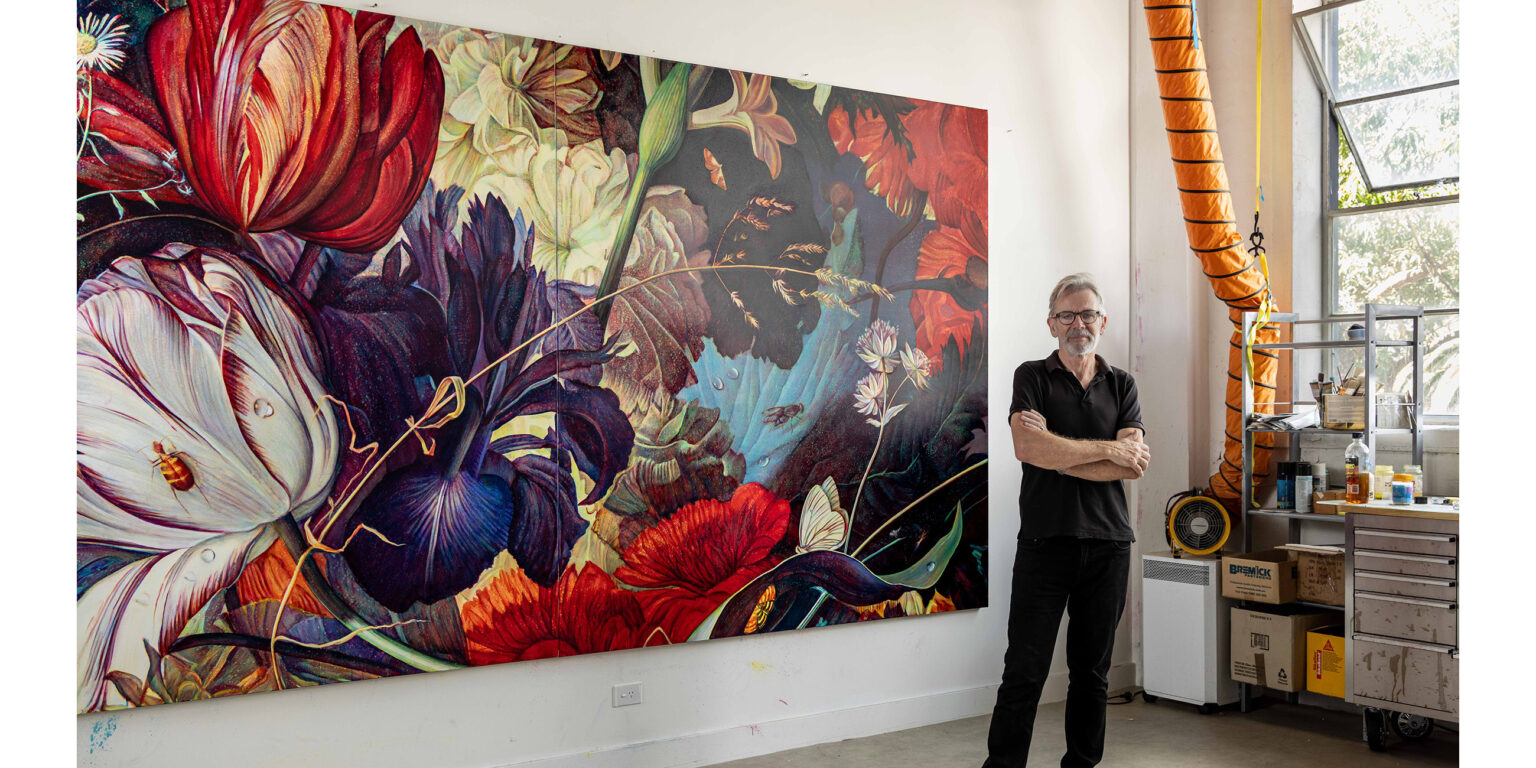
It rekindled my interest in the subject matter. Earlier, I liked the fuzzy old postcard because it was often unclear what I was actually painting. I didn’t know if it was a leaf or background, and I liked not knowing. It freed me up. It was just shapes and marks. Now it’s very clear what it is, and I’m interested in it. I really enjoyed painting the little bugs and strange minute details that had been scrupulously recorded 400 years ago.
These series seem to involve a more explicit engagement with the symbolic or allegorical aspects of Dutch still-life tradition. Do you feel there was a shift? And what felt newly available to you in drawing out those narrative layers?
I don’t know if it’s maturity, but I stopped denying the source. For a long time I talked about the work as being about process. Now the process is a given.
There had been terrible bushfires just prior, and that was all happening around the time of COVID; this idea that tiny viral agents could turn everything on its head. Bushfires have been a theme in my work for a long time. They’re illustrations of the fleeting, unreliable nature of existence.
Beauty is subject to those forces. Nothing is timeless or universal. There’s a resonance between those ideas and what underpinned Dutch still lifes originally. So I was happy to re-dock my boat there, with more attention.
This openness to narrative feels especially present in bodies of work such as Old World, New World and Regeneration, which responded to the Kinglake bushfires. How did those works take shape?
Bushfires had been part of my thinking since art school. I grew up in the Blue Mountains – they were an ever-present danger. You felt safe, but the wilderness was always there. I made early works about that contrast – everyday life set against an underlying threat. A barbecue in an empty space, sausages frying, bushfire smoke on the horizon.
After the Kinglake fires, I took panoramas of the burnt landscape. The twisted branches looked almost nuclear, but in the foreground there was vivid green regrowth. That energy of renewal after such ferocity was incredibly striking. That became the source material for the Kinglake works images – mainly large prints and light boxes, though I’ve also made some paintings from it.
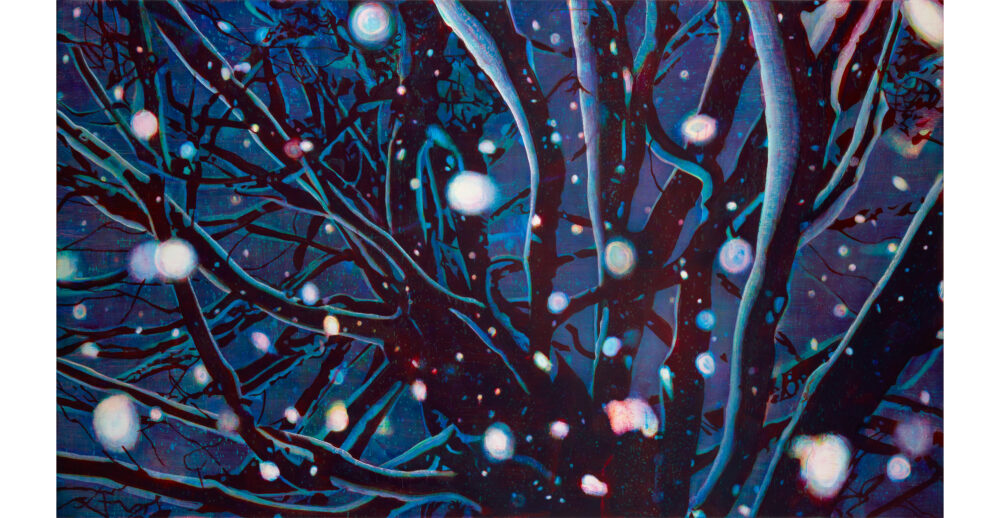
The Kinglake works introduce elements such as falling ash, which, like the cascading snow in your wintry paintings, bring another optical layer to the image. How do these motifs operate for you?
It was an extension of my fascination with the luminous quality of the digital screen. I was making images on screen, printing them large, but there’s always some loss. Printing onto backlit screens maximised that luminosity.
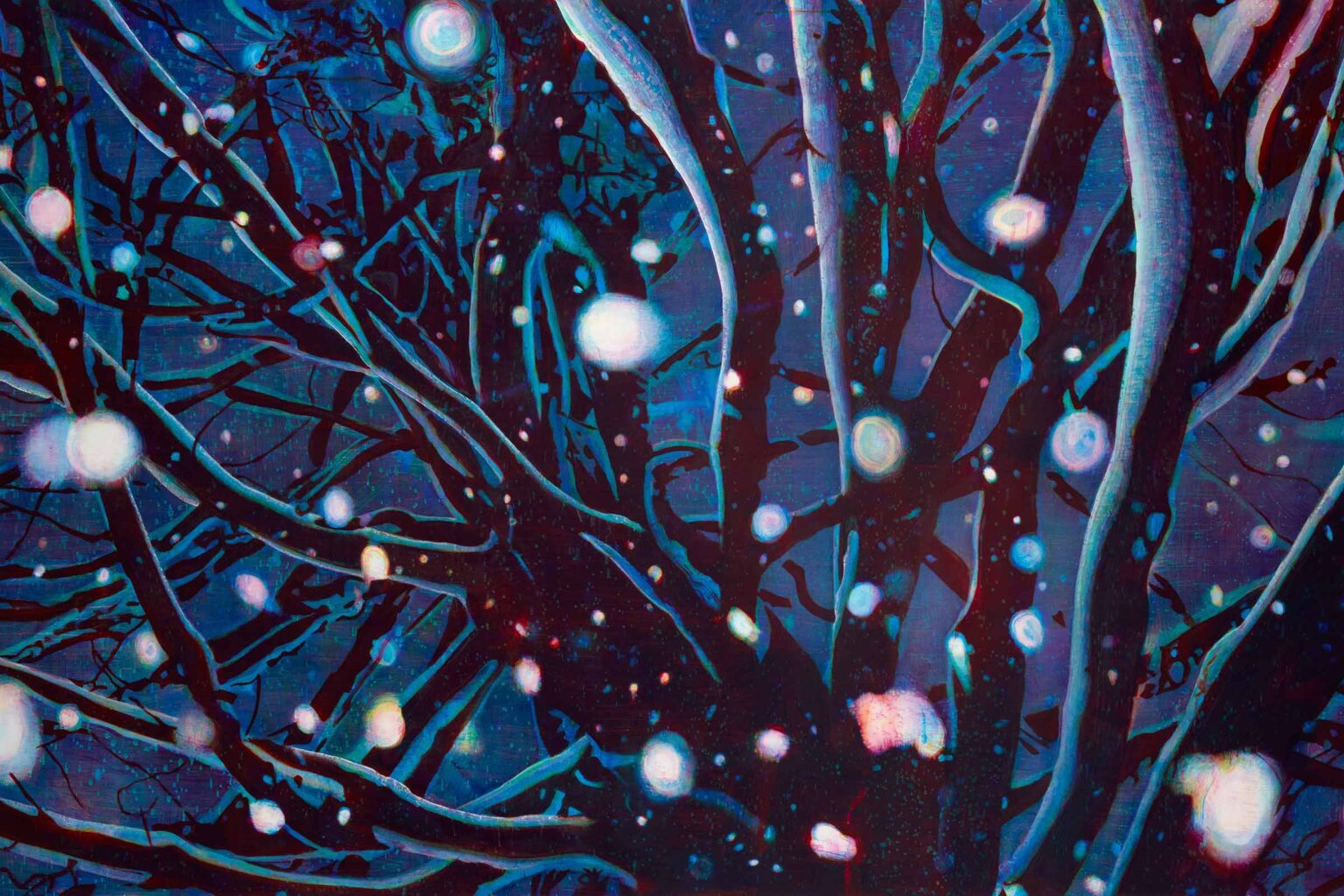
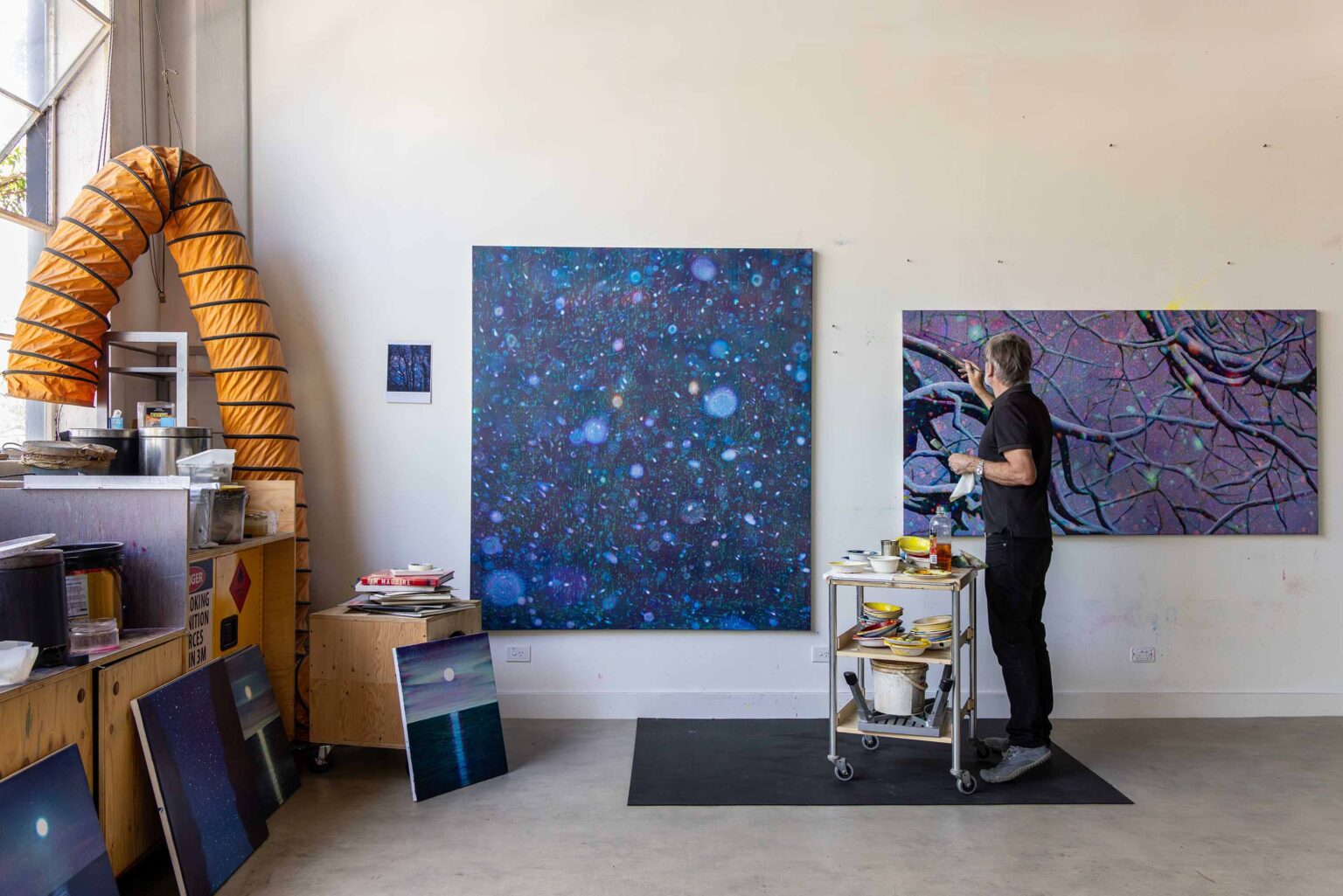
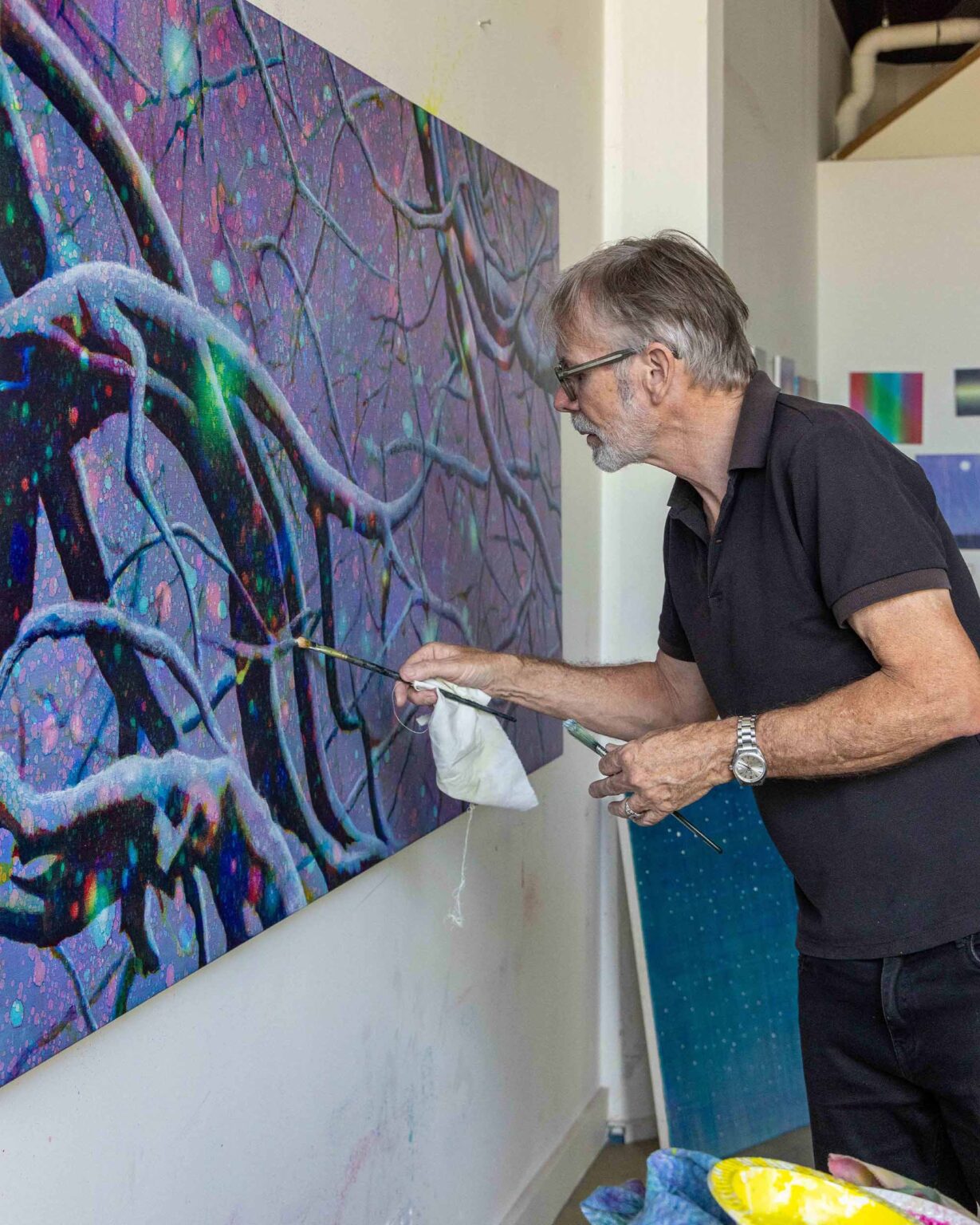
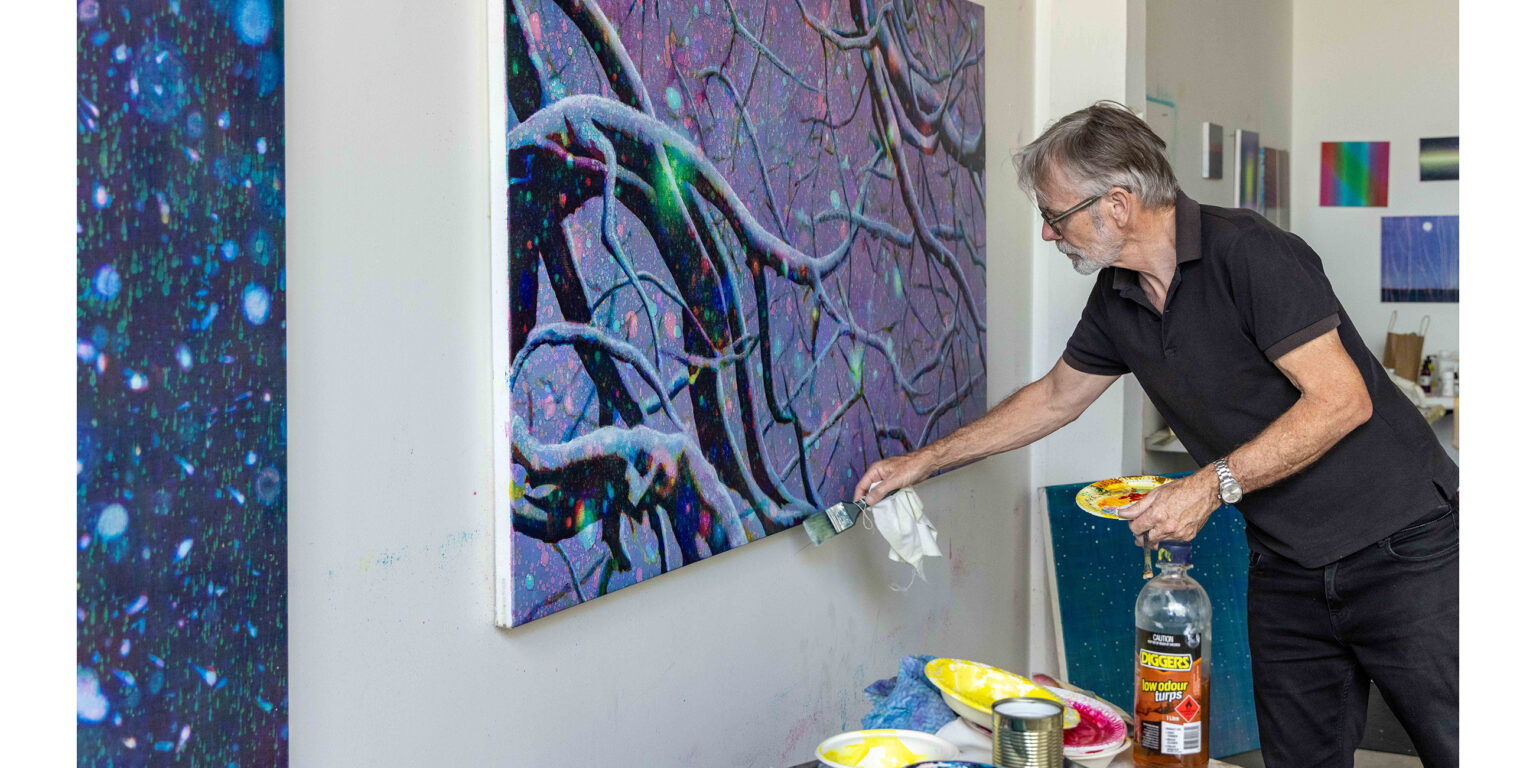
More recently, I revisited canvases of falling snow. I superimposed imagery from the Kinglake photographs – trees and branches – in a way that integrated the snowflakes into the space. The juxtaposition of burnt bush and snow gave the works a strange quality. In paintings where I’d used colour separation, the red, green, and blue snowflakes looked like flying embers or spirits – something ghostly or magical. They refract light, almost like prisms, and can act like little lenses that reveal the forms behind them.
There are certain elements that recur in your work – falling snow, water lilies, berries – what draws you back to these motifs and what do they allow you to explore pictorially?
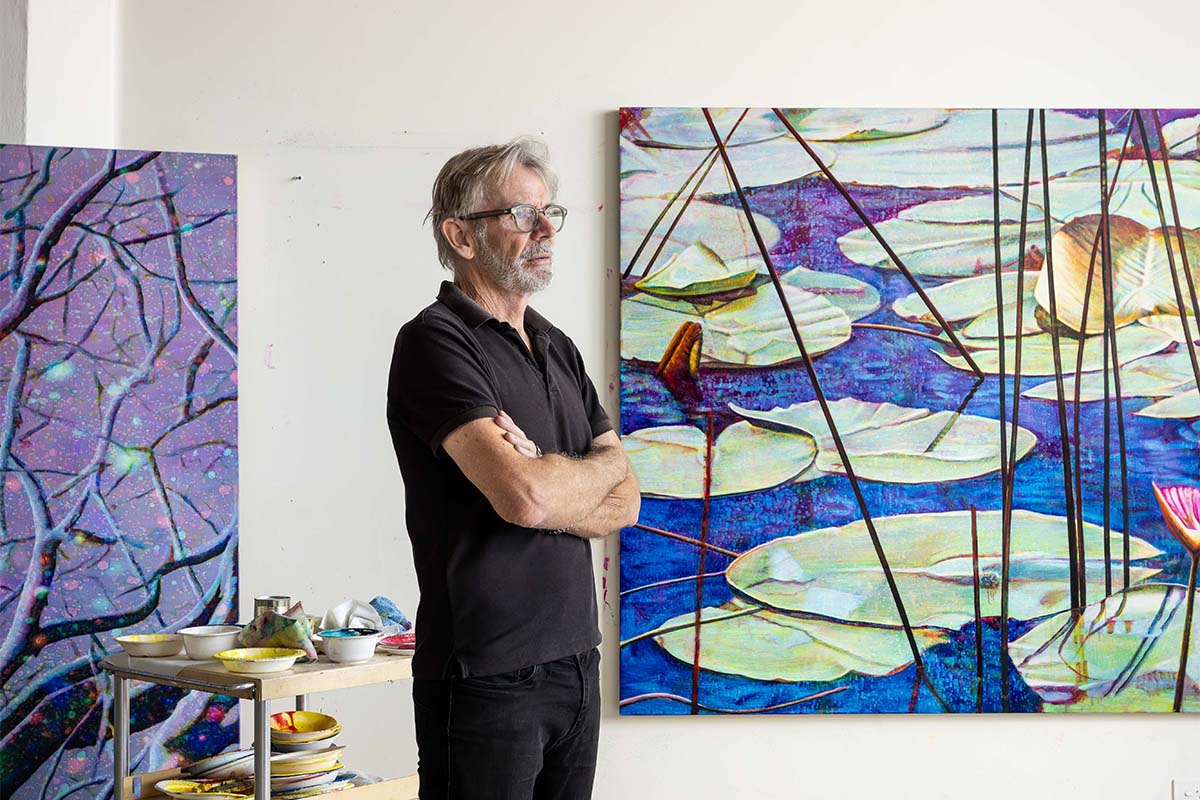
I was interested in how the water lilies could be three-dimensional and very flat at the same time. With falling snow, it’s the fleeting beauty, the randomness of distribution. Which snowflakes do you include, which do you leave out? I never put anything in that wasn’t there, so it’s a question of what you exclude. It’s a bit like automatic writing.
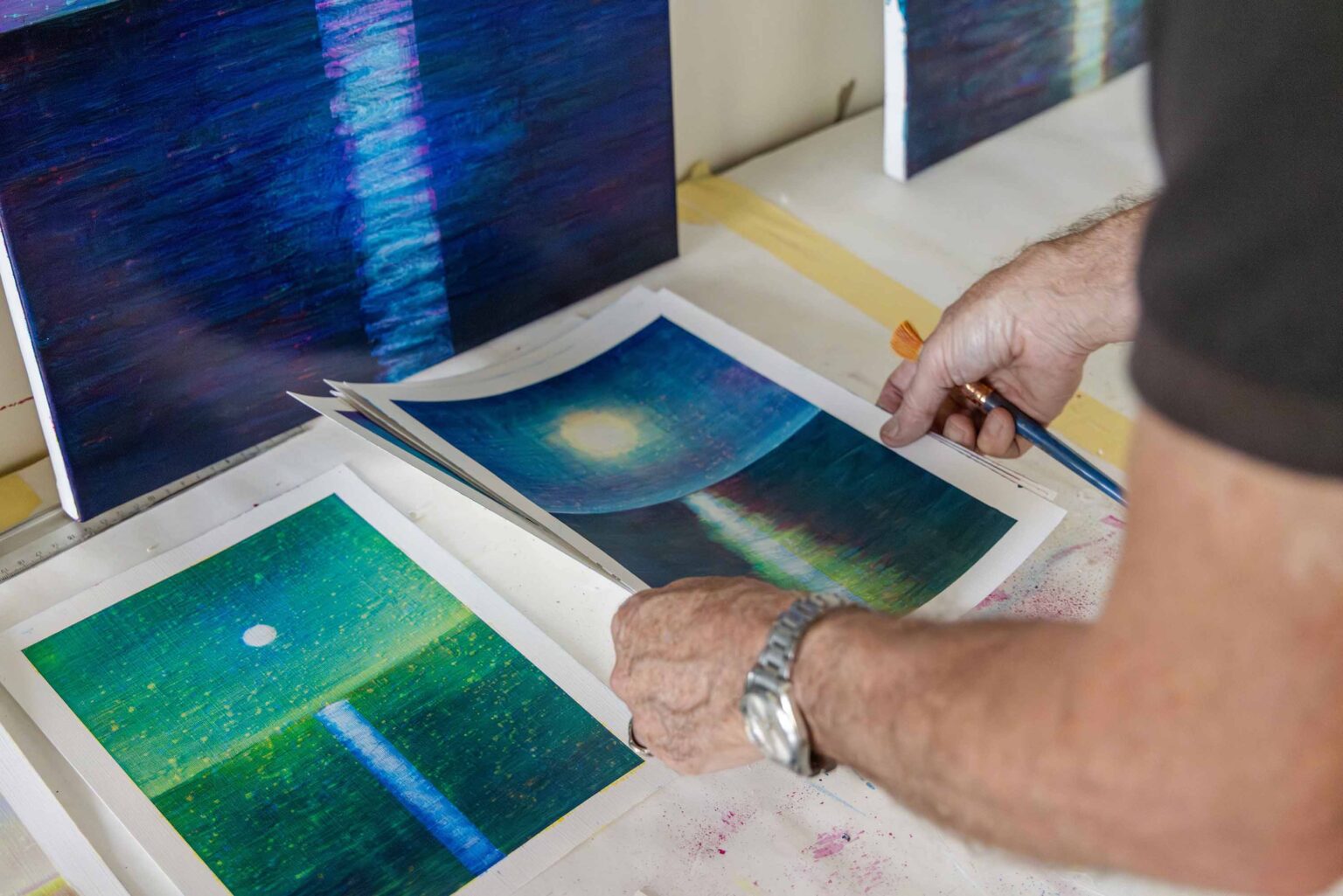
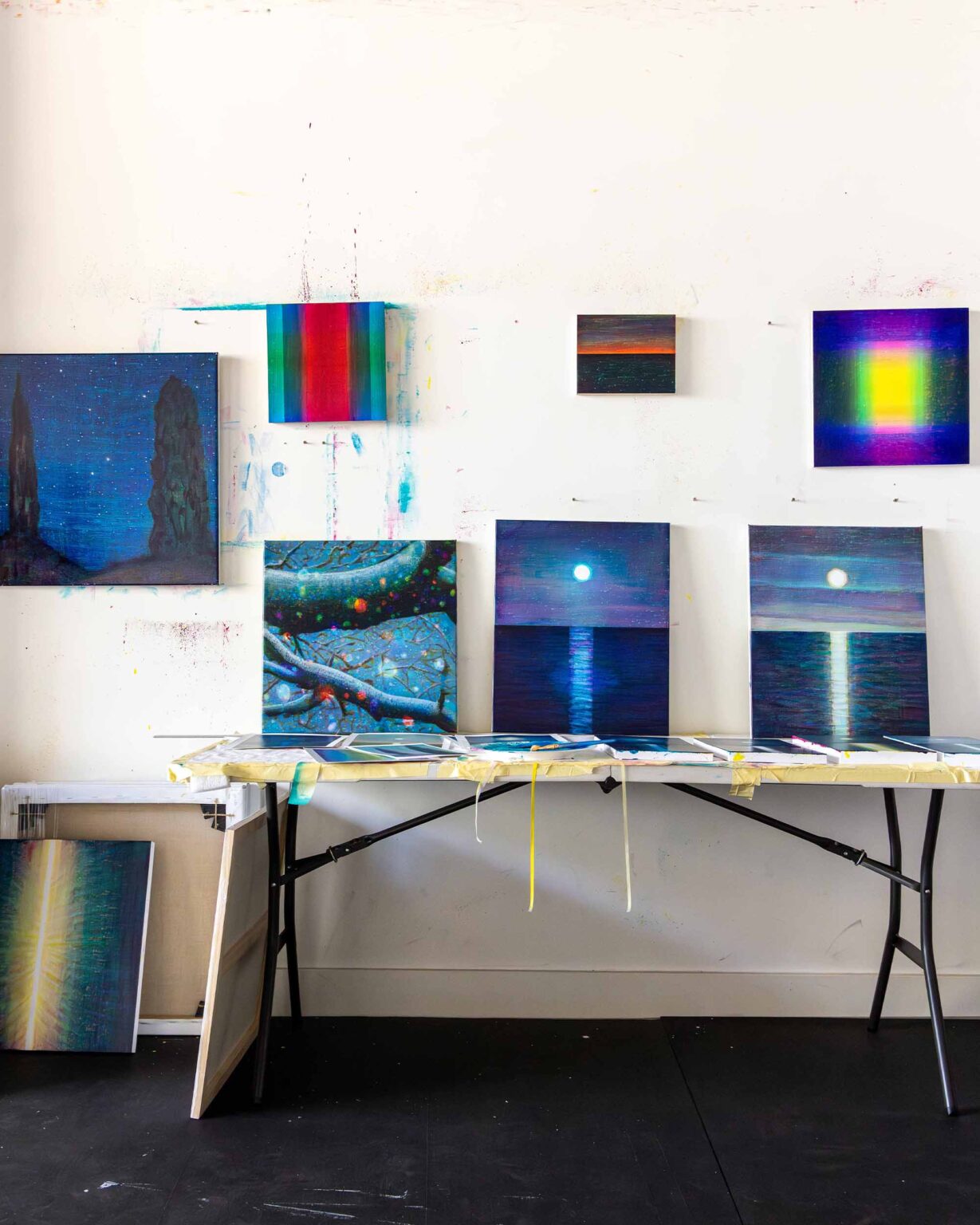
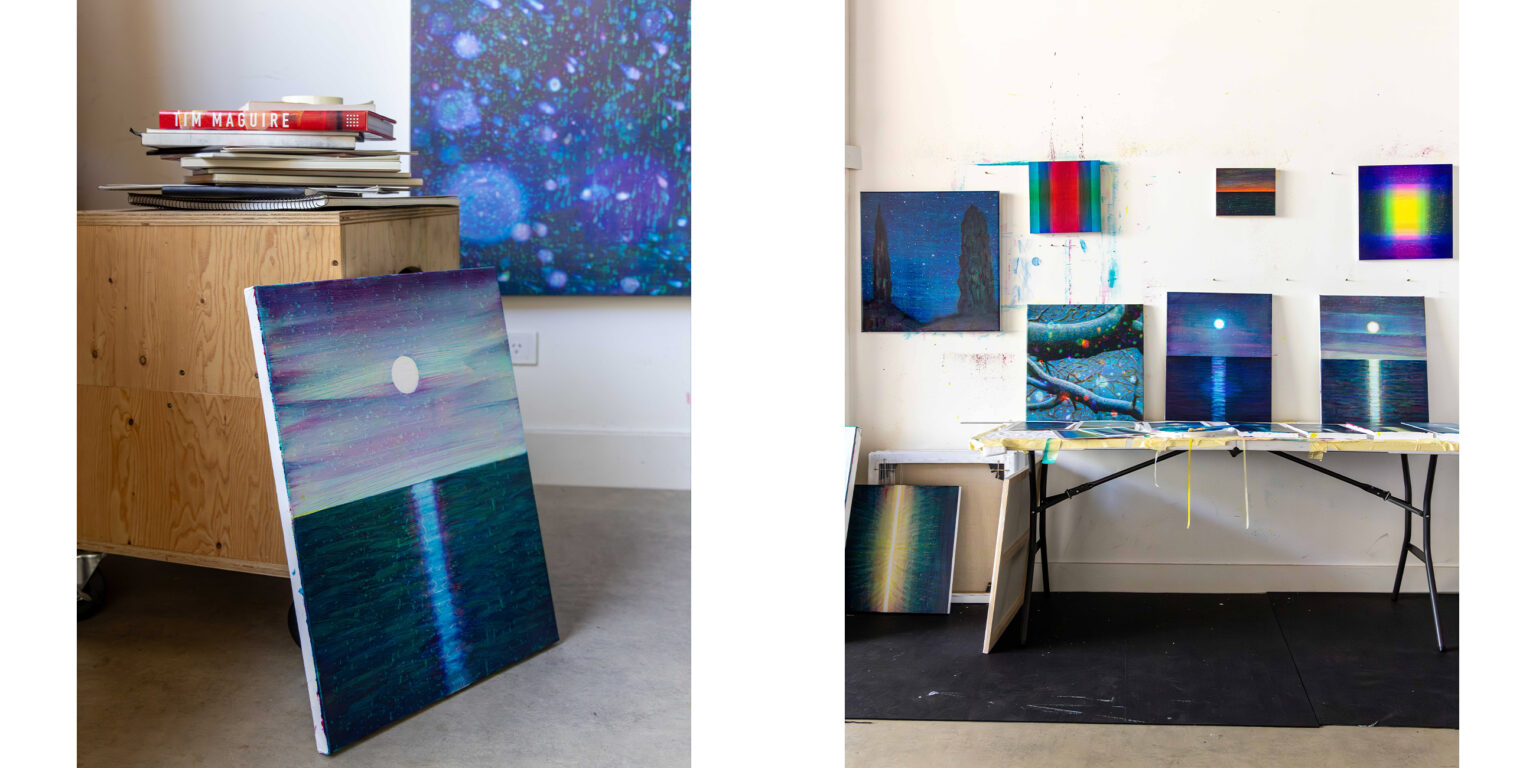
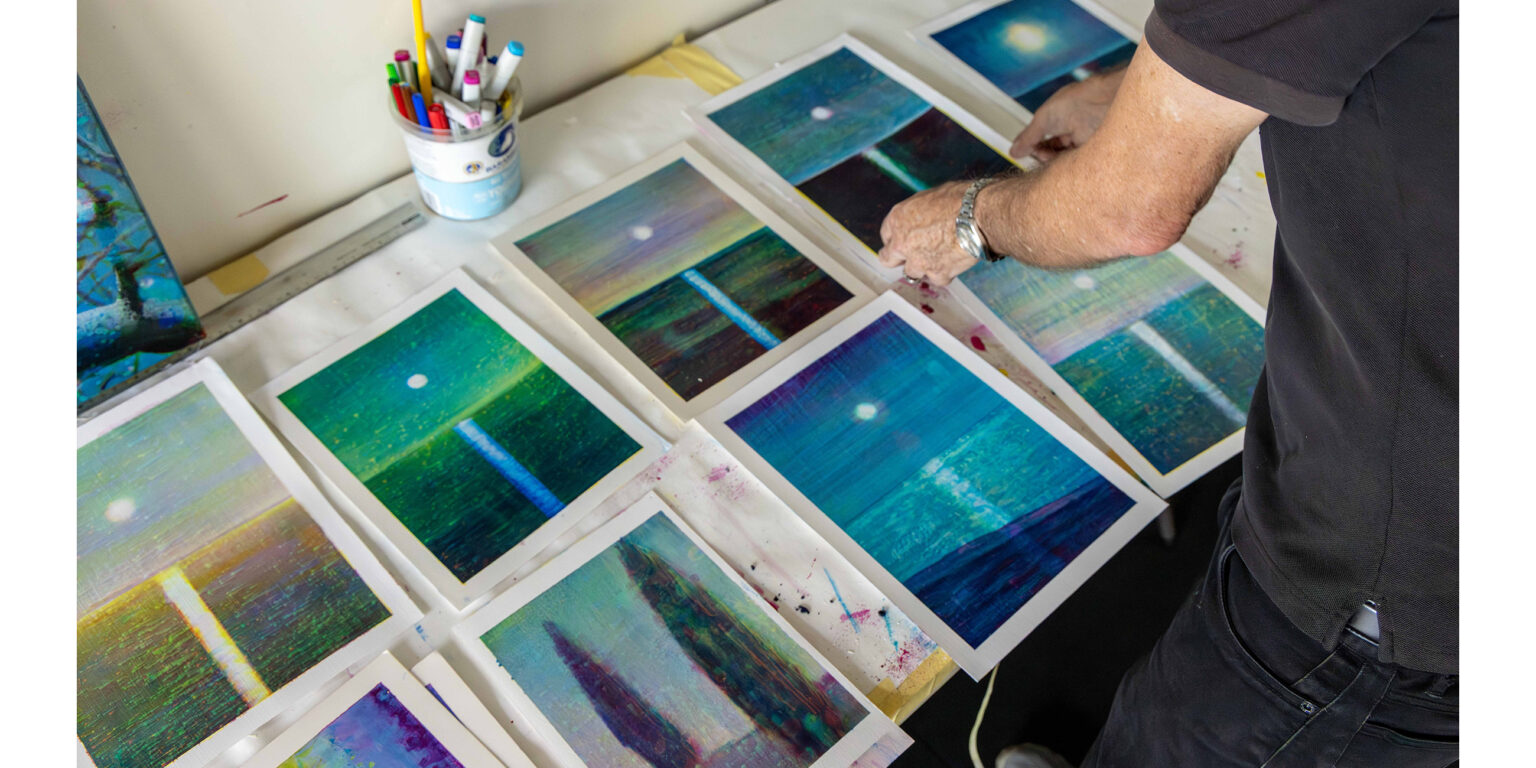
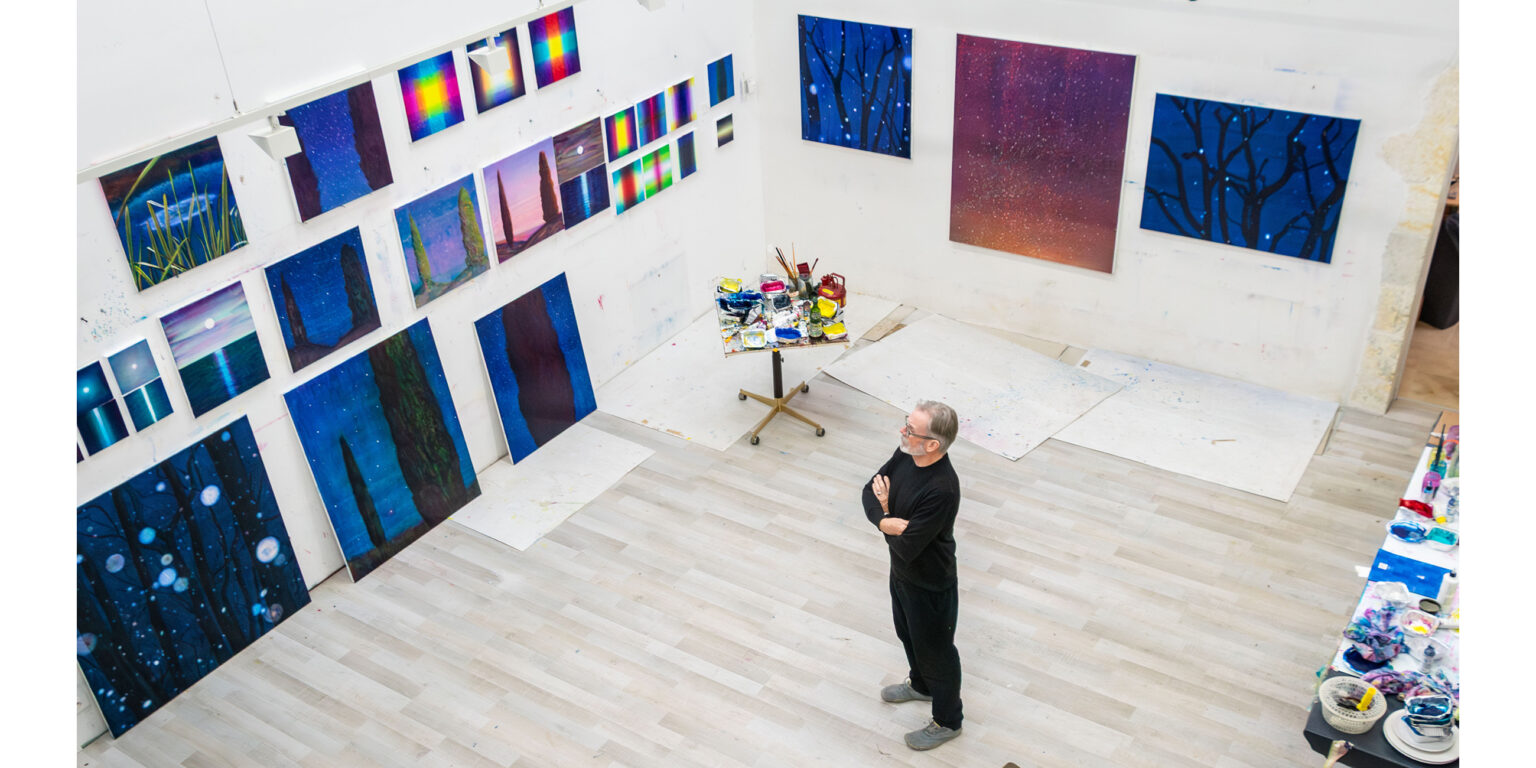
More recently, some very early imagery has reappeared – tanks with strips of light between them. Before tanks, I was painting columns – symbols of rationalisation. Then those dissolved into strips of light. Putting illusion back in: light, form, space. The horizon appears, too – very reductive, barely a space, but recognisable. There are lots of references to abstract painting – readable both as abstraction and as something seen in the world. I’ve gone back to some of that imagery in recent prints: the horizon, the square, the openings.
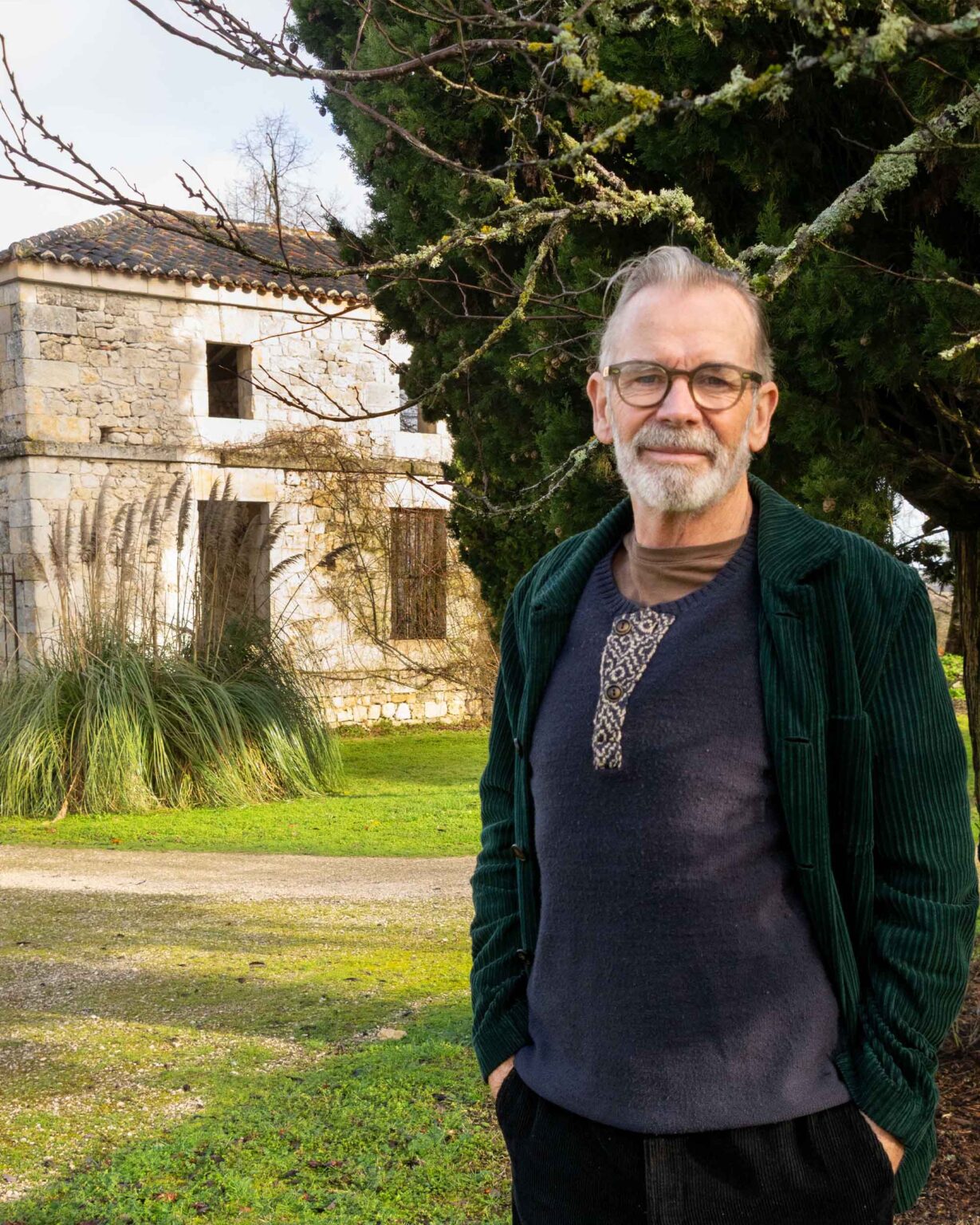
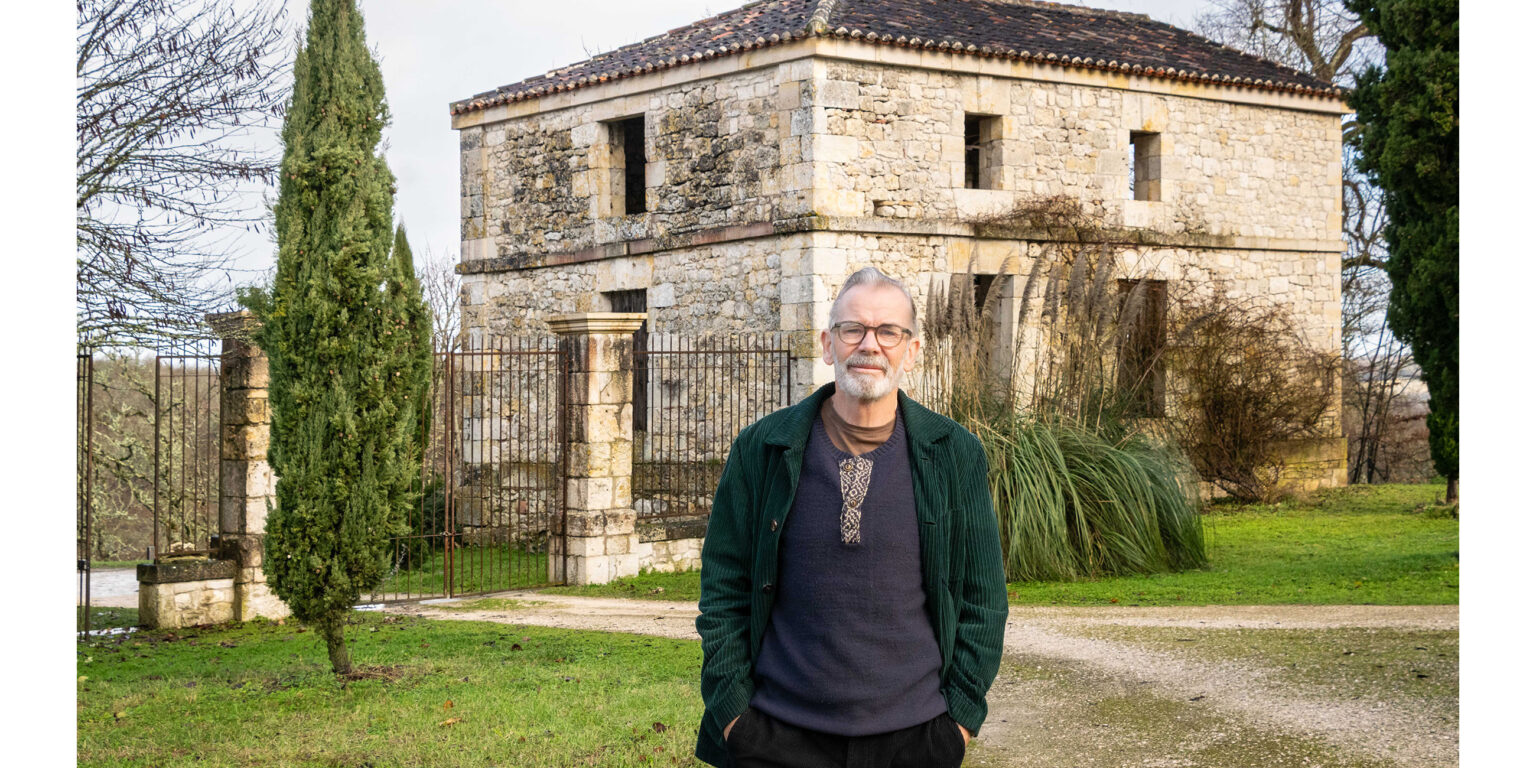
You divide your time between rural France and Australia. How does that movement shape the work?
People in Australia say my work feels European, and people in Europe say it feels Australian. So I’m somewhere in between. I might work on a painting in one studio and finish it in the other, and it looks completely different. The light does have an effect – you see things differently. You adjust, you accommodate.
But I’ve never really consciously thought, “That’s a European thing, that’s an Australian thing.” The gestation period is so long that when I’m in France, I’m probably working on ideas that I came up with in Australia, or even on the previous trip to Australia, and vice versa. Everything gets mixed together.
Images float around on my computer for years, get recycled, accumulate. They’re just ingredients. They become disassociated from their origins. With the Dutch still-life material, people ask, “What painting is that from?” I have absolutely no idea.
In addition returning to historical source material, you have also revisited and reworked your own earlier paintings. How do you approach that and what does it unlock for you?
It’s partly age. Things come around again. When I was younger, I moved fast, trying to get somewhere. Interesting ideas get set aside, not fully explored. So I’ve given myself permission to go back and dig around. Why not? There might be more there. You also accumulate unfinished works. You ask: Is it finished? Do I sign it? Do I throw it away? Or can I do something else with it? That’s been happening – adding trees to falling snow, for instance – and it’s meshing nicely with what I’m doing now.
Could you tell us about what you’re working on and what feels most generative in the studio at the moment?
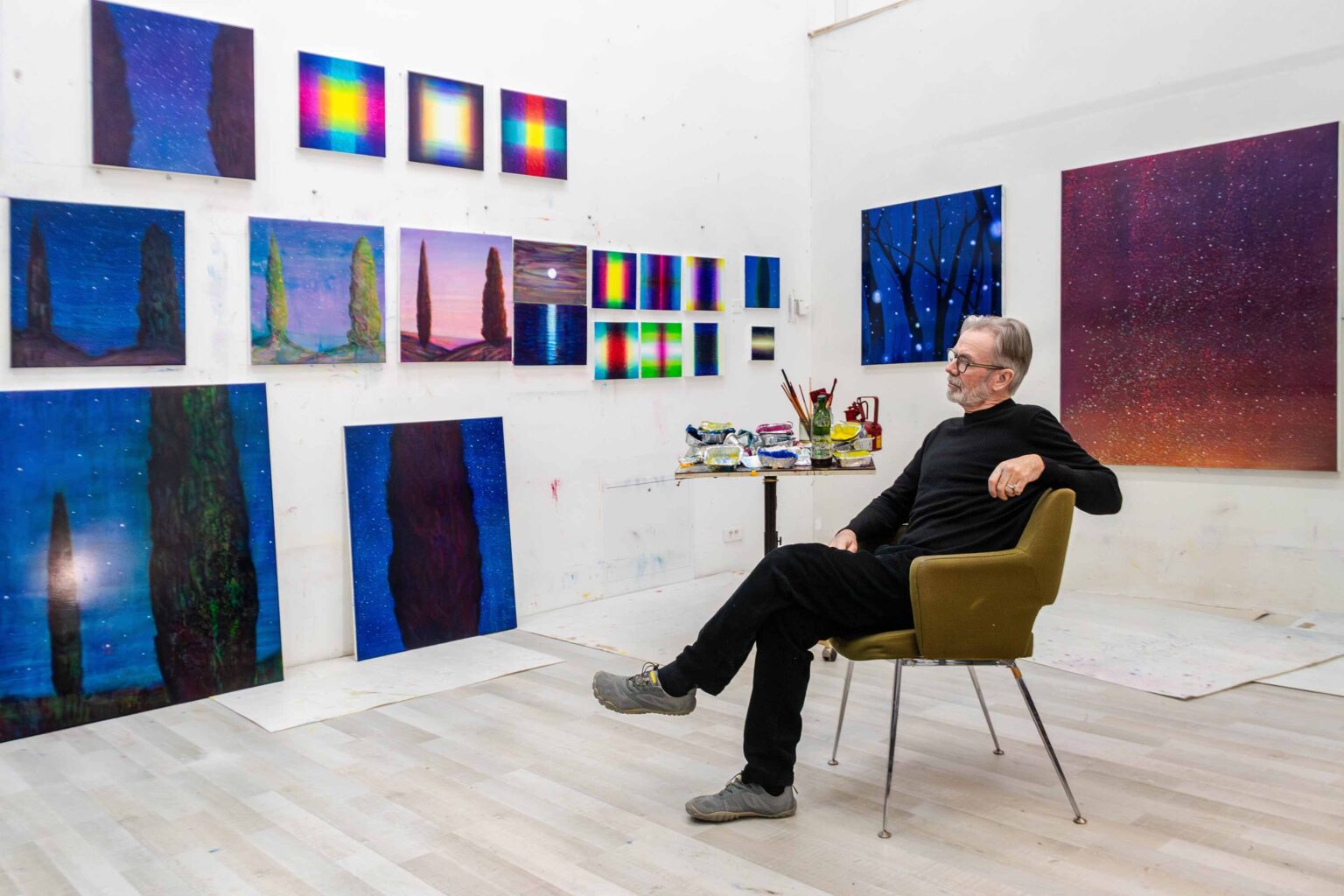
I’m still working with colour separation, but the very large figurative Dutch master imagery has become less central. There’s a body of work that began with digital prints. I used dice to determine which drawing was used for which colour, orientation, positive or negative. With those works, it’s about randomness – letting go of control.
It takes me back to printmaking, back to the press, back to ink. You try to make one image and end up with twenty variations. The variations become the interesting thing.
I’m also working on very simple little landscapes. Change the amount of yellow, change the sky – you could make a thousand and they’d all be different. The base forms feel universal. Like Sugimoto’s horizons – images we feel we’ve always known.
I enjoy that fulcrum between abstraction and representation – between chance and recognition. I don’t quite know how it works, but it does.