
PAINTING NOW | Columbiere Tipungwuti

Posted by

PAINTING NOW | Columbiere Tipungwuti

  • Artist
    Columbiere Tipungwuti
  • Dates
    4—28 Dec 2025
  • Gallery Location
    Eora / Sydney
  • Catalogue
    Download now

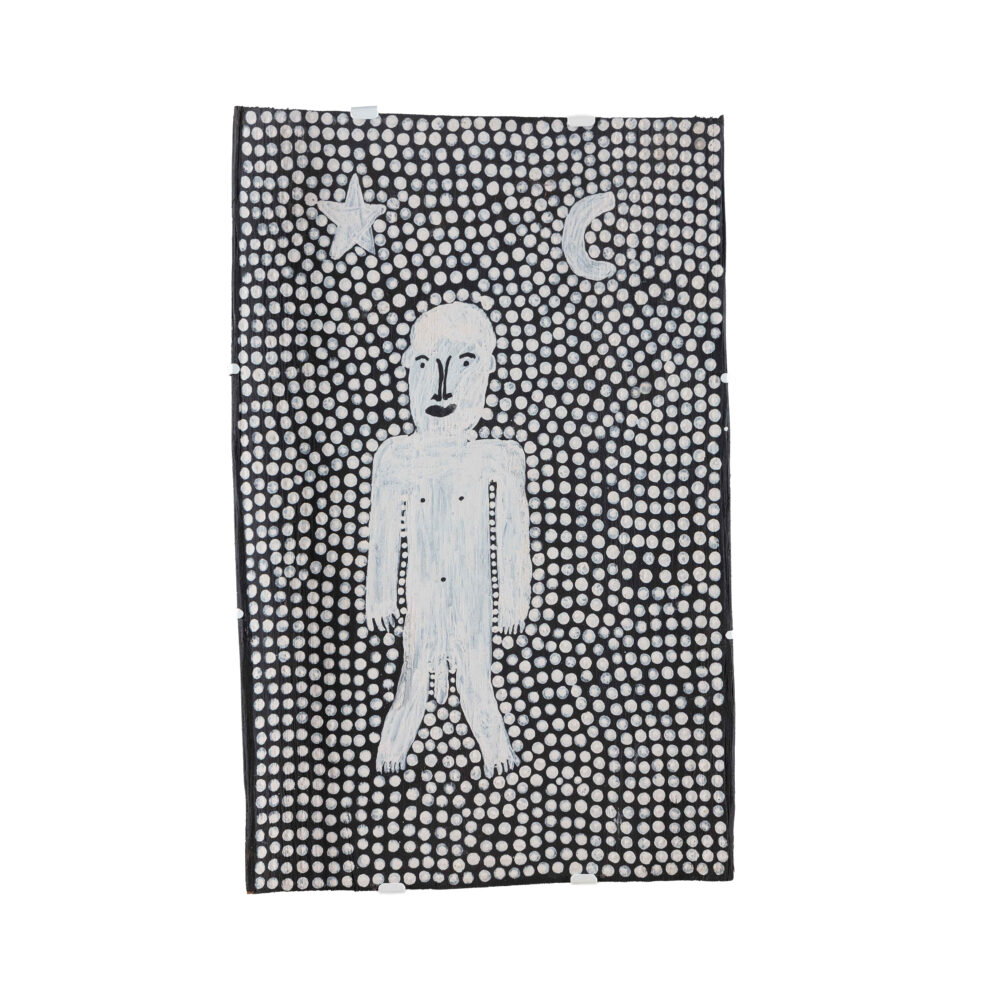
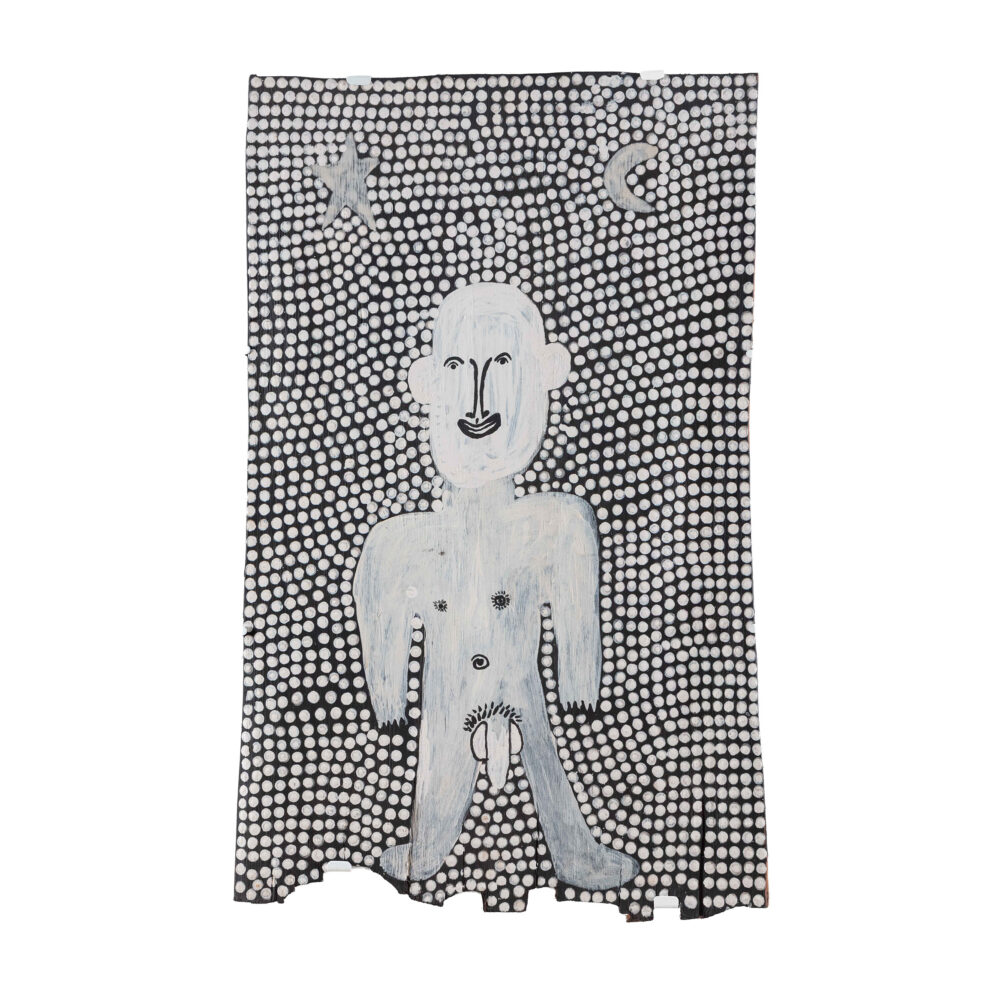
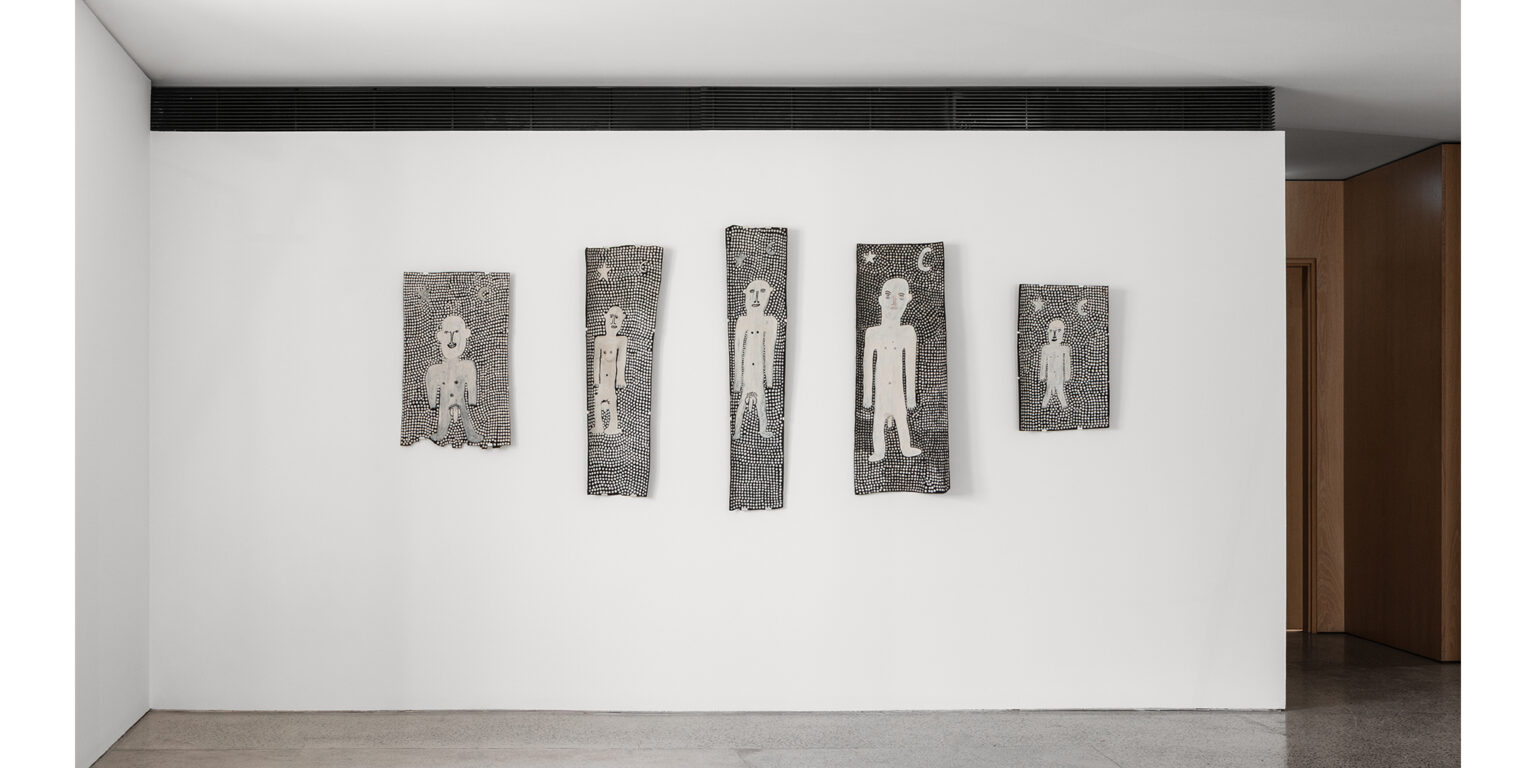
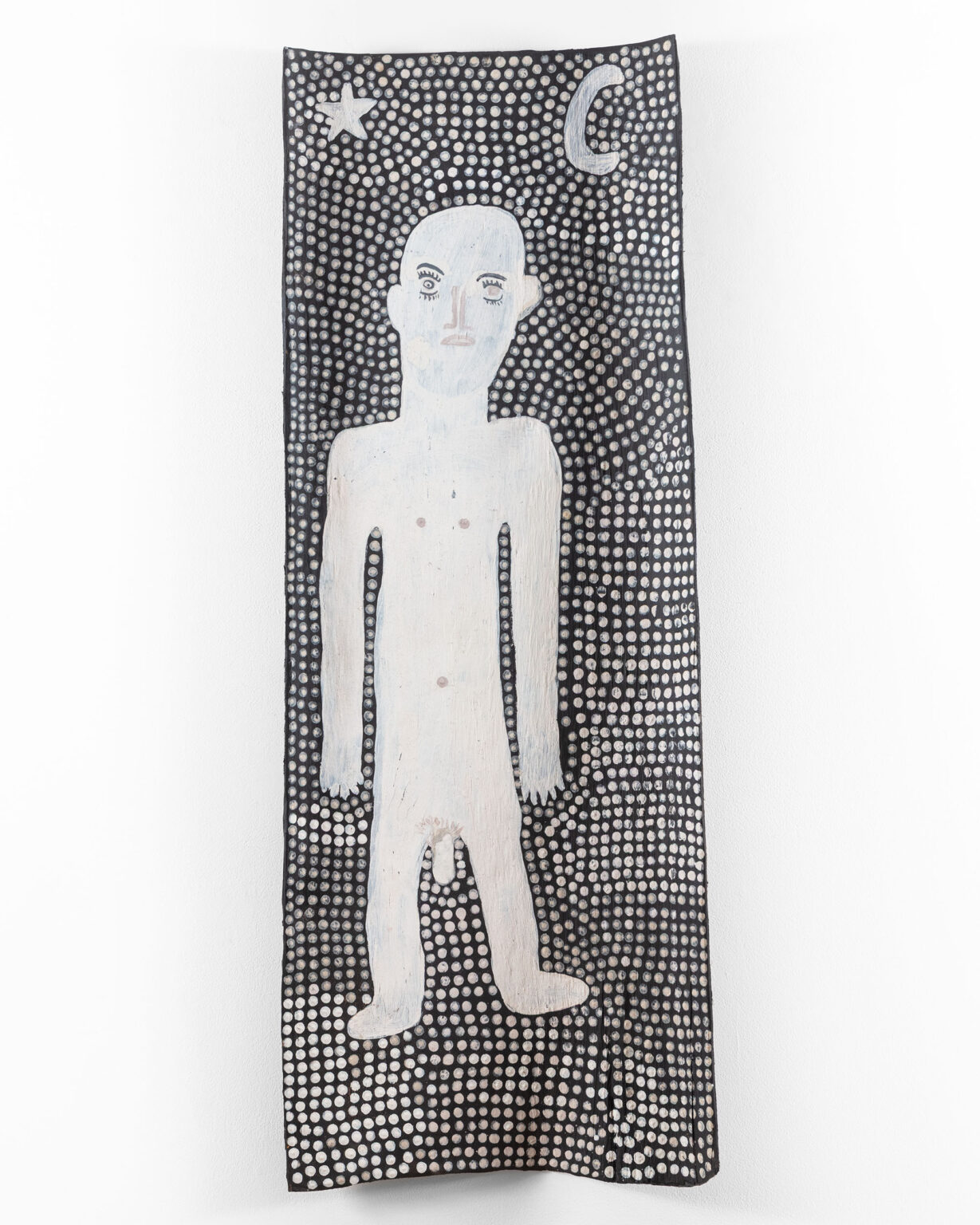
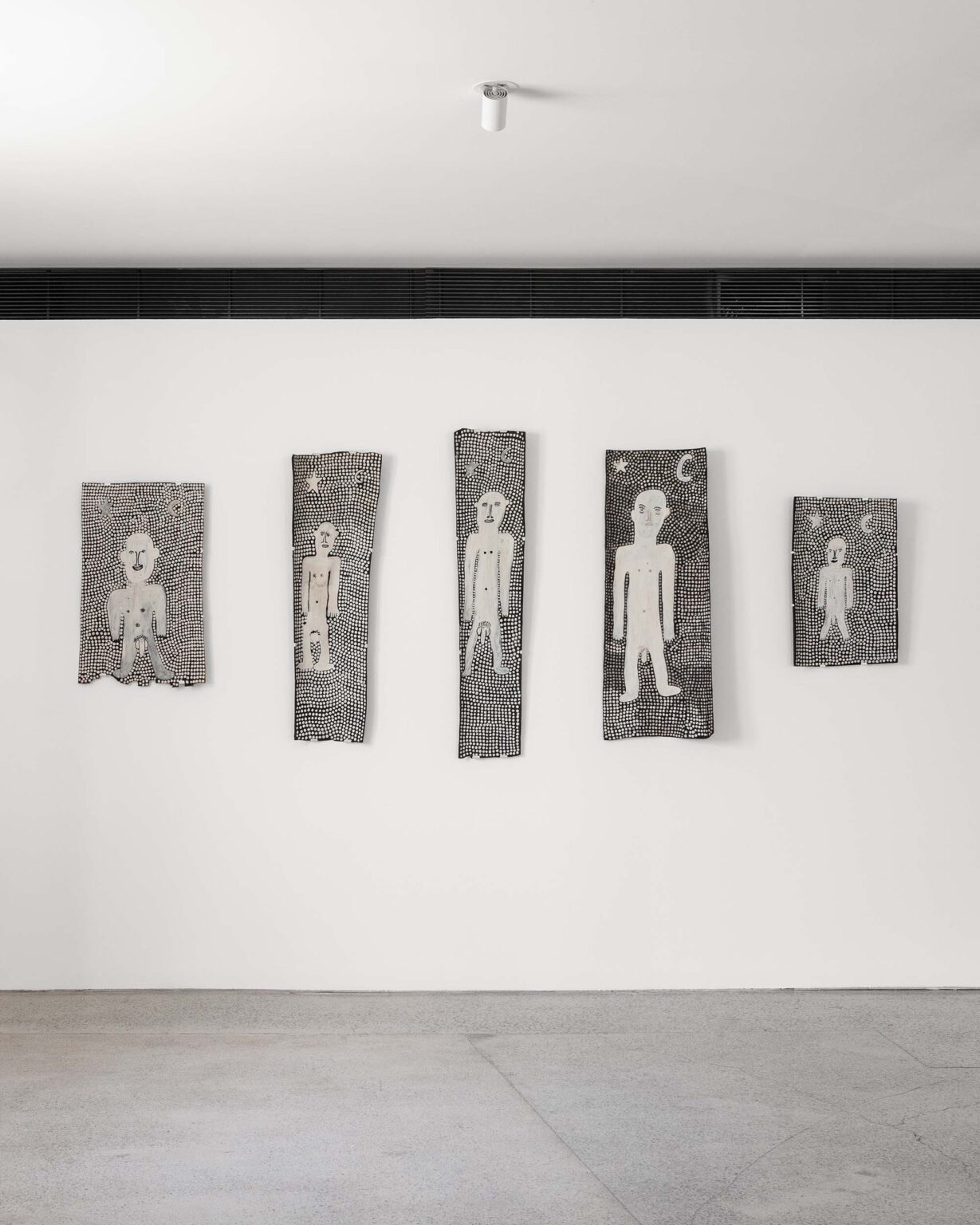
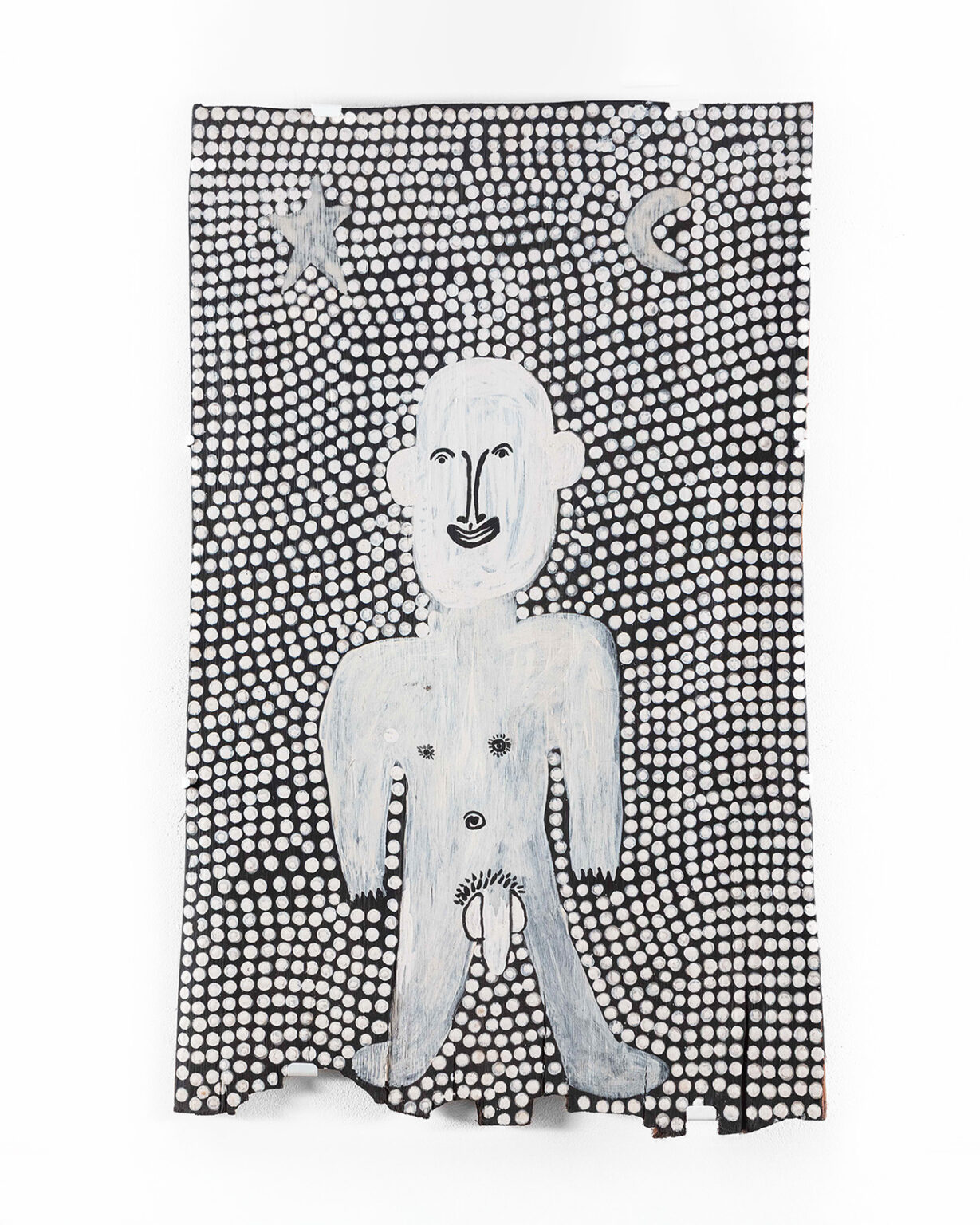
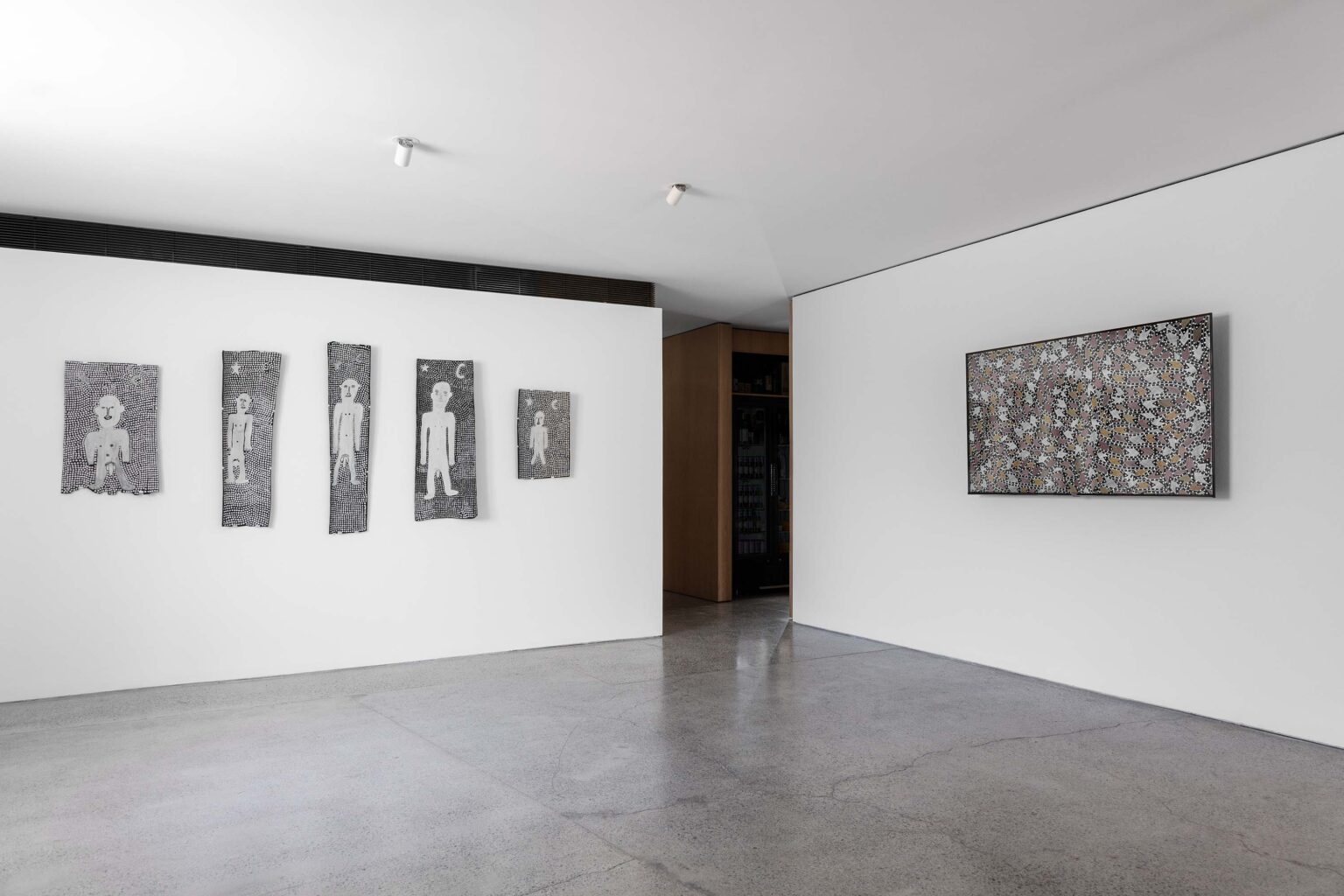
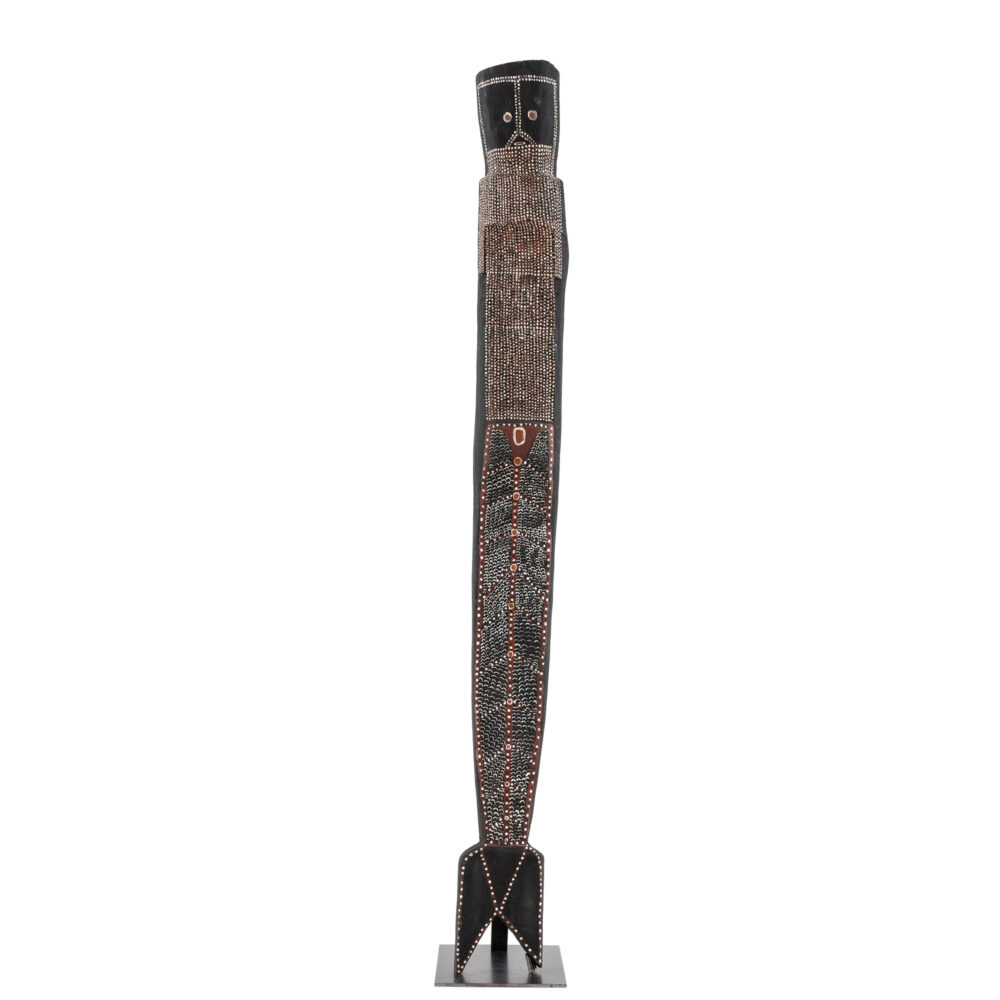
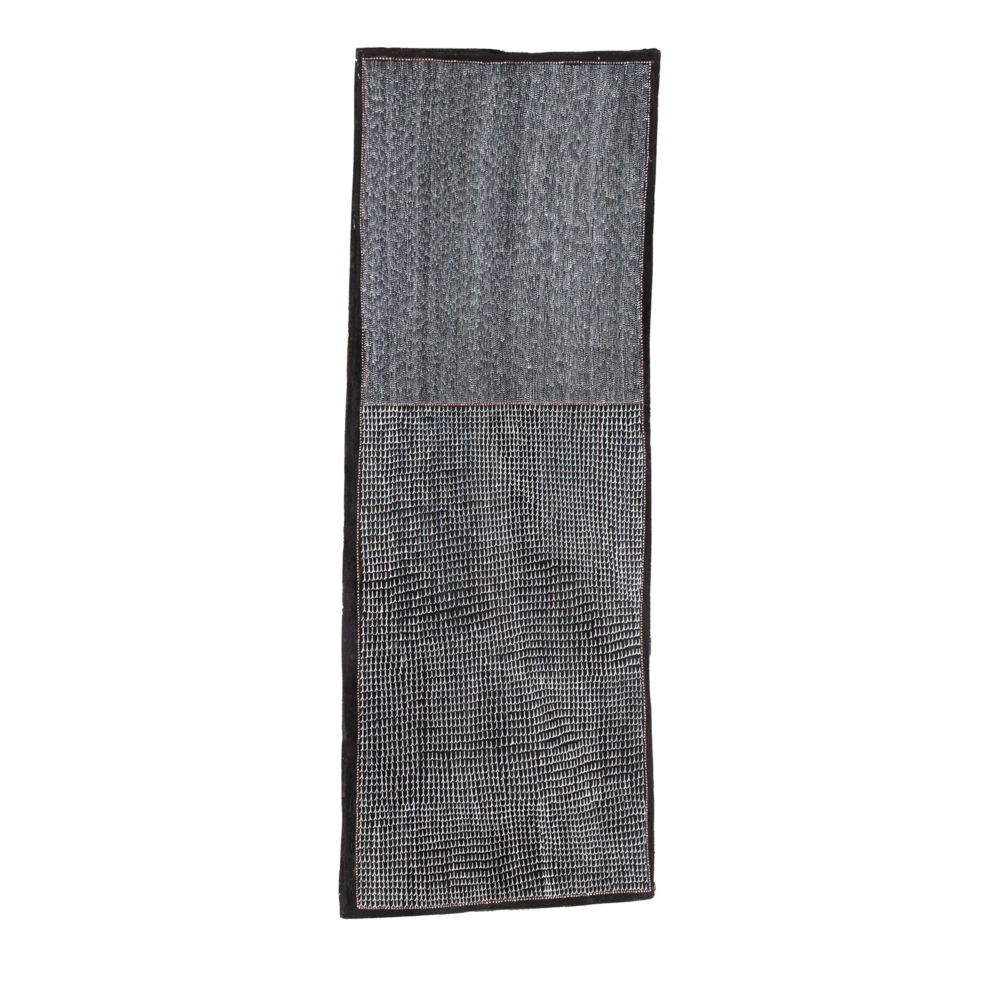
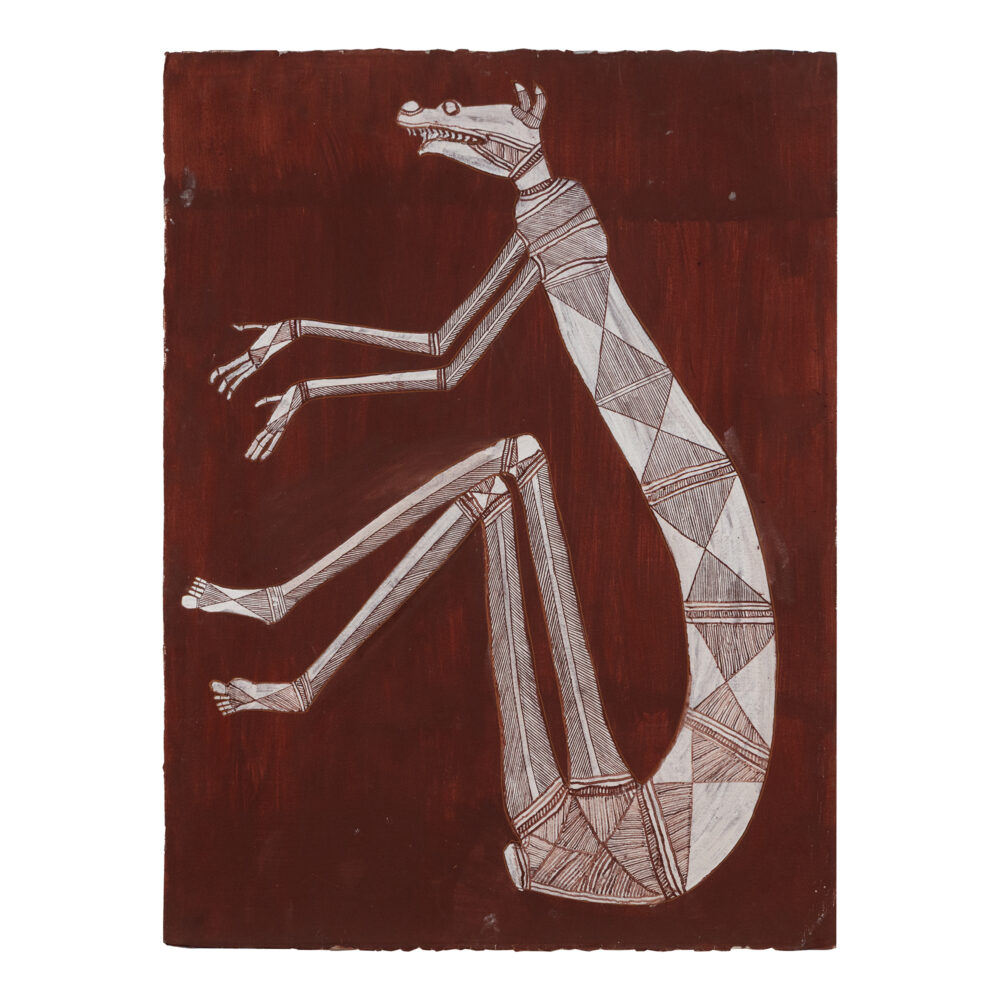
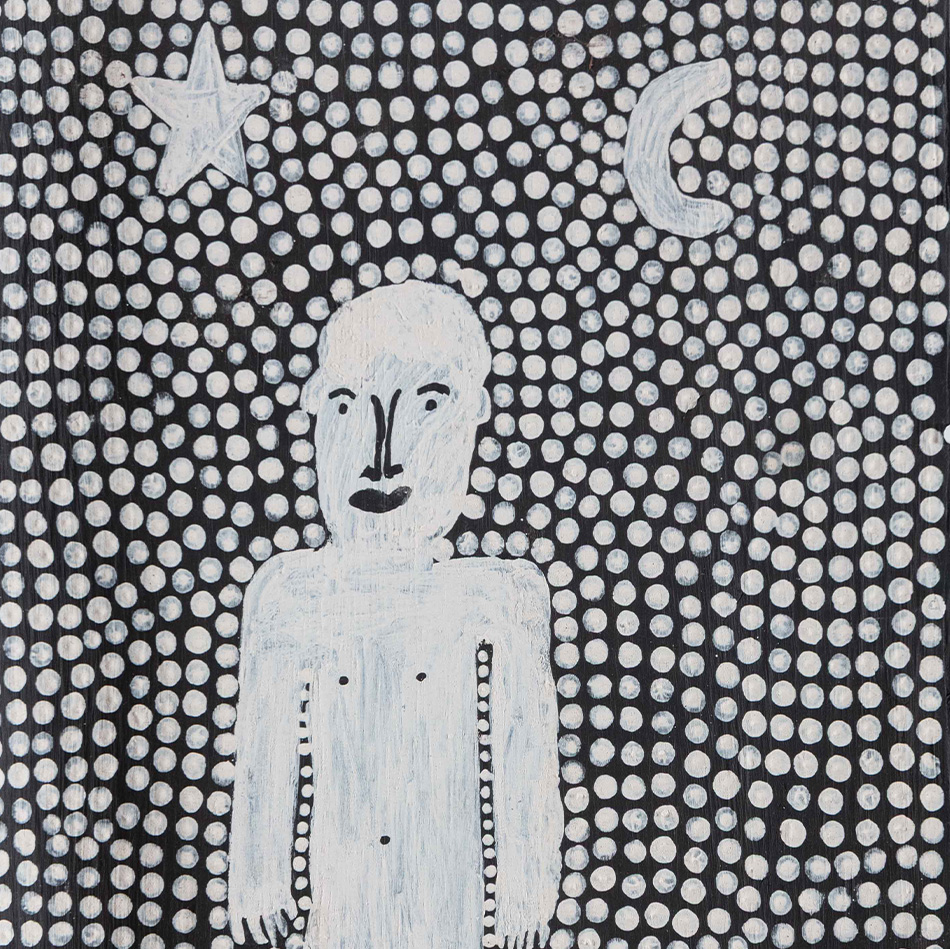
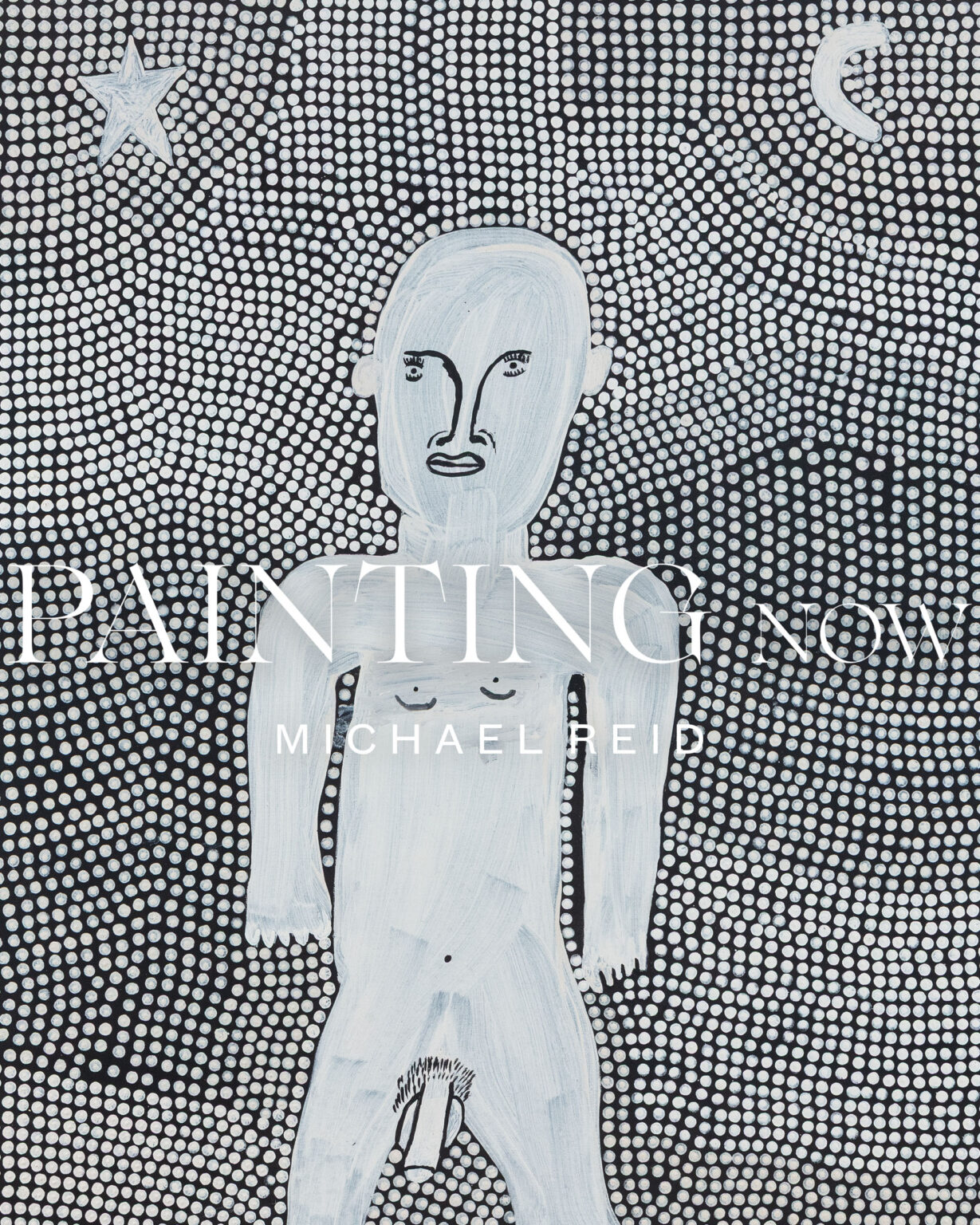
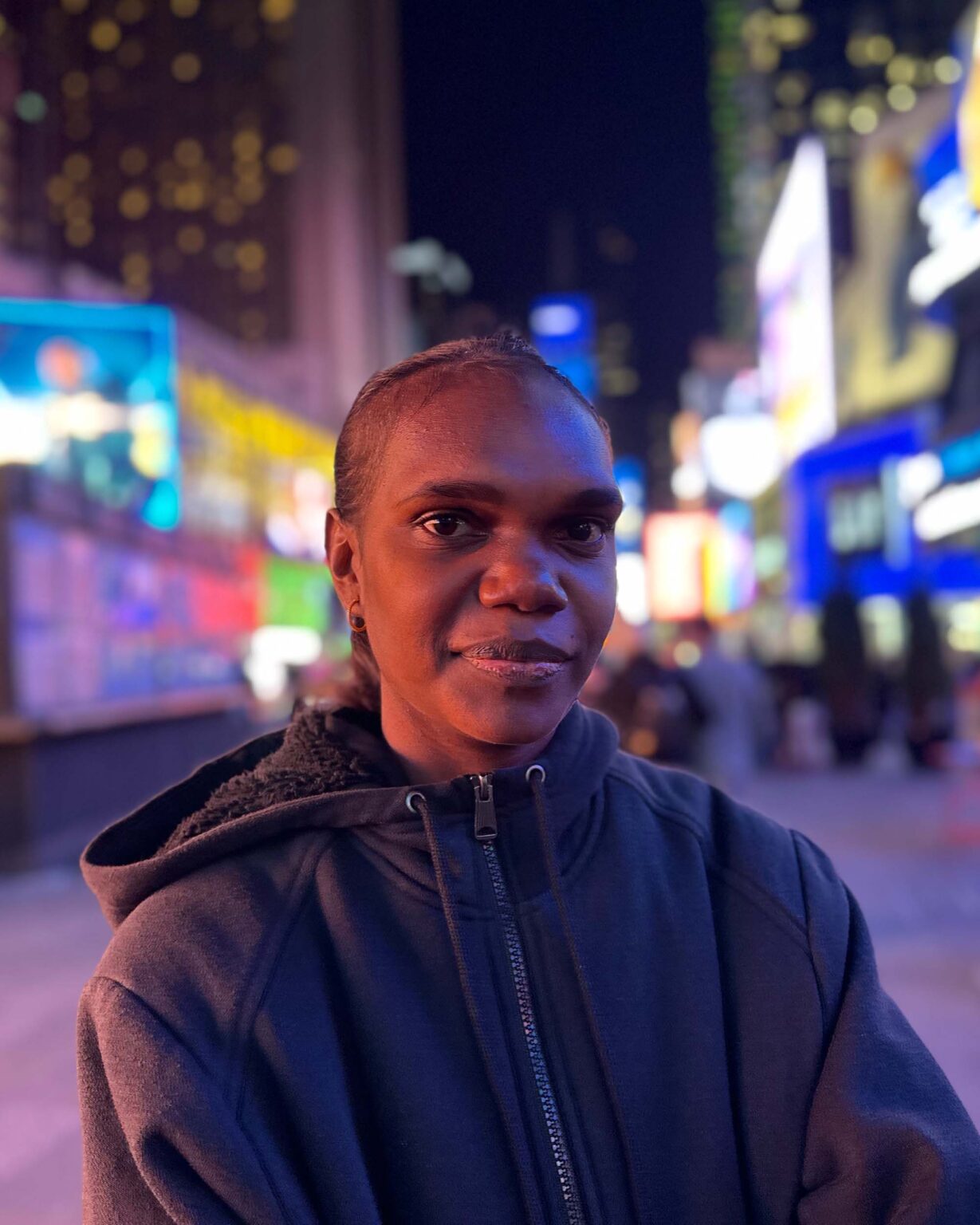
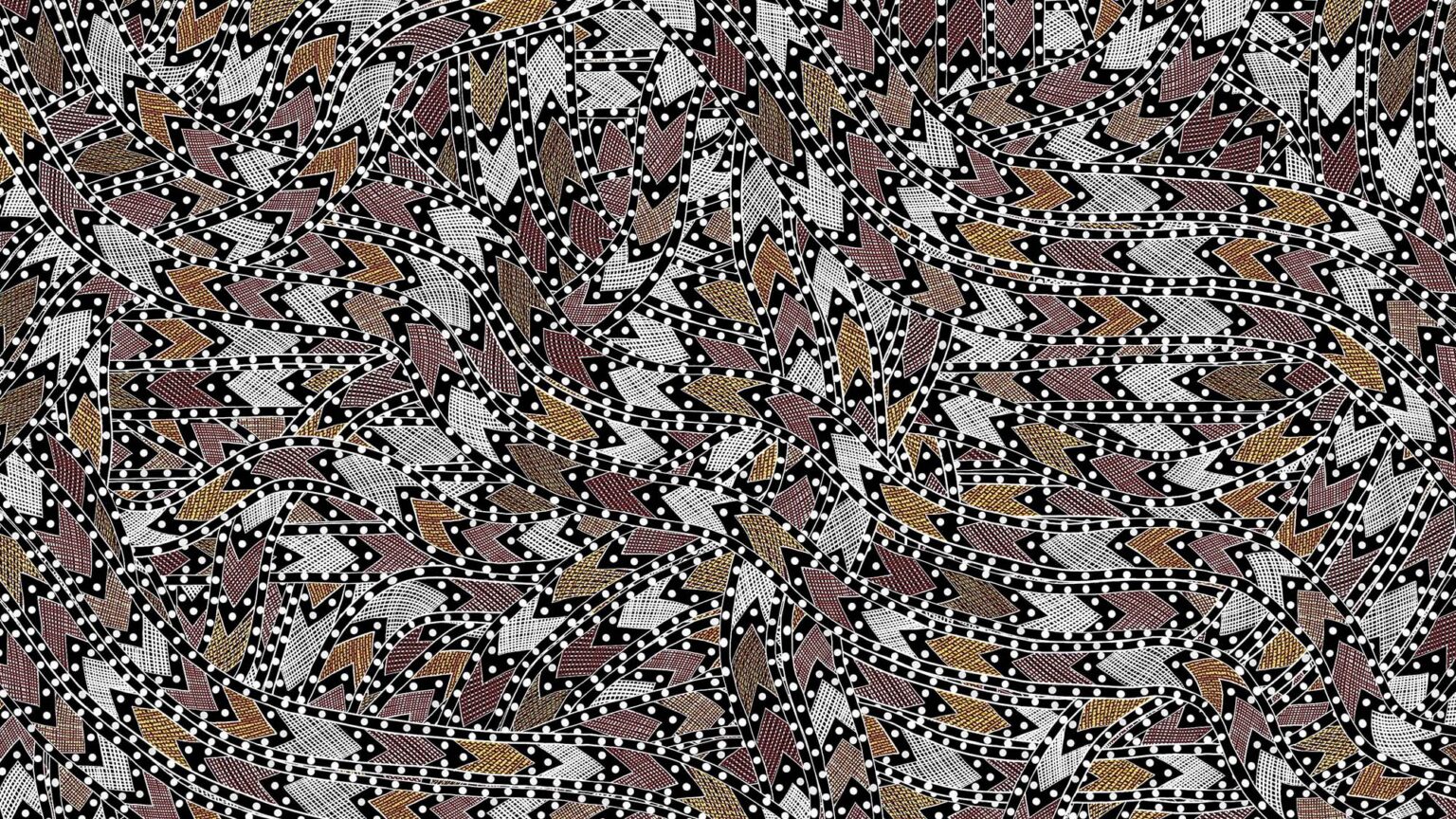
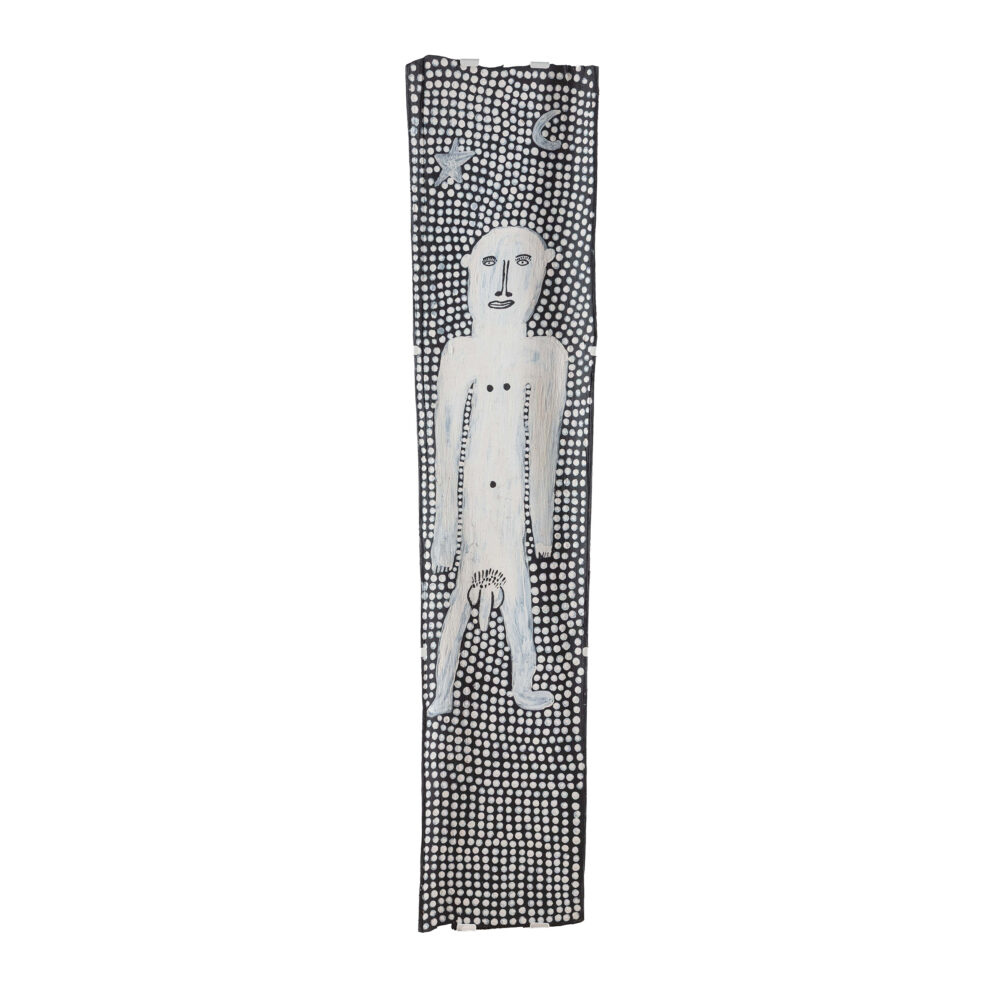
Columbiere Tipungwuti paints the celestial figures of Tiwi ceremonial culture – Japarra, the moon-man who brought mortality to the world, and japalinga, the stars whose ochred forms adorn dancers’ bodies in ceremony and yoyi. “I paint Japarra because I want to tell that story from long ago – what he did on earth and keep that story going,” says the artist. The story tells of Japarra’s fateful encounter with Purukuparli and Wai-ai, which led to the death of their child and Japarra’s ascent to the sky, where his white light reminds the Tiwi people of the cycles of life and death.

“In parlingarri – old time – Japarra saw the family out bush; the baby died from the sun, and Japarra wanted to take him up for three days and bring him back alive. But the father said, ‘Karlu’ – ‘no’. After fighting, Japarra flew up and stayed in the sky to become the moon and look down on the whole world. Now everyone around the world can’t come back; they must follow that father and his son and die when it is their time.”

On bark and canvas, Tipungwuti renders the ancestral moon-man in stark black and white, his face striking, solemn and compelling. “Japarra is white – the moon-man has a white body. All the stars are white and the moon is white too,” he explains of his elemental palette, made from white ochre gathered on Country at Wurankuwu.

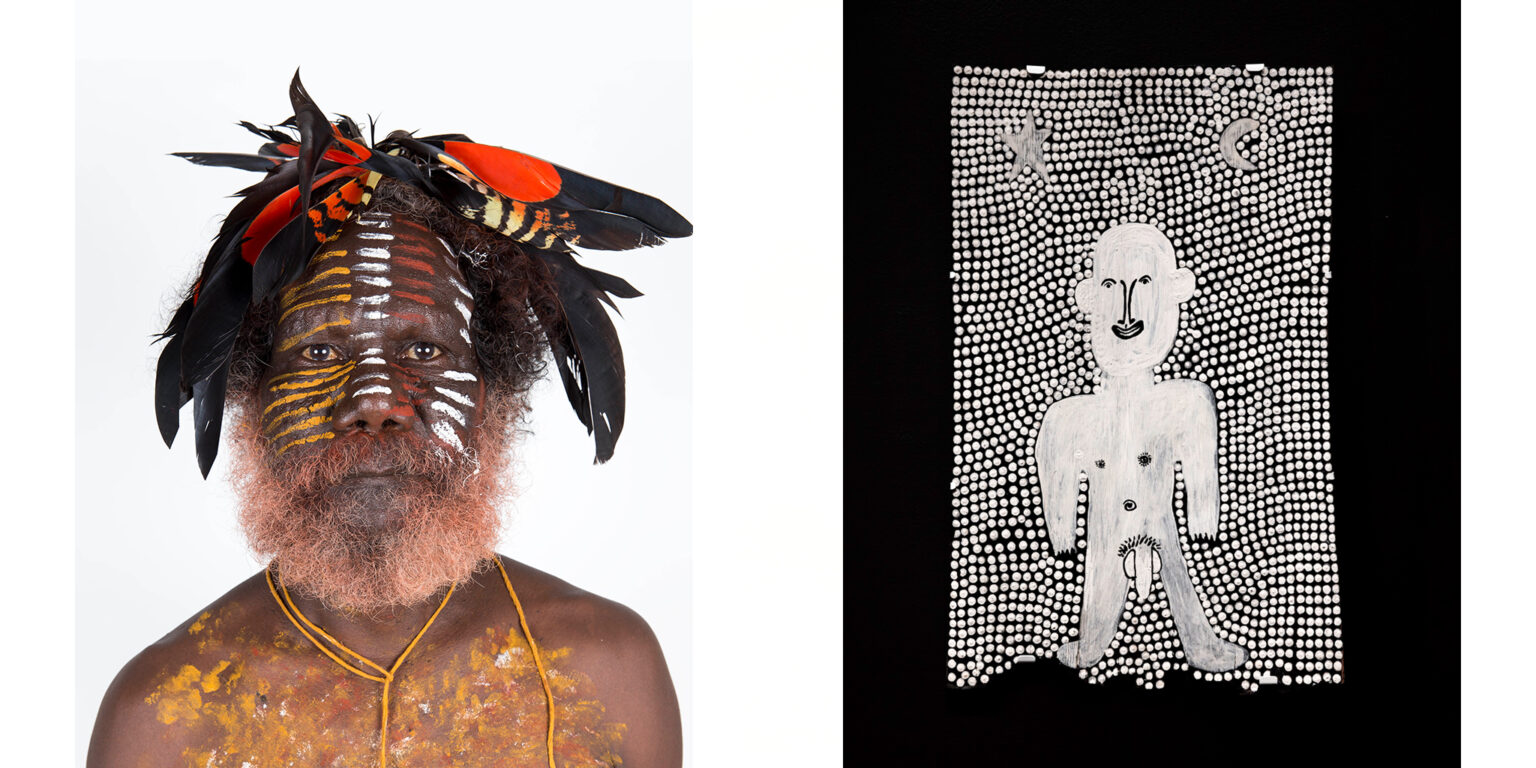
“I want to share my story and the story of my painting with people from all over the world,” says Tipungwuti, who also has a background in dance – performing ballet in Sydney in the 1980s and yoyi on the Tiwi Islands.

A finalist in the 2024 National Emerging Art Prize, Tipungwuti showed his paintings to great acclaim this year at UNSW Galleries in Parlingarri Amintiya Ningani Awungarra: Old and New, a widely celebrated exhibition curated by José Da Silva with Jilamara Arts. In Painting Now, Tipungwuti continues this lineage, transforming Tiwi creation stories into powerful, luminous images that bridge earth, sky and spirit.

“In years gone by, there was a strong Tiwi tradition of producing nude figurative ironwood carvings that tell [Japarra’s] story,” writes cultural critic and researcher Tristen Harwood. “Tipungwuti’s paintings draw on these important cultural influences to create innovative works grounded in his knowledge of the old stories and connection to longstanding practices of storytelling.”

For enquiries, please email dean@michaelreid.com.au

Explore more from Painting Now HERE.
What were some of your earlier artistic influences?
My close family did not paint, but when I grew up I was thinking about that story Purukuparli, Wai-ai and Jinani (Tiwi Creation Story) when they were out bush. When Jilamara opened in 1989 I started painting here. I have lived at Pirlangimpi and painted at Munupi Arts in between, but still going here at Jilamara.

What initially drew you to painting and how has your approach developed over time?
When both Tiwi people and murrintawi (non-Tiwi people) ask me why you doing this Japarra (moonman) painting I tell them that this is my story. Japarra offered to bring that baby back to life after three days, but because the father (Purukuparli) of the son (Jinani) said “no”, we all have to follow that baby and die when it is our time.

What have been some of your favourite career experiences?
When I decide to stop in Milikapiti and work at Jilamara full-time and not move around so much between the communities on the islands – Garden Point (Pirlangimpi) and Nguiu (Wurrumiyanga). Then I started making Japarra paintings and it has gone on from there. Last month I did my first Jilamara trip to Sydney and danced at the opening at UNSW.

Could you tell us about the body of work you have created for Painting Now?
I’ve been working on my painting for a long time, but the Japarra (moonman) painting I make now is from the last couple of years. I now only use white ochre because Japarra – the moonman – is white and the stars are white too.

Is there a narrative or throughline in your Painting Now series?
The story of the painting is from parlingarri (old time) when there were no cars or houses on the land. The story is of Japarra when he saw the family Purukuparli, Wai-ai and Jinani when he was out bush. Then he went away with that woman and her son Jinani died from the sun. He then fought with the father one. Japarra, he wanted to bring the baby back to life, take him up for three days and bring him back alive, but the father said “Karlu” – “no”. After a while they were fighting and Japarra flew up and stayed up in the sky to become the moon and look down on the whole world. So now everyone all around the world can’t come back, they have to follow that father and his son and die when it is their time.

How do you hope viewers will engage with your work in Painting Now?
I want murrintawi (non-Tiwi people) to look at that painting and learn about the story about long time ago on the Tiwi Islands. I want to share that story with the world.

I want to share my story and the story of my painting with people from all over the world. I haven’t always been a painter. I’ve also been a dancer. Ballet dancer in Sydney in the 1980s and also a dancer here on the Tiwis – my totem is Jarranga (buffalo) and I dance this at ceremonies. Now I am a painter and can share my story through my Japarra (moonman) paintings.

PAINTING NOW | Jo Chew

Posted by

PAINTING NOW | Jo Chew

  • Artist
    Jo Chew
  • Dates
    4—28 Dec 2025
  • Gallery Location
    Eora / Sydney
  • Catalogue
    Download now

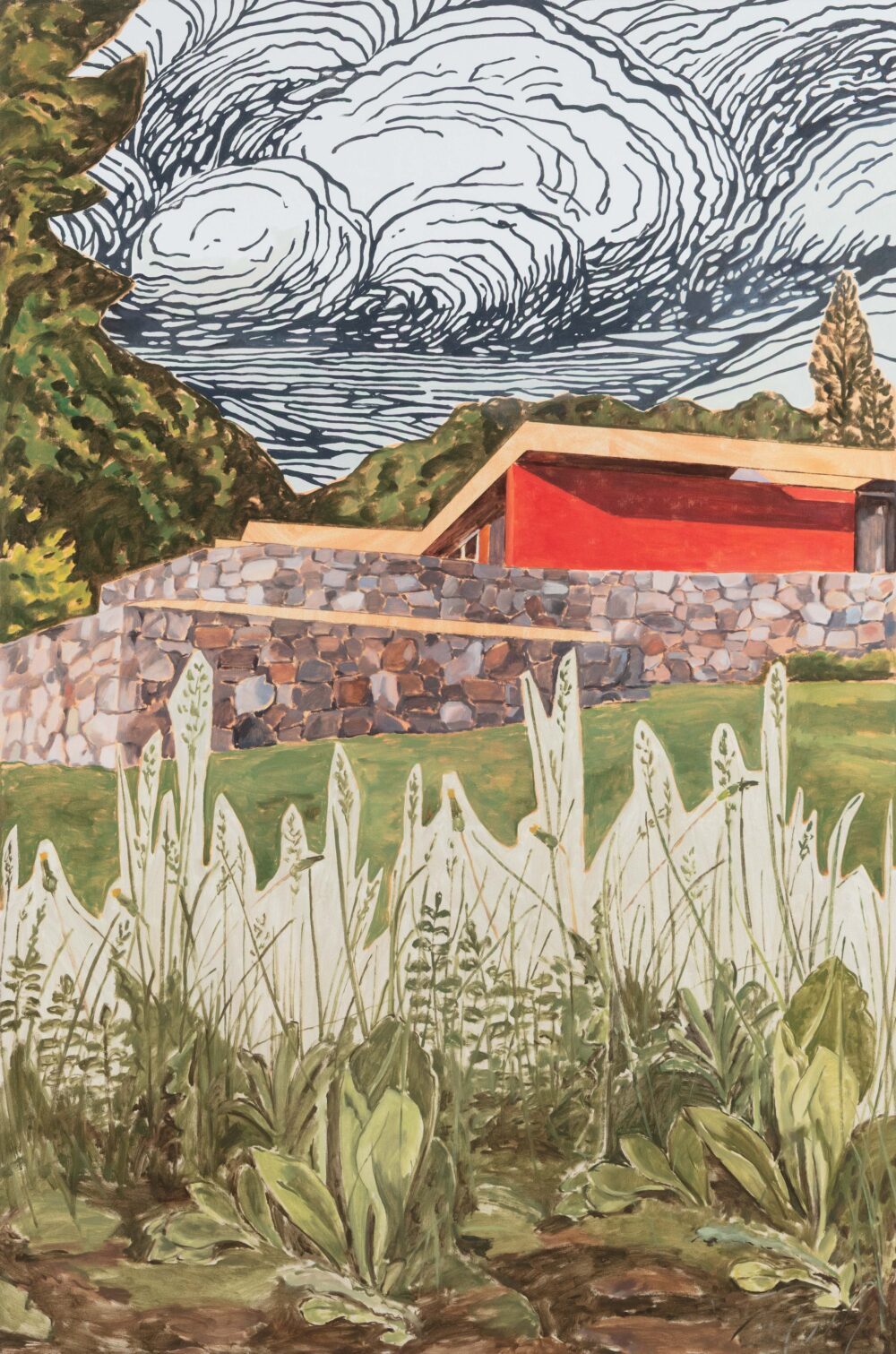
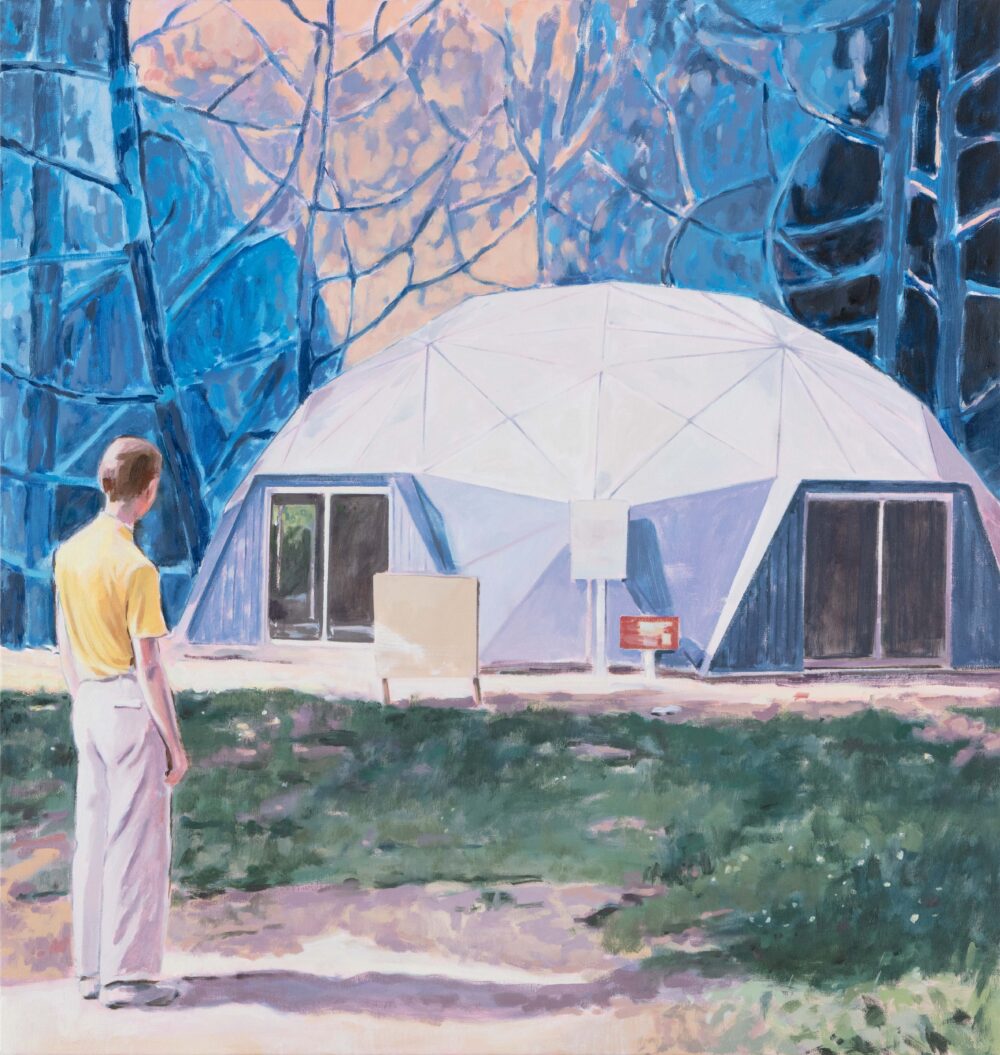
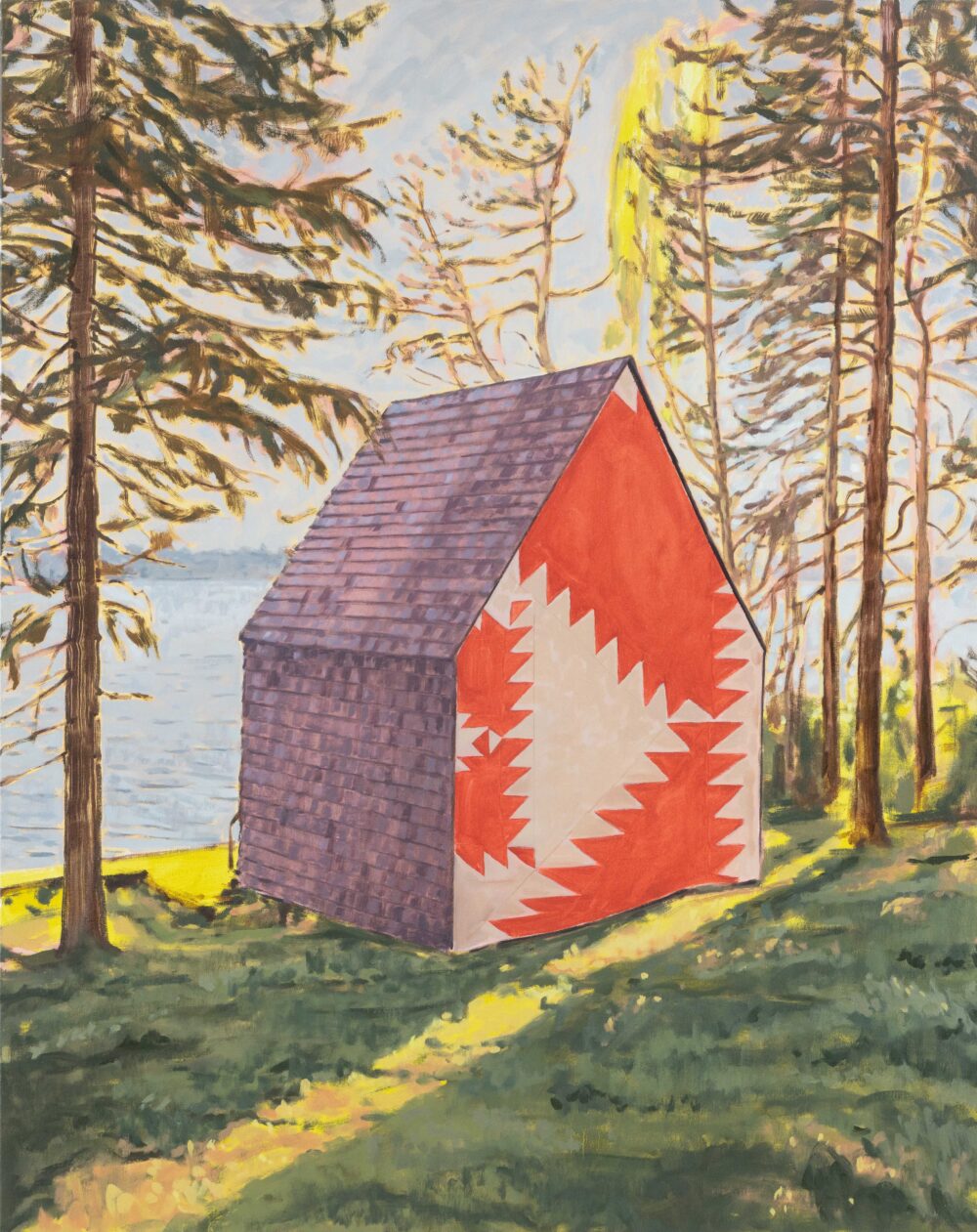
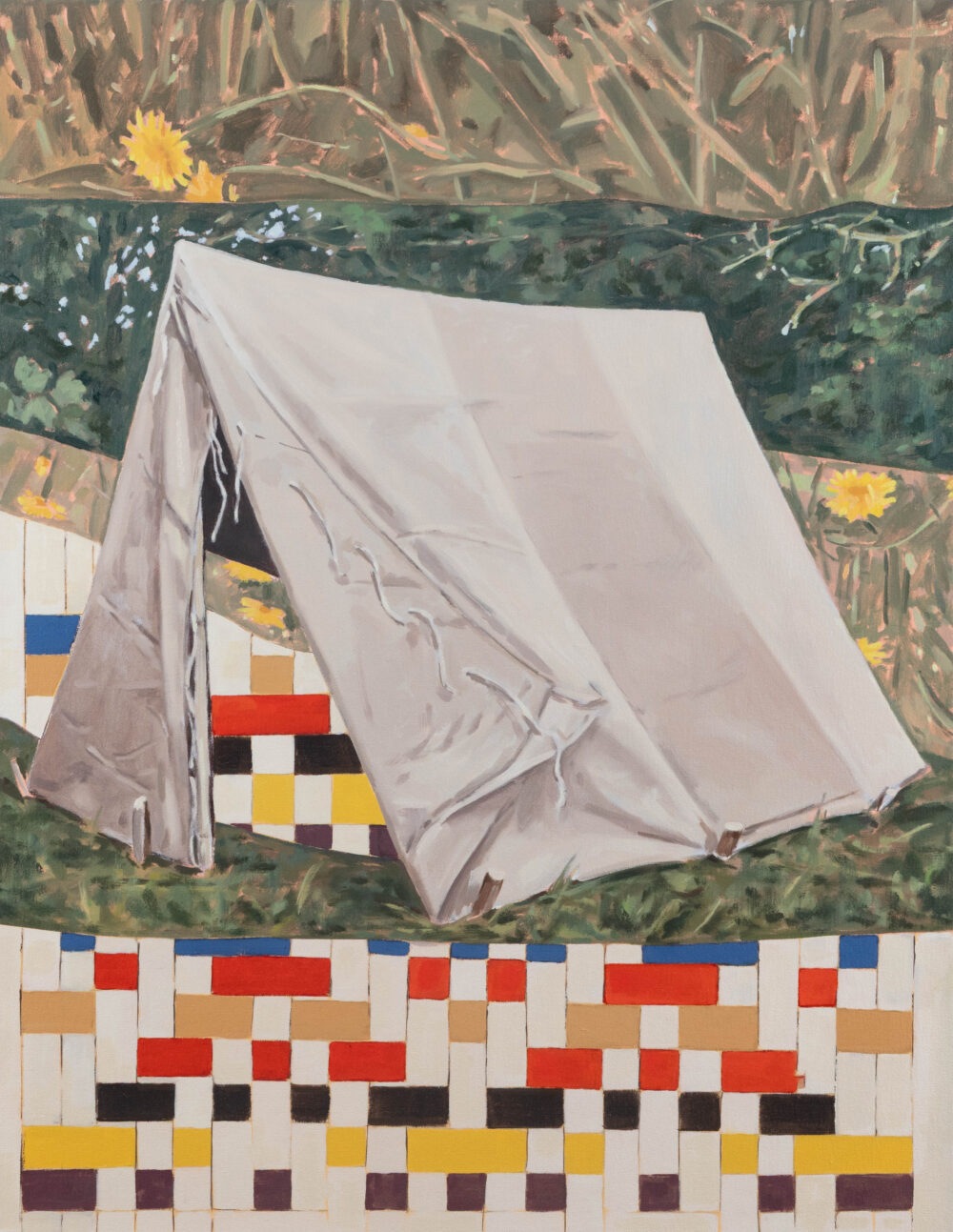
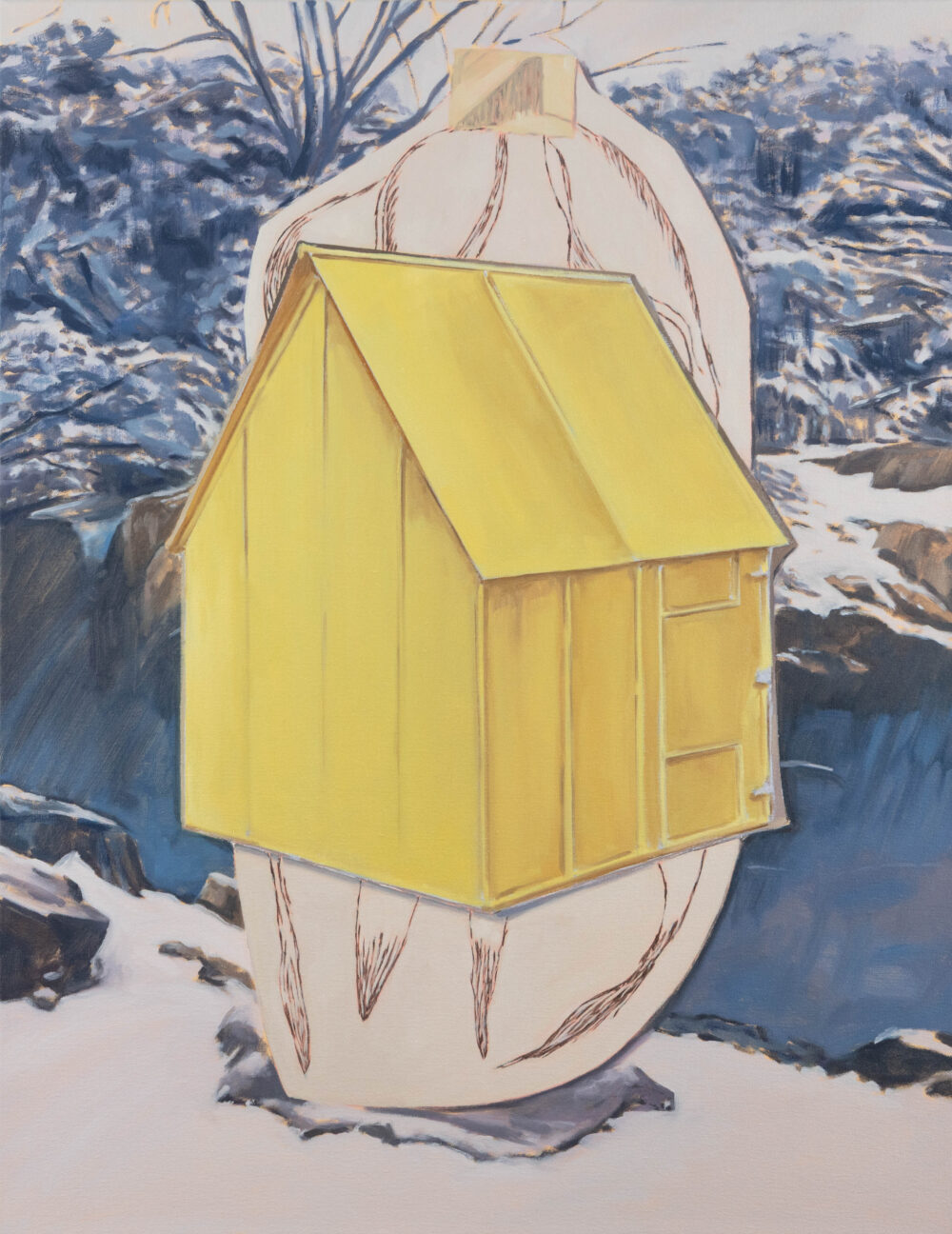
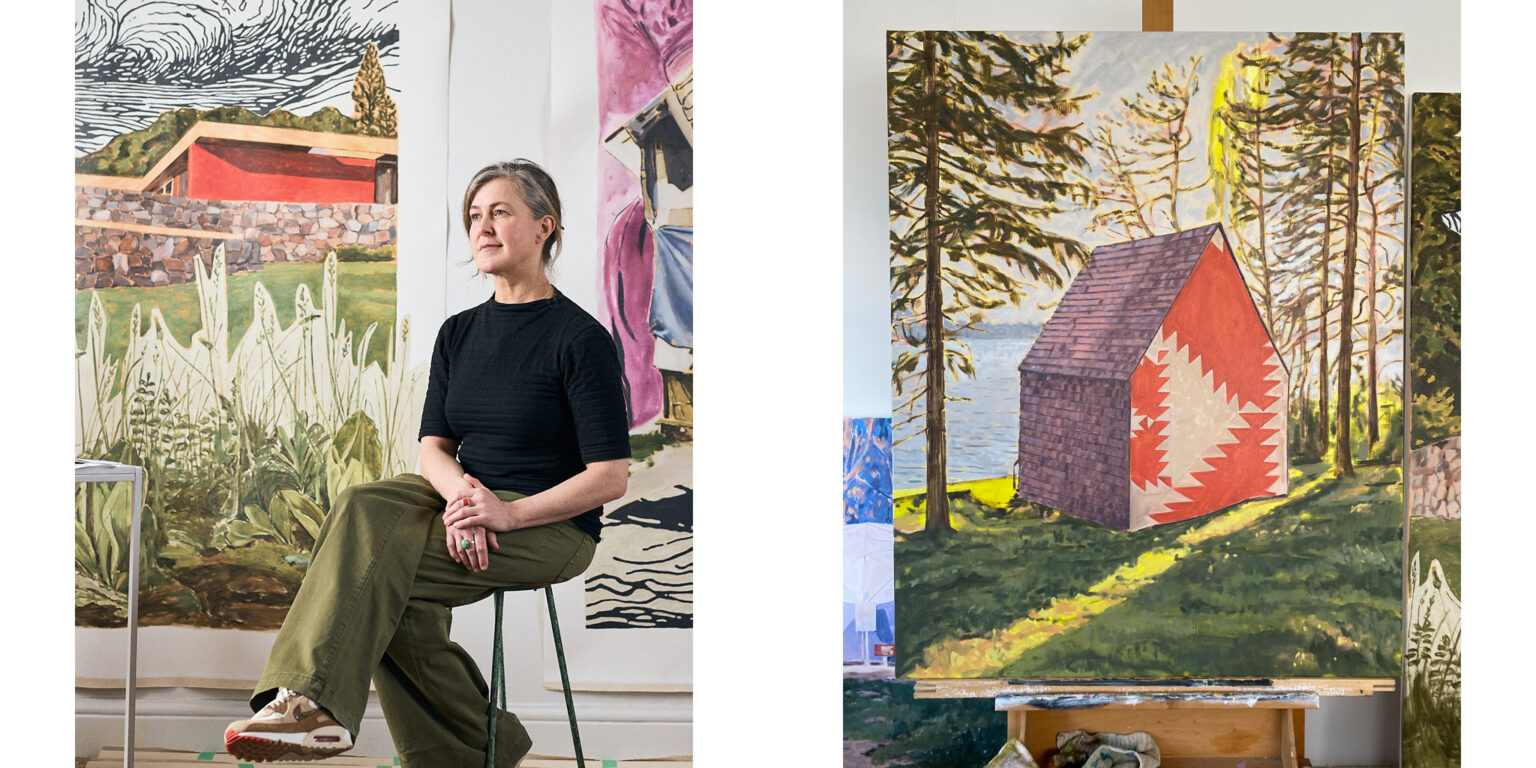
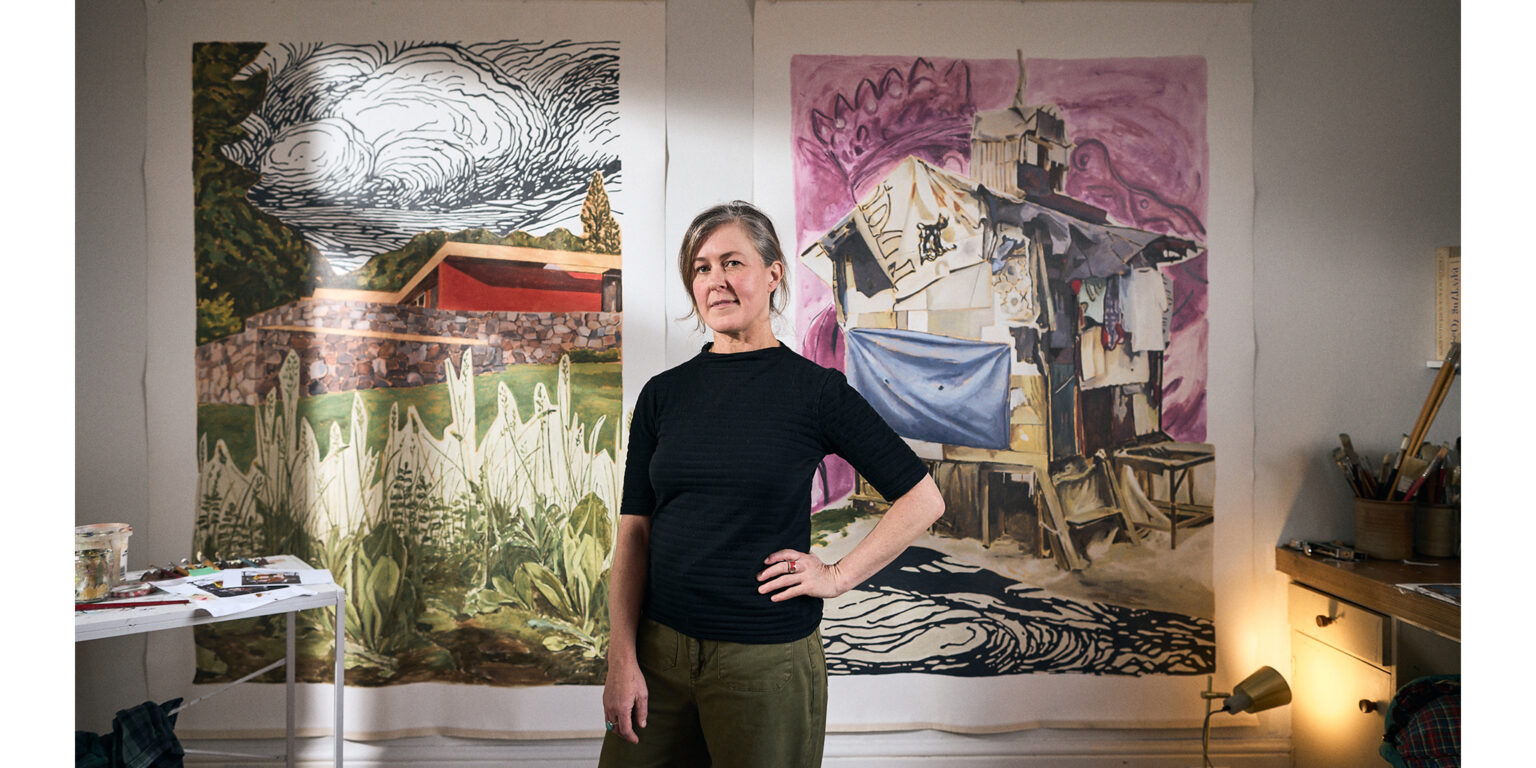
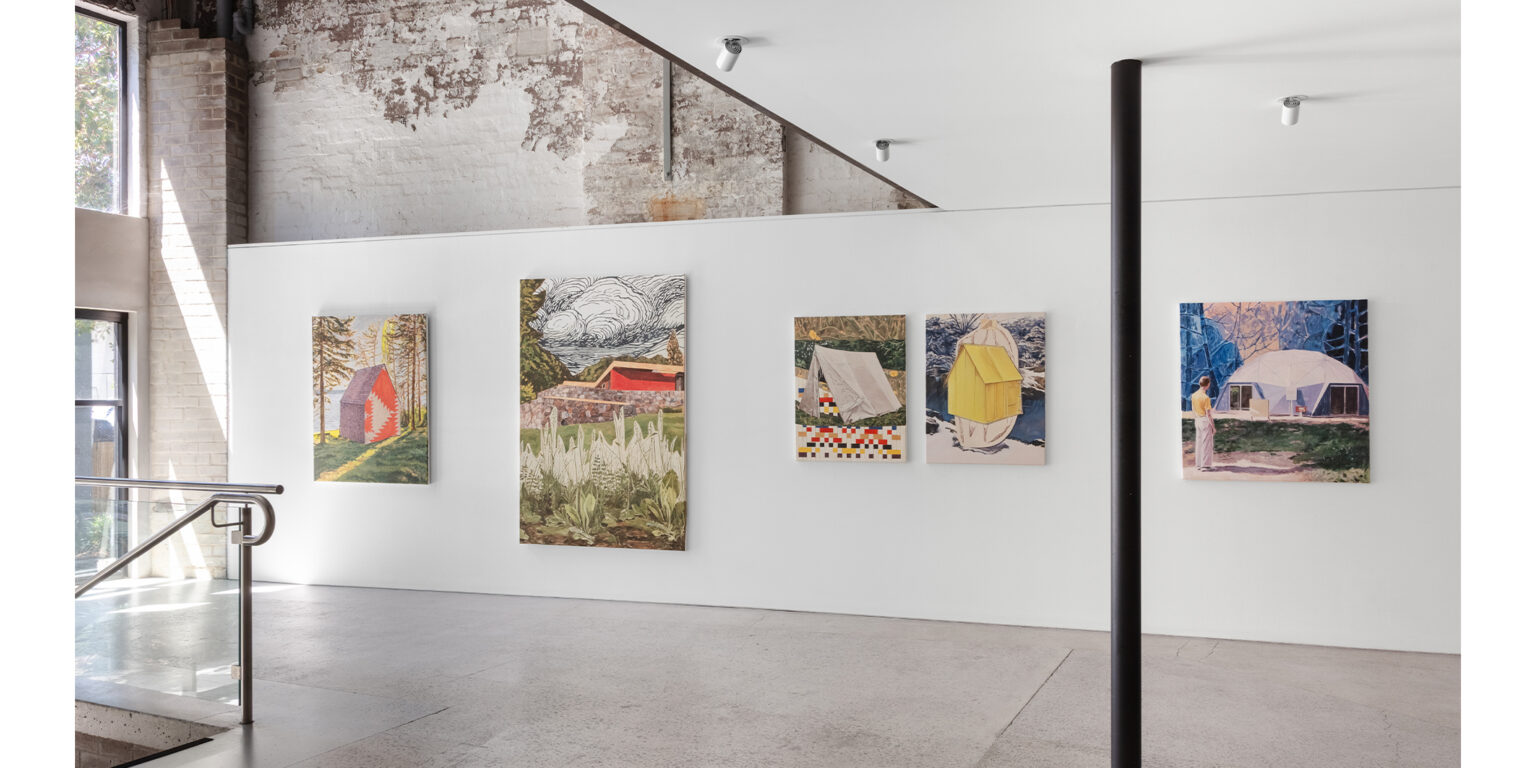
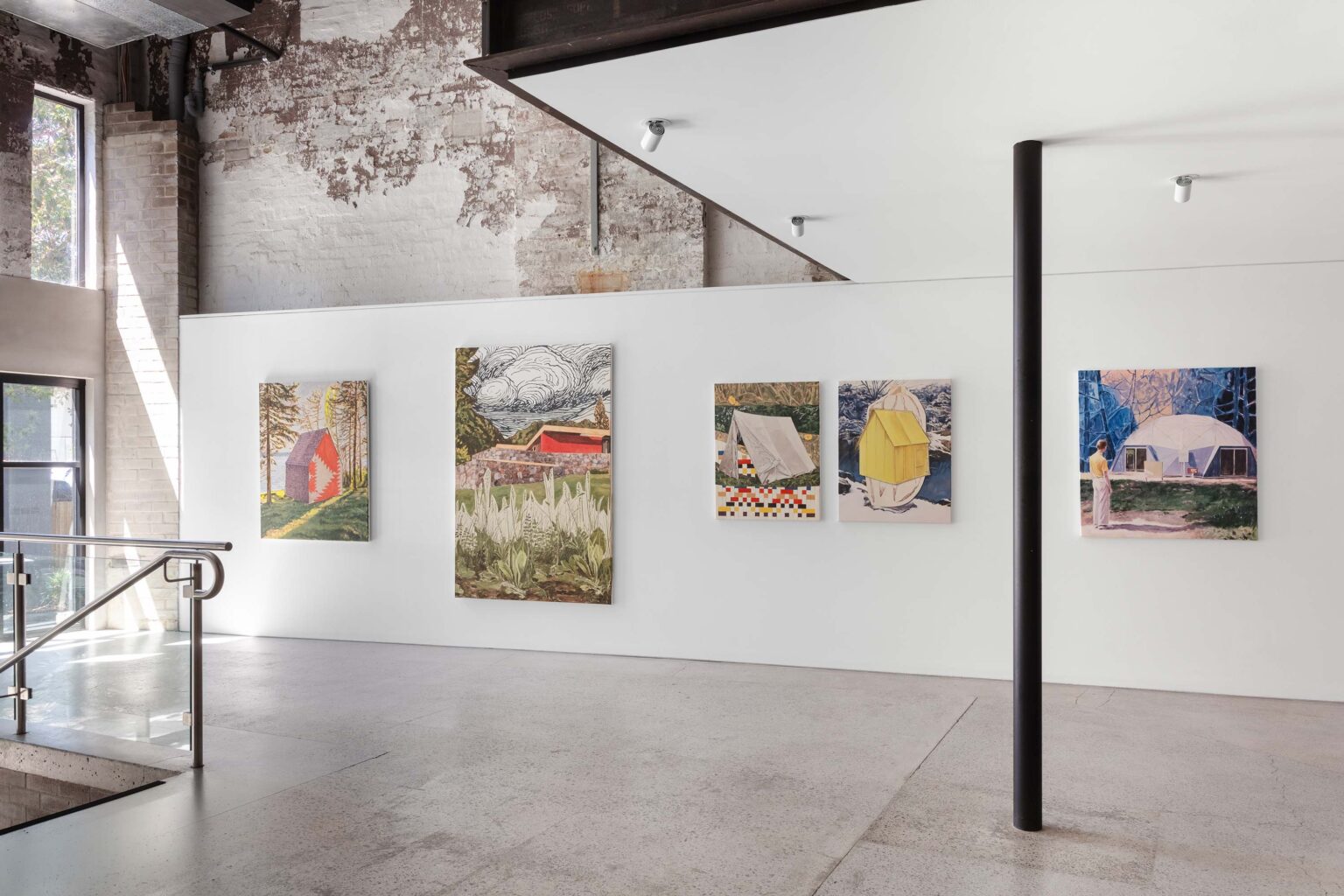
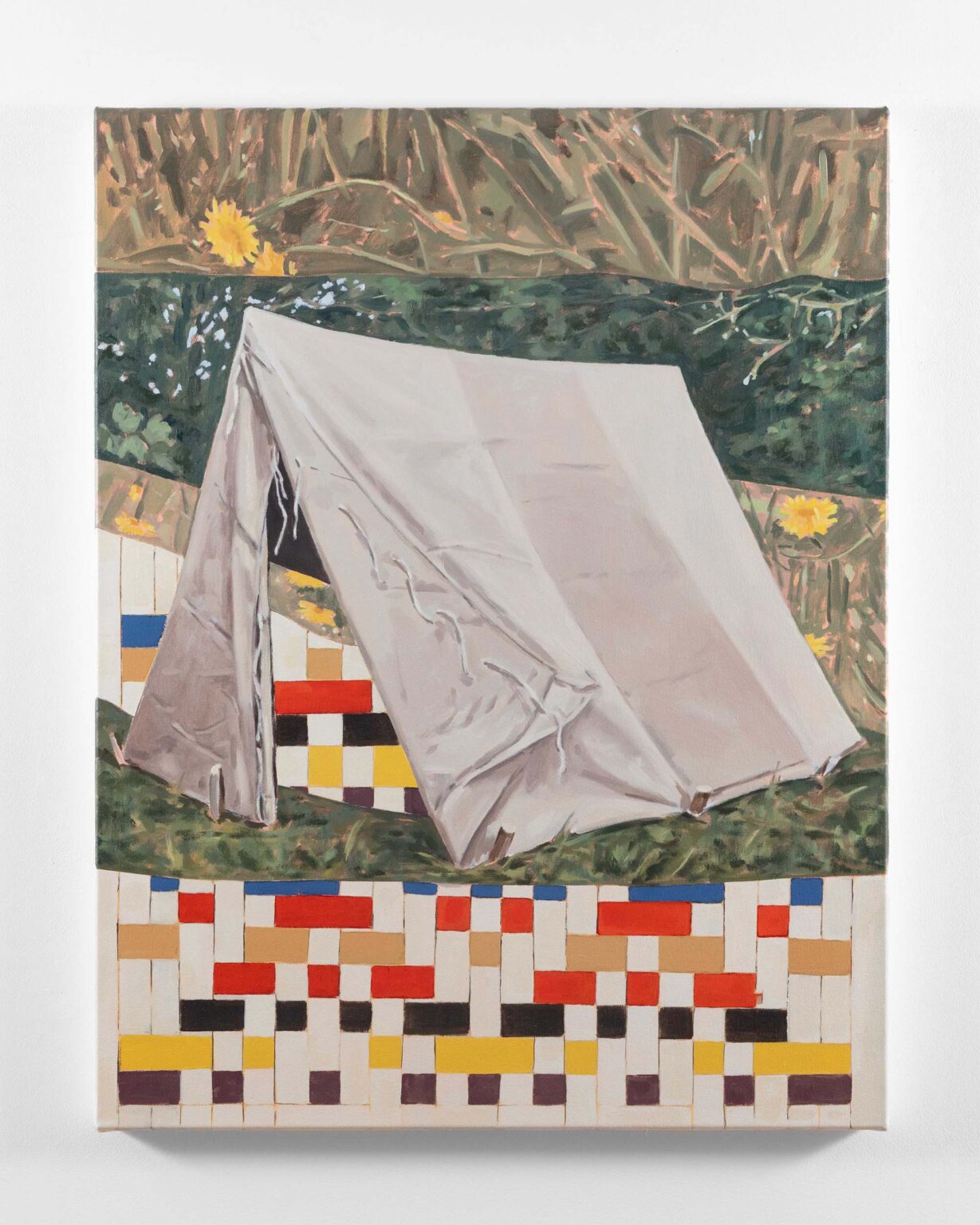
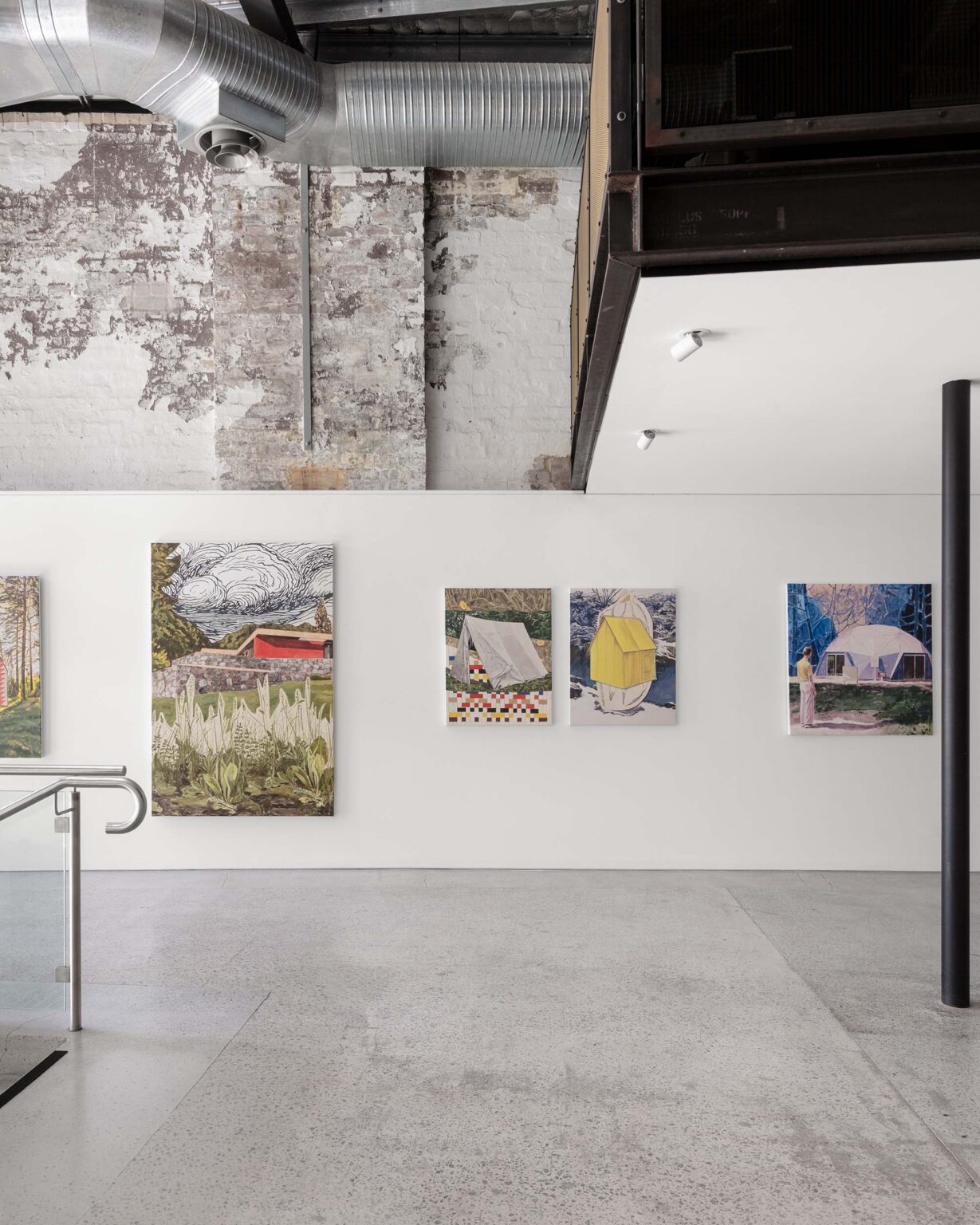
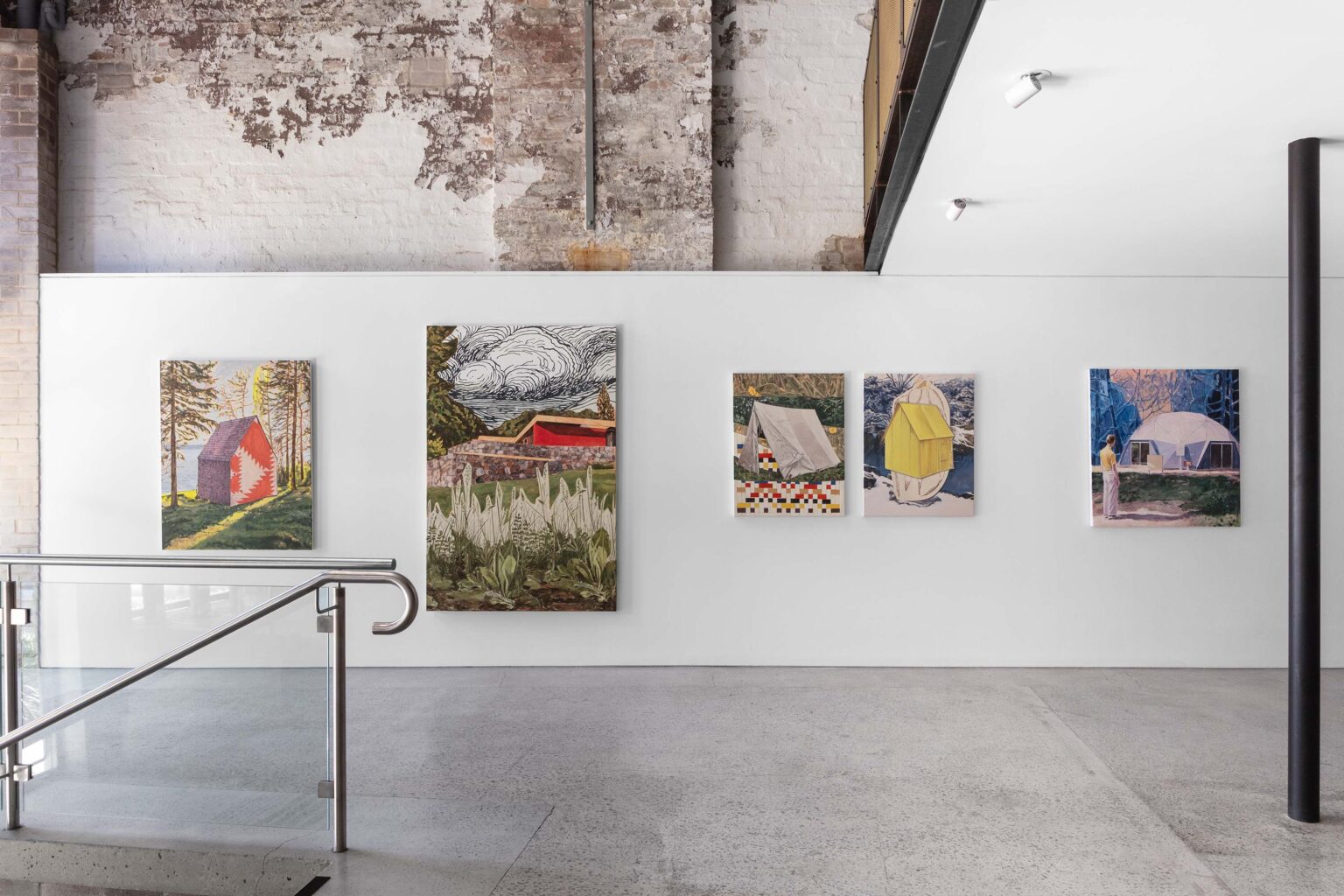
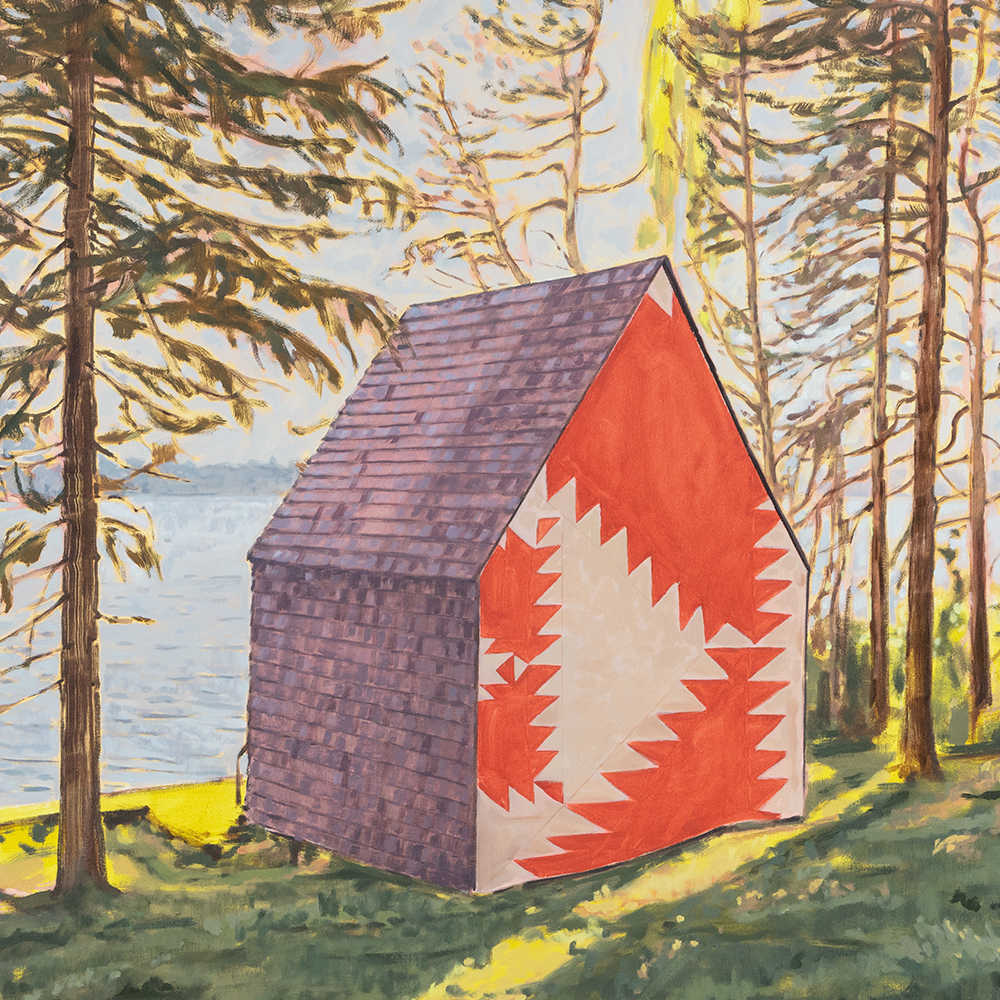
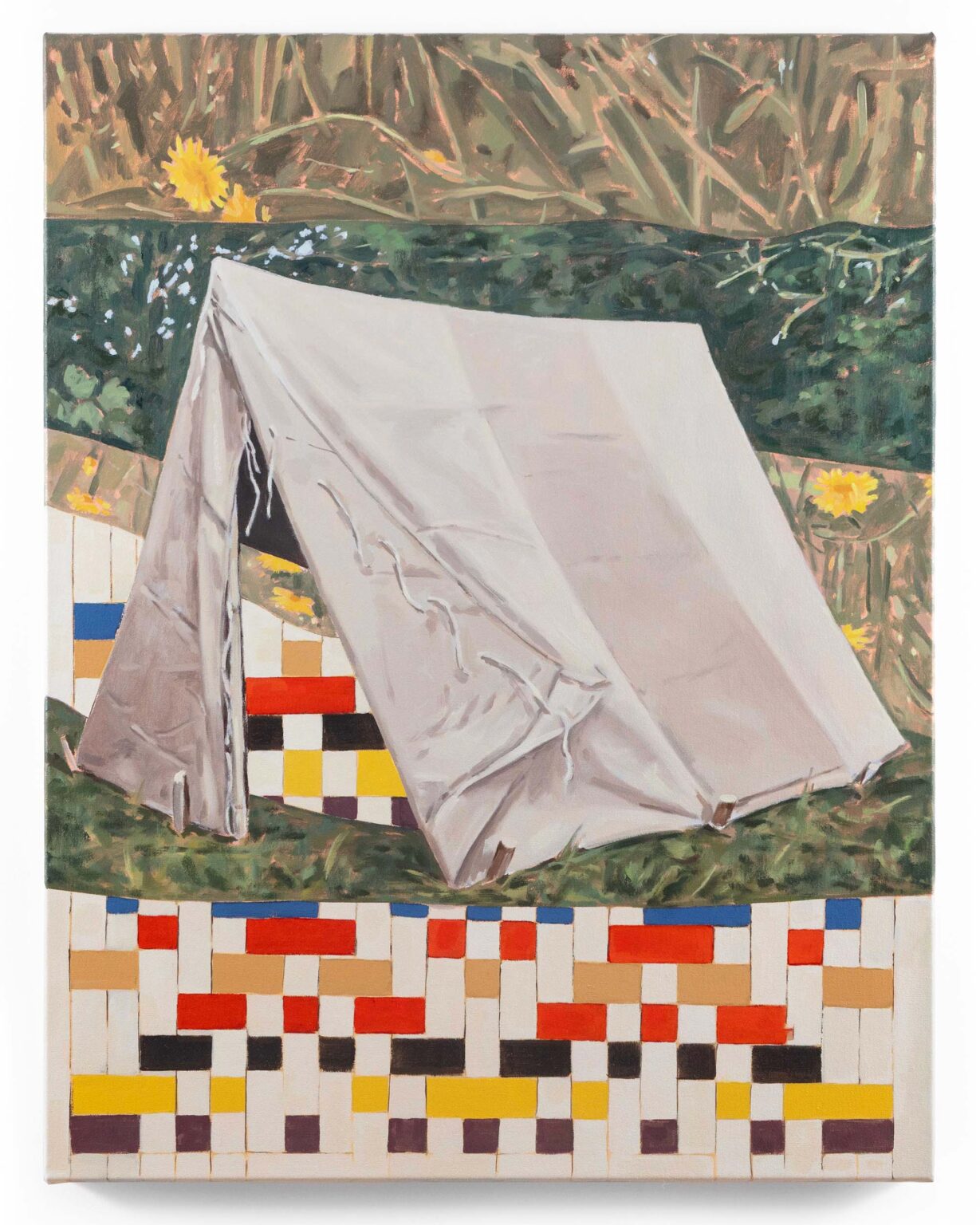
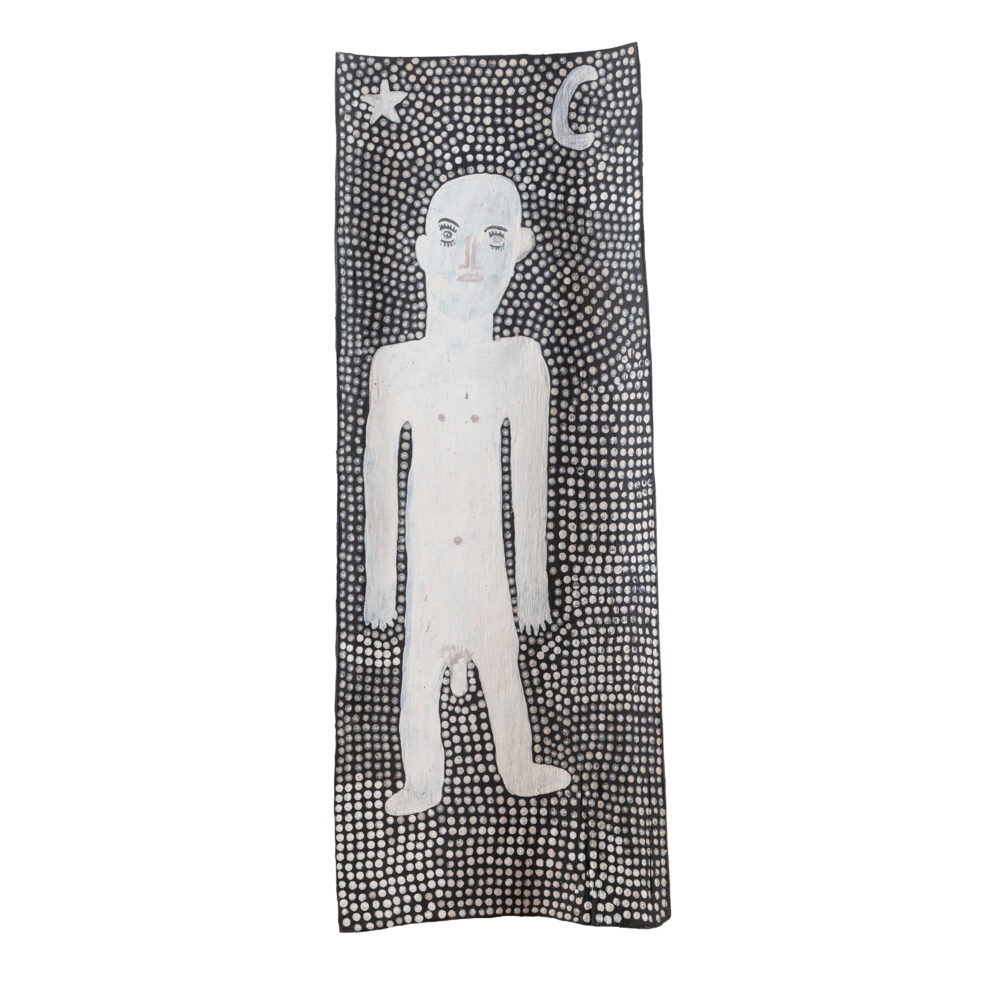
In the painted worlds of Nipaluna/Hobart-based artist Jo Chew, built forms become vessels for an open-ended meditation on vulnerability, hopefulness, loss and longing. “A poem doesn’t need to describe everything and a song doesn’t need to make sense – I feel it can be the same with a painting,” says the artist, whose vibrant, sun-dappled paintings derive from collaged compositions; fragmentary photographs, drawings and found references spliced together “in the hope of finding something that speaks to me.”

This process achieves an almost trompe-l’œil effect, with her large-scale paintings retaining a collagistic sense of pictorial layering in space – an illusory interweaving of paper and paint, memory and material. In doing so, her practice breathes new life into the medium, in step with the curatorial ambitions of Painting Now.

Despite the work’s compelling ambiguities, themes slowly coalesce through Chew’s Painting Now series, in which house-like structures repeat in various guises and take on poetic resonance. Whether temporary and improvisational – tents and makeshift A-frames – or suggesting past visions of a future utopia – modernist dream houses and geodesic domes – her recurring pitched forms invoke a universal language of shelter, inviting reflections on our longing for refuge and a place to call home.

Brought to life during her final months in her long-term home, Chew’s exploration of how we dwell and what we treasure is tinged with a quiet acceptance of transience. “It doesn’t mean things or places can’t be treasured,” she says. “Just that nothing is really ours to keep.” The artist notes a nostalgic thread running through her constructed images: “A desire to get something back that we can’t quite retrieve,” she says. “But they’re not dark or depressing; I think there’s an appreciation for something from the past and an optimism that something similar might still be found. Many of my works this year have a feeling of something hidden and forming, suggesting a period of rest and reflection; cocoon-like, perhaps.”

For enquiries, please email dean@michaelreid.com.au

Explore more from Painting Now HERE.
What were some of your earlier artistic influences?

From an early age I was encouraged to be curious – to look at and find wonder in small things and the natural world. My parents and grandparents were, and are, resourceful and creative. Both of their homes were full of books and art and treasured objects. I remember beachcombing on Bruny Island and Dolphin Sands – collecting shells, seedpods and sea urchin endoskeletons. Treasuring these small ‘homes’ fed my creative impulse. I can’t help but see their influence on my paintings of shelters and dwellings.

What initially drew you to painting and how has your approach developed over time?

Painting is magical. I don’t know how else to describe it. I’m always amazed when looking at paintings – they can be two years old or two hundred years old or two thousand years old and somehow they feel current and alive. I love how painting distils time – the movement of a hand and the thought process of the maker still sit on the surface and in the layers of these objects. It’s like a direct link to a moment in time, a place on earth and the thinking of a person that never ceases to amaze me.

I’m particularly drawn to paintings that are more than descriptive; I’m interested in internal worlds as much as external. Music and poetry have been influential and I try to think visually in these ways. A poem doesn’t need to describe everything and a song doesn’t need to make sense – I feel it can be the same with a painting. Shelters and dwellings are recurrent themes. This has, at times, taken on a form of social or political commentary, but more often than not they stand in for the way we dwell and how we find ourselves in the world. They’re often temporary in nature – either in the structure itself or in the way it might be painted (with a kind of fragility or brevity). They are about our experience – which is huge and saturated but also so incredibly fleeting and small in the scheme of things.

What have been some of your favourite career experiences?

I’ve had some wonderful moments – being selected for or winning prizes in recent years has been hugely encouraging. However, I think the biggest creative breakthroughs came with moving back home to Tasmania and throwing myself into research. Those years were both healing and expanding for me as a person and for my work. It was a huge luxury to have the time and space and support to think deeply and experiment and paint.

Could you tell us about the body of work you have created for Painting Now?

I began with collages – this is how I usually begin – collecting and combining pictures, drawings, paintings; extracting parts and overlaying or weaving together images in the hope of finding something that speaks to me. During the process of painting them I was conscious that the time in my current home was drawing to a close. I will have been in this house for seven years – the longest I’ve ever been in a place in my adult life. It’s been a crucial touchstone for me and my children, but I was aware it wouldn’t be forever. I’ve been thinking about the importance of holding onto things lightly. It doesn’t mean things, or places, can’t be treasured – just that nothing is really ours to keep.

Is there a narrative or throughline in your Painting Now series?

When naming these works I realised a lot of the names revolve around ideas of mapping – it’s no coincidence given maps have loomed large in my day job at Mona library recently. But I also think they’re about quiet observation – scoping out a way forward, but biding my time. Many of my works this year have a feeling of something hidden and forming, suggesting a period of rest and reflection; cocoon-like, perhaps.

How do you hope viewers will engage with your work in Painting Now?

I hope they will find something pleasurable in these paintings. Perhaps they’ll suggest a memory, association or a feeling for the viewer. In my mind there’s something deeply nostalgic about these works – a desire to get something back that we can’t quite retrieve. But they’re not dark or in any way depressing; I think there’s an acknowledgement and appreciation for something from the past and an optimism that something similar might still be found.

PAINTING NOW | Brenton Drechsler

Posted by

PAINTING NOW | Brenton Drechsler

  • Artist
    Brenton Drechsler
  • Dates
    4—28 Dec 2025
  • Gallery Location
    Eora / Sydney
  • Catalogue
    Download now

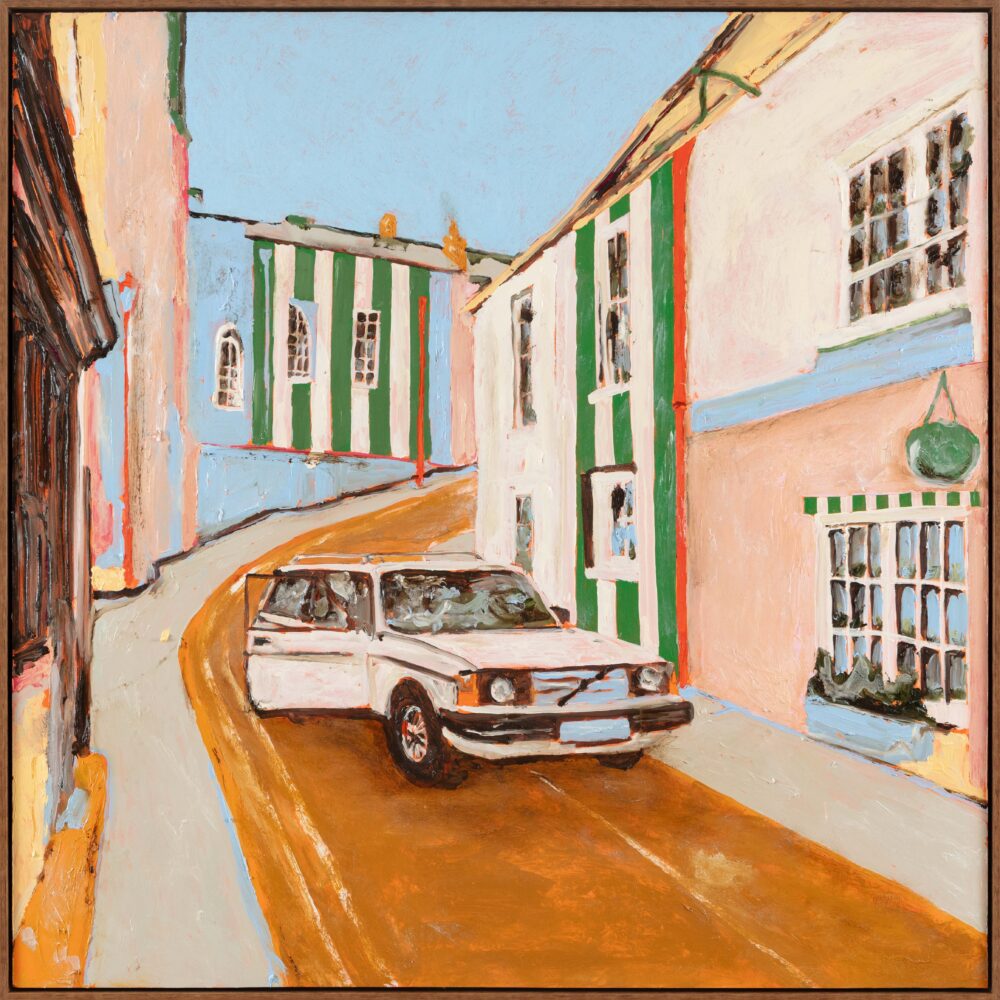
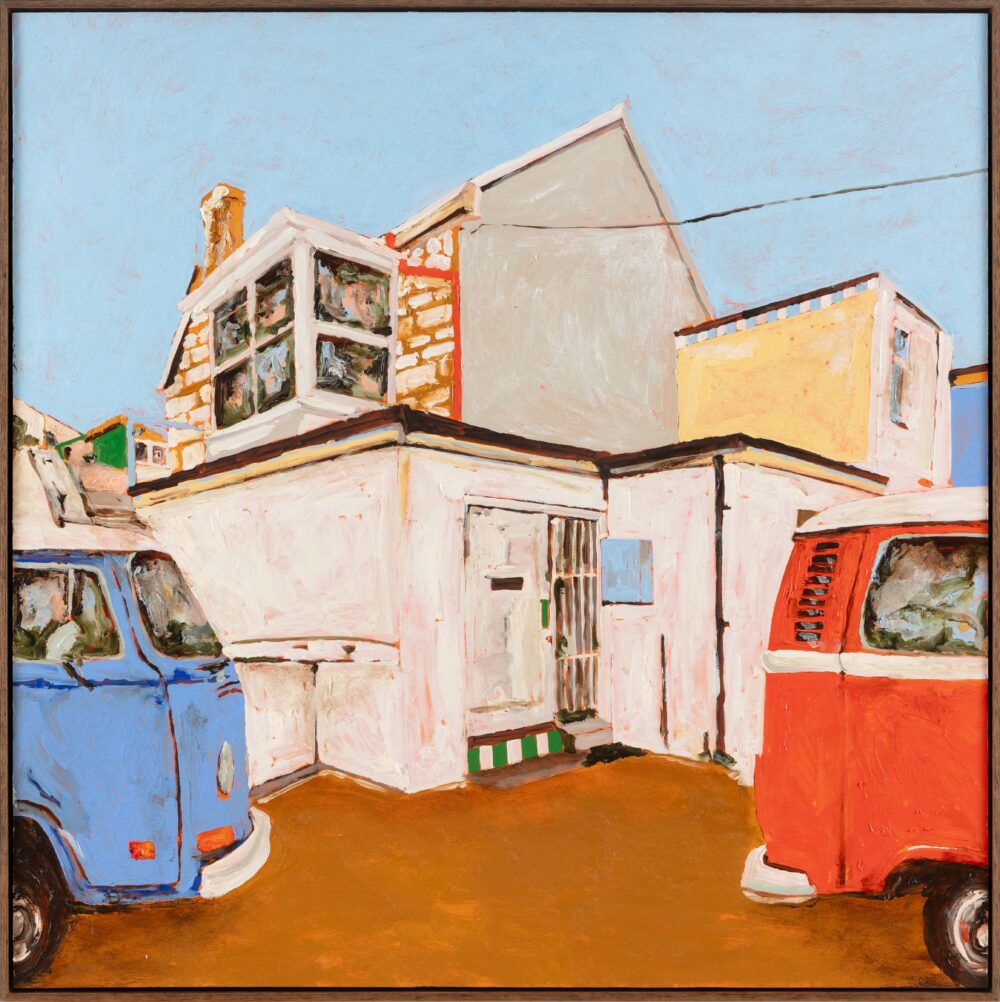
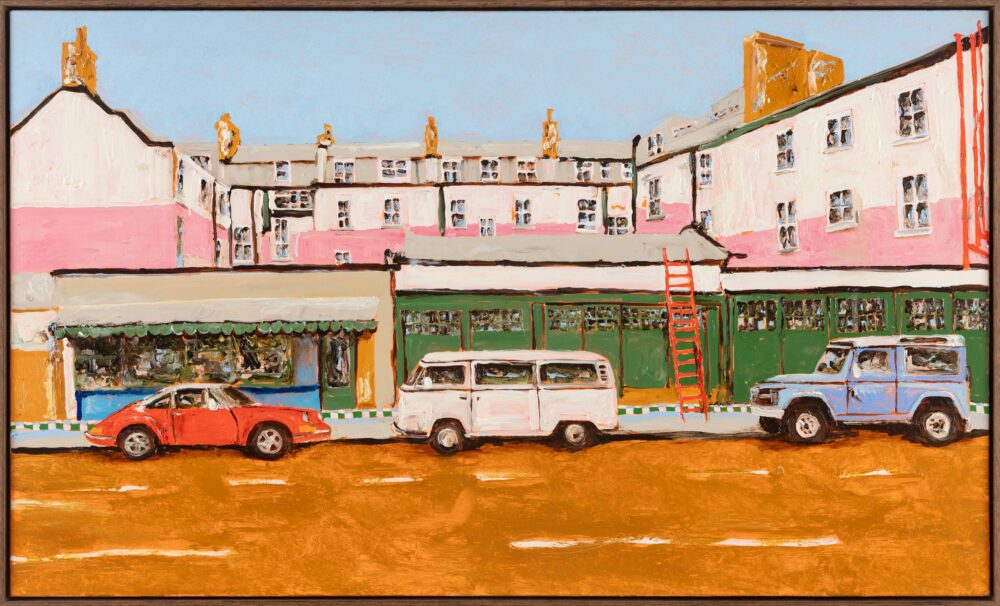
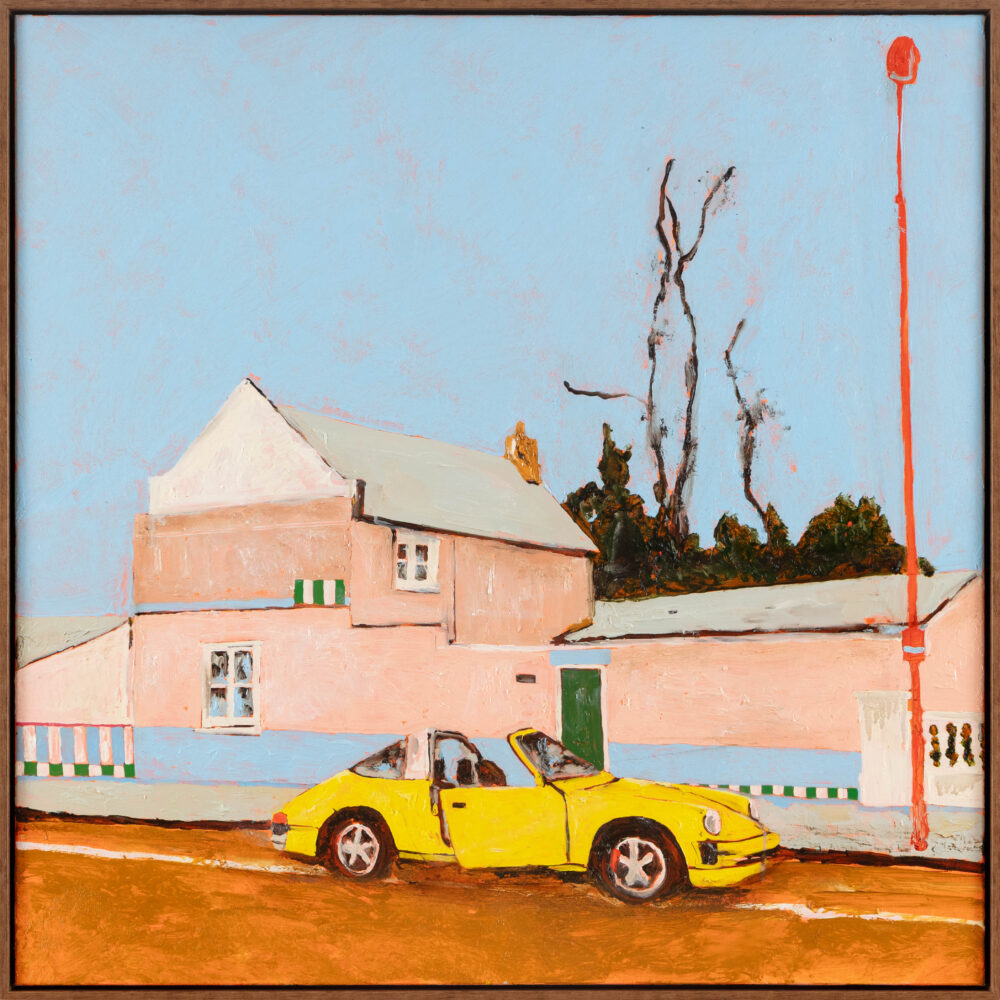
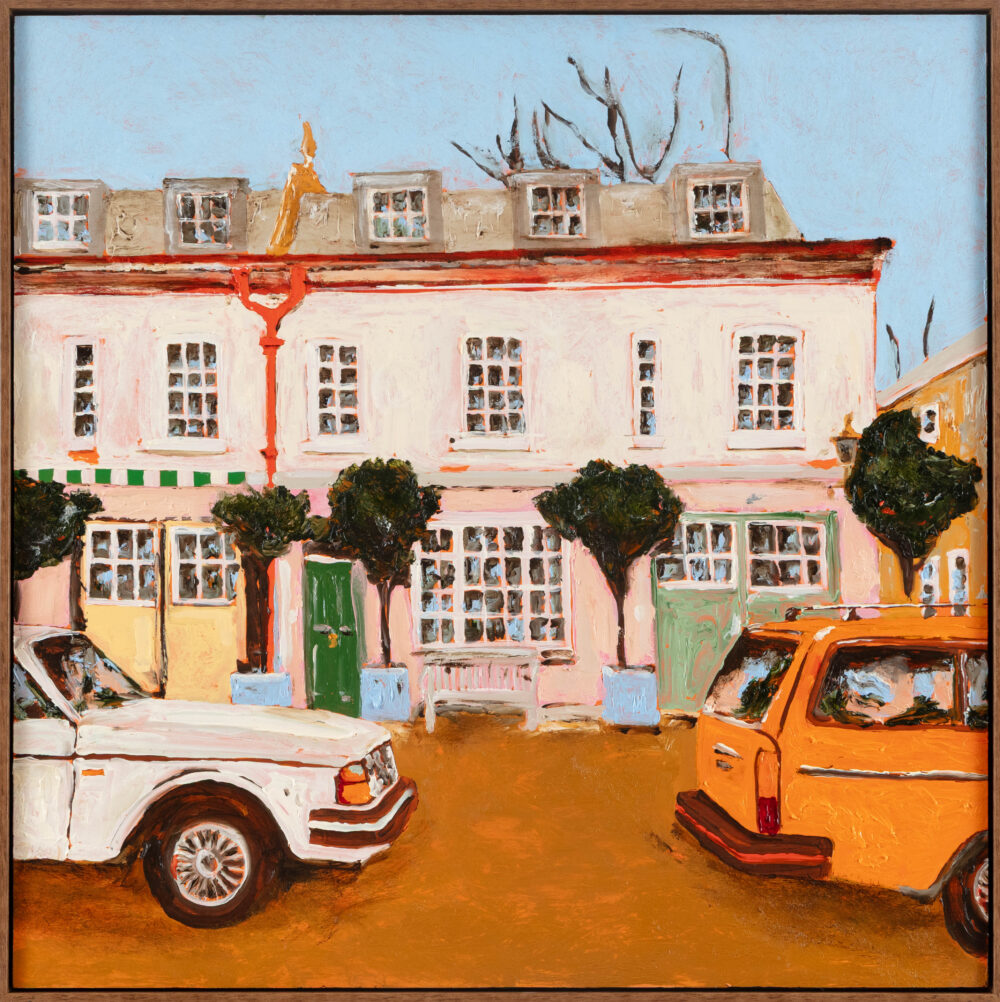
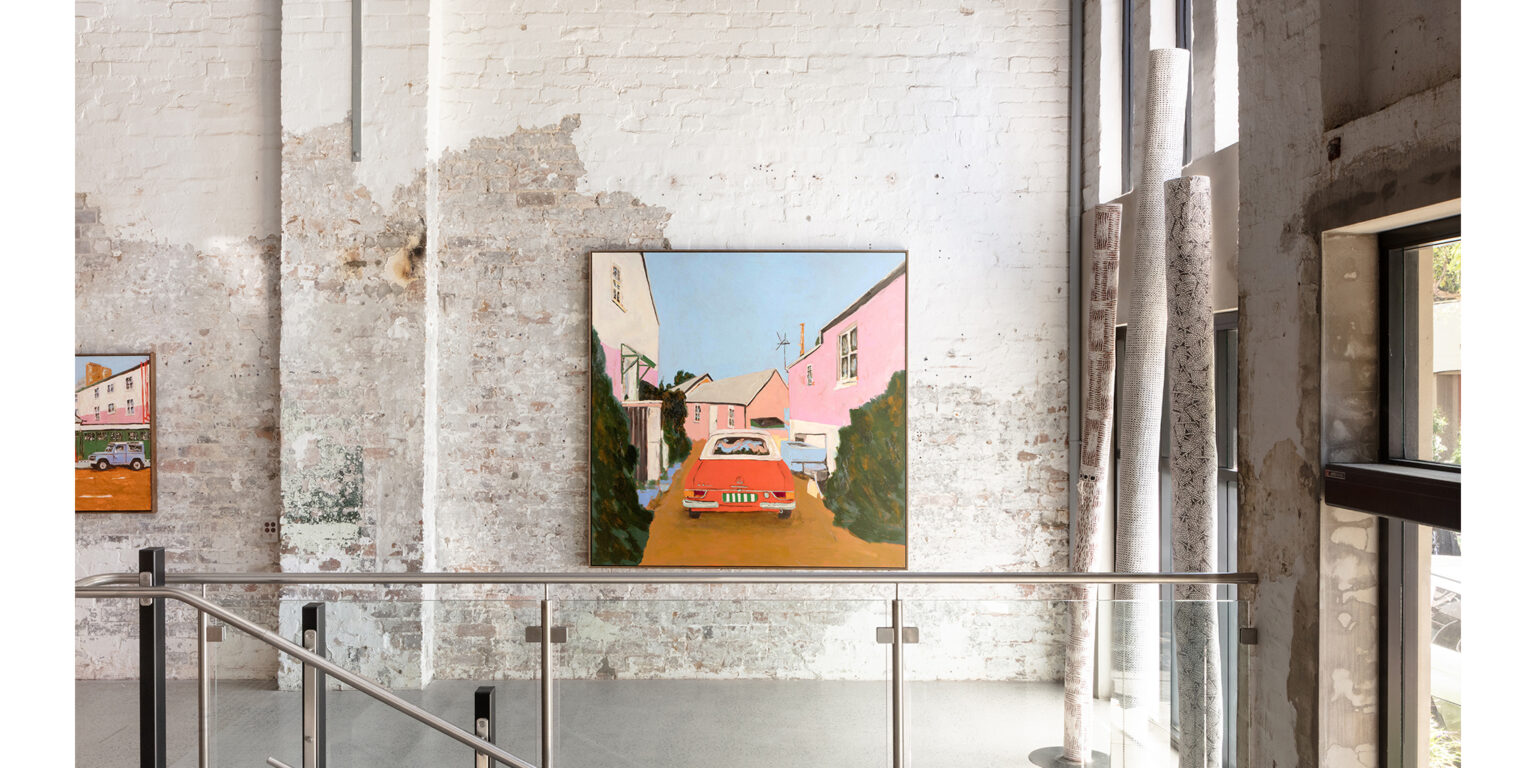
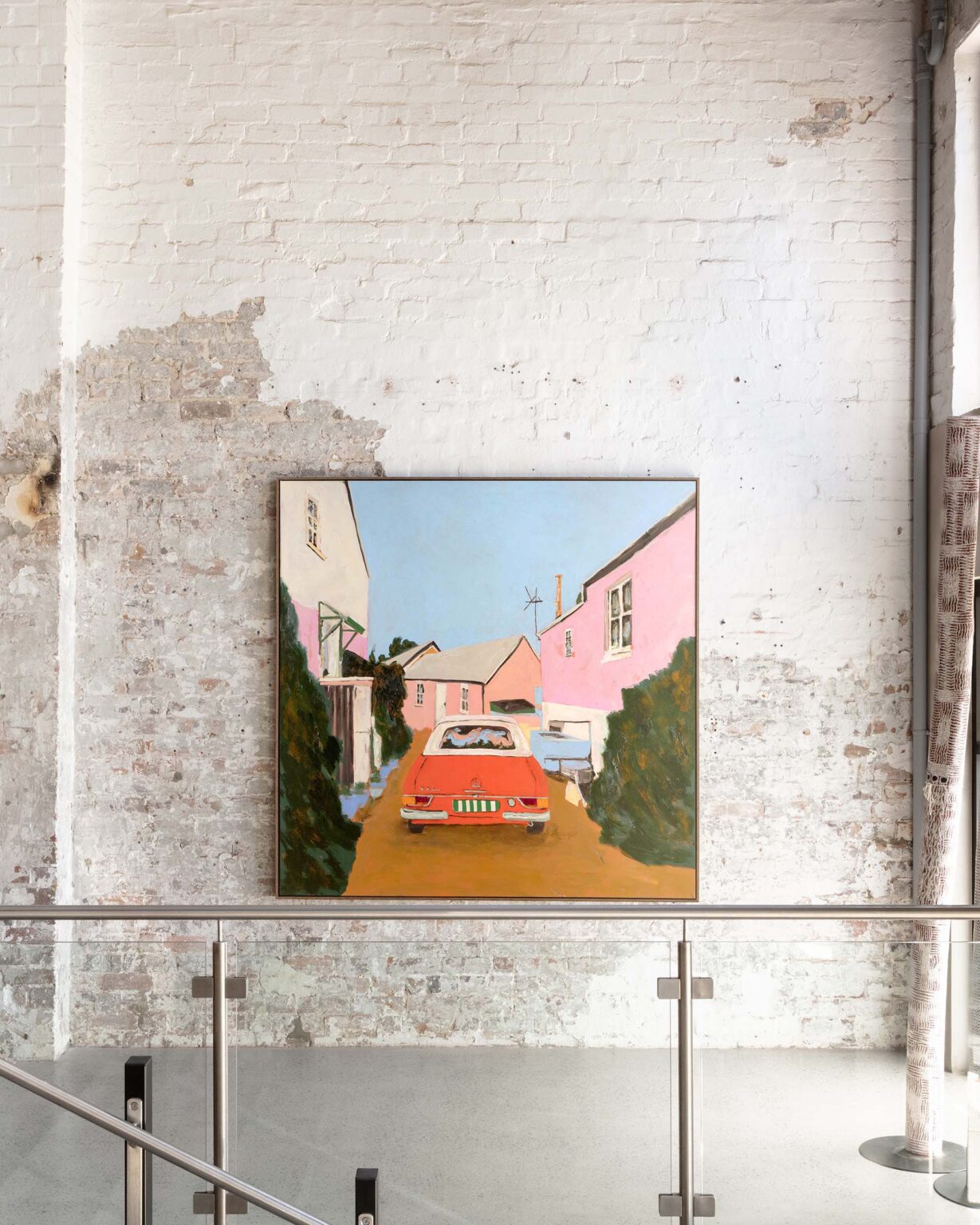
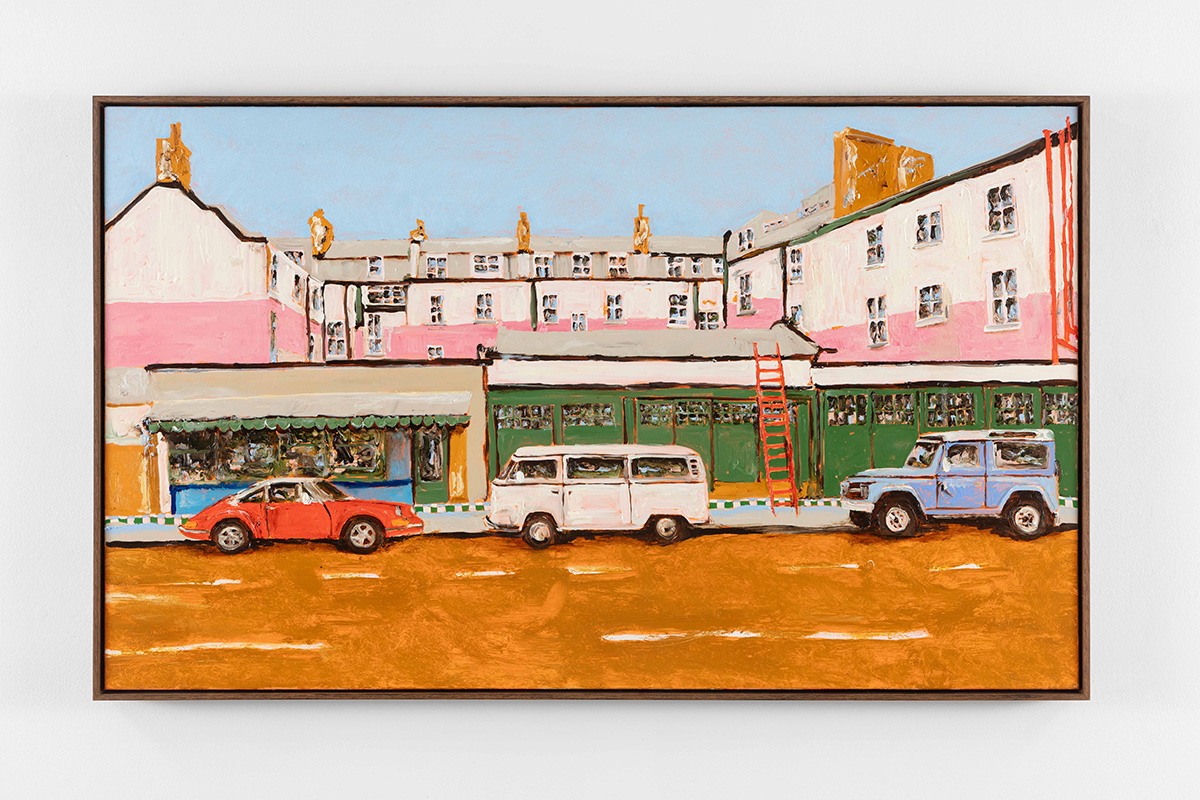
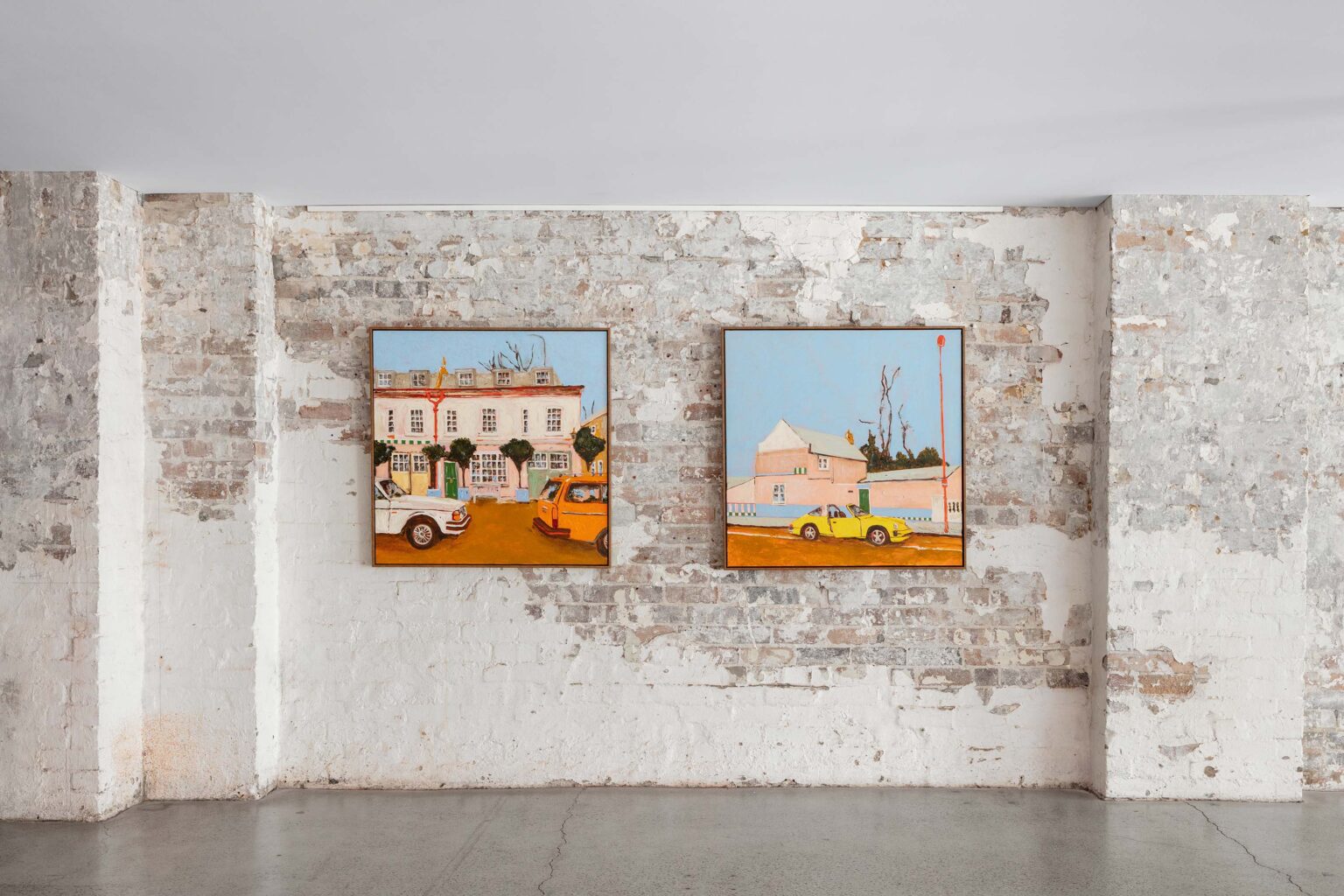
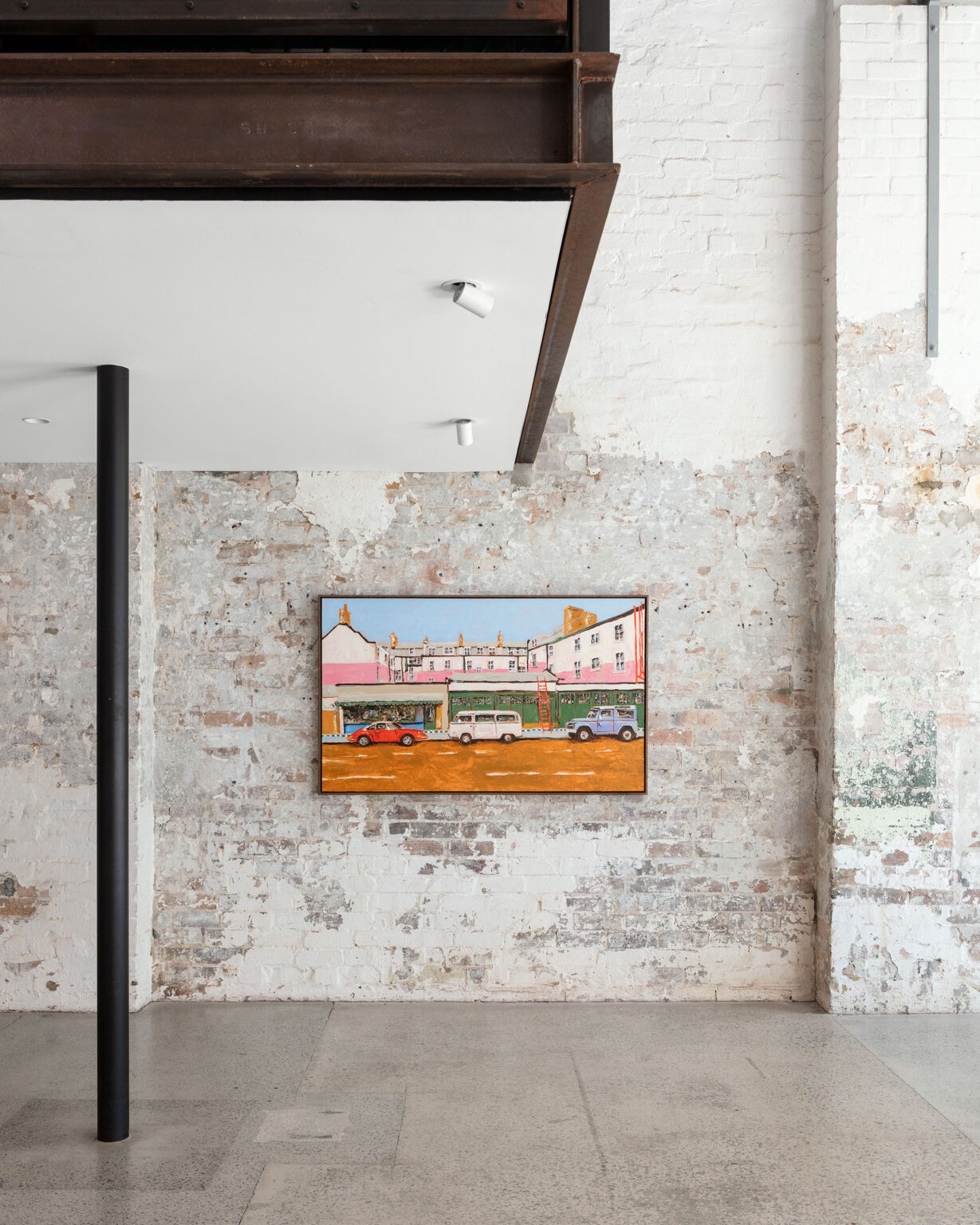
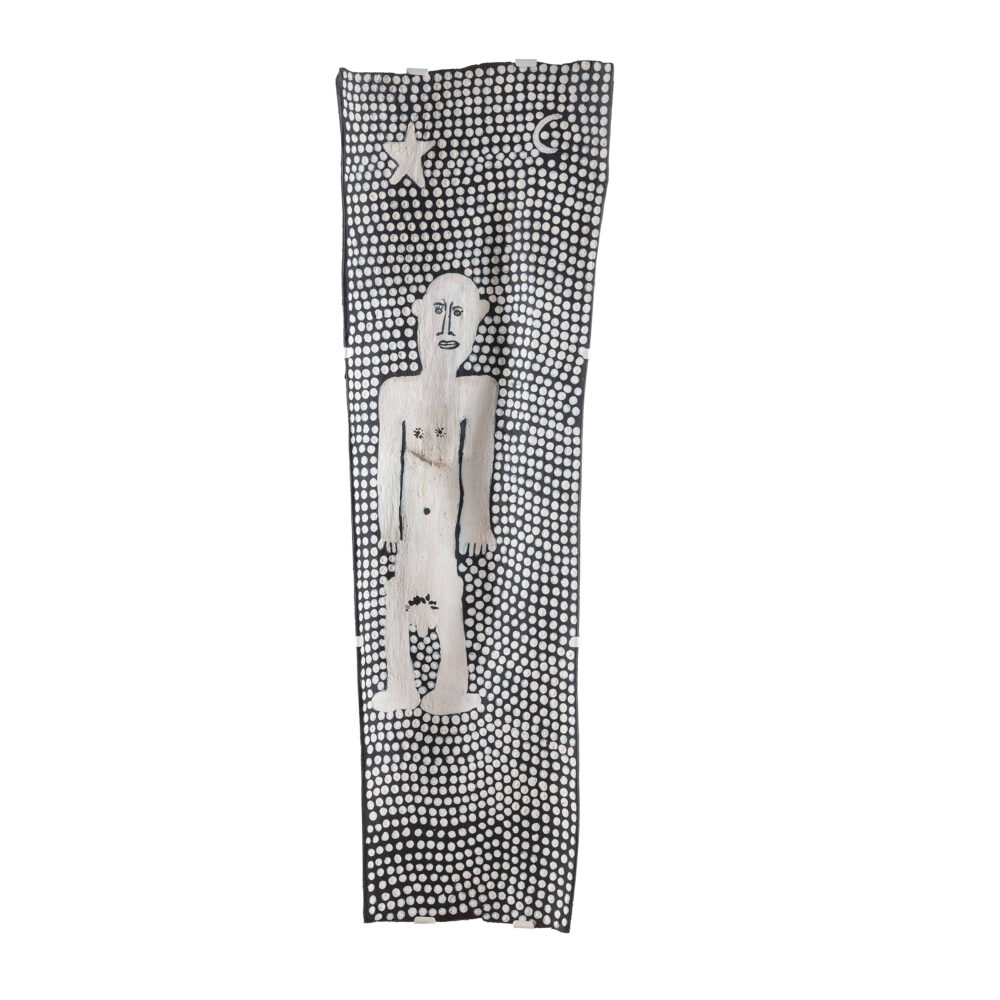
South Australian contemporary painter Brenton Drechsler joins Painting Now 2025 with his most ambitious body of work to date. A two-time National Emerging Art Prize finalist who recently joined the stable of artists represented by Michael Reid Northern Beaches and Southern Highlands after a succession of sold-out solo shows at both spaces, Drechsler has taken Painting Now as an opportunity to significantly dial up his work’s scale and scope while honing the distinctive visual language for which he is already widely celebrated. On his largest canvases yet, Drechsler’s work attains a newly cinematic heft, deepening the ongoing dialogue between visibility and concealment – belonging and displacement – that emerges from his queer subjectivity and animates his visually dazzling, conceptually rich practice.

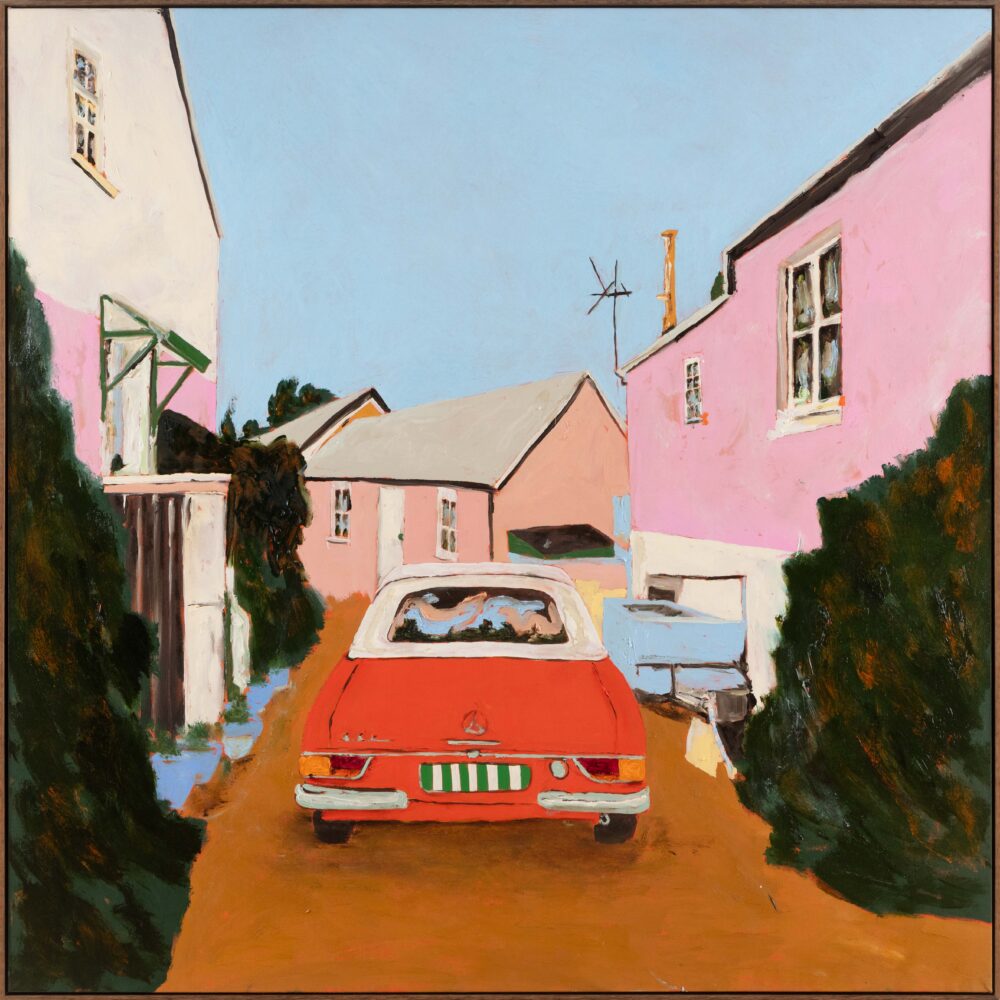
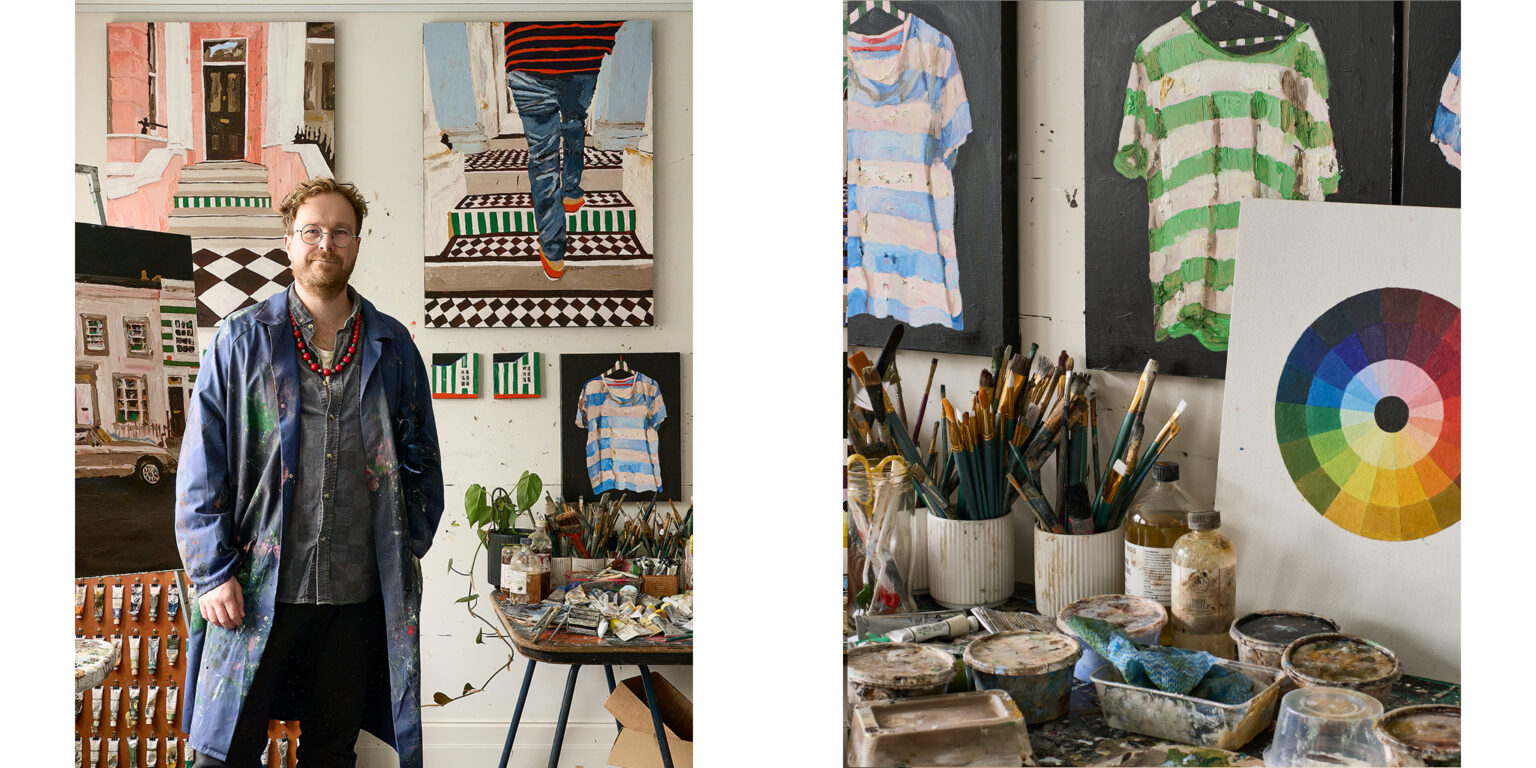
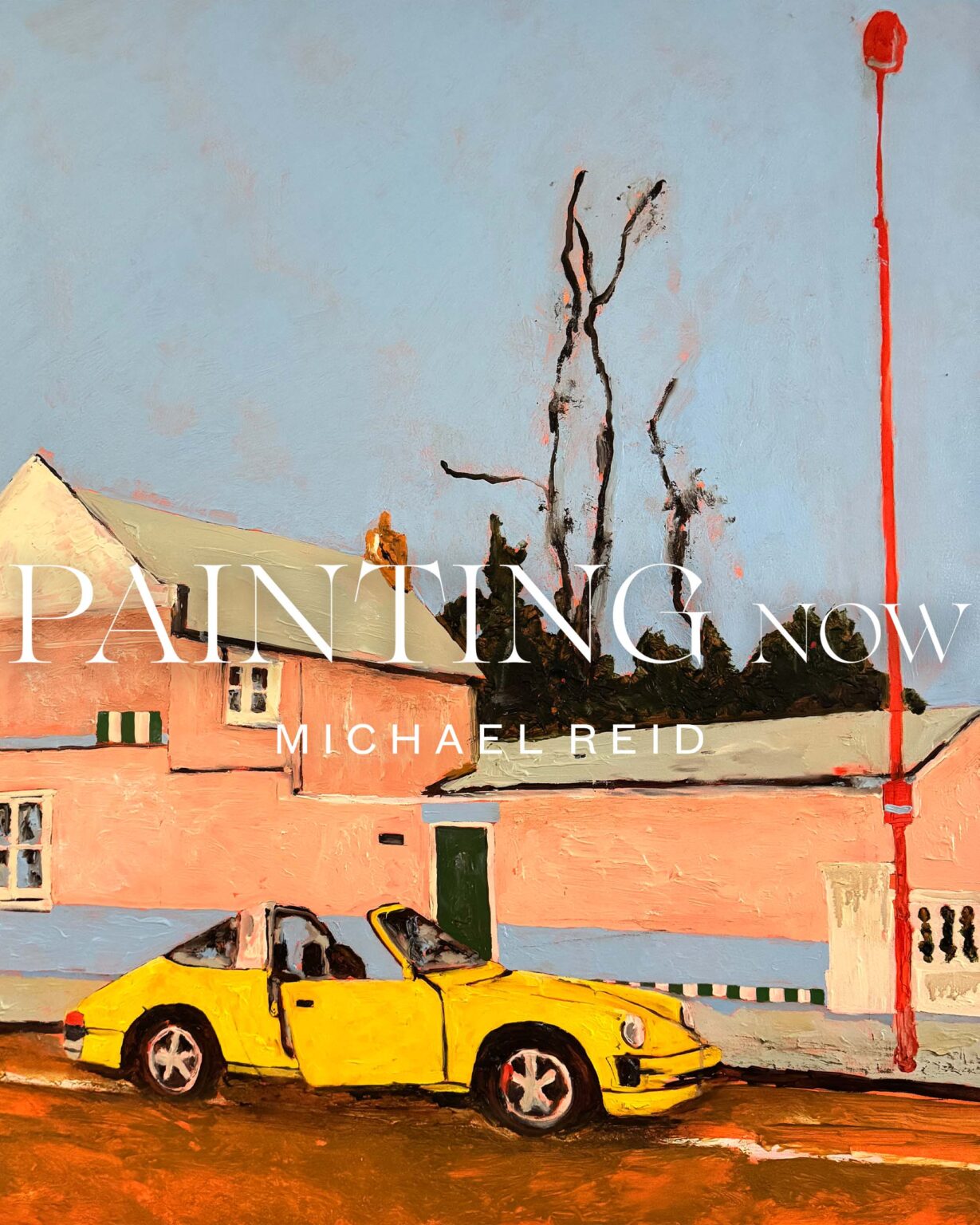
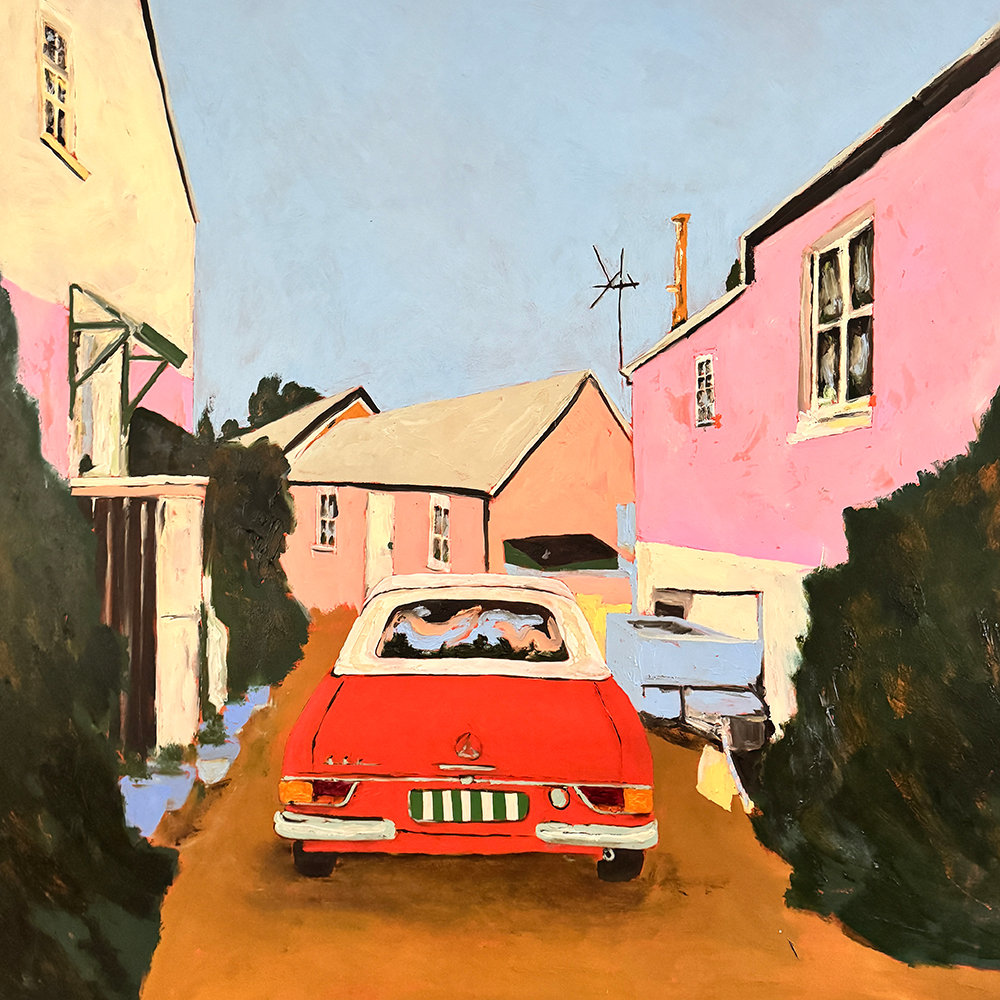
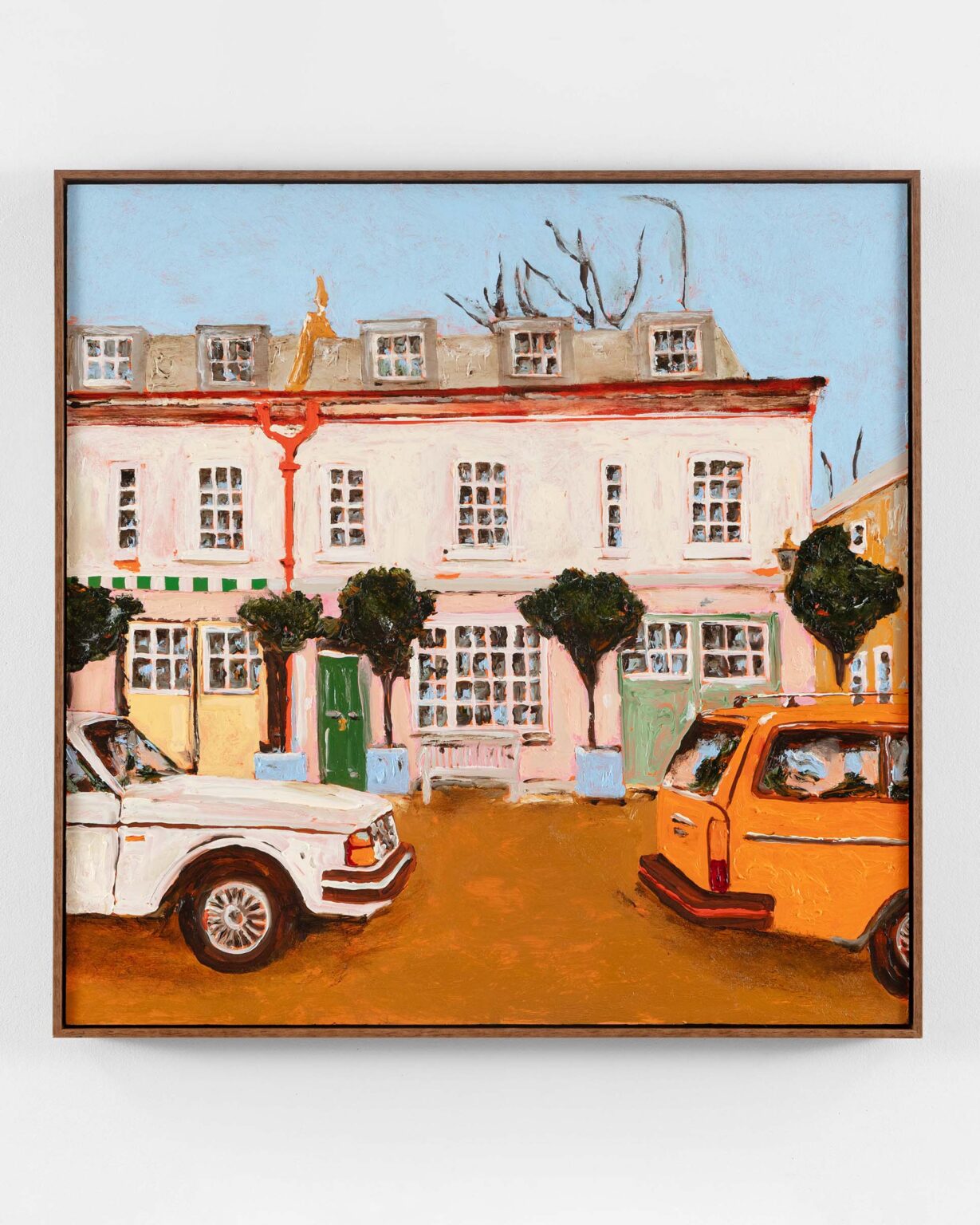
Within these expansive and arresting compositions, recurring motifs appear in deliberately “foreign” spaces: vintage cars, building facades and flashes of the artist’s trademark green-and-white stripe. “The stripes stand in for my physical self,” he says. “They take up space and attract attention – things that don’t come naturally to me.” That double movement – to stand out and blend in at once – threads through the series with quiet persistence.

A curatorial prompt to consider the visual language of auteurs such as Wes Anderson became a springboard for a bolder palette and dramatic sensibilities befitting the work’s broader scale. Here, punchy pinks and cardamom reds meet tender tonal harmonies, while precise drawing loosens into gestural passages; “mistakes” remain visible as signs of the artist’s hand. “Dean encouraged me to look at cinematic devices and framing,” says Drechsler. “It opened me up to composition in new ways – to big reds, saturated pinks and how colour can create mood.”

Drechsler describes these adventures in colour as both exciting and somewhat nerve-racking. “Are they too much?” he wonders. “Maybe. But that tension is part of what it means to make art as an emerging queer artist. The overarching message is that we all fit, wherever we are, and that we are valued and belong in any room we occupy. Painting taught me that.”

For enquiries, please email dean@michaelreid.com.au

Explore more from Painting Now HERE.
What were some of your earlier artistic influences?

My early influences and what got me interested in painting were the painters I admired in major state galleries, like Cecily Brown, Egon Schiele, Clarice Beckett and Marsden Hartley. As I moved deeper into my visual art studies, my influences became more contemporary. Artists such as Kym Luetwyler, Richard Lewer, Clara Adolphs, William McKinnon and Salman Toor continue to shape the way I use paint and how I think about storytelling in my work.

What initially drew you to painting and how has your approach developed over time?

At first, I was drawn to the freedom of paint. I started my creative life in the fashion industry, where pattern making and sewing often came down to the millimetre. Throwing paint around felt like the opposite of that. My approach is rooted in queer phenomenology. I see the physical qualities of painting and the act of applying paint to canvas as an extension of my identity and sense of self. I can’t resist letting the paint guide its own outcome: thick here, transparent there. I’m also fond of leaving the “mistakes” visible on the canvas for others to enjoy, and some of the initial mark making in ink and charcoal, which speaks to opacity in queer storytelling.


What have been some of your favourite career experiences?

Graduating art school with First Class Honours was a major highlight, as was exhibiting in beautiful semi-rural communities like Ballina, Newport and, most recently, Mudgee. Engaging with community members and other artists is my jam. Finding people who speak a similar visual language and happily nerd out on all things paint is really cool.

A breakthrough in my practice came through repetition. Learning to recognise my own methods and what helps me achieve a resolved painting has been key to producing consistent work and building confidence in my abilities. It allowed me to find my voice, so to speak.

Could you tell us about the body of work you have created for Painting Now?

The works in Painting Now 2025 grew from a now much-cherished conversation I had on a windy, wintry day with Dean Andersen, the exhibition’s curator – me on the South Coast of South Australia and Dean in Sydney. Dean planted a seed for me: to research the cinematic worlds of Wes Anderson. He encouraged me to reflect on the visual devices and themes that appear in his films and how they might echo elements of my own practice. It turned out to be a gift that kept giving, widening my sense of palette, scale and composition.

Is there a narrative or throughline in your Painting Now series?

The narrative centres on recurring motifs placed in foreign spaces, which is a running trope in my practice. The vintage cars and the green-and-white stripe that appear in each composition speak to the experiences I’ve often had as a queer person trying to find a place within Australian heteronormative environments. Trying to stand out and blend in at the same time is a common contradictory thread that runs through each of my works.
How do you hope viewers will engage with your work in Painting Now?

Above all, I hope viewers enjoy a fresh painterly perspective and a playful use of bold colour. I have never gone this big before, so I hope viewers can enjoy the larger scale – especially Twickenham (The Art Teacher). The cadmium red and big saturated pinks in this series are both exciting and a little nerve-racking. Are they too much? Maybe. But maybe that tension is part of what it means to make art as an emerging queer artist.

I hope the series resonates with both collectors and the public, especially those who recognise the underlying narrative of holding your ground in uncomfortable environments. The overarching message is that we all fit, wherever we are, and that we are valued and belong in any room we occupy. Painting has taught me that.

Private Collection

Posted by

Private Collection

  • Artist
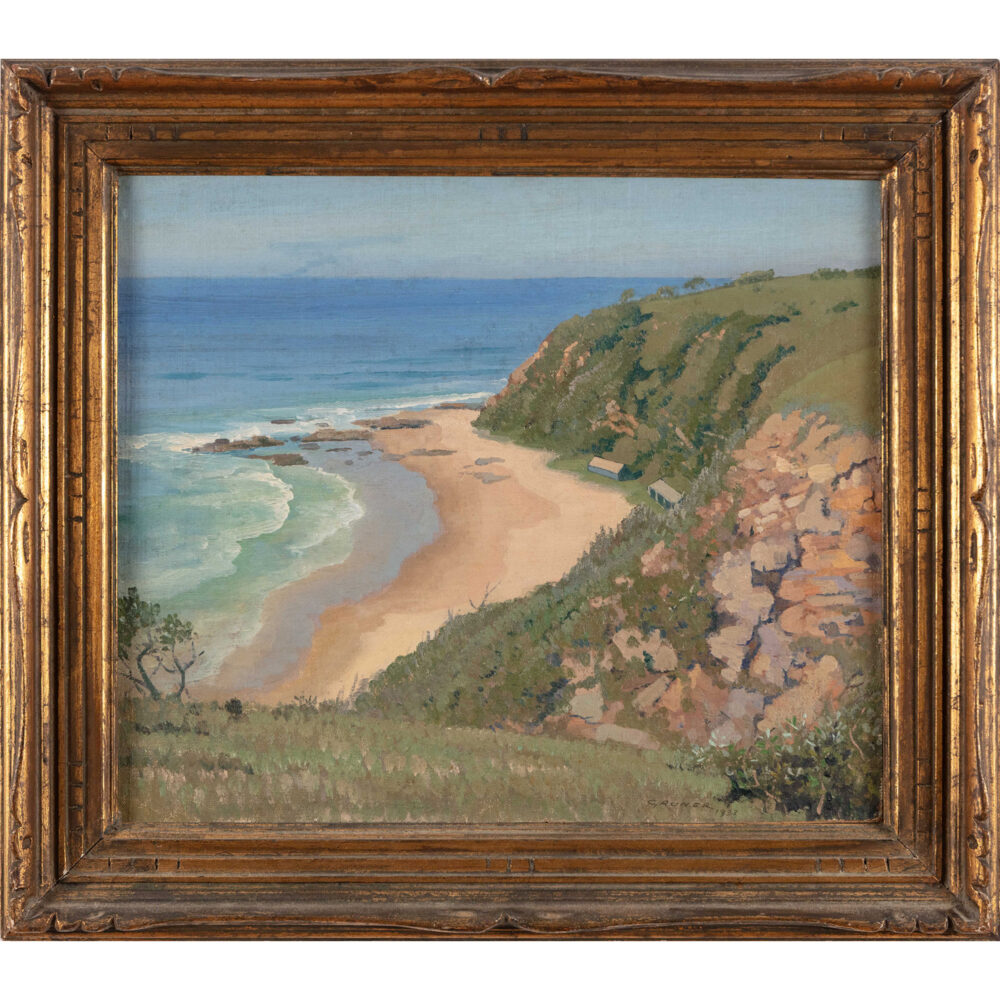
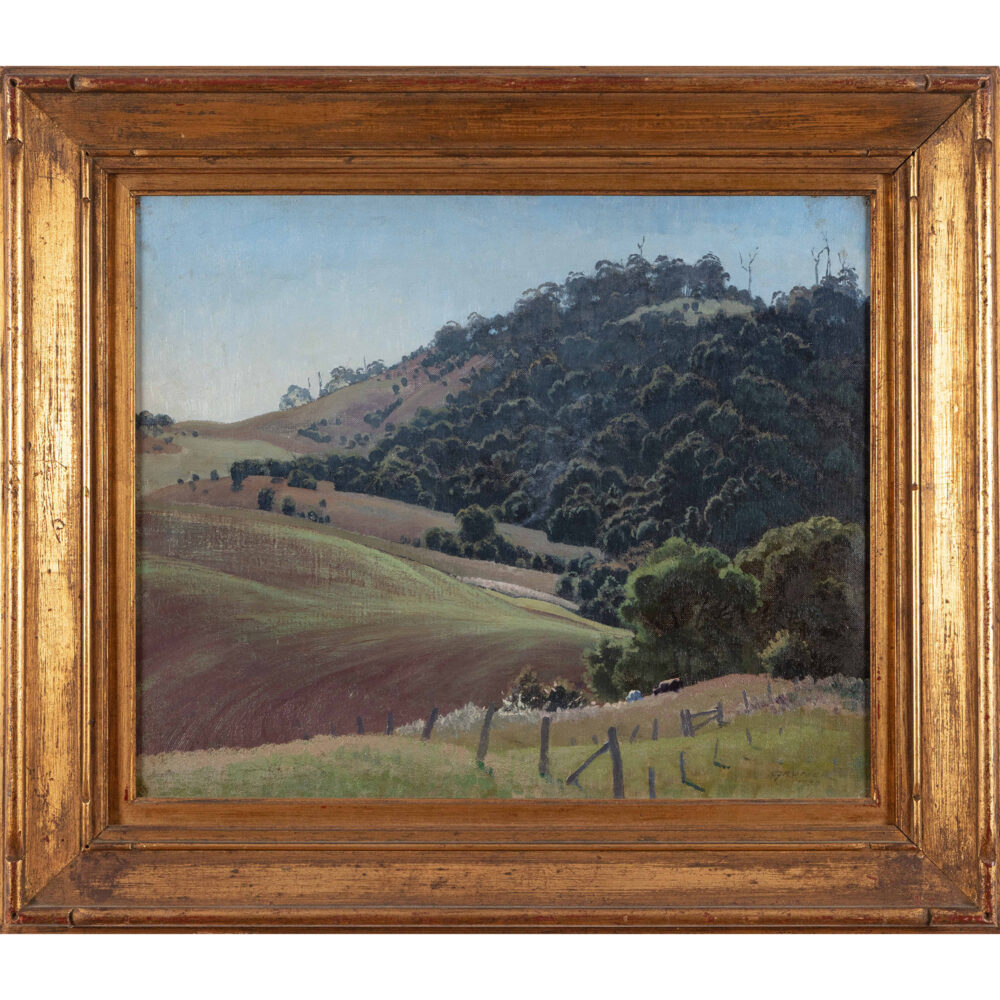
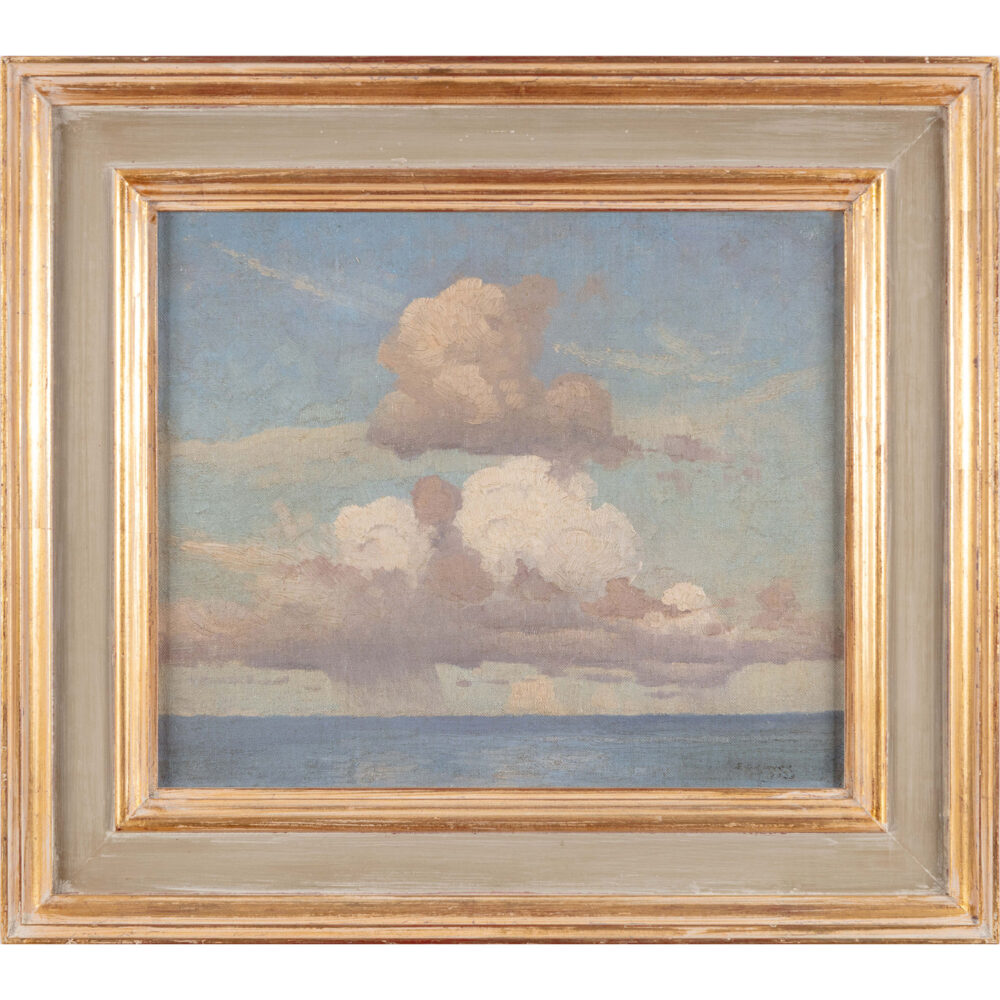
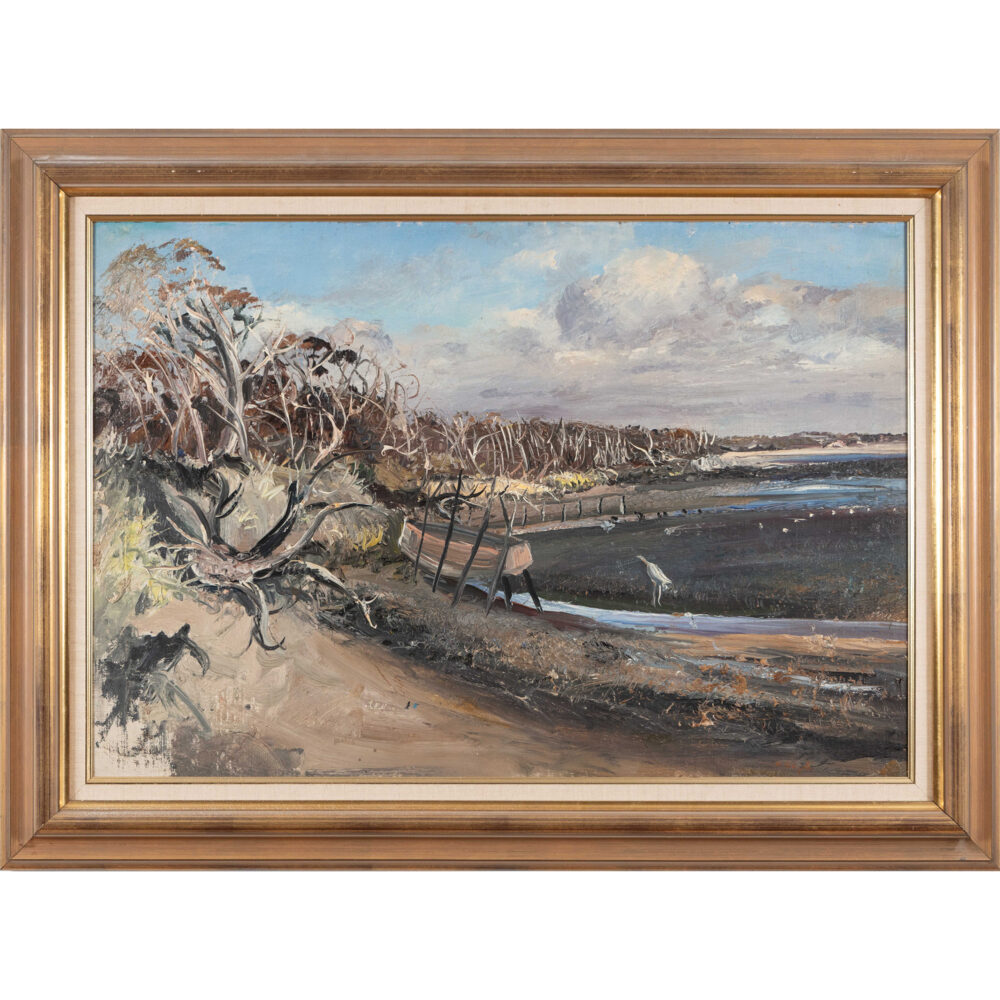
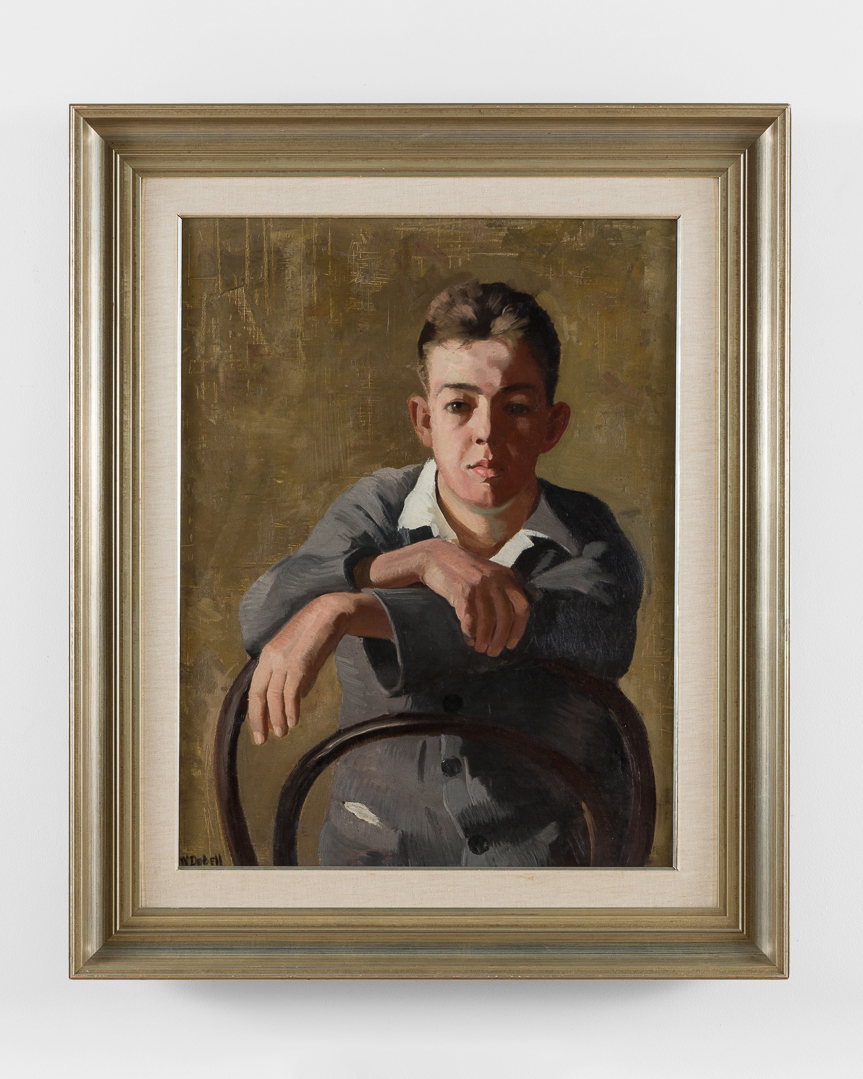
    Sidney Nolan, William Dobell, Elioth Gruner, Arthur Boyd, Tom Roberts
  • Dates
    17 Nov 2025—28 Feb 2026
  • Gallery Location
    Eora / Sydney

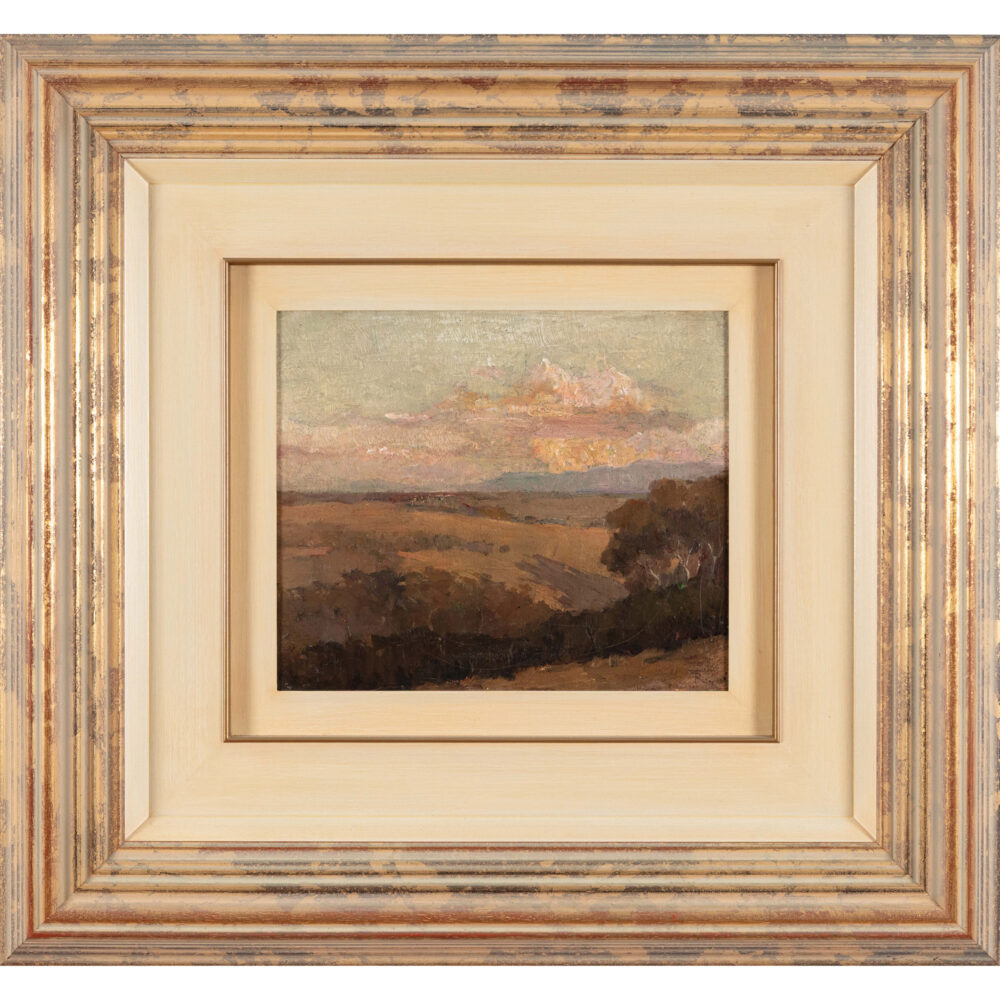
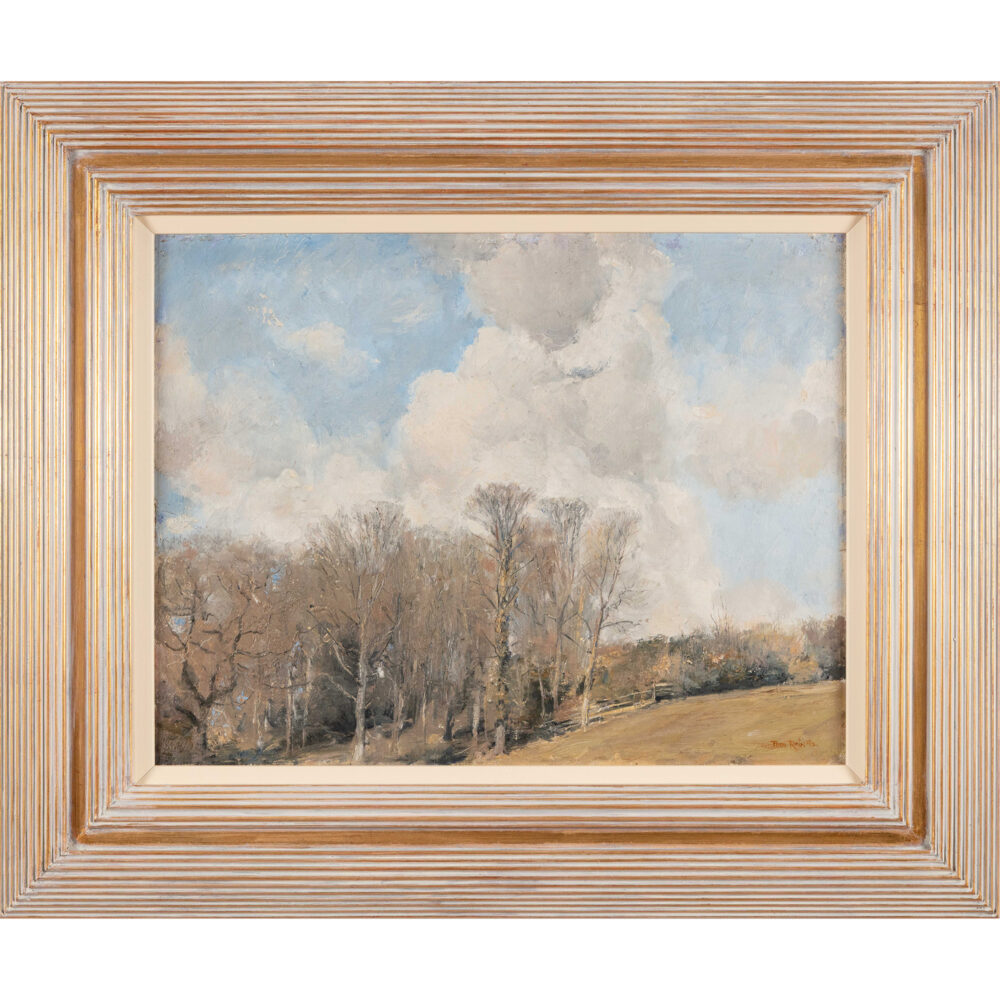
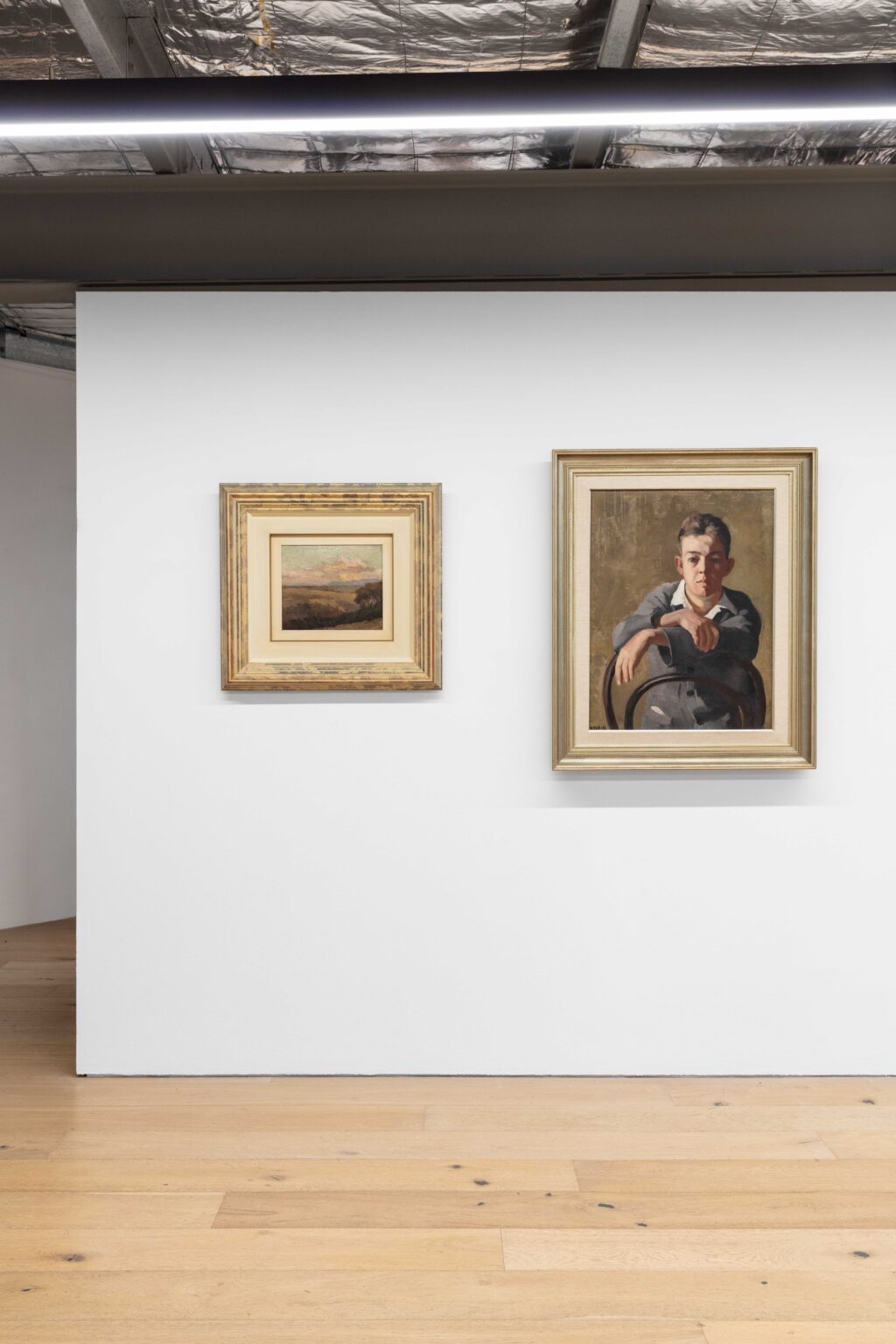
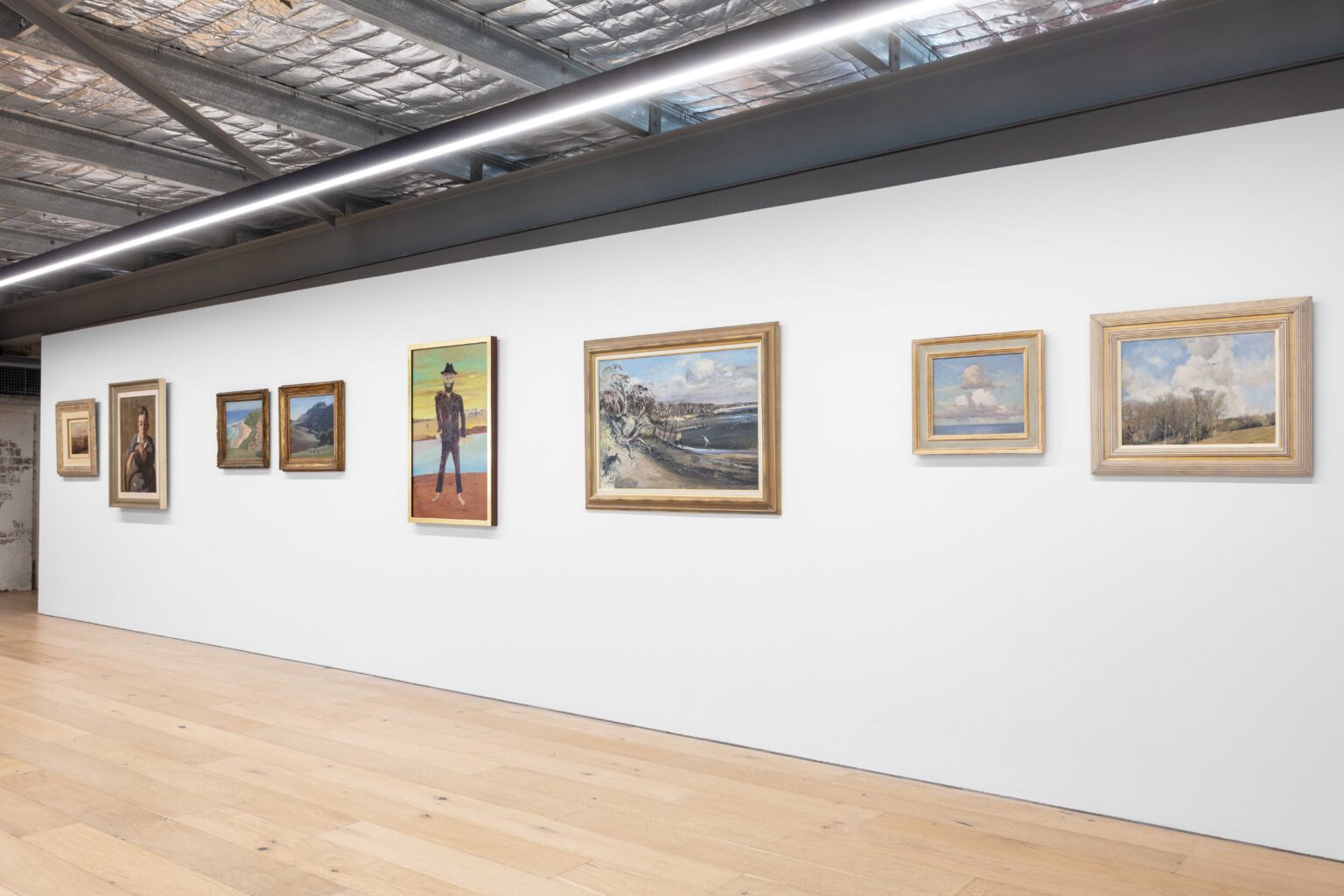
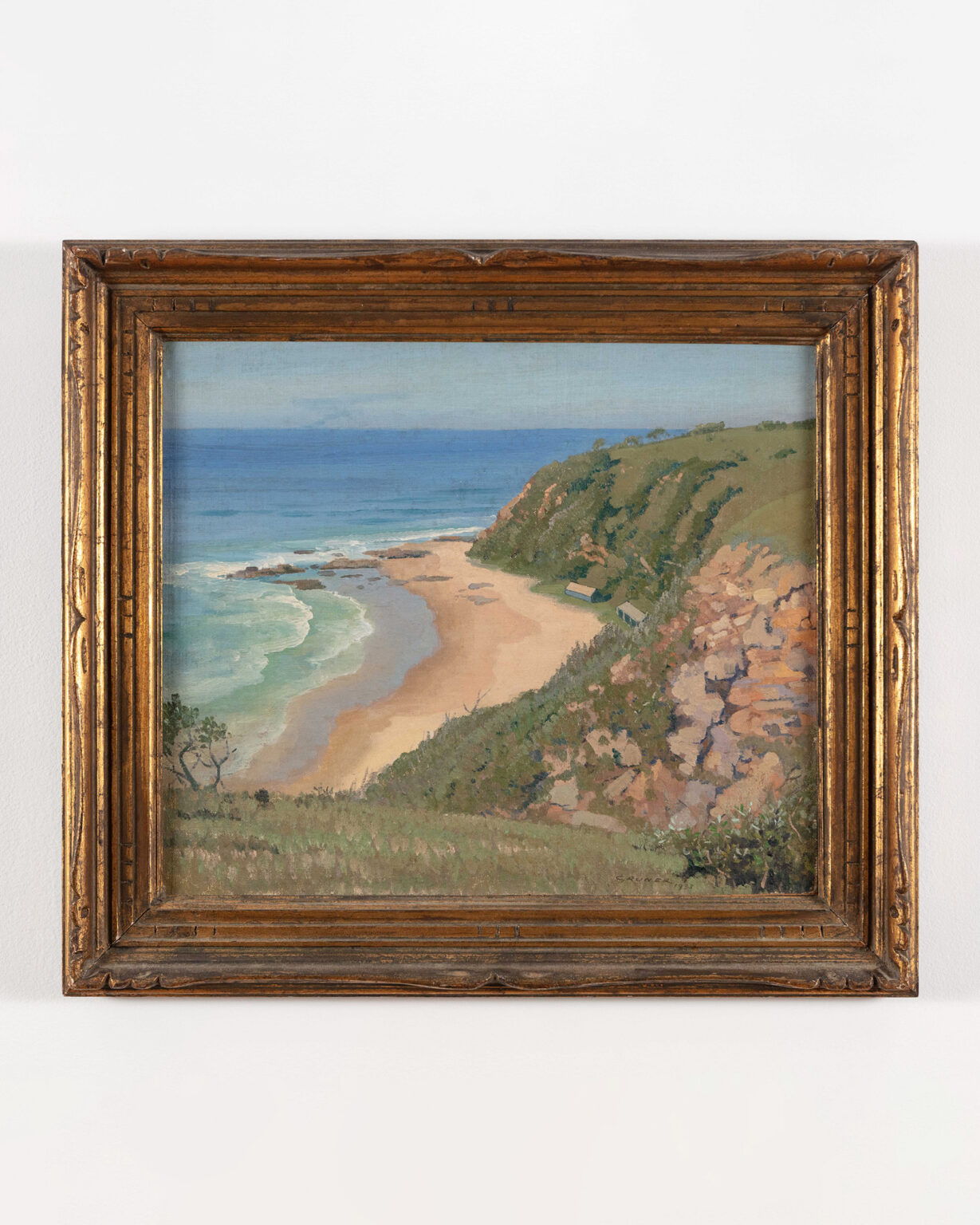
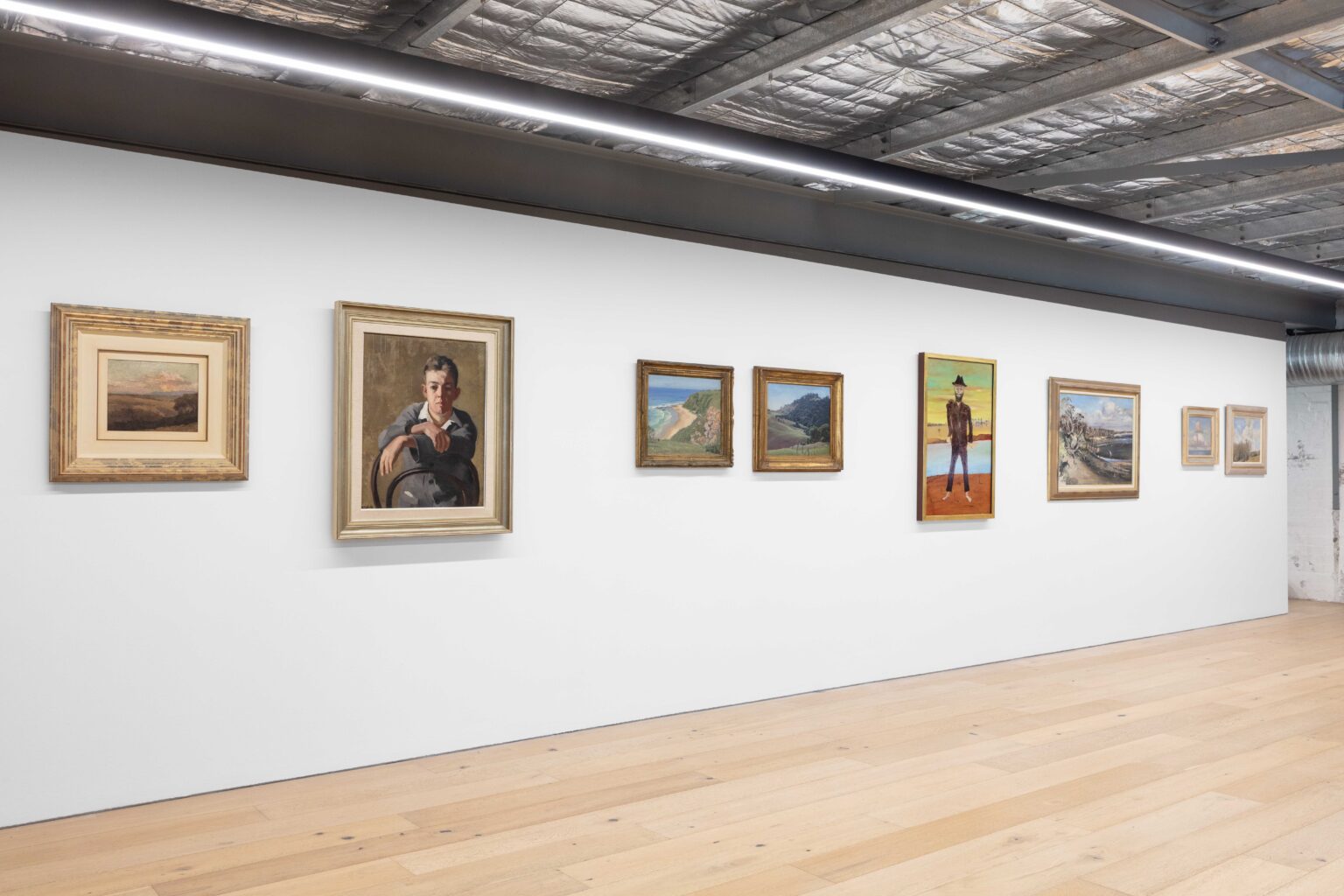
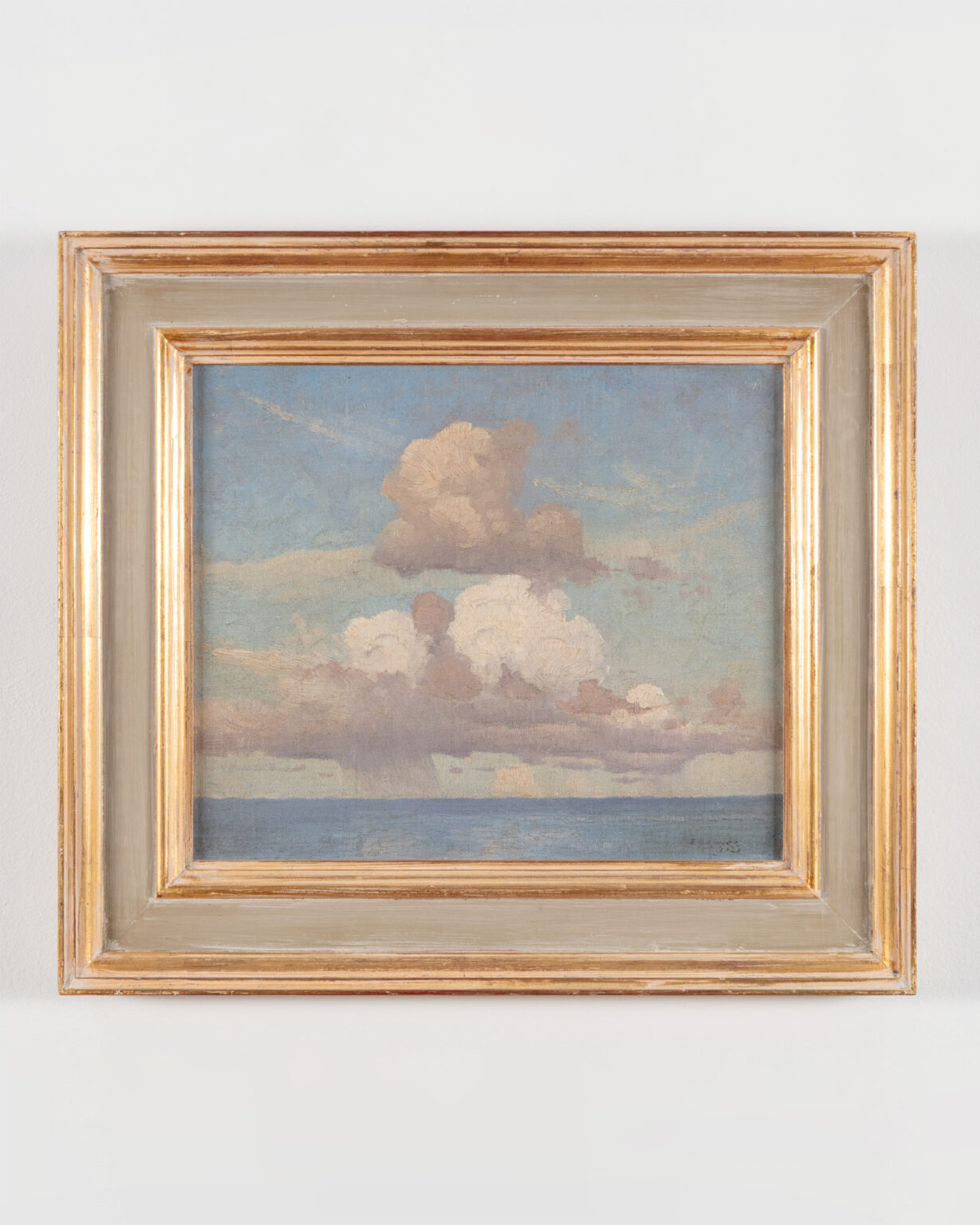
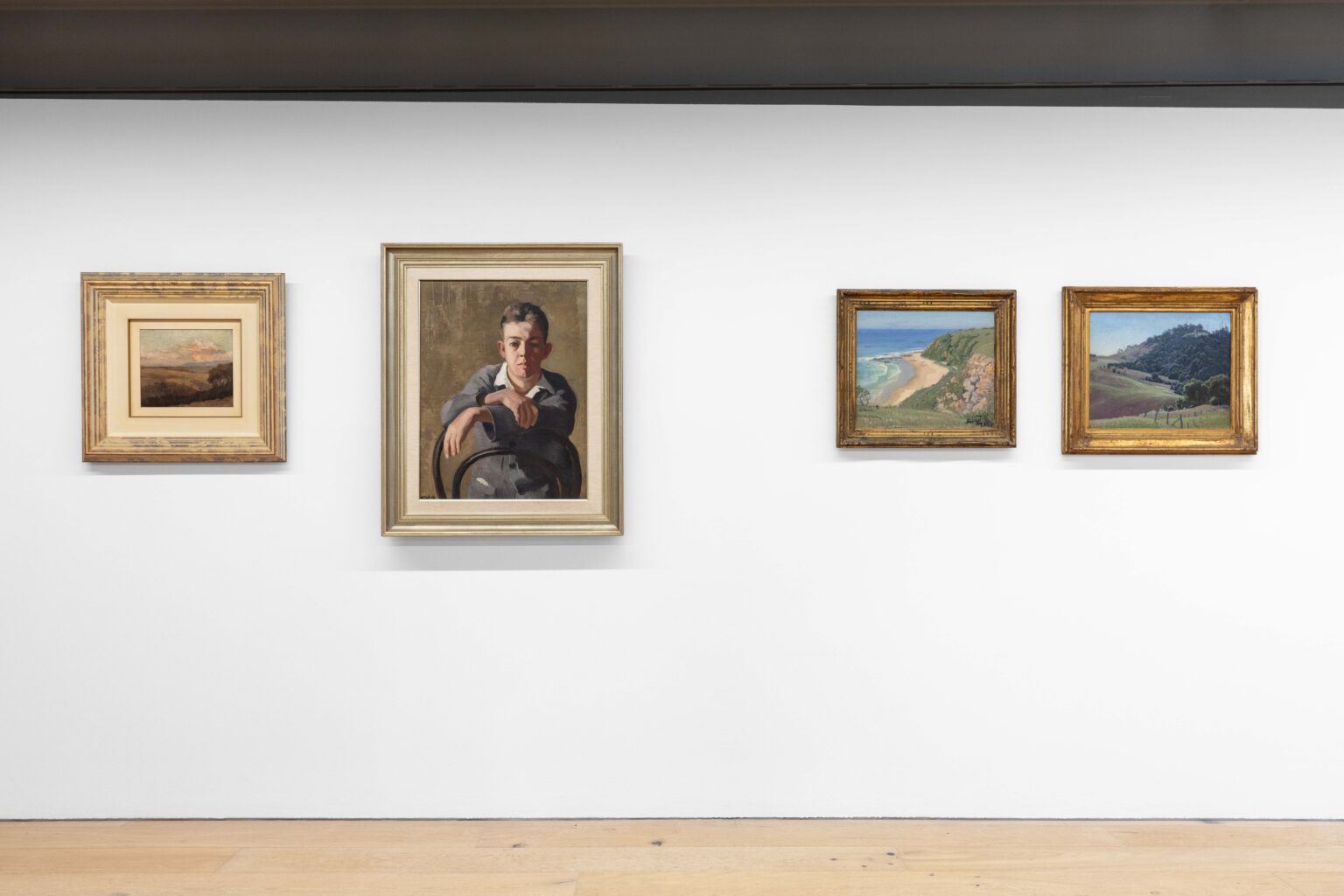
Spanning the late 19th to mid 20th centuries, this private art collection from Perth, Western Australia, has been steadily assembled over the past twenty years.

The purpose of this collection has been to delight and intrigue its owner. How each artist delved into their subject has been of central importance to their acquisition. The use of the entire surface, the subject, the play of negative space, and the artist’s unique technique were all carefully considered and contrasted prior to acquisition. Chosen for their strength as art museum–quality examples, the works were selected for their artistic merit rather than the prominence of their makers’ signatures. Each artwork has been appraised as a fine example of its period. Every piece has been collected with an eye for the object itself—not, as can often be the case, in the spirit of the trophy collector who pursues a signature above all else.

After decades of collecting with vigour and curiosity, the collector–now in a downsizing phase–has decided to release a portion of the collection to the market. This presents a rare opportunity to acquire fresh and compelling artworks that would sit comfortably within any art museum or private collection.

Please consider.

– Michael Reid OAM


For enquiries, please email hughholm@michaelreid.com.au

The Stars Before Us All | Eora/Sydney Edition

Posted by

The Stars Before Us All | Eora/Sydney Edition

  • Artist
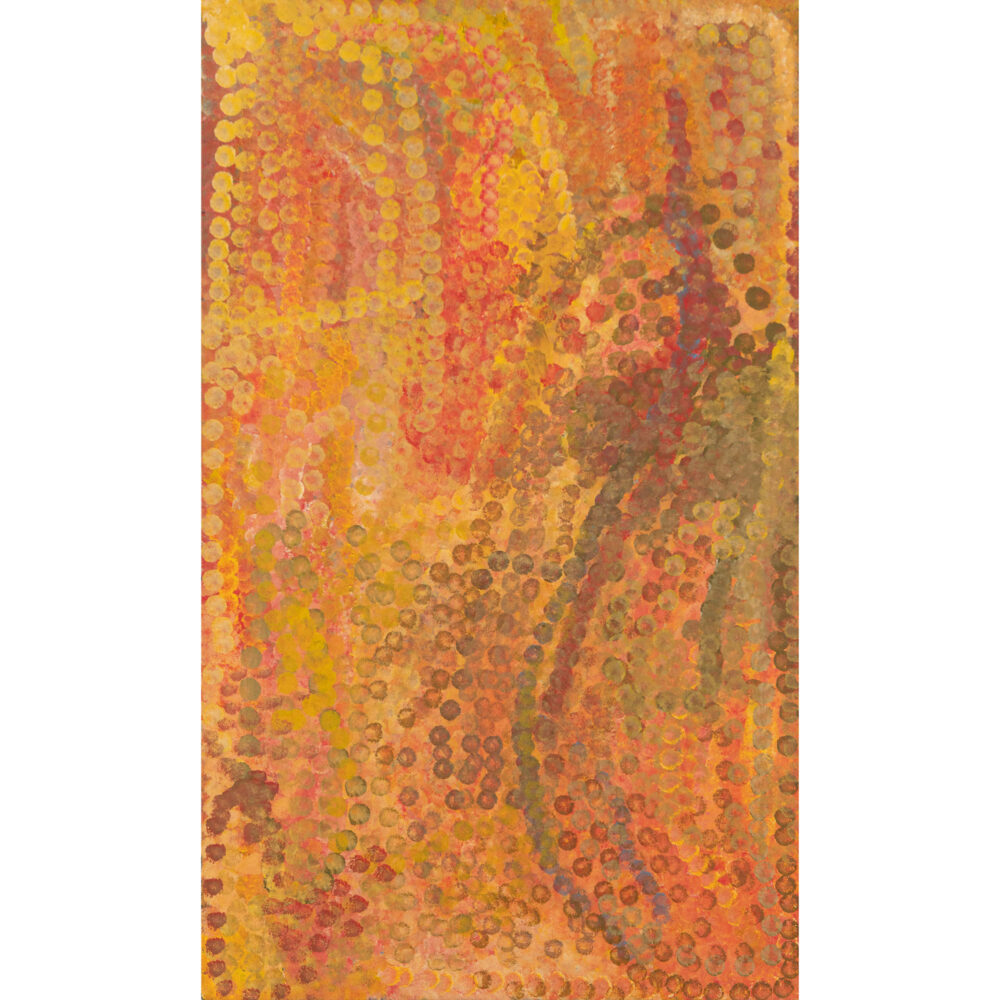
    Betty Chimney & Raylene Walatinna, Vicki Yatjiki Cullinan, Mirdidingkingathi Juwarnda Sally Gabori, Emily Kam Knwarraye, Sylvia Marrgawaidj, Danie Mellor, Bardayal Lofty Nadjamerrek AO, Kathleen Petyarre, Jennifer Prudence, Josina Pumani, LeShaye Swan, George Tjampu Tjapaltjarri, Turkey Tolson Tjupurrula, Regina Pilawuk Wilson and Djirrirra Wununmurra Yukuwa
  • Dates
    9 Oct—2 Nov 2025
  • Gallery Location
    Eora / Sydney
  • Catalogue
    Download now

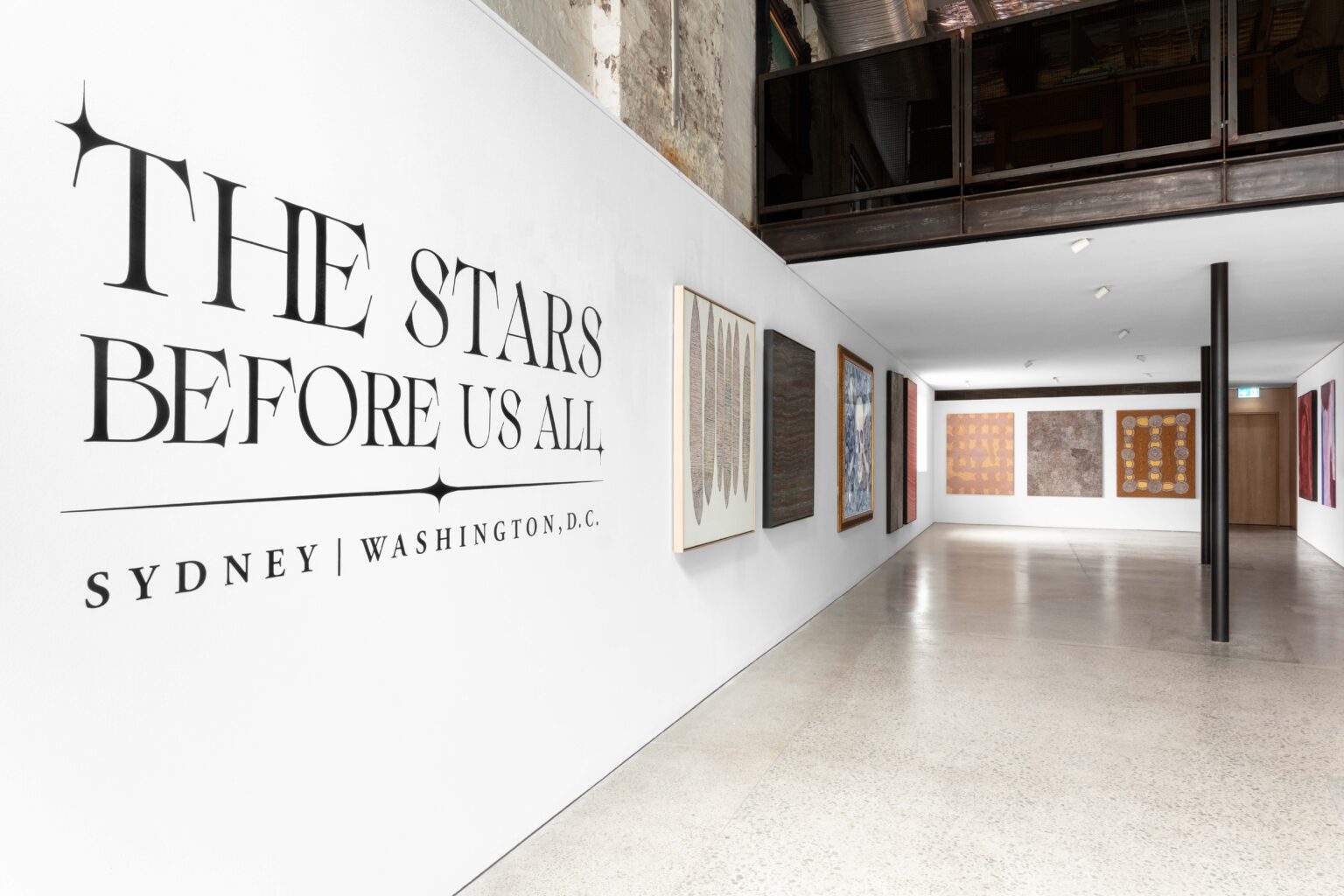
Michael Reid Sydney is delighted to present a specially curated companion exhibition to The Stars Before Us All – our upcoming exhibition of contemporary First Nations art in Washington, D.C. Ahead of our show’s opening in the US capital on Wednesday, 15 October, Michael Reid Sydney’s expansive presentation of The Stars Before Us All is now unfolding across the entire exhibition space at our flagship gallery in Chippendale and will continue concurrently with our stateside survey throughout October.

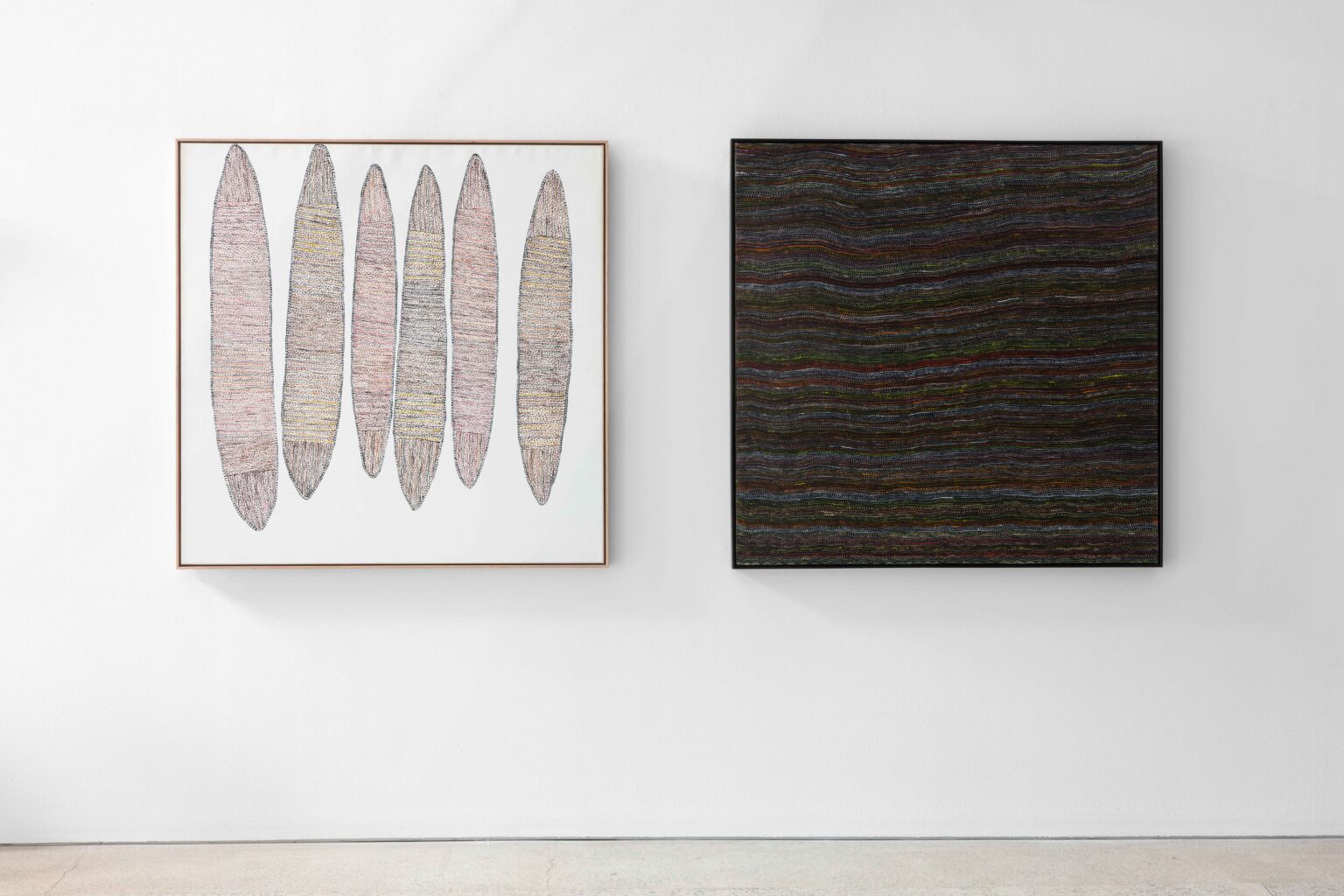
This significant group exhibition offers local collectors and gallery visitors the opportunity to experience and acquire extraordinary new and historical work by more than 15 luminaries of contemporary First Nations art at a watershed moment during which their practice is being celebrated on the international stage.

Reflecting the project’s international scope, the Eora/Sydney edition of The Stars Before Us All supports the gallery’s ambition to embed First Nations art within a globe-spanning network of collectors, curators and institutions, joining the cross-cultural dialogue forged by the National Gallery of Victoria’s landmark touring exhibition The Stars We Do Not See, which will travel across North America over the next two years following its debut at The National Gallery of Art in Washington, D.C.

Echoing the work of the NGV and the National Gallery of Art, The Stars Before Us All highlights practising First Nations artists and key historical works, offering a contemporary complement to the NGV’s sweeping institutional survey. The Eora/Sydney edition of The Stars Before Us All is anchored by a significant suite of historical works by Regina Pilawuk Wilson, who will travel to Washington, D.C. this month as the guest of honour at our opening celebration for The Stars Before Us All – the first occasion for her to visit the room named in her honour at the Australian Embassy to the United States.

Joining Wilson in the exhibition’s local contingent is Kuninjku artist Owen Yalandja, who was awarded the Wandjuk Marika Memorial 3D Award at this year’s Telstra National Aboriginal and Torres Strait Islander Art Awards, as well as Yankunytjatjara artist and three-time Wynne Prize finalist Betty Chimney, Yolŋu artist Djirrirra Wunuŋmurra Yukuwa and many more. The exhibition also features a sublime painting by the late visionary Emily Kam Kngwarray, whose career-spanning retrospective is currently on view at the Tate Modern in London, and a work by the late Mirdidingkingathi Juwarnda Sally Gabori.

To discuss works from The Stars Before Us All, please email hughholm@michaelreid.com.au

Margaret Preston: A Collection of Important Prints

Posted by

Margaret Preston: A Collection of Important Prints

  • Artist
    Margaret Preston
  • Dates
    19 Nov 2025—28 Feb 2026
  • Gallery Location
    Eora / Sydney
  • Catalogue
    Download now

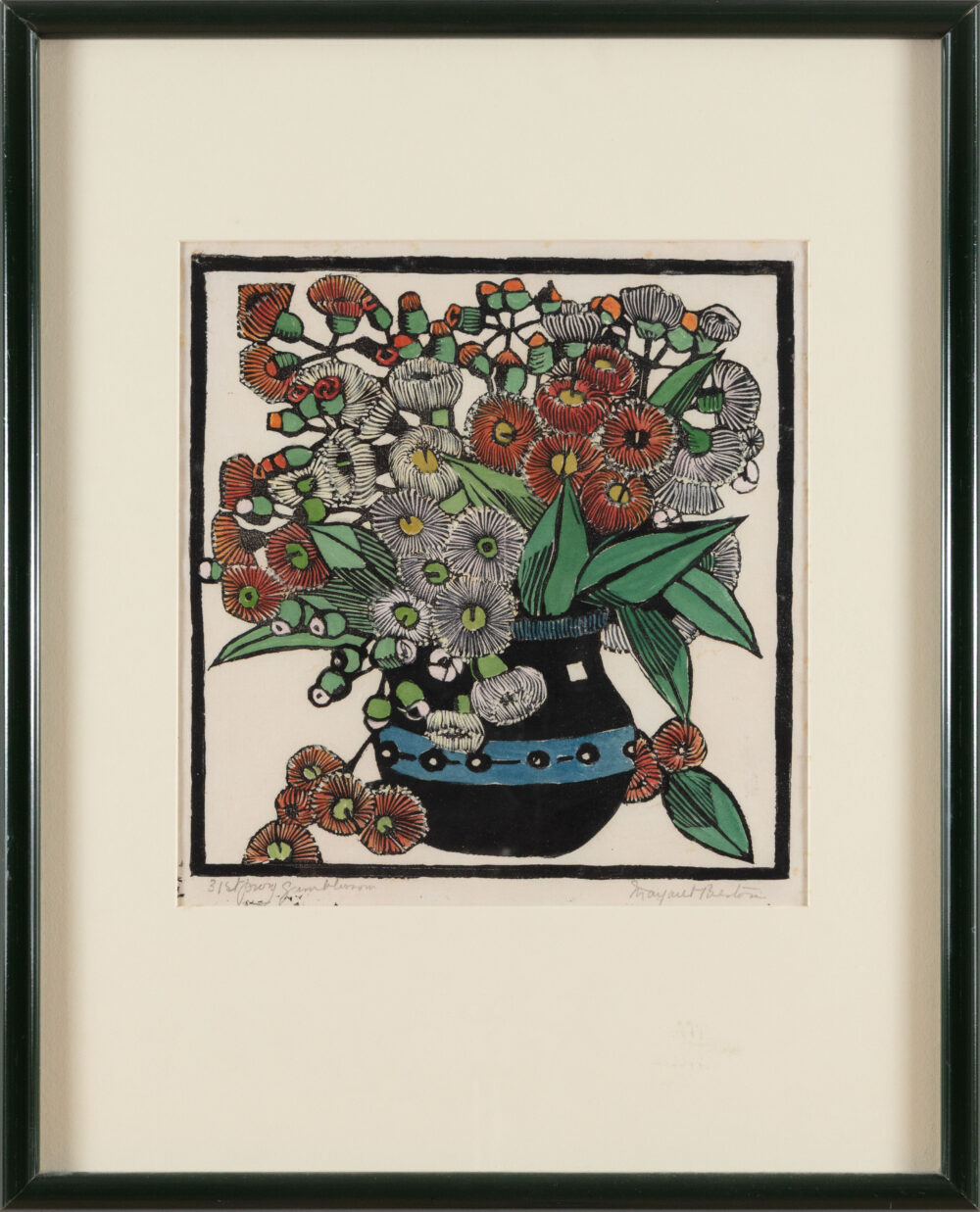
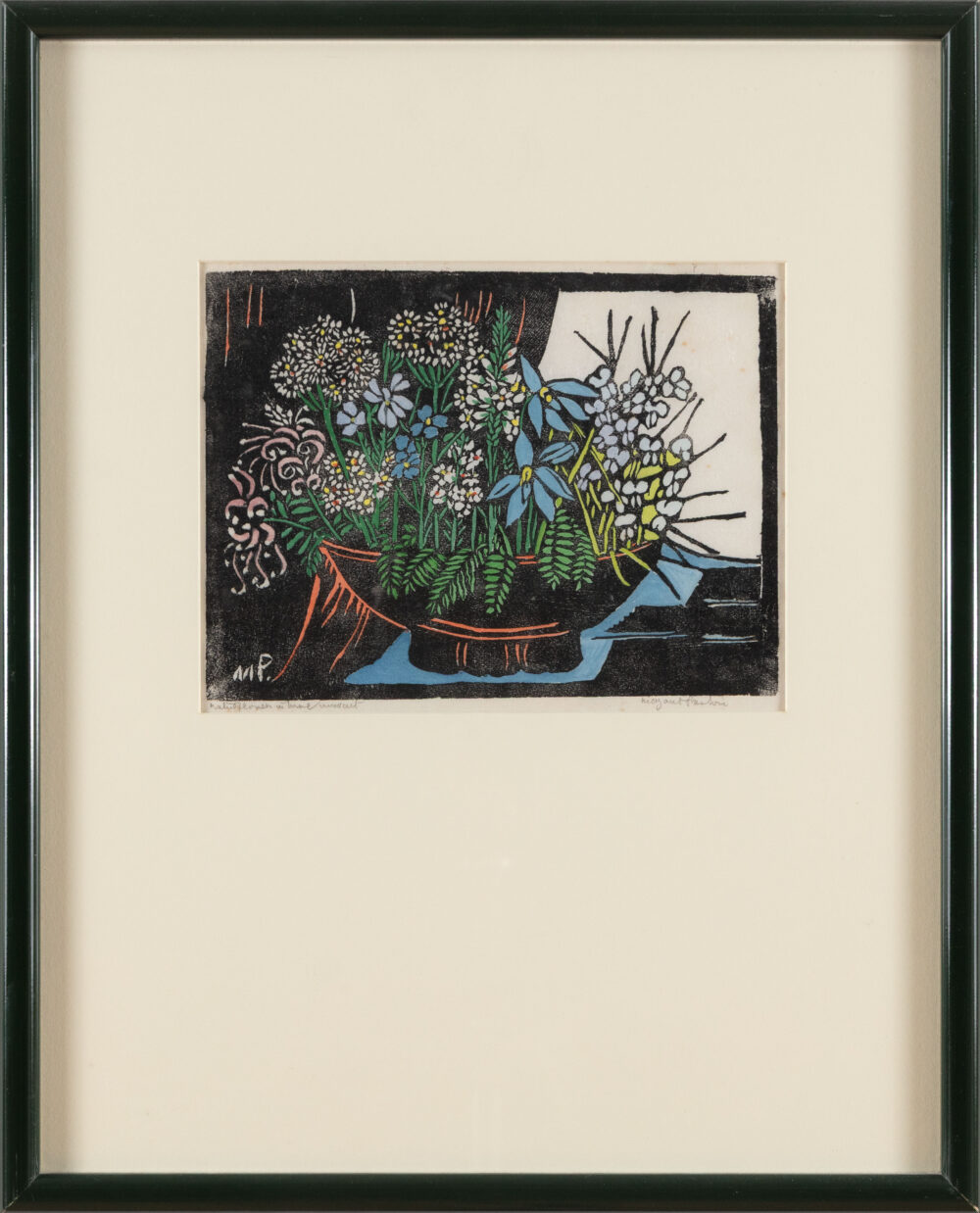
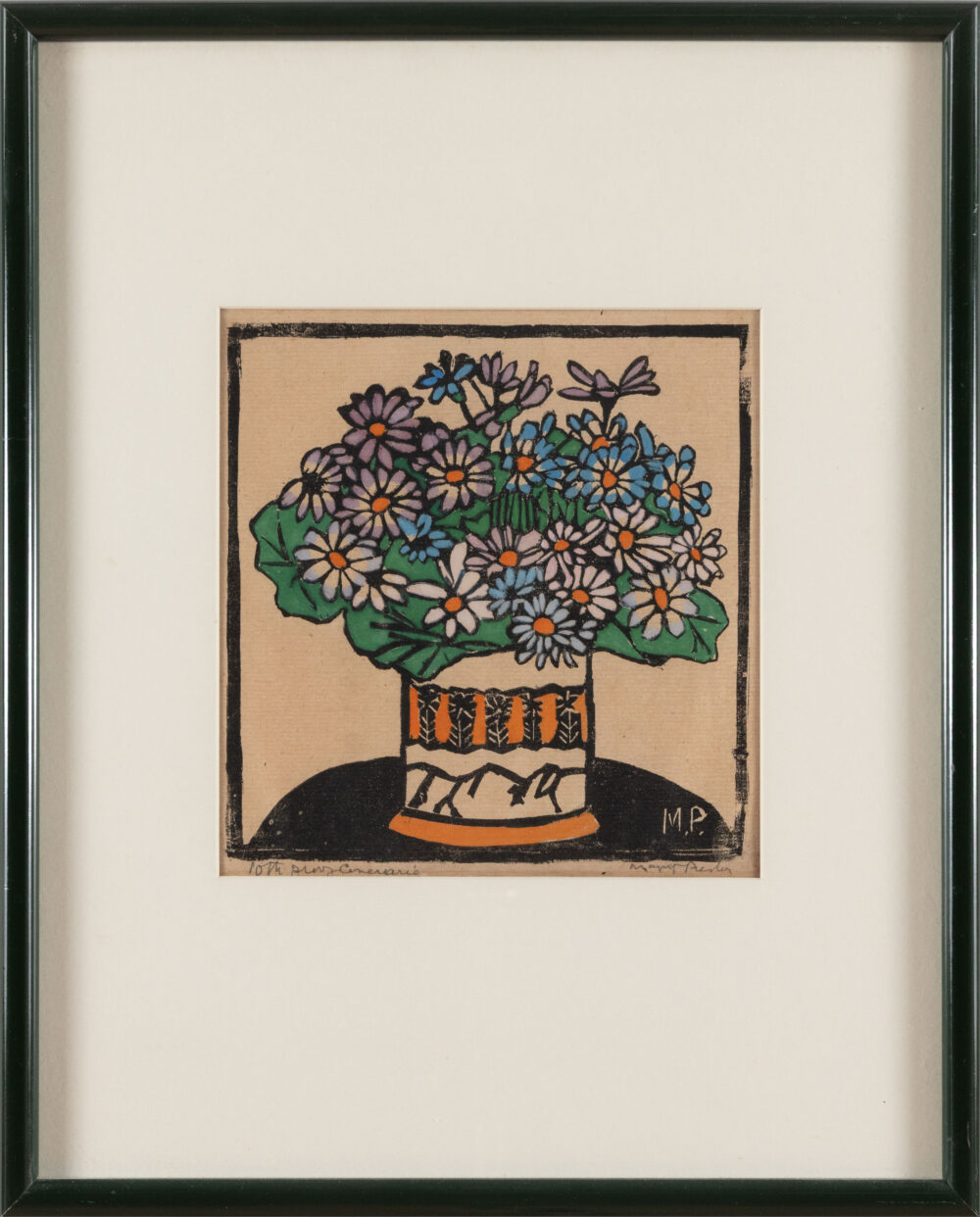
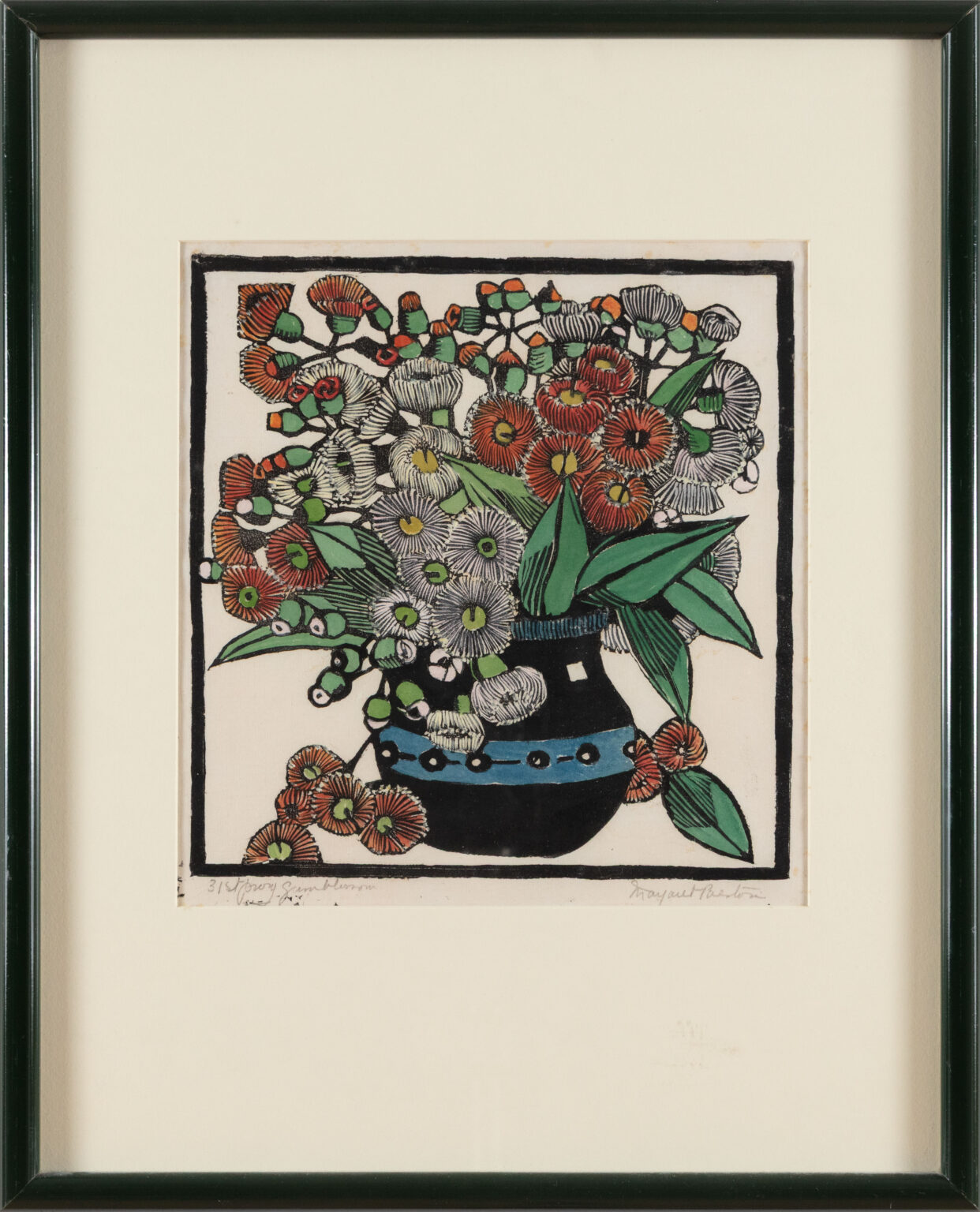
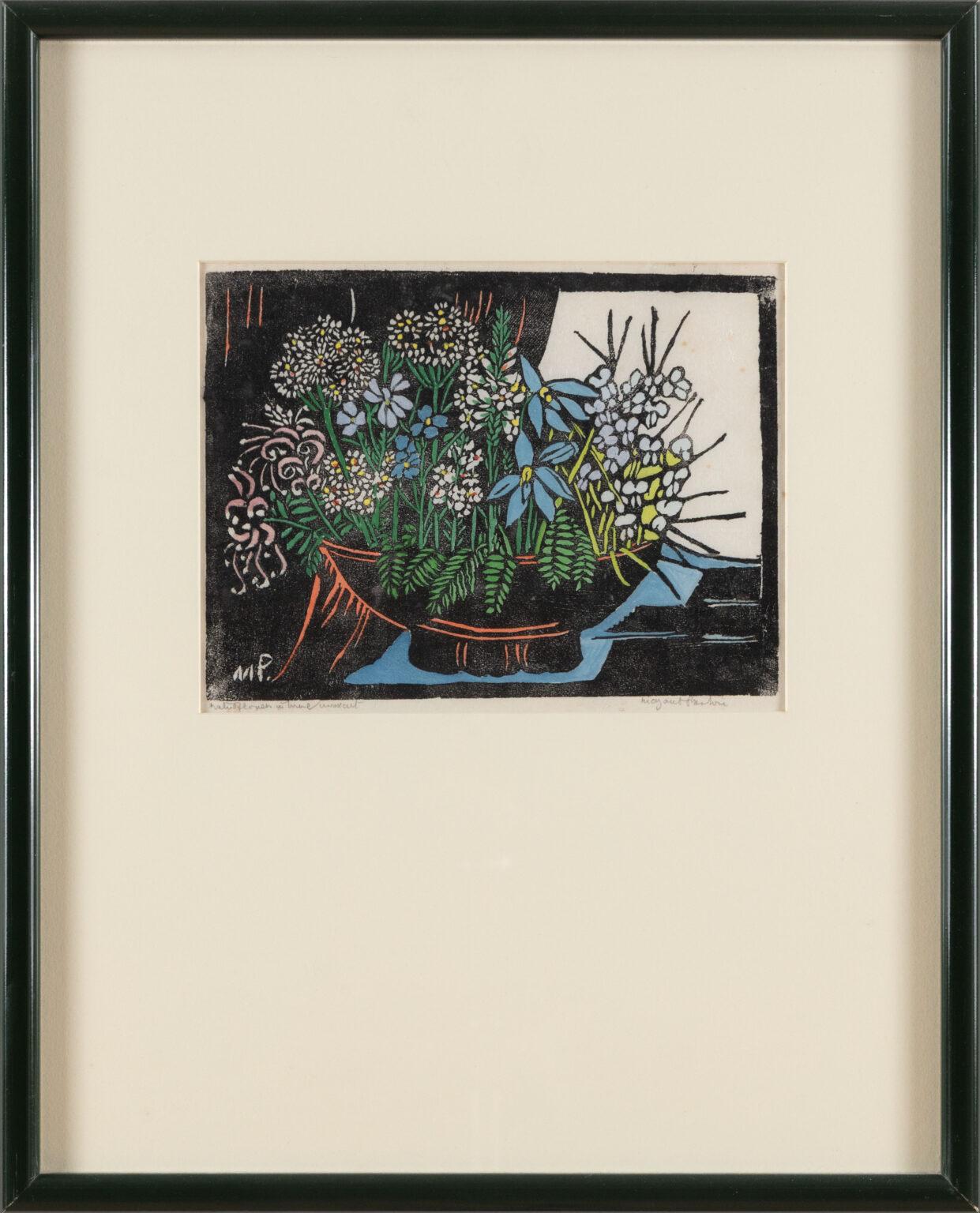
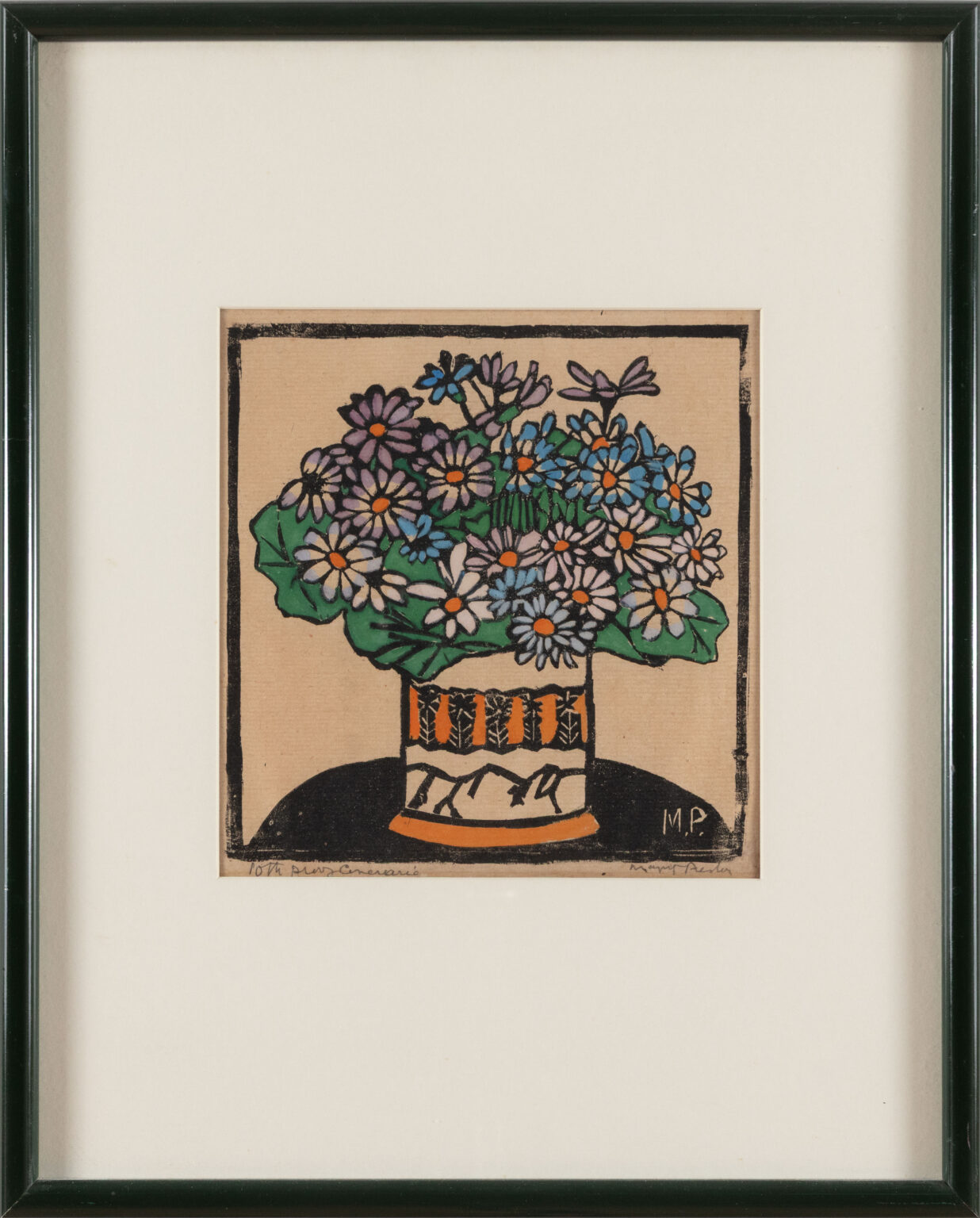
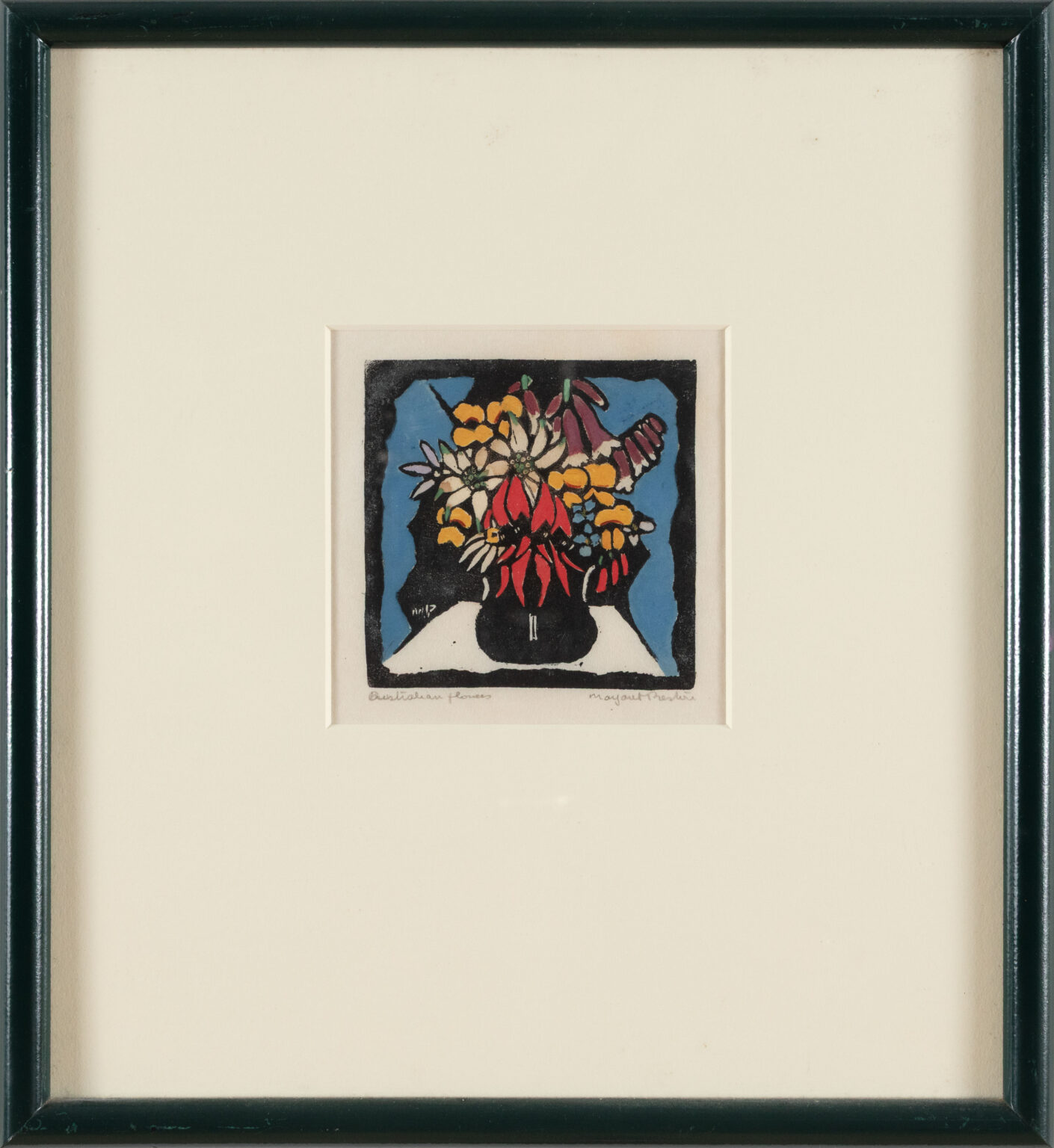
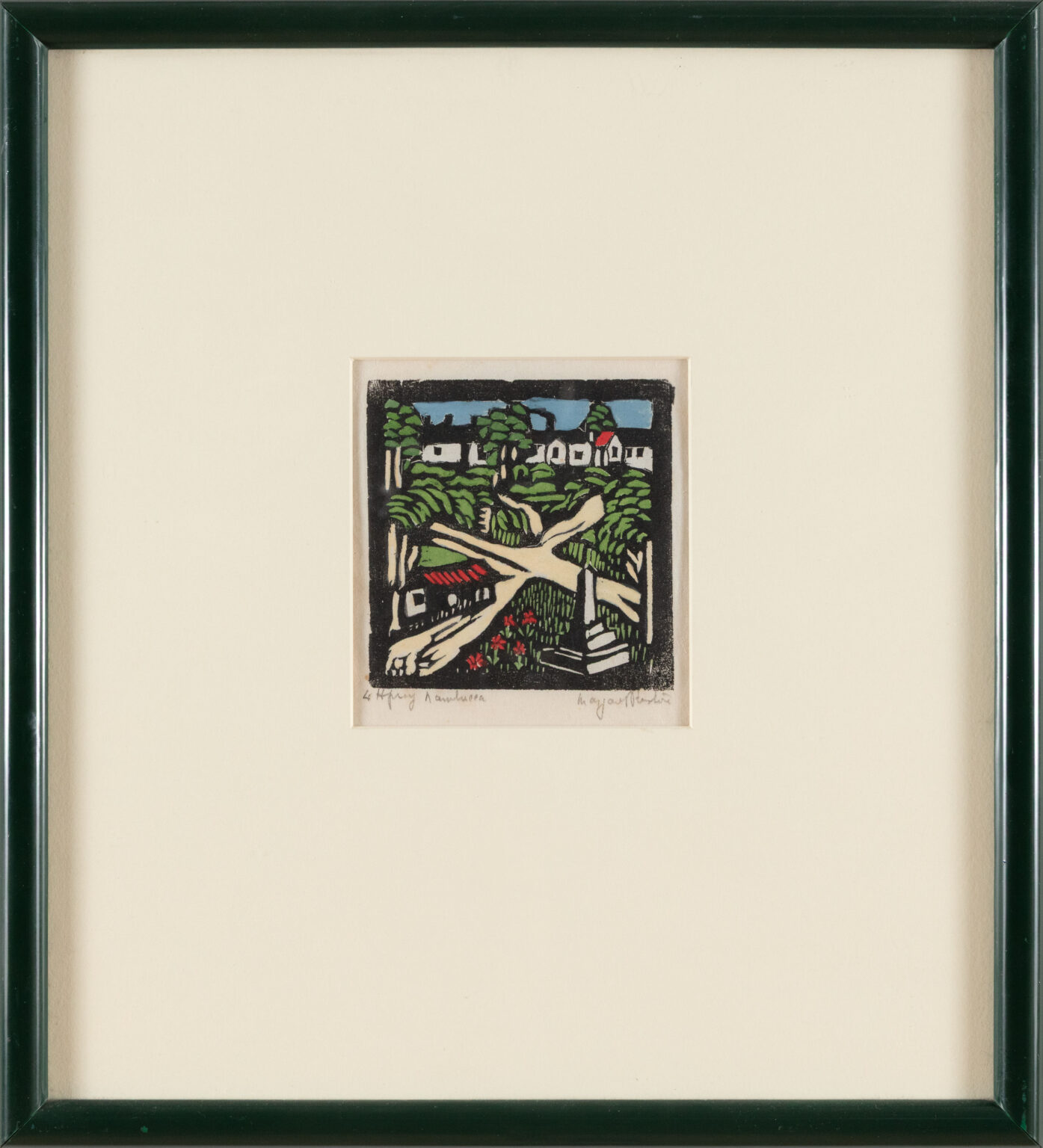
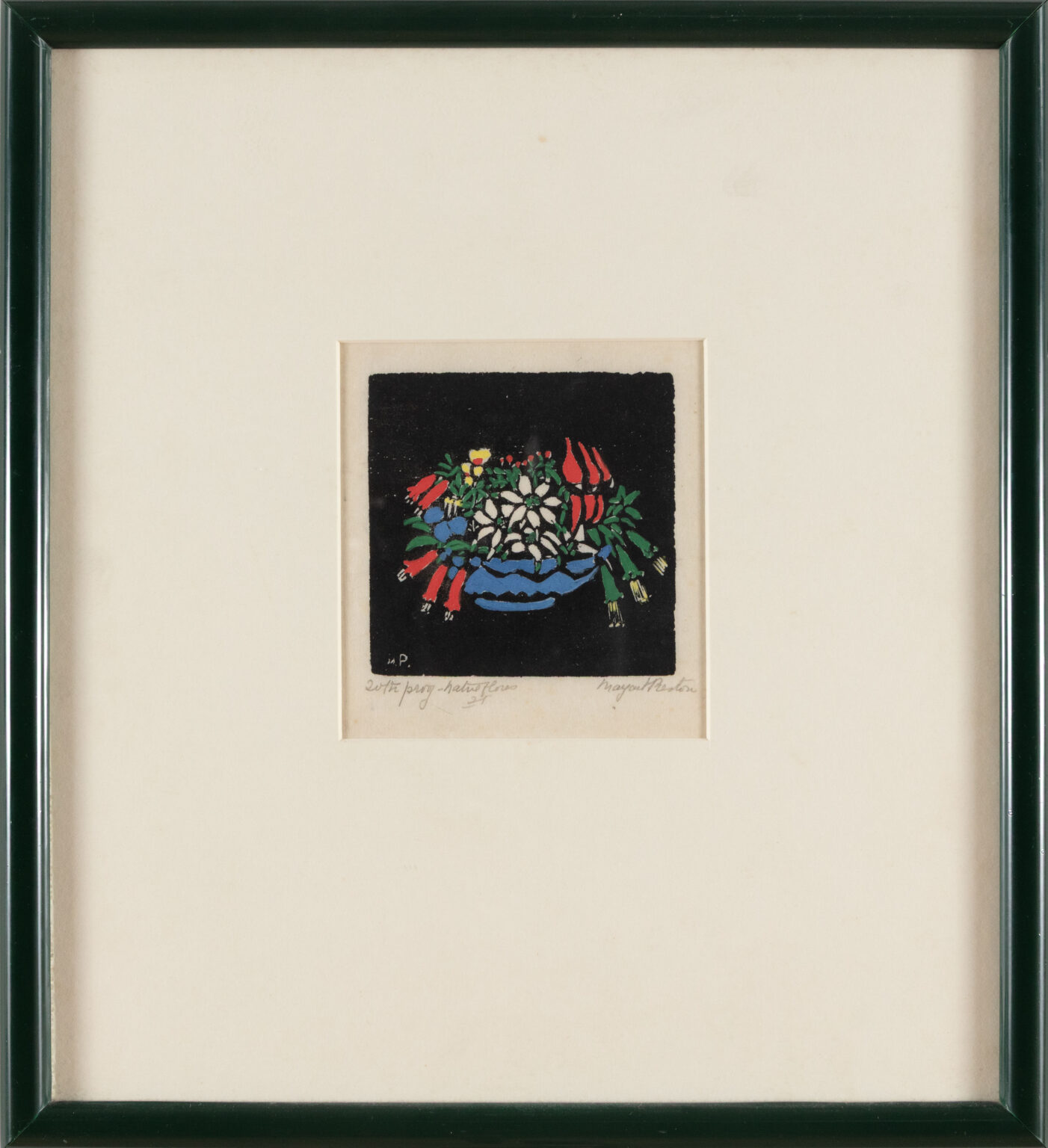
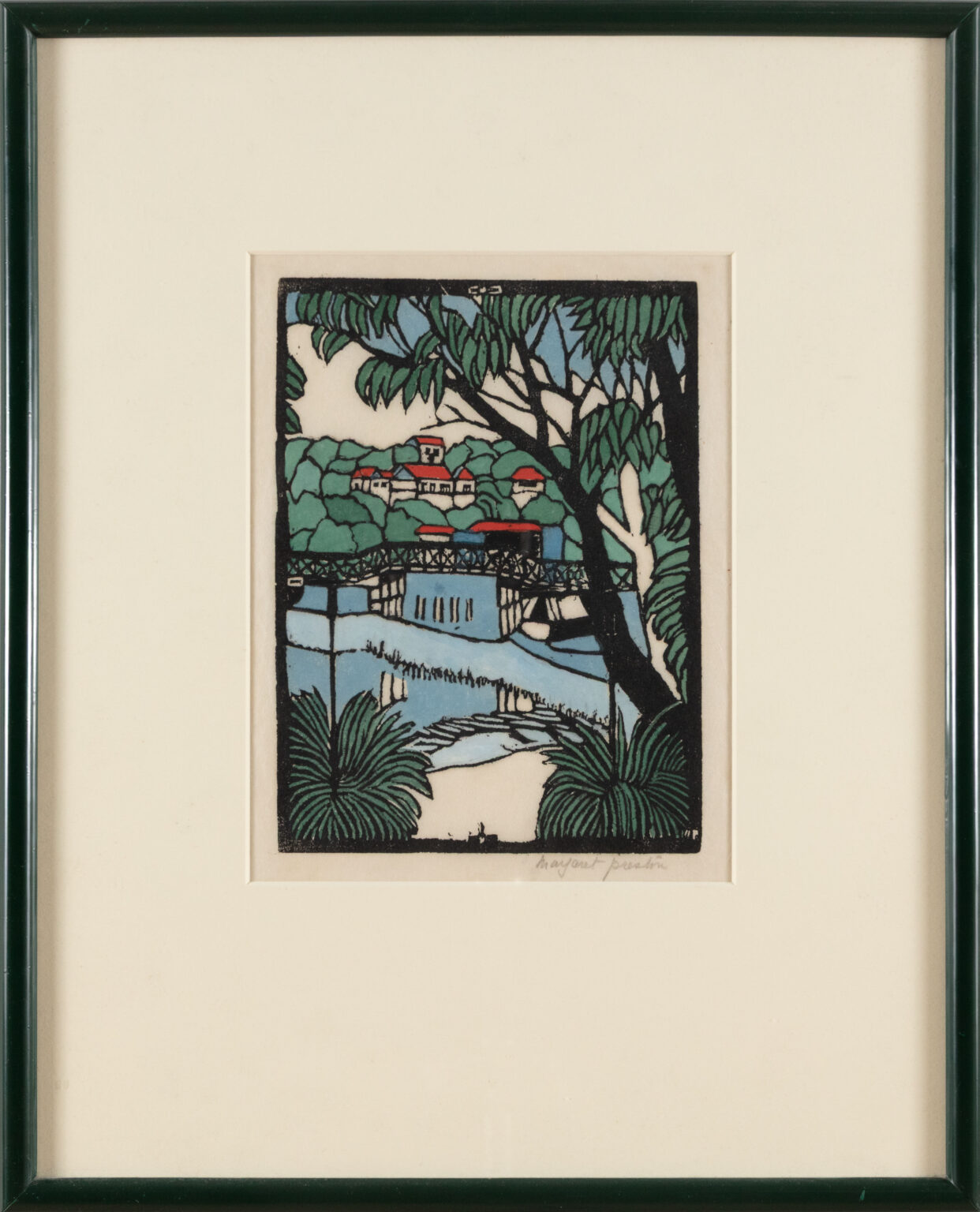
From the time of her first exhibition in 1925 Margaret Preston established herself as the most important artist printmaker working in Australia. The exhibition received critical and popular acclaim. It was described in the press as ‘a riot of colour’ and sold exceptionally well. The most desirable works were those dealing with Australian flora; Preston hand-coloured them in gouache which enabled her to exploit the effects of vibrant, saturated colours. Her work quickly became iconic, being illustrated in journals like Art in Australia and The Home and being acquired by public galleries.  The exhibition also marked the beginning of Preston’s commitment to the development of a national Australian art.

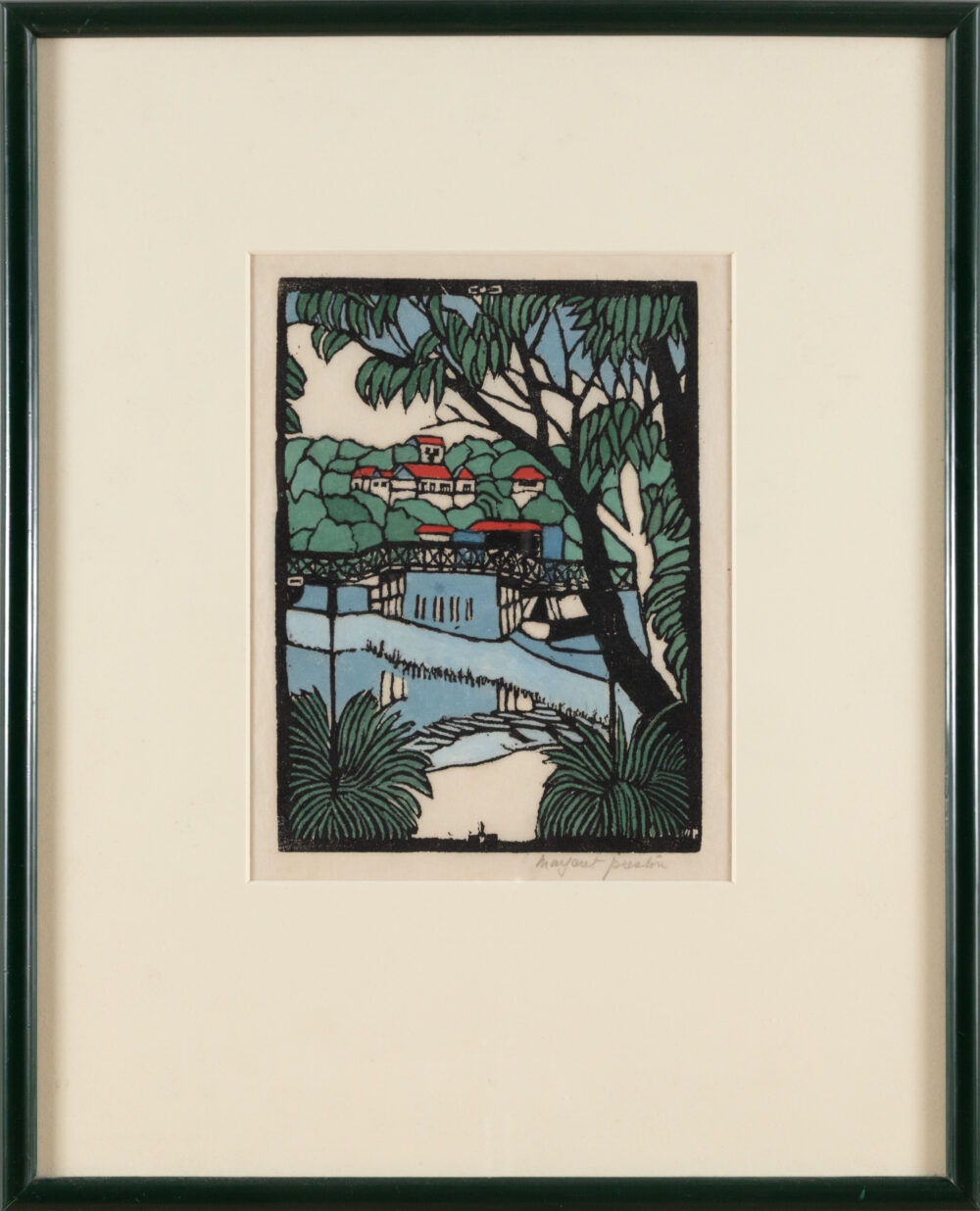
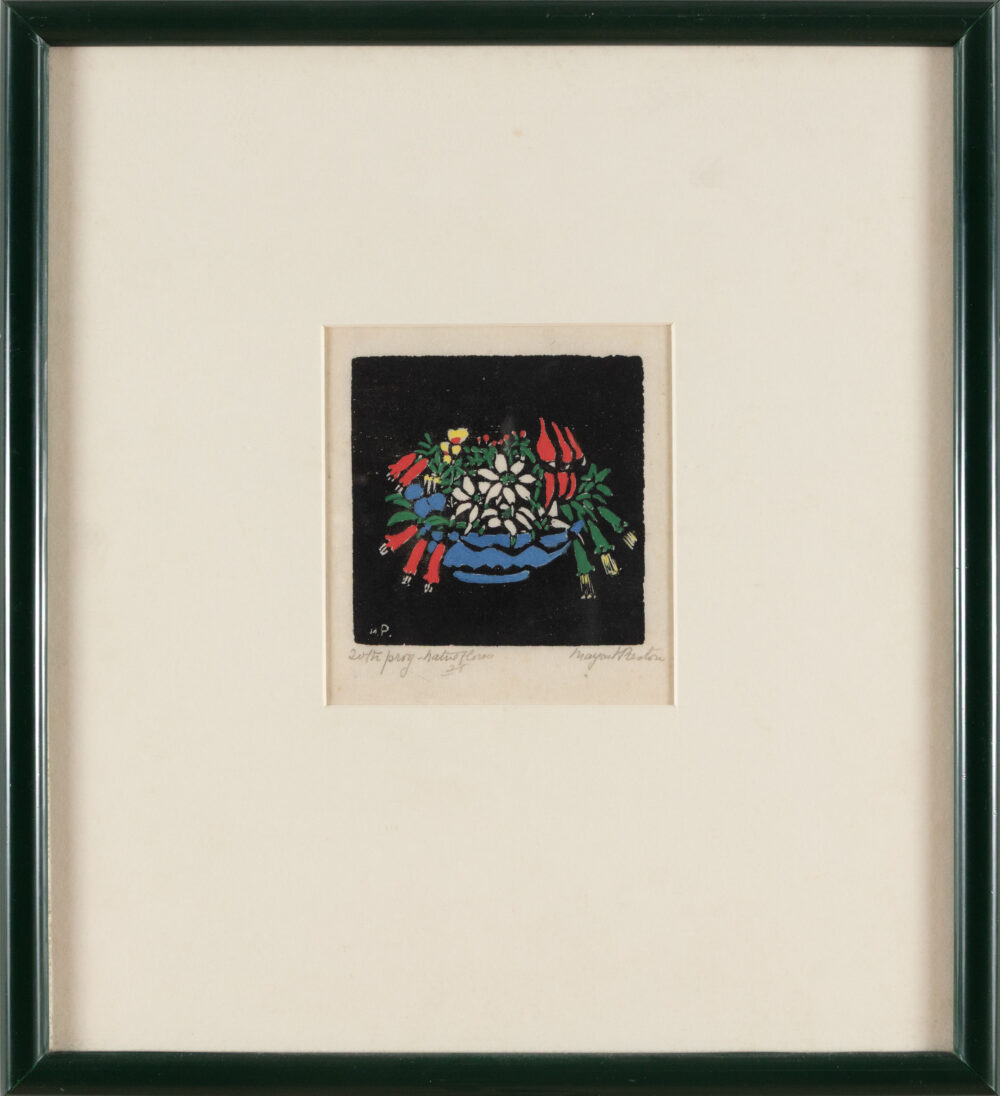
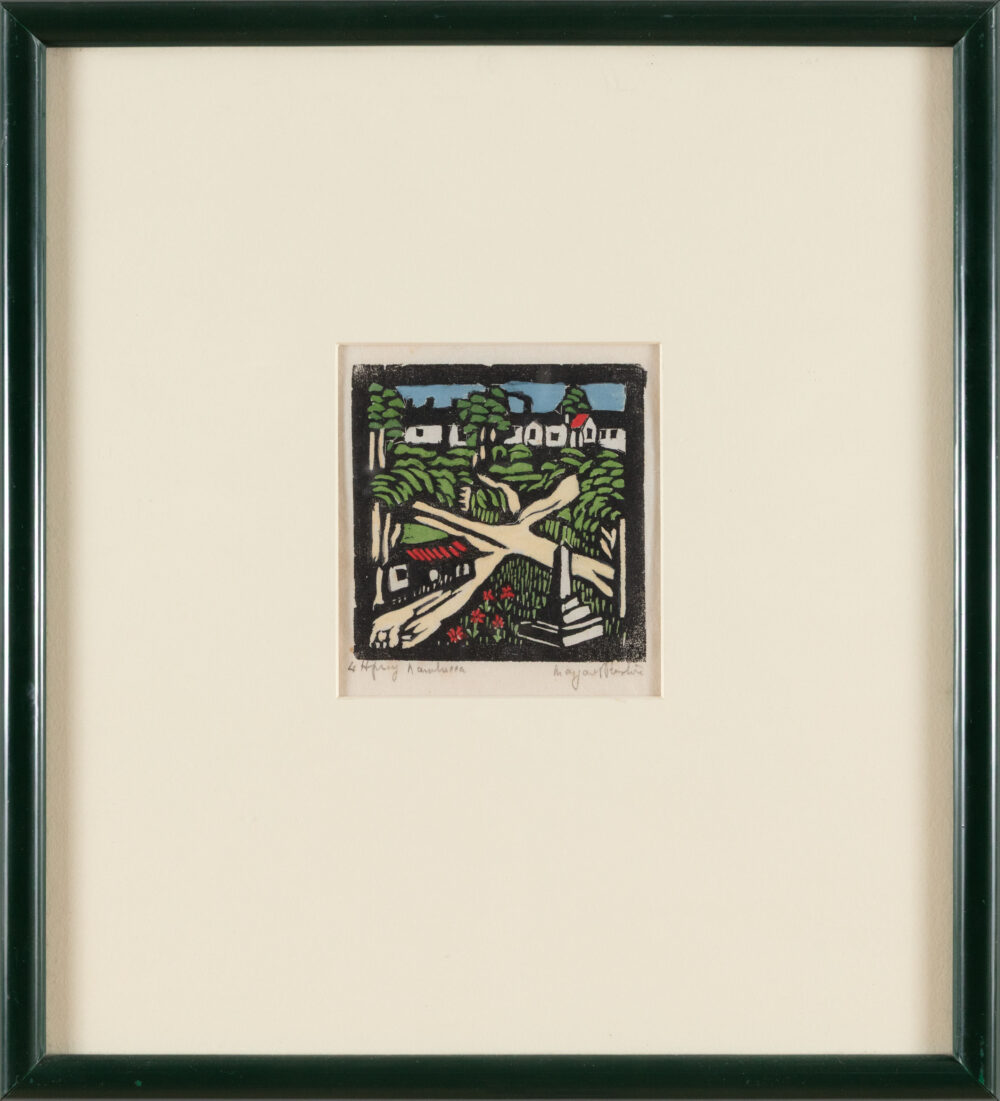
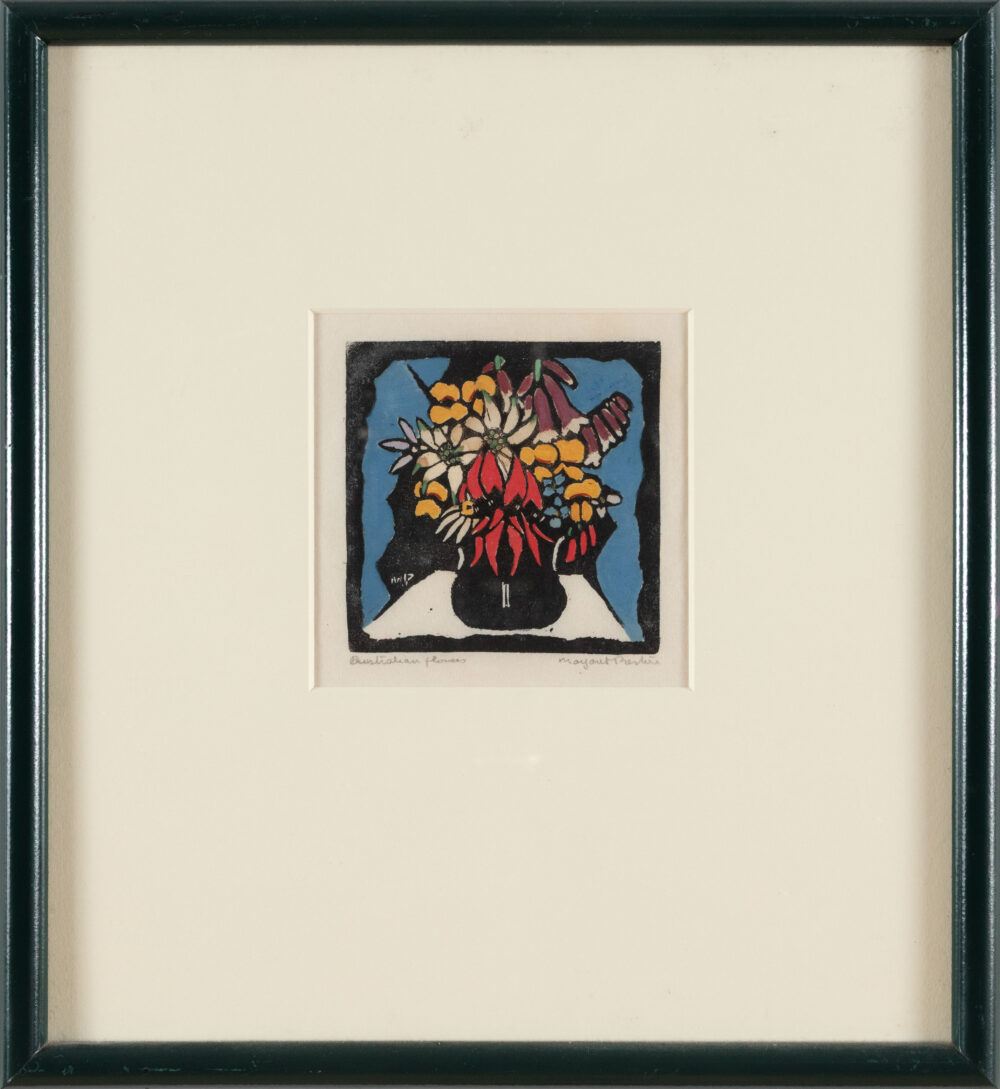
This important group of eight prints span the most productive years of Preston’s involvement with woodblock printmaking – ranging from her 1925 exhibition until 1939.

In Native flowers (1925), an arrangement of flannel flowers, Sturt desert peas and Christmas bells in a blue bowl, the flowers have a jewel-like quality, appearing vibrant against the solid black background. This was one of the best-known prints from the 1925 exhibition following its reproduction on the cover of Art in Australia in December of that year.

Throughout the twenties Preston continued to experiment with still lives of native flowers, the compositions becoming bolder and more commanding. She also produced landscapes of the Sydney foreshore. When Preston settled in Sydney in 1920, she lived in the harbourside suburb of Mosman and went on to produce several prints which show her affection for this picturesque location. Mosman Bridge (1927), one such view, was selected by the artist to accompany her monograph Margaret Preston: Recent paintings 1929. All impressions of this print are slightly different. Preston was not interested in printing in colour, but hand coloured each print, the distribution of colour often varying, imparting each with its own vitality.

By the end of the decade Preston’s still life prints had become highly abstracted. Gum blossoms (1928) is one of the outstanding prints of this period, the artist carefully designing a floral arrangement with a pre-determined pictorial composition in mind. The subtly coloured round gum flowers and triangular leaves push out to the edges of the image, constrained by the rigid black lines that define the composition.    

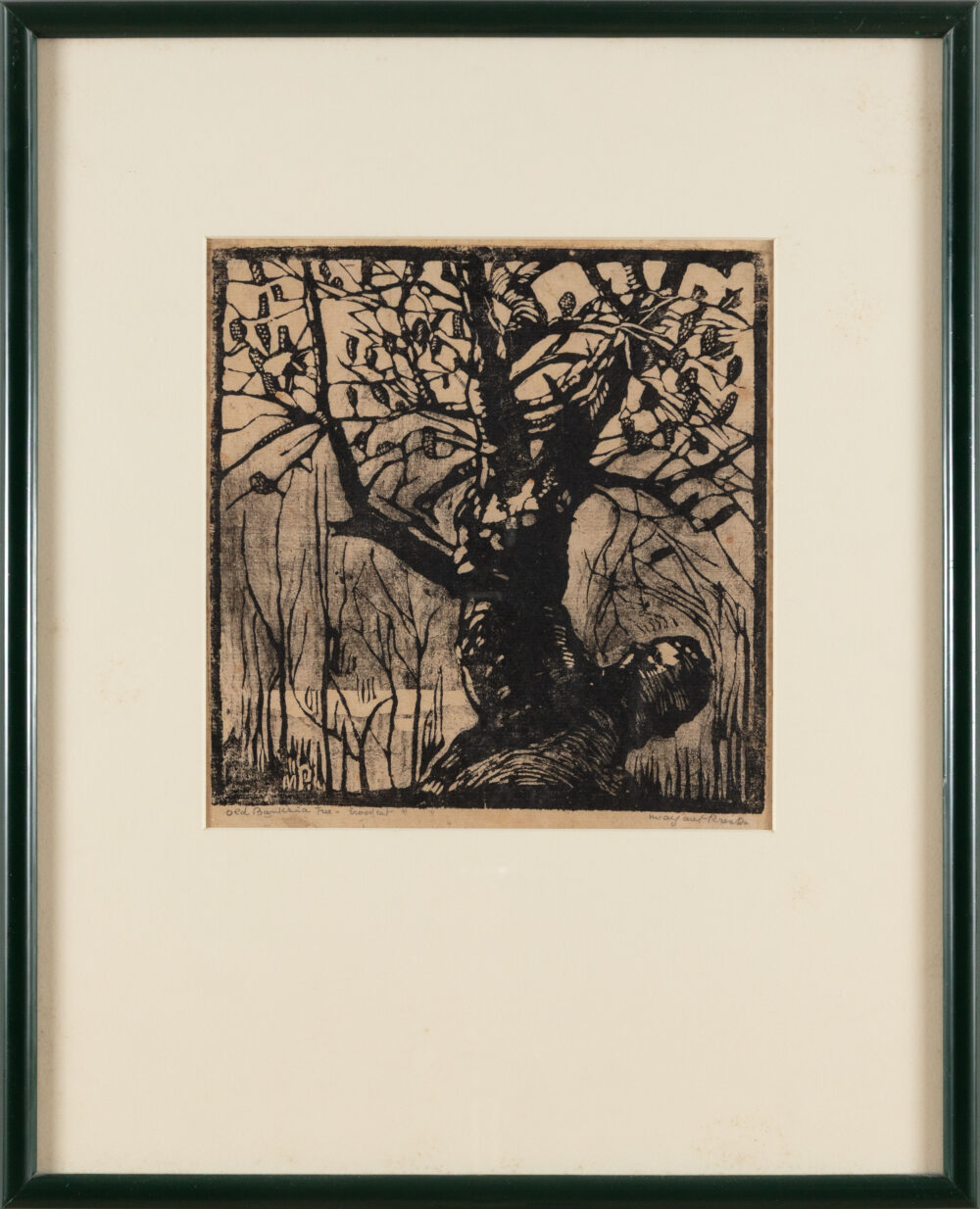
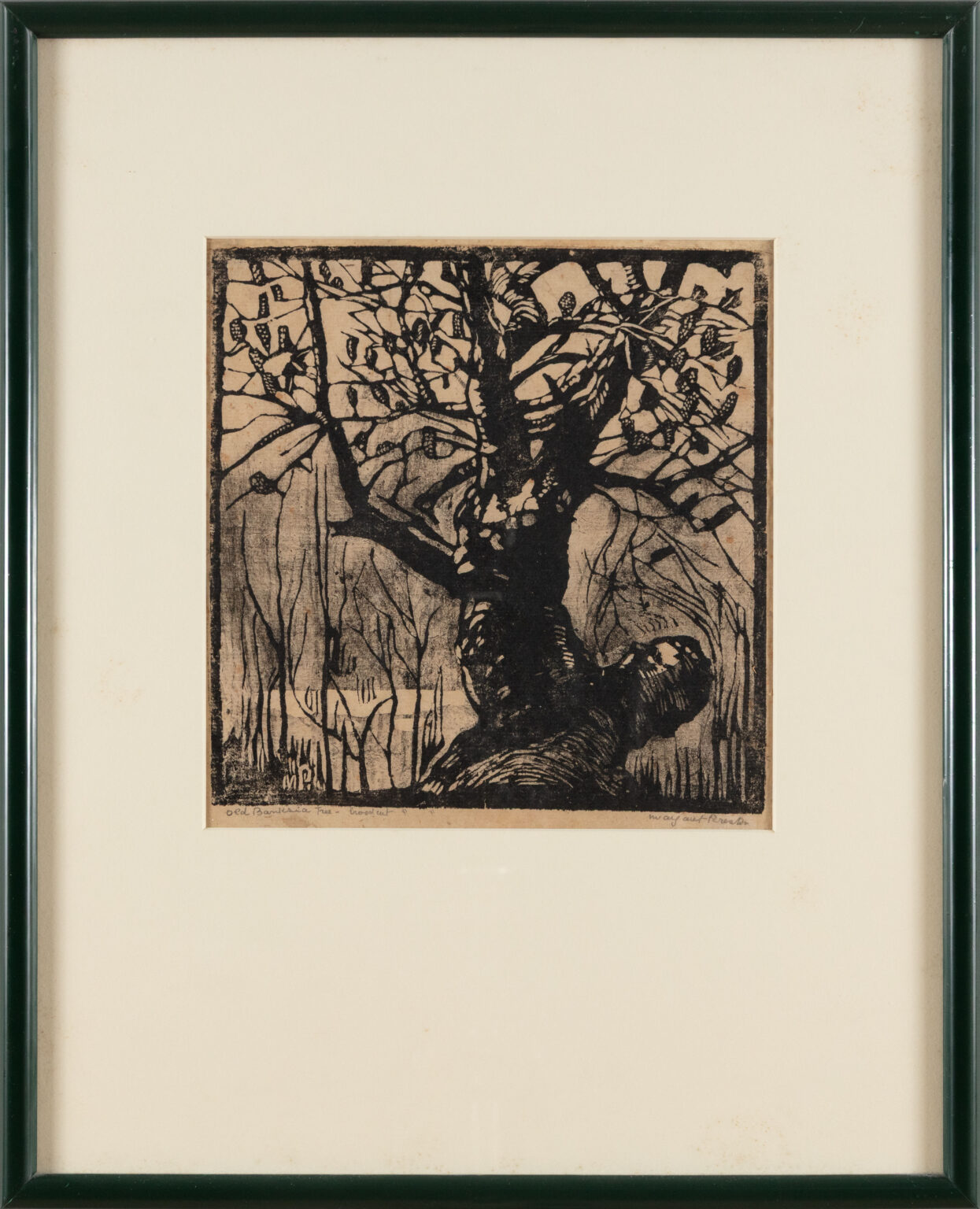
In the early 1930s Preston moved to live in Berowra, a rural area surrounded by dense native bush. She was aged in her early sixties and was recovering from surgery. Prints produced by Preston after this time are all rare. Whereas in the early 1920s her editions usually numbered 50 or 25, later editions are small, numbering only two or three, and in many cases impressions are unique. This is the case with Old Banksia Tree (1939), one of Preston’s most important prints from her Berowra years. The tree was located at the bottom of her property, gnarled by age but still productive; Preston obviously identified with it (there is a photograph of her standing next to it).

In this impression, the woodcut is not hand-coloured, but the artist has introduced background tone that emphasises the isolation and vulnerability of the tree. Produced on the cusp of the Second World War it marked the end to Preston’s Berowra phase of her career.

Roger Butler AM

Emeritus Curator, Australian Prints and Drawings

National Gallery of Australia

© Margaret Preston/Copyright Agency, 2025

Provenance

Collection formed from the early 1990s; all woodcuts acquired from Josef Lebovic, Sydney.

Private collection, Sydney.


Price On Application

tobymeagher@michaelreid.com.au


Selected Collections that hold works by Margaret Preston

Art Gallery of New South Wales (Sydney)

Art Gallery of South Australia (Adelaide)

Art Gallery of Western Australia (Perth)

Geelong Gallery (Geelong)

Holmes à Court Collection (private, WA)

Joseph Brown Collection (private, gifted to NGV, Melbourne)

National Gallery of Australia (Canberra)

National Gallery of Victoria (Melbourne)

Newcastle Art Gallery (Newcastle)

New England Regional Art Museum — Howard Hinton Collection (Armidale)

Queensland Art Gallery | Gallery of Modern Art (Brisbane)

University of Western Australia — Cruthers Collection of Women’s Art (Perth)

Jim Naughten

Posted by

Jim Naughten

  • Artist
    Jim Naughten
  • Dates
    9 Apr—2 May 2026
  • Gallery Location
    Eora / Sydney
  • Catalogue
    Download now

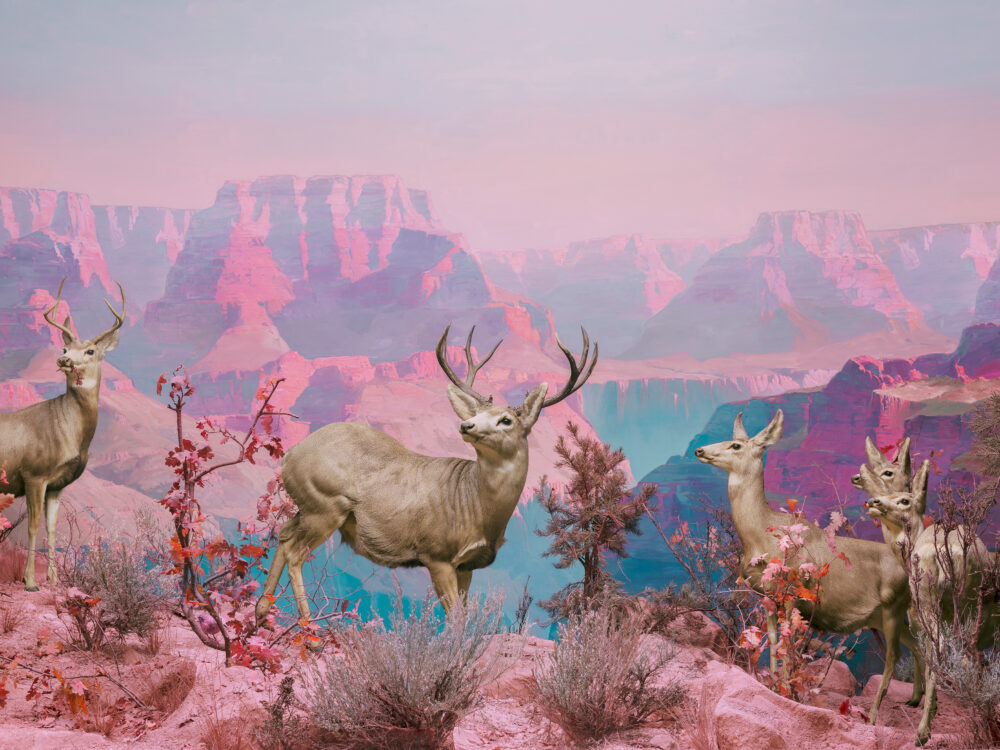
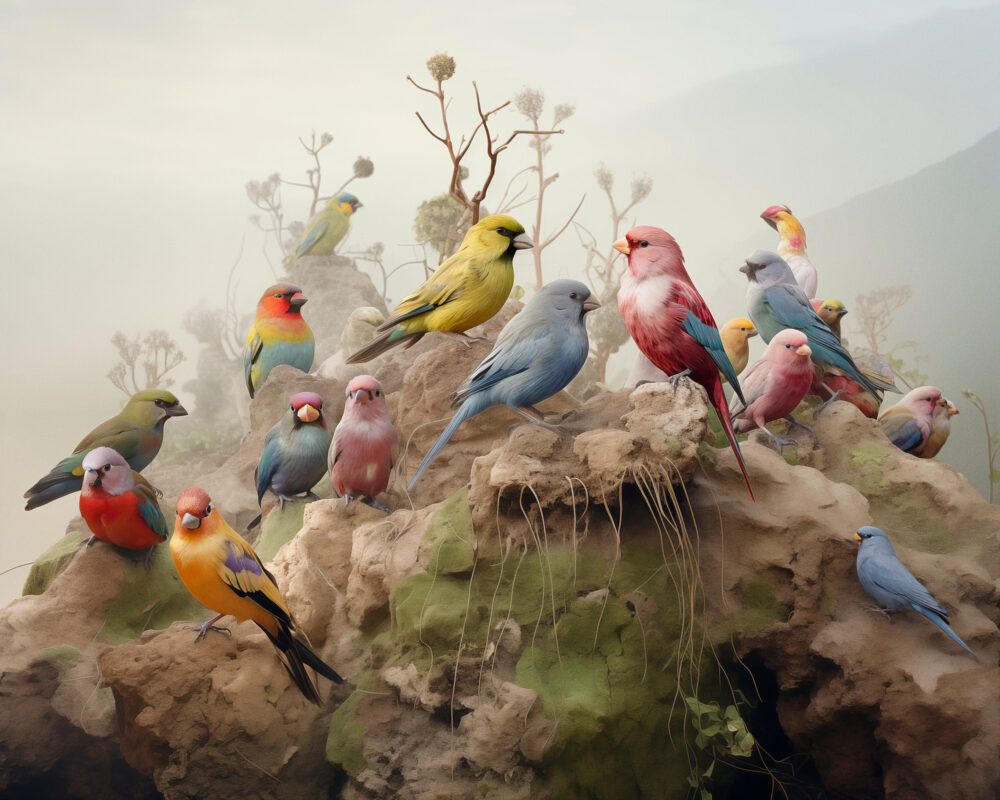
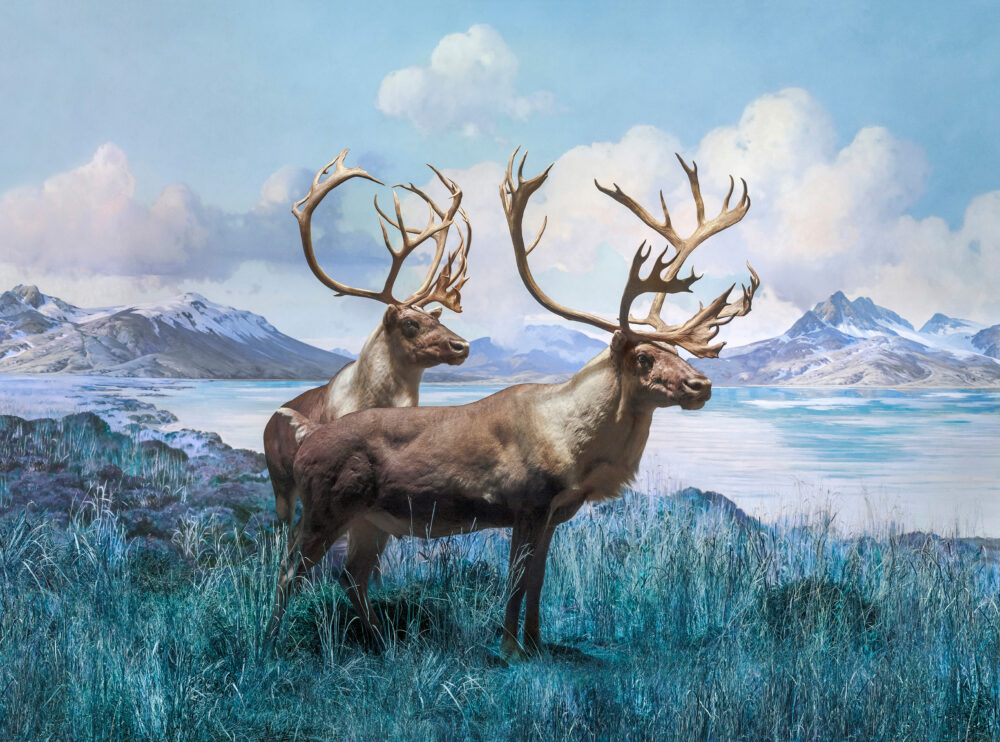
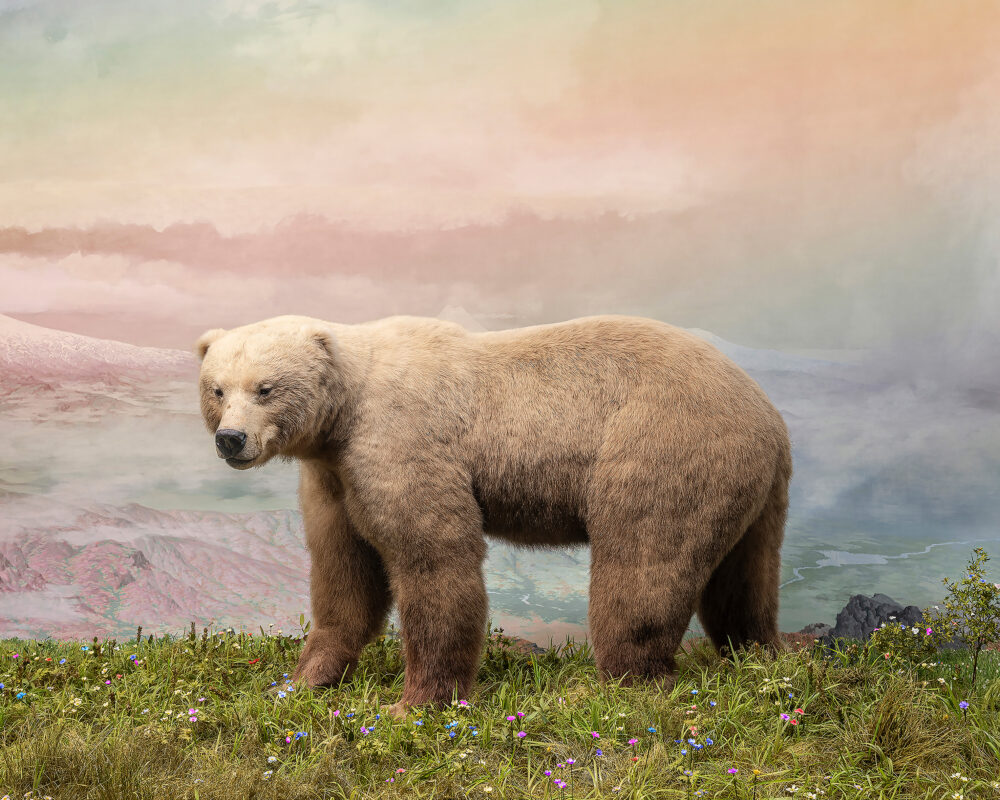
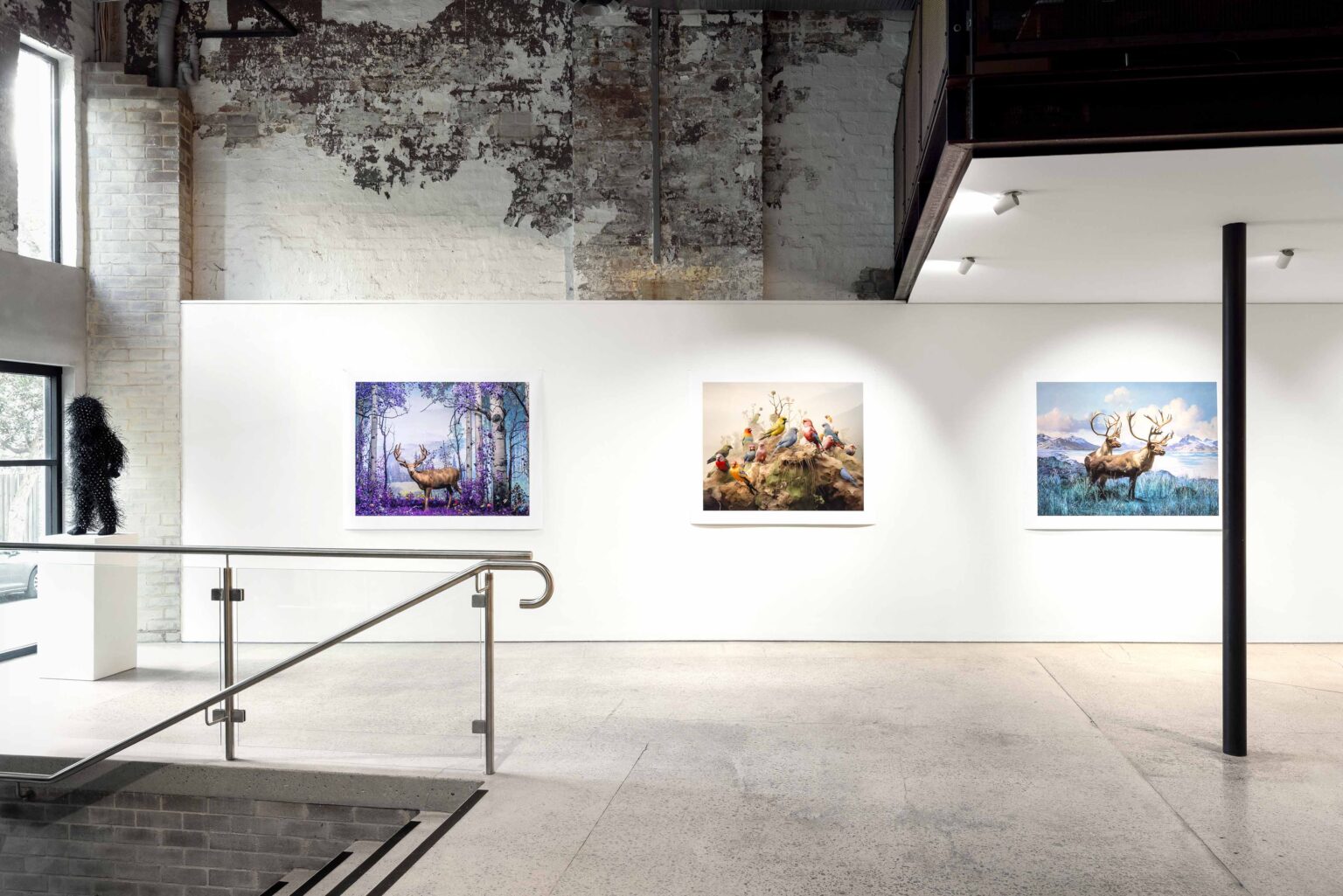
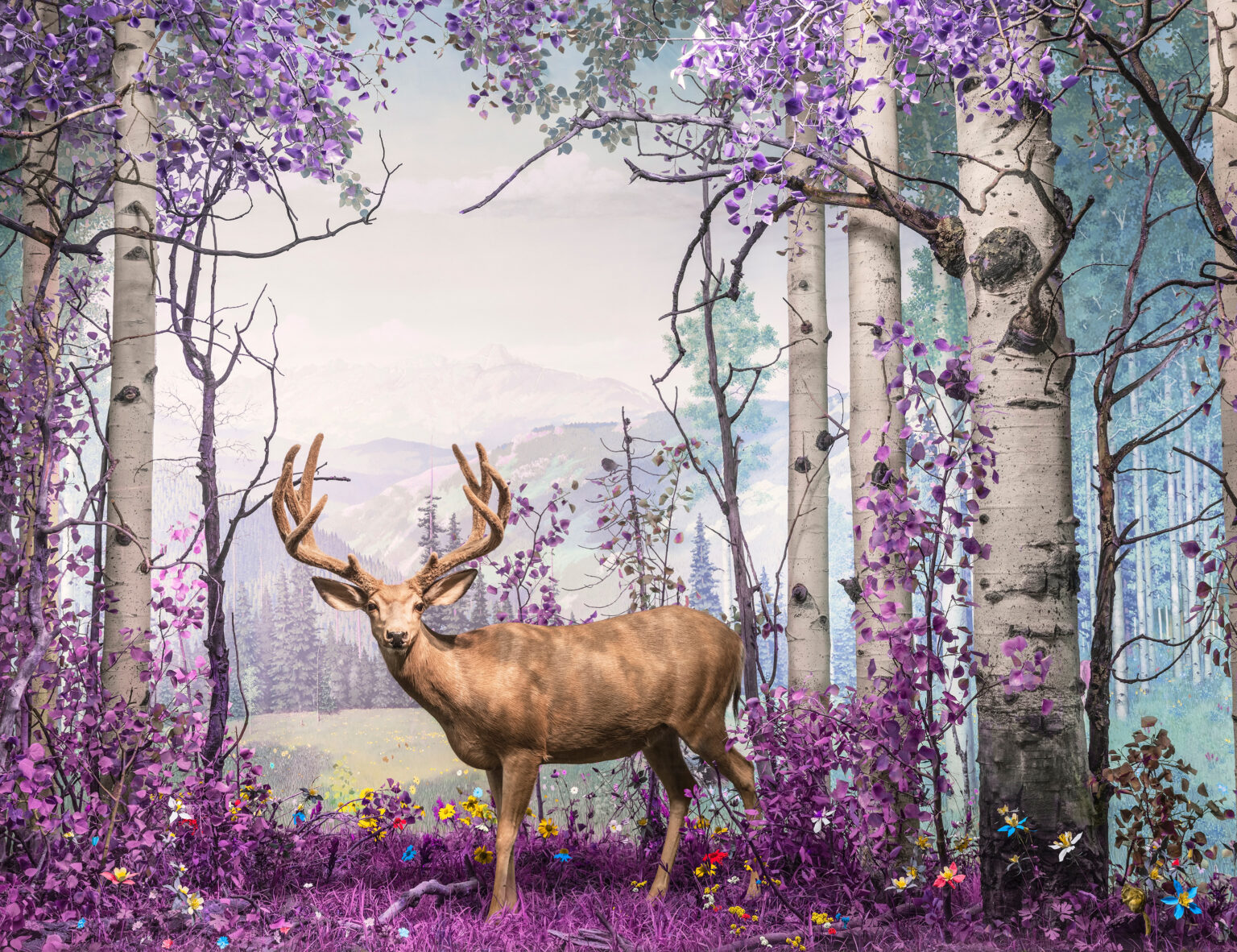
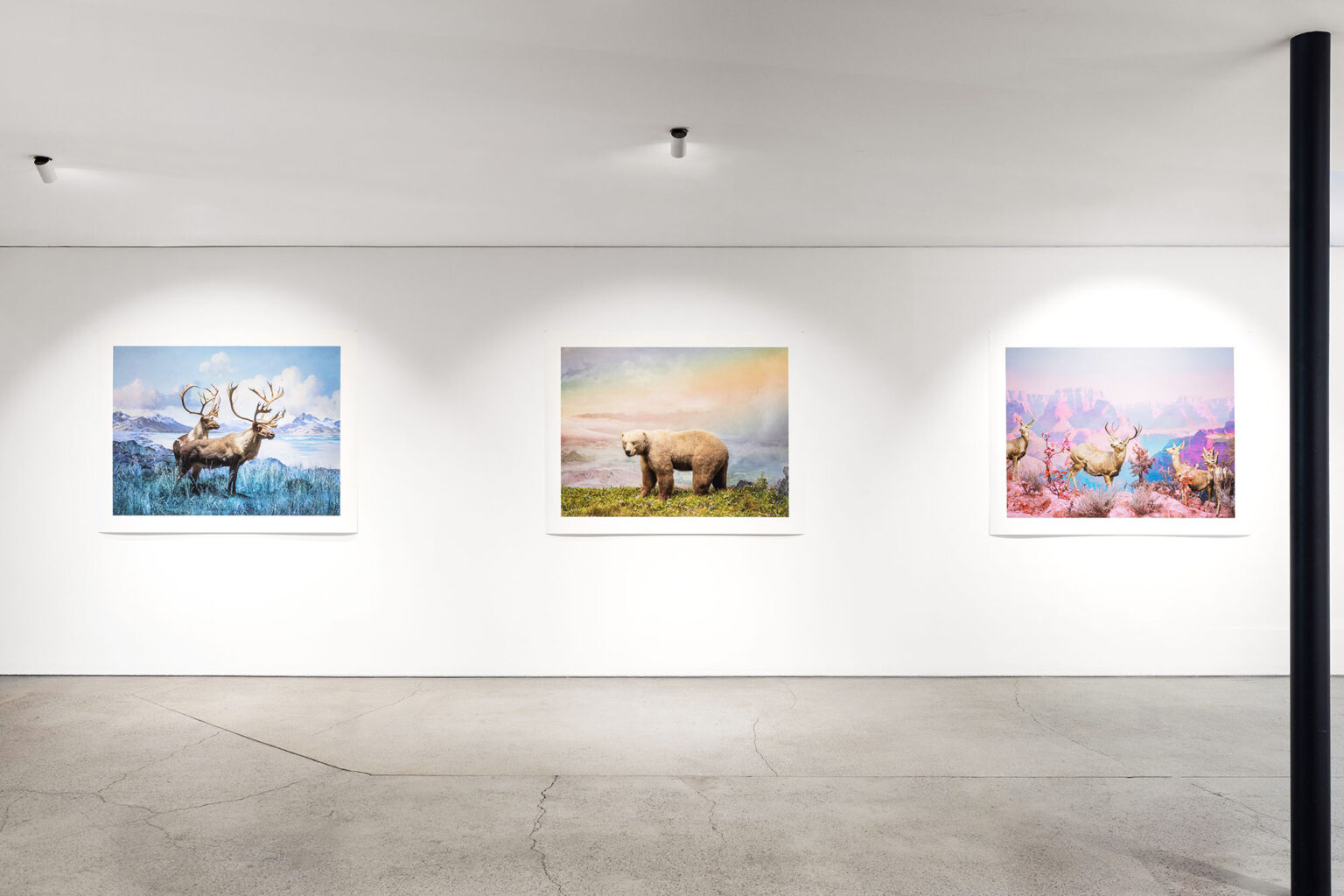
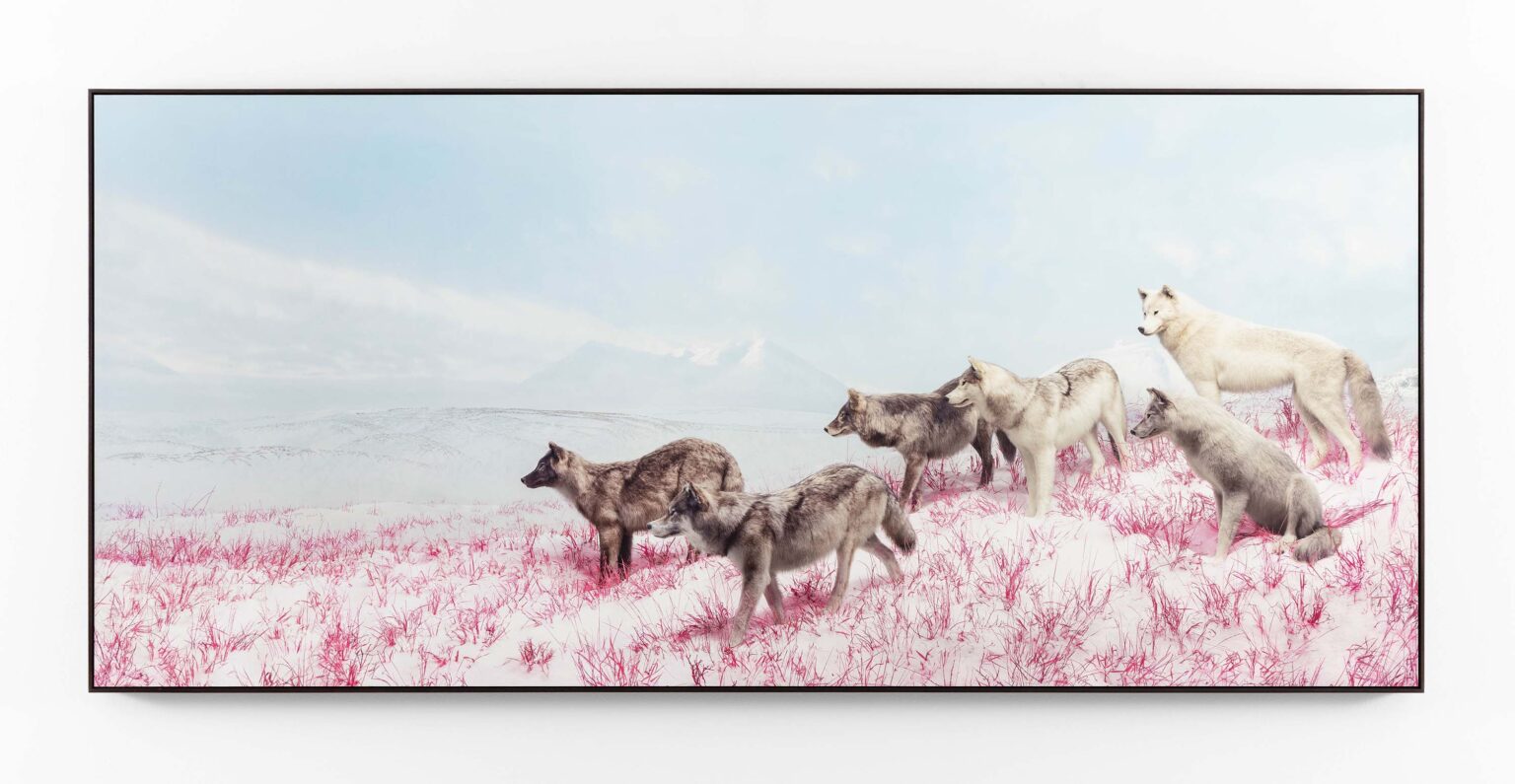
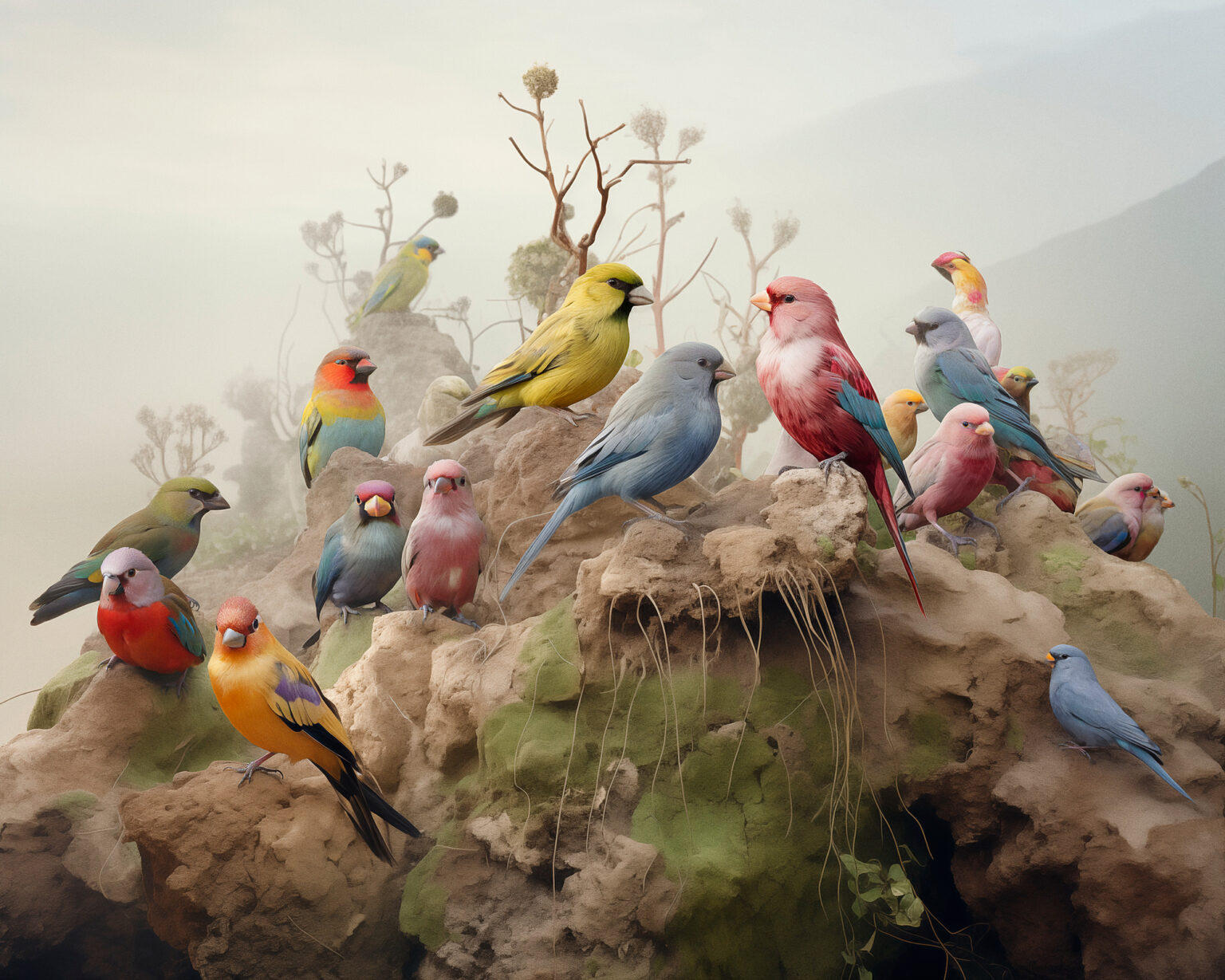
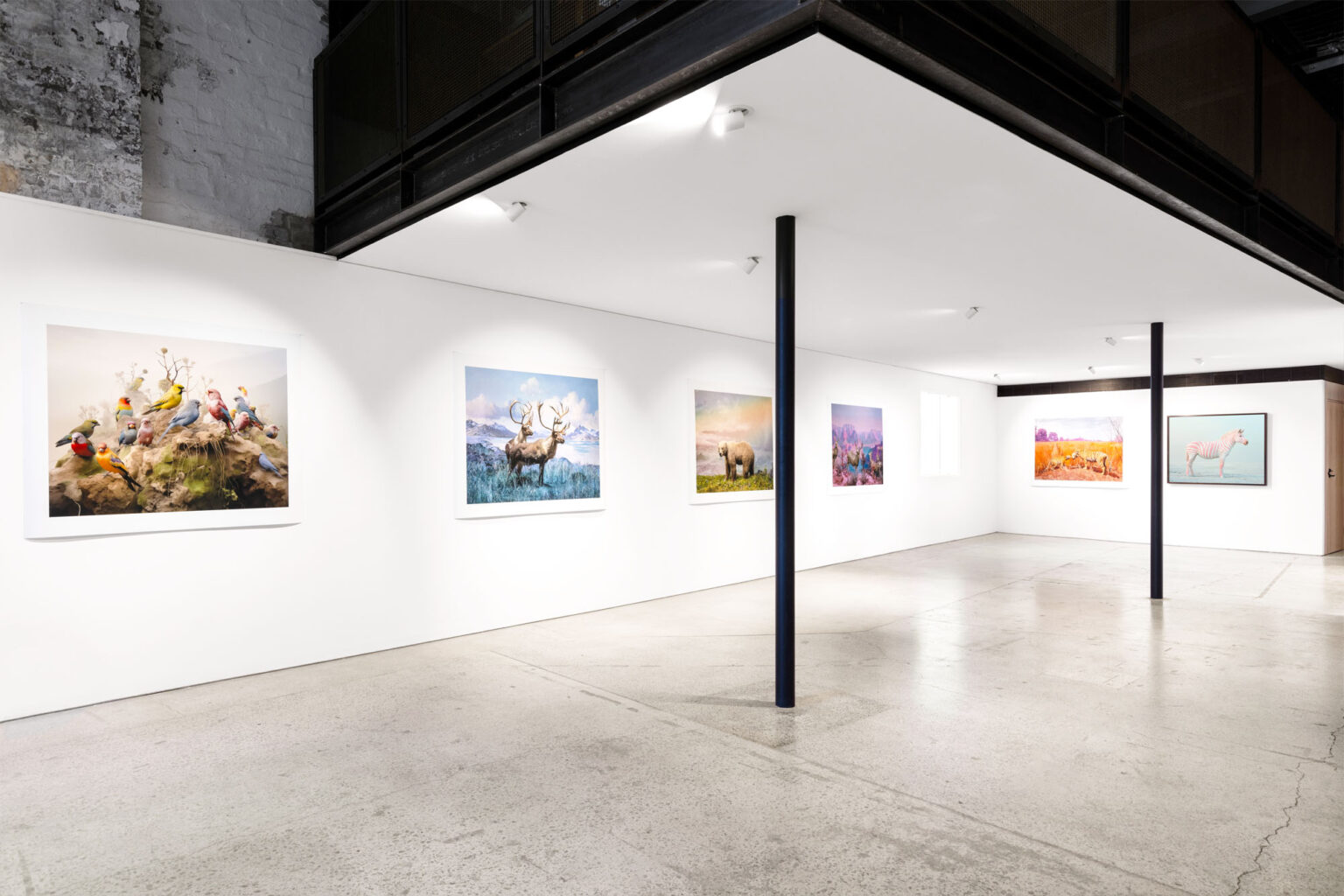
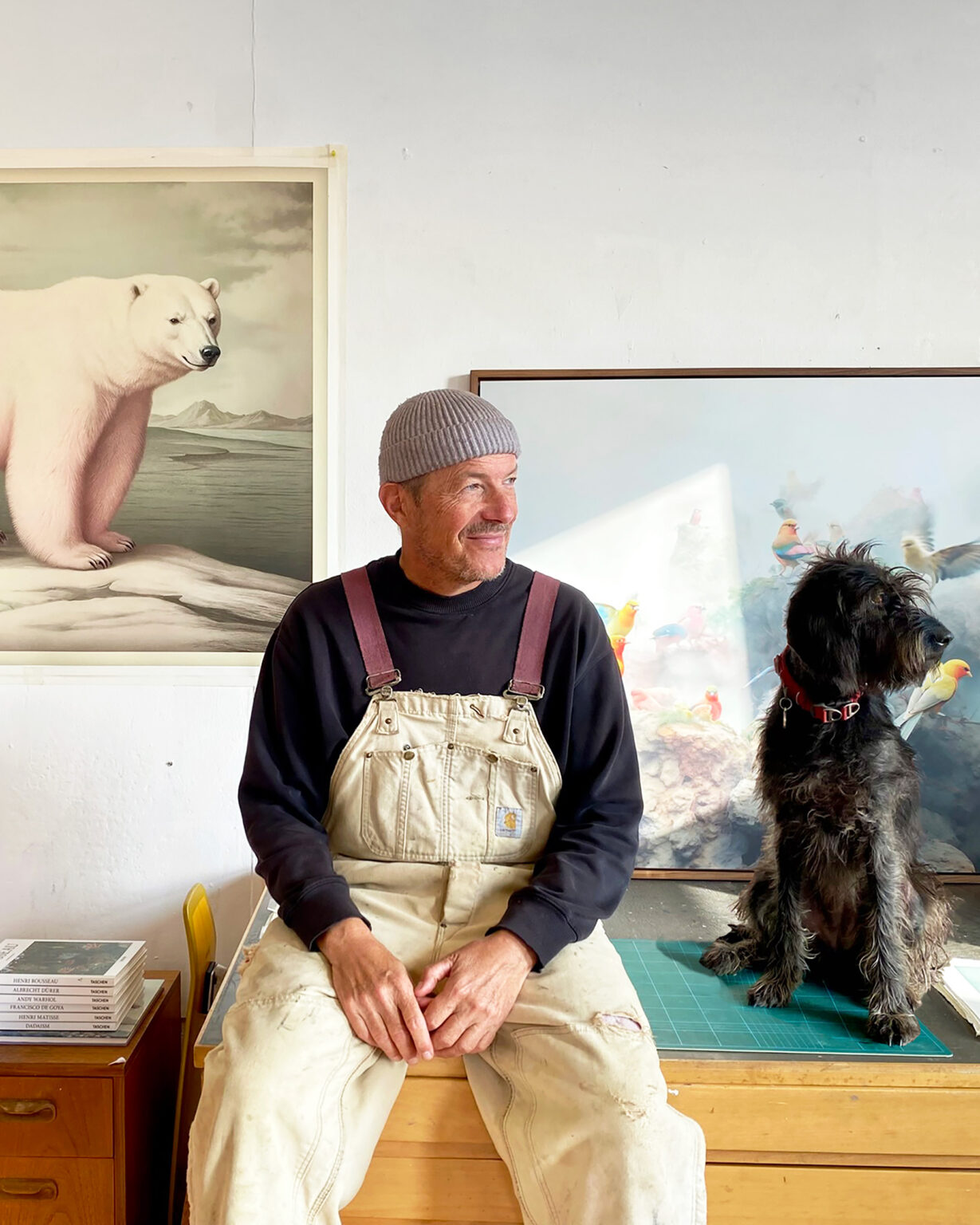
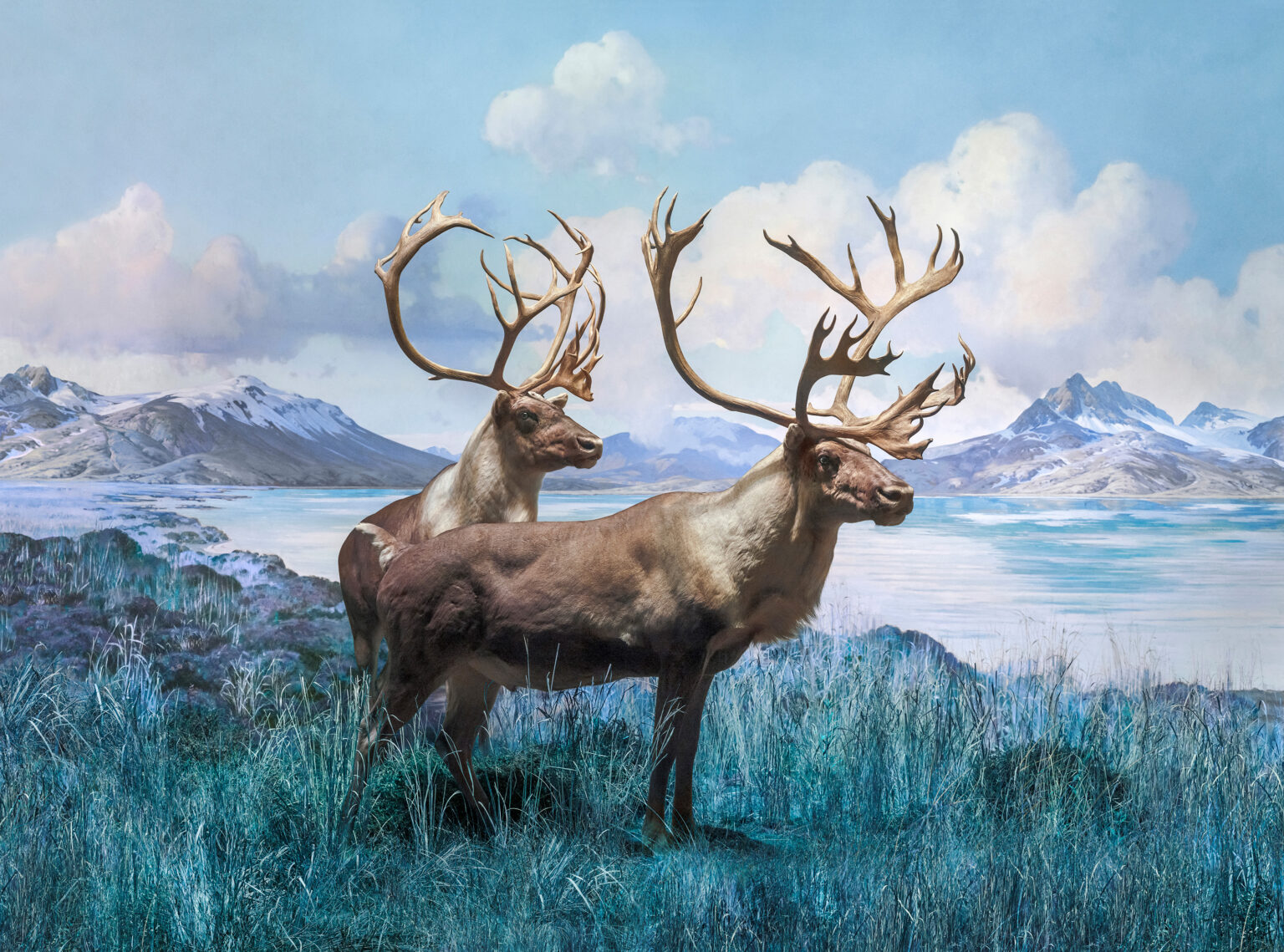
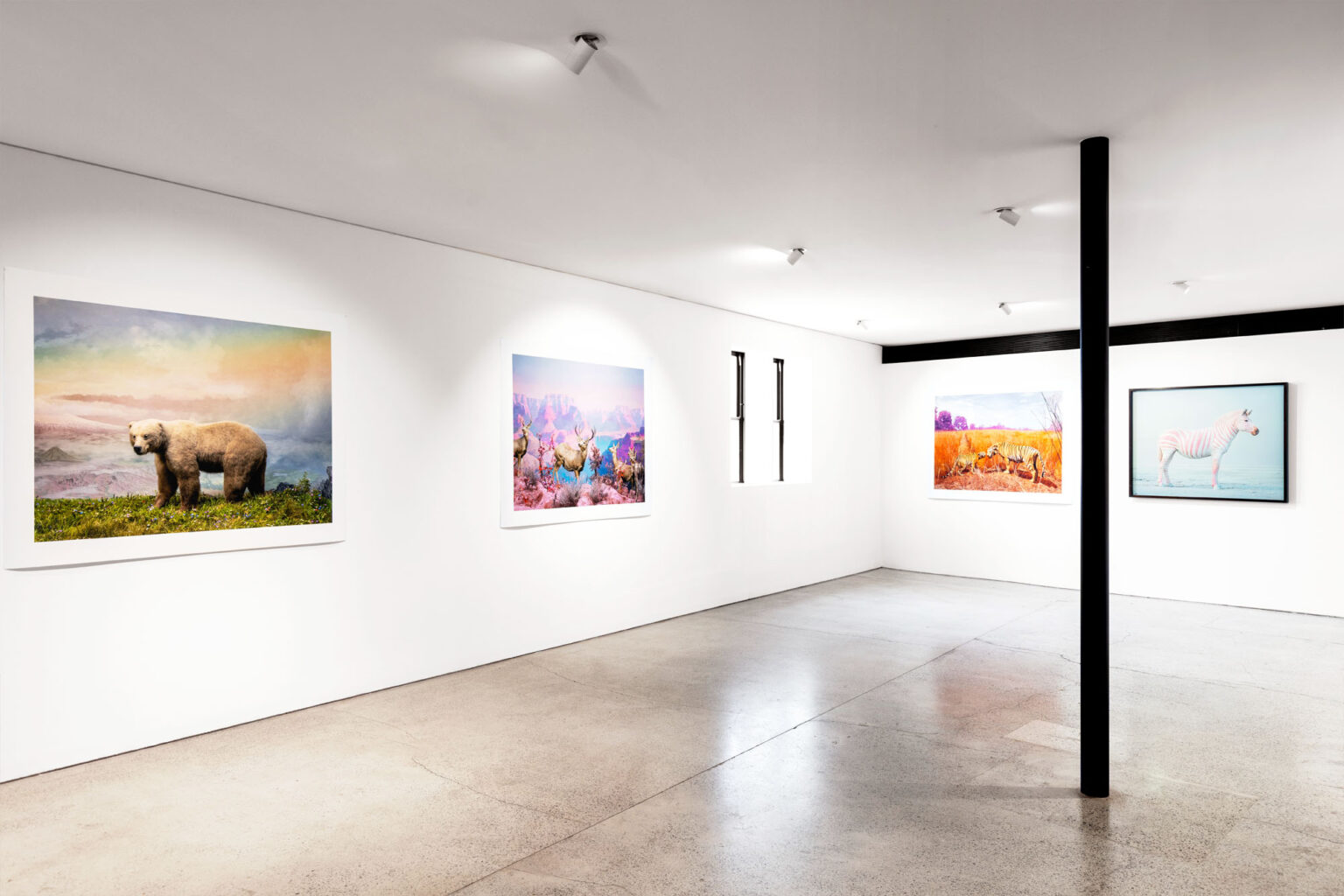
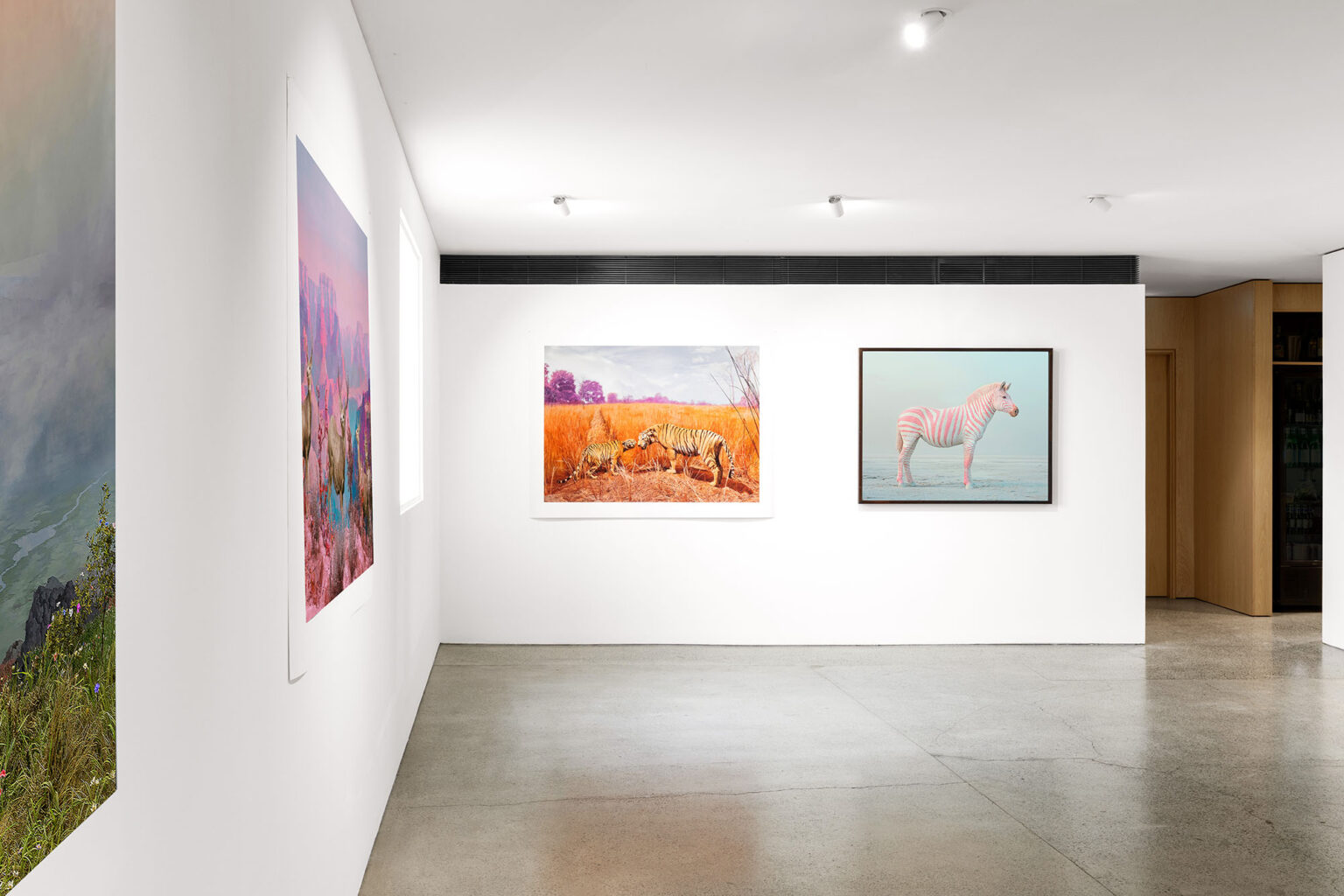
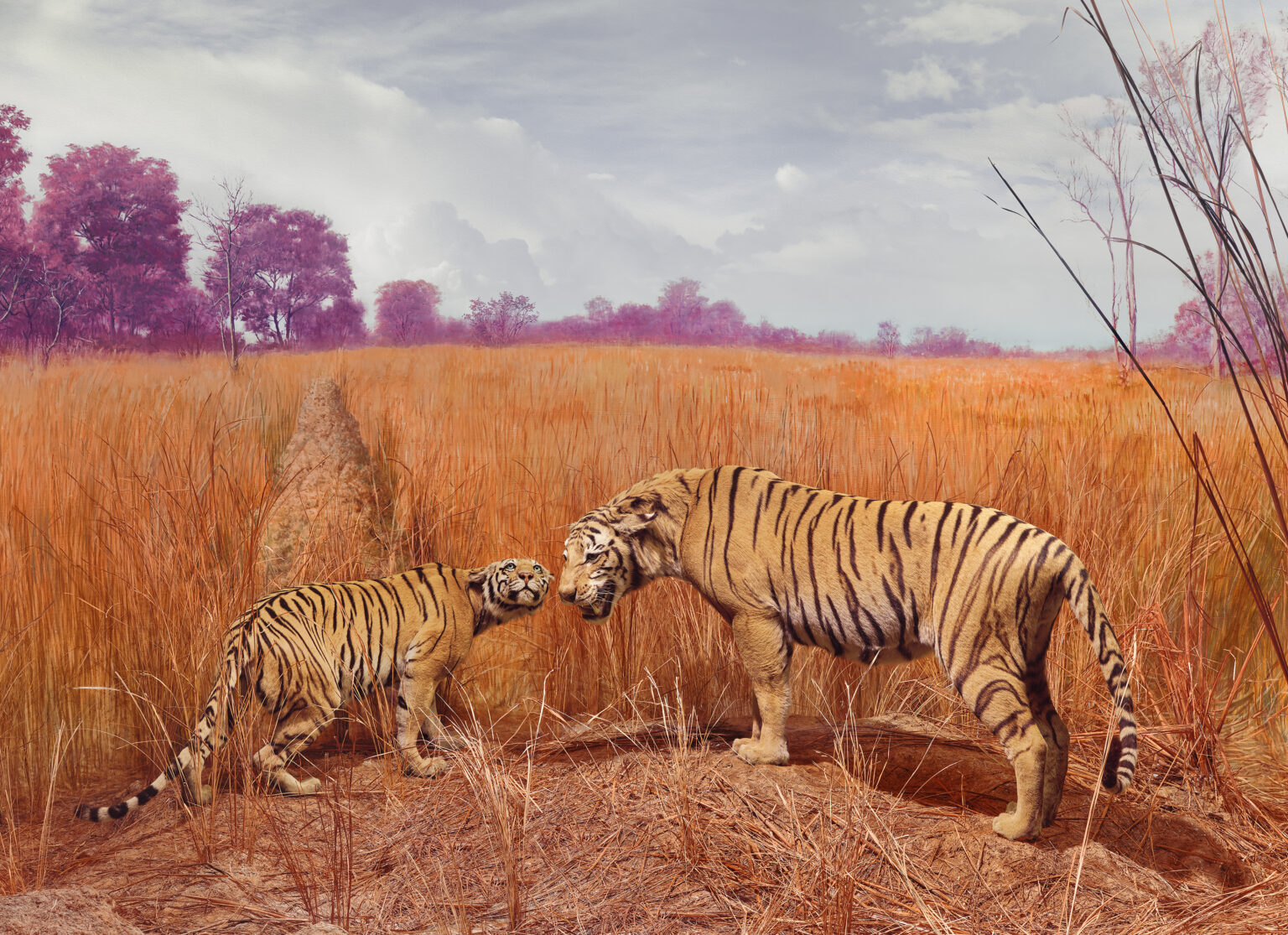
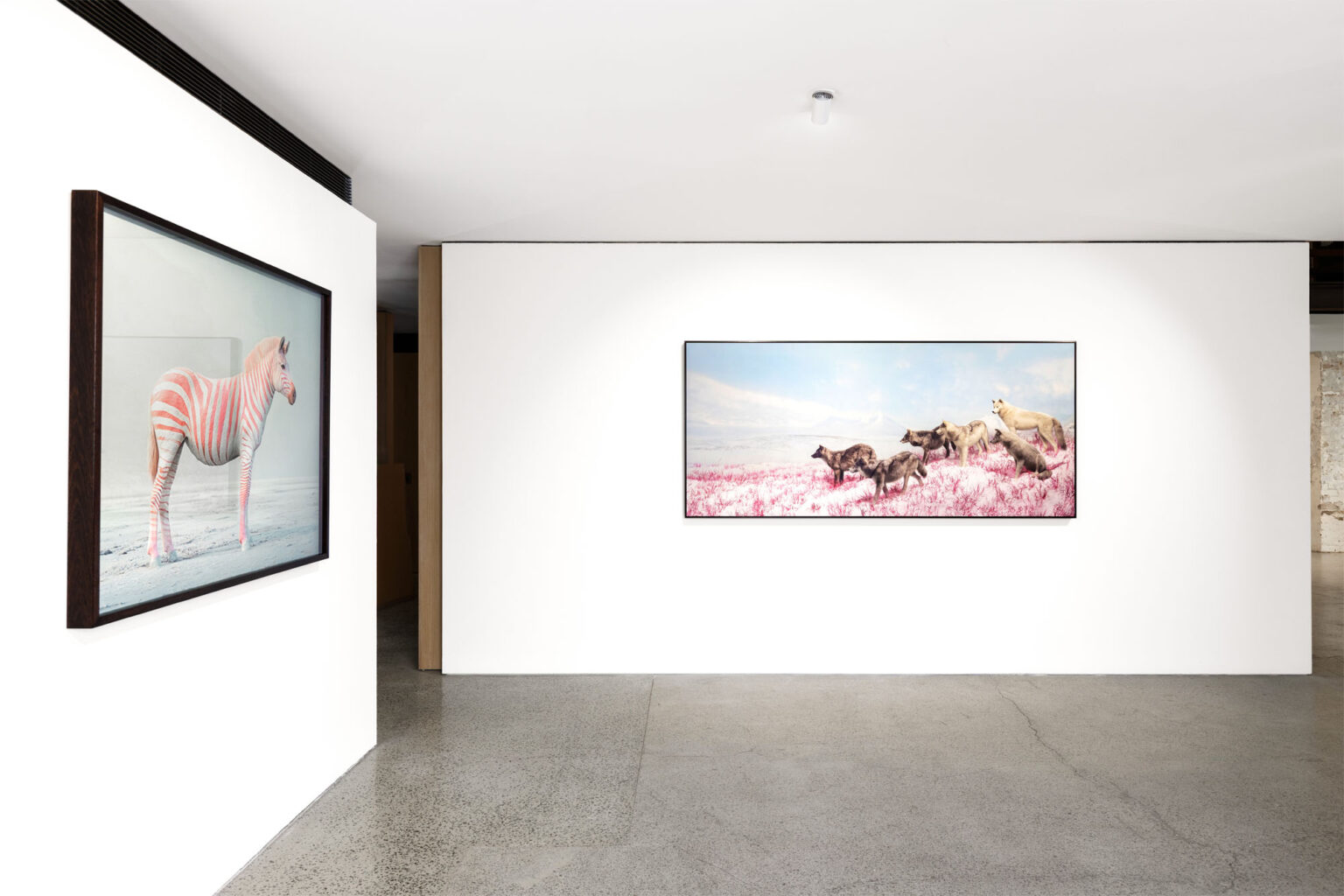
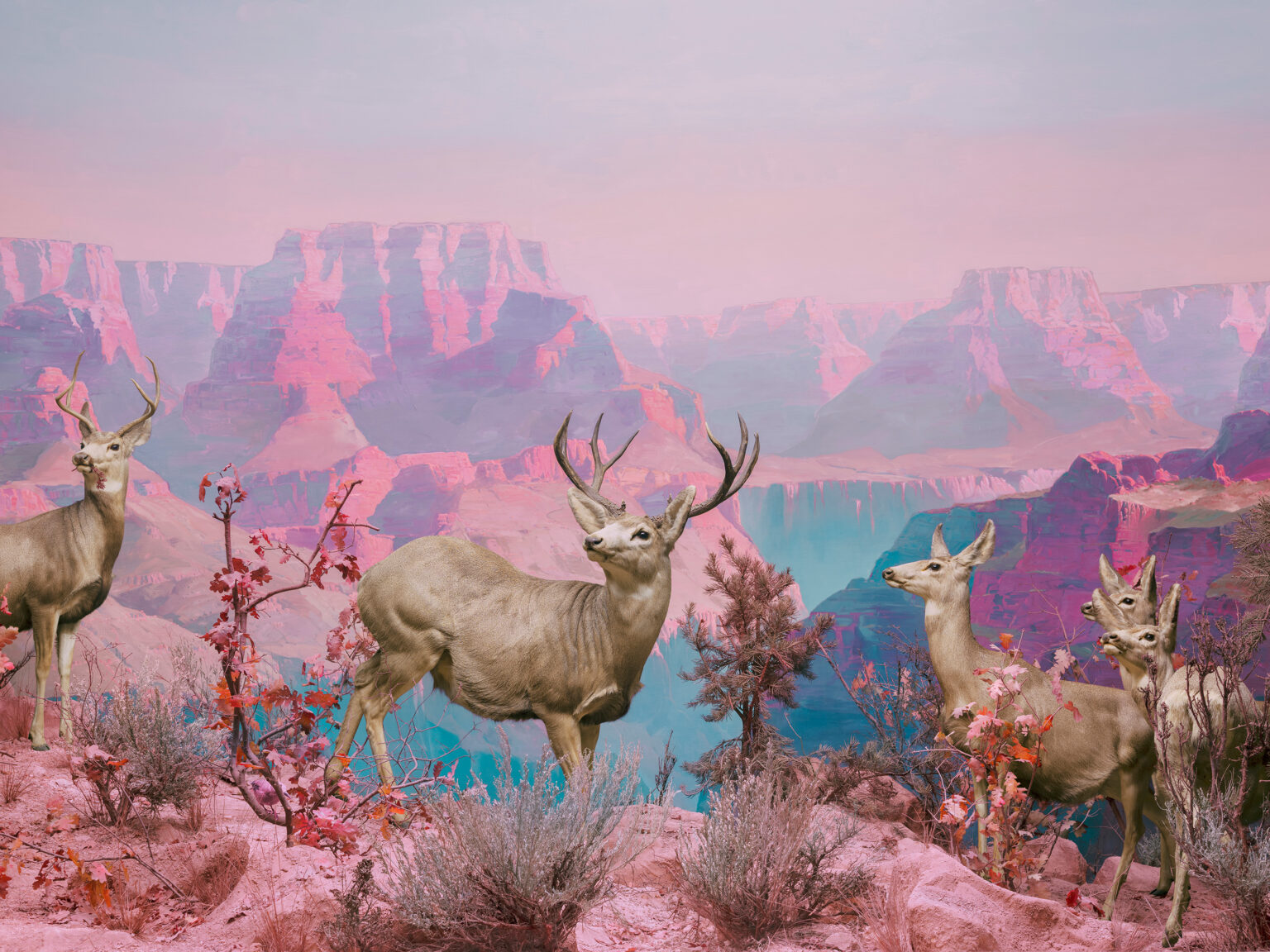
Jim Naughten is a British artist whose work explores the complex and fragile relationship between humans and the natural world. Originally trained as a painter, he now works primarily with photography, digital manipulation, and, more recently, Artificial Intelligence.

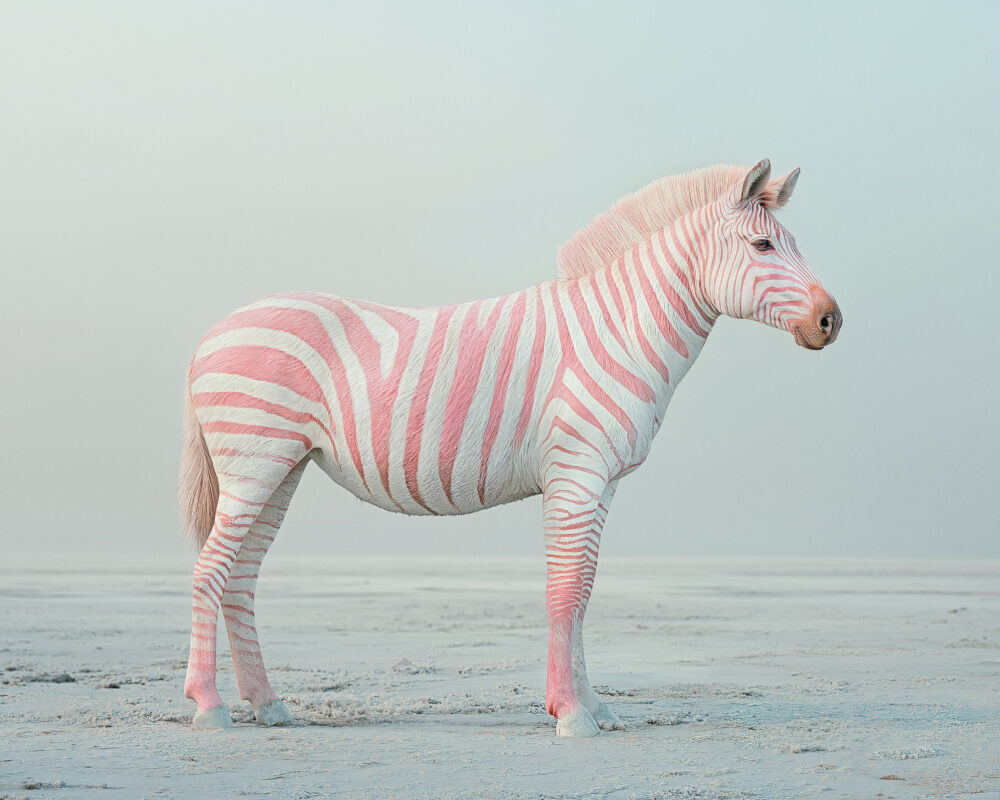
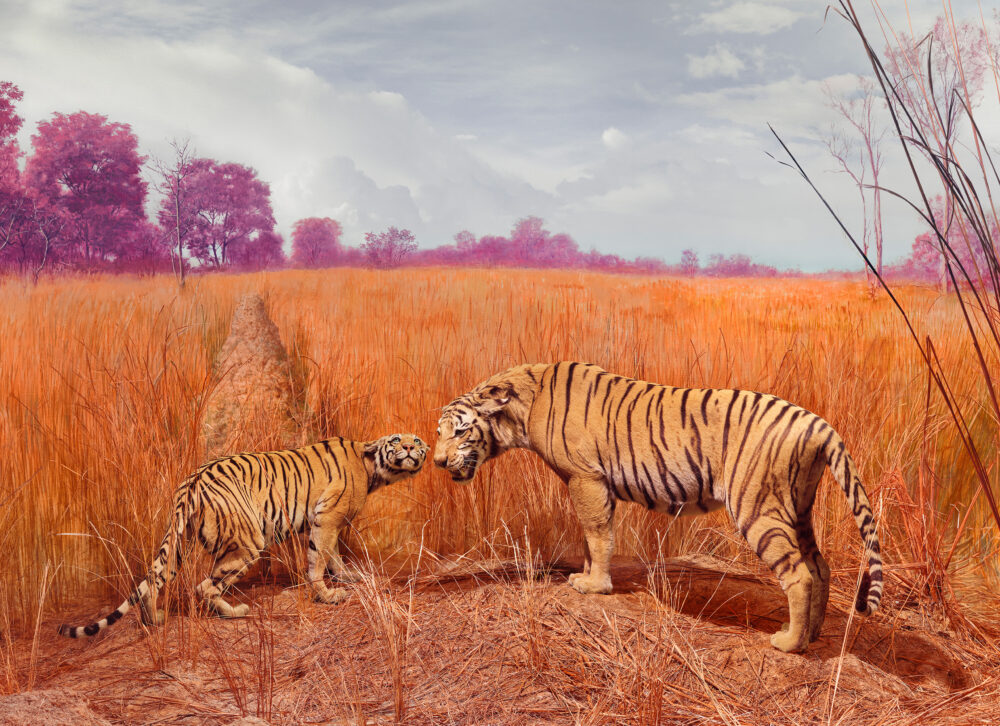
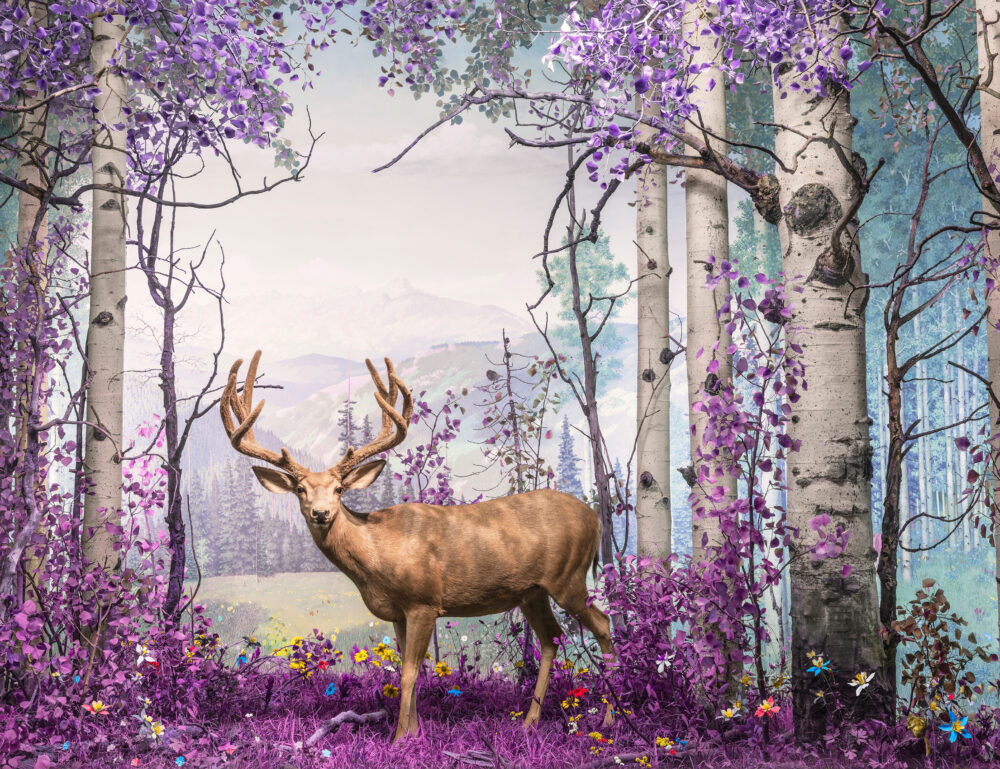
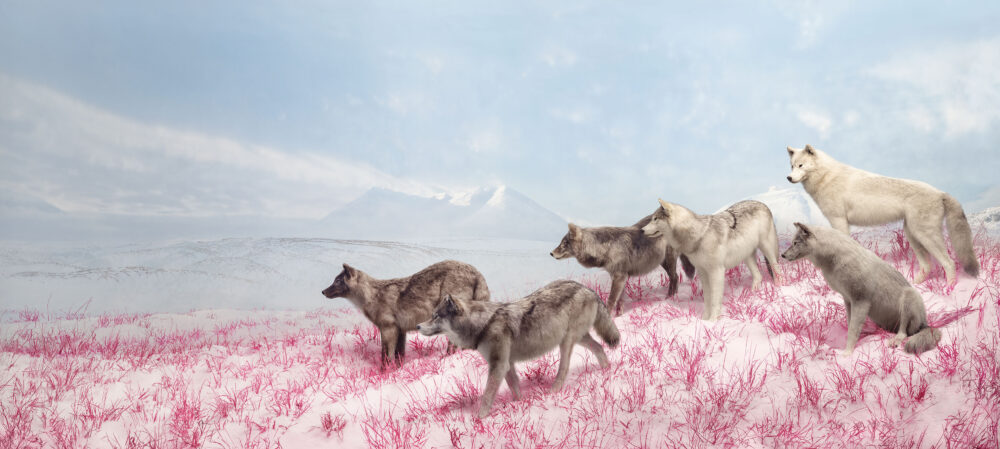
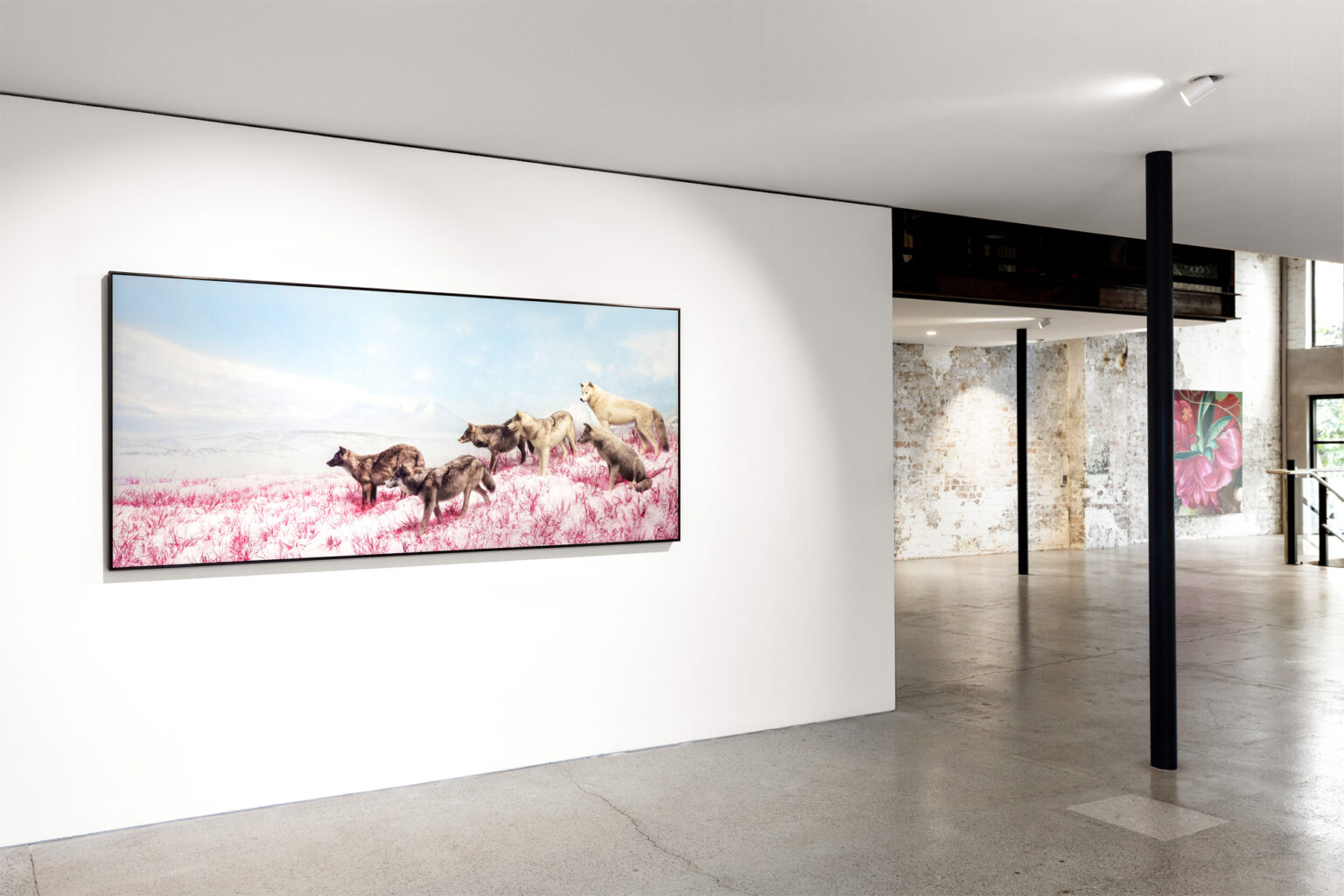
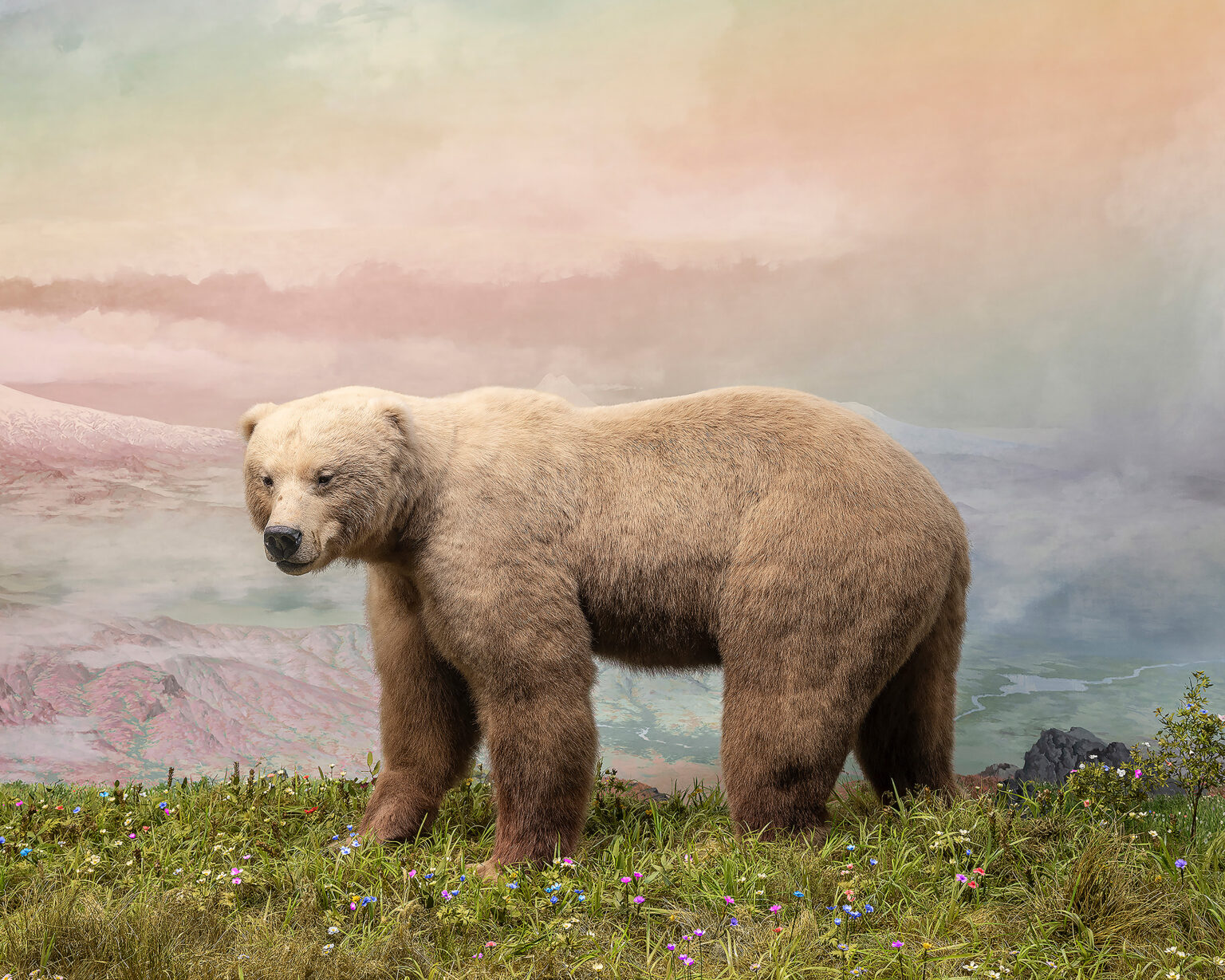
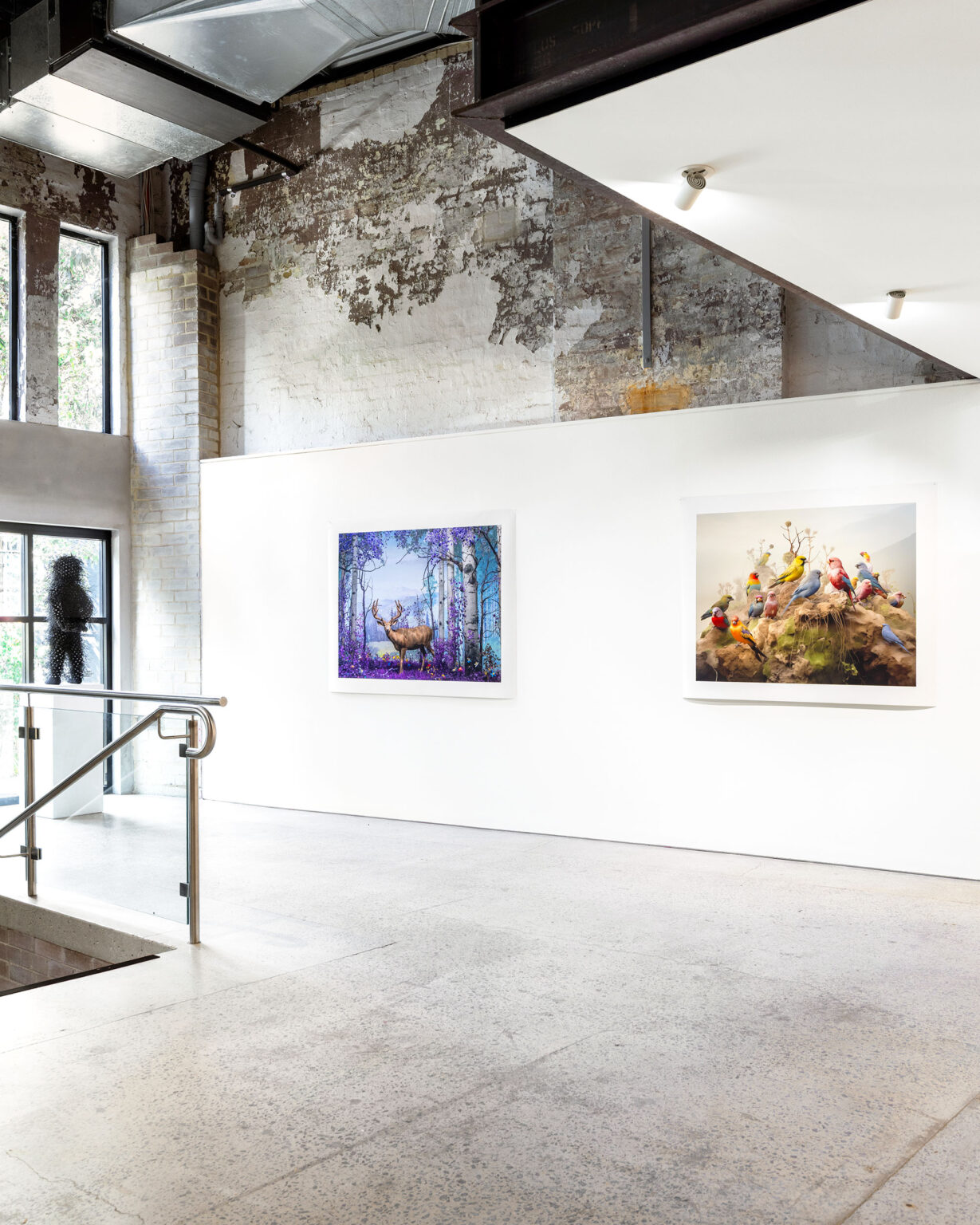
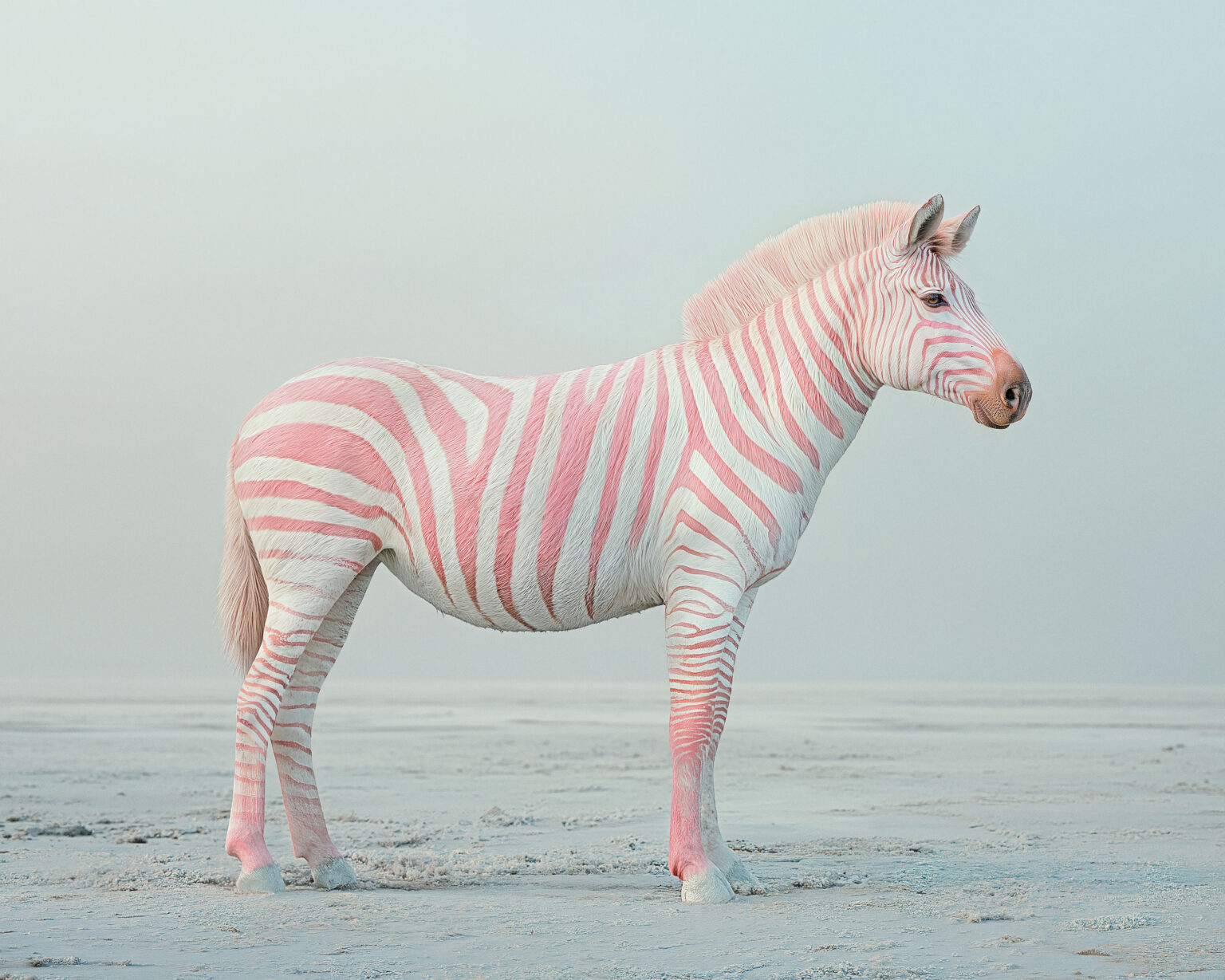
Drawing from a deeply creative and classically trained foundation, Naughten champions new frontiers in photographic practice—where analogue traditions are extended through digital technologies and AI. His images—featuring surreal subjects such as pink zebras, neon gibbons, crested birds, and roving wolves—are vivid, unsettling, and dreamlike.

They explore the space between memory, imagination, and ecological anxiety. Through this lens, Naughten confronts the environmental crisis with unflinching directness, using the “shock of the new” to highlight the realities of biodiversity loss and climate change. His recent projects, Mesozoic (2023) and Biophilia (2025), reflect a growing urgency in his practice and a call to reconnect with the natural world.

Naughten’s works are meticulously constructed—painterly in their approach, layered and refined through time and digital technique. Influences range from the psychological portraits of Diane Arbus to the lush, documentary-style interventions of Richard Mosse and Patrick Waterhouse. He frequently collaborates with ecologists and conservationists, and has supported environmental initiatives including fundraising for the  Jane Goodall Institute.

His work is held in major public and private collections, including the Wellcome Collection, the Imperial War Museum, the Horniman Museum, the Museum of Fine Arts, Houston, the Honolulu Museum of Art, and the Boca Raton Museum of Art in Florida. Through striking imagery and cutting-edge visual storytelling, Jim Naughten urges us to remember the wonder and fragility of the natural world—and our shared responsibility to protect it.

For enquiries, please email hughholm@michaelreid.com.au

Painting Now 2025

Posted by

Painting Now 2025

  • Artist
  • Dates
    4—28 Dec 2025
  • Gallery Location
    Eora / Sydney
  • Catalogue
    Download now

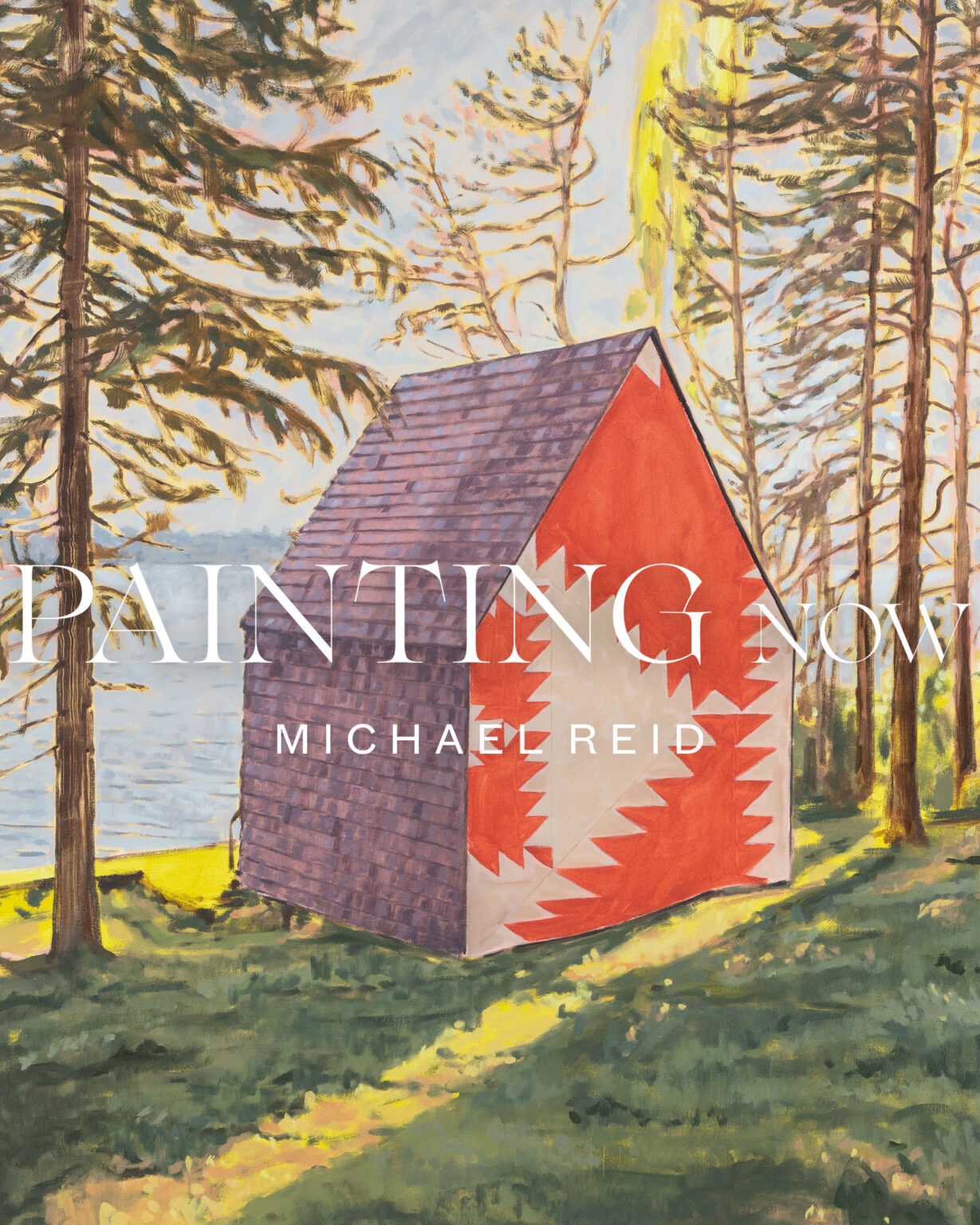
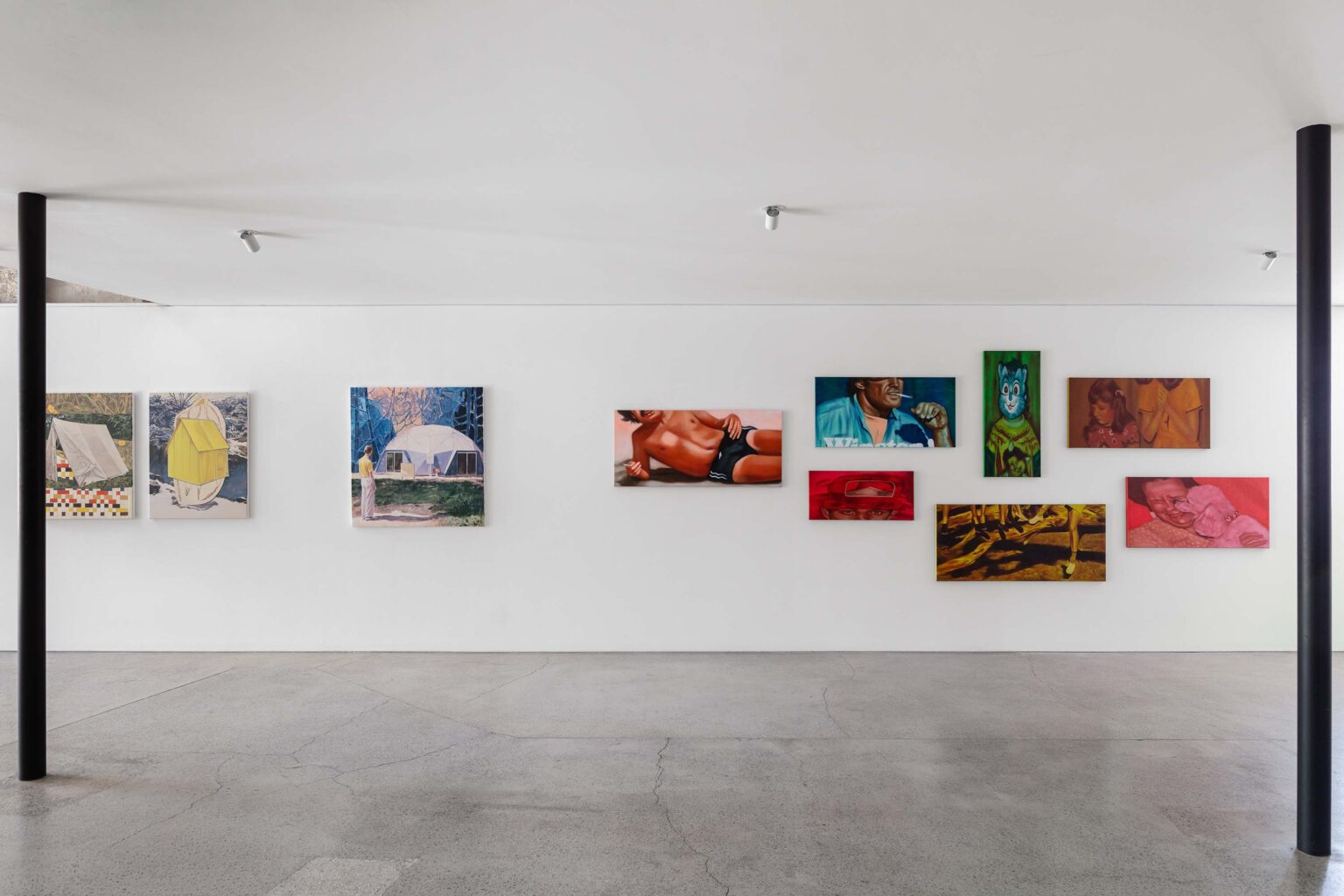
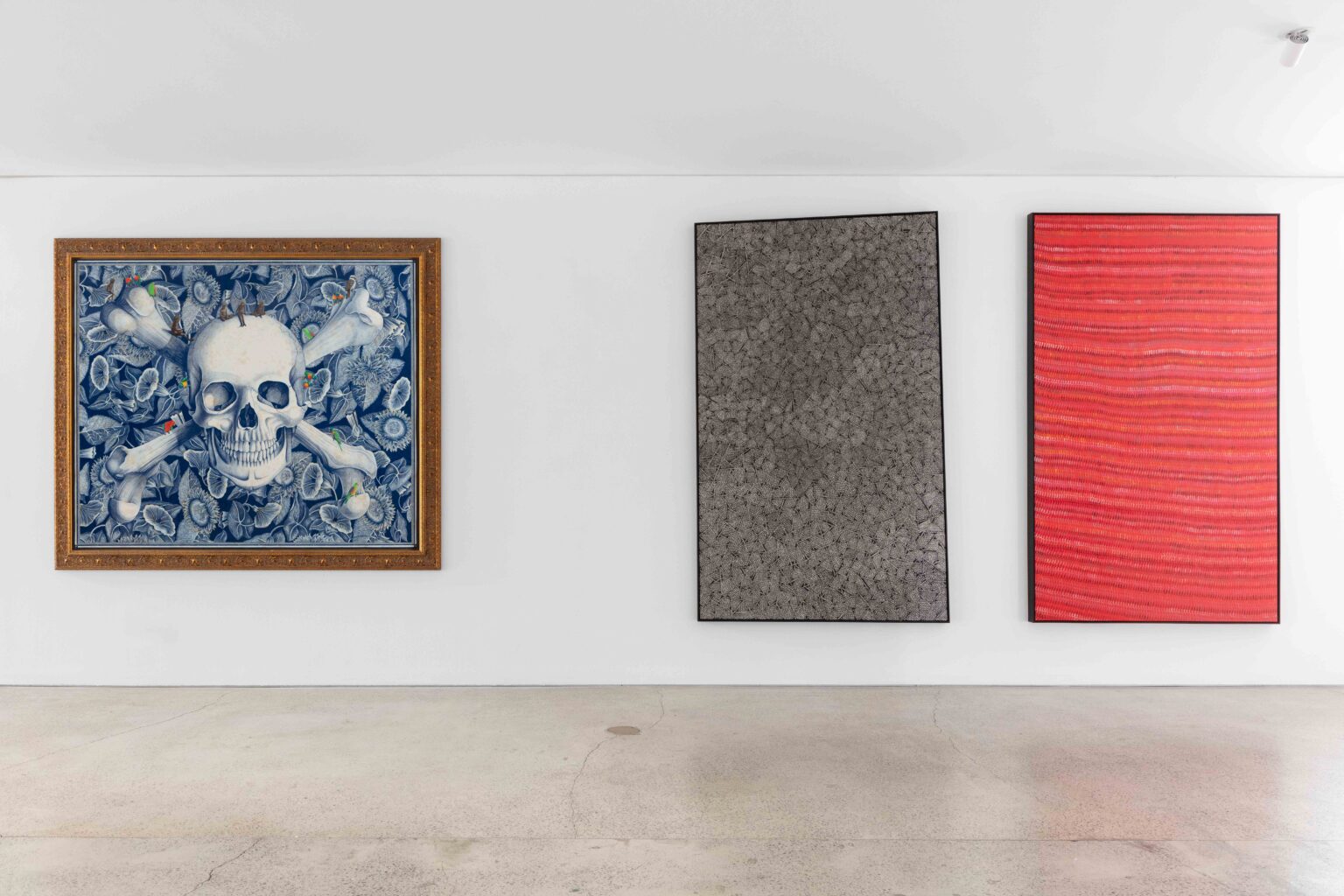
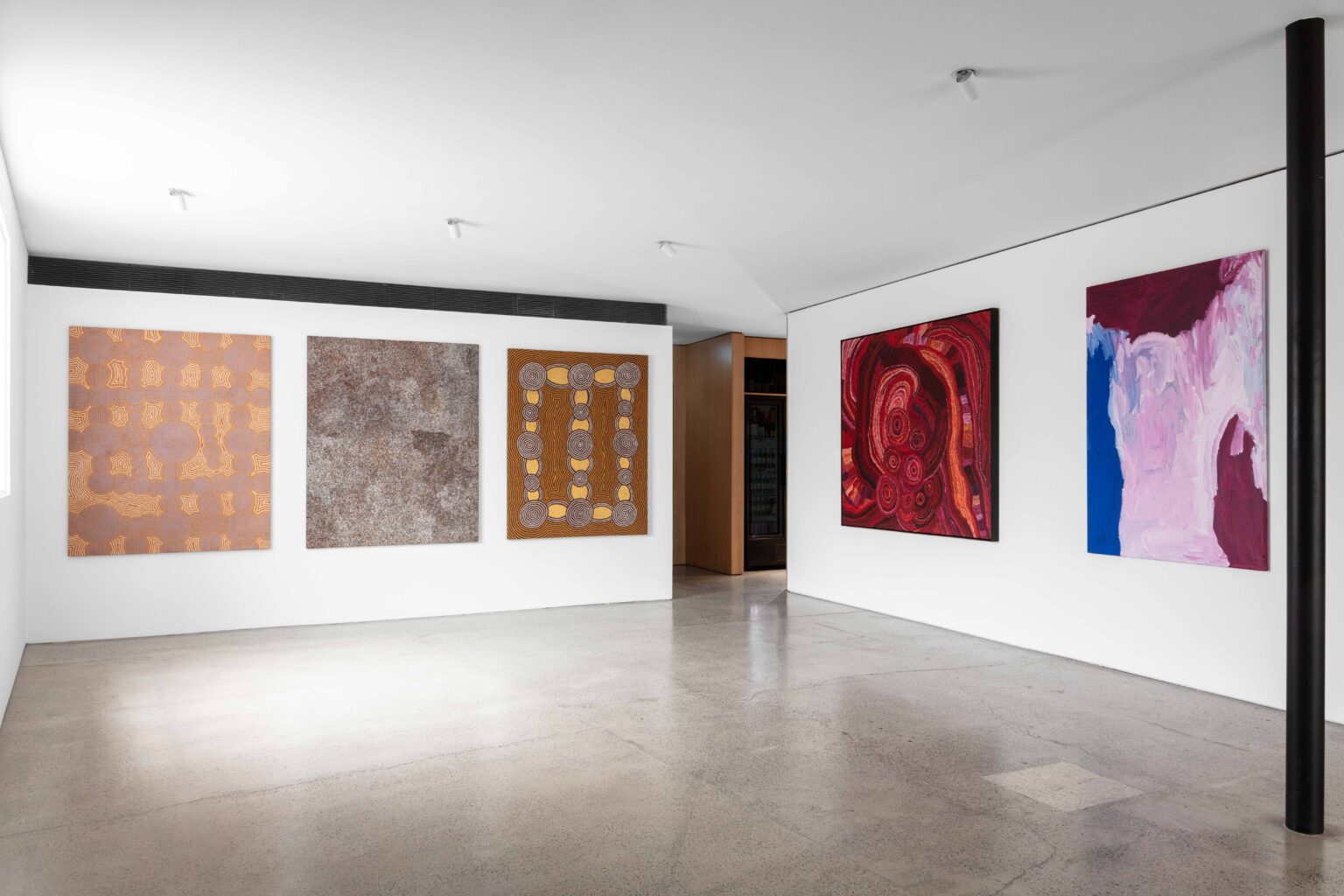
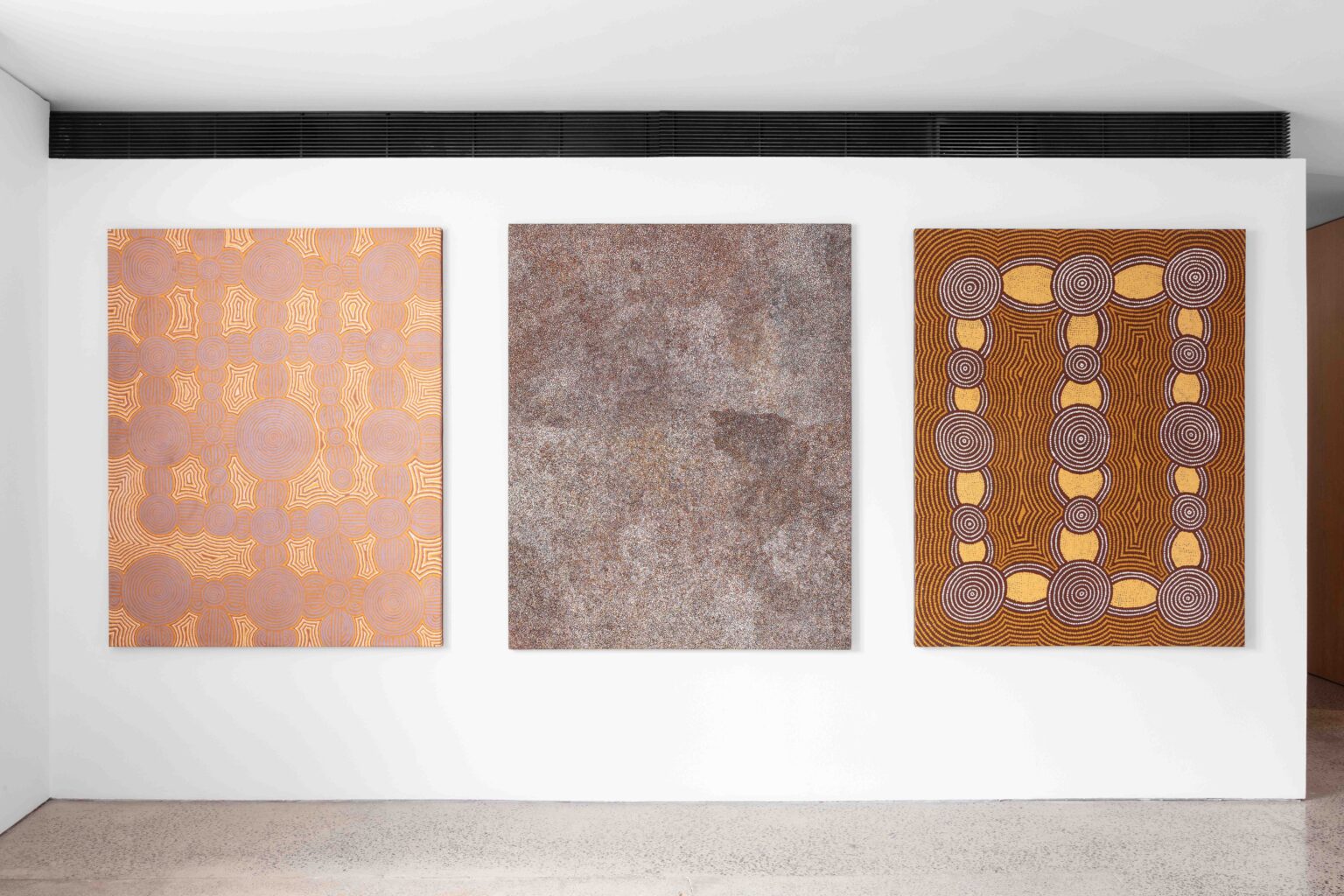
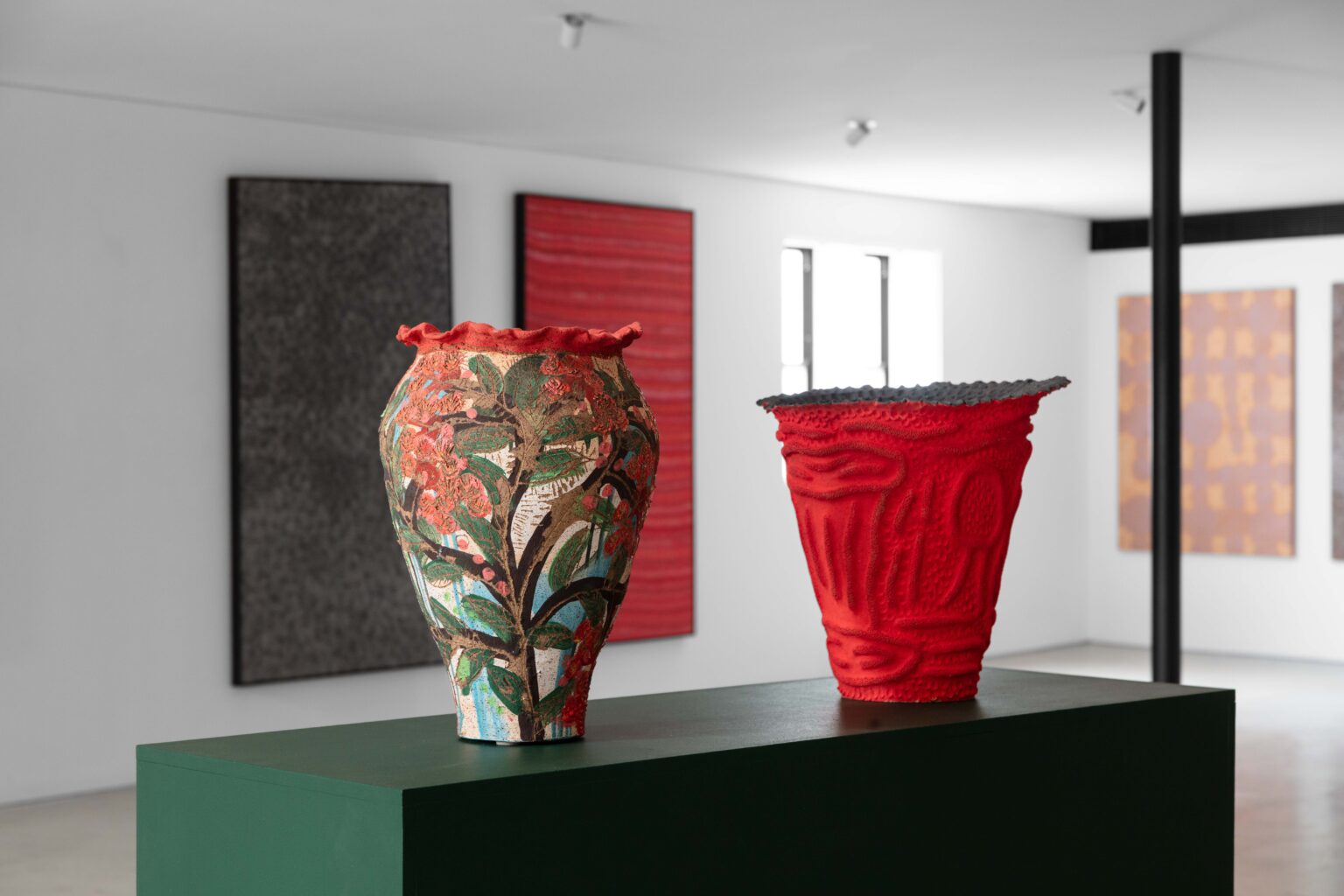
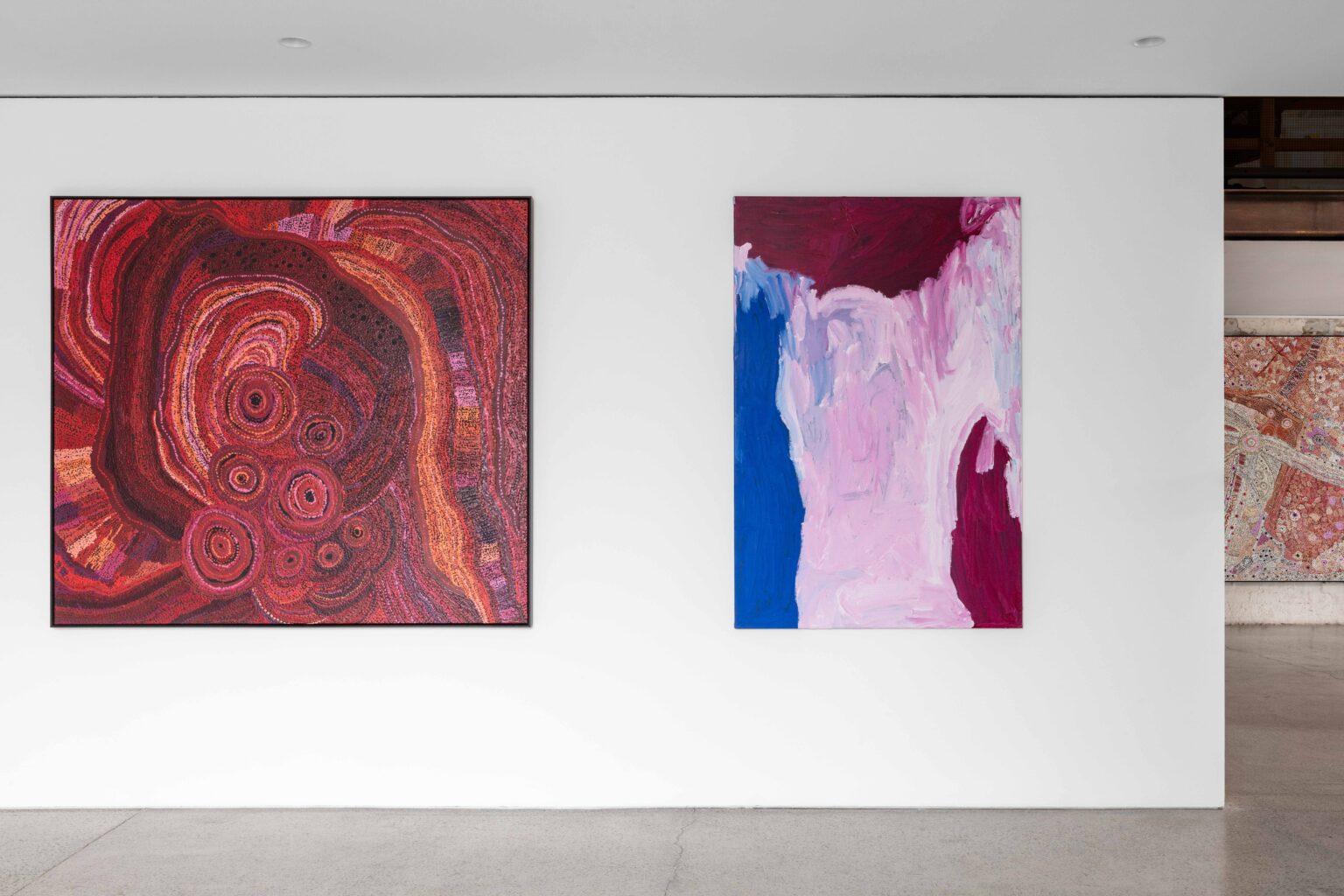
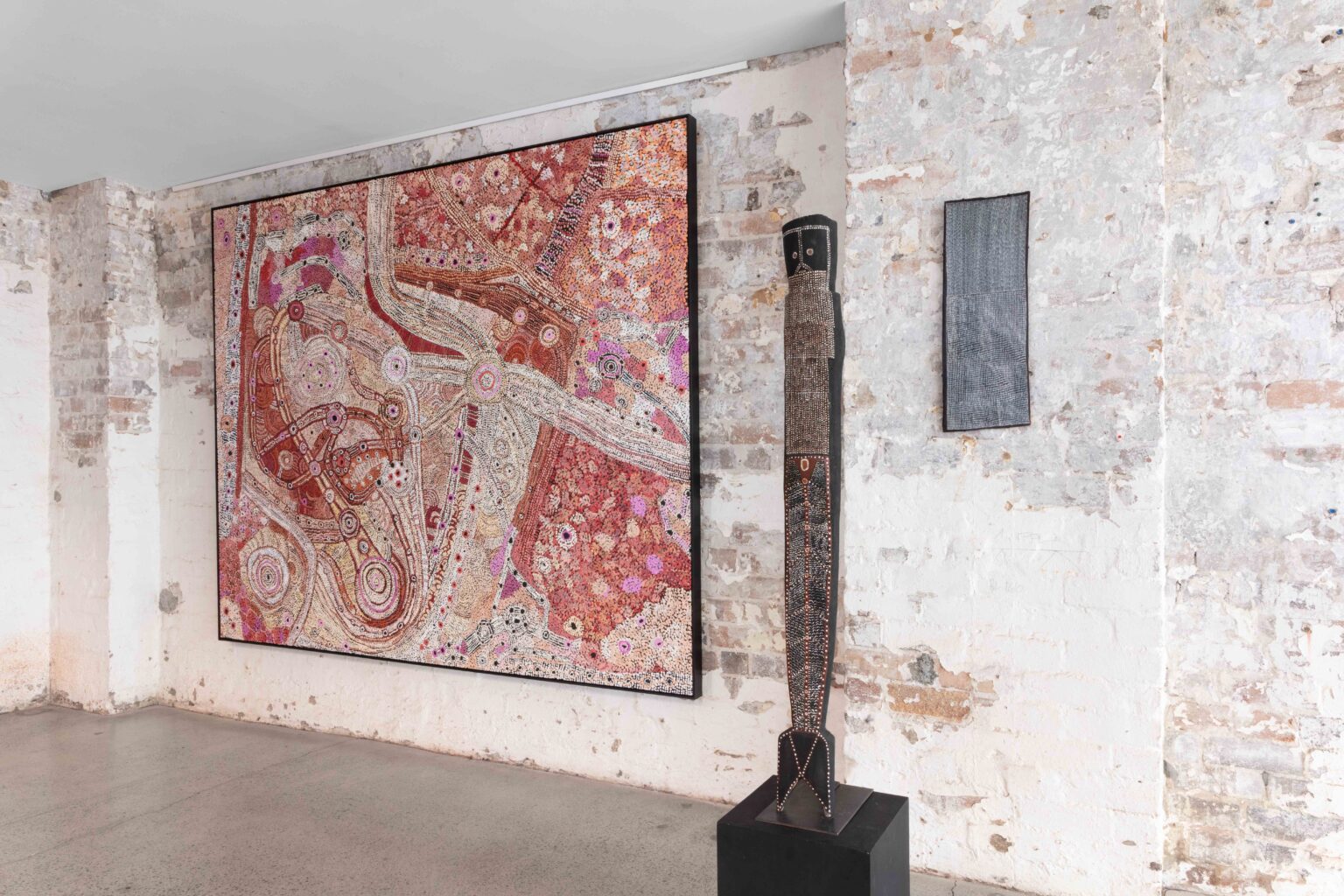
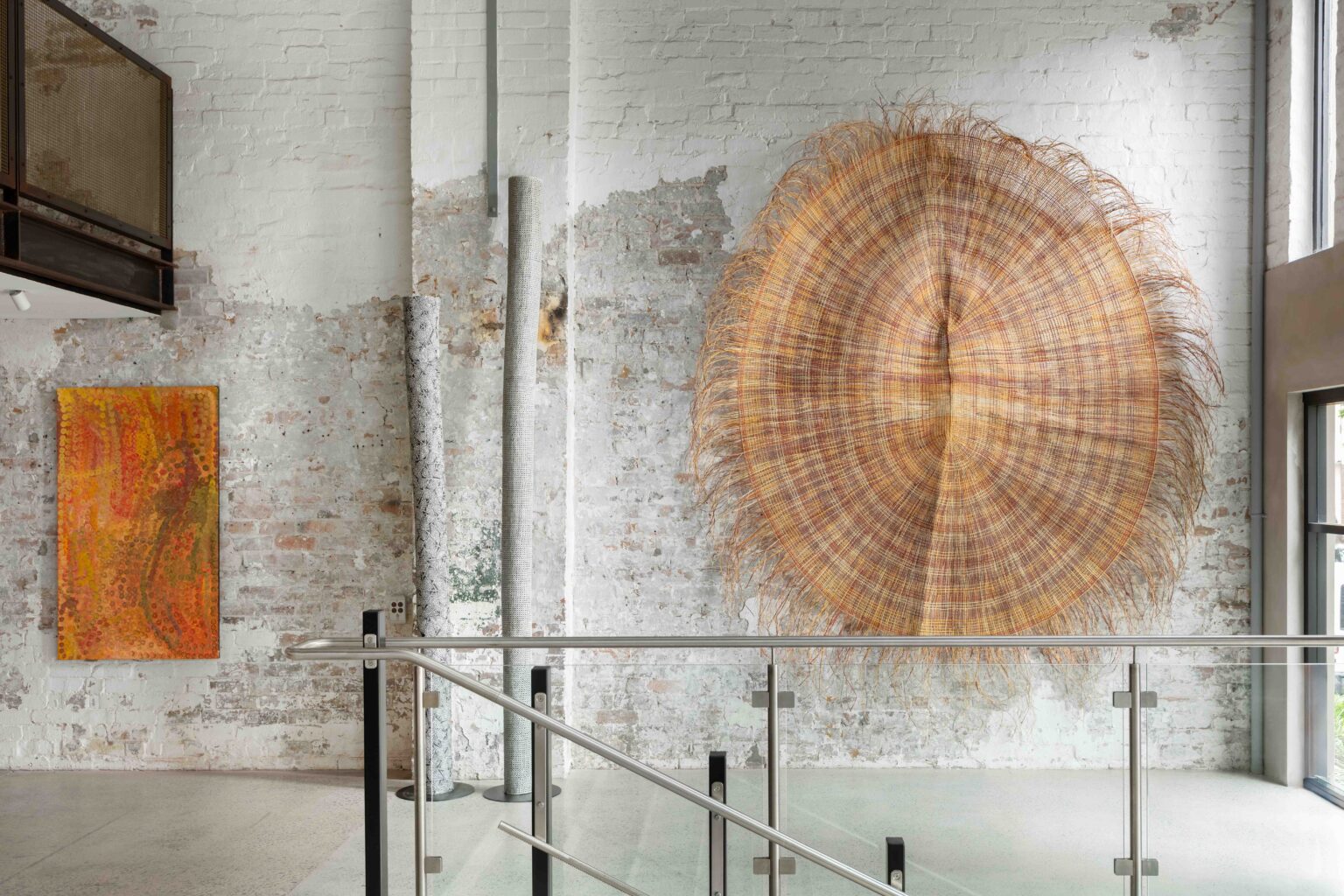
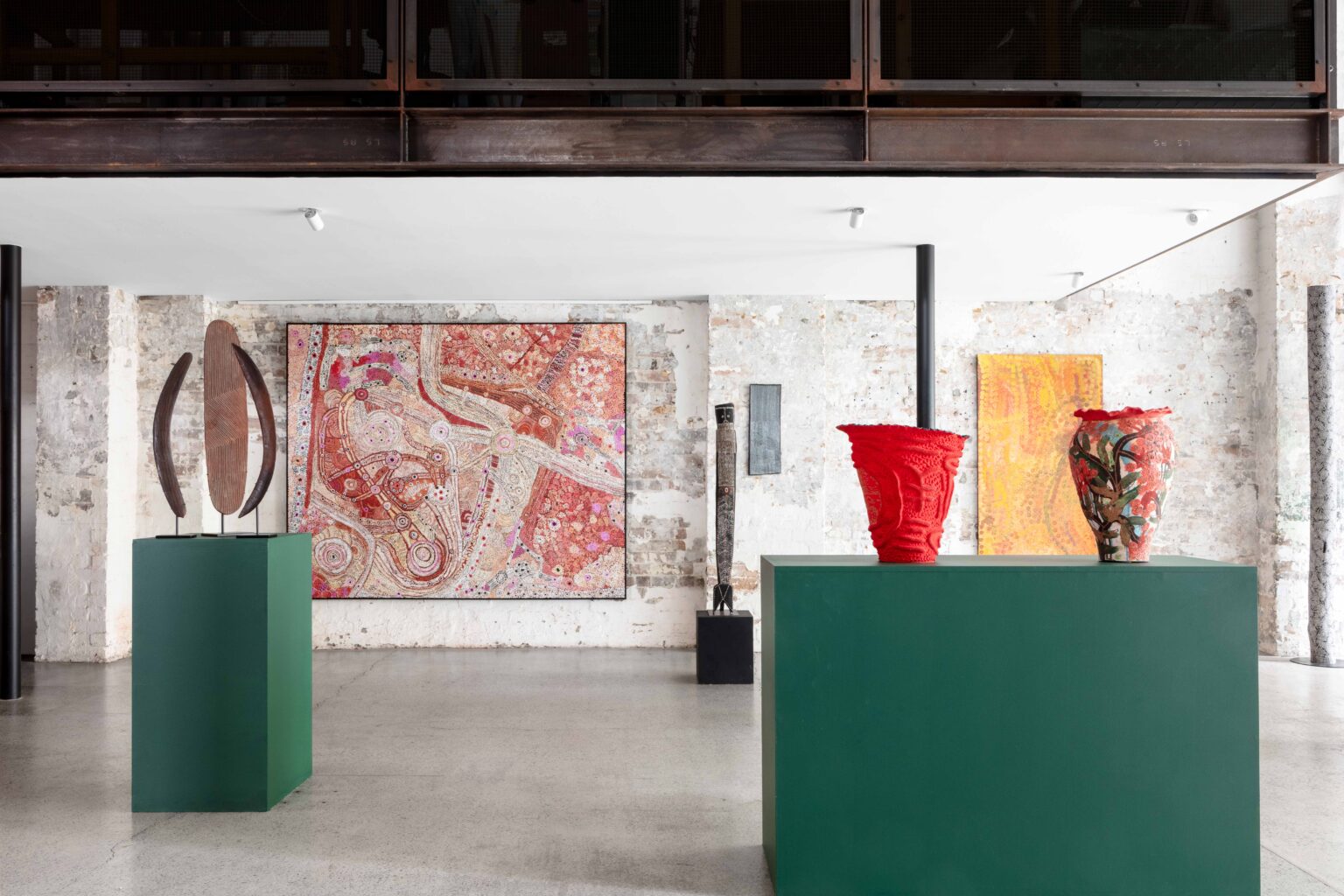
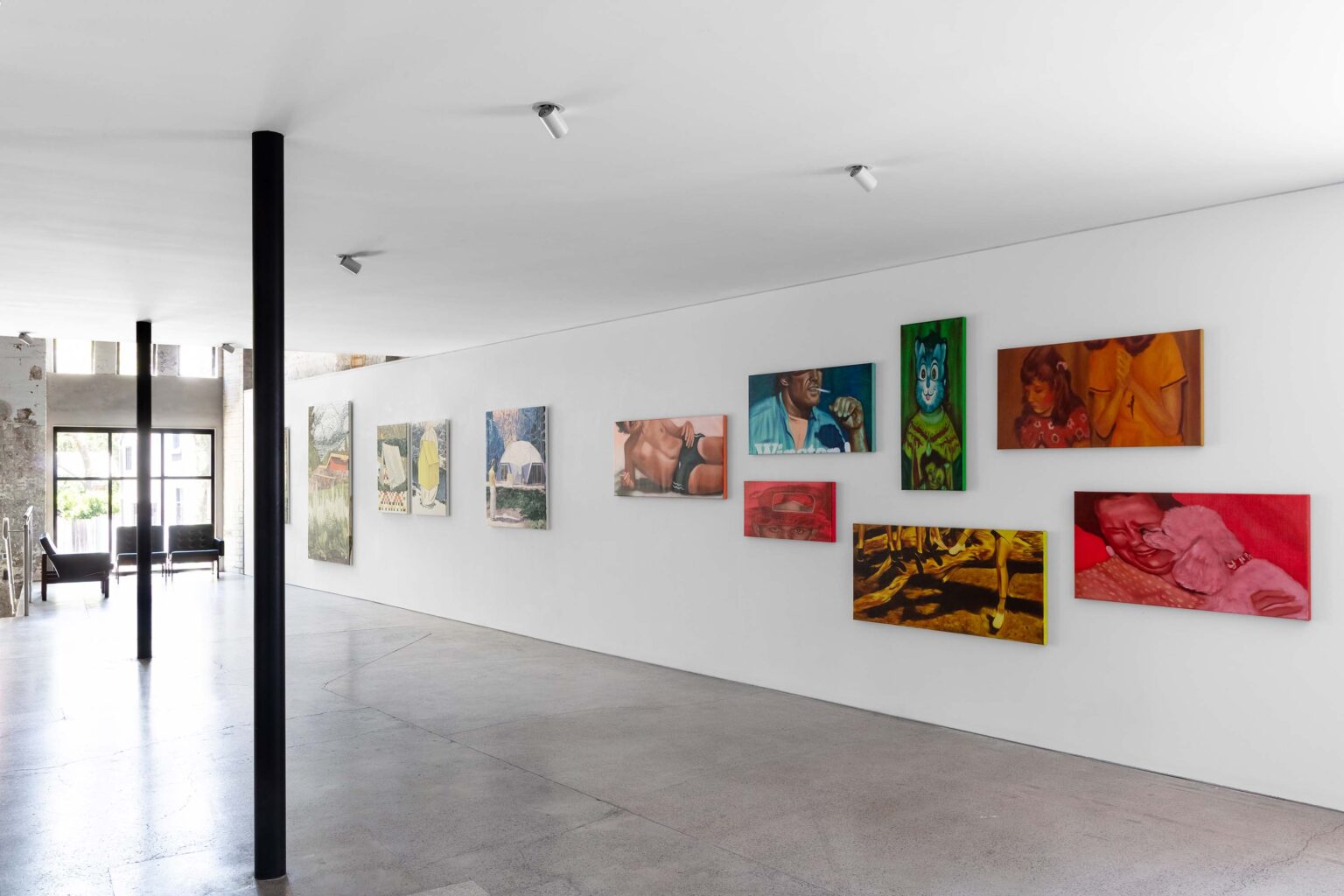
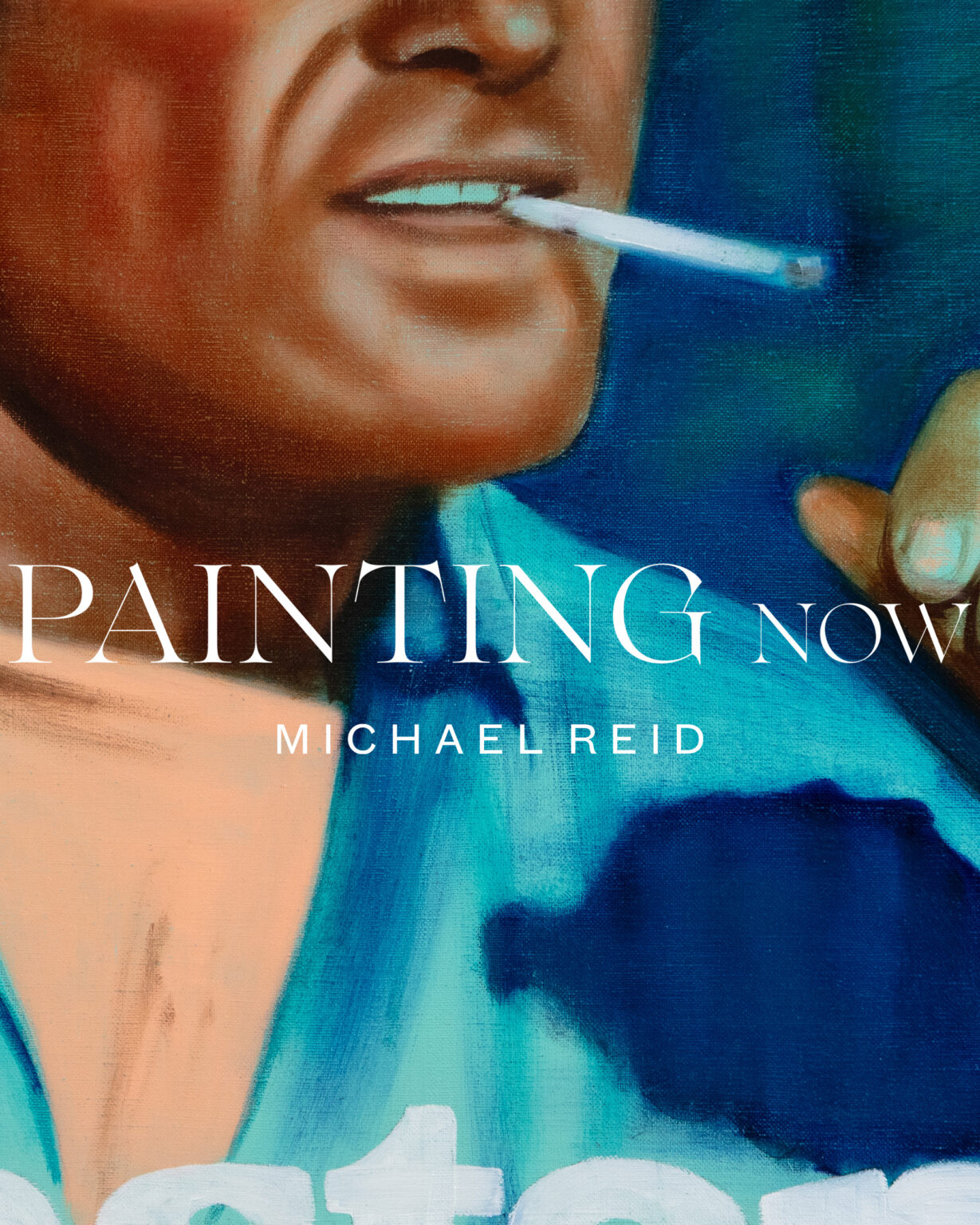
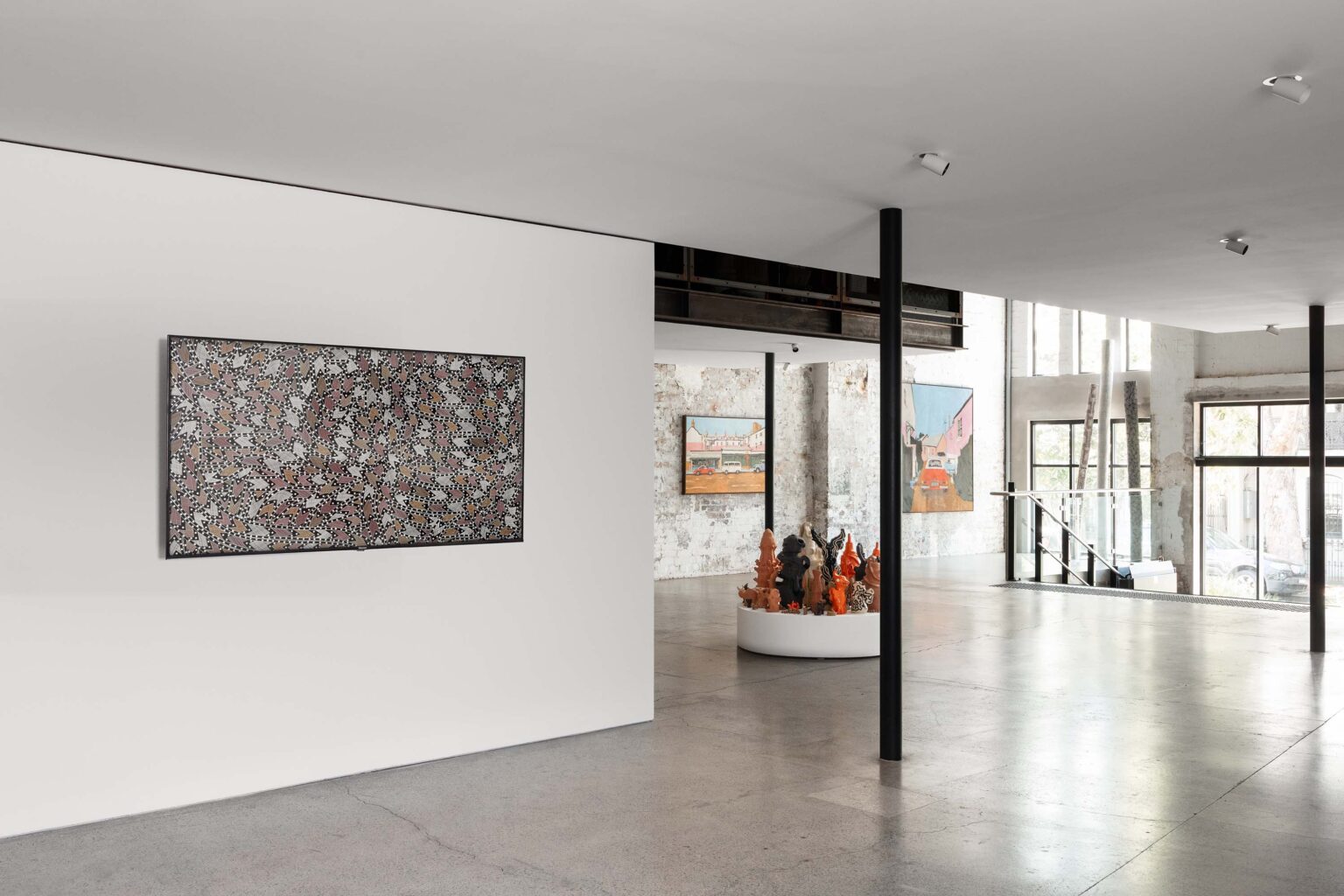
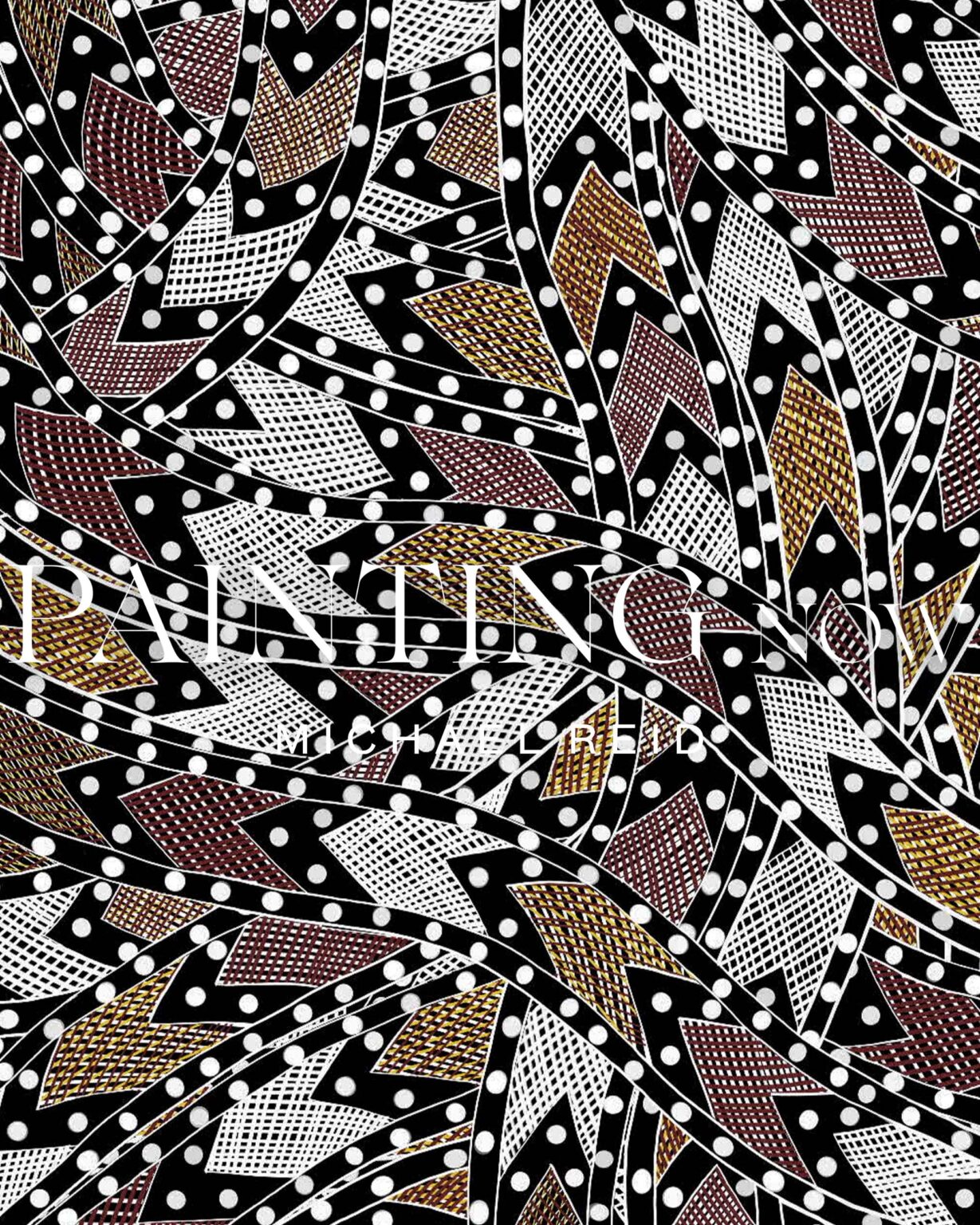
Michael Reid Sydney’s 2025 exhibition program culminates this month with the latest edition of Painting Now. Curated by Dean Phillips-Andersen, our annual group survey spotlights an exciting school of established contemporary painters from across Australia whose practices expand the creative possibilities of art’s most storied medium.

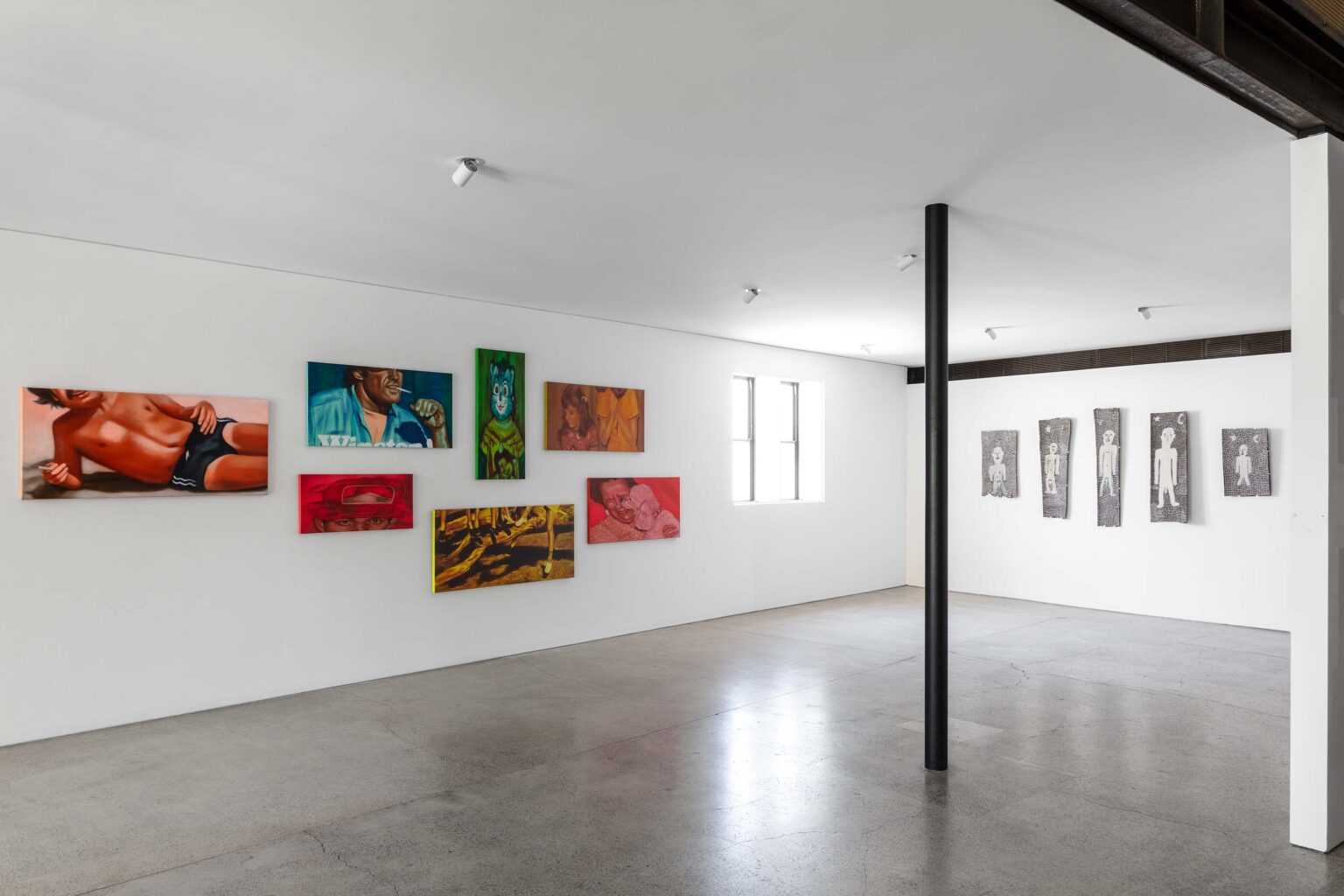
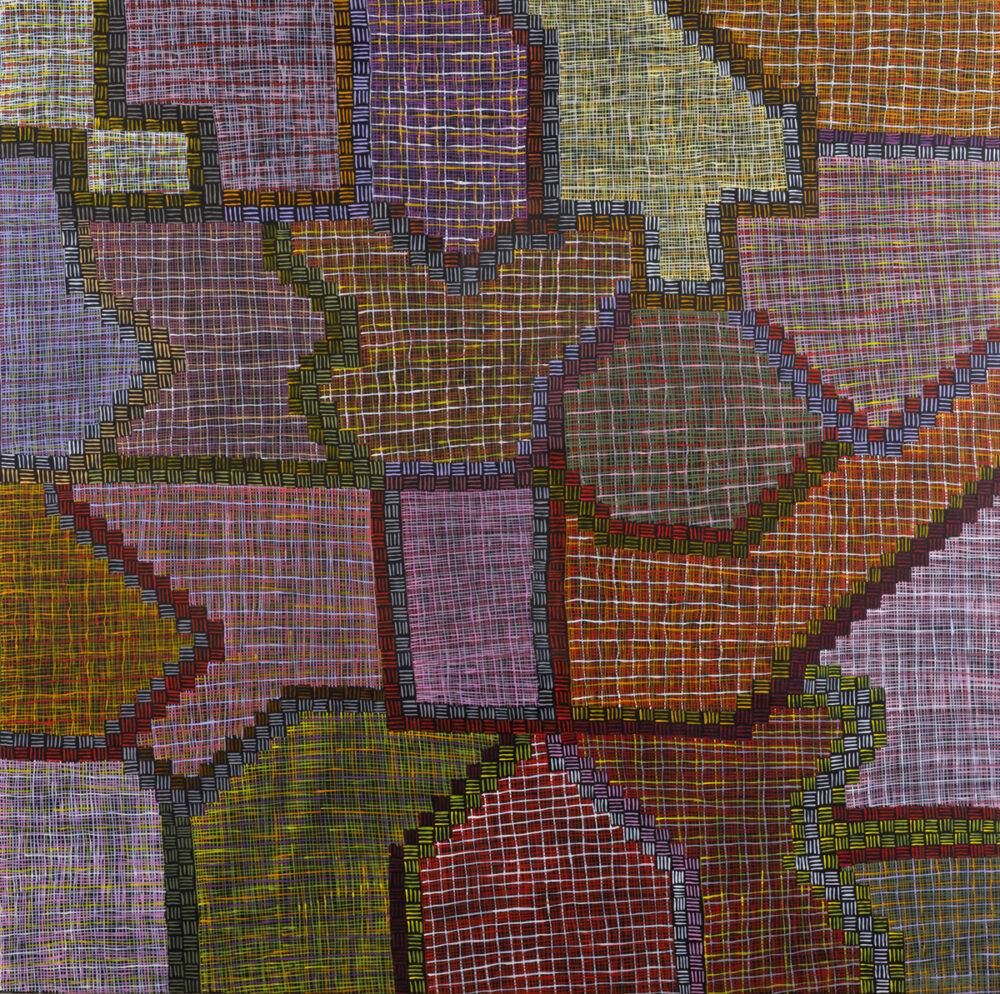
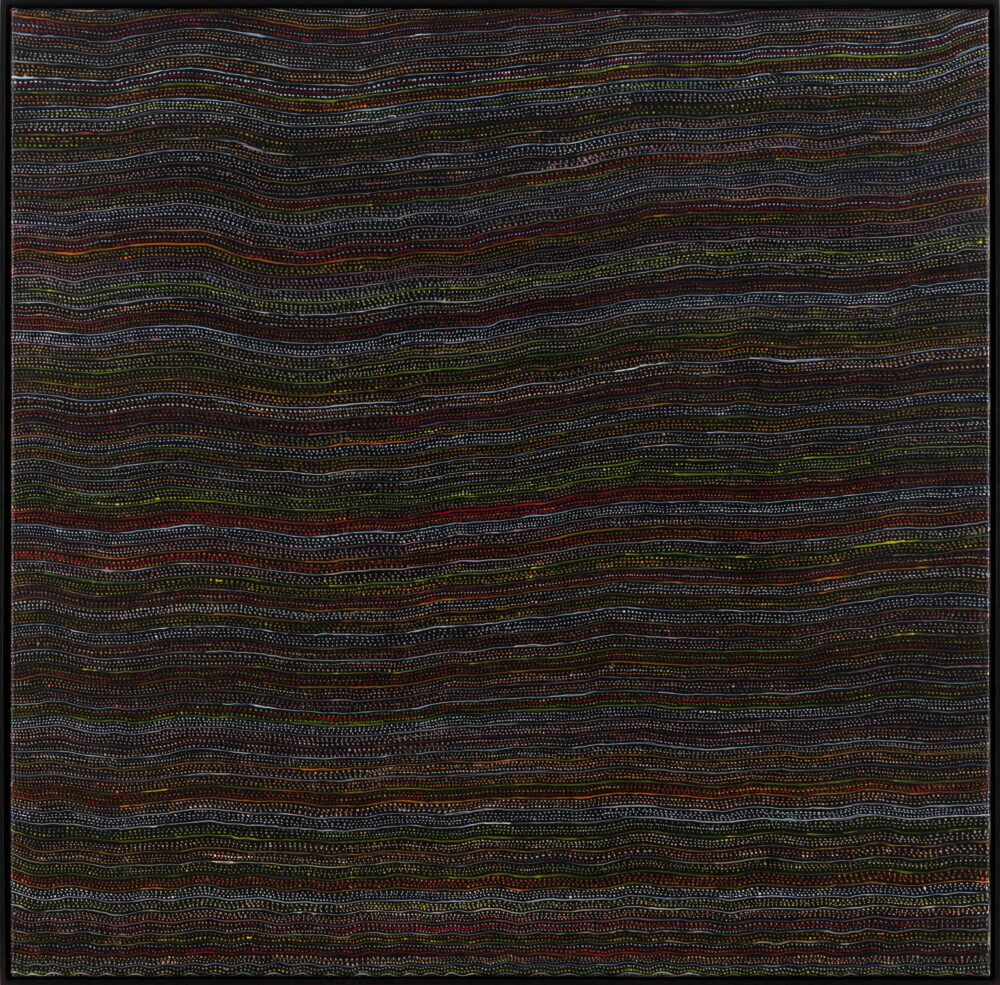
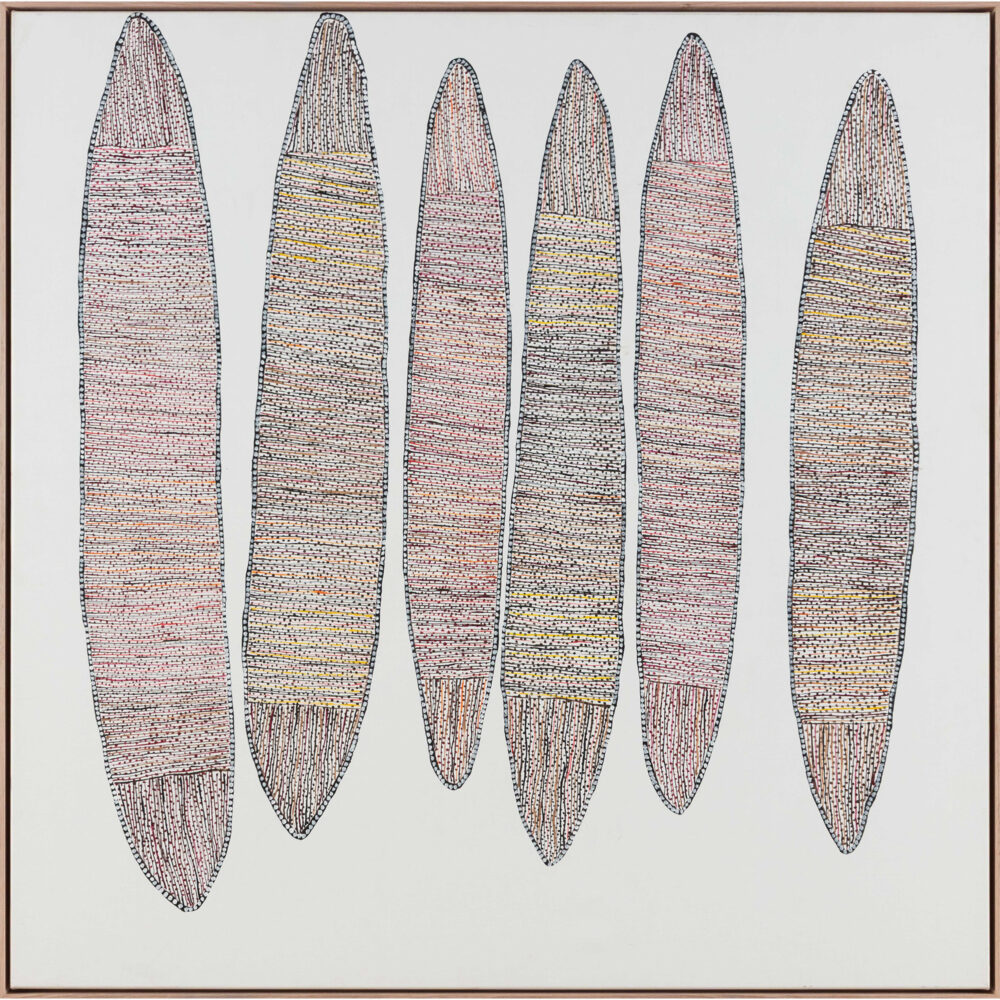
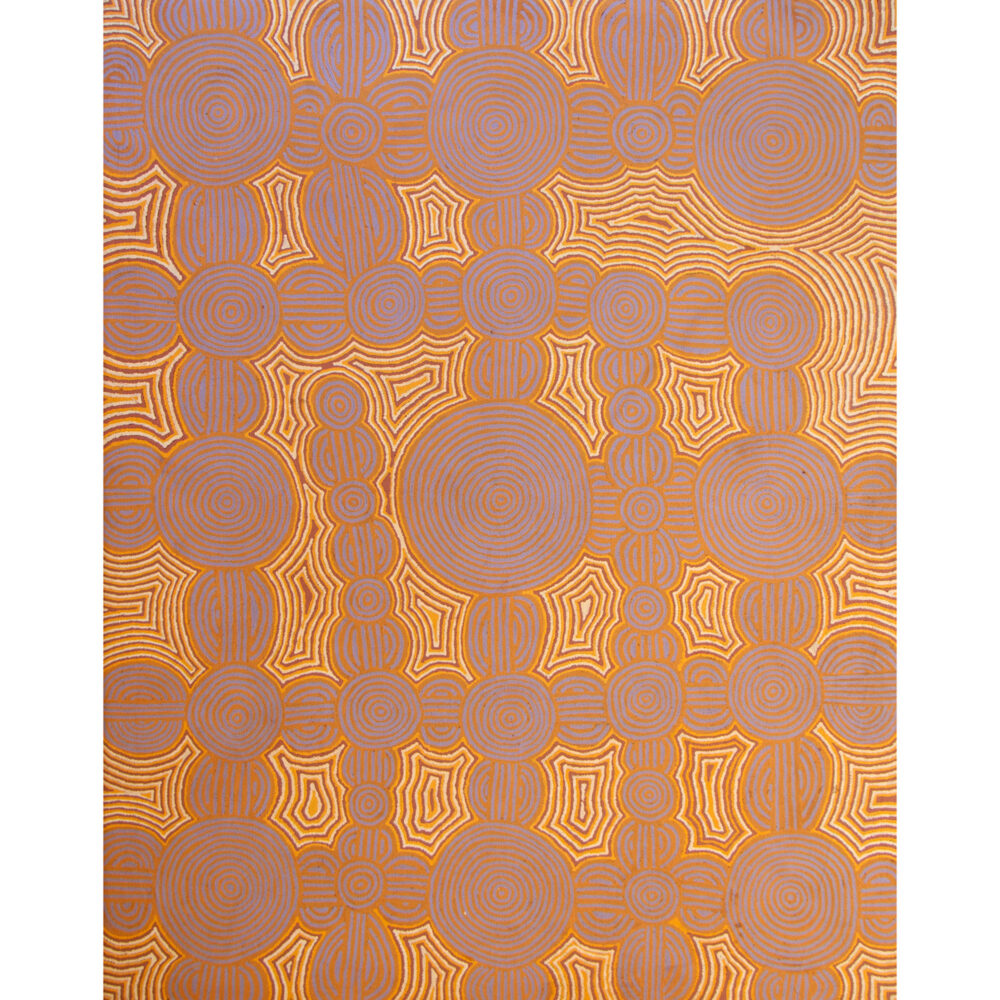
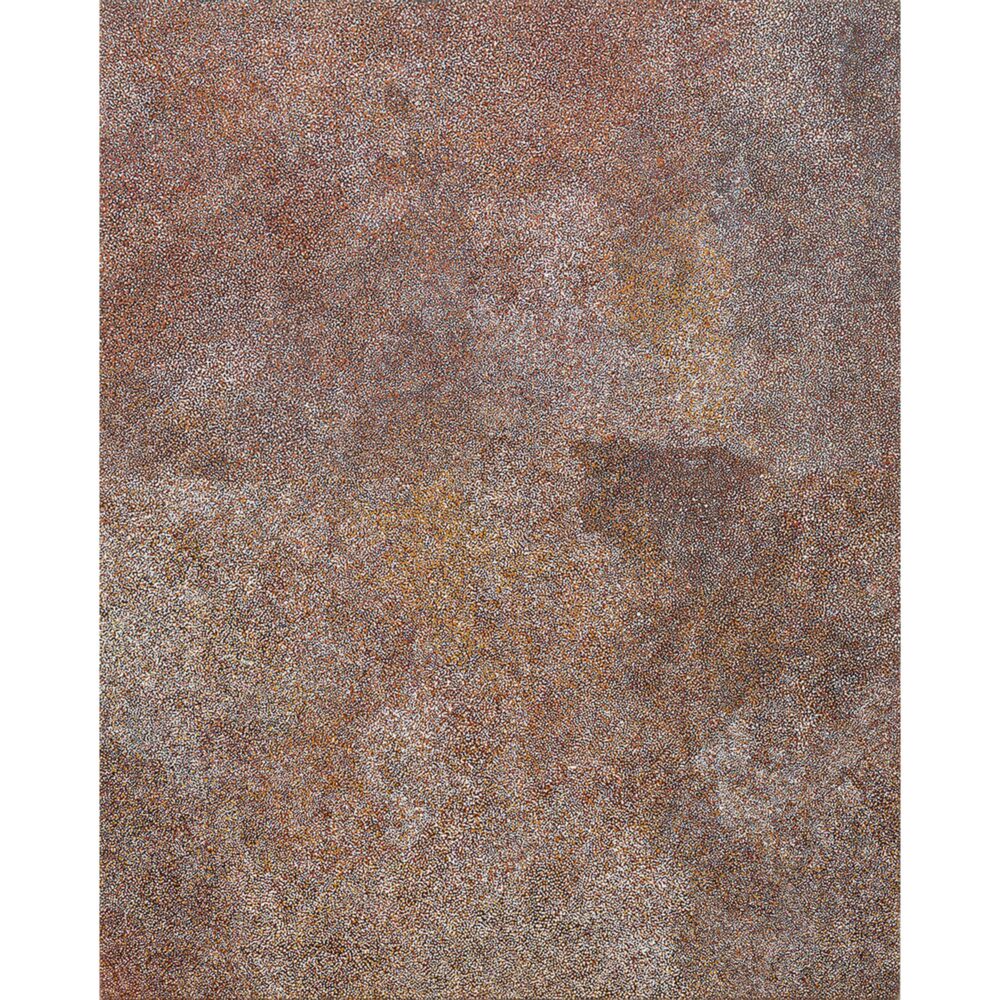
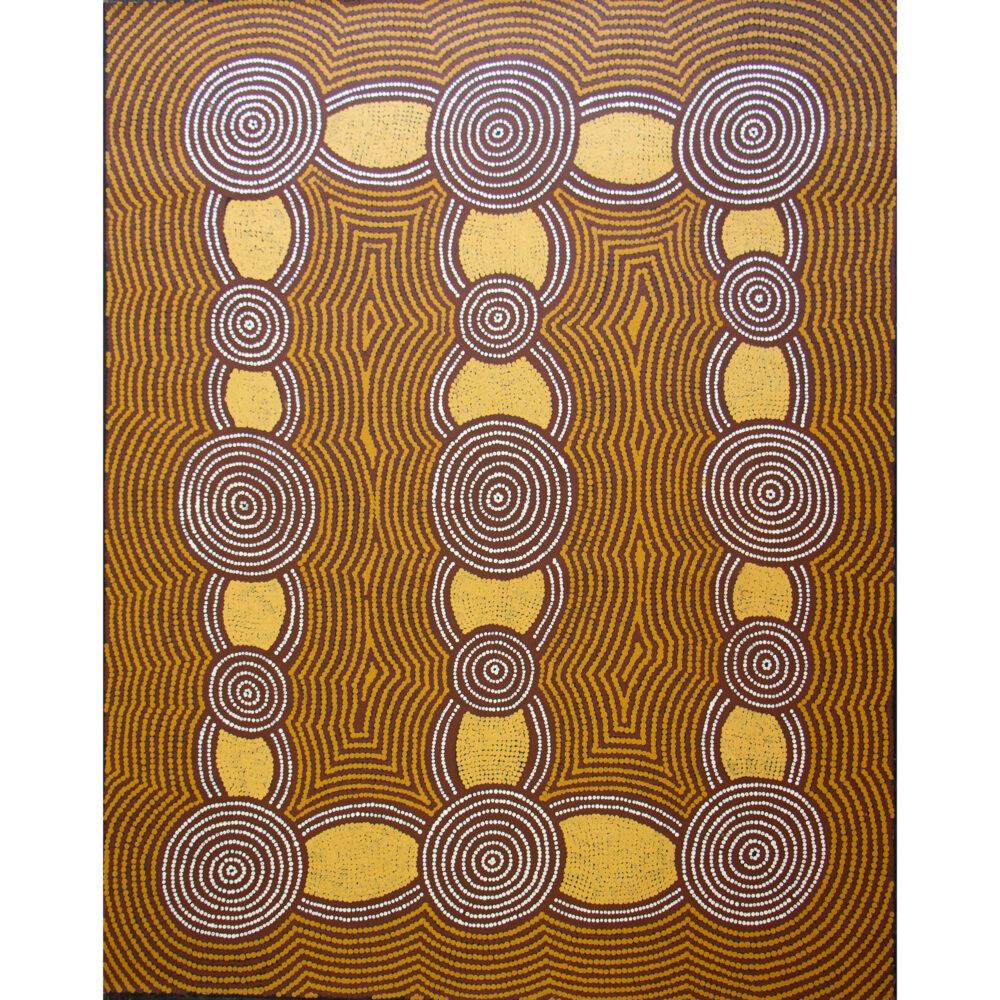
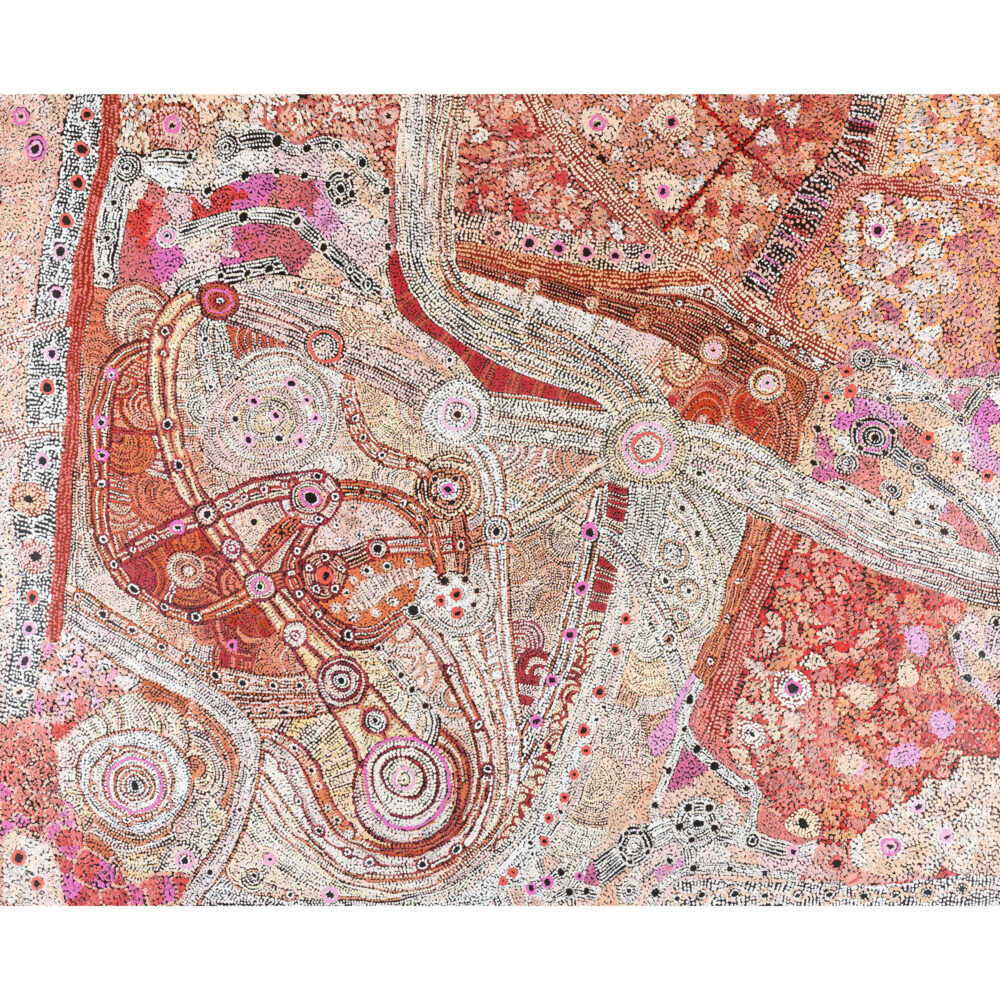
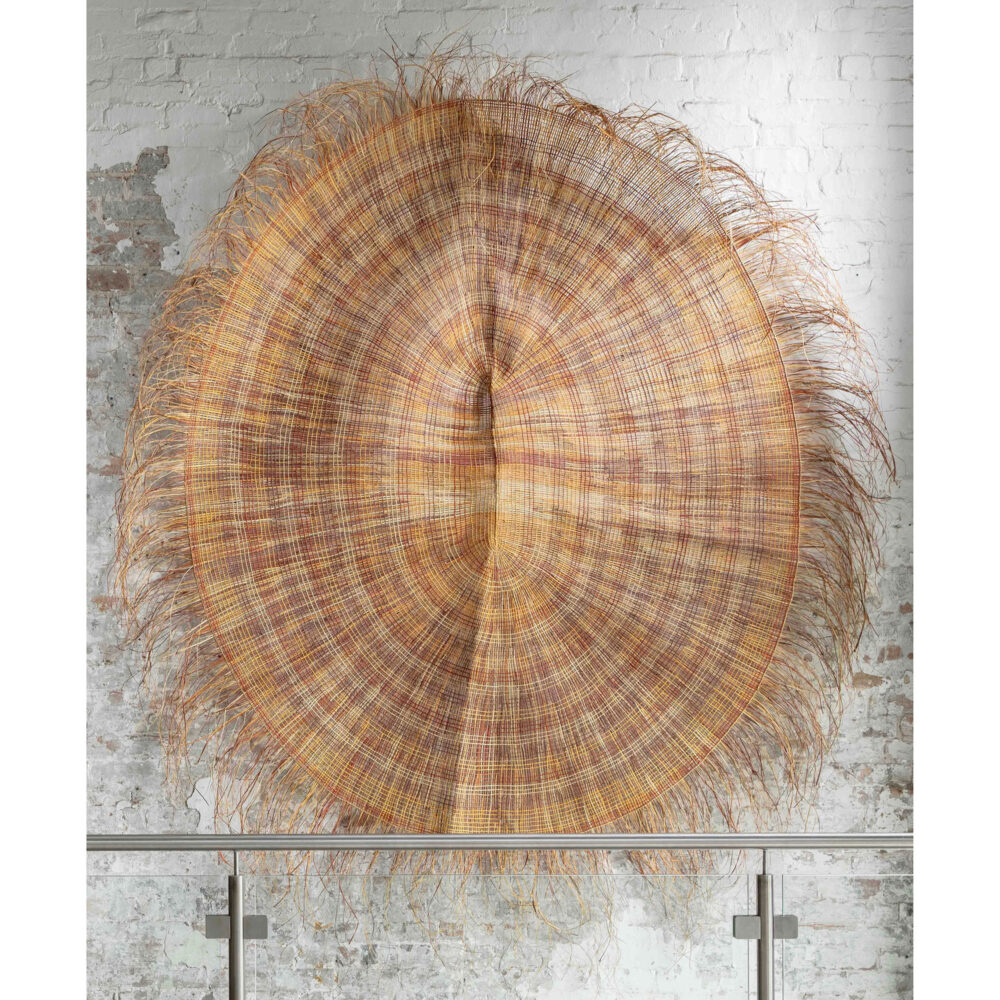
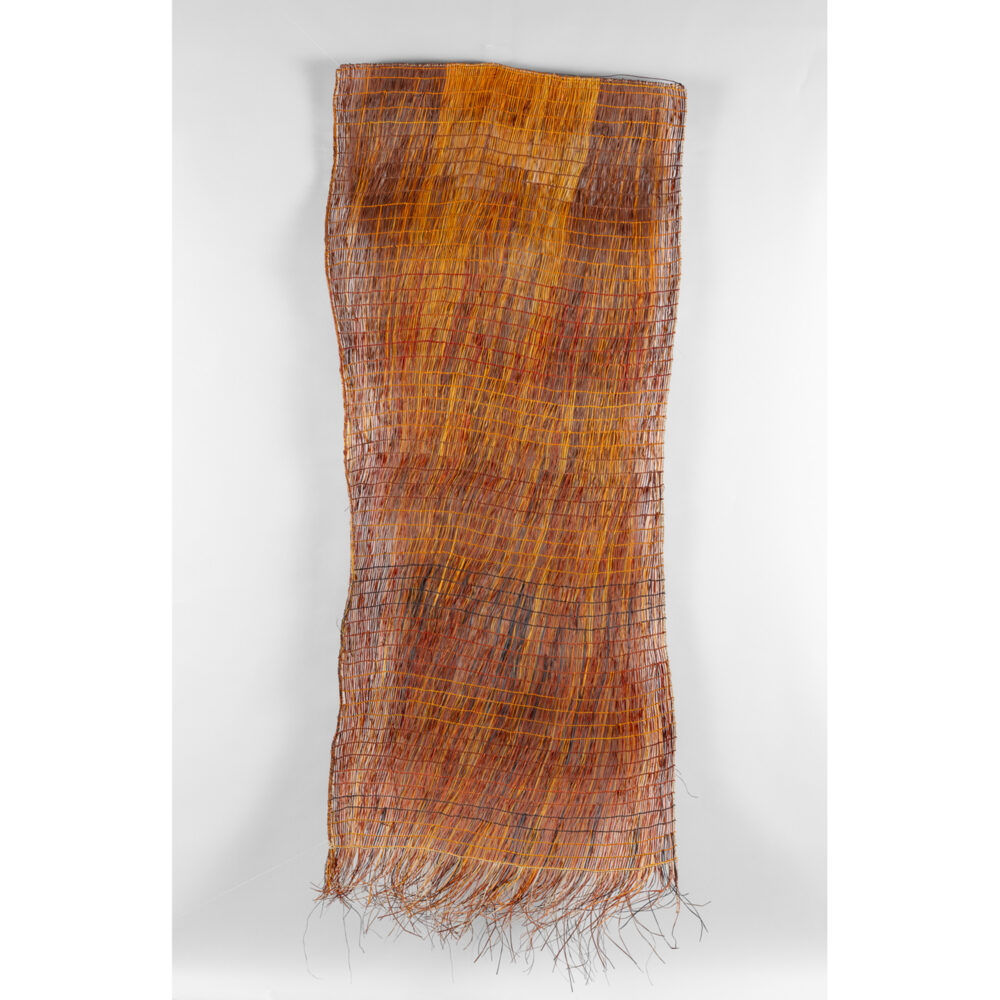
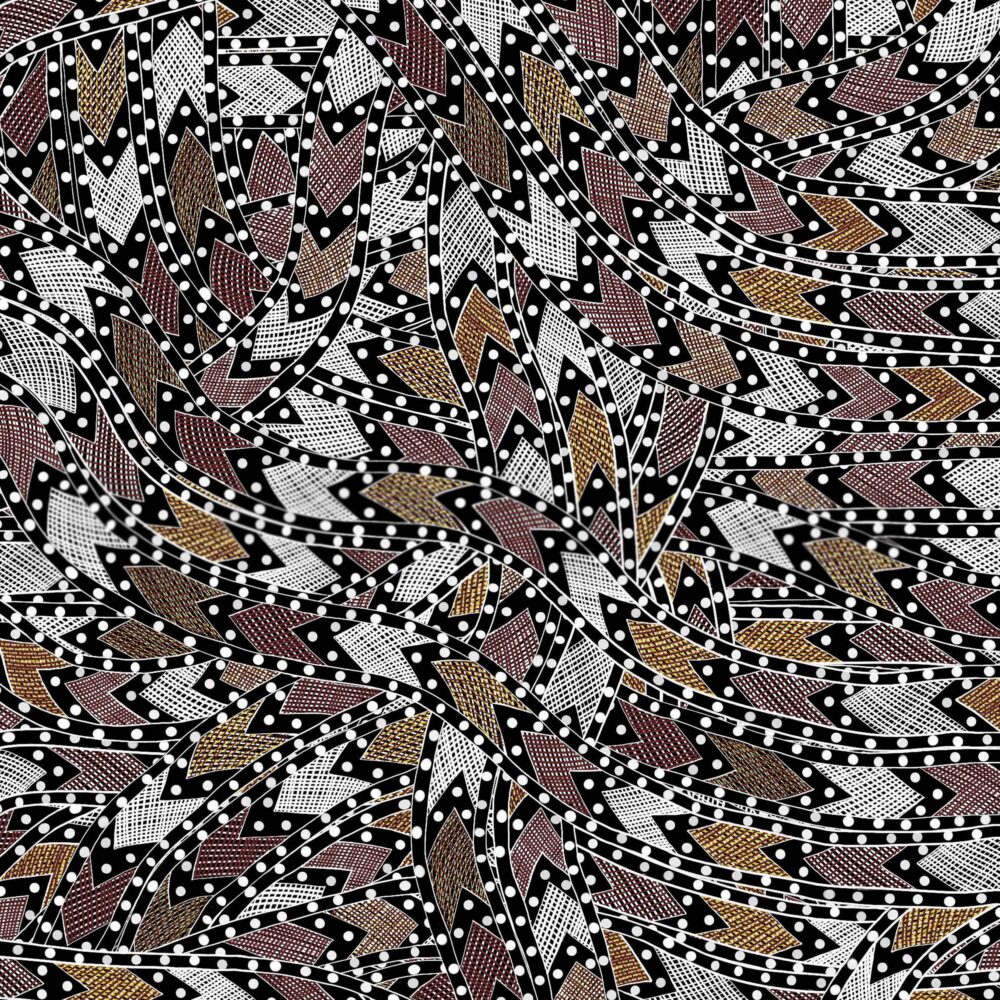
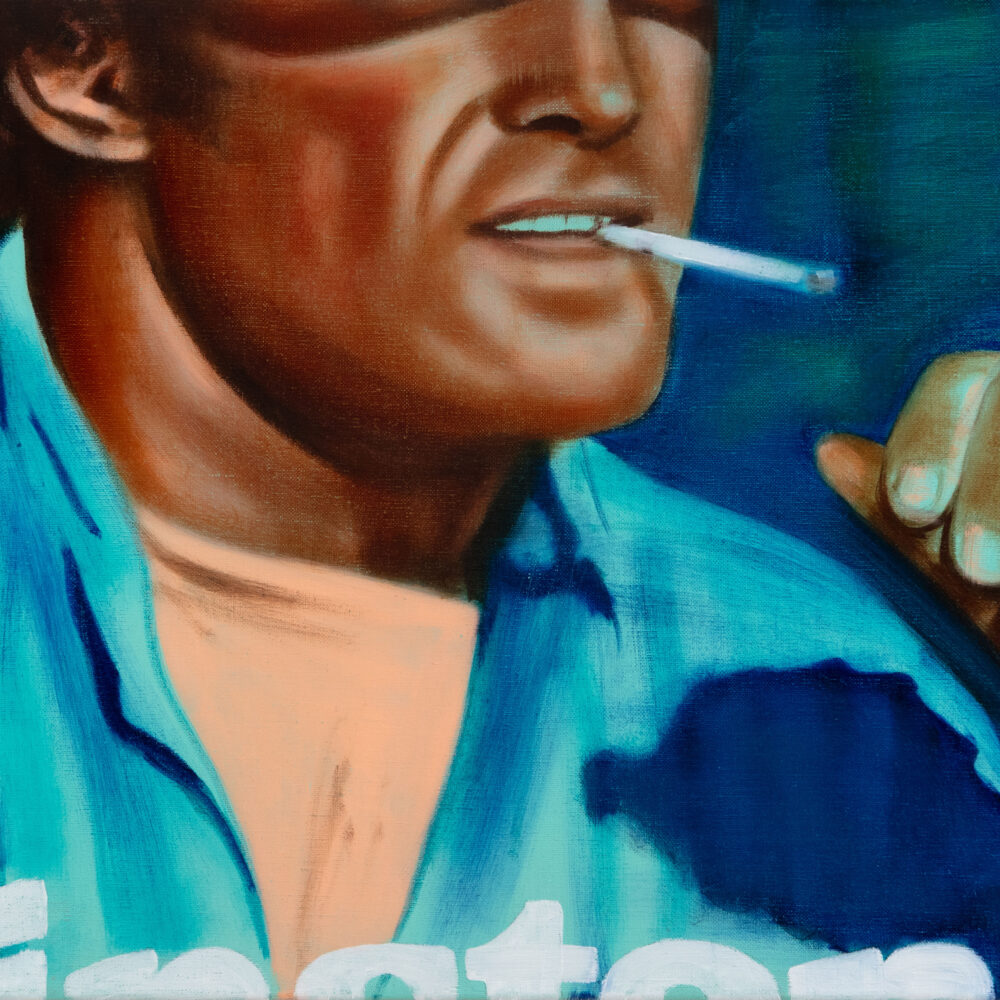
Painting Now 2025 presents significant new bodies of work by Columbiere Tipungwuti, Jo Chew, Heath Nock, Dhukumul Waṉambi and Brenton Drechsler. With their distinct approaches, perspectives and preoccupations, these artists recast painting as an expanded creative field, pushing the medium into optically charged, technically dazzling and conceptually daring terrain.

The success of so many Painting Now alumni reflects the program’s ambition to identify, mentor and celebrate singular talents at a moment of creative breakthrough, presenting their work just as it ascends to a new level of collectability and acclaim. Unfolding across the entire ground-floor gallery at our flagship Eora/Sydney space, Painting Now 2025 will be celebrated with opening drinks on Saturday, 6 December, and all works are available to explore and acquire online and by request.

For enquiries, please email dean@michaelreid.com.au

Louise Frith

Posted by

Louise Frith

  • Artist
    Louise Frith
  • Dates
    6—28 Nov 2025
  • Gallery Location
    Eora / Sydney
  • Catalogue
    Download now

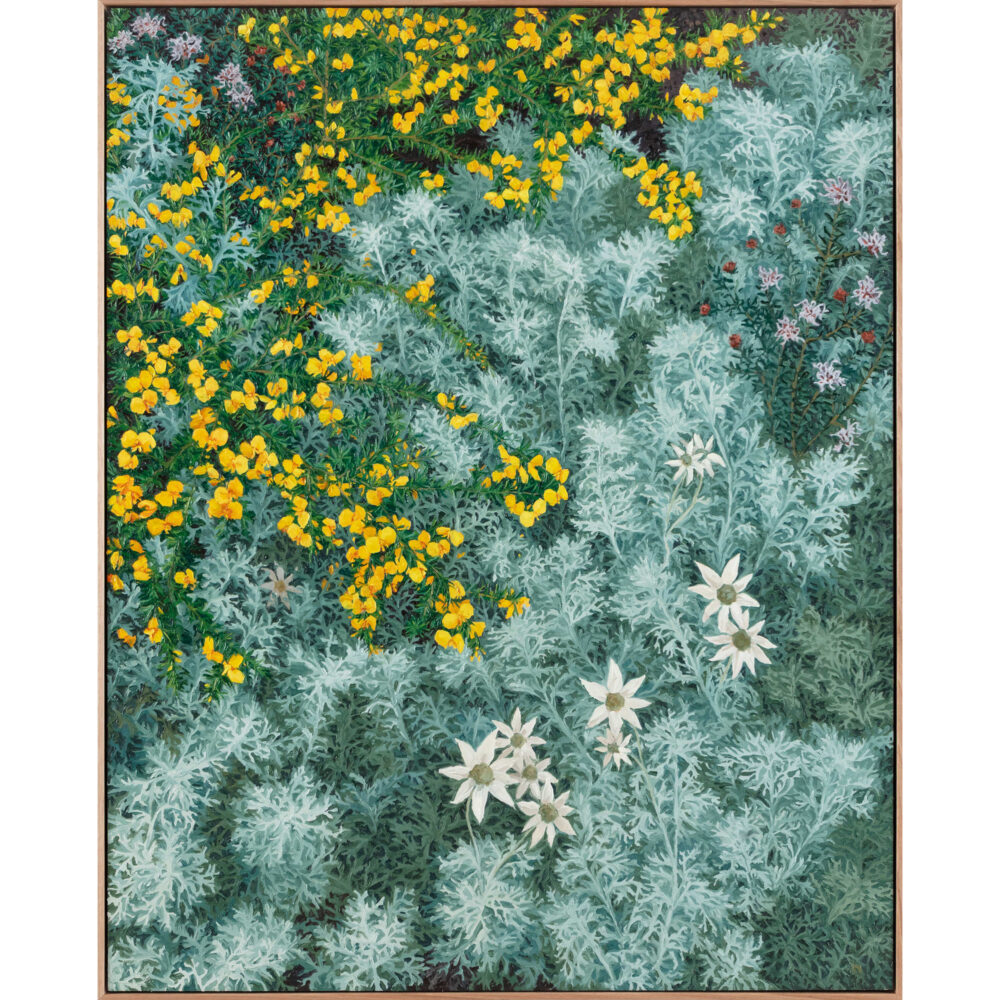
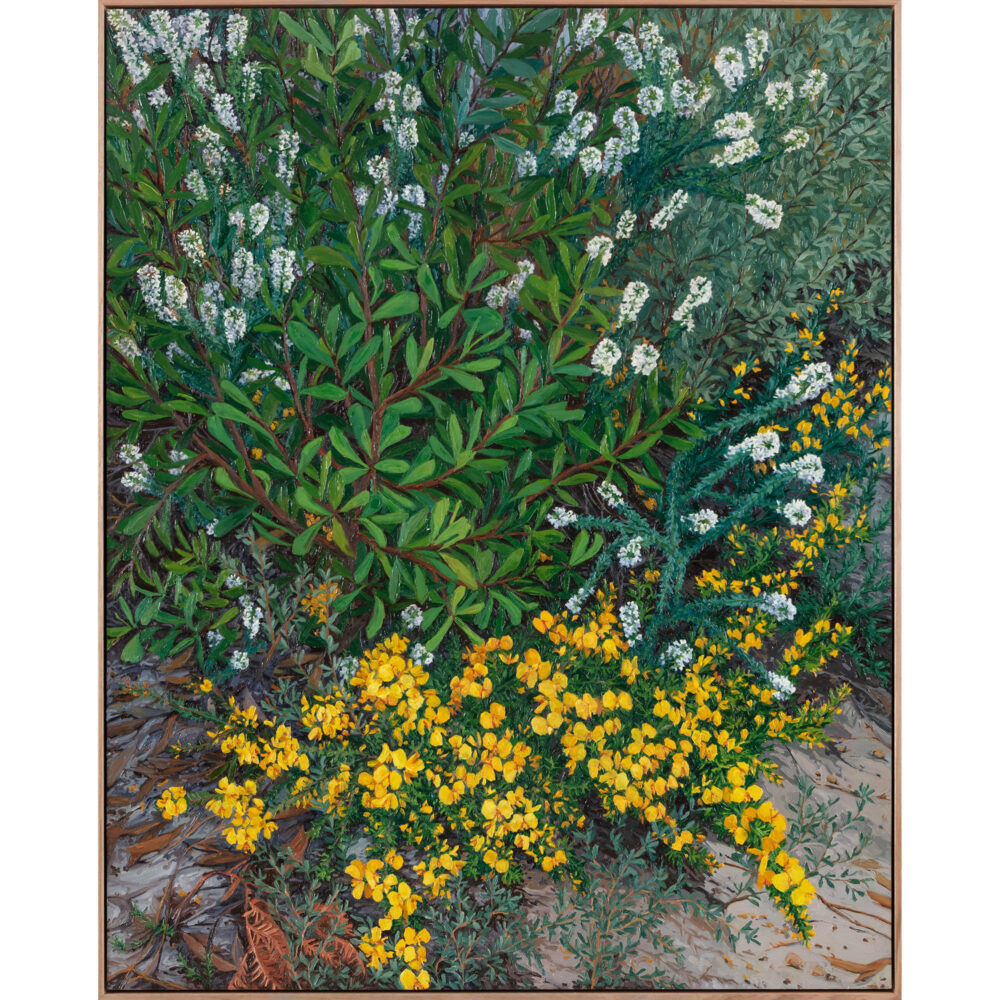
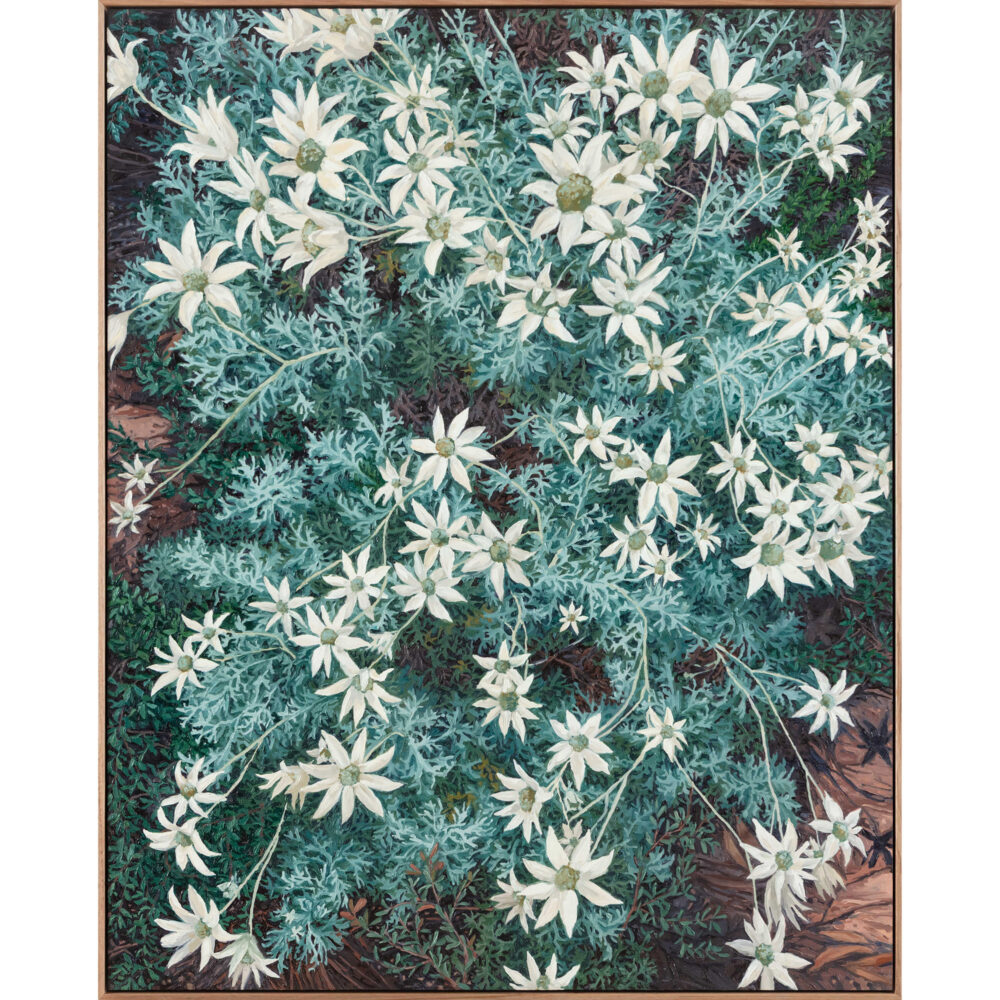
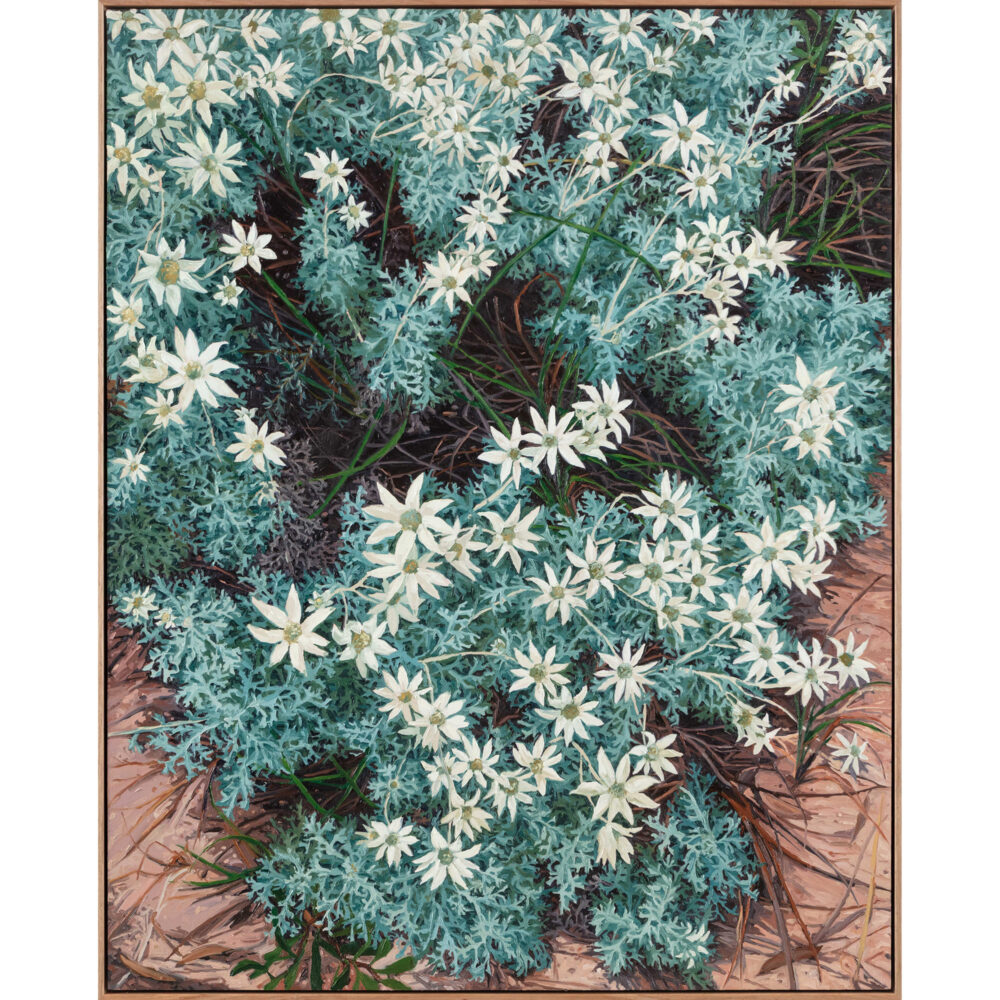
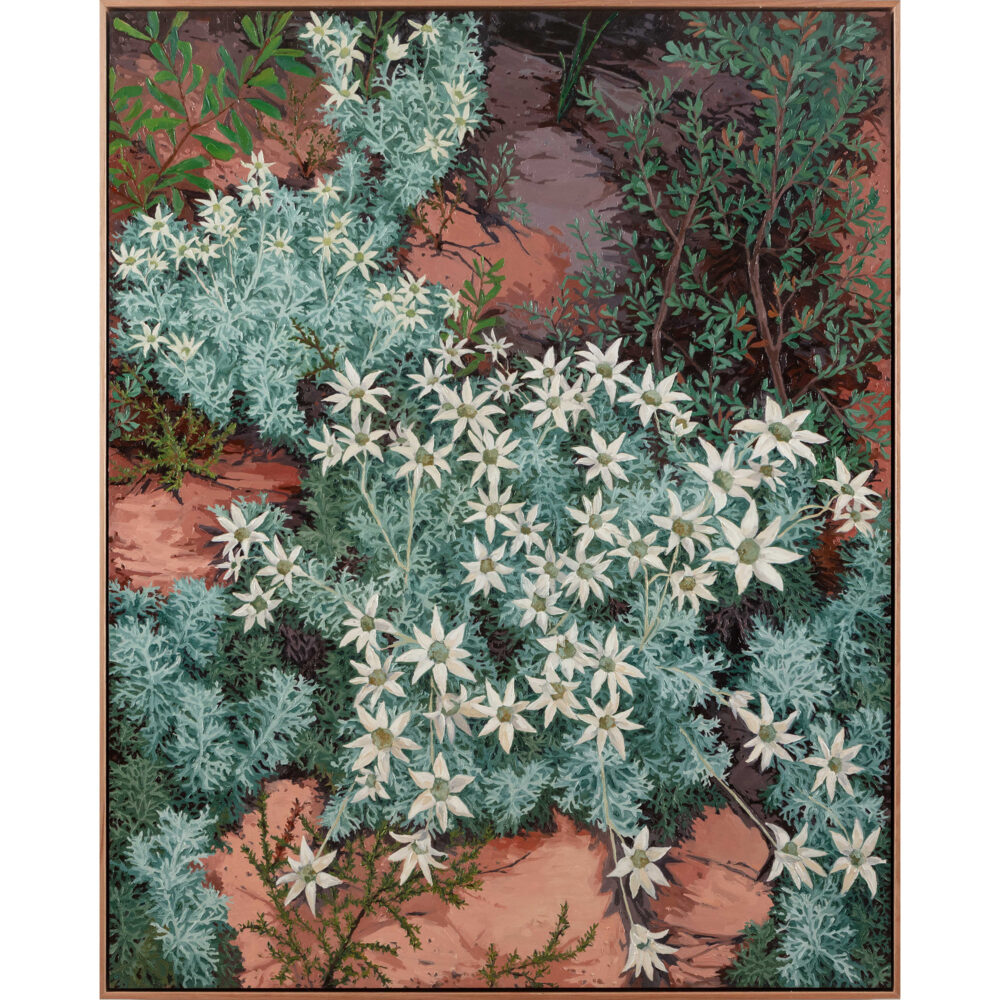
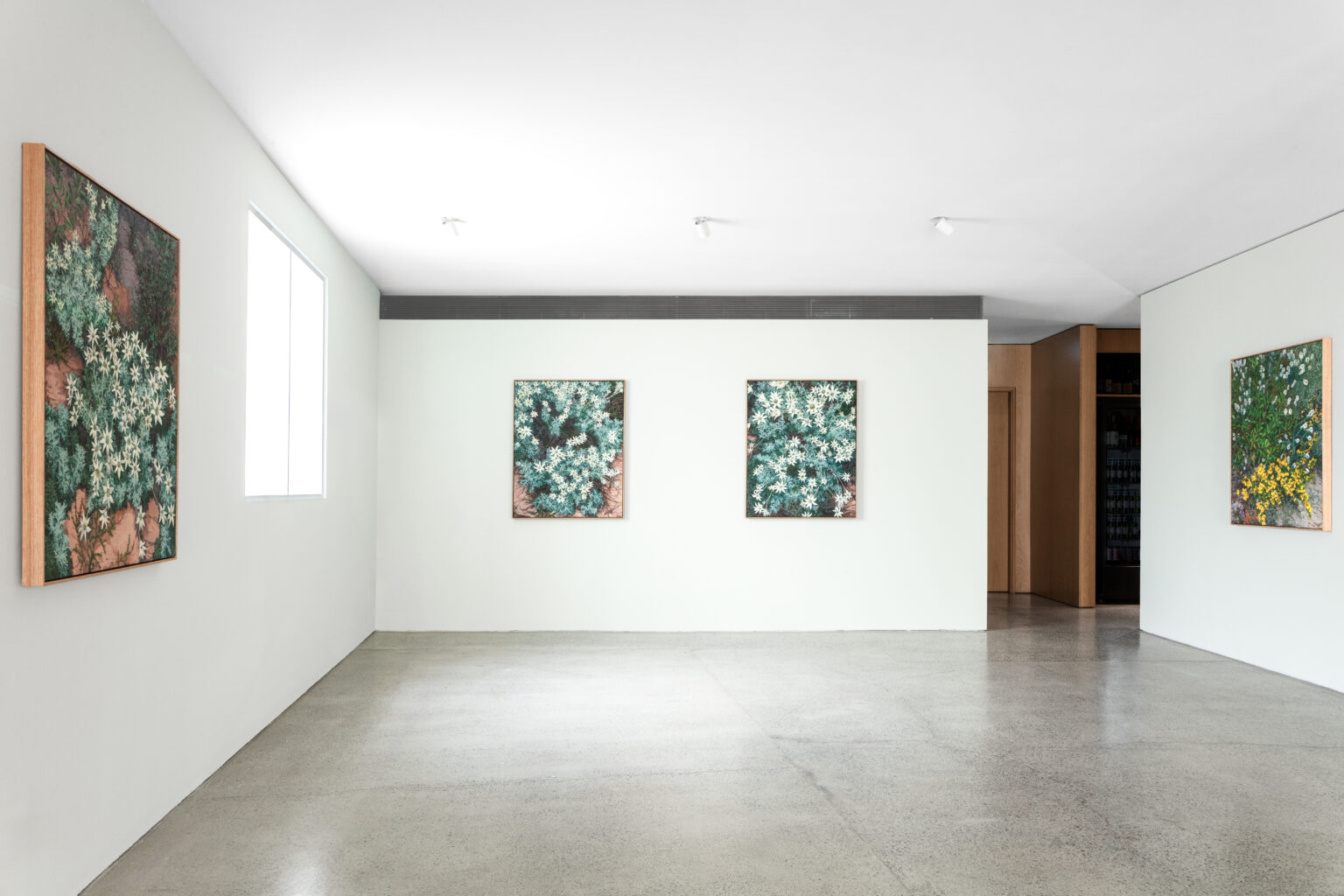
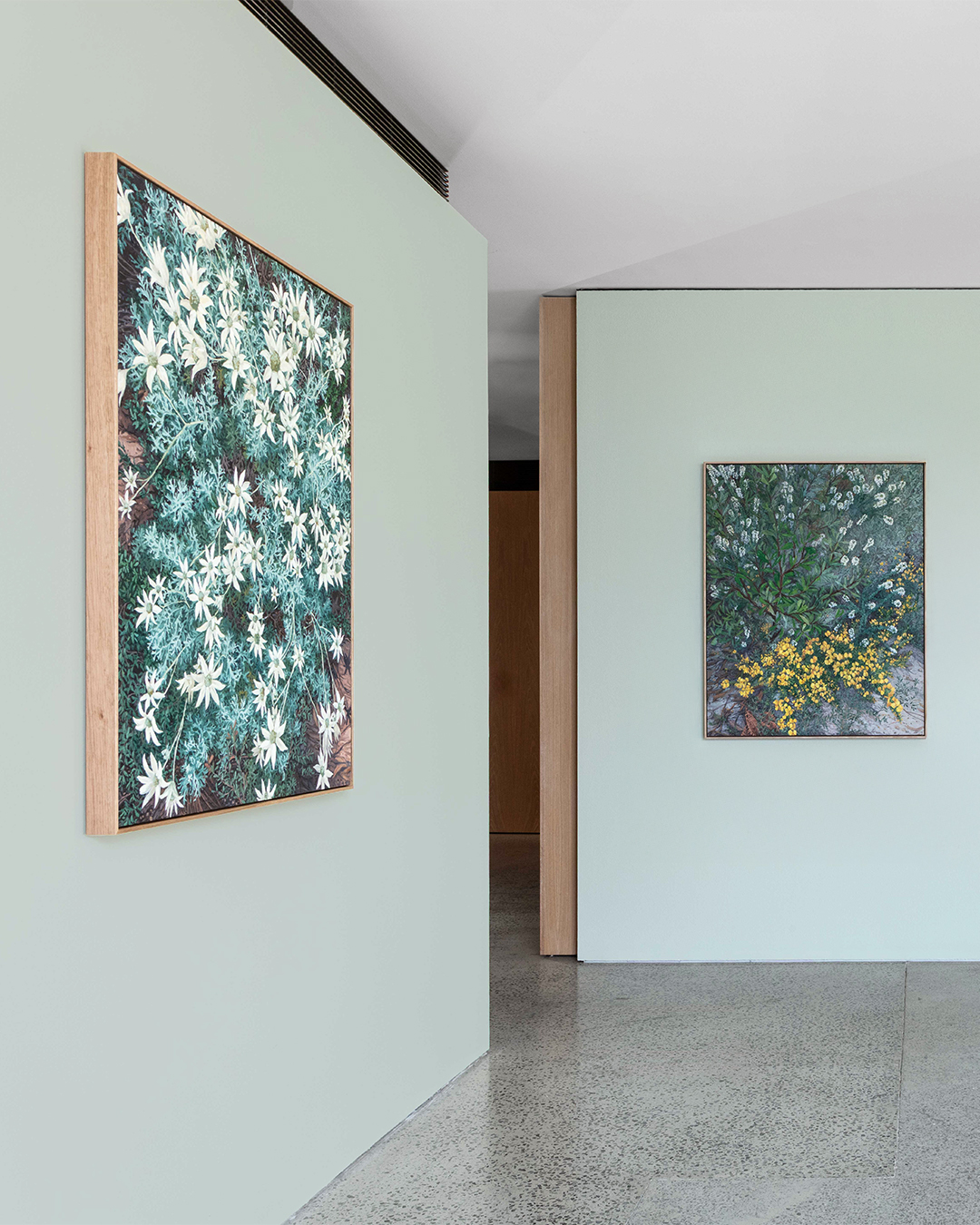
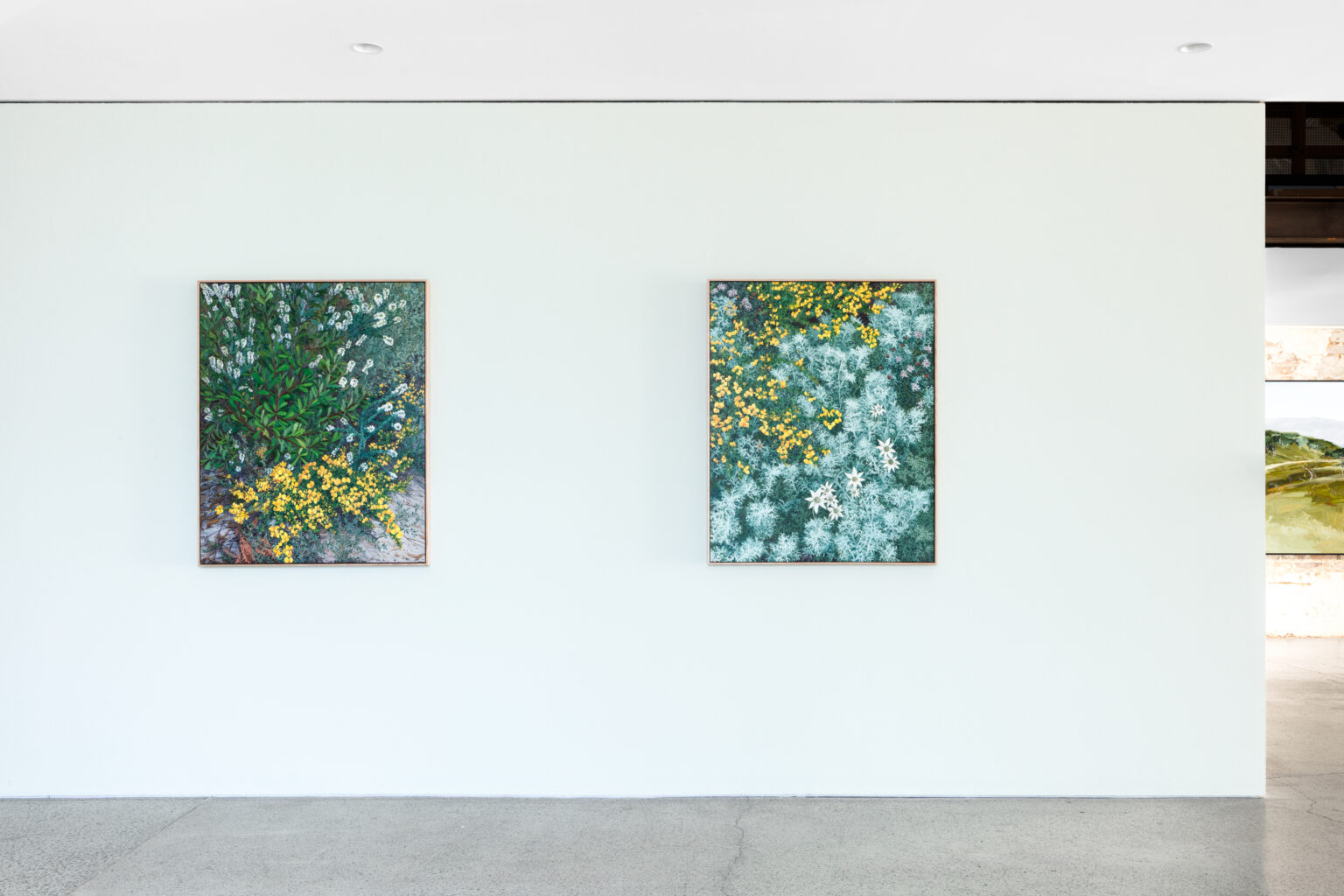
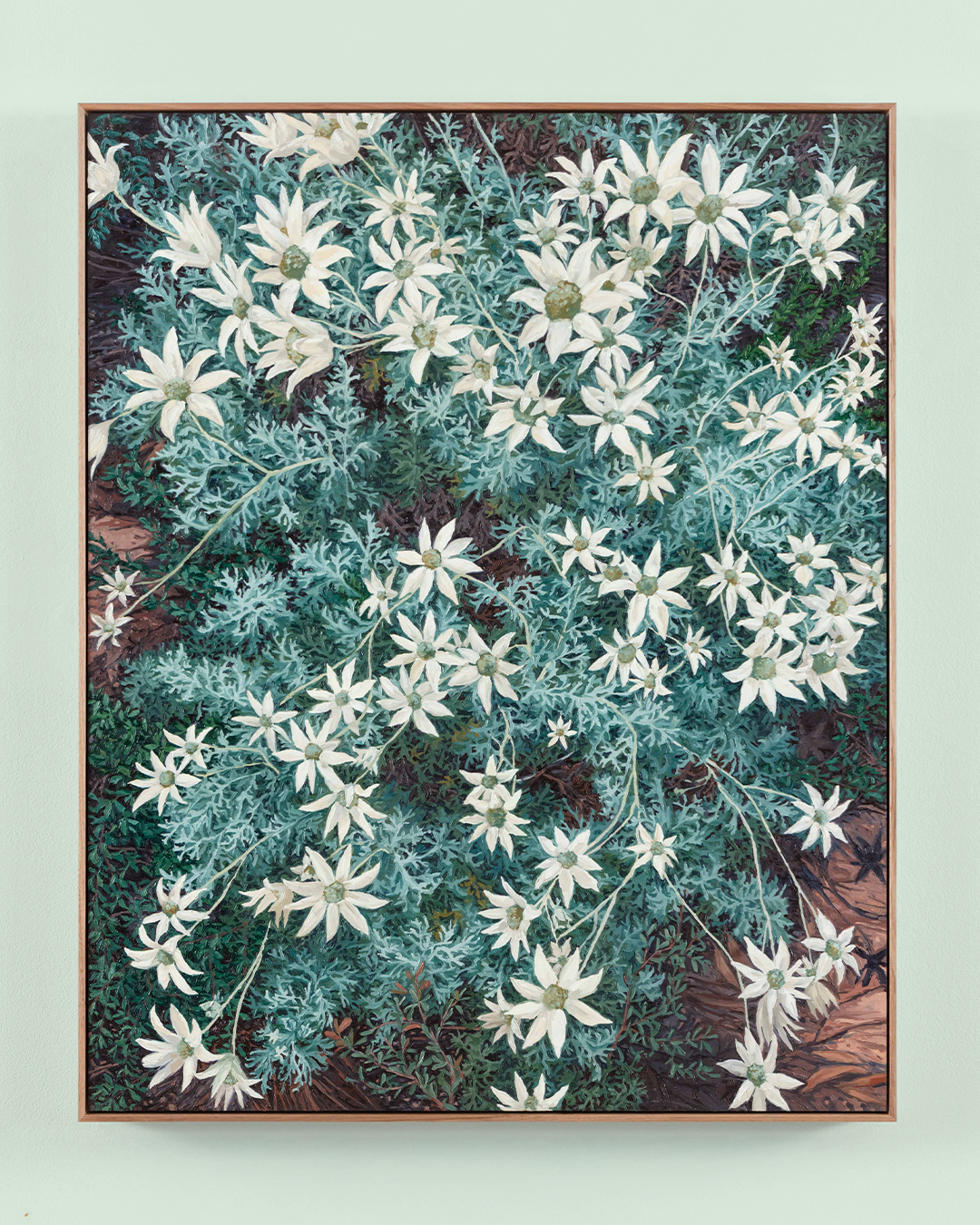
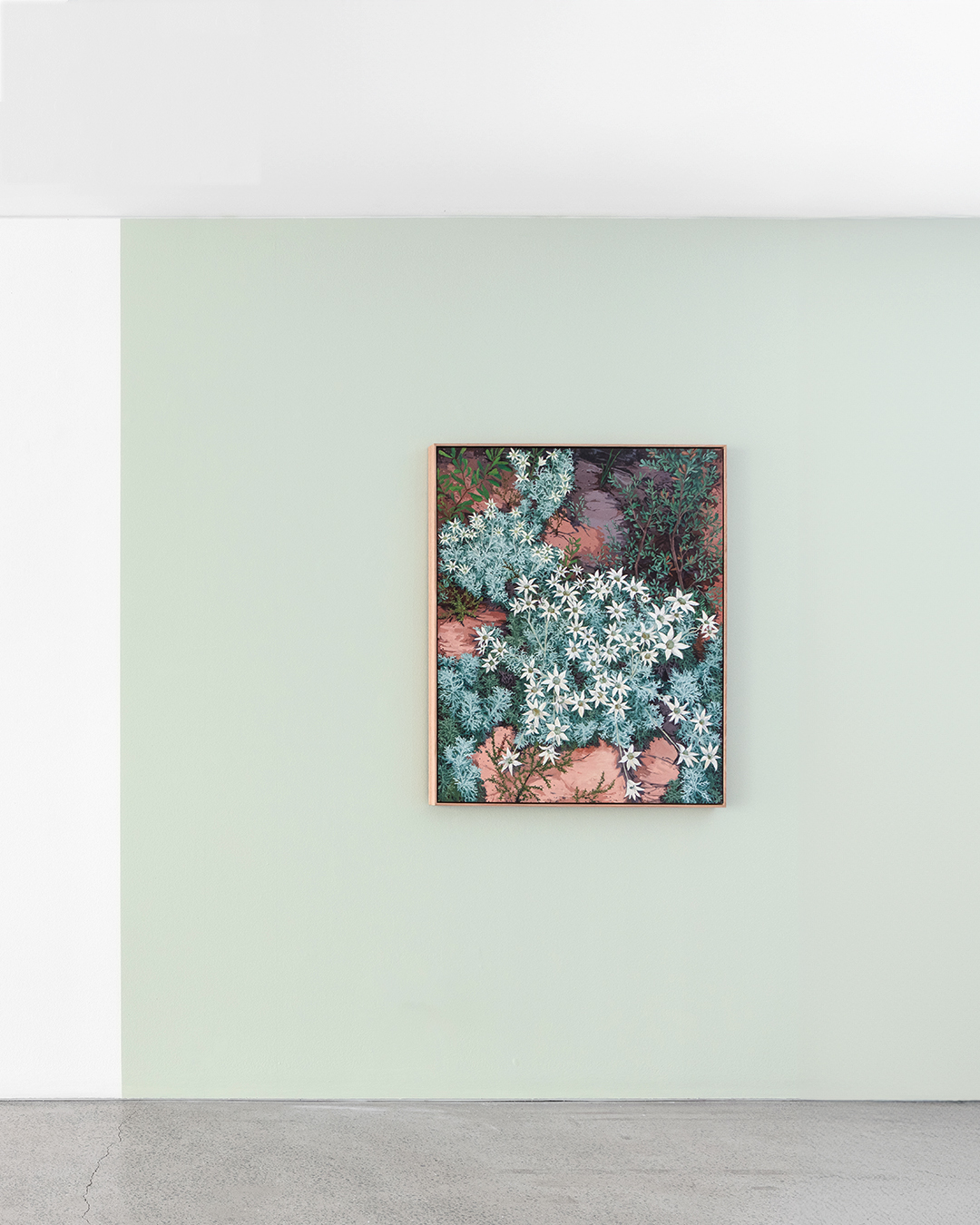
Michael Reid Sydney is delighted to present a new series of exuberant botanical paintings by Eora/Sydney-based artist Louise Frith, who is making her debut in our flagship exhibition space after a stellar run of solo exhibitions at our Murrurundi and Southern Highlands galleries.

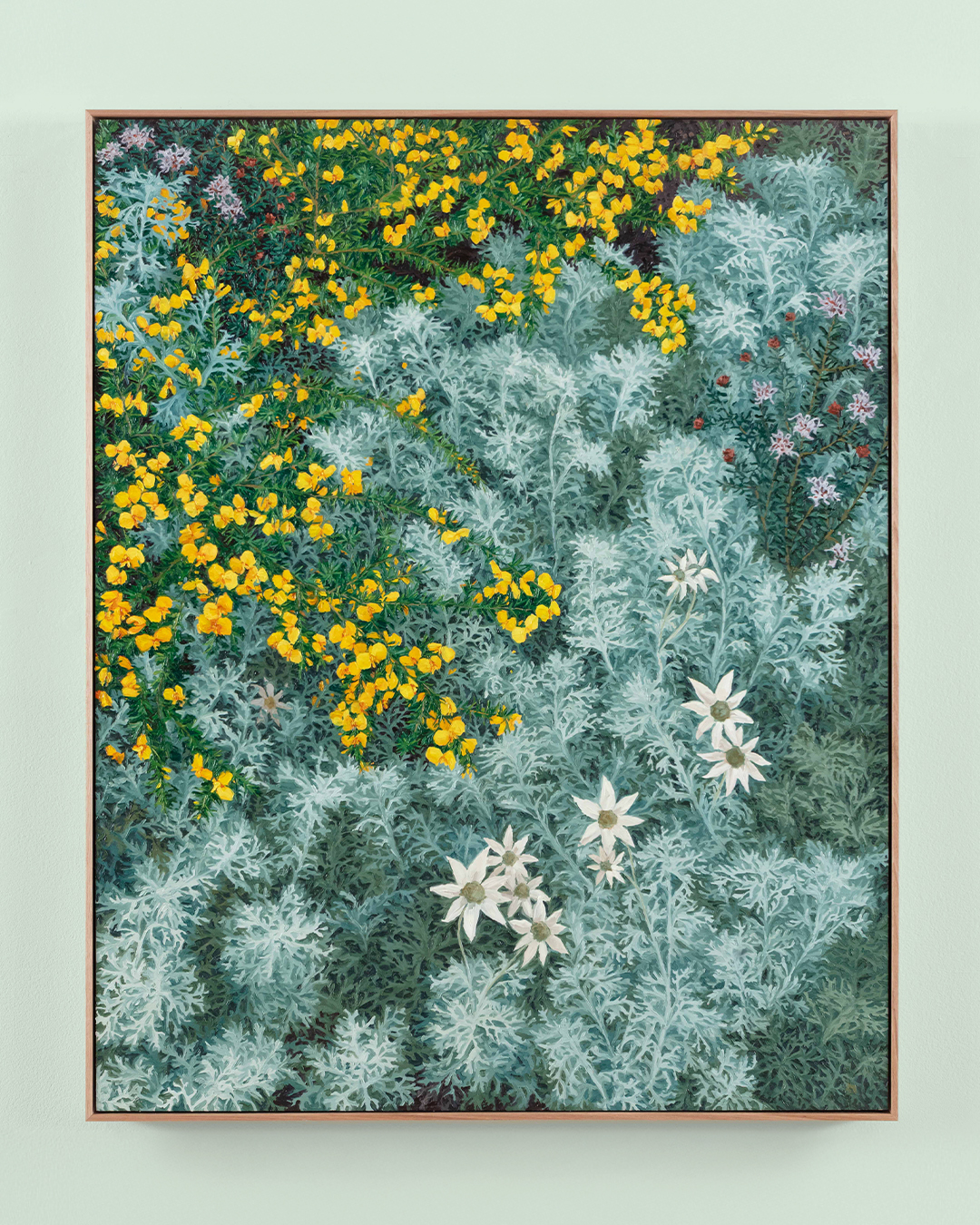
Building on the creative breakthrough of her widely celebrated Murrurundi shows Understory and Tendrils and Tapestries – as well as her recent collaboration with fashion brand Nancybird, which saw her elegant flannel flowers and other painted botanicals transposed onto textiles – Frith’s new works take us deeper into the thickets of the bushland covering Sydney’s North Head.

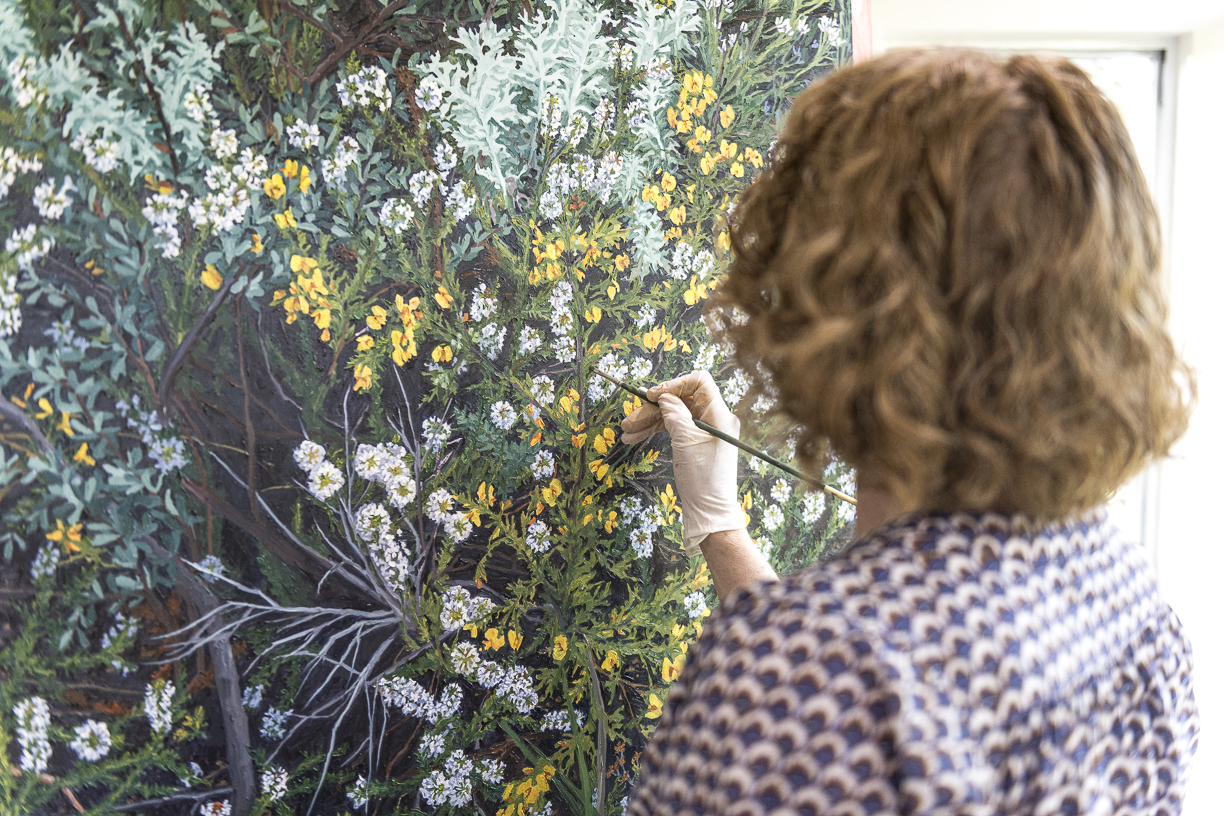
Moving with painterly gusto between areas of intricate, tightly controlled detail and an overall mood of untamed, impressionistic abundance, the artist’s dazzling profusions of native wildflowers teem and tangle right to the edge of each canvas.

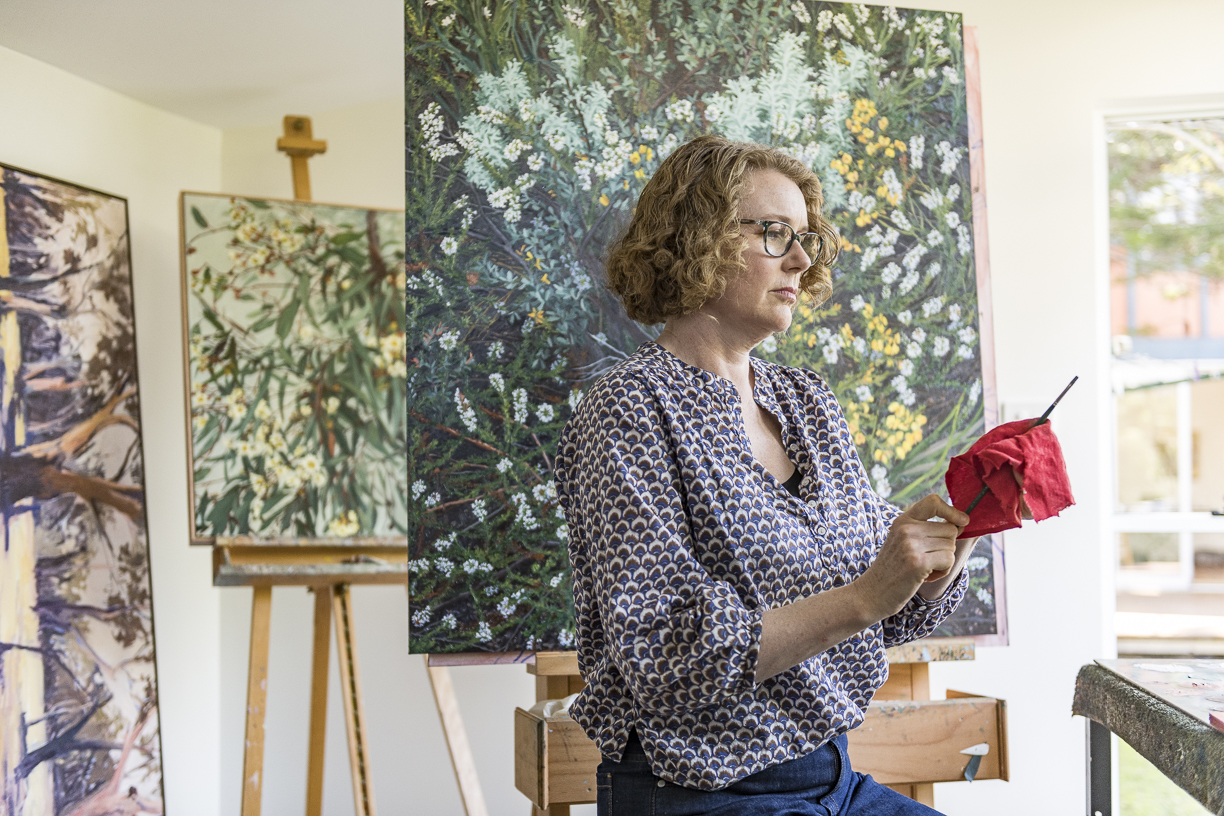
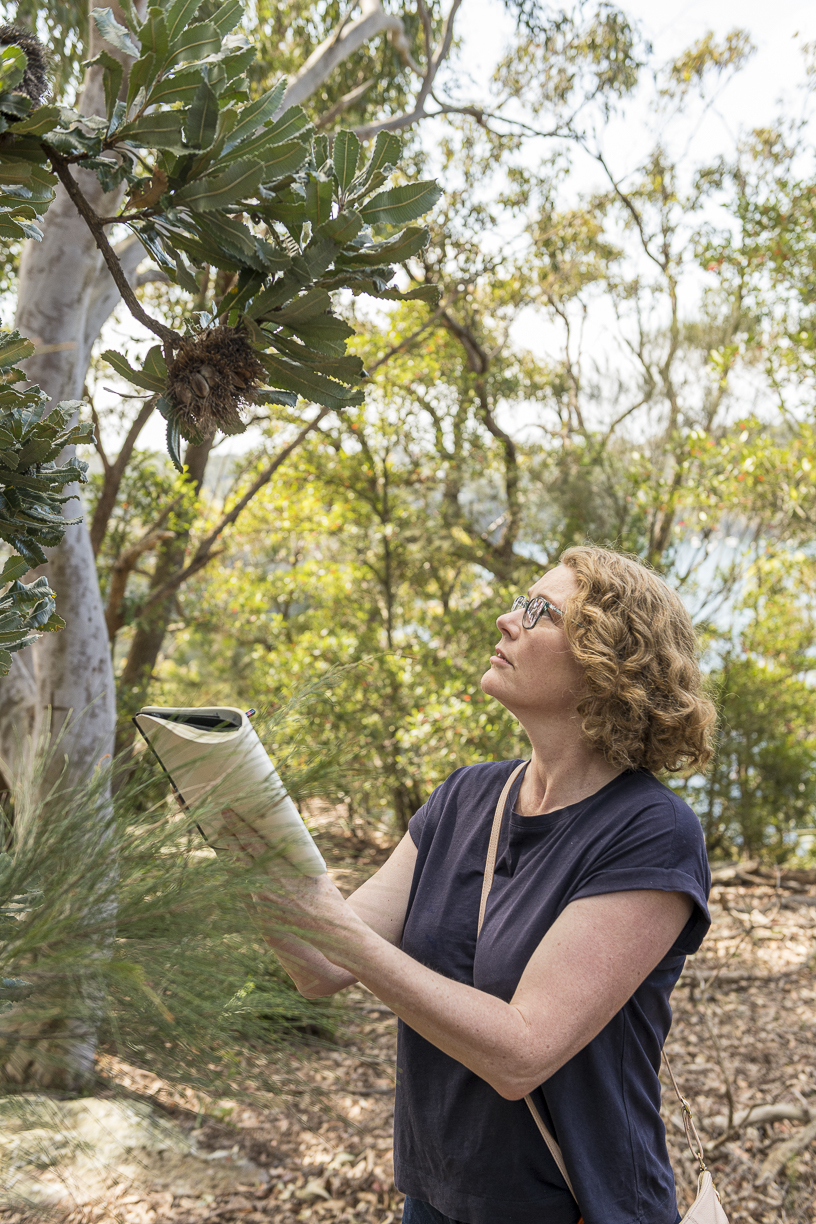
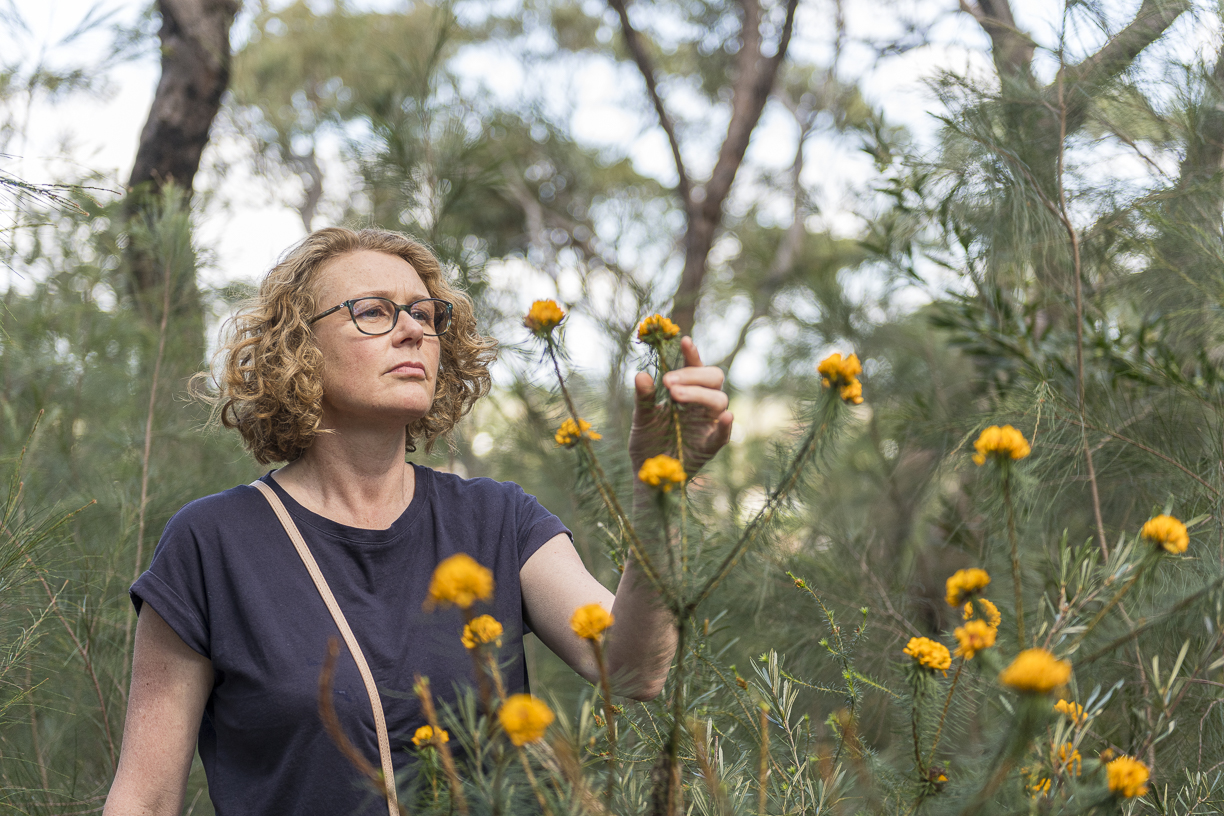
Sketching out in the field before returning to her painting studio, Frith observes and translates North Head’s dense floral interplay, seasonal shifts, and the filtered patterns of light and shade cast across the forest floor.

The resulting paintings often read less as conventional landscapes than as exuberant, impressionistic fields of pattern-like flora that envelop and transport the viewer. Each work is at once precisely rendered, yet verging on abstraction, with overlapping forms and immersive, optically charged, tapestry-like effects.

To discuss works by Louise Frith, please email dean@michaelreid.com.au

Julz Beresford – A Rhythm of Peaks and Flows

Posted by

Julz Beresford – A Rhythm of Peaks and Flows

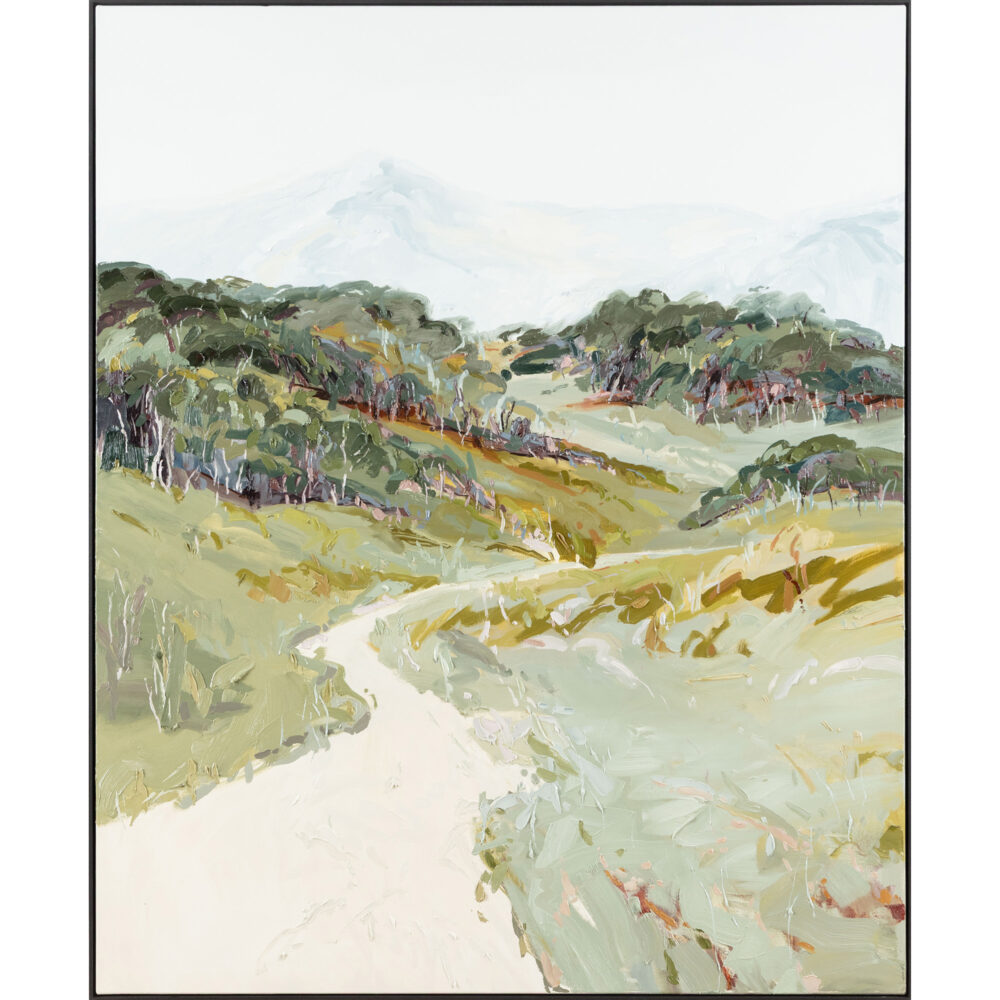
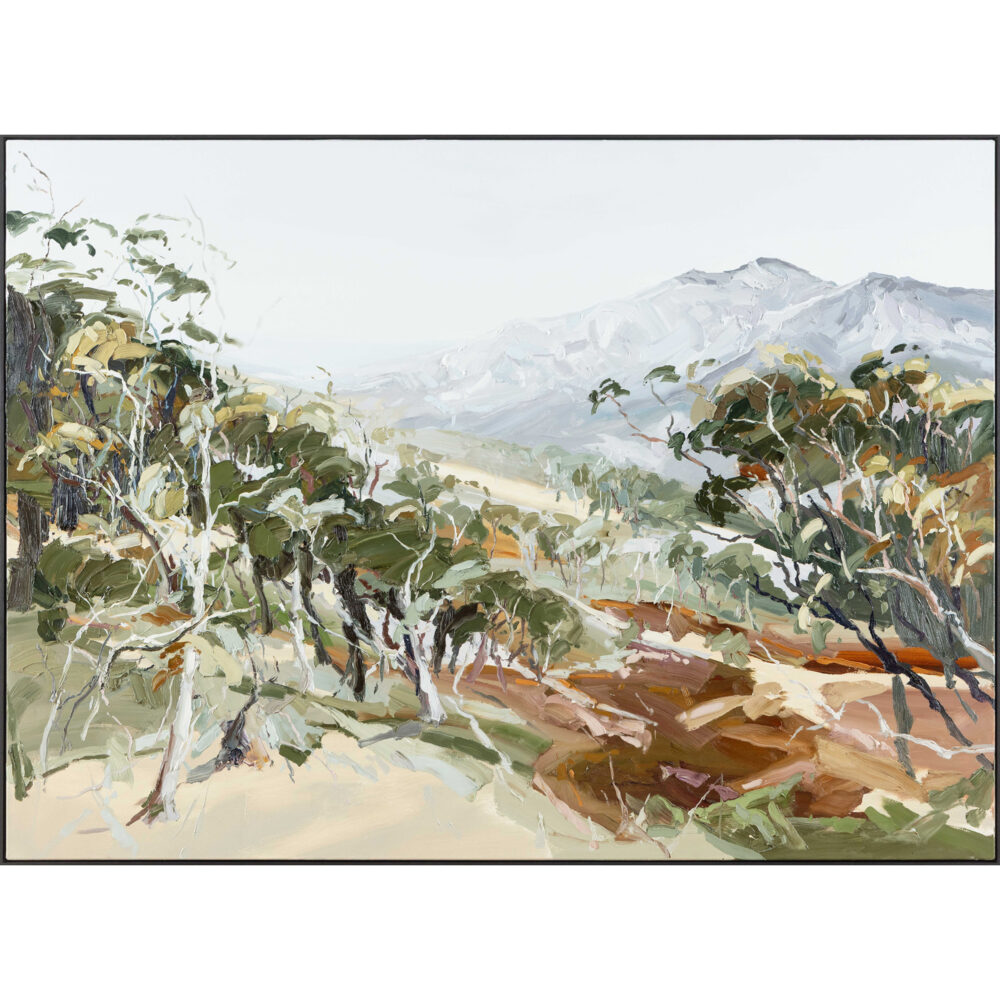
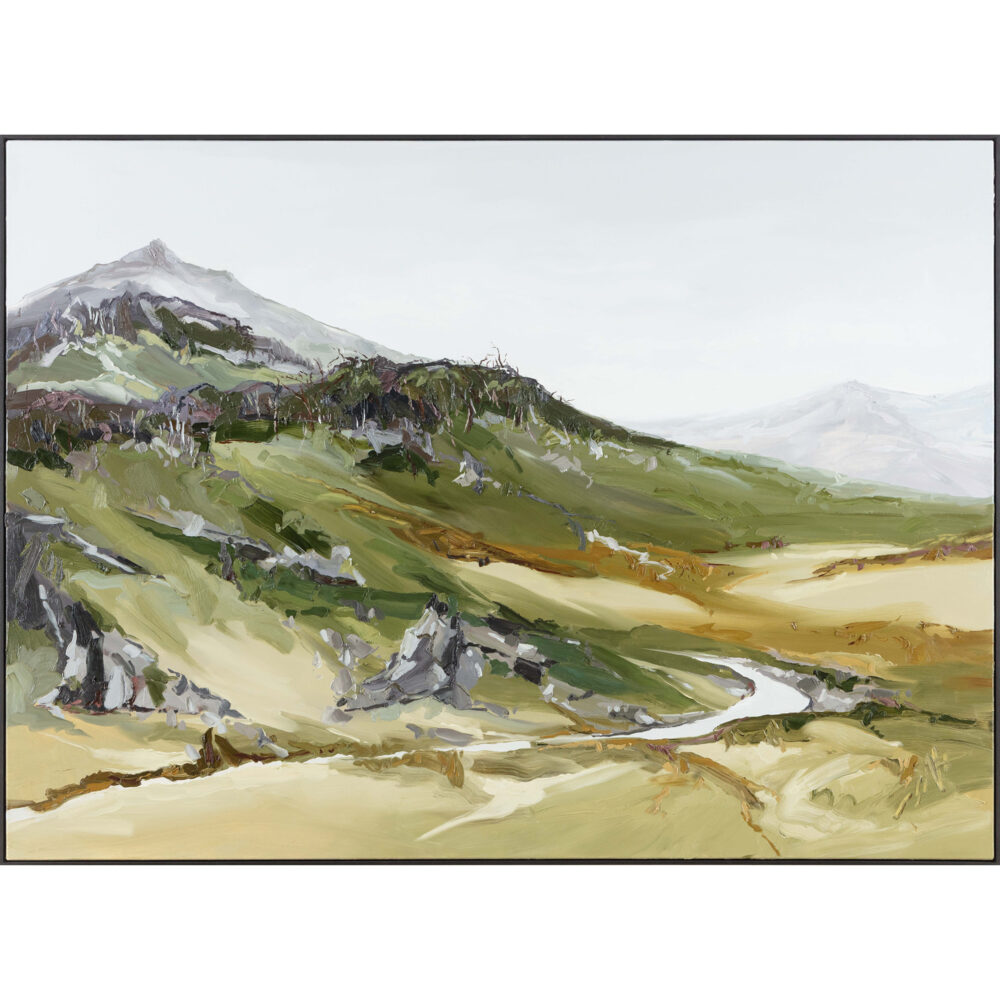
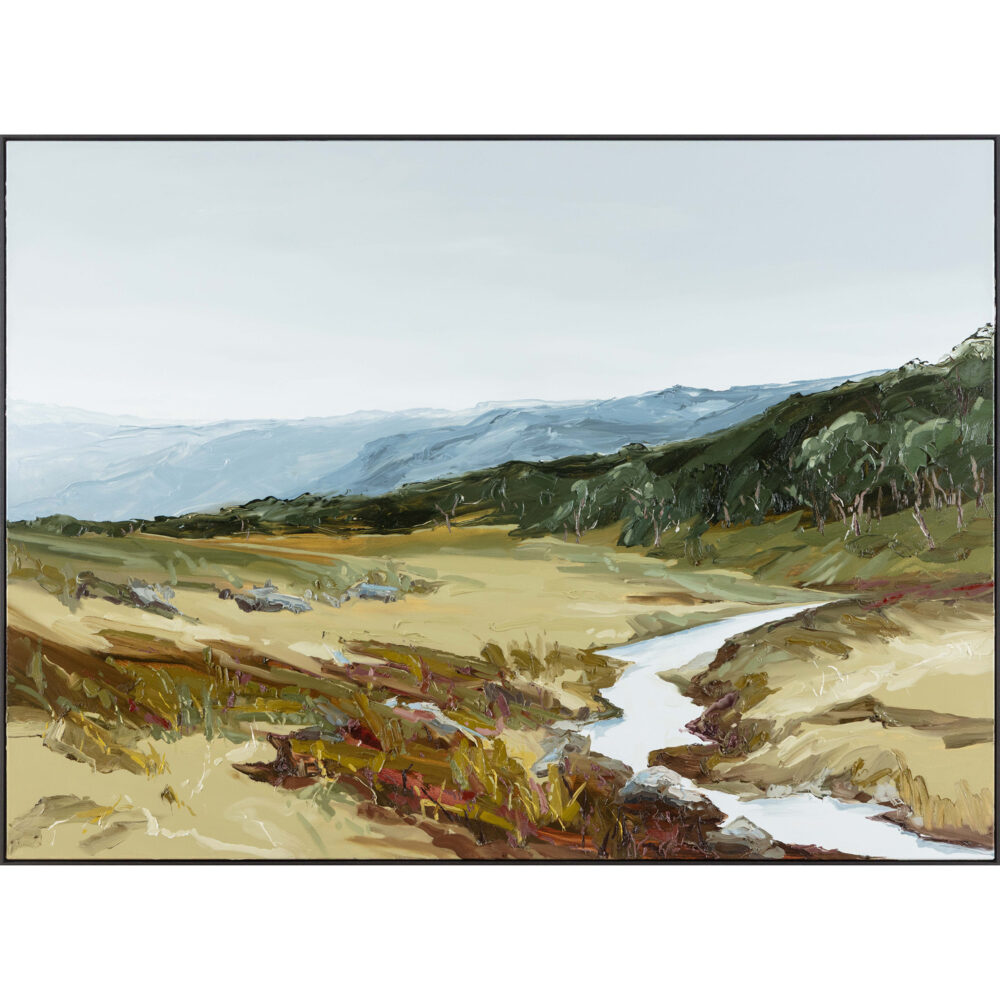
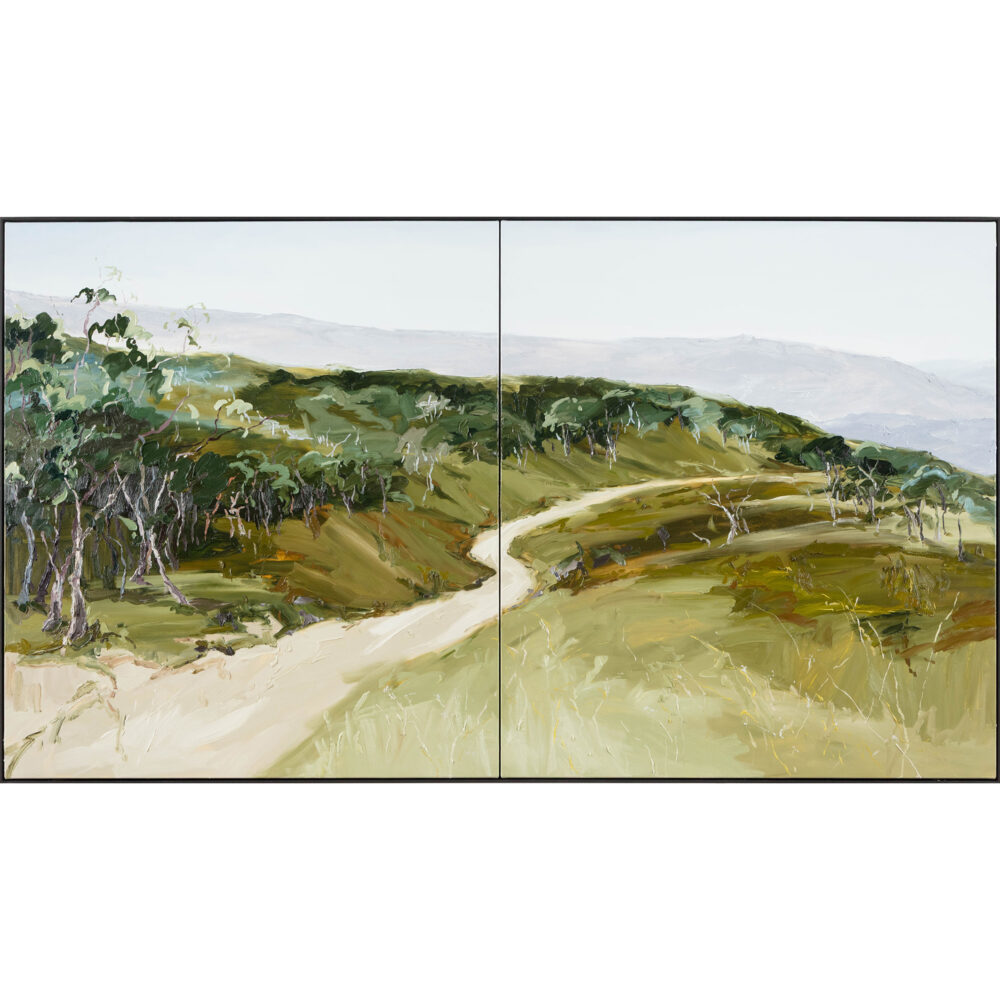
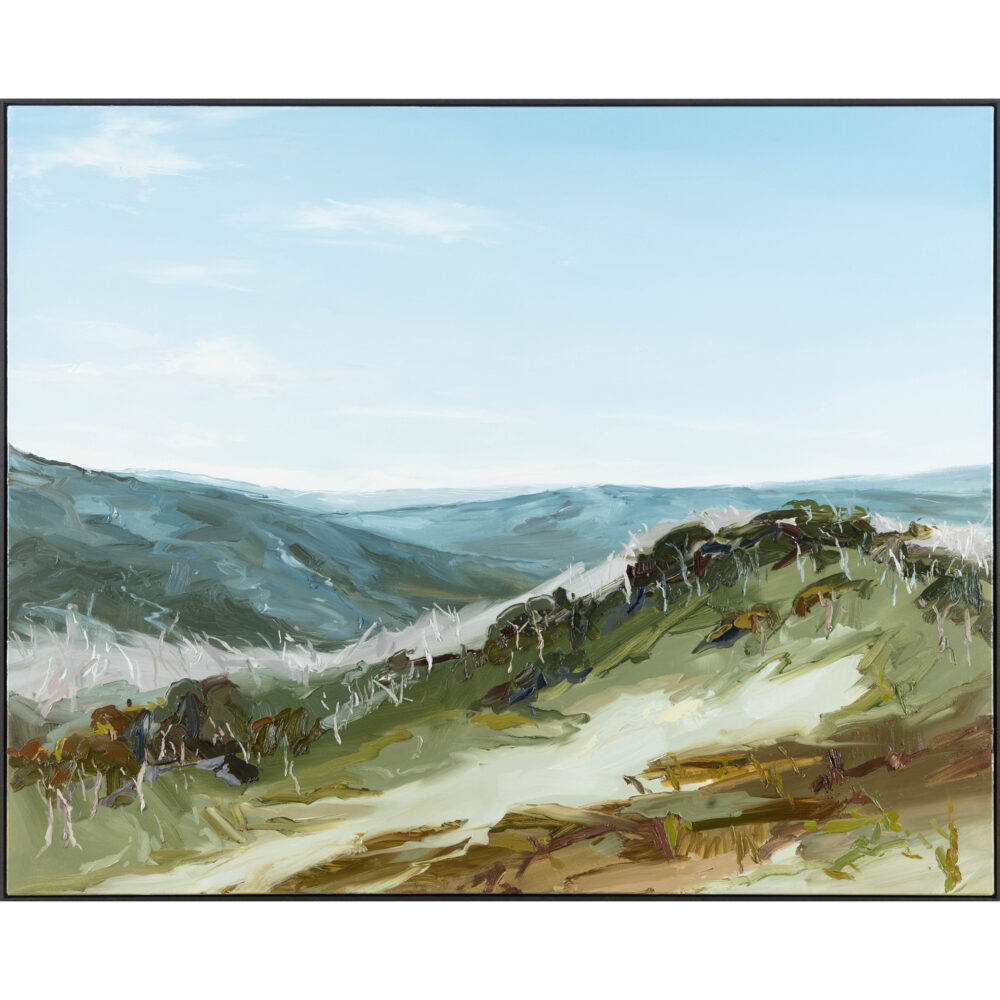
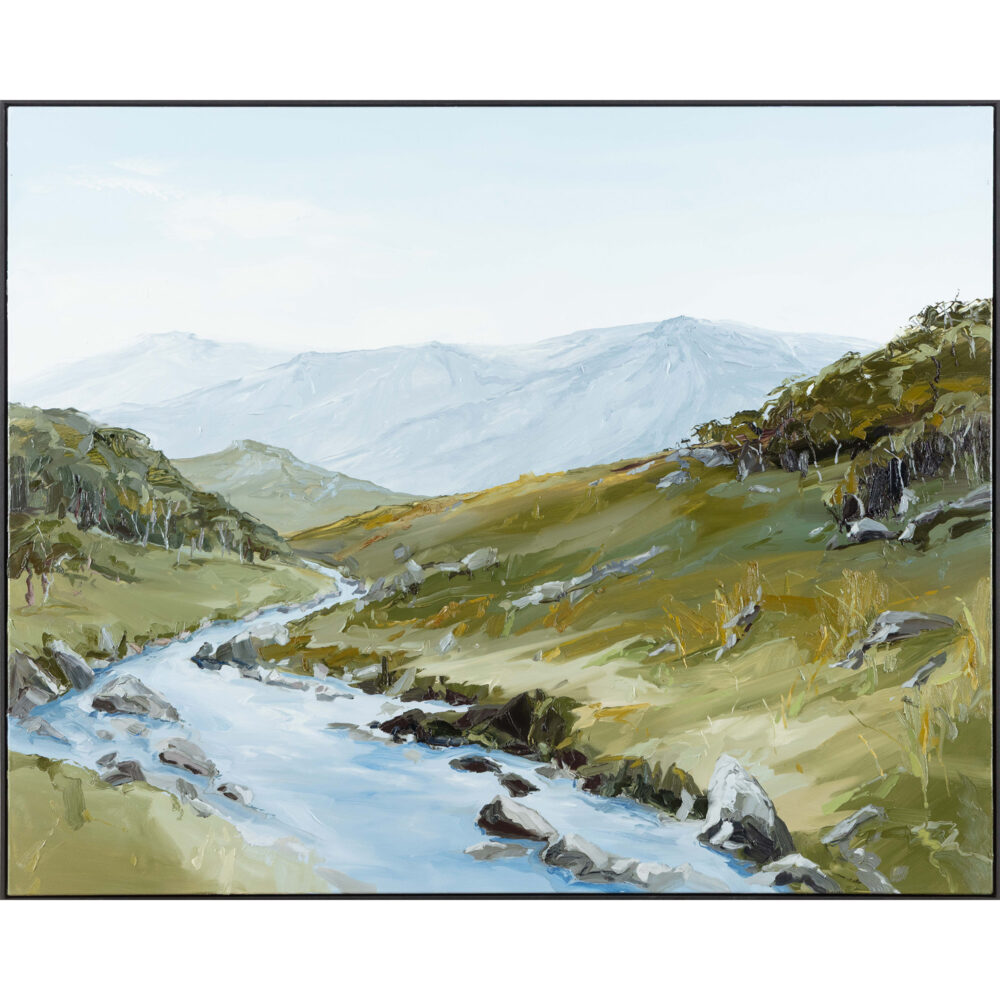
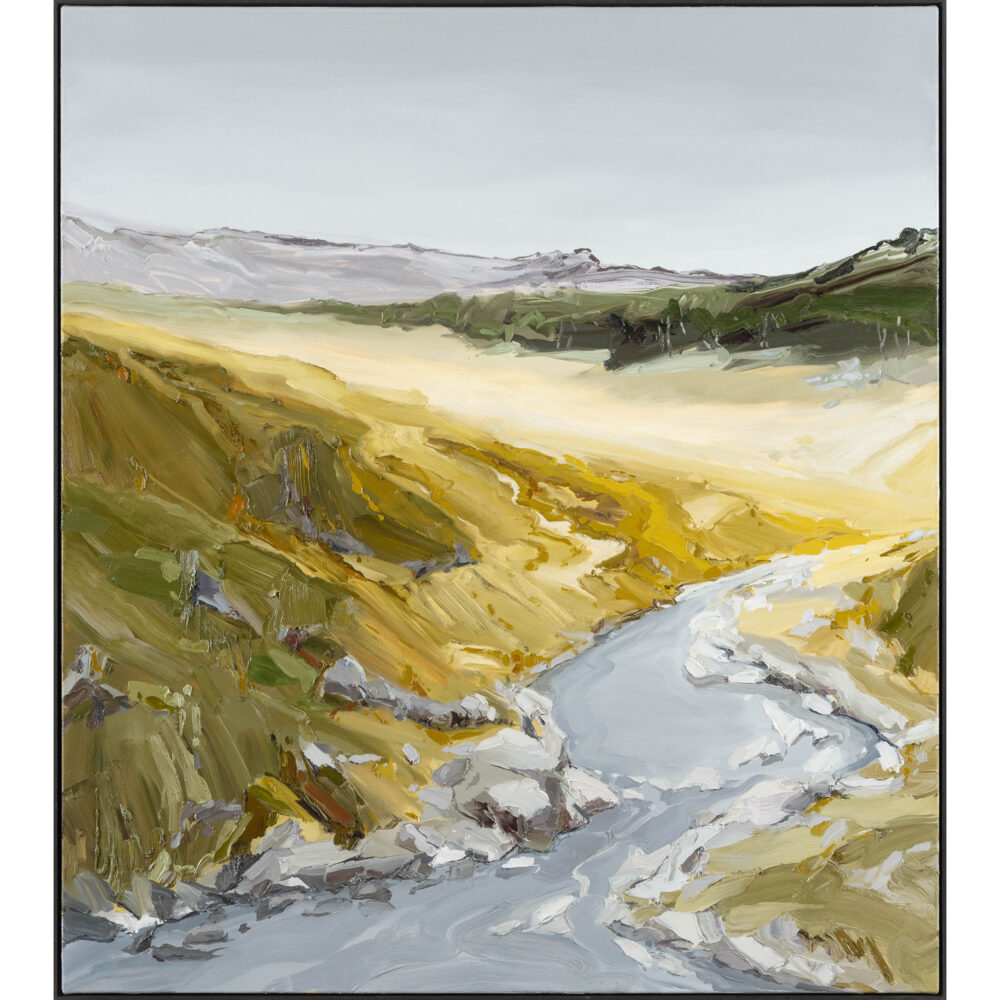
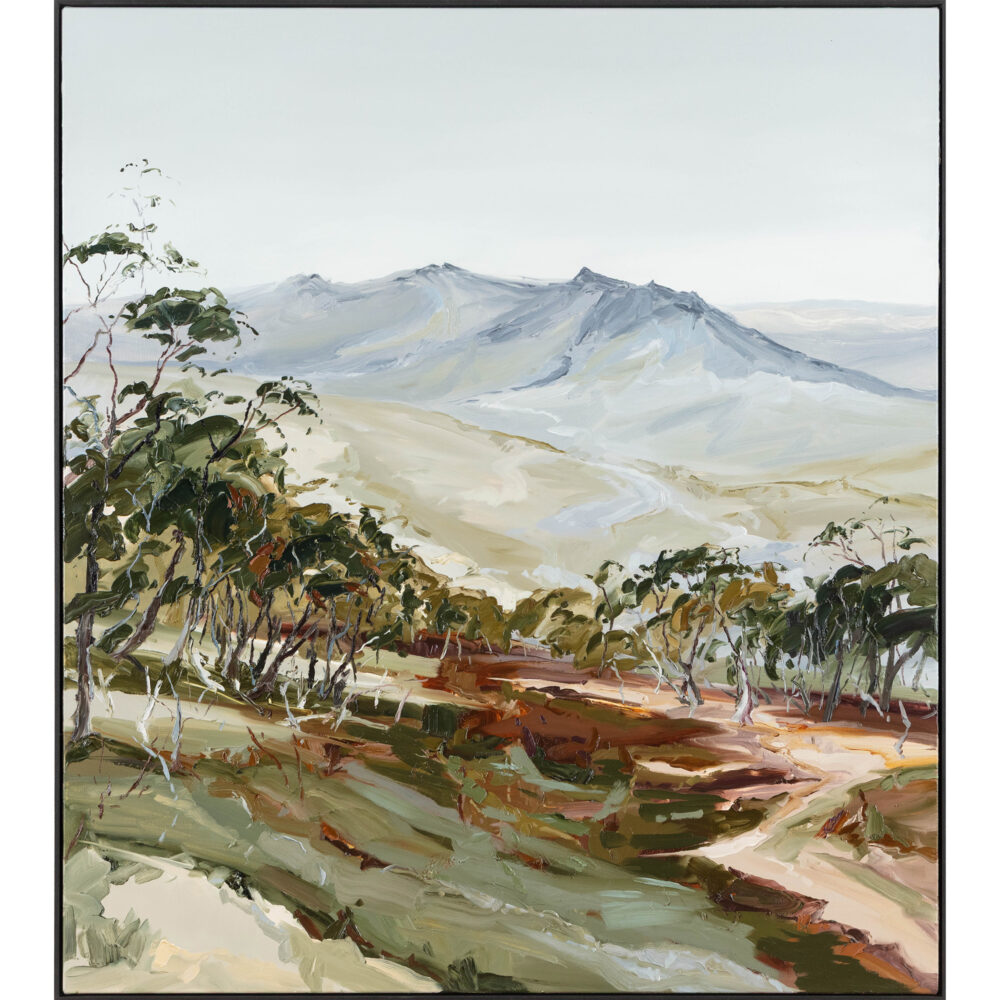
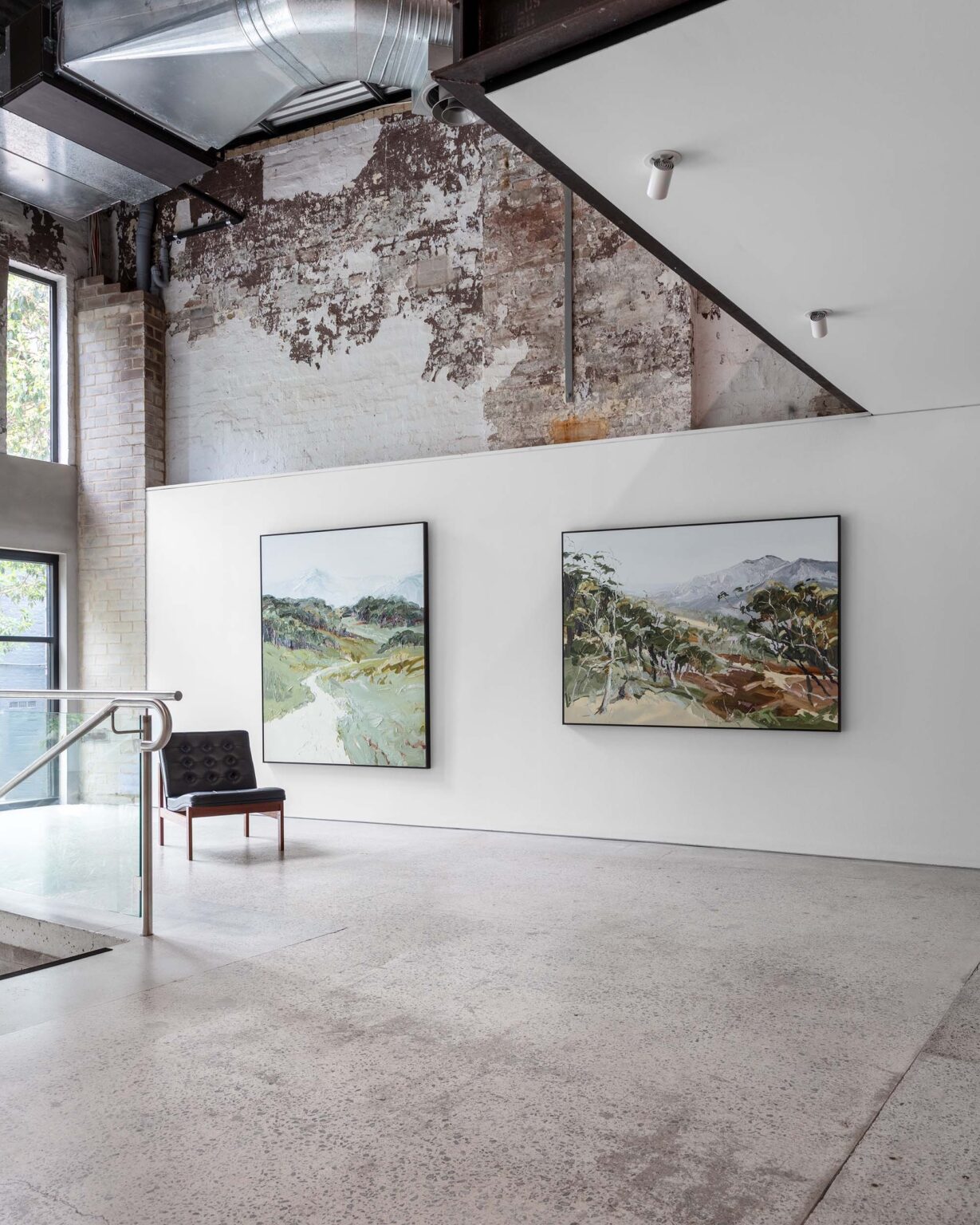
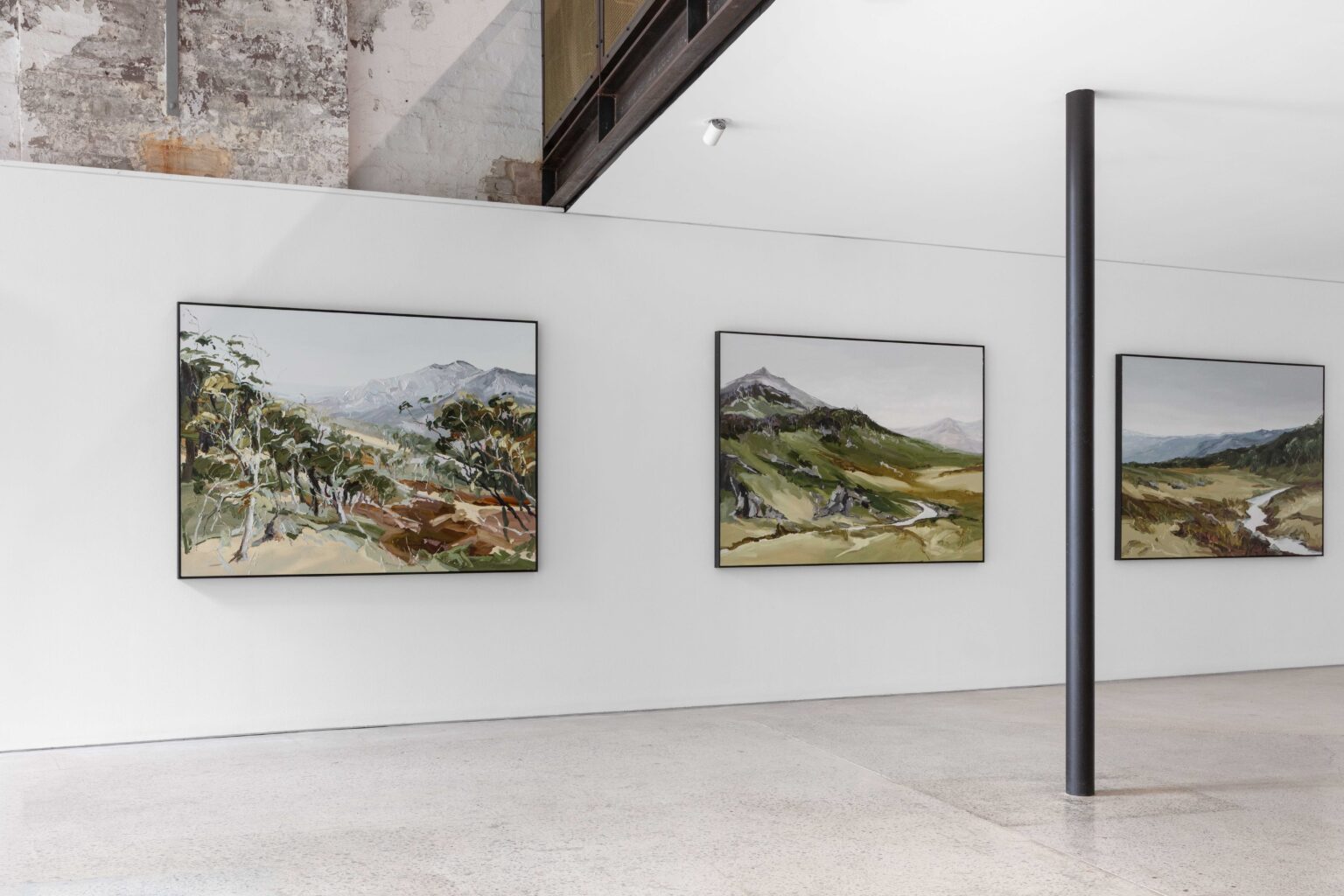
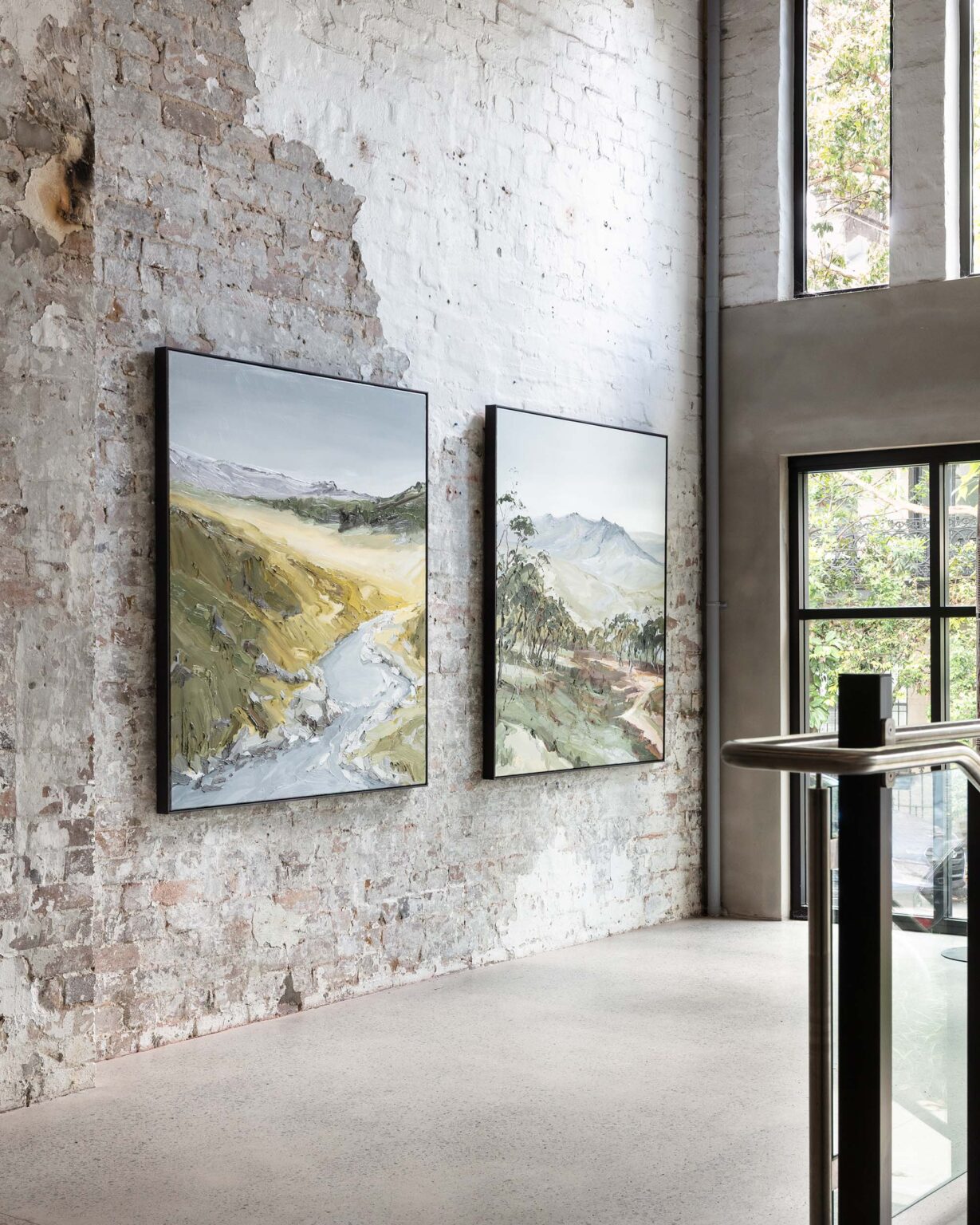
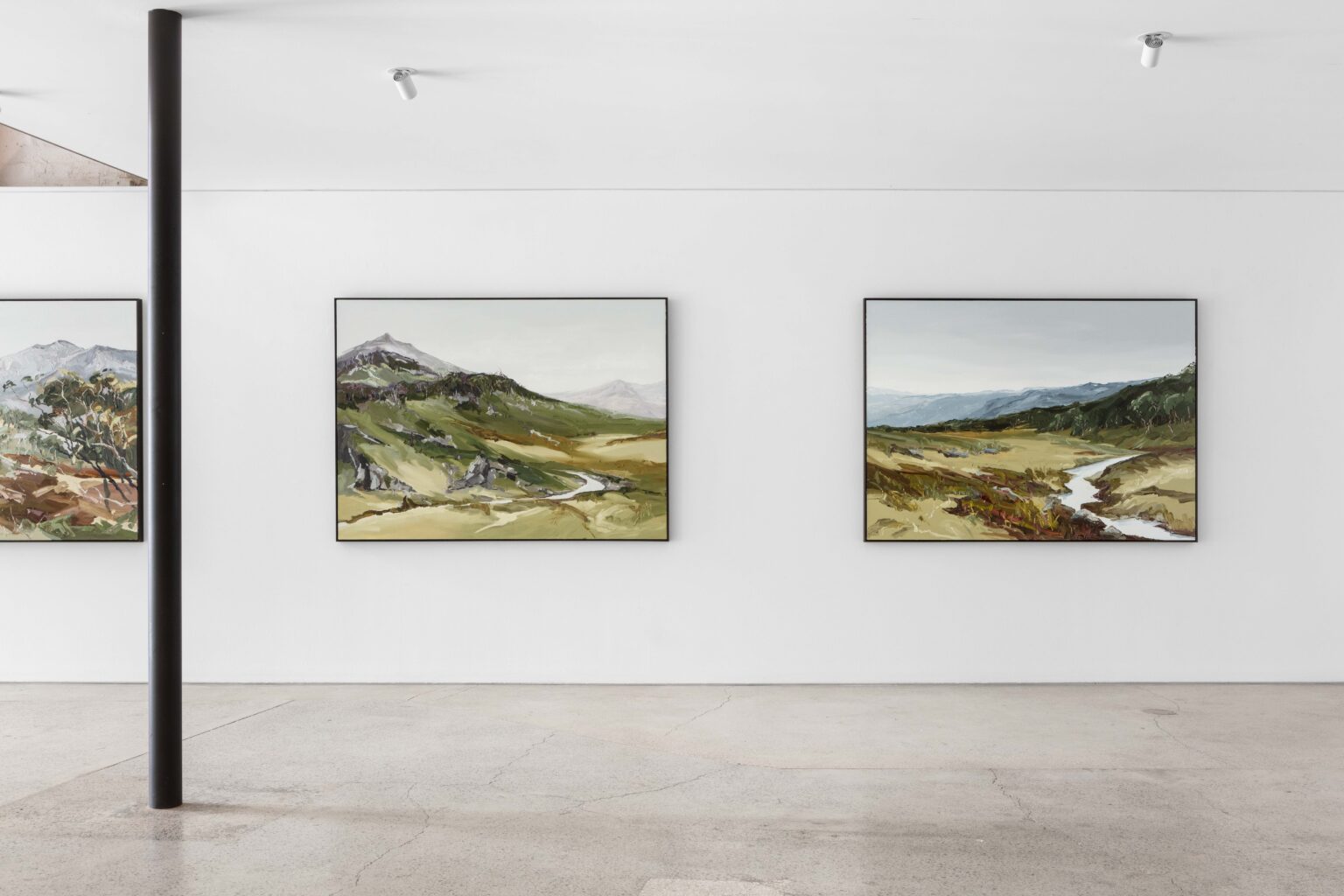
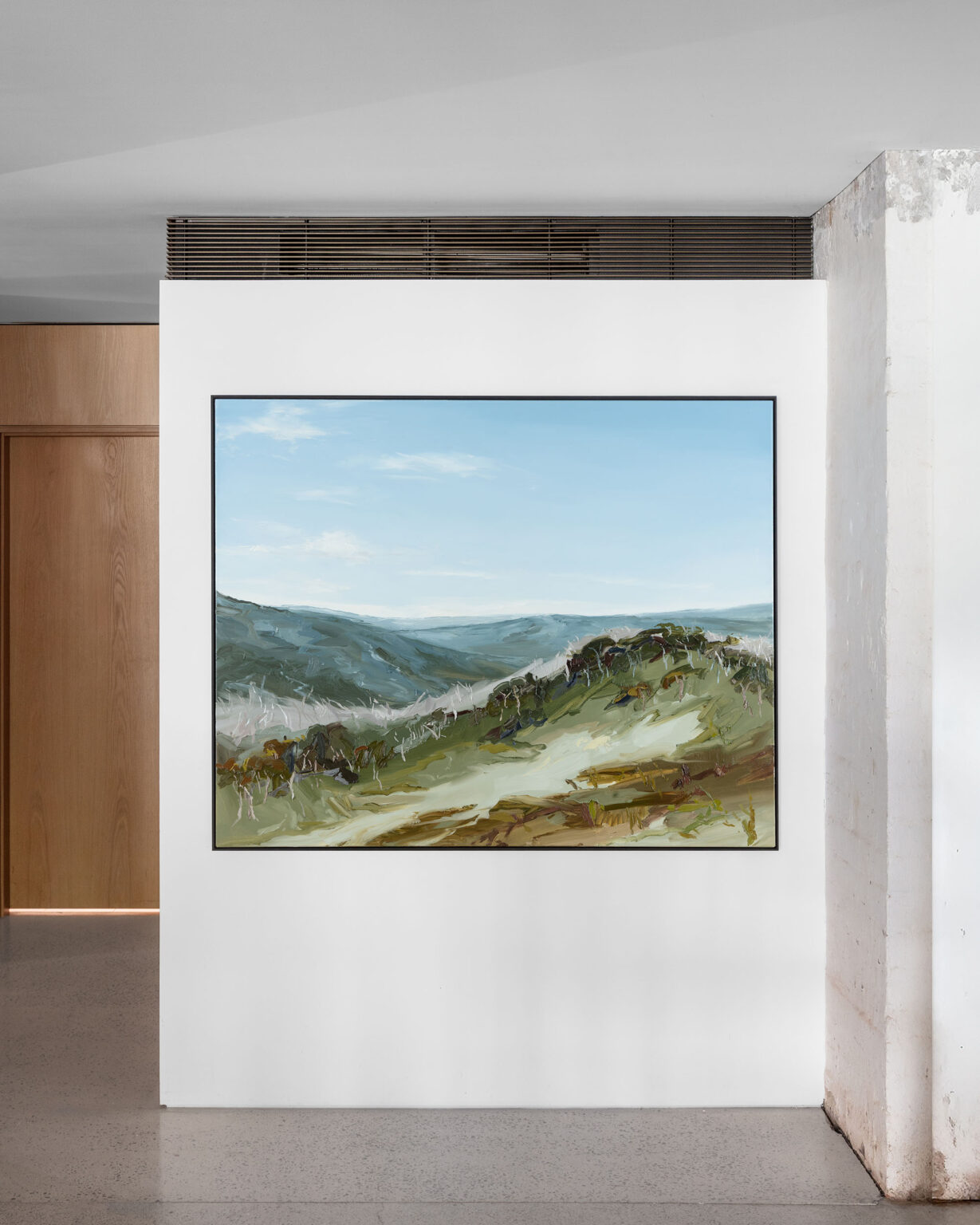
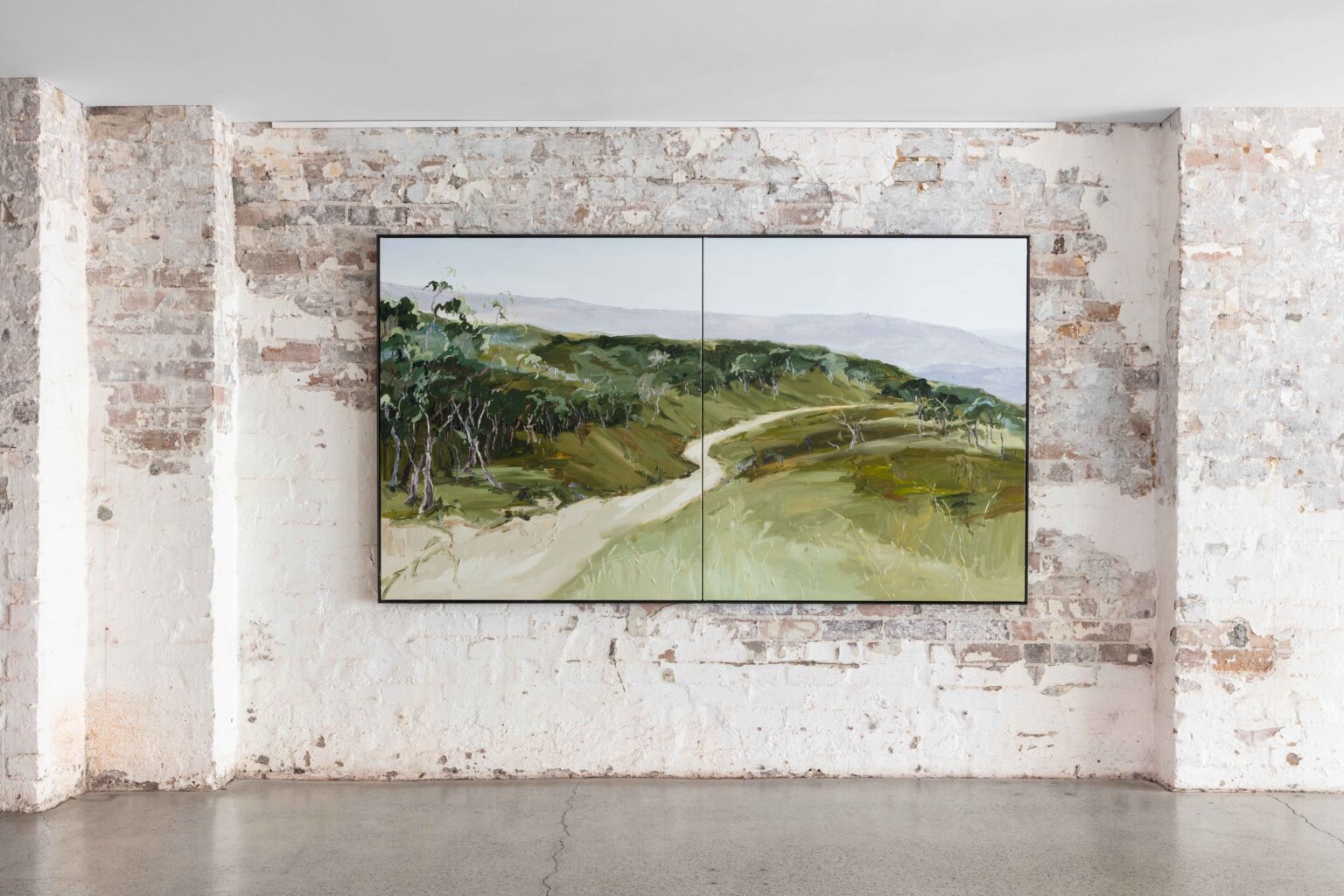
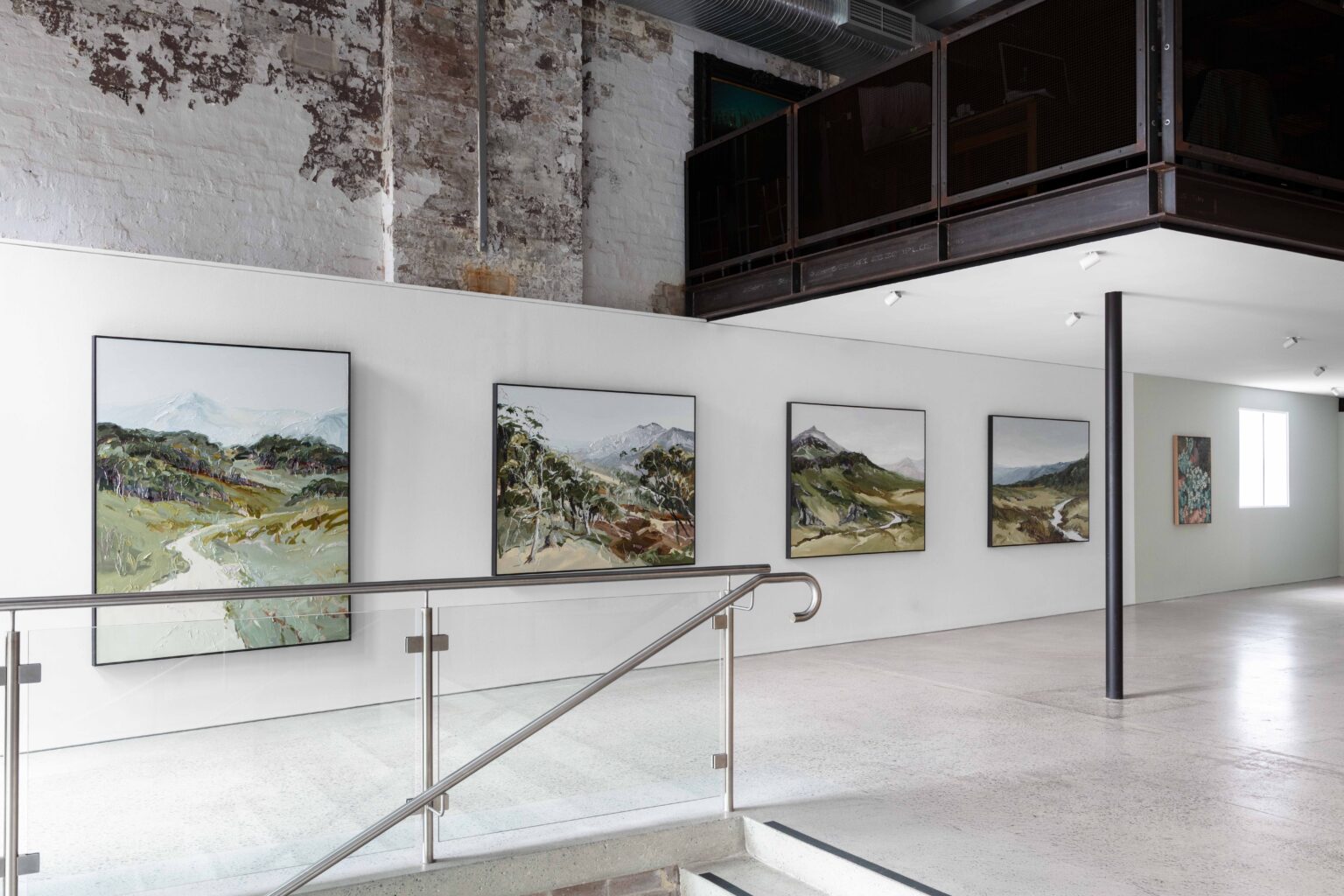
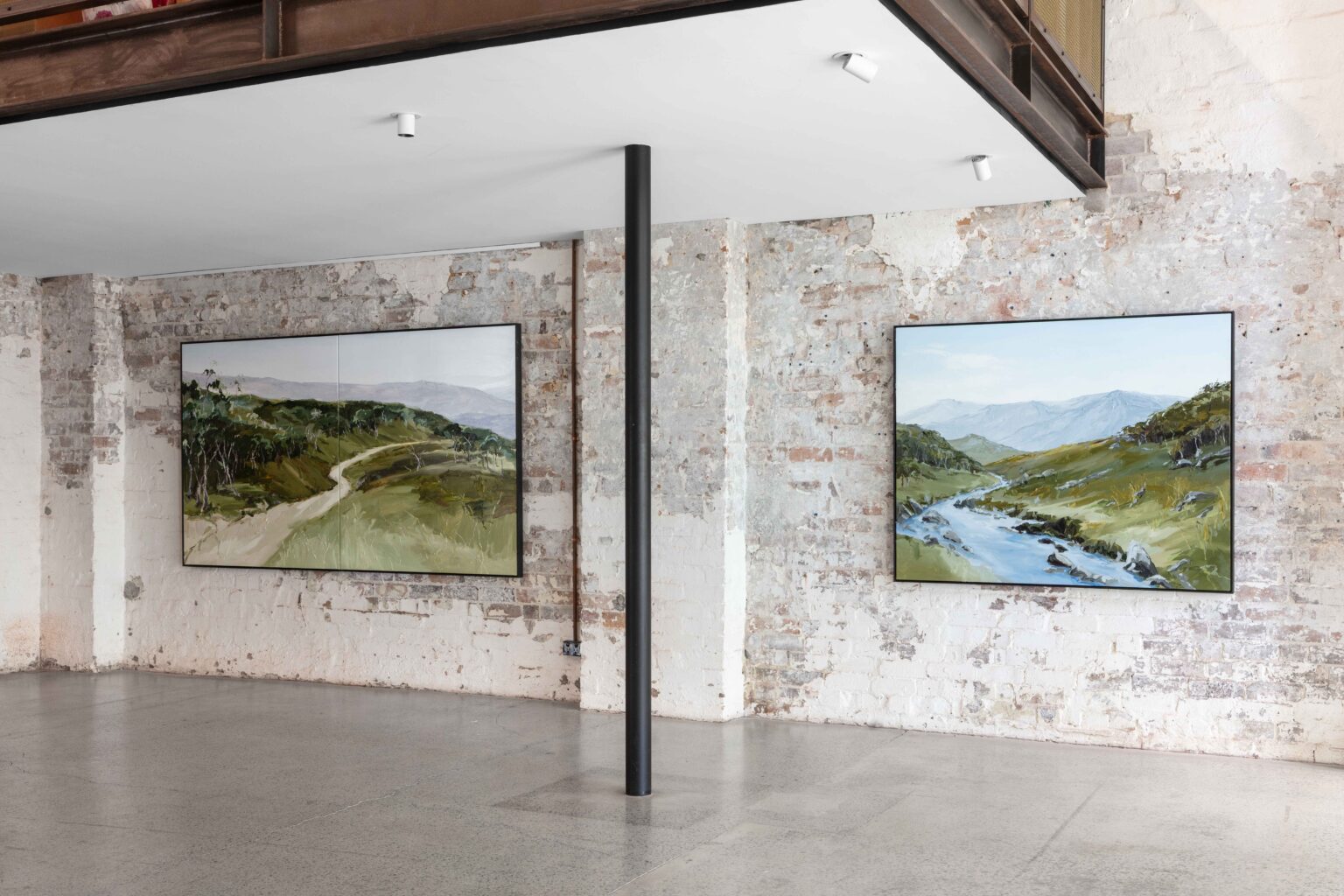
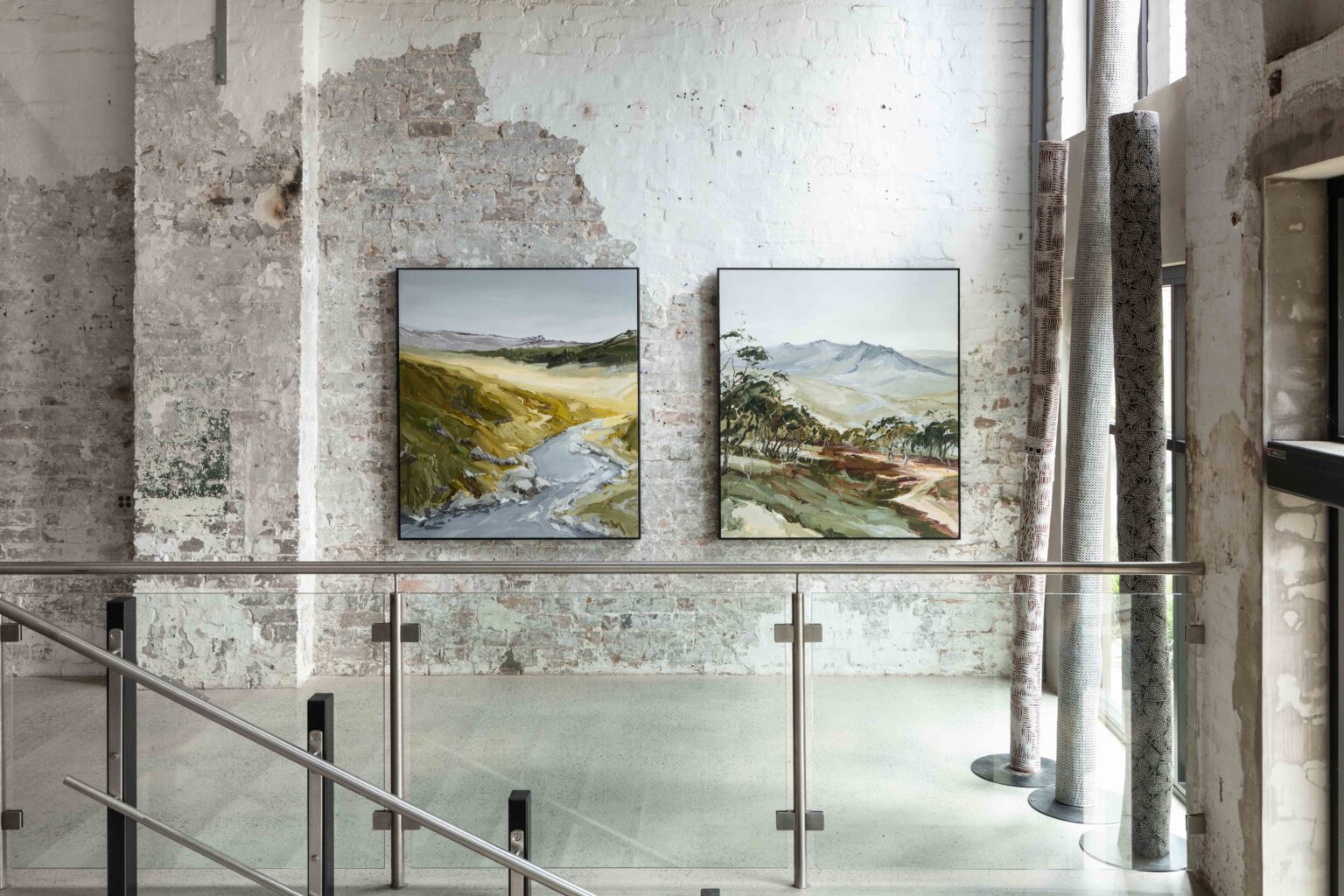
Michael Reid Sydney is delighted to present A Rhythm of Peaks and Flows – the latest solo exhibition from celebrated Dyarubbin/Hawkesbury-based contemporary painter Julz Beresford. A finalist in this year’s Hadley’s Art Prize and one of the most in-demand painters in our flagship Eora/Sydney gallery’s stable, Beresford returns to one of her most enduring subjects with this new series, capturing the epic peaks and winding waterways of the Snowy–Monaro region.

For Beresford, immersion in the landscape is an embodied act. “Being there gives you a sense of openness – your senses are alive, so you feel things rather than just look,” says the artist, who beautifully distils rugged alpine topography and shifting light with dramatic and expressive painterly sweeps of thick impasto paint and soft gradations of green. “These sensations are what I hold onto back in the studio. My gouache sketches remind me of how it felt. I have no fixed intention in the landscape; it’s about the feeling of being there.”

Back in her studio, Beresford translates those memories into moody canvases where sculptural brushwork and fluid gesture echo the rhythm of water and the pulse of the land. “You journey through a place just like you journey through a painting,” she says. “It’s a transfer of pure happiness – being lost in the moment, absorbed in nature.” A Rhythm of Peaks and Flows marks a new summit for Beserford as she pushes her practice towards ever-more heroic, expansive and immersive terrain. Now online and on view at Michael Reid Sydney, the exhibition continues until 29 November.

Julz Beresford joined the Michael Reid Sydney + Berlin stable of represented artists in 2024 after a successful exhibition career over many years at our Northern Beaches gallery.

To discuss works from A Rhythm of Peaks and Flows by Julz Beresford or sign up for first access to the artist’s forthcoming projects, please contact dean@michaelreid.com.au

Join our mailing list
Interests(Required)
REGISTER YOUR INTEREST:
This field is hidden when viewing the form
Artist
This field is hidden when viewing the form
Centres
This field is hidden when viewing the form
Interests