



MICHAEL REID BEYOND
Chelsea Gustafsson
ARTIST PROFILE
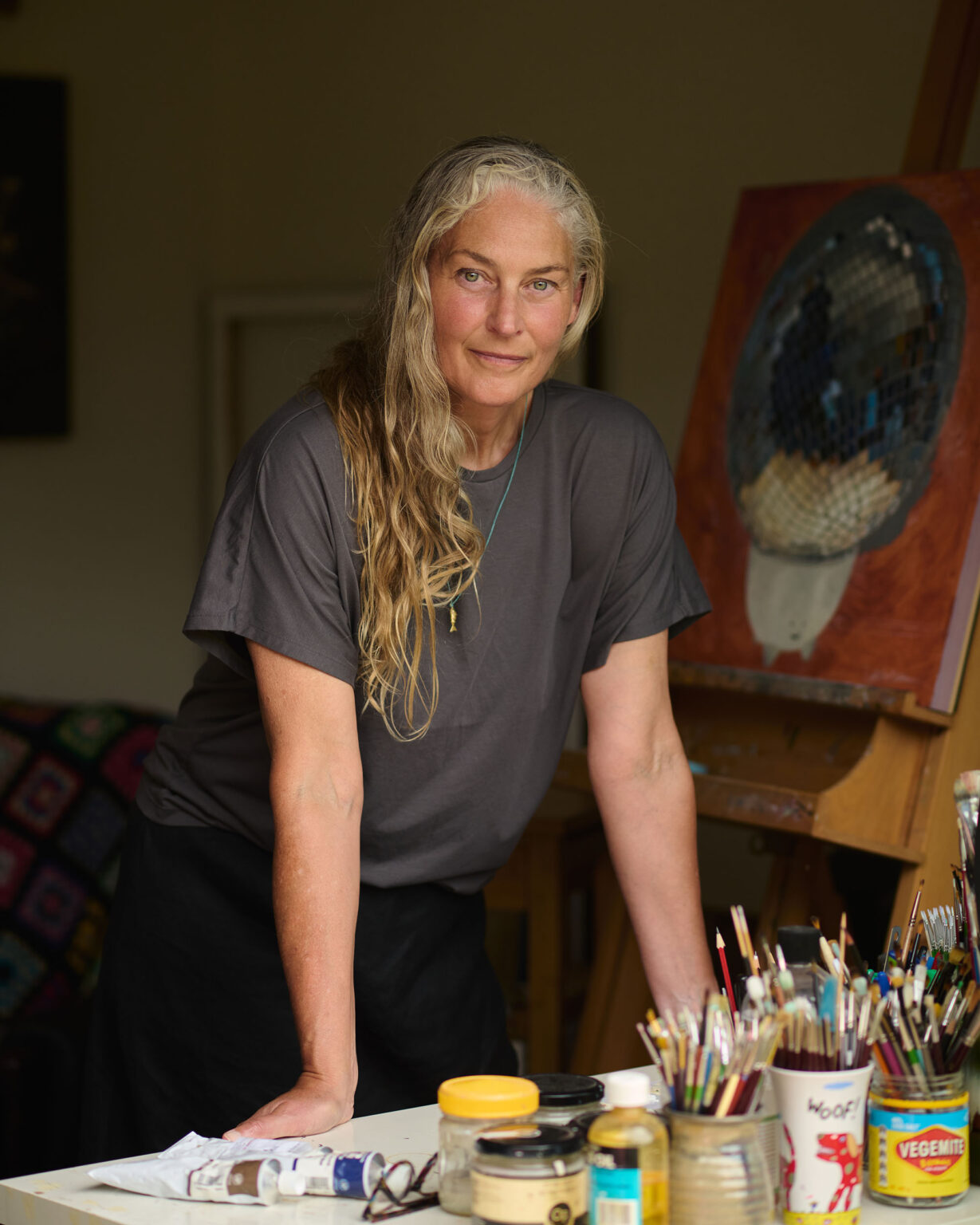
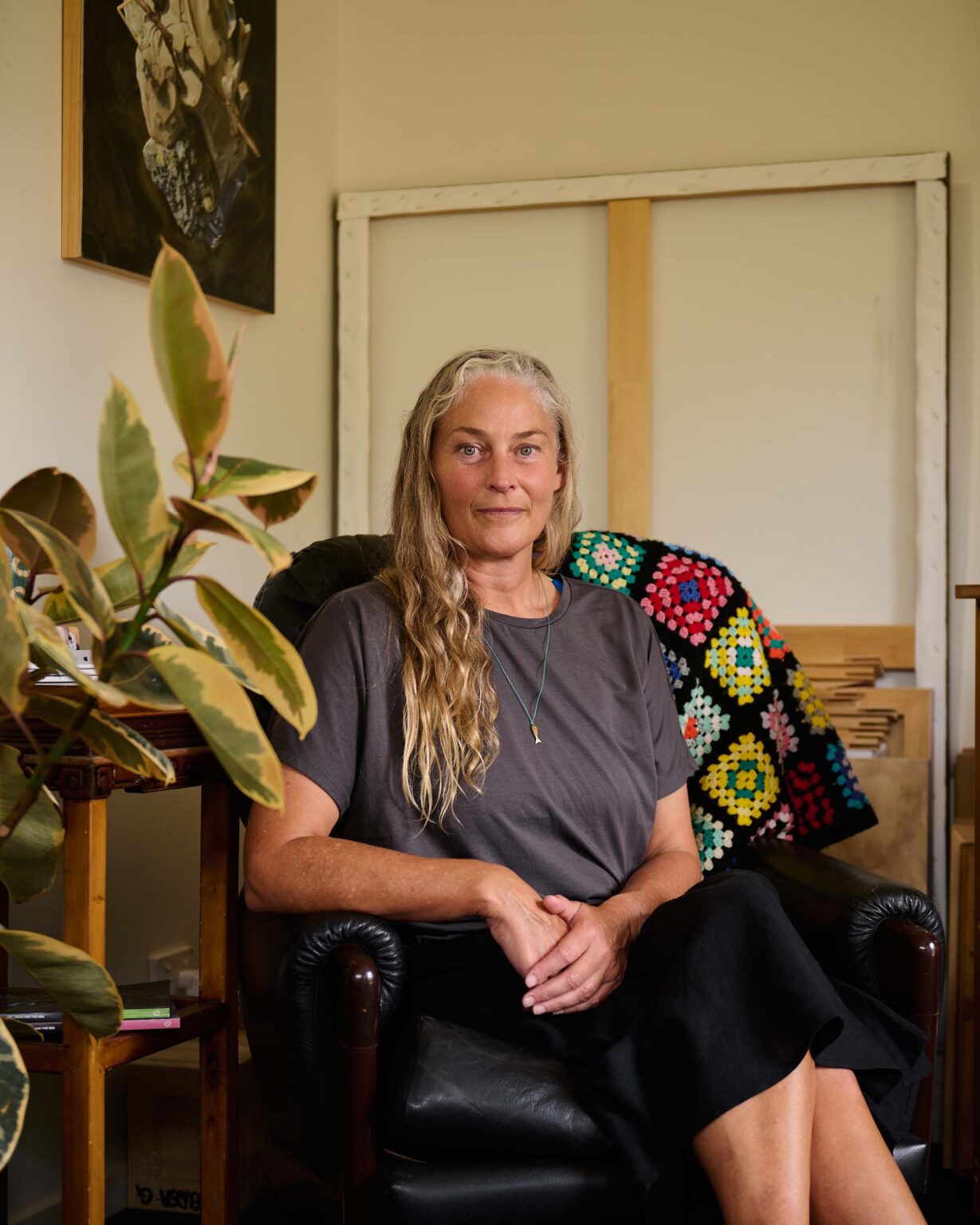
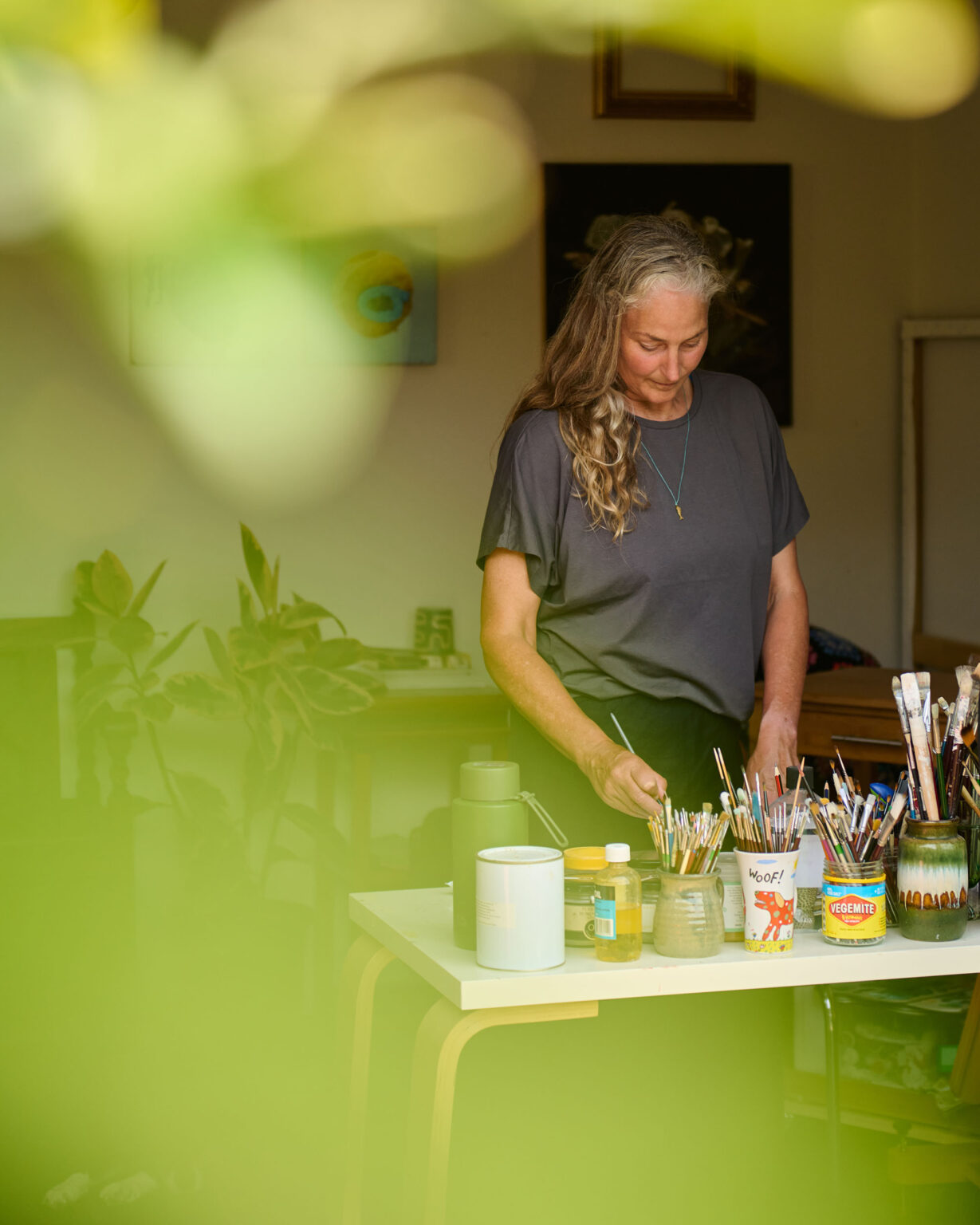
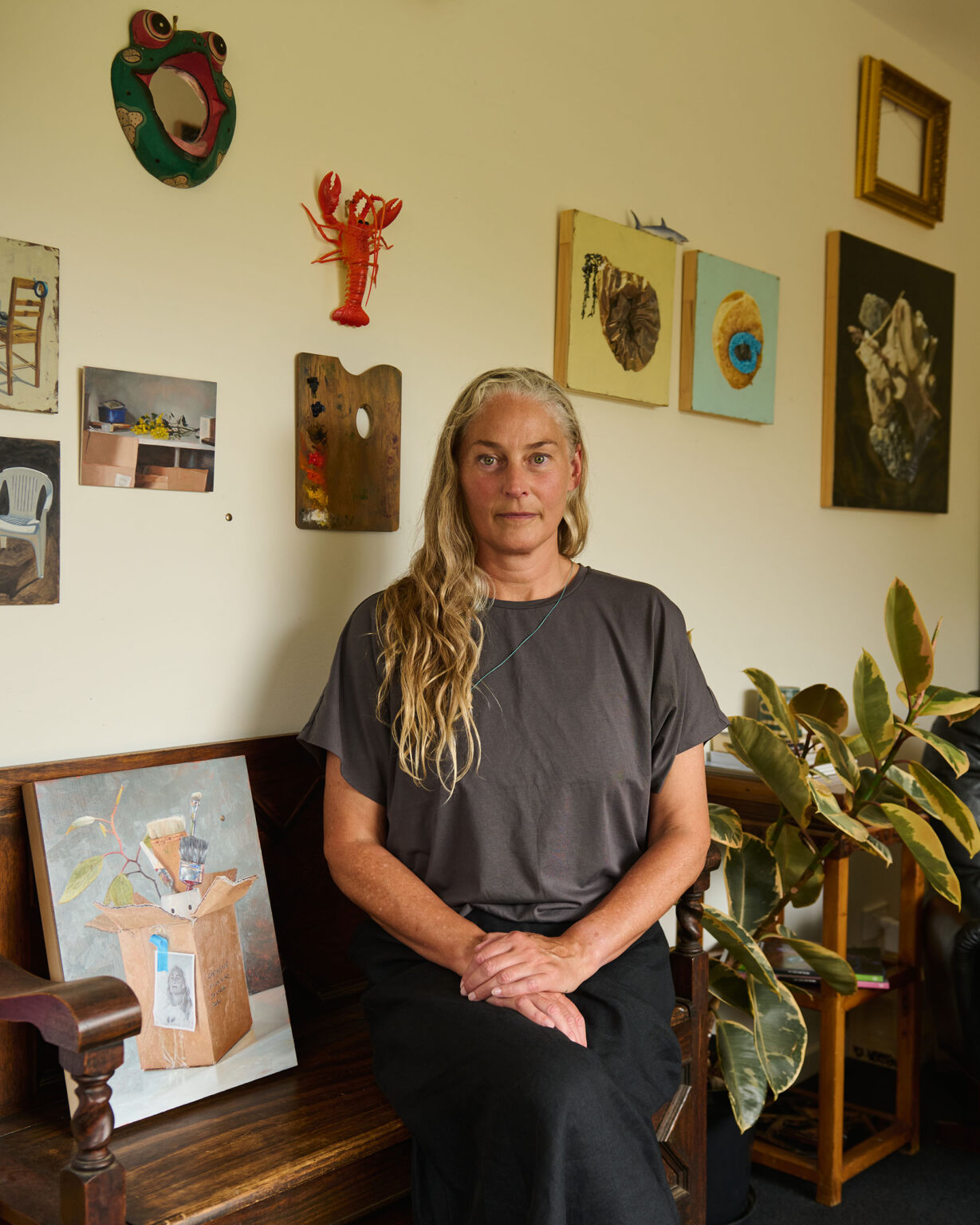
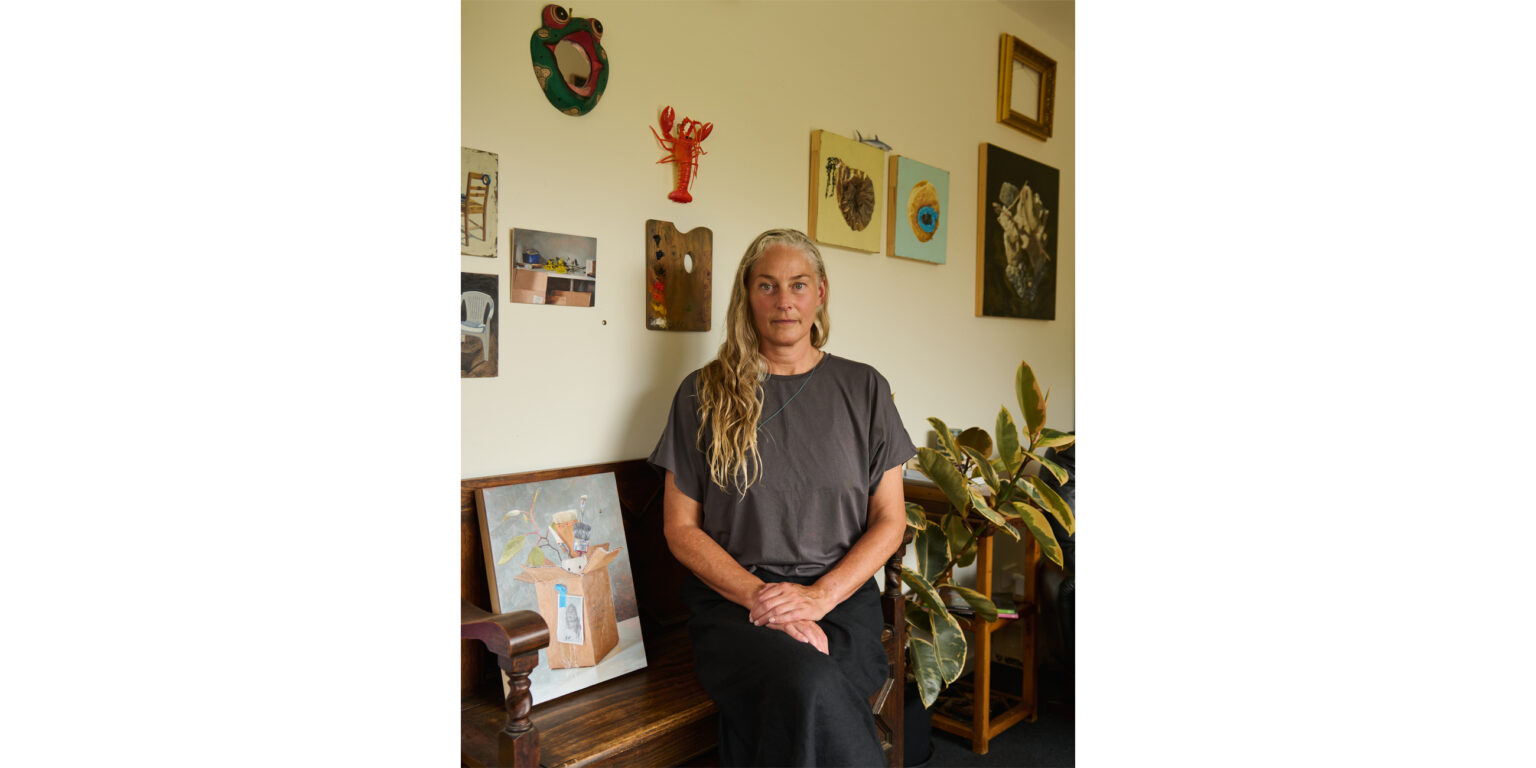
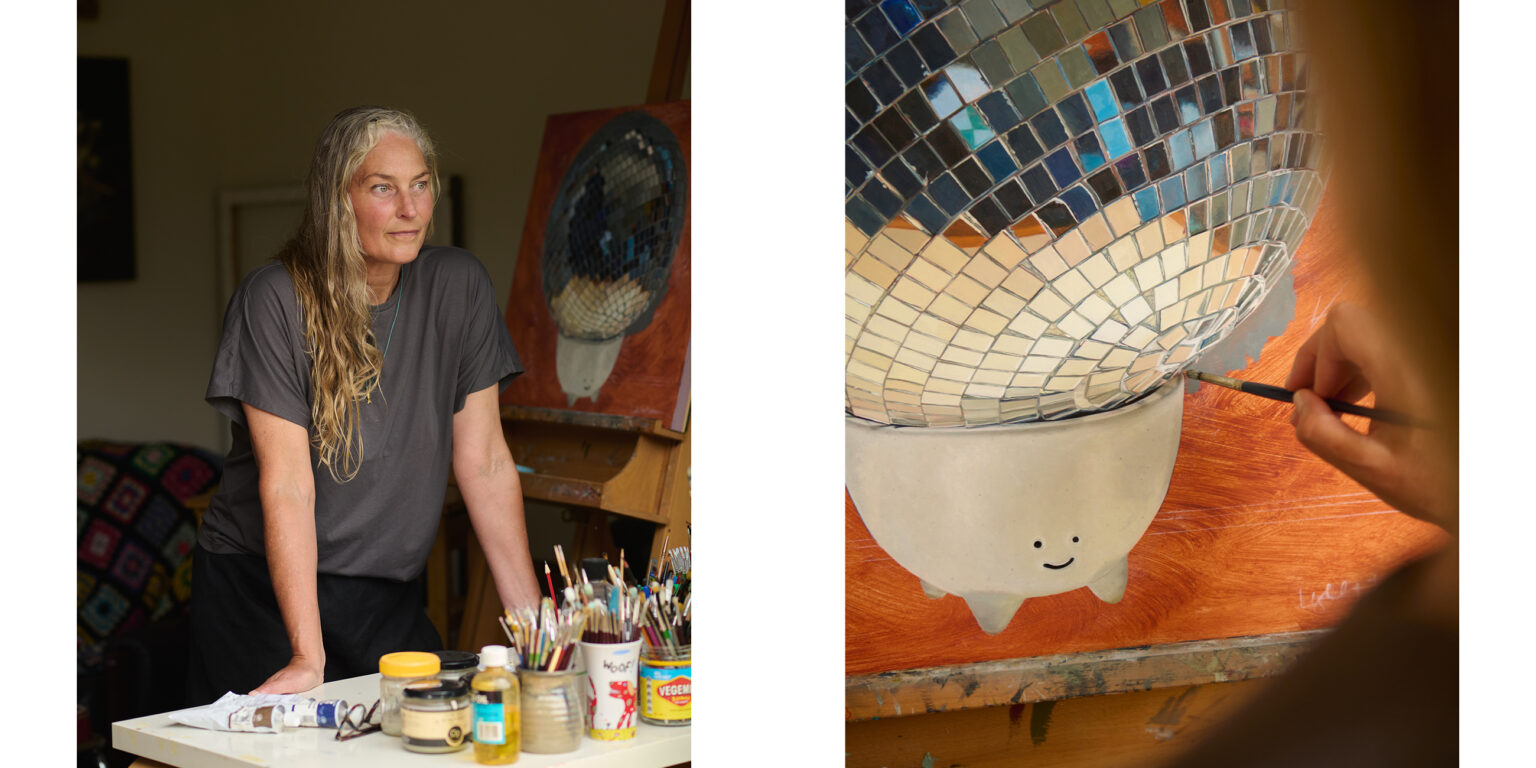
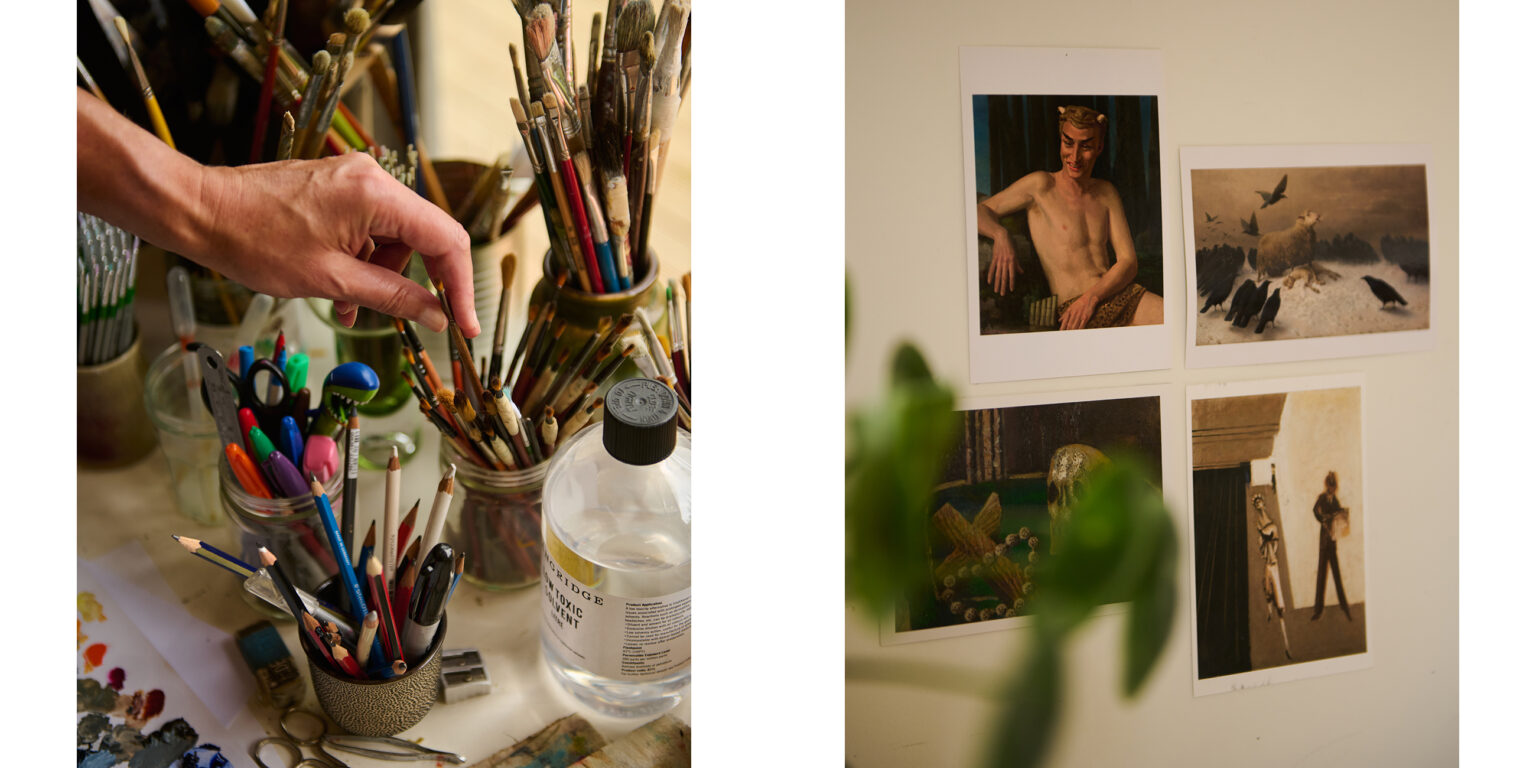
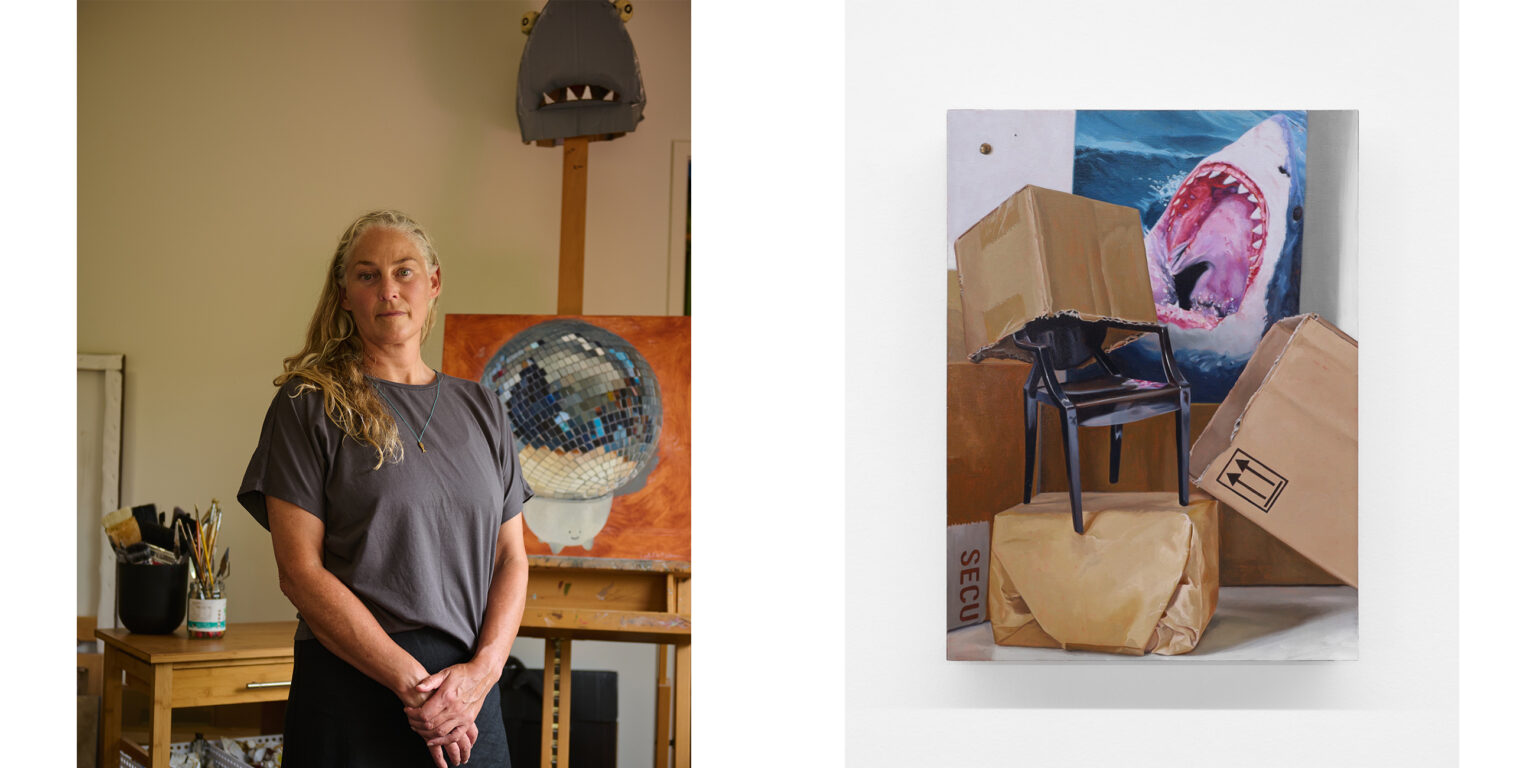
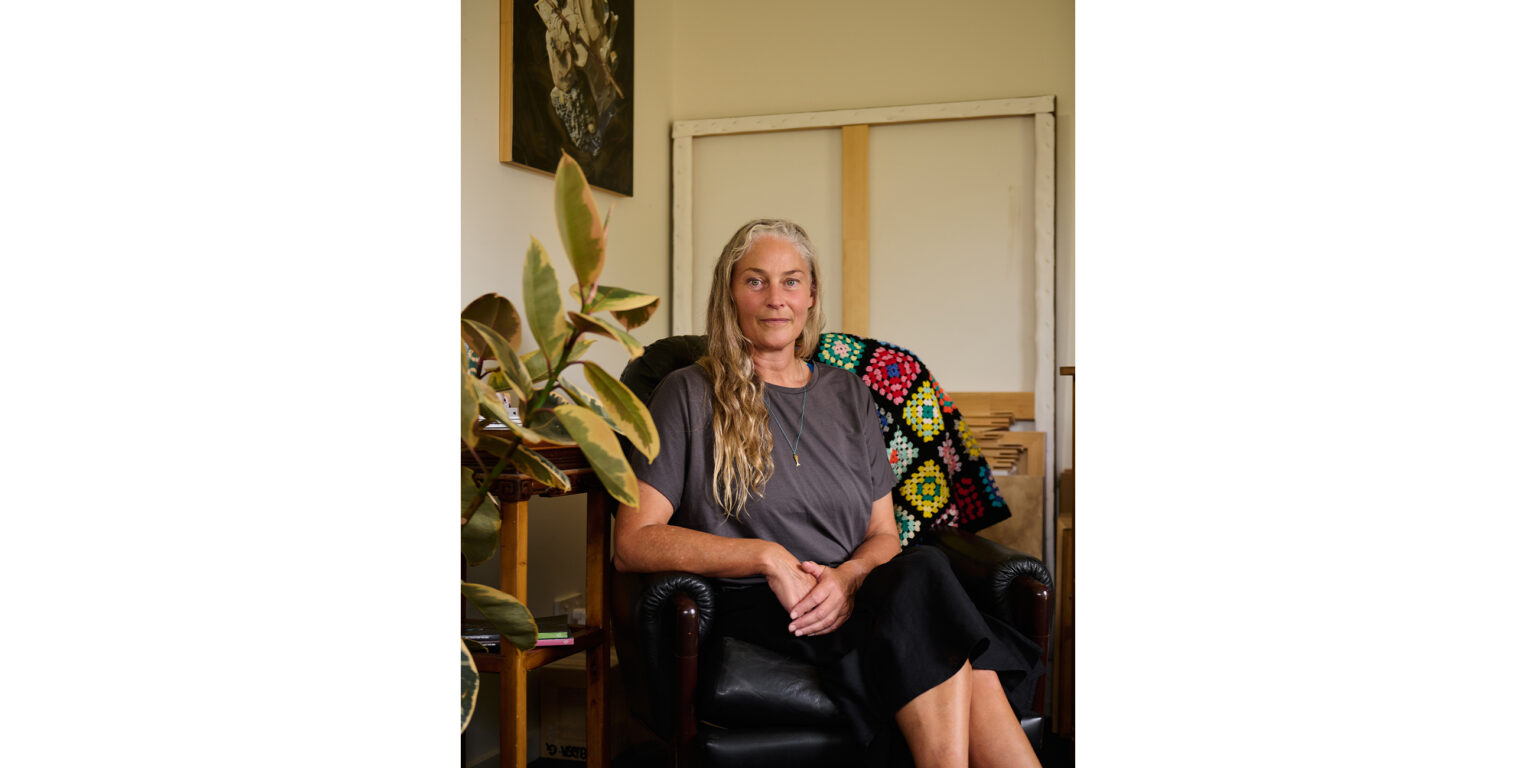
In the lead-up to the announcement of Chelsea Gustafsson’s representation by Michael Reid Berlin, the gallery team visited the artist’s studio in the Victorian coastal town of Barwon Heads to discuss the ideas, experiences and recurring motifs that shape her distinctive painting practice.
“Painting for me is a contemplative response to the news and events going on in the world, the books I’m reading, and podcasts and music I’m listening to,” says Gustafsson in the resulting profile, now available to explore below alongside a special online release of newly available paintings. “Often, I find myself drawn to an object or image and it’s only through the repetition of portraying it that I begin to understand its presence in my work.”
To sign up for early previews and priority access to forthcoming bodies of work by Chelsea Gustafsson, please email colinesoria@michaelreid.com.au
What were some of your early creative influences?
My earliest influences came from connections with artists working in 3D. I grew up in a small rural community and in my early teens I was introduced to a couple of artists that were living in a little hut they’d built in the Snowy River National Park. They would have been the first working artists I’d encountered, and I suppose they took me under their wings and introduced me to ceramics. Then later in my twenties I met another couple of artists, Dean Colls and Louise Skacej, who trained me up as their studio technician. I got to discover a wide variety of techniques and skills, and had the opportunity to work on some amazing projects with them. So although my passion has always been with painting, I would say through these connections it normalised the idea of being an artist, especially since we’re talking about life before the internet and access to the infinite variety and examples of contemporary artists now.
What led you to pursue painting as a career?
I think I’ve just always thought of myself as a painter and by having these early connections with working artists it equipped me with the knowledge that there is not just one formula on how to be an artist and what it looks like, other than turning up and being consistent. The coincidence that these artists, who were essentially my mentors, were all working three dimensionally may have unconsciously influenced how I chose to present images two dimensionally. My early paintings were often renderings of objects or figures floating in space. Over time I kept refining how I wanted to describe them as the hero of an image and I also began thinking about how they can be presented to support a narrative.
How did you develop your approach to painting?
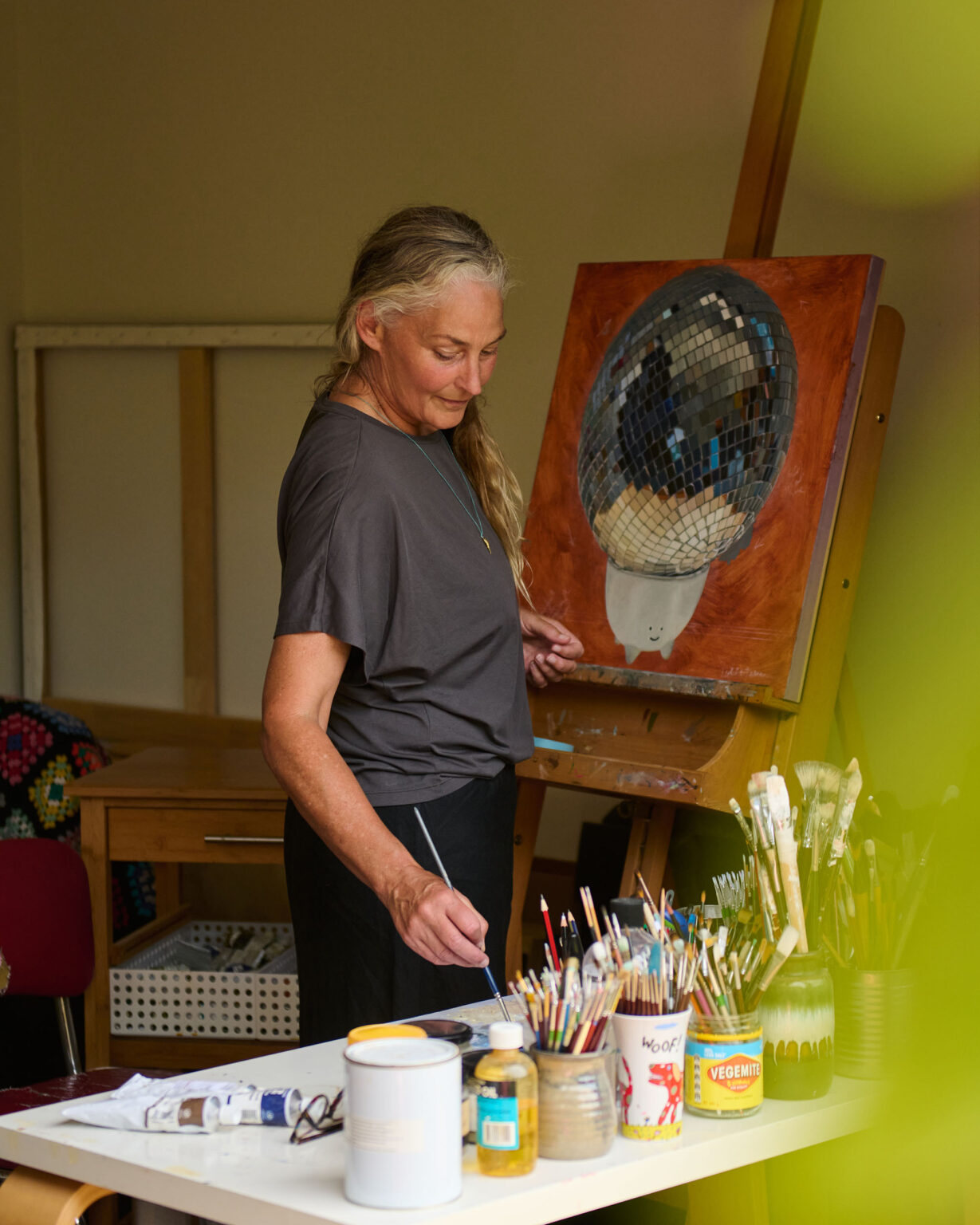
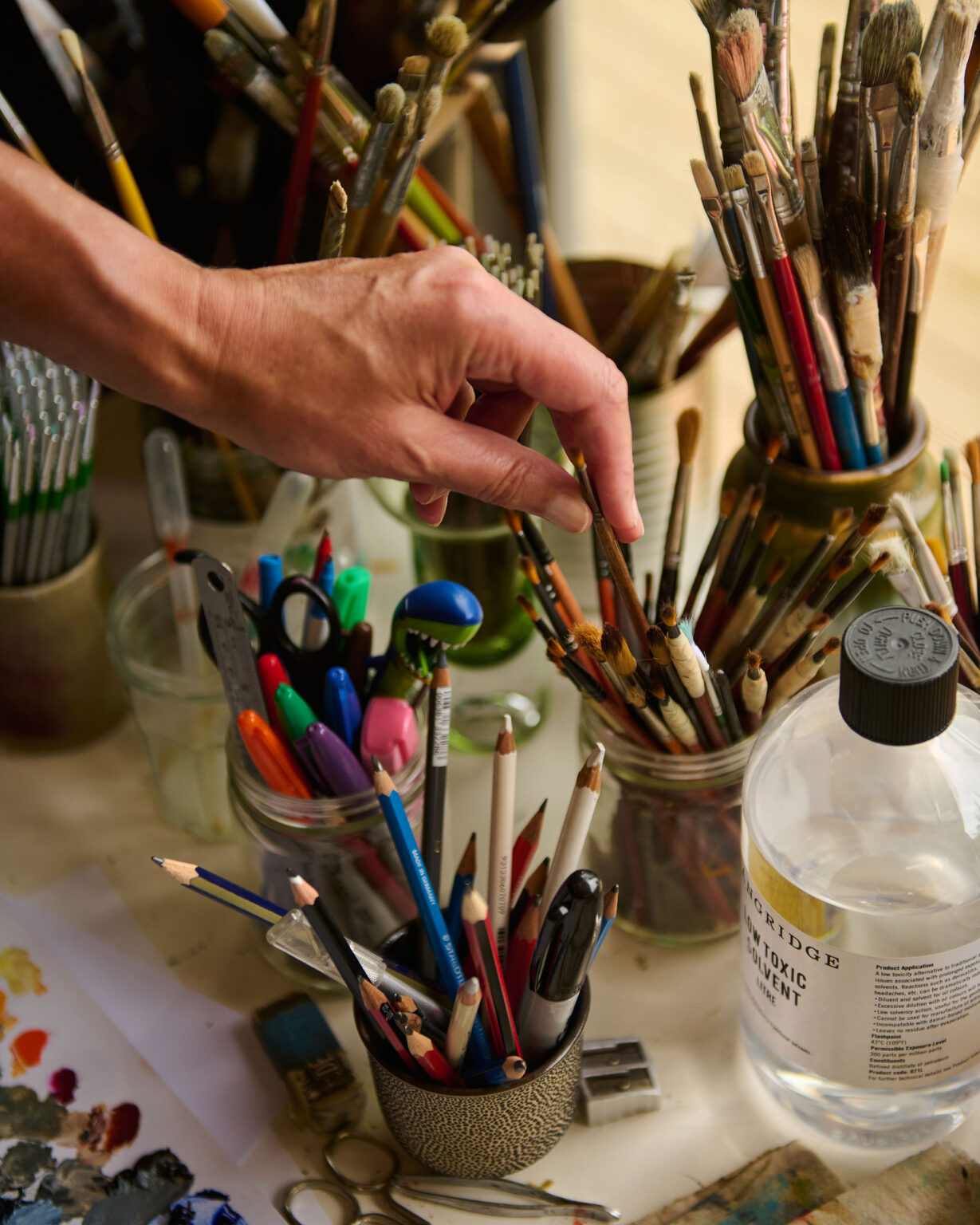
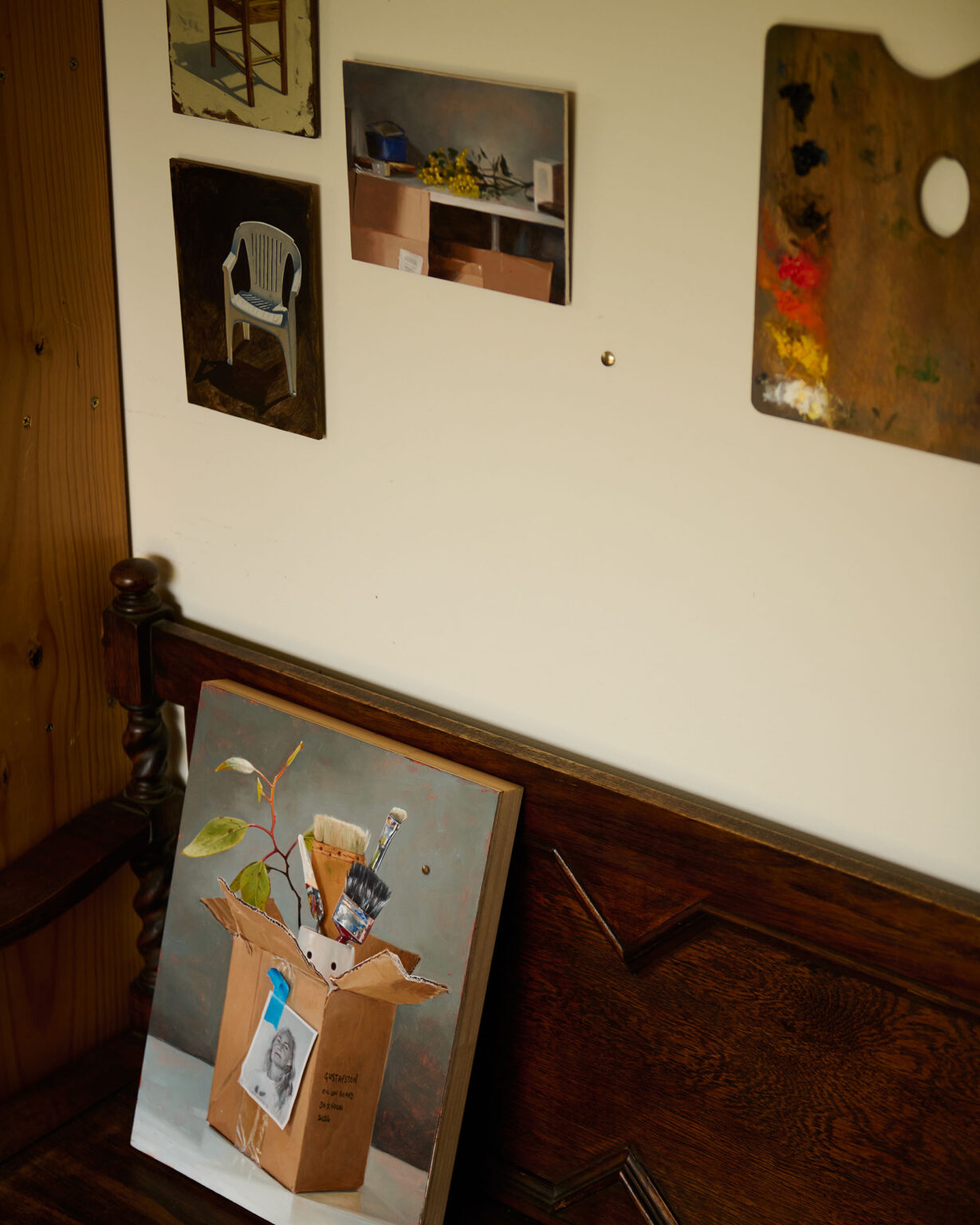
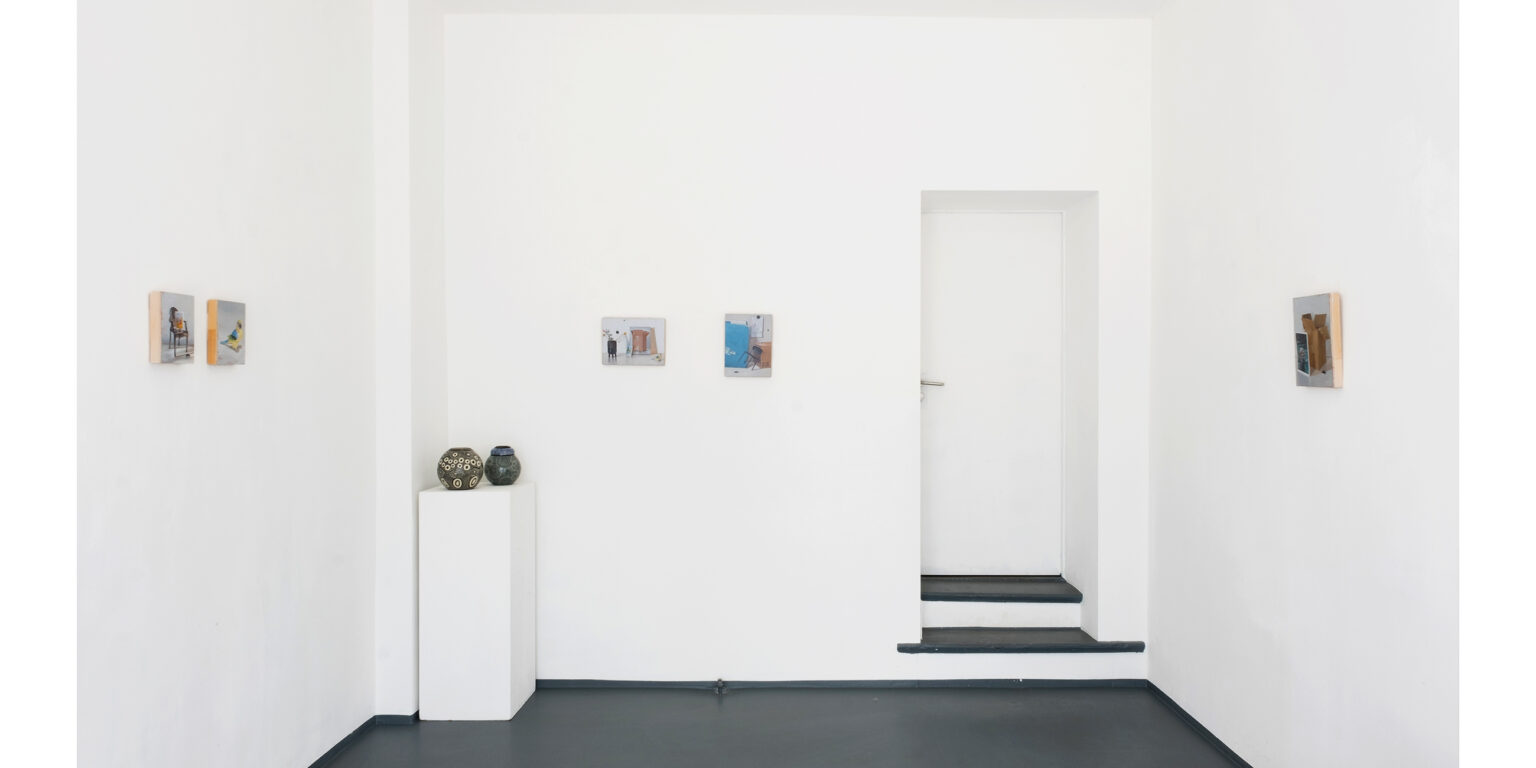
Initially the scale of my paintings came from convenience and necessity at the time. Working on bedroom floors in share houses, out of a backpack overseas and then from the end of our dining table as I kept an eye on my babies growing into little people. While I have a dedicated studio space to paint larger now, I’ve found my comfort zone is still in this smaller format. It sounds a bit counterintuitive, but I feel more expressive and experimental at this size. I apply paint quite thinly, sometimes wiping areas back or layering or shifting colours with glazes, and I find the smooth surface of the wood panels gives the opportunity to showcase brush work where needed.
What informs the subject matter of your paintings?
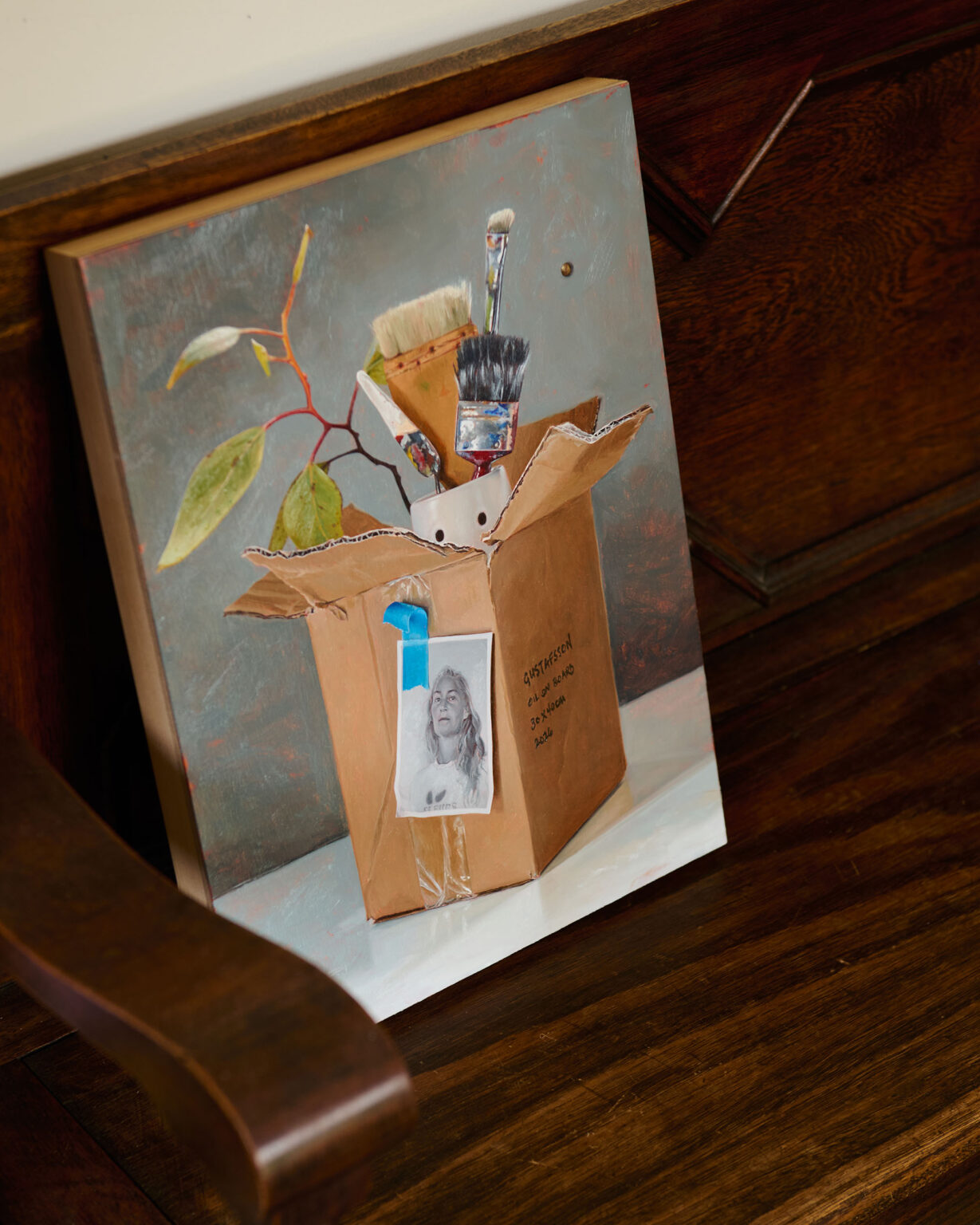
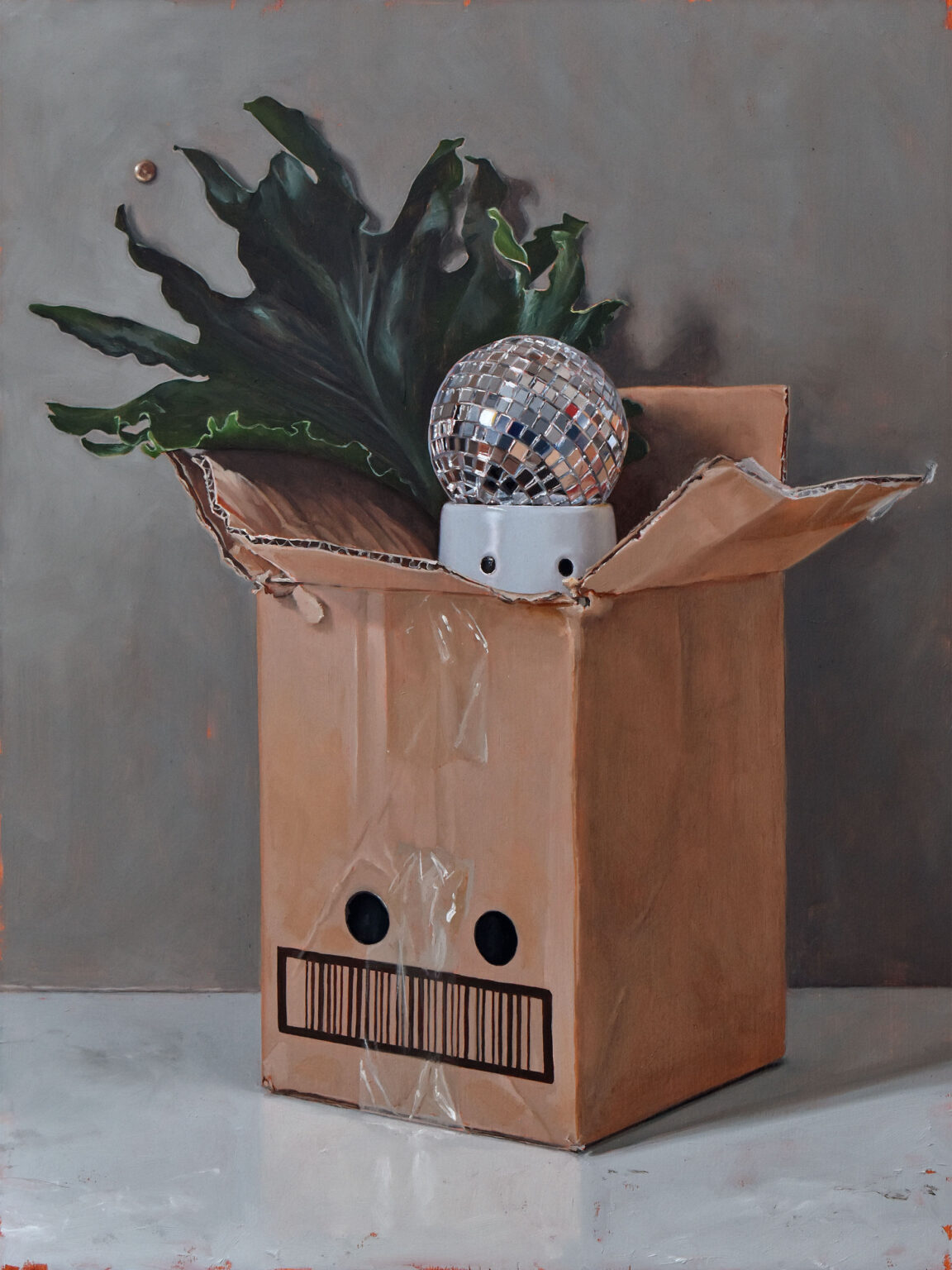
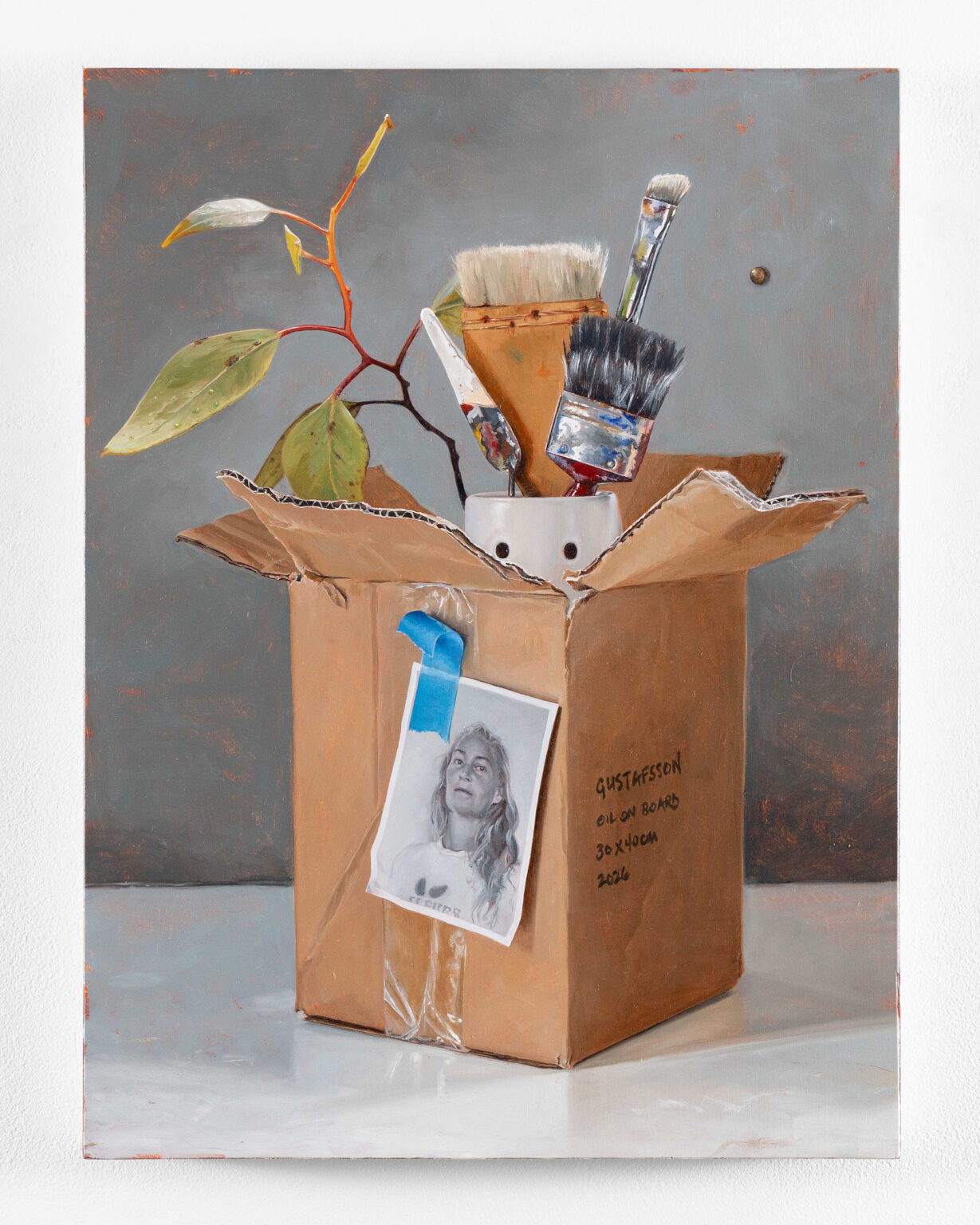
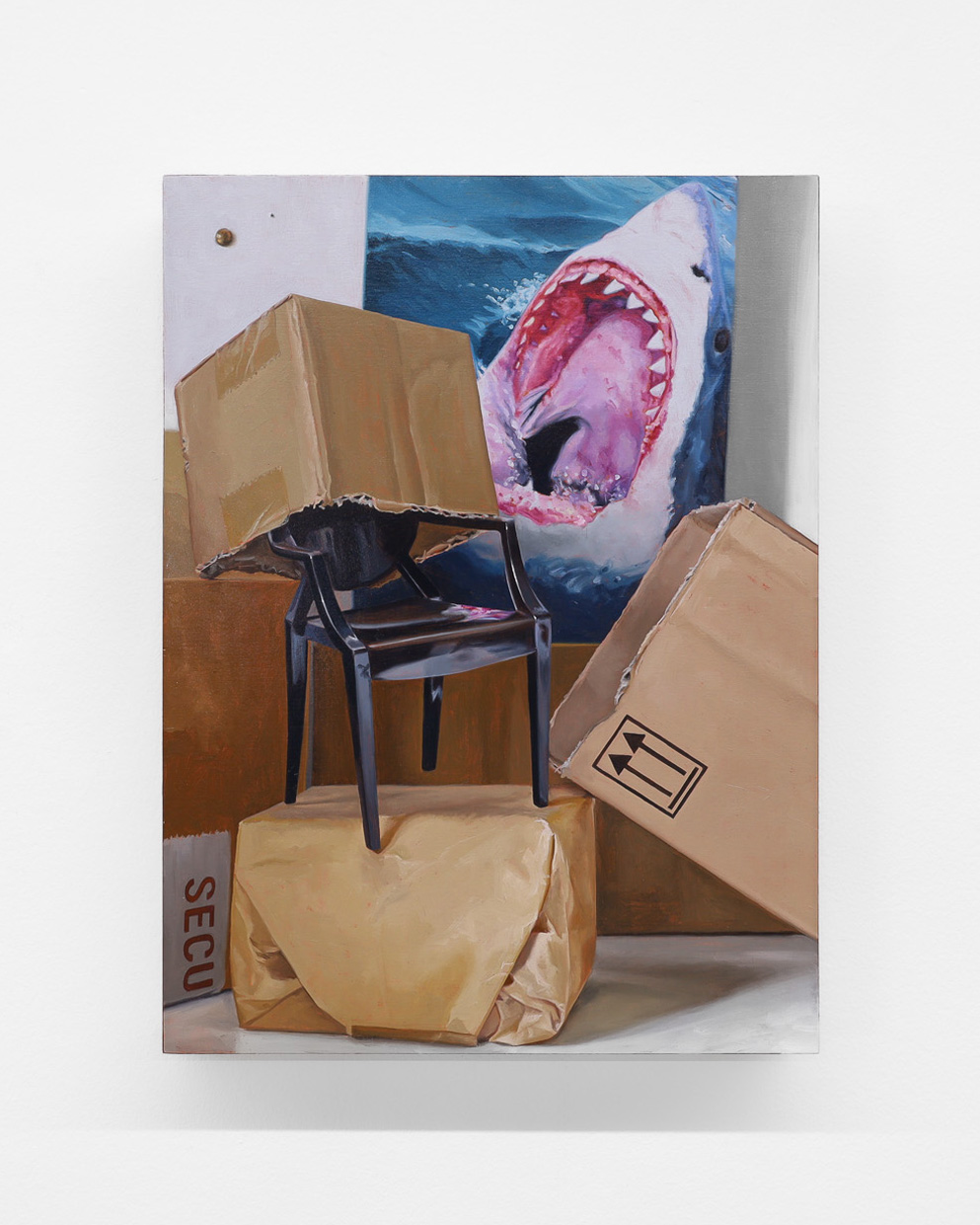
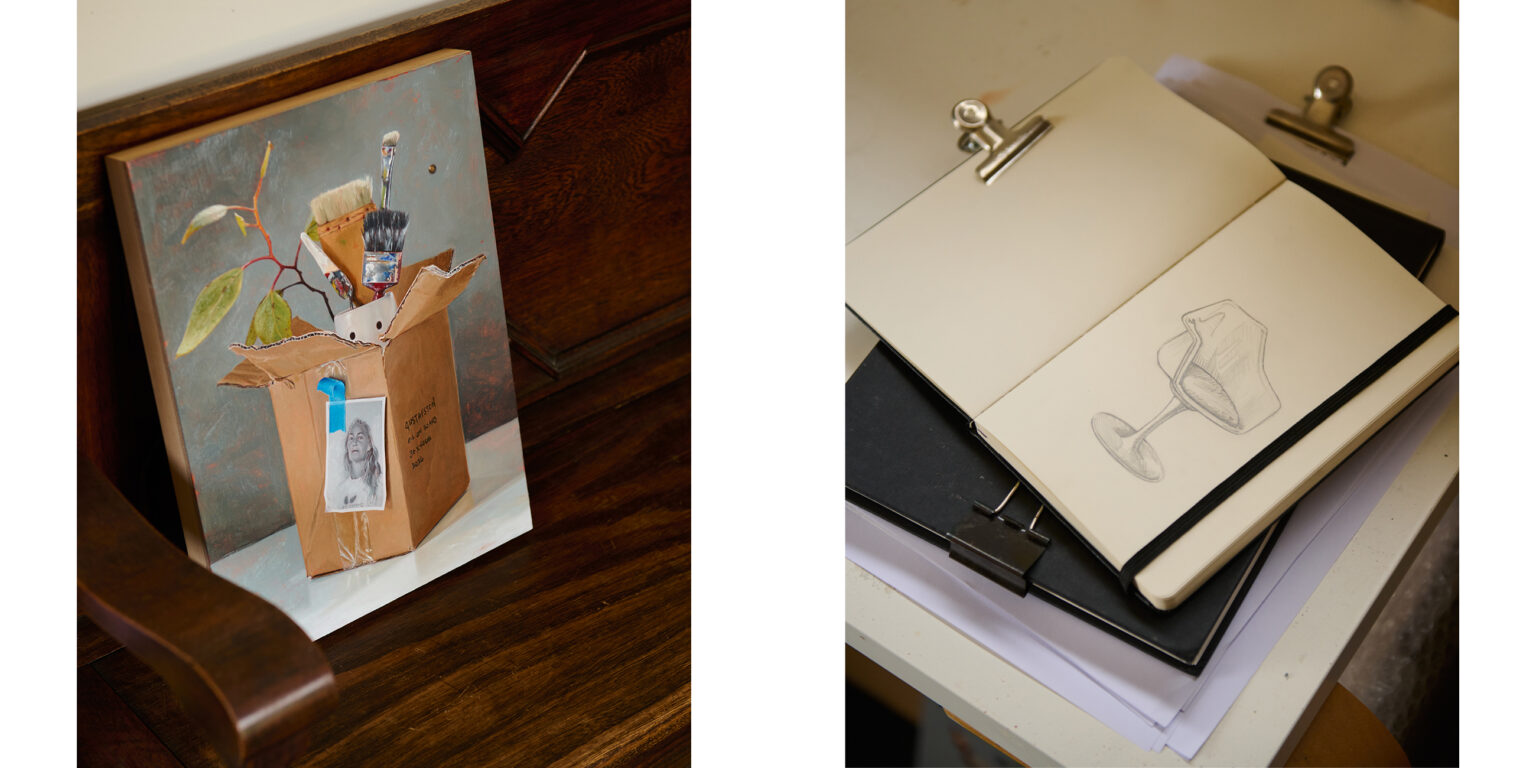
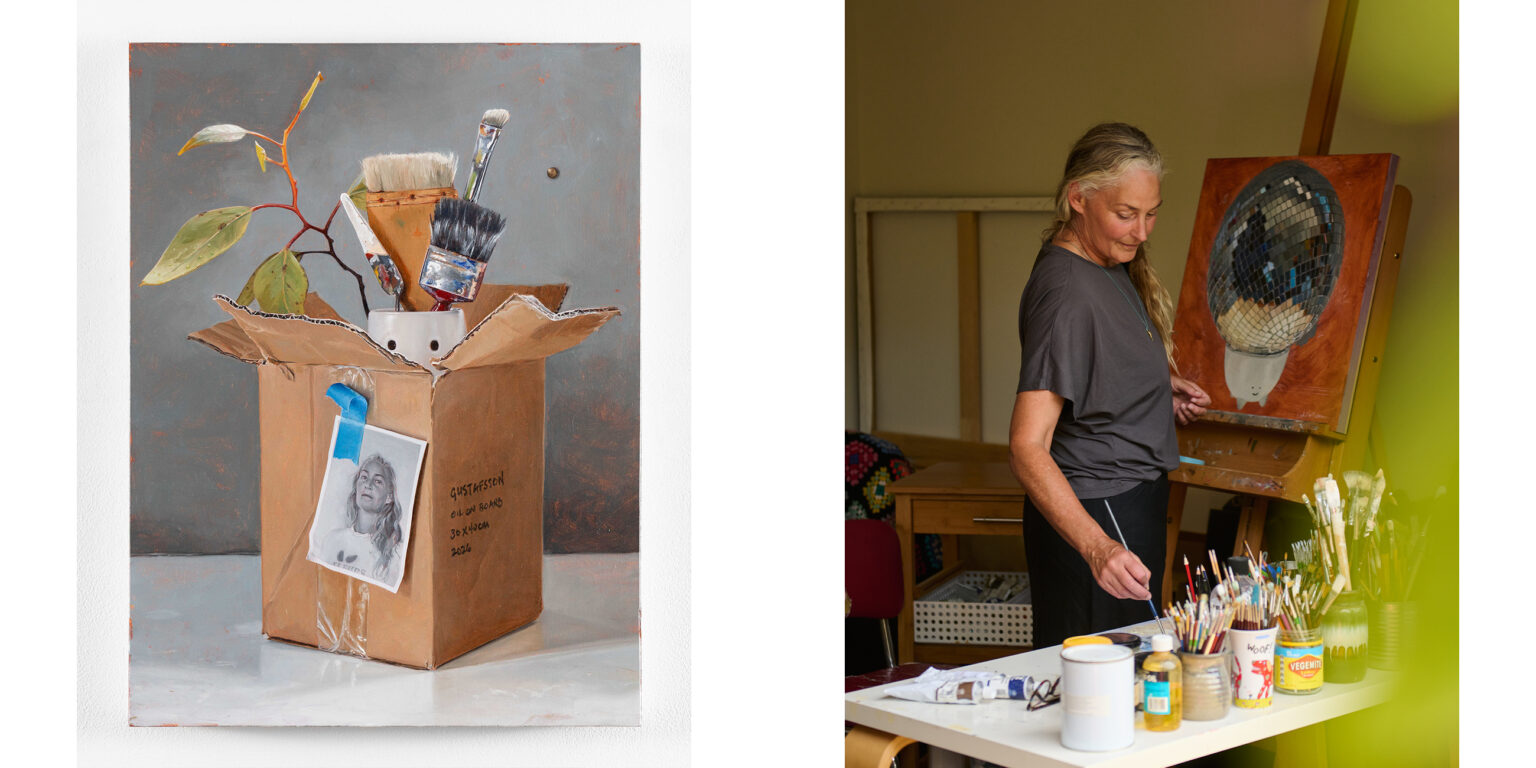
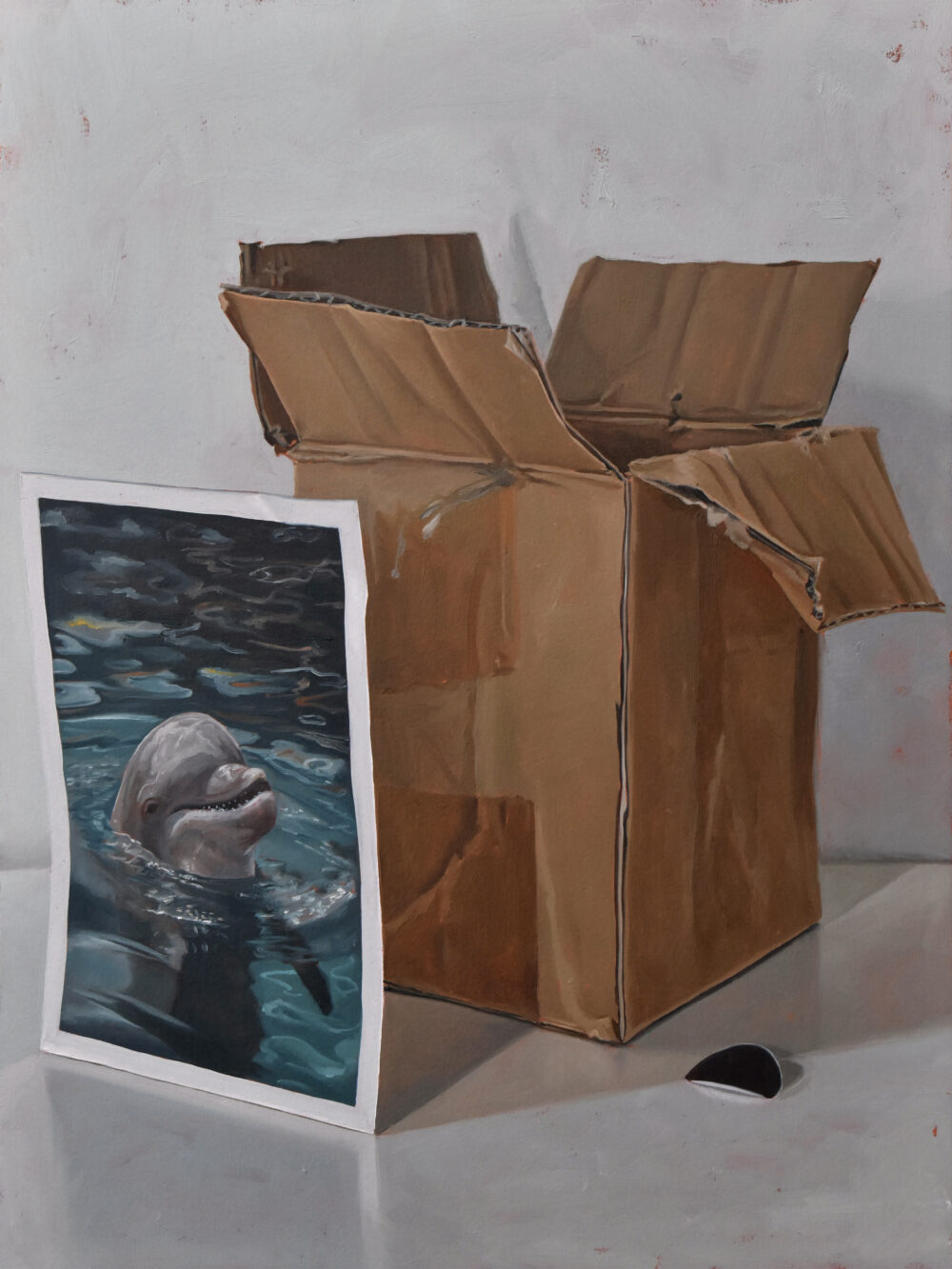
Painting for me is a contemplative response to the news and events going on in the world, the books I’m reading, and podcasts and music I’m listening to. Often, I find myself drawn to an object or image and it’s only through the repetition of portraying it that I begin to understand its presence in my work. Cardboard boxes started turning up as places to hold all the information from news and social media sources that can feel overwhelming at times. Painting the cardboard felt loose and allowed for more abstract brush marks to suggest tape or a tear. Similarly, painting a series of things on fire several years ago felt cleansing and physically felt like colouring outside the lines. Even though the repetition of something begins to take on a meaning, I don’t create paintings to be decoded by symbols. I’m attracted to shapes and textures and how they complement or visually contrast with other objects, exploring a subtle tension and balance. I don’t work to a brief, sometimes I just have to paint something that keeps drawing me to it so I can move on. Some things are a one-off and some just keep turning up again and again and again…
How have chairs in particular operated as subjects in your paintings?
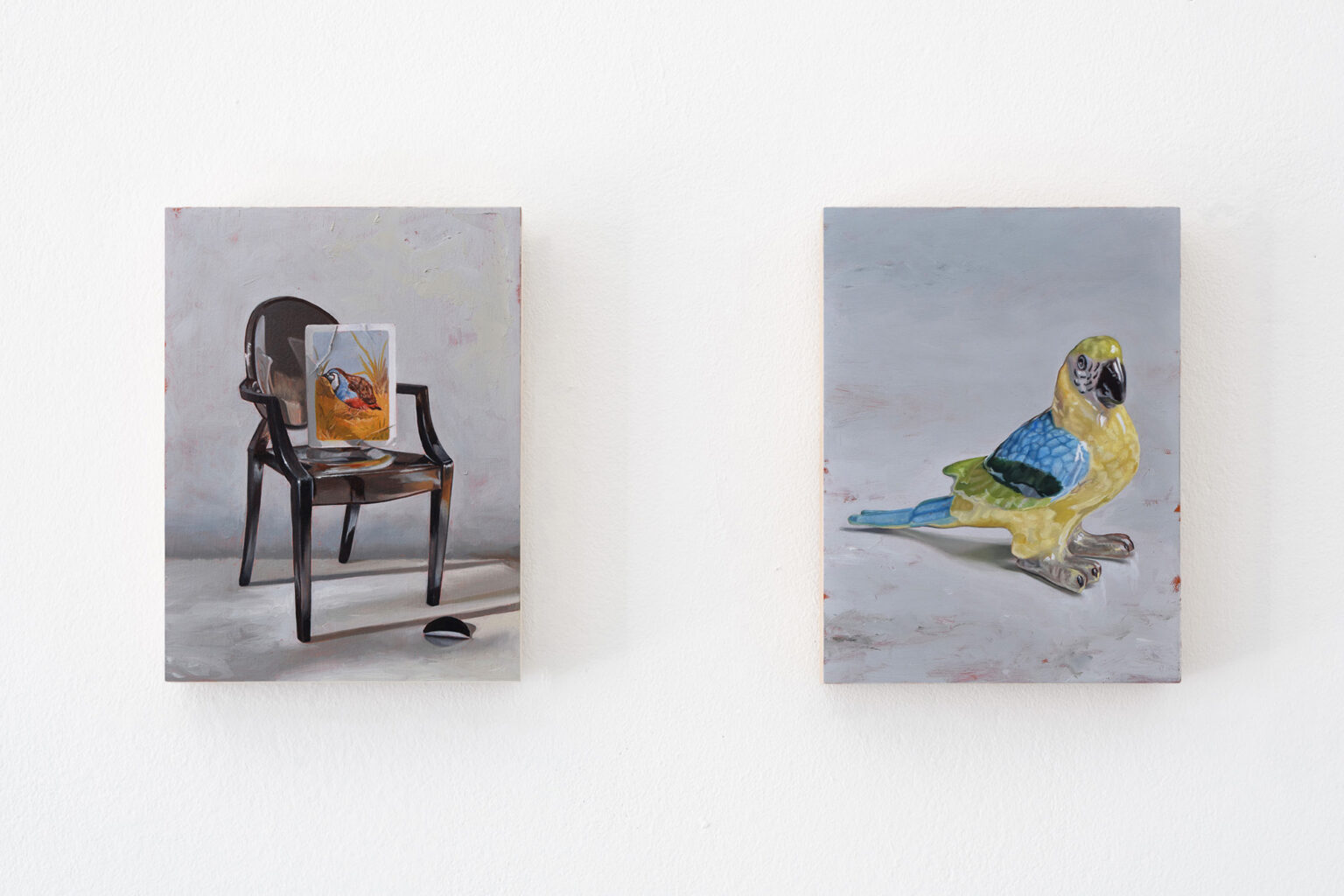
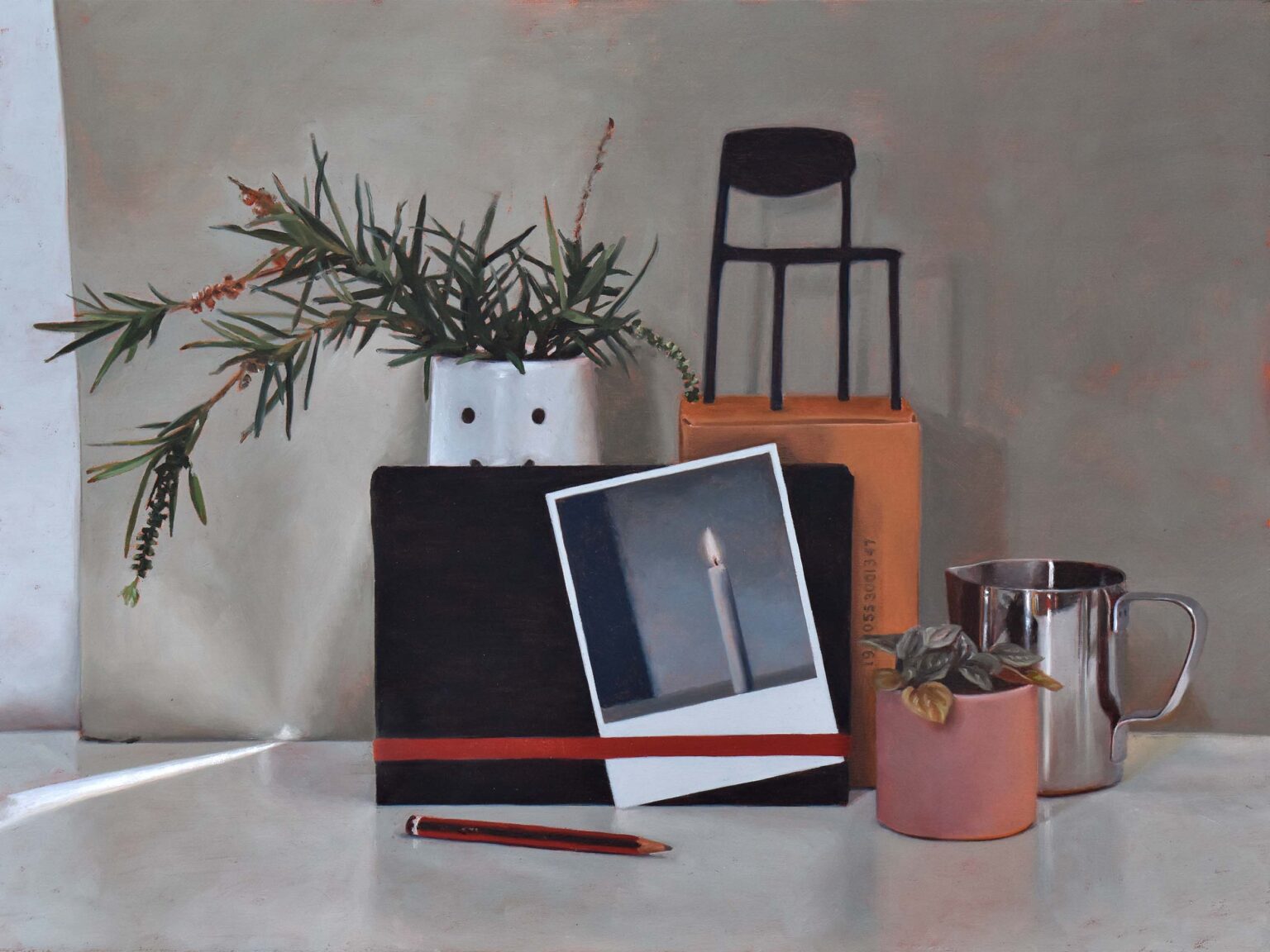
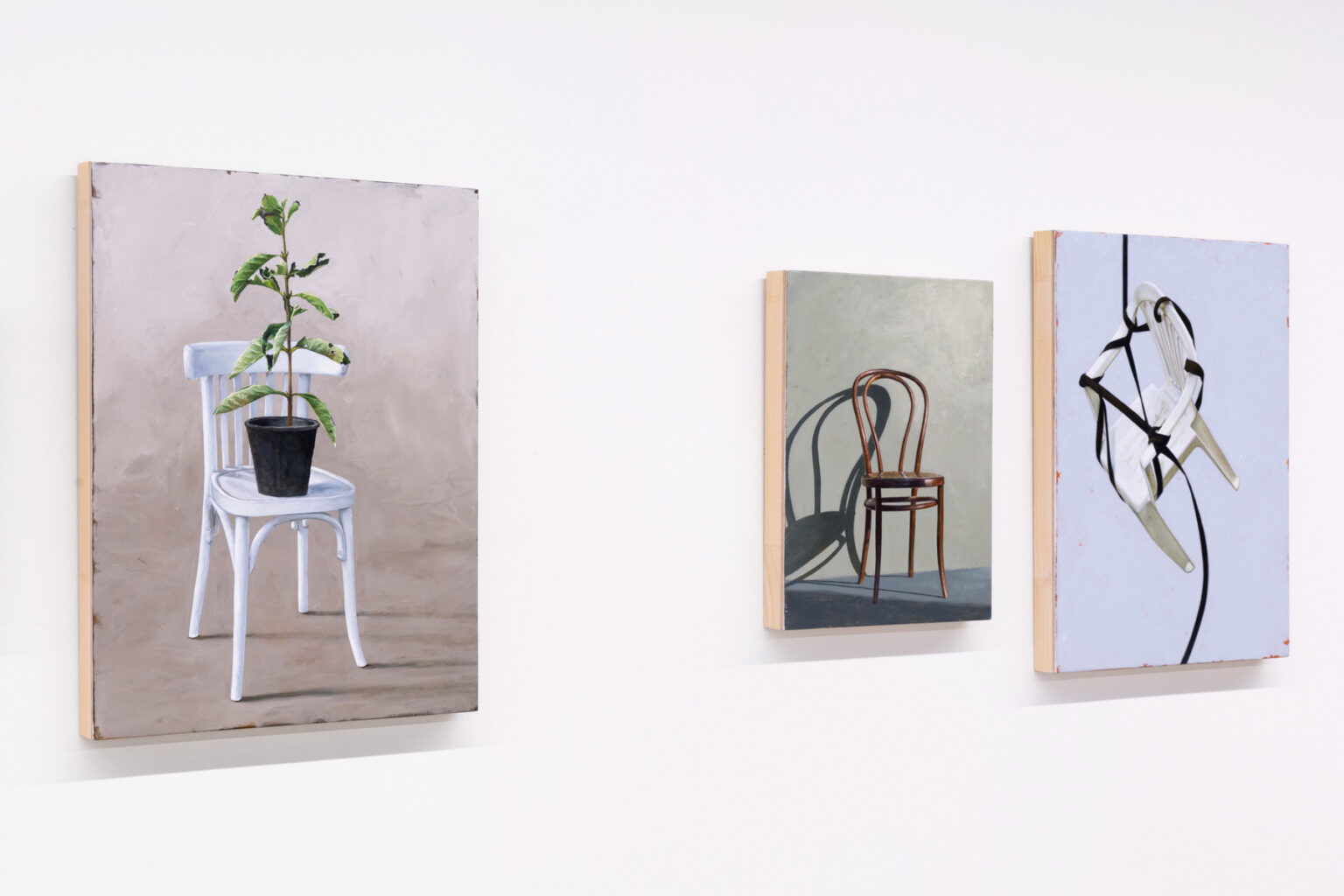
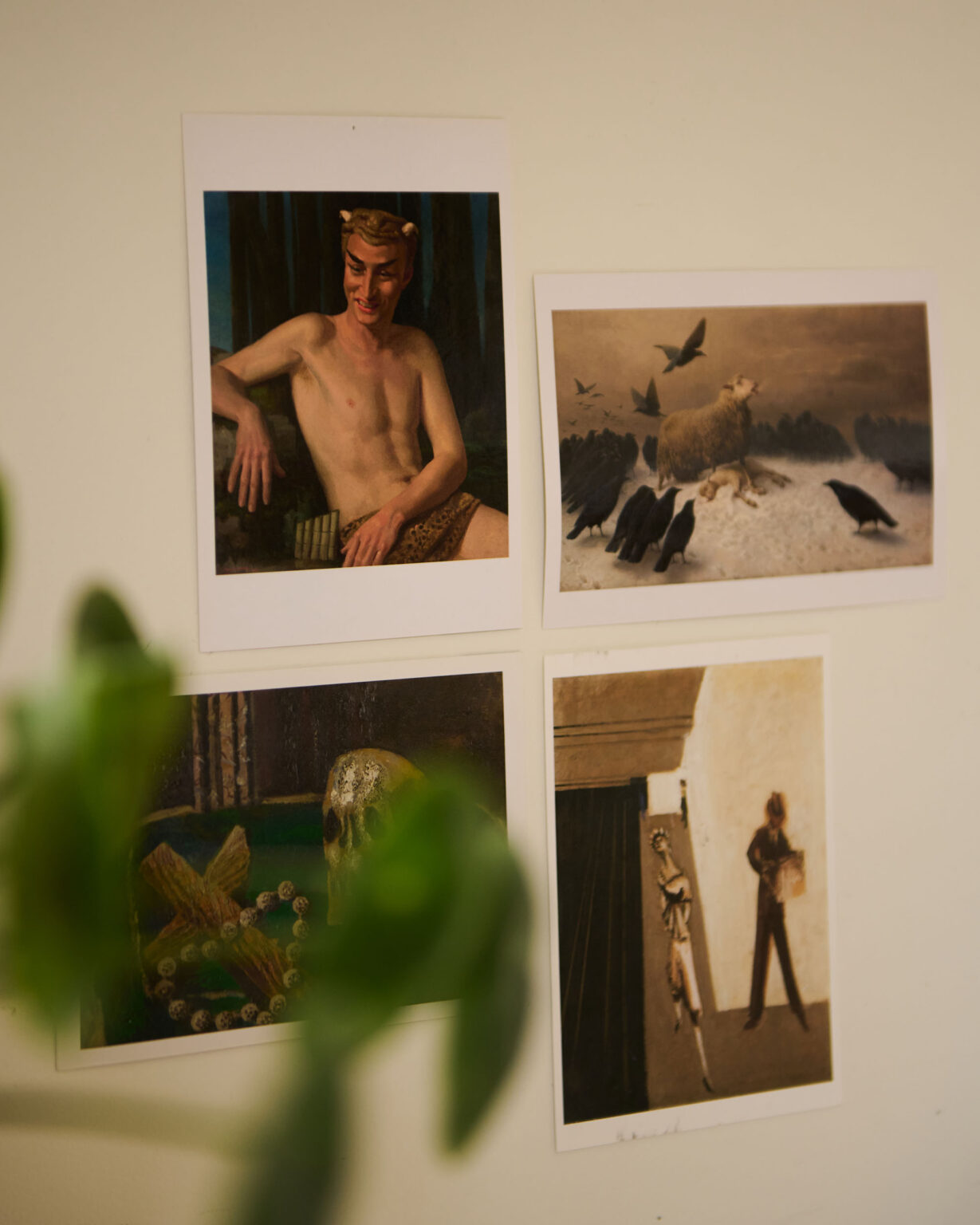
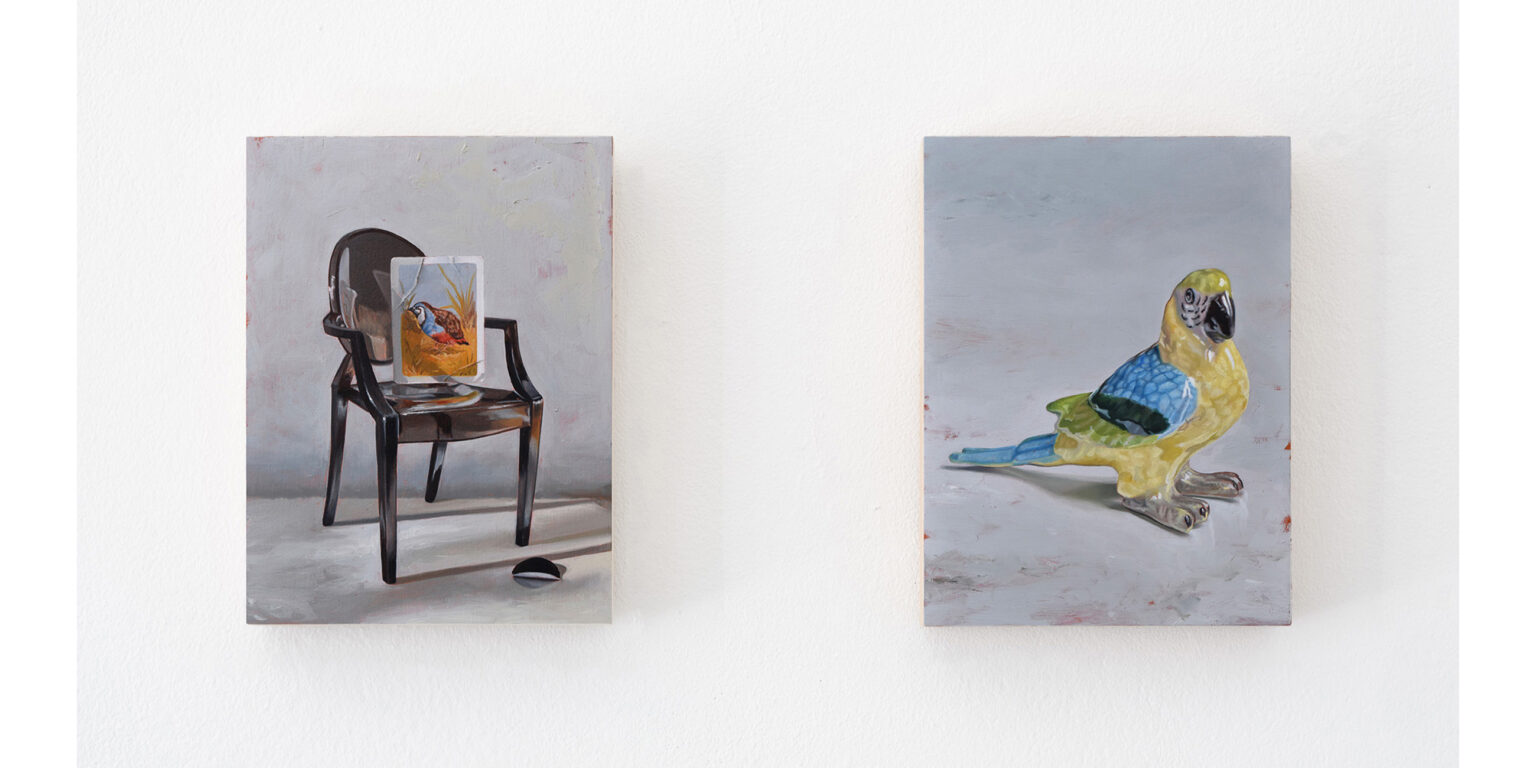
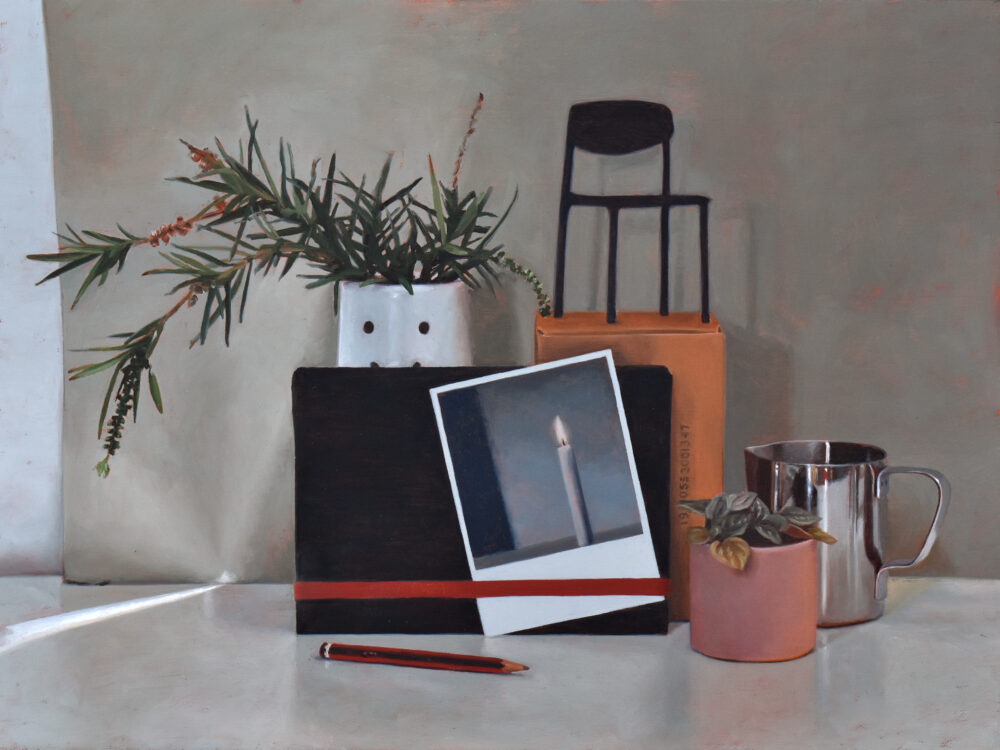
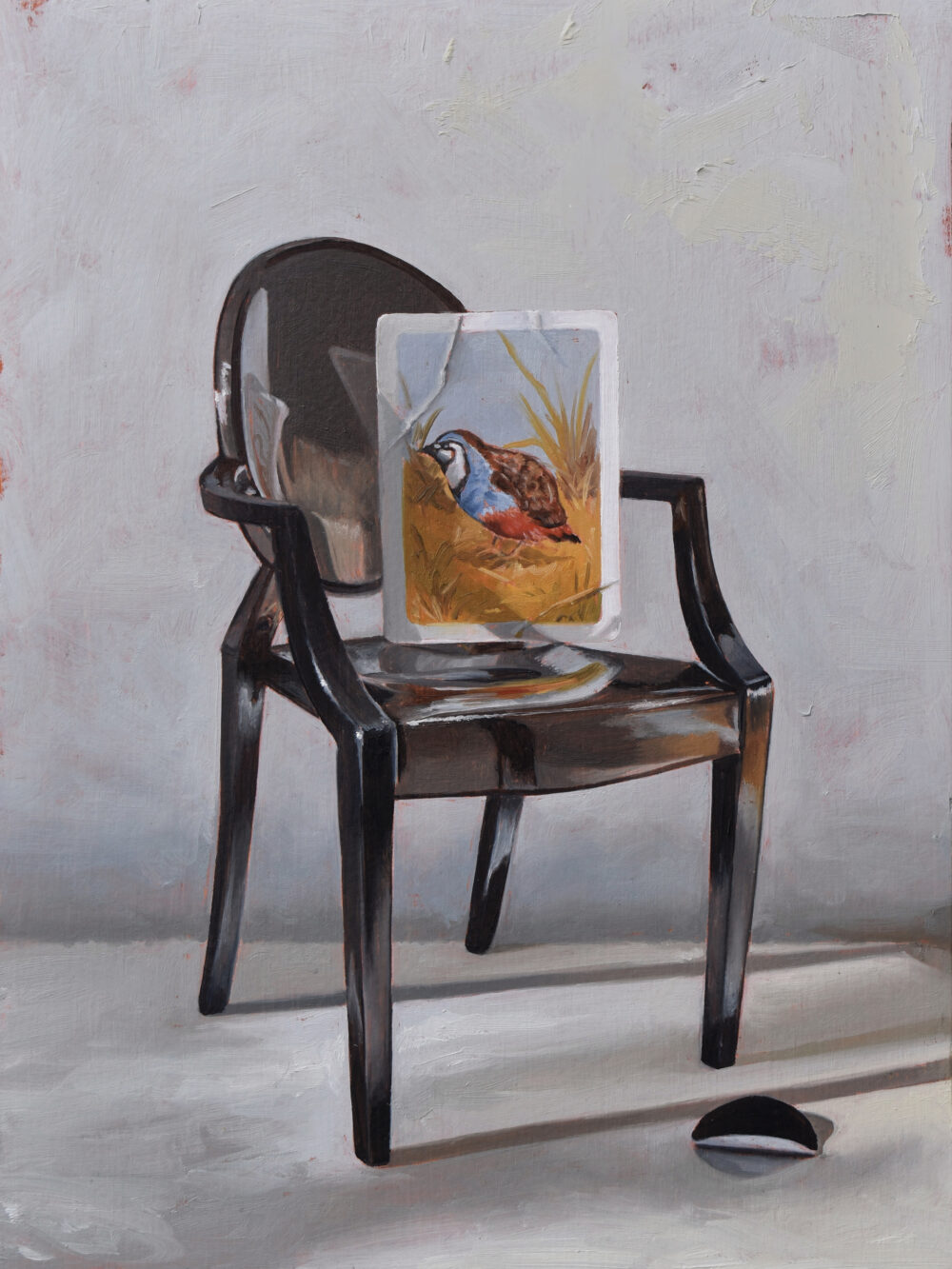
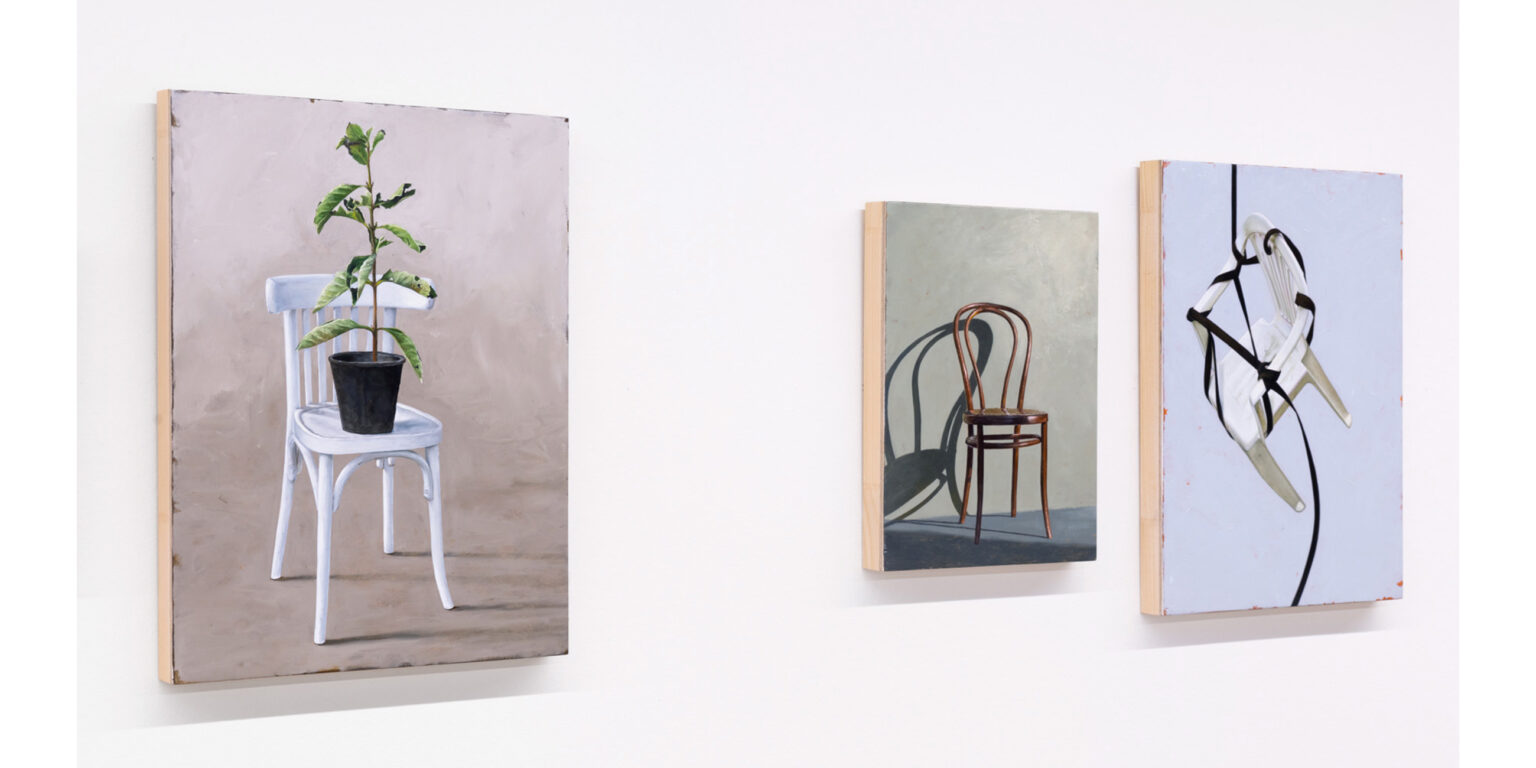
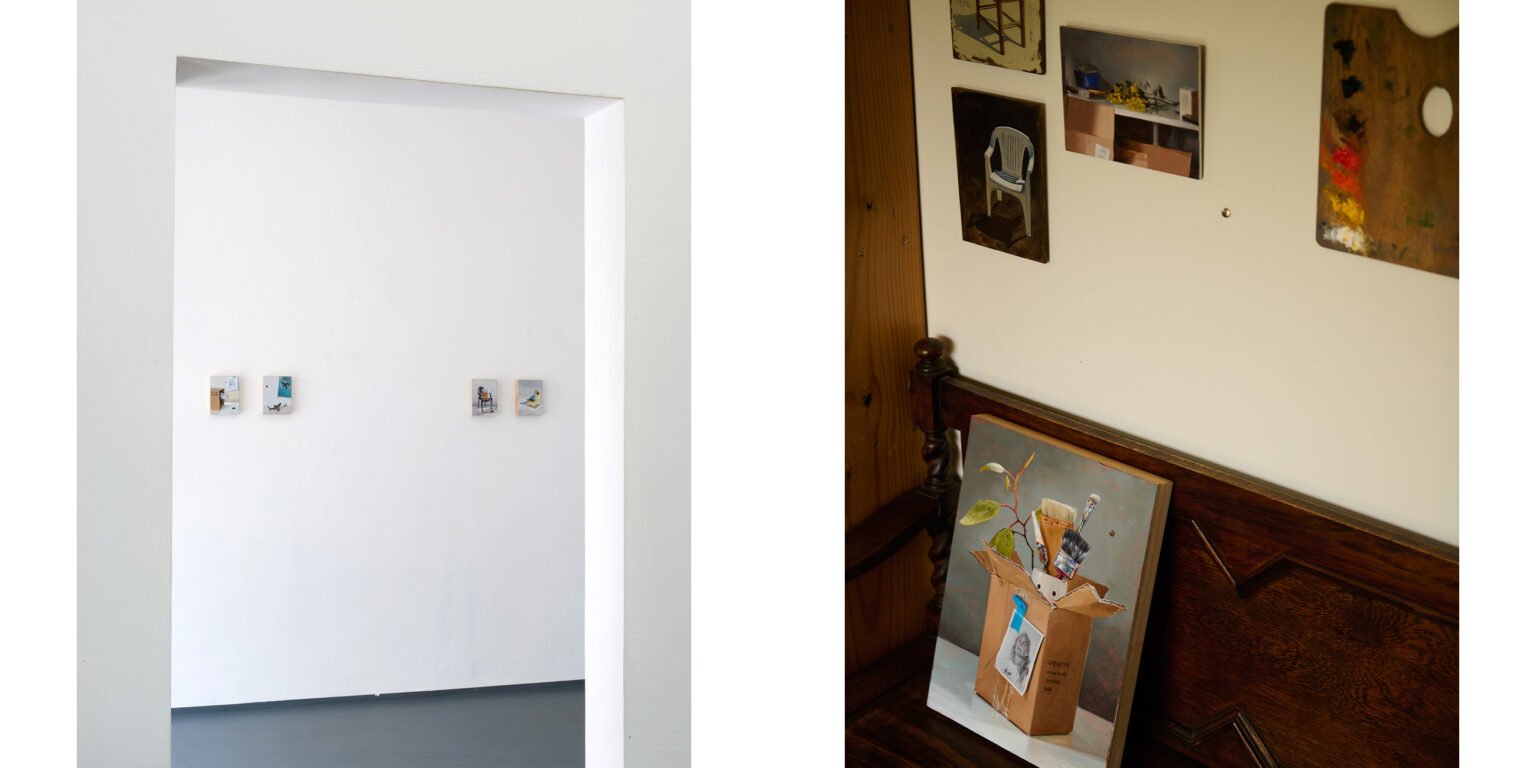
The chair has been a recurring motif for some years, recognised as a practical object of domesticity – for social gatherings and even an extension of self-expression. It has developed from being the hero and a single entity in my work to being scaled down and sitting within still-life settings alongside cardboard boxes, ornaments, postcards and some of my own paintings or drawings as objects also. Over time I think the chair has become an observer, quietly questioning and reflecting.
What have been some of your favourite career experiences?
In 2024, two of my paintings were acquired by the City of Melbourne’s Art and Heritage collection, which was unexpected and a lovely surprise. While I don’t usually recognise it at the time, getting the opportunity to exhibit a body of work or a piece for an art prize is often a highlight in itself. In the moment, I’m caught in the process of meeting a deadline and being as thorough as I can, but with hindsight and distance it’s often a pleasing surprise to look back on what I produced. Completing a series usually means preparing and exploring ideas for the next one, asking how I can refine what I’m doing better or what areas can I push and explore further. After every show I often think ‘well that could be the last one!’. I don’t take any of these opportunities for granted, tomorrow is unpredictable.
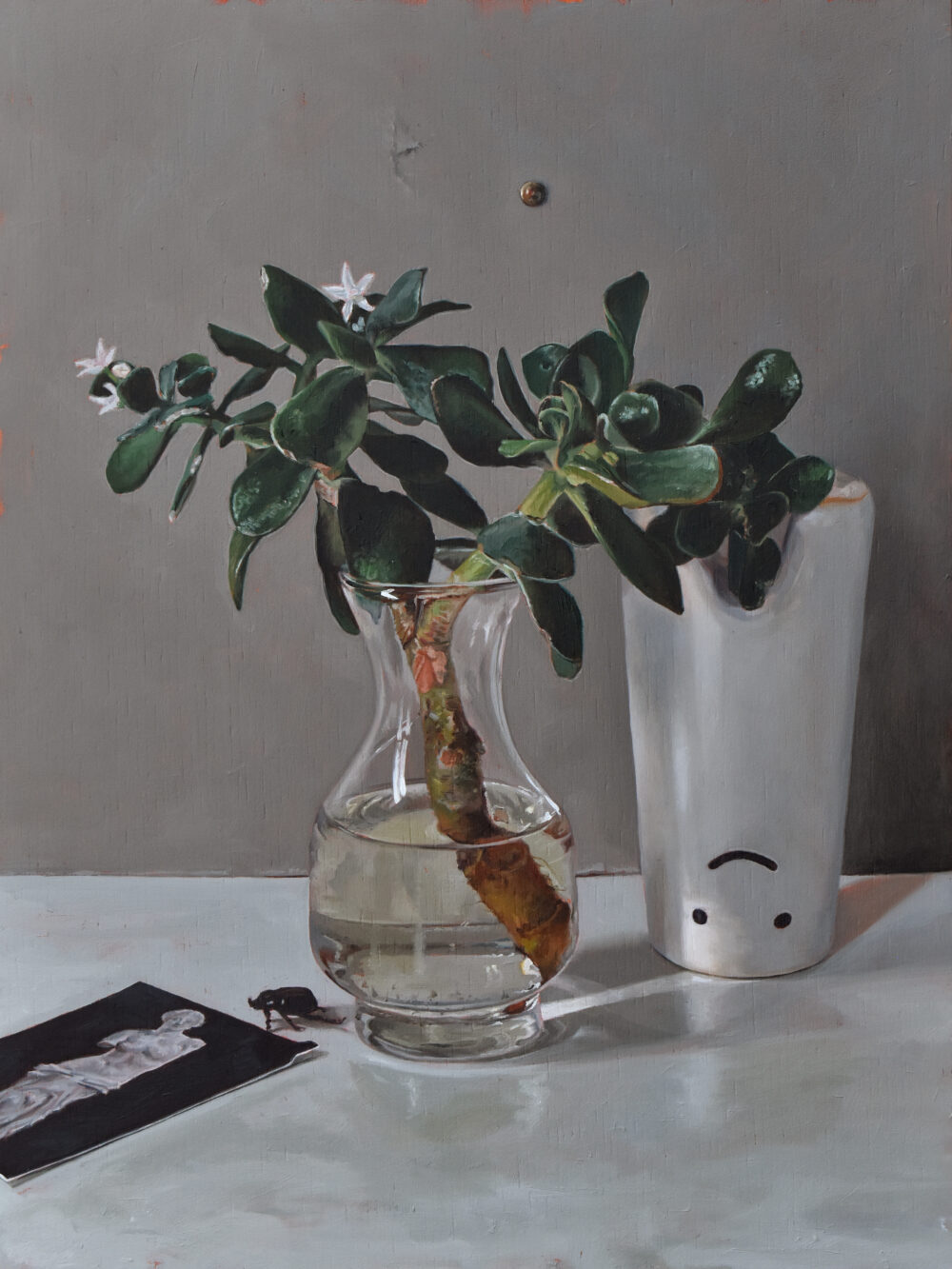
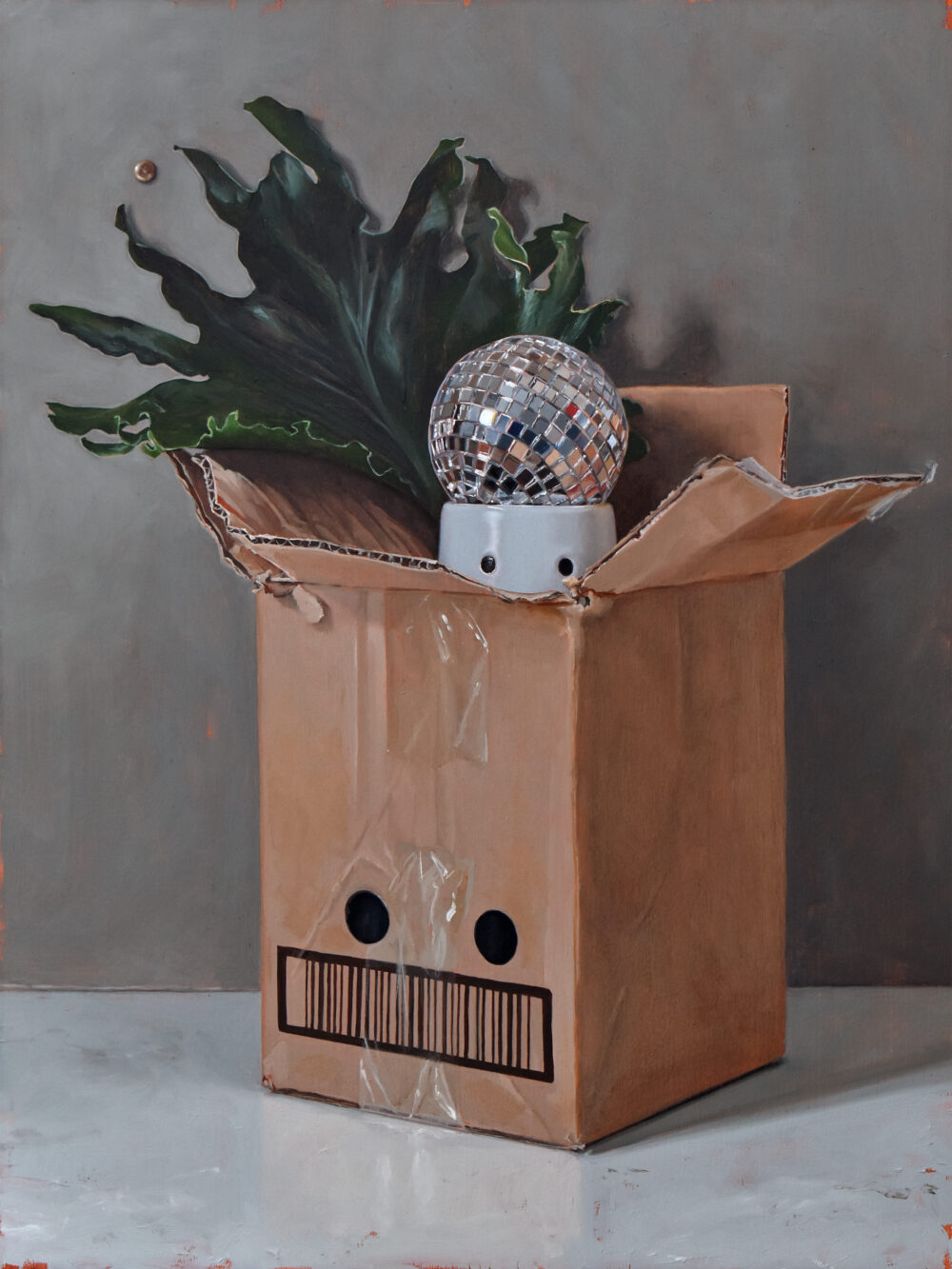
Could you tell us about some of your recent bodies of work, from Seated (2020) and Chairs (2023) through to Glimpse and Onlookers (2025)?
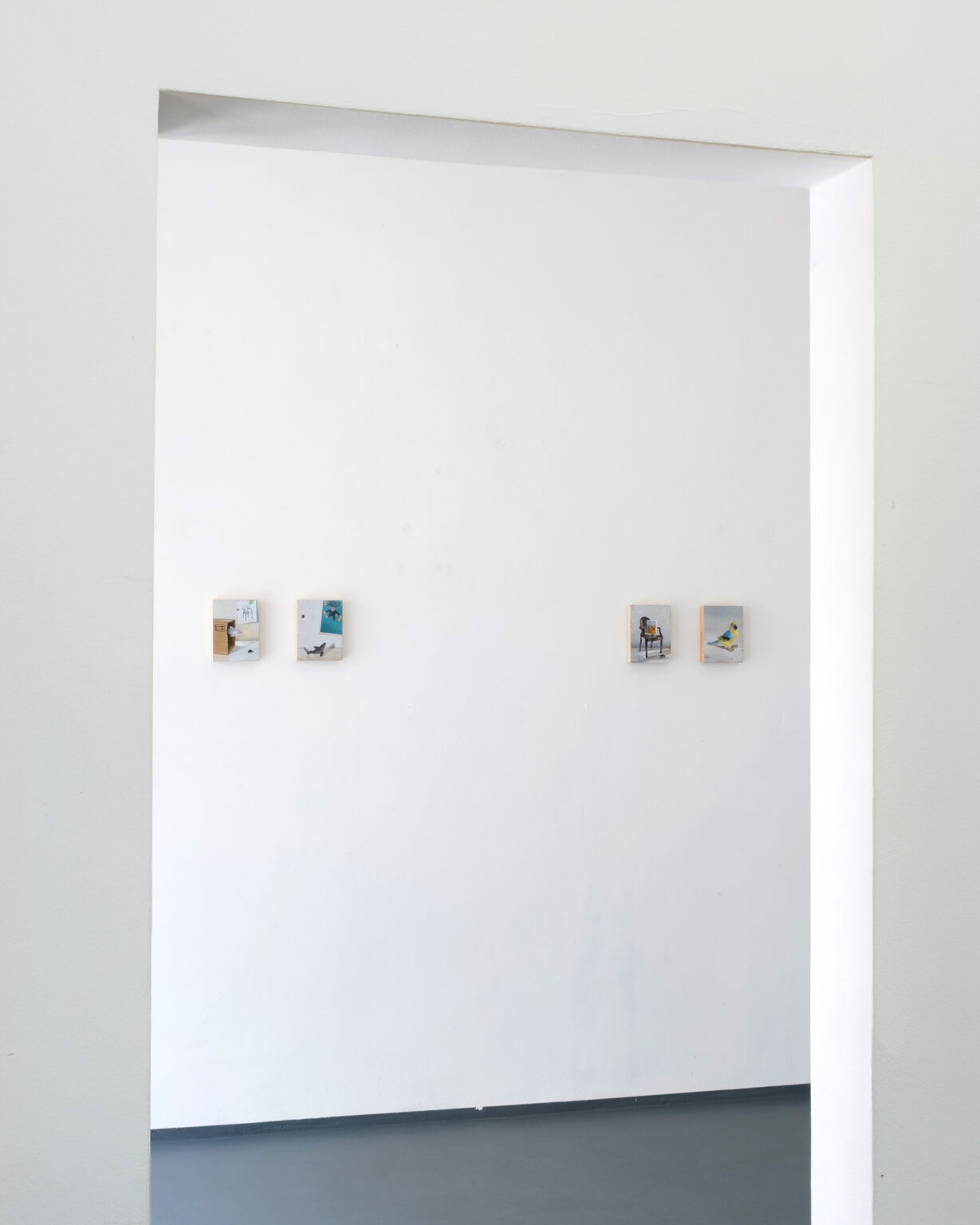
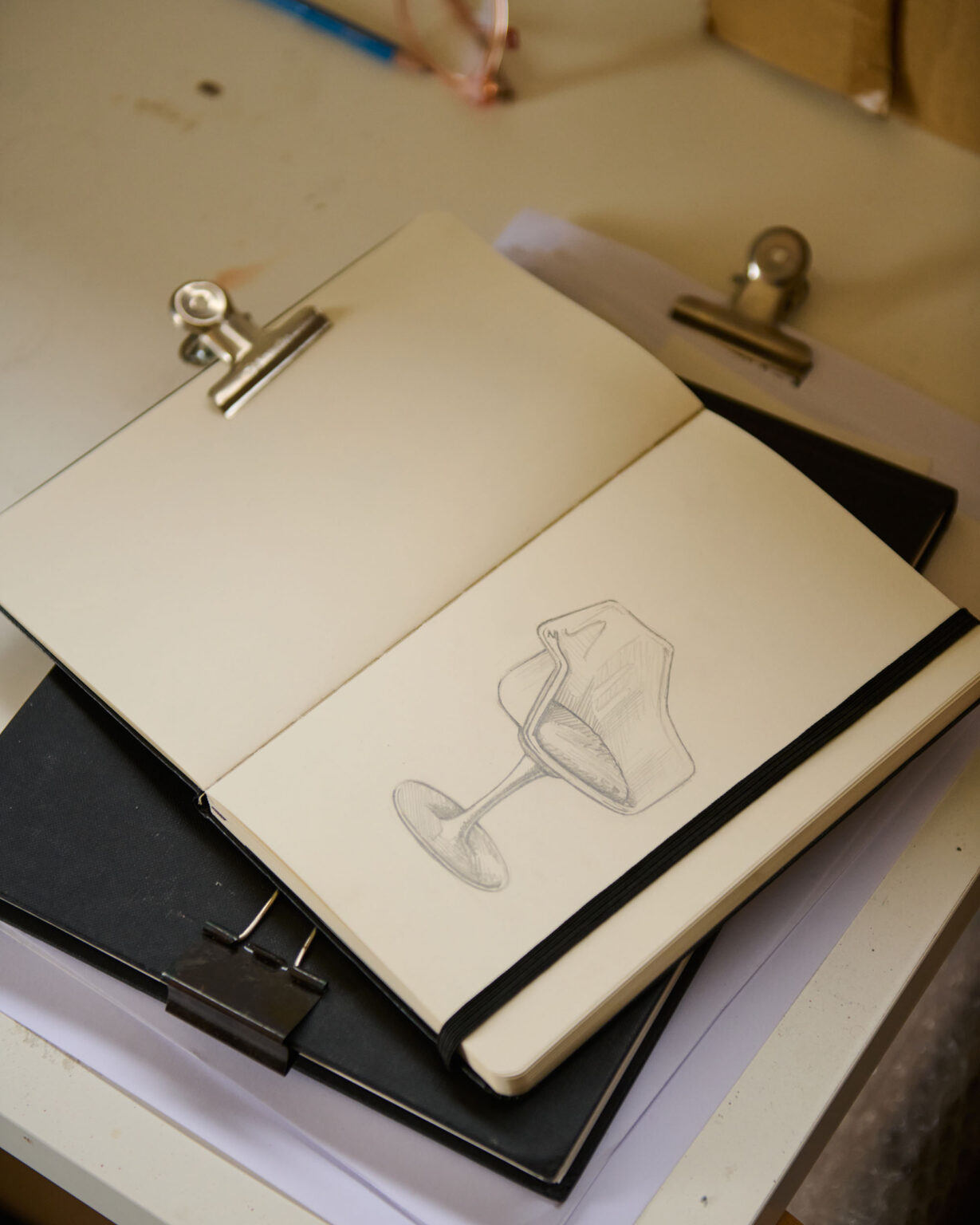
The development through these series sees the chair going from being a hero piece through to a supportive element and then scaled down and introduced as an object on my studio workbench alongside other elements brought into these scenes. Since initially introducing postcards as another prop or object, I’ve been enjoying exploring the use of my own drawings and paintings to add a layer of an image within an image. It’s a little bit meta I guess. One body of work usually evolves into the next, and along the way new elements tend to appear like the kitsch porcelain ornaments in Onlookers that reference news stories on the environment.
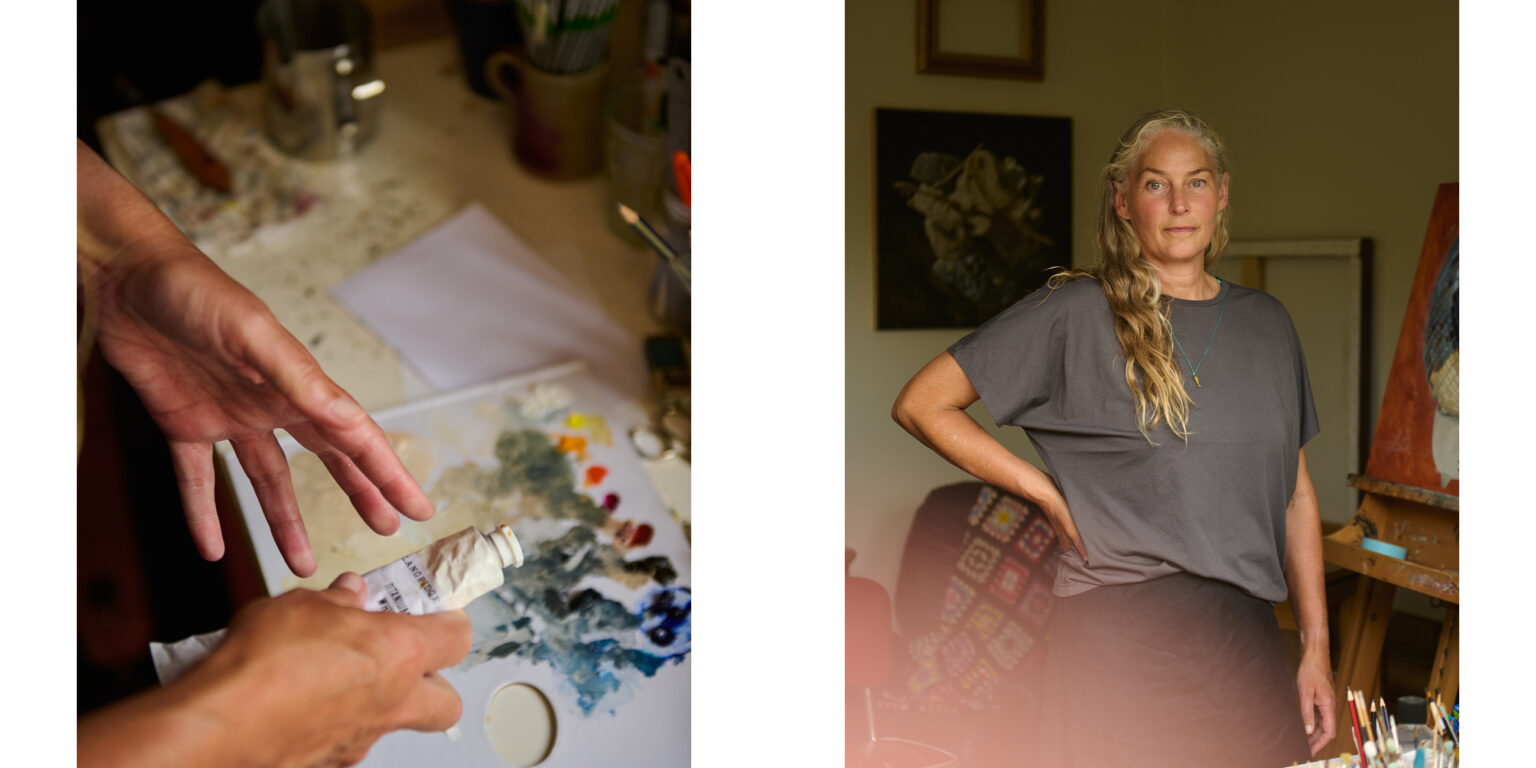
“Painting for me is a contemplative response to the news and events going on in the world, the books I’m reading, and podcasts and music I’m listening to. Often, I find myself drawn to an object or image and it’s only through the repetition of portraying it that I begin to understand its presence in my work.”
Could you tell us about the suite of works you created in the lead-up to the announcement of your representation by Michael Reid Berlin?
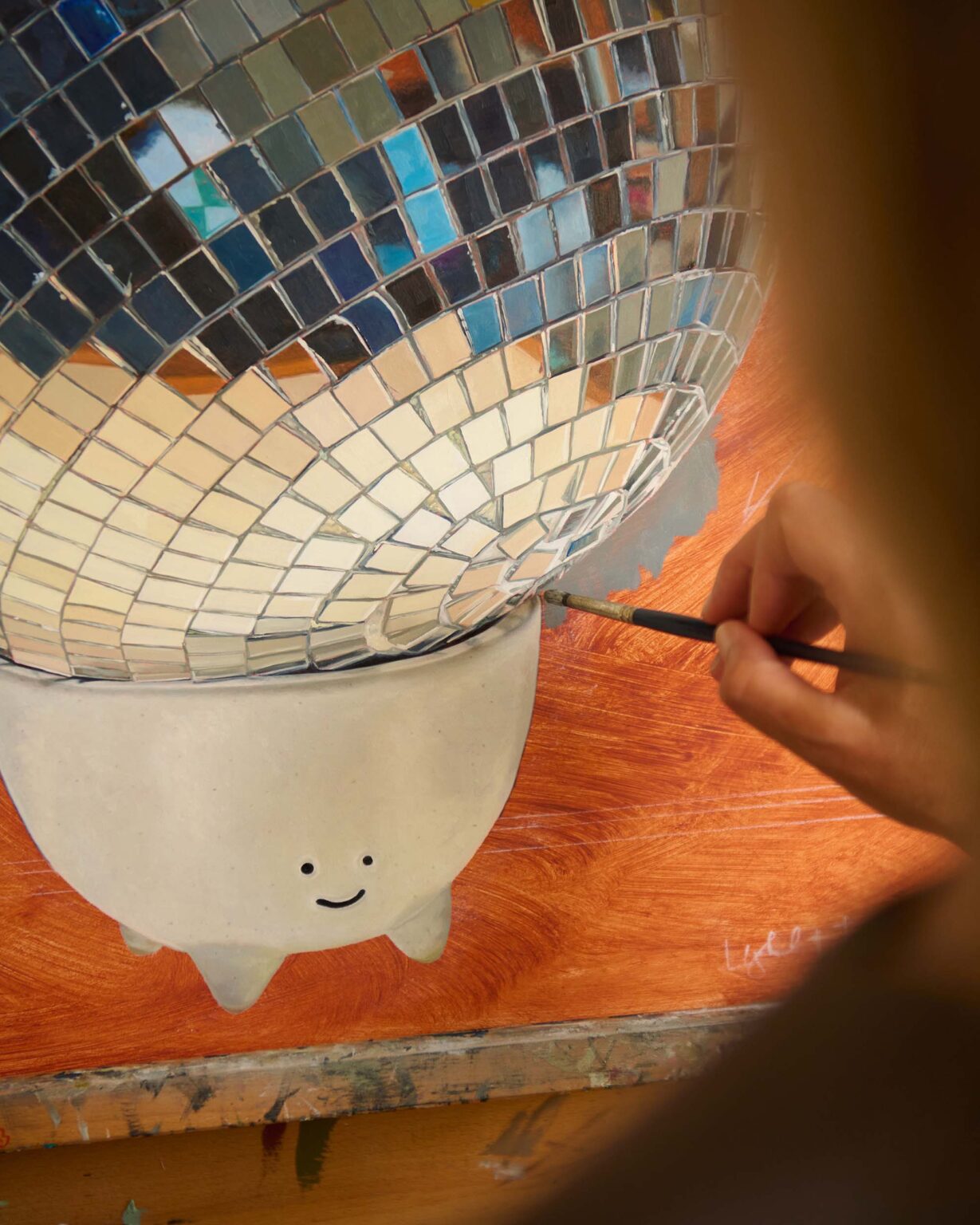
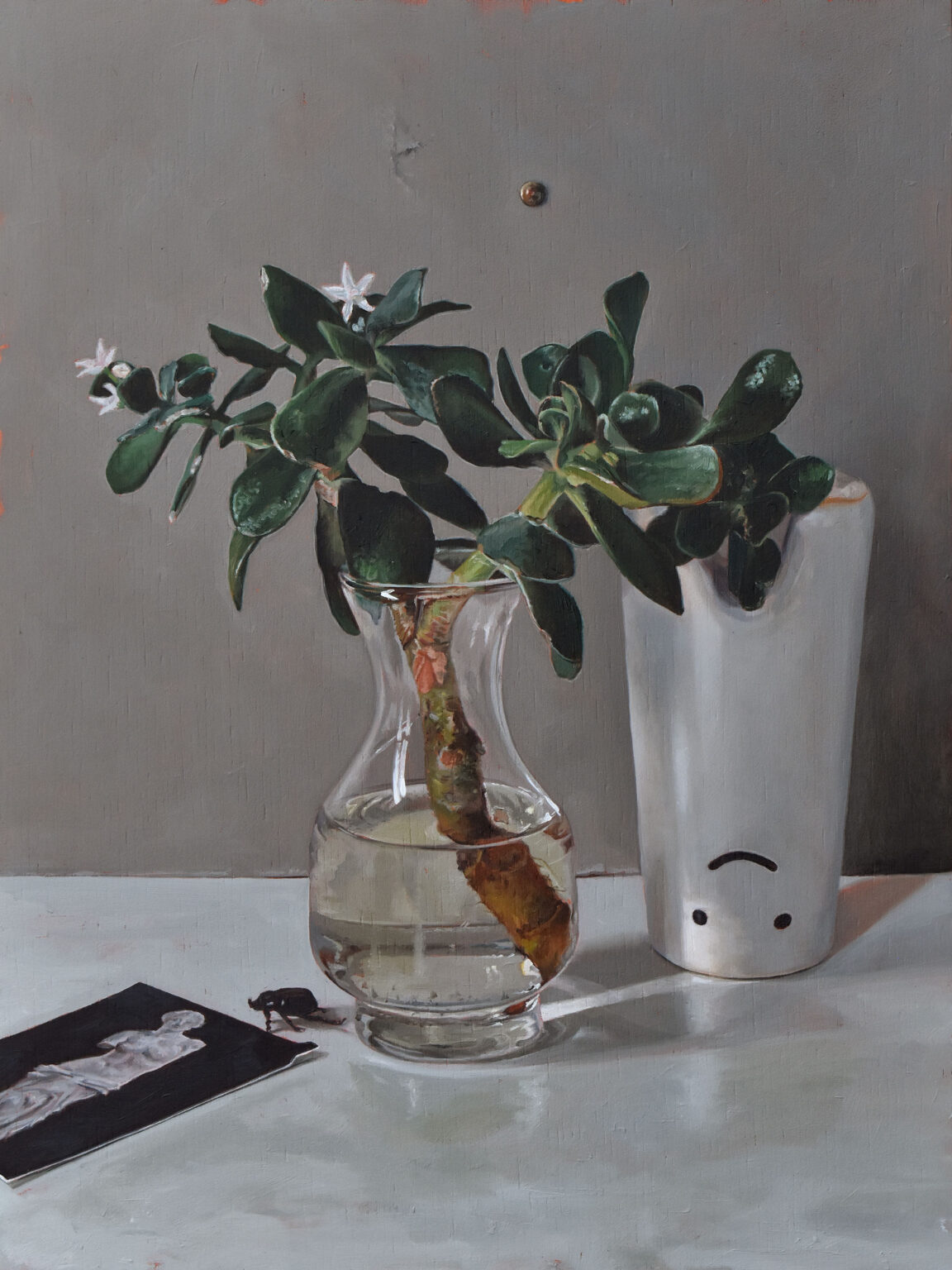
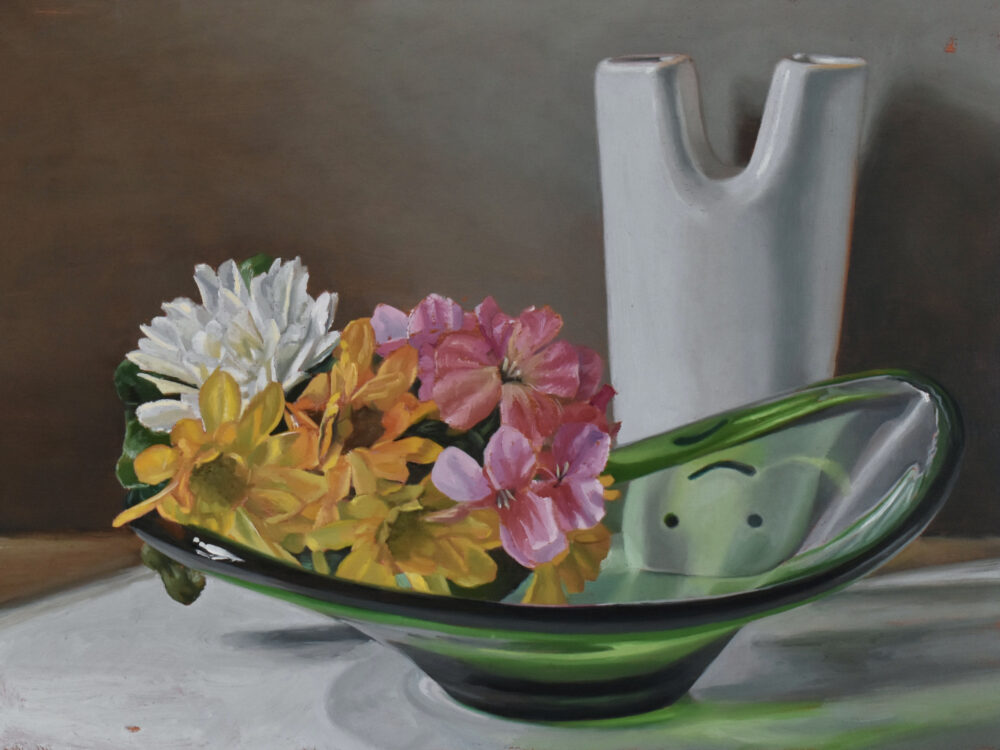
While this body of work is still in the process of being made and I’m still feeling out what is working and what will be discarded, overall I feel like it has a theme of light humour and hope. A simple little vase with a smile on it seemed to kick things off – it shuffles around my workbench among shiny orbs and disco balls and pot plants, books, notes and boxes. My studio space and working practice are quite unruly but from this I like building quiet, contemplative scenes. I used to feel a bit cynical about the word hope; I related it to despair and being inactive. However, it’s not a new theme throughout the history of art and has been used to encourage resilience, inspiration, activism and positivity during uncertainty. I love this little quote by John Berger on Rebecca Solnit’s book Hope in the Dark; he says “…hope is not a guarantee for tomorrow but a detonator of energy for action today.” I don’t want to make works with hard messages or instructions, just simple images to resonate with and remember the worthiness of optimism and inspiration.
What other projects are you looking forward to working on in the coming year?
I’m working on two solos this year and have one on the calendar for next year, so sometimes my head forgets to be in the here and now. I would love to make time for some drawing and painting outdoors. I’m not at all comfortable doing it. I recently spent a day with artist Stacey McCall drawing in the You Yangs. I was simultaneously completely at peace sitting under the trees and terribly out of my comfort zone, attempting quick little representations of the landscape. I’d like to keep exploring new things like this to upset the predictability of what I know or what I think I know. Surprises add excitement.