



MICHAEL REID BEYOND
Leila Jeffreys
ARTIST PROFILE
In the lead-up to the announcement of Michael Reid Sydney + Berlin’s representation of Leila Jeffreys – and ahead of her first showing with the gallery at this year’s Sydney Contemporary – our team visited the acclaimed Australian artist at her Eora/Sydney home for a wide-ranging conversation covering the creative influences, approaches and extraordinary encounters with birdlife that have shaped her singular practice. Read our interview with Leila Jeffreys below.
To enquire about available works by the artist, including the two she is set to present at Sydney Contemporary 2026, please email dean@michaelreid.com.au.
“I hope viewers encounter my work emotionally rather than analytically. Our emotions are what give life its colour.”
LEILA JEFFREYS
___
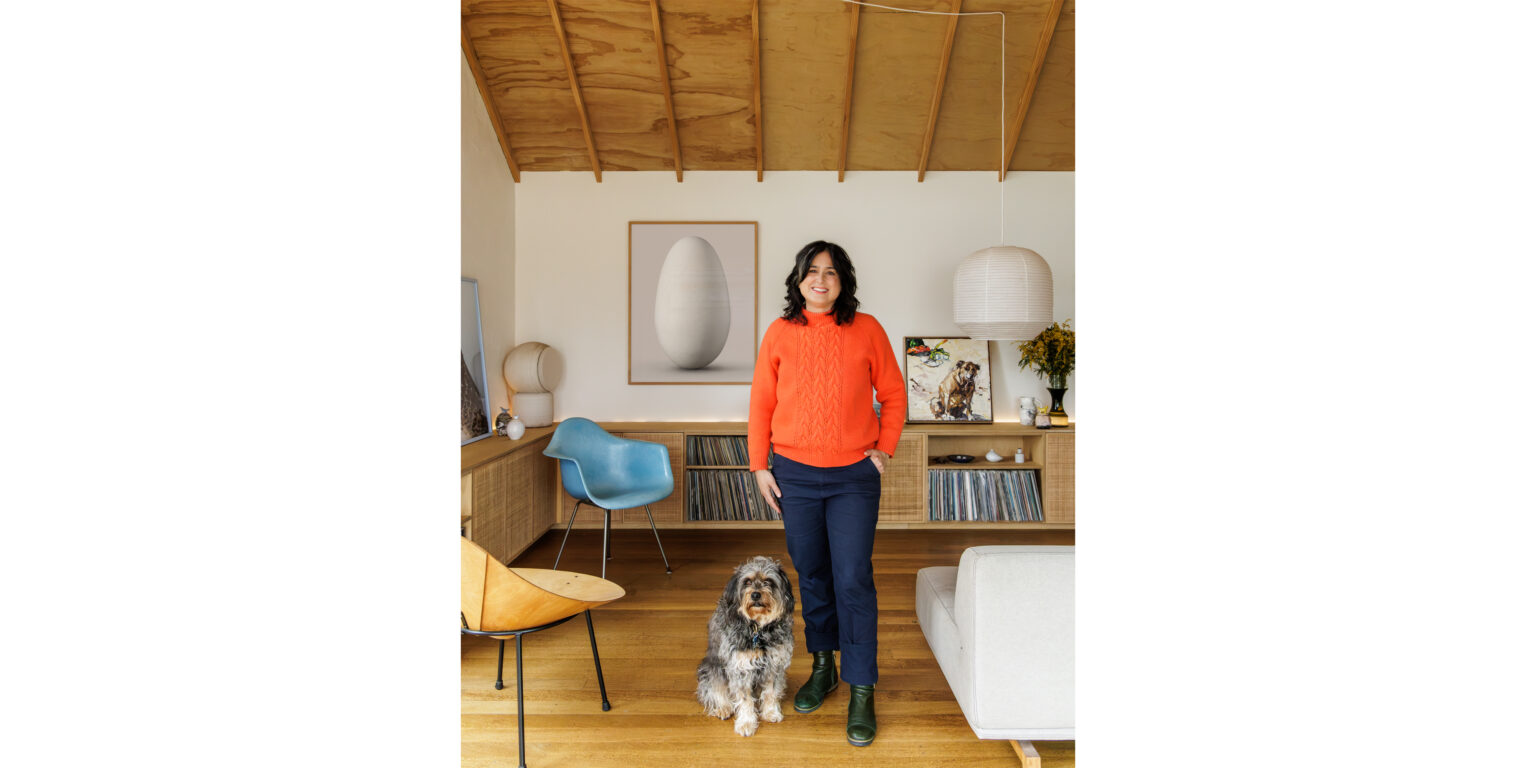
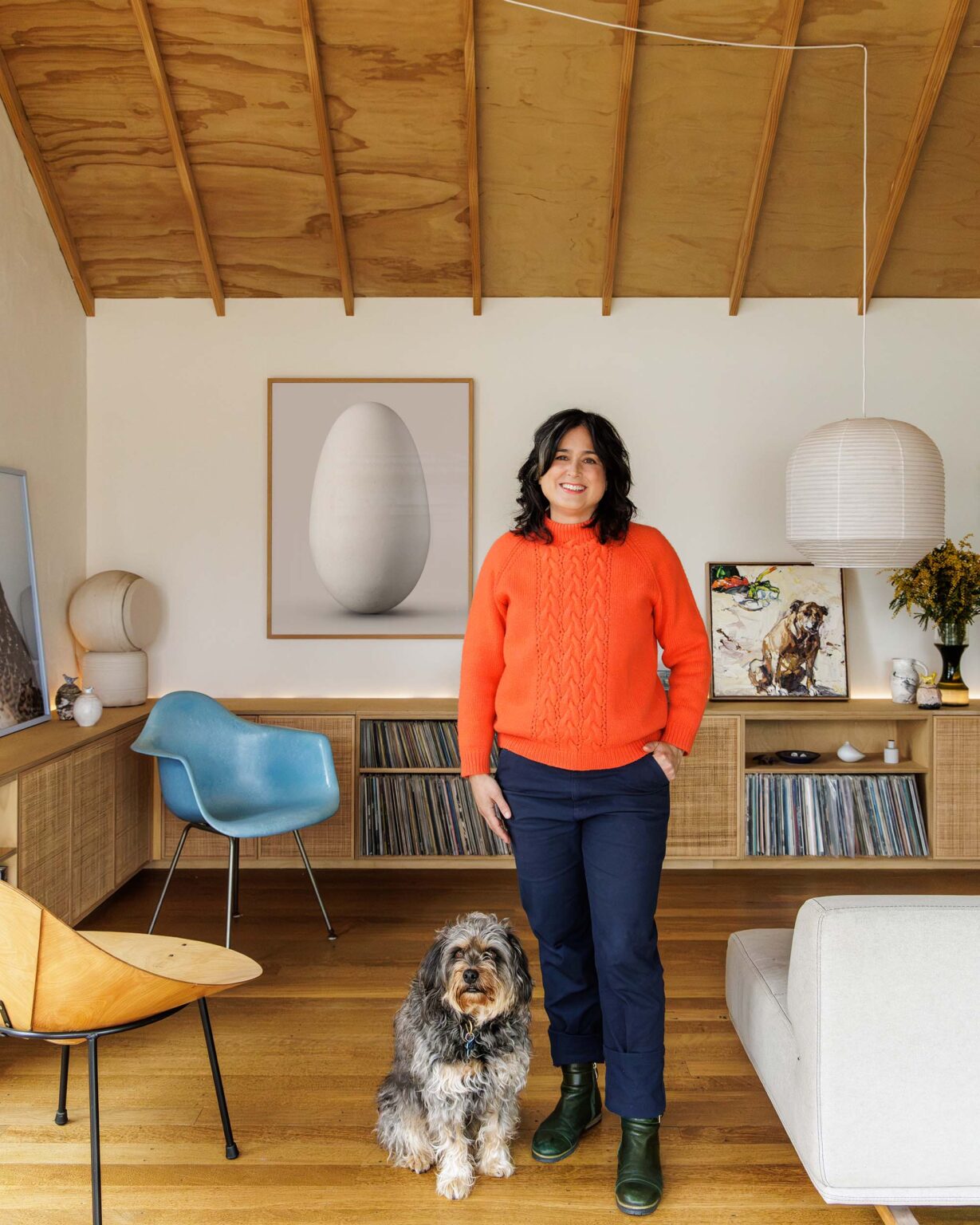
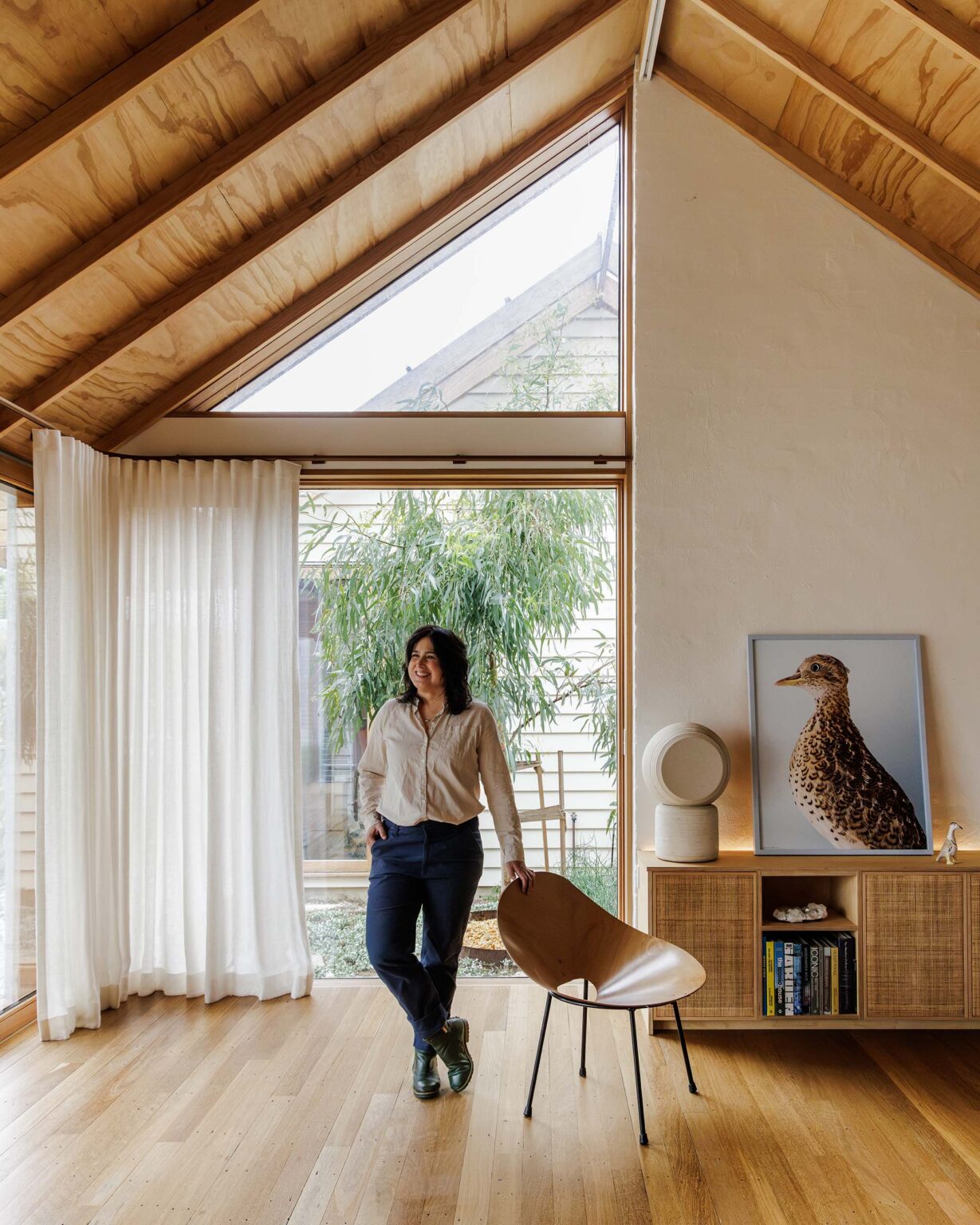
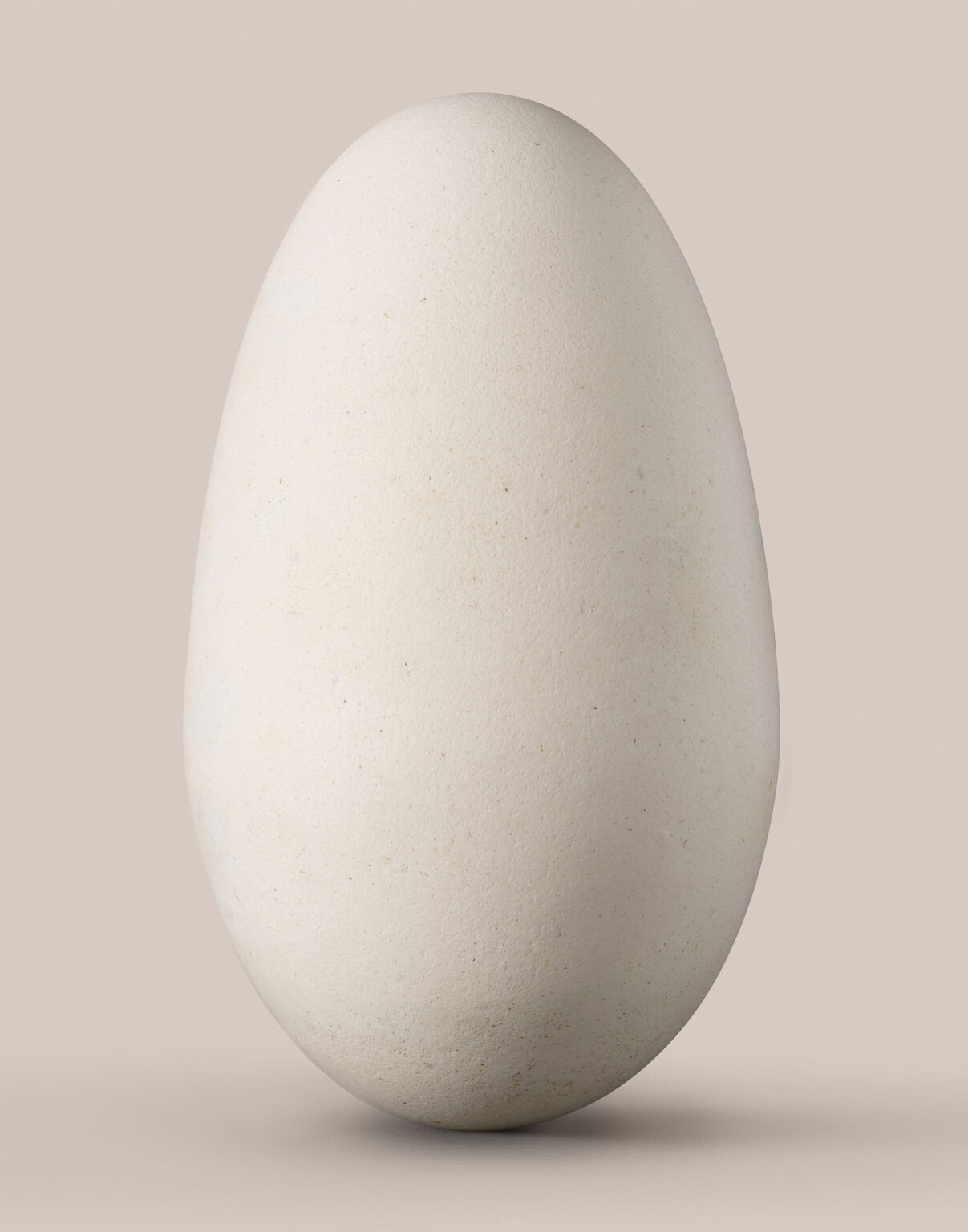
Leila Jeffreys in her Eora/Sydney home, pictured with Ronnie Barker and her work (left) Wandering Albatross egg from her 2024 series, Stillness (portrait by Jonathan Cohen).
How did you first approach photography and what were some of the earlier influences that shaped the way you wanted to capture your subjects?
I first approached photography through portraiture. I was interested in the conventions we use when photographing people, the simplicity of a studio, a neutral background, considered lighting and, most importantly, the relationship between photographer and subject that brings out what is uniquely theirs.
When I began photographing birds, I wanted to use that same visual language, but most importantly I did not want to show them as specimens. I was, and am, interested in them as beings, born out of the earth, just as we are.
An early experience that influenced me was seeing Olafur Eliasson’s The Weather Project at Tate Modern in 2003. I remember walking into the Turbine Hall, encountering this enormous artificial sun and being completely overwhelmed by it. It showed me that art could alter your physical and emotional state.
I’m drawn to the simplicity of classical portraiture, but equally to scale, immersion and creating an emotional experience.
How do you hope a viewer will encounter your images? Has this shifted from project to project over the years, or is there a common thread you return to?
I hope viewers encounter my work emotionally rather than analytically. Our emotions are what give life its colour, but so often we don’t slow down enough to notice what is happening within us, overriding our feelings with the thousands of analytical thoughts that cycle through our minds.
What has shifted over the years is my interest in taking that beyond the individual viewer. With larger, immersive works, I’ve become fascinated by what happens when hundreds of people encounter an artwork together and are drawn into the same emotional state, such as love. There is a palpable amplification that can be quite profound.
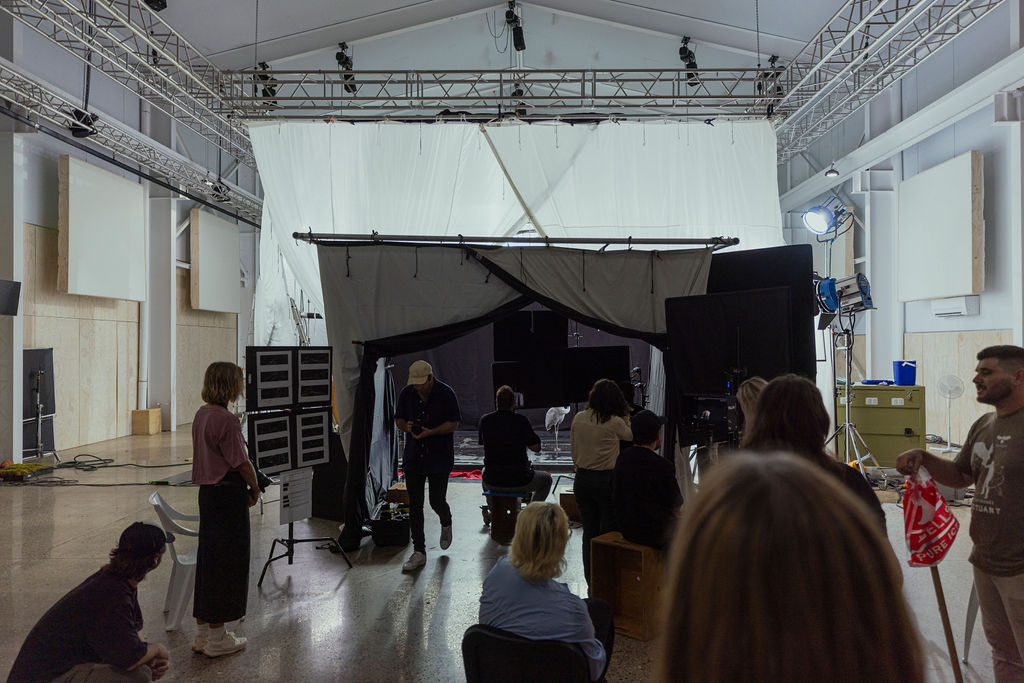
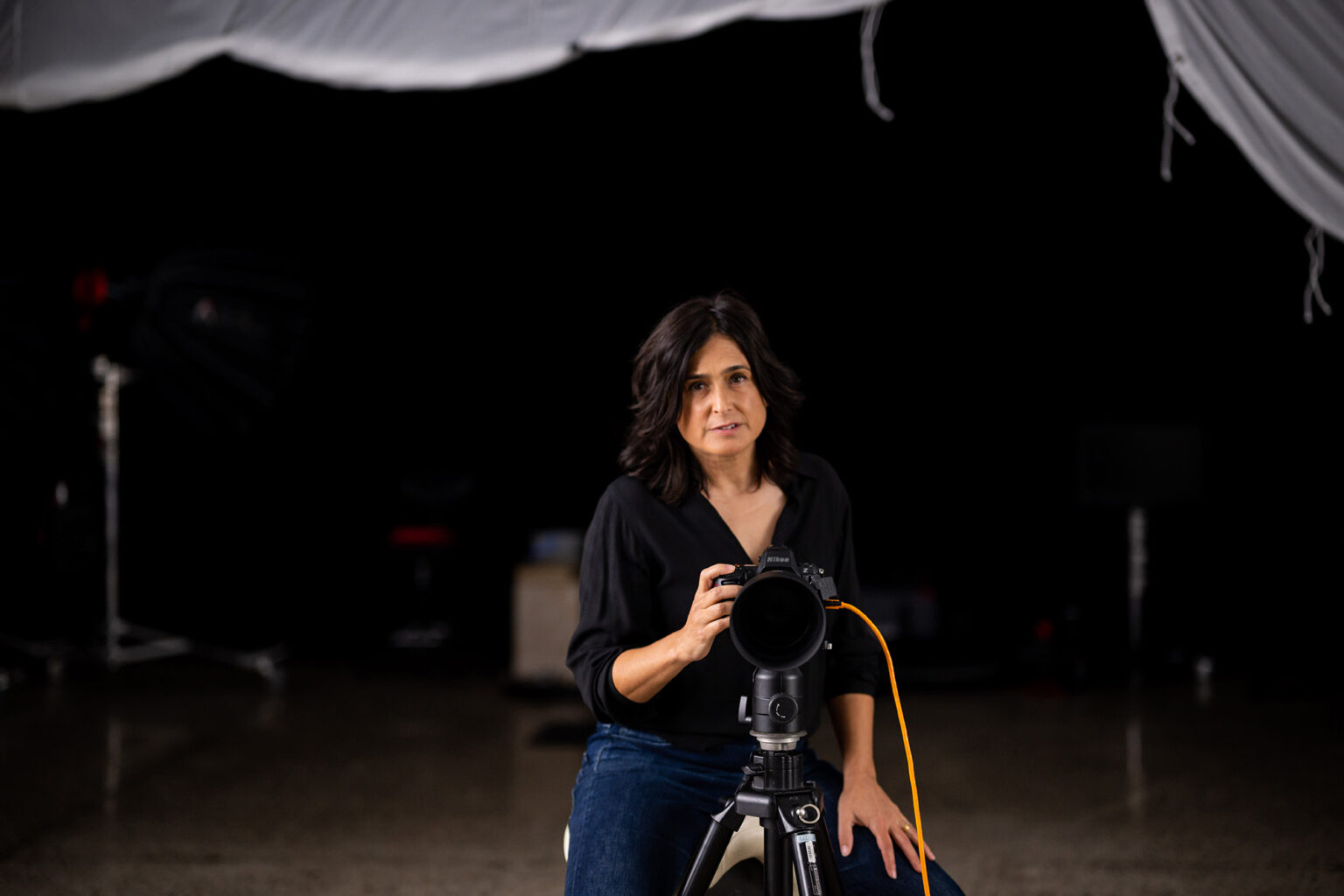
Behind the scenes as Leila Jeffreys photographs her Bonsai and Branch works on a Phase One medium-format camera.
Could you tell us about your work with conservation organisations and how these collaborations have become embedded in your practice?
I work in the realm of artist/activist. The deep love I have for wildlife is inextricably linked to their conservation and care, so these relationships have become embedded in both the ideas behind my work and the way I make it.
As part of my process, I immerse myself with ornithologists, scientists, wildlife carers and museum curators, absorbing their knowledge. What I learn can become the seed for an artwork or an entirely new direction in my practice.
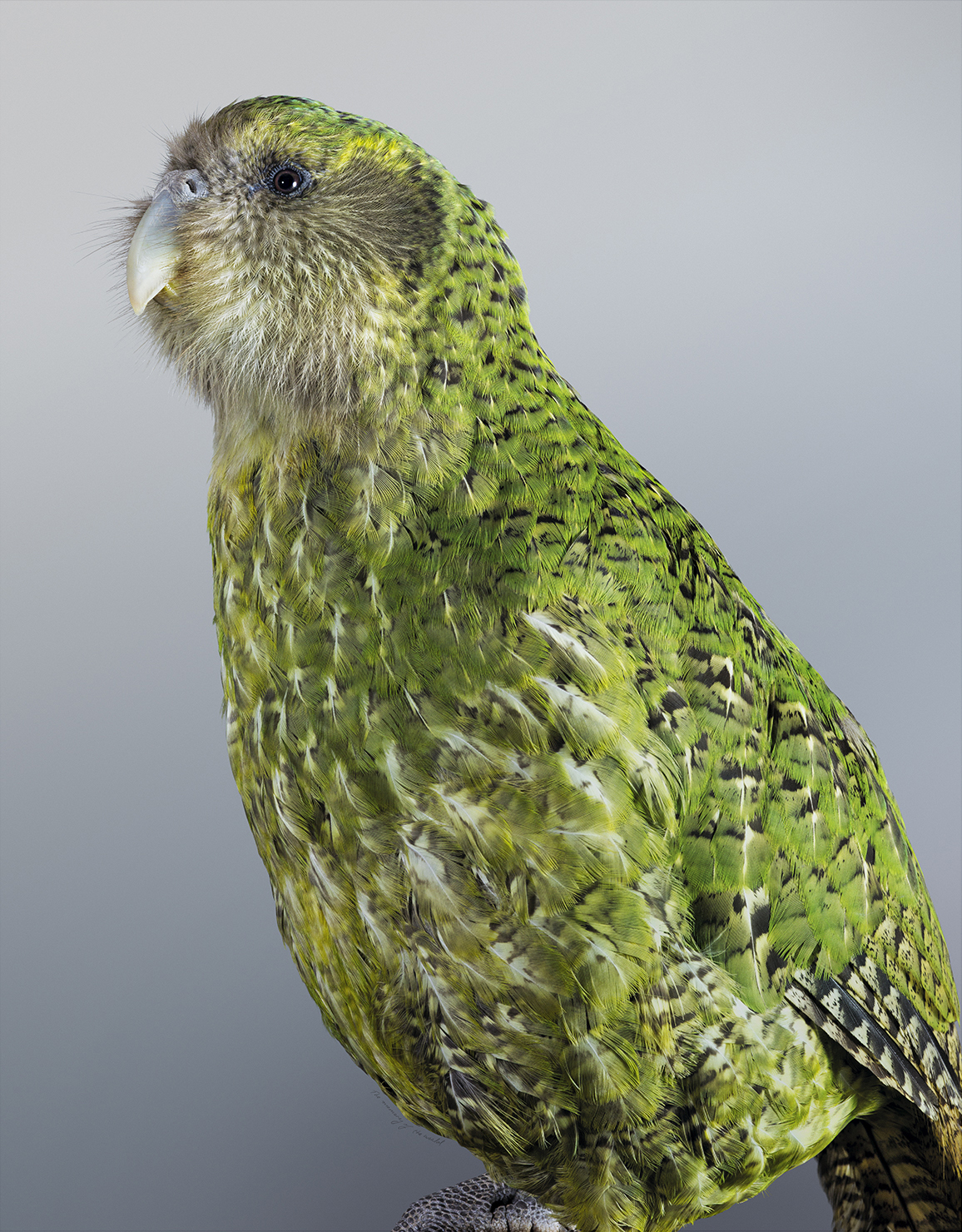
It can also be very hands-on. My work with the Kākāpō Recovery Programme began with being helicoptered onto a remote offshore island in New Zealand to volunteer with the critically endangered kākāpō breeding programme, and eventually led to photographing Sirocco the famous kākāpō.
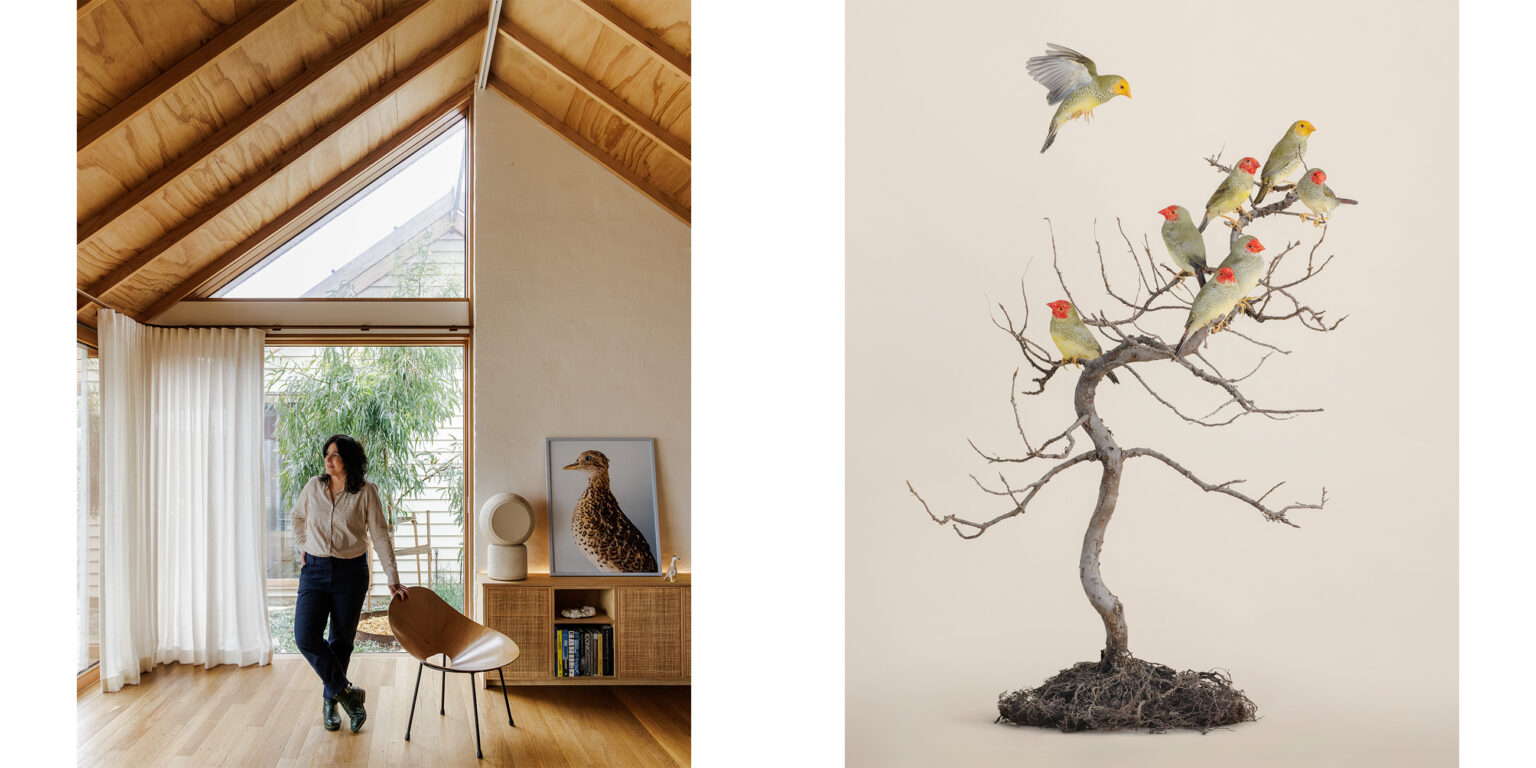
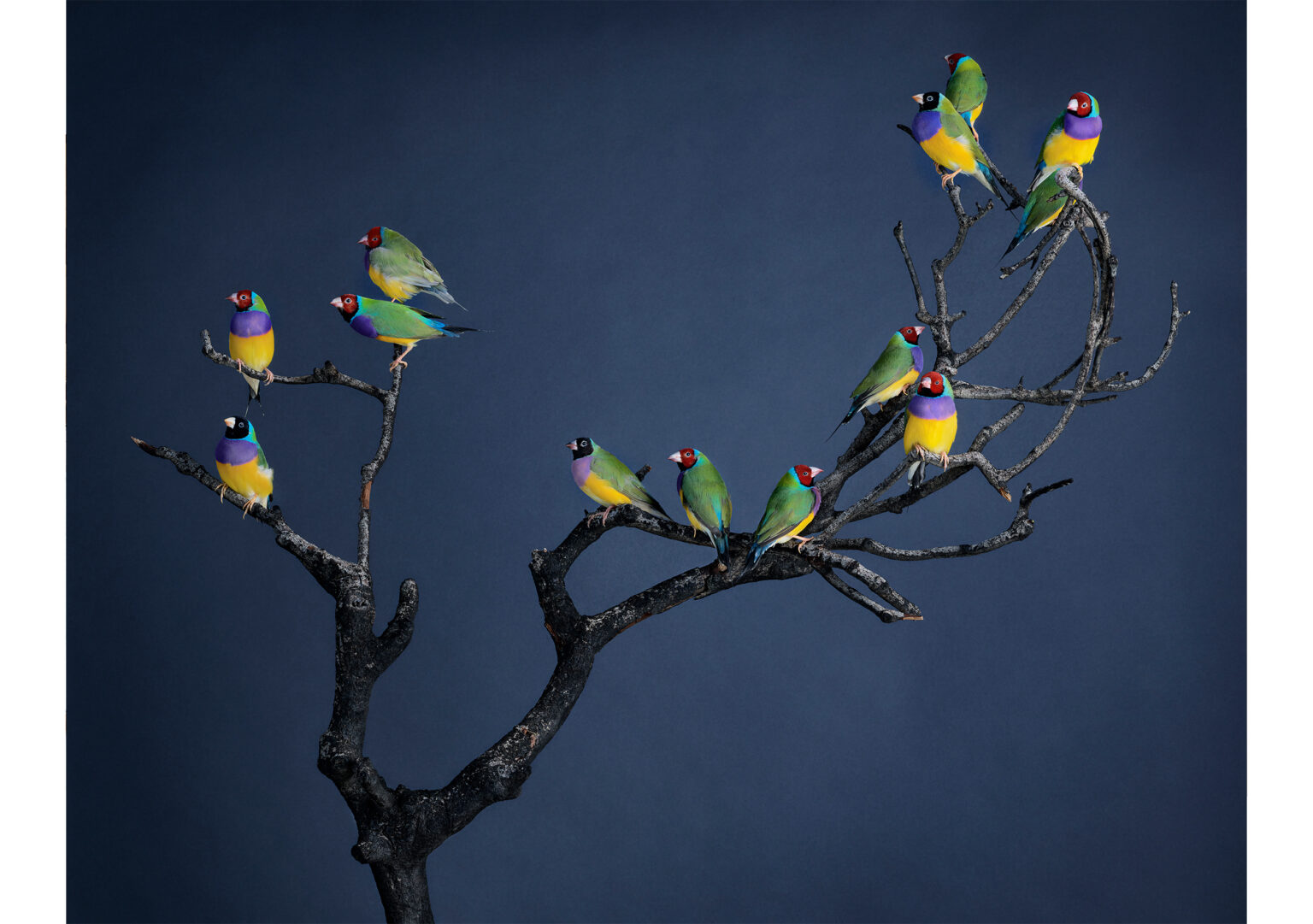
Pictured, clockwise from top left: Leila Jeffreys at home, pictured with her work ‘Clay’ Plains Wanderer from her 2026 series Songs of Innocence (portrait by Jonathan Cohen). Bonsai No.1 and Burnt Branch by Leila Jeffreys, both from her 2022 series The Wound Is The Place Where The Light Enters.
Could you take us through your process – the work involved in finding your subjects, working with them and developing a project from an idea through to a photographic series?
Seabird is perhaps a good example. It’s a body of work that will have taken almost twelve years by the time it is exhibited and published as a book and major exhibition in 2028. The idea was to take the complex world of seabirds and create a visual language that allows us to see them in different ways. The portraits focus on the individual, the eggs are photographed in isolation, almost like planets in space, while landscapes in the book situate the birds within the scale and atmosphere of the environments they inhabit.
The research has taken me from travelling by ship from Scotland to the Arctic to spending a month in Antarctica as part of an Australian Antarctic Arts Fellowship, living and working alongside scientists and learning from their research. It has also involved building relationships with seabird specialists, rescue centres and zoos in Australia and overseas. I generally work with birds already in care and accustomed to people, and it takes months of conversations before a shoot.
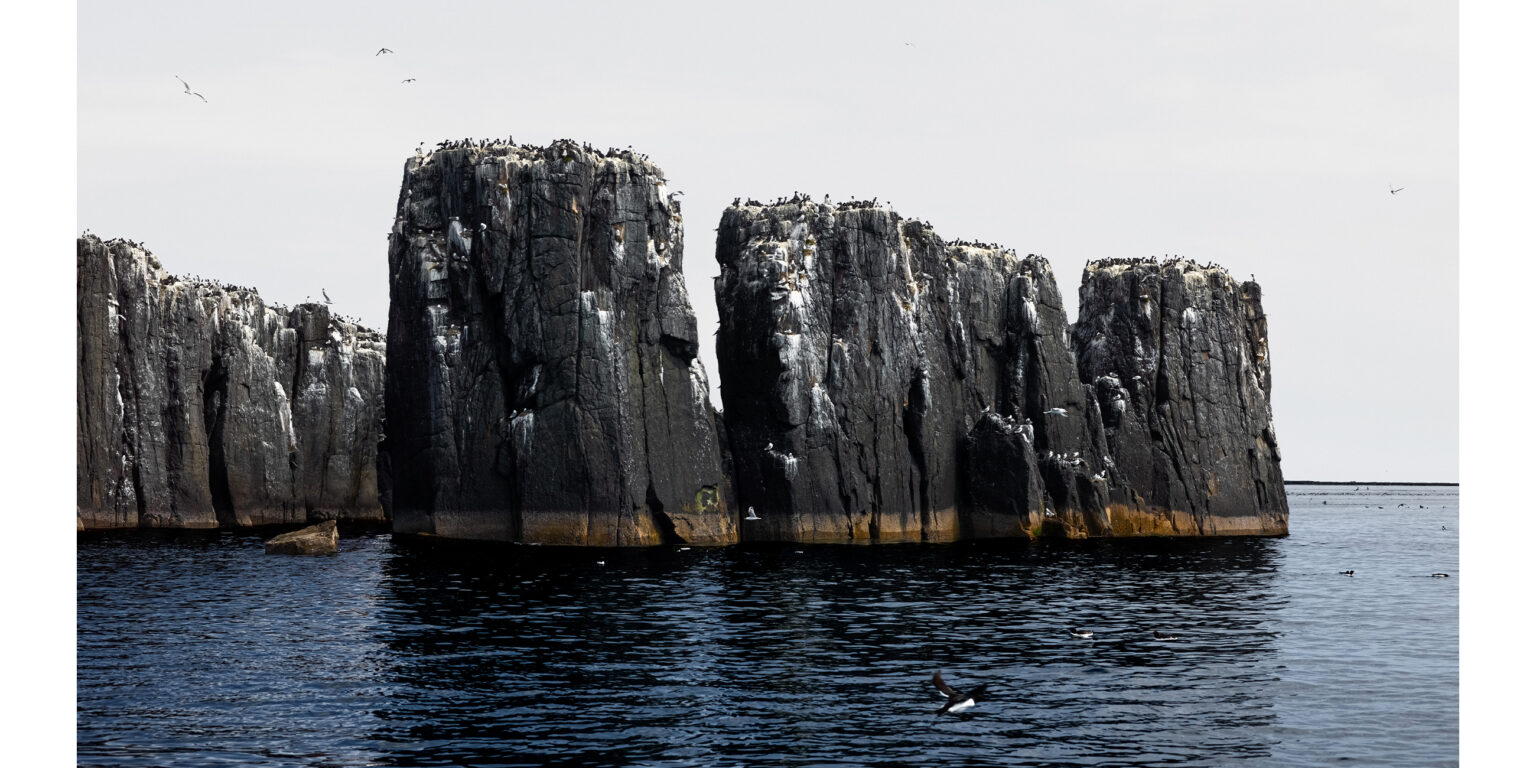
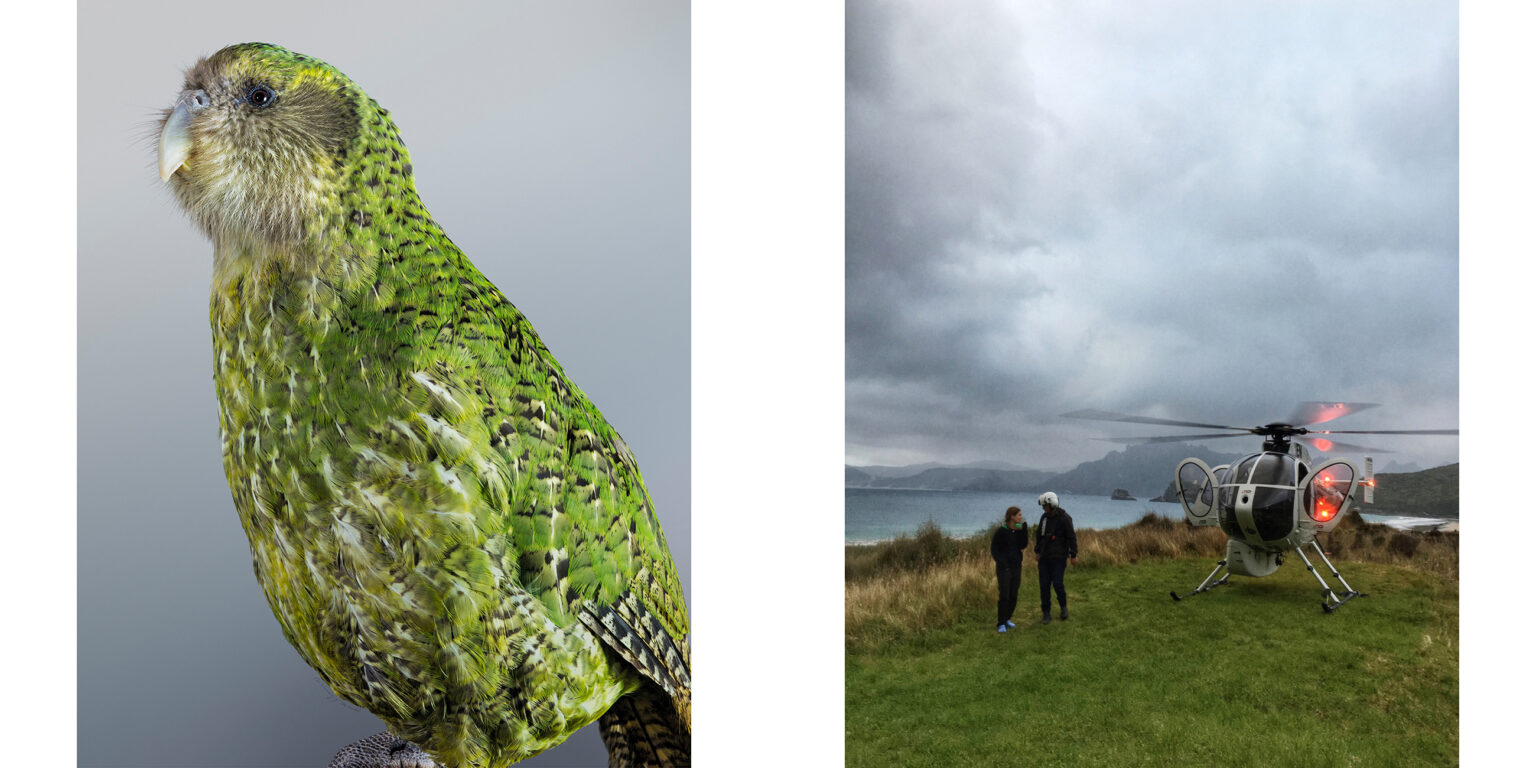
Pictured, clockwise from top: Leila Jeffreys visits the Farne Islands off the Northumberland Coast in northeast England, 2026. Kākāpō, 2025. Leila Jeffreys working with the Kākāpō Recovery Programme in New Zealand.
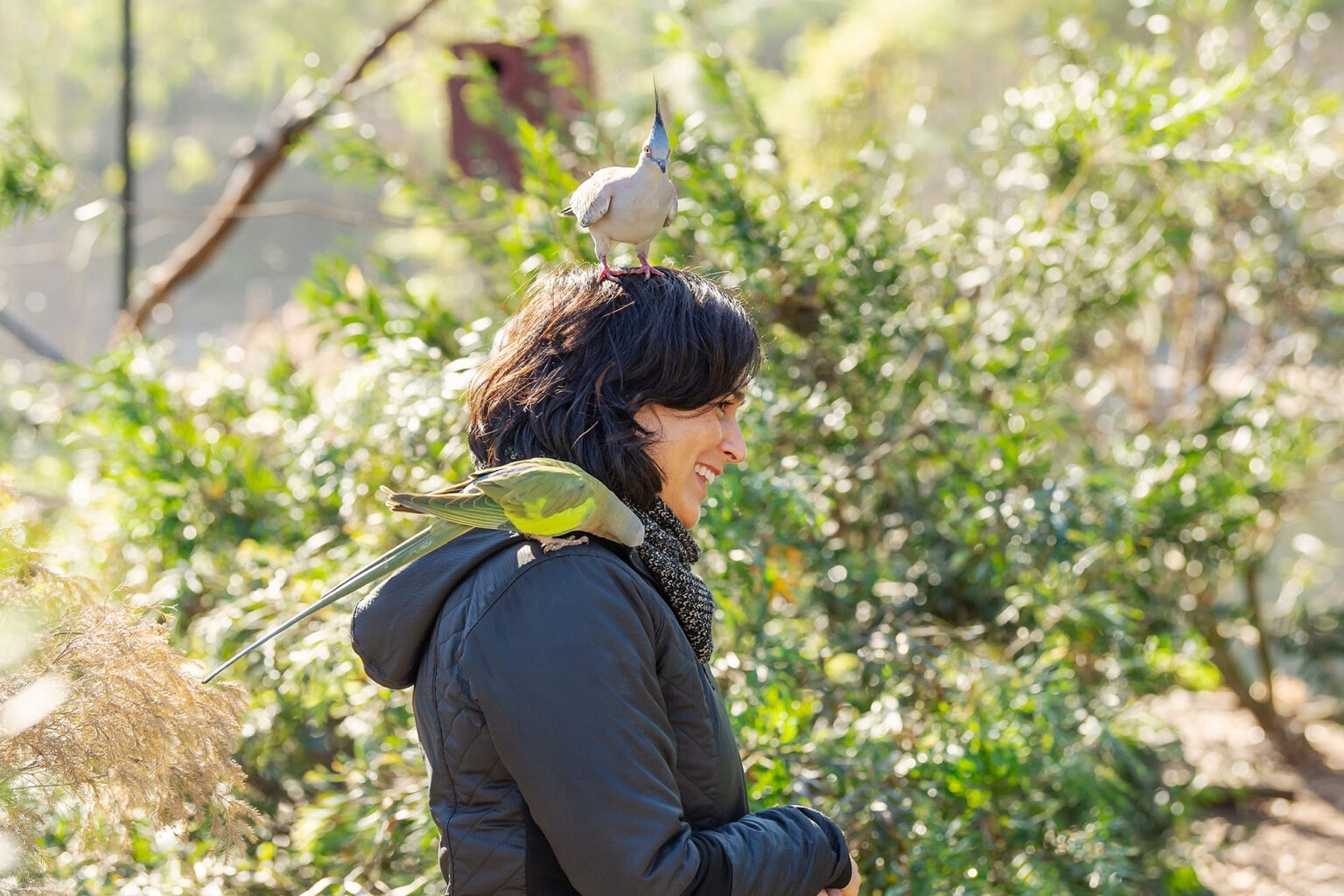
Part of the process can be forming my own relationship with the bird. With gannets and pelicans, I spent time allowing them to become comfortable with me, but ultimately the birds determine what happens. One puffin spent much of our shoot tearing strips from my paper background and running away with them to line its burrow.
At the Natural History Museum in the UK, I worked closely with senior curator Douglas Russell, developing a way to photograph their extraordinary seabird egg collection that achieved my artistic vision while protecting these precious and fragile objects.
The idea gives me a framework, but the work does evolve as I travel, encountering people, birds, egg specimens and environments along the way.
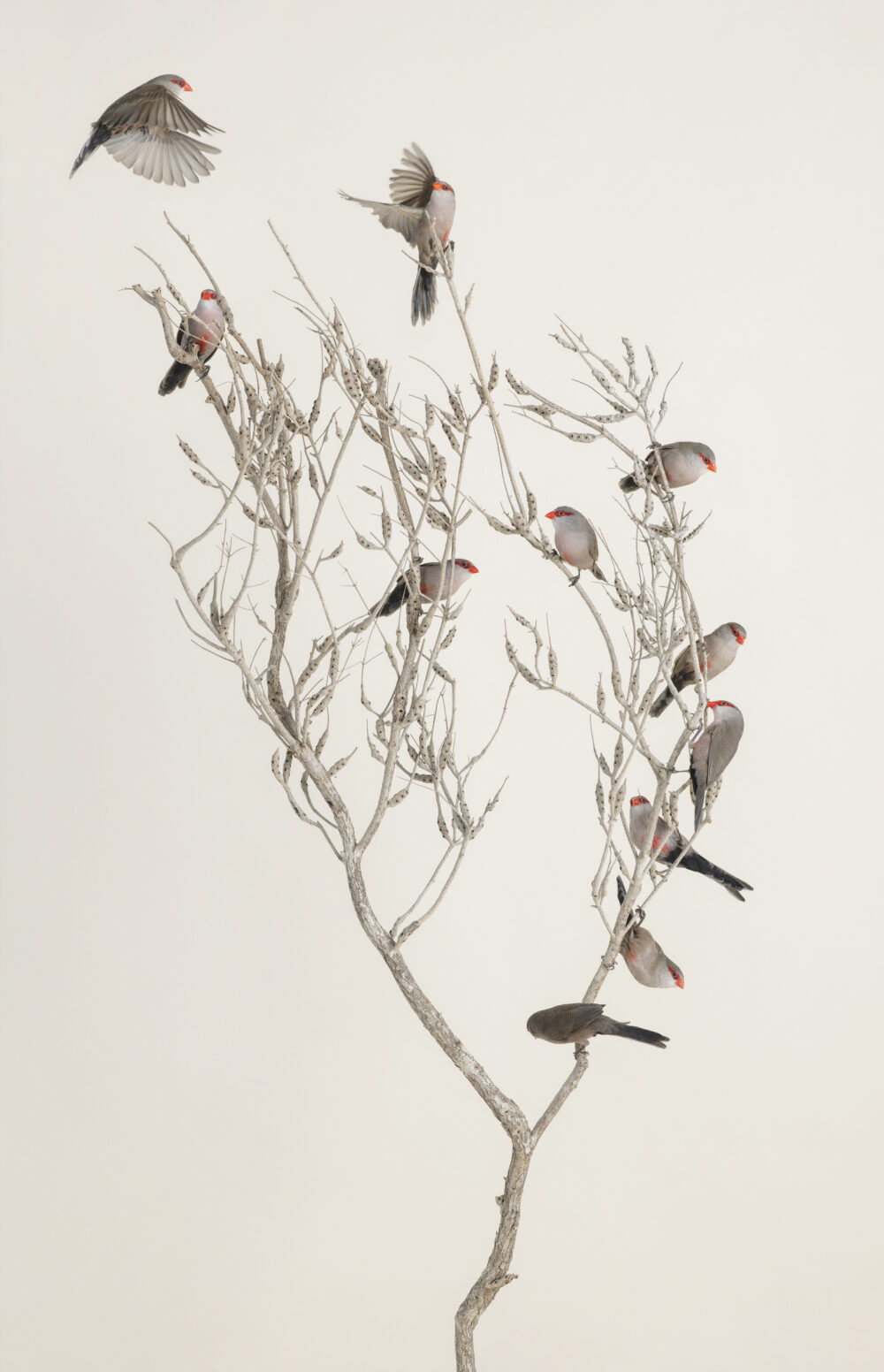
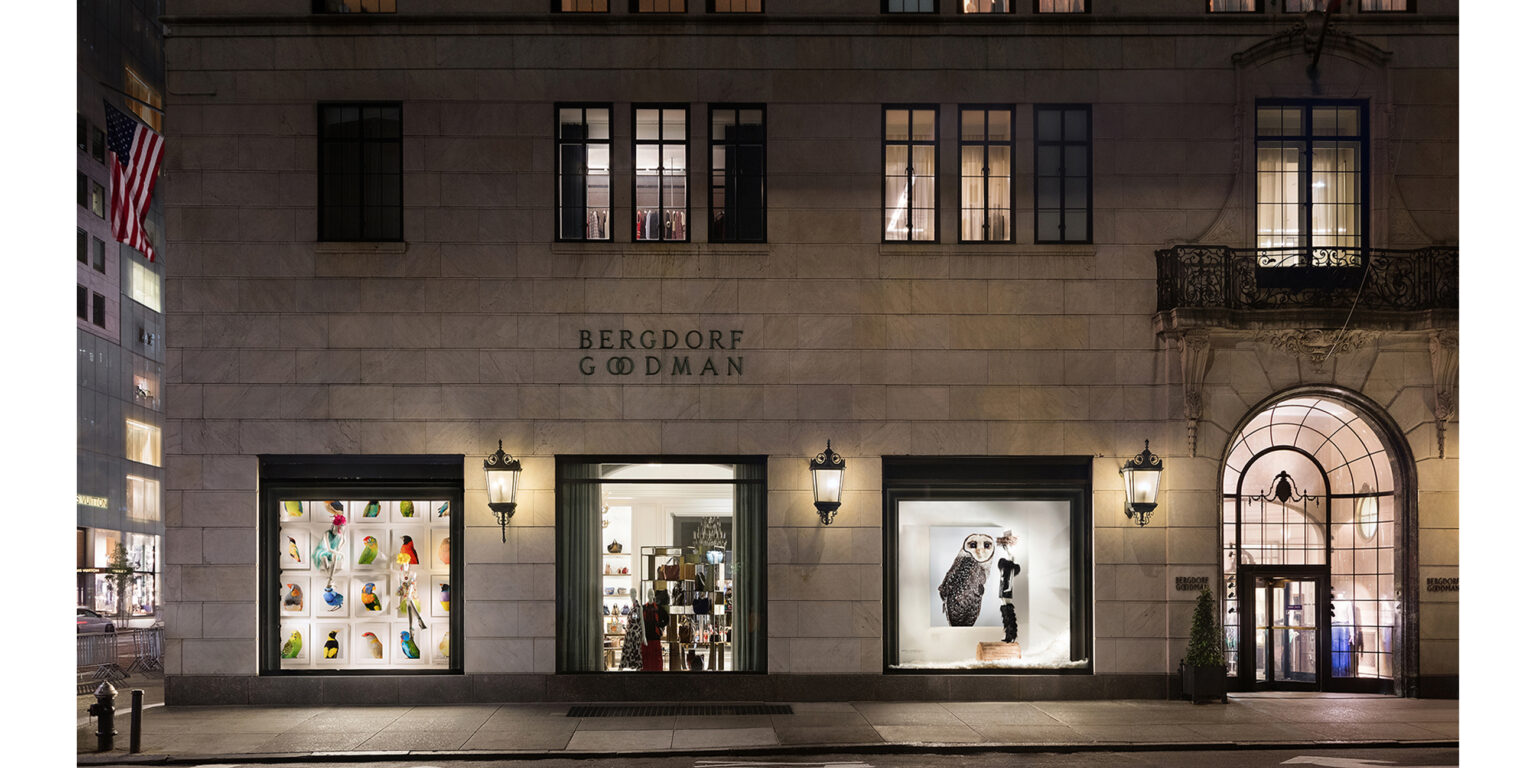
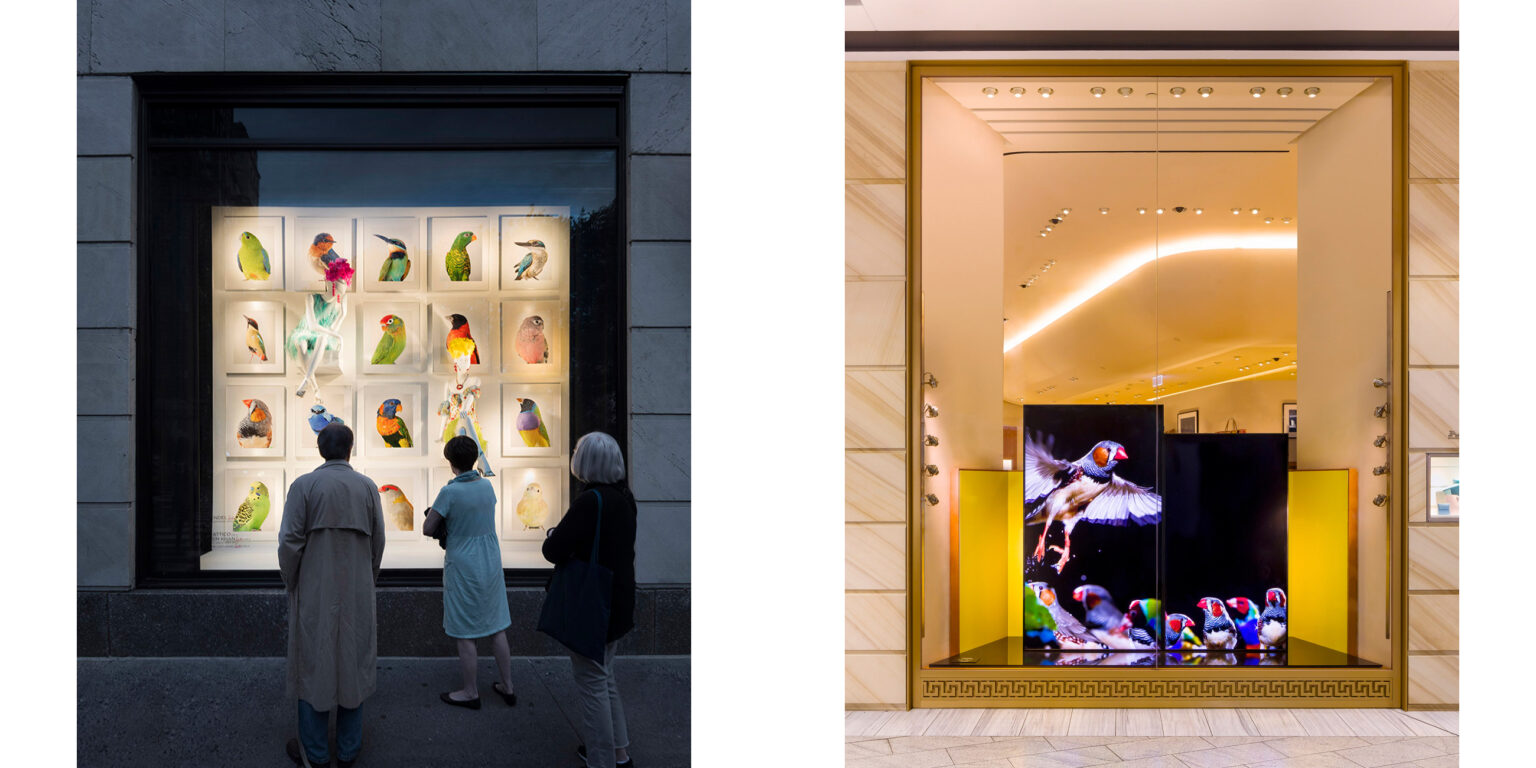
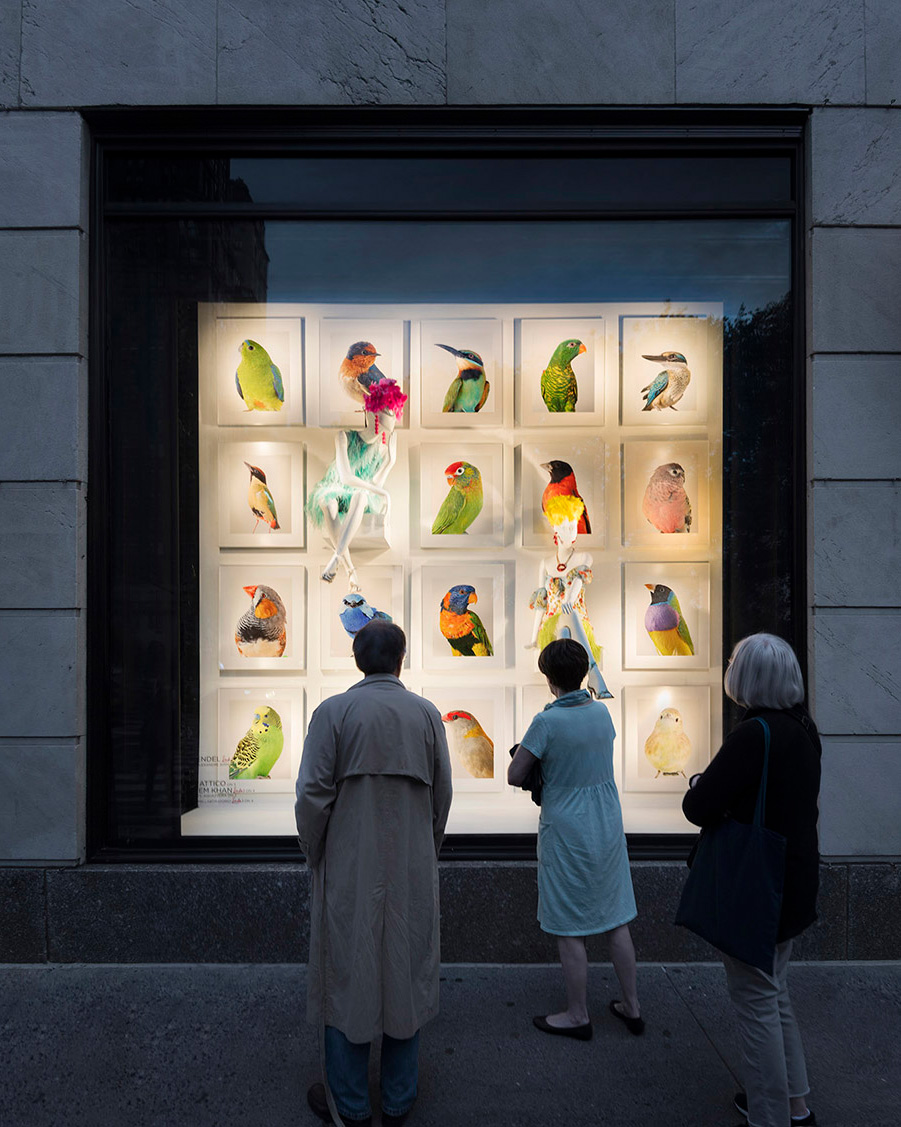
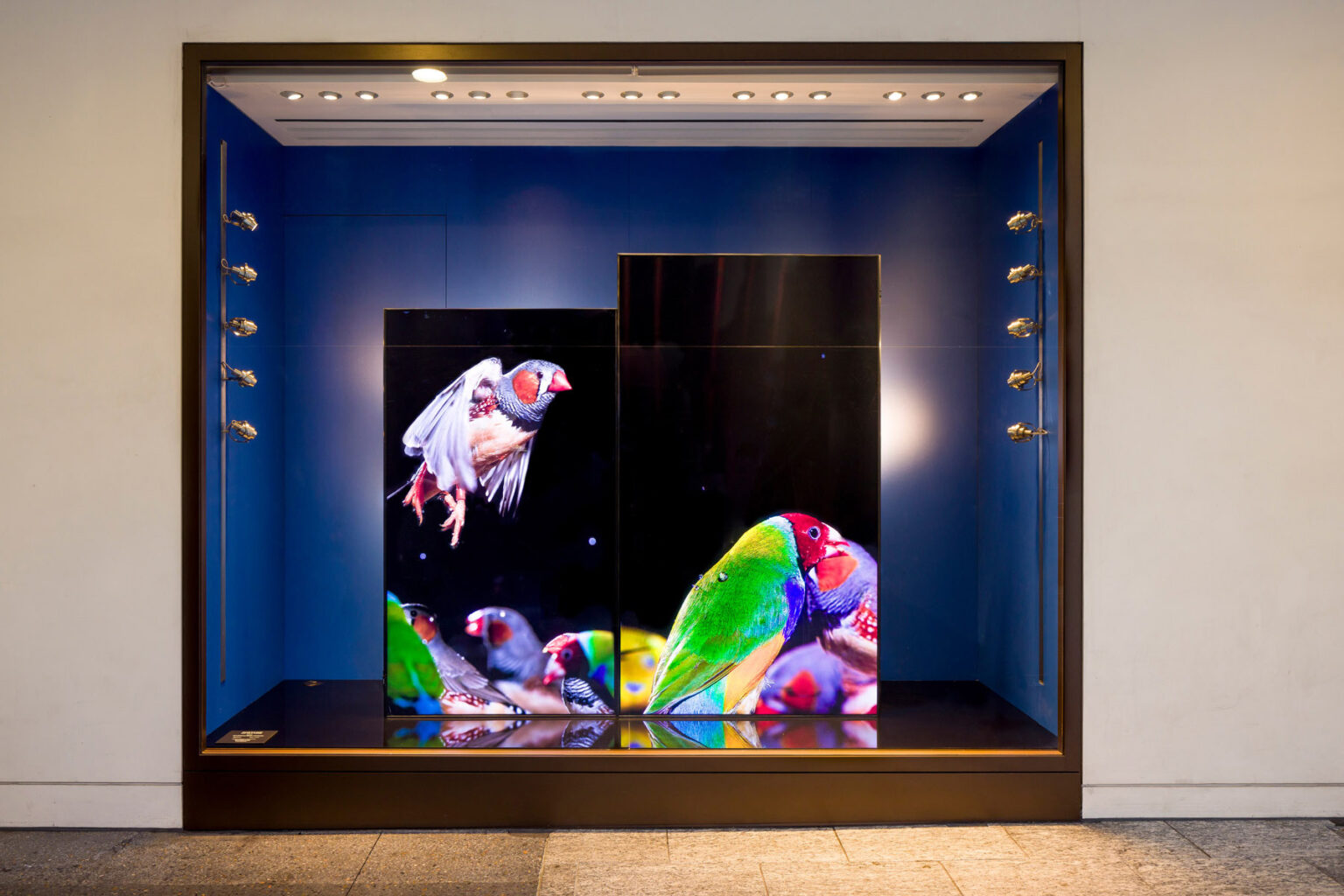
Pictured, top and bottom left: Window installations at Bergdorf Goodman, New York, 2018. Bottom right: Window installation at Hermès Melbourne in collaboration with Melvin J. Montalban, 2023 (photograph by Pete Waddinton).
Your photographs can feel very composed and controlled, yet you are working with living subjects. How does this tension play out in your work?
Very, very slowly. I have the training to understand what makes a compositionally beautiful image, so my sets are very considered and designed to enable me to capture what I hope to capture. But there can also be chaos. Birds fly off, and I need the patience to meet them where they are at.
I try to get into an almost meditative state where I can communicate non-verbally with the bird and respond to what they are giving me.
Leila Jeffreys photographing Penguin the Magpie on a Phase One medium-format camera (video by Cameron Bloom).
Could you tell us about the shift in your work from tighter, often solo bird portraits to capturing larger flocks in more expansive sets and constructed environments?
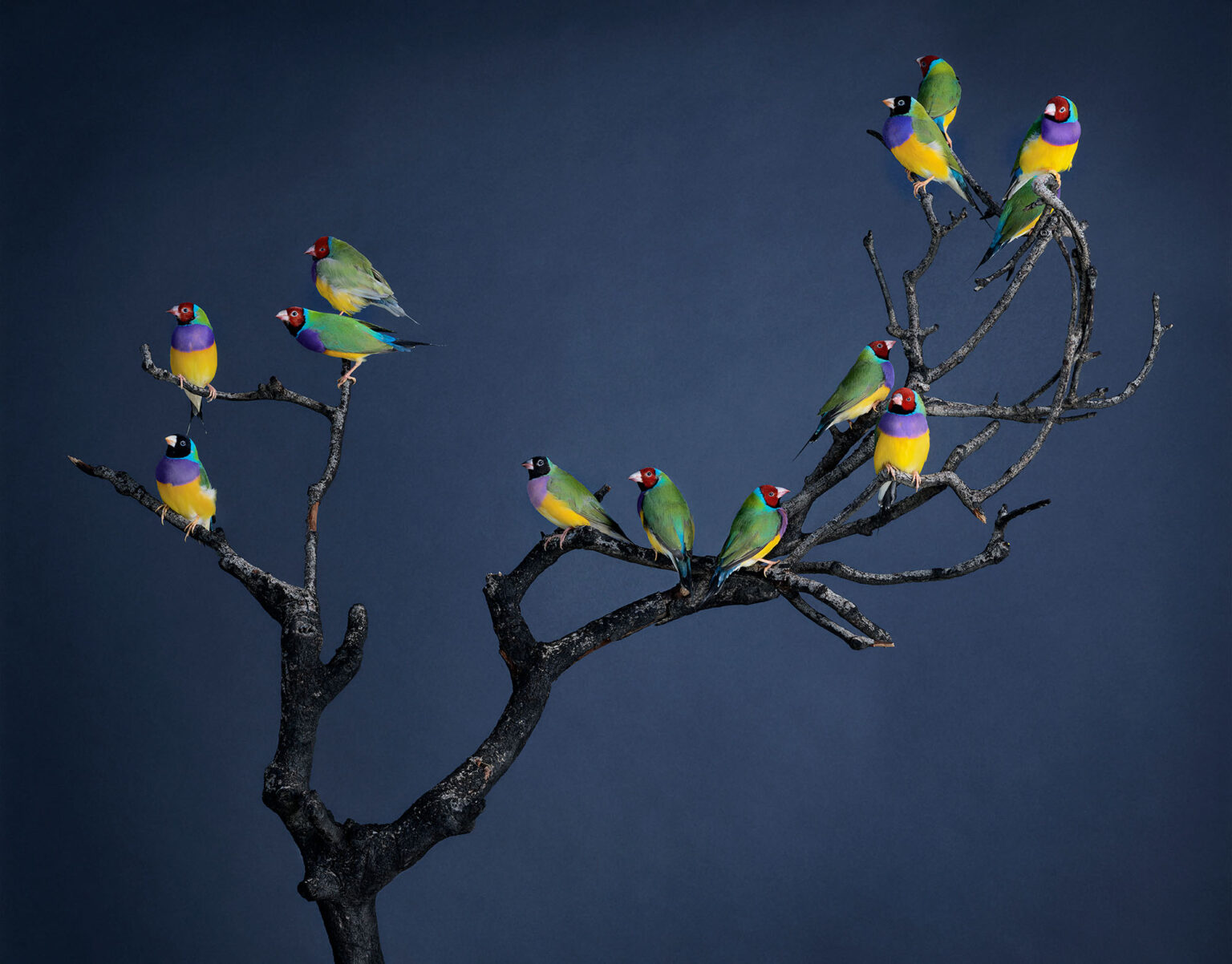
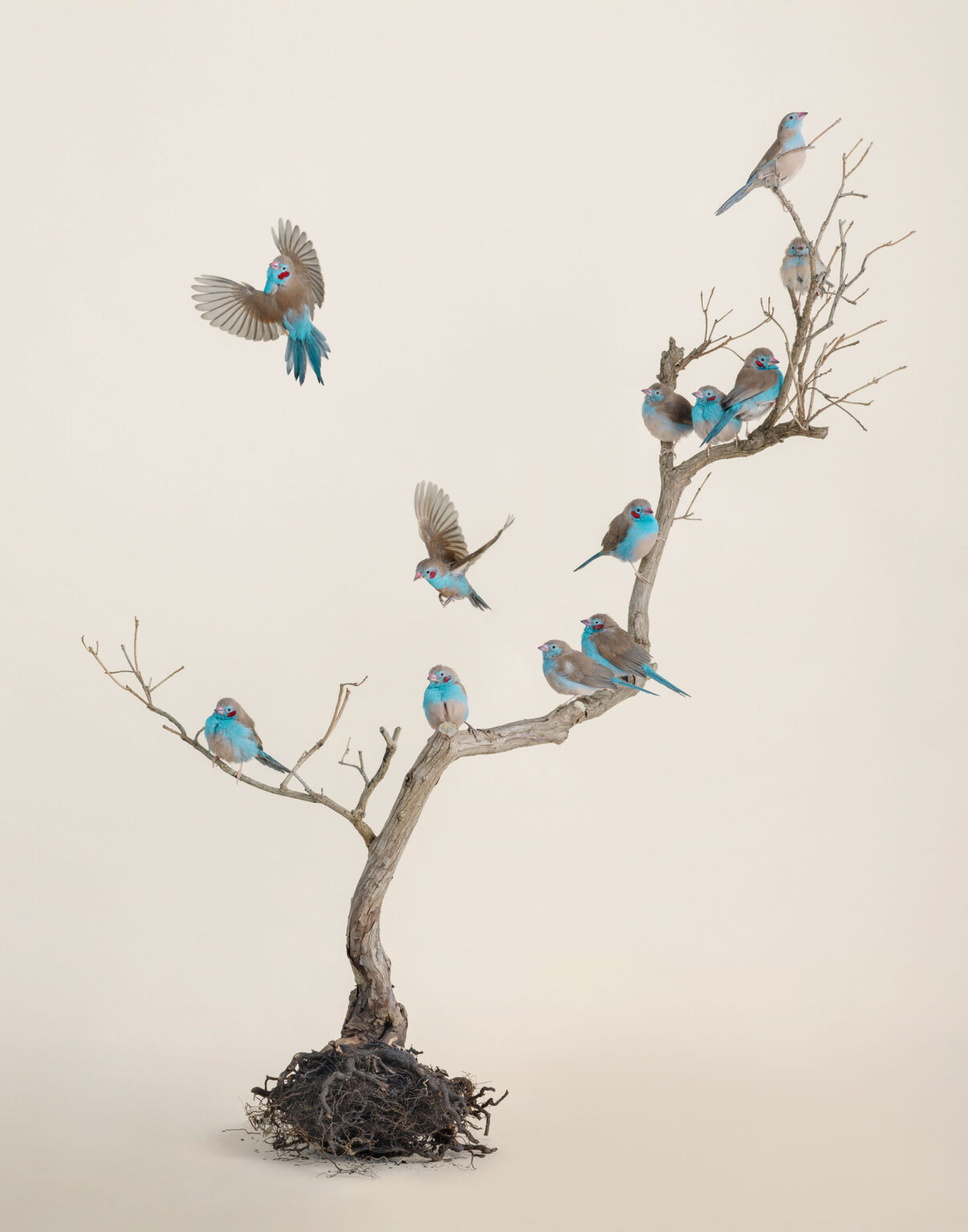
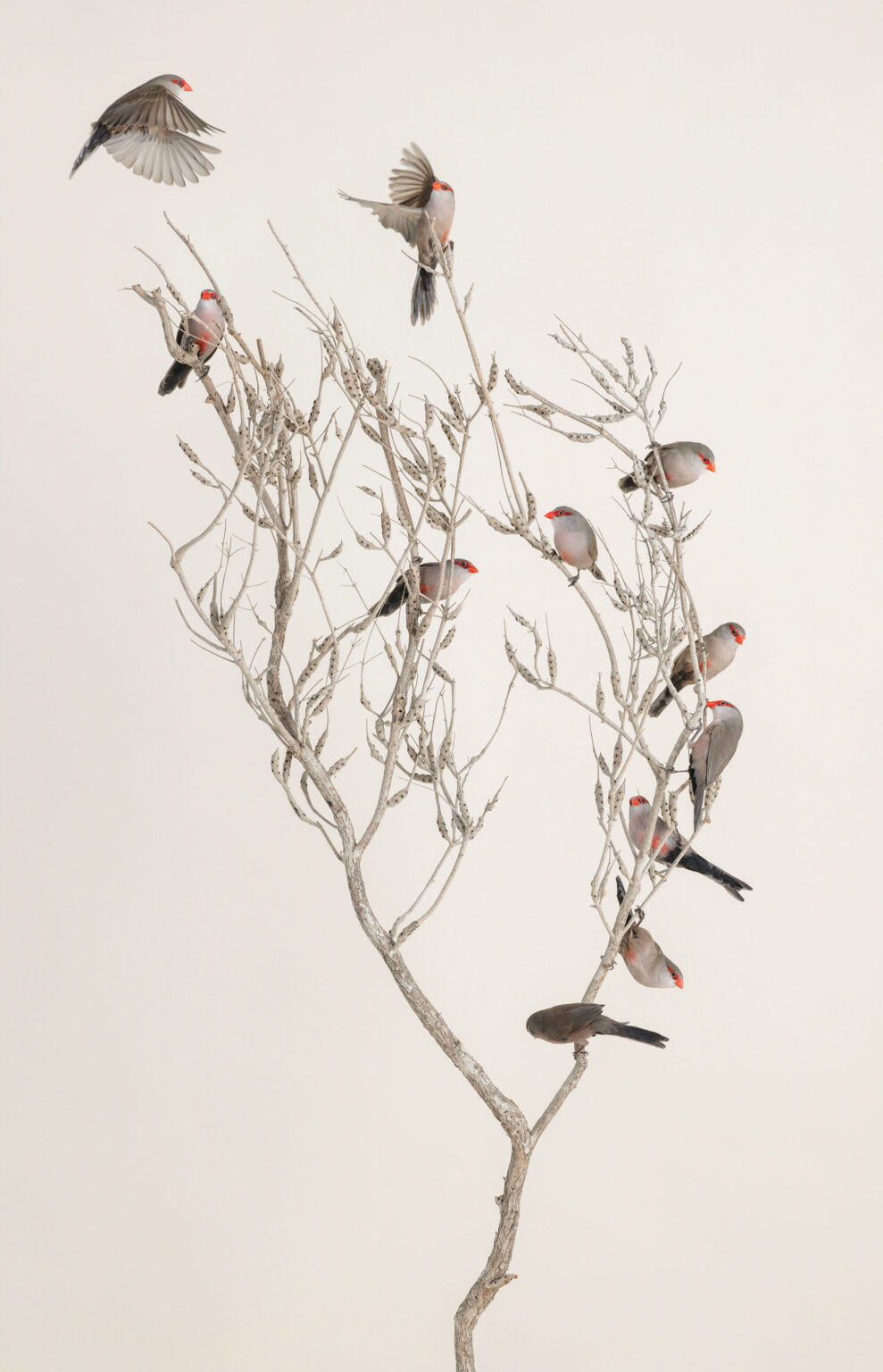
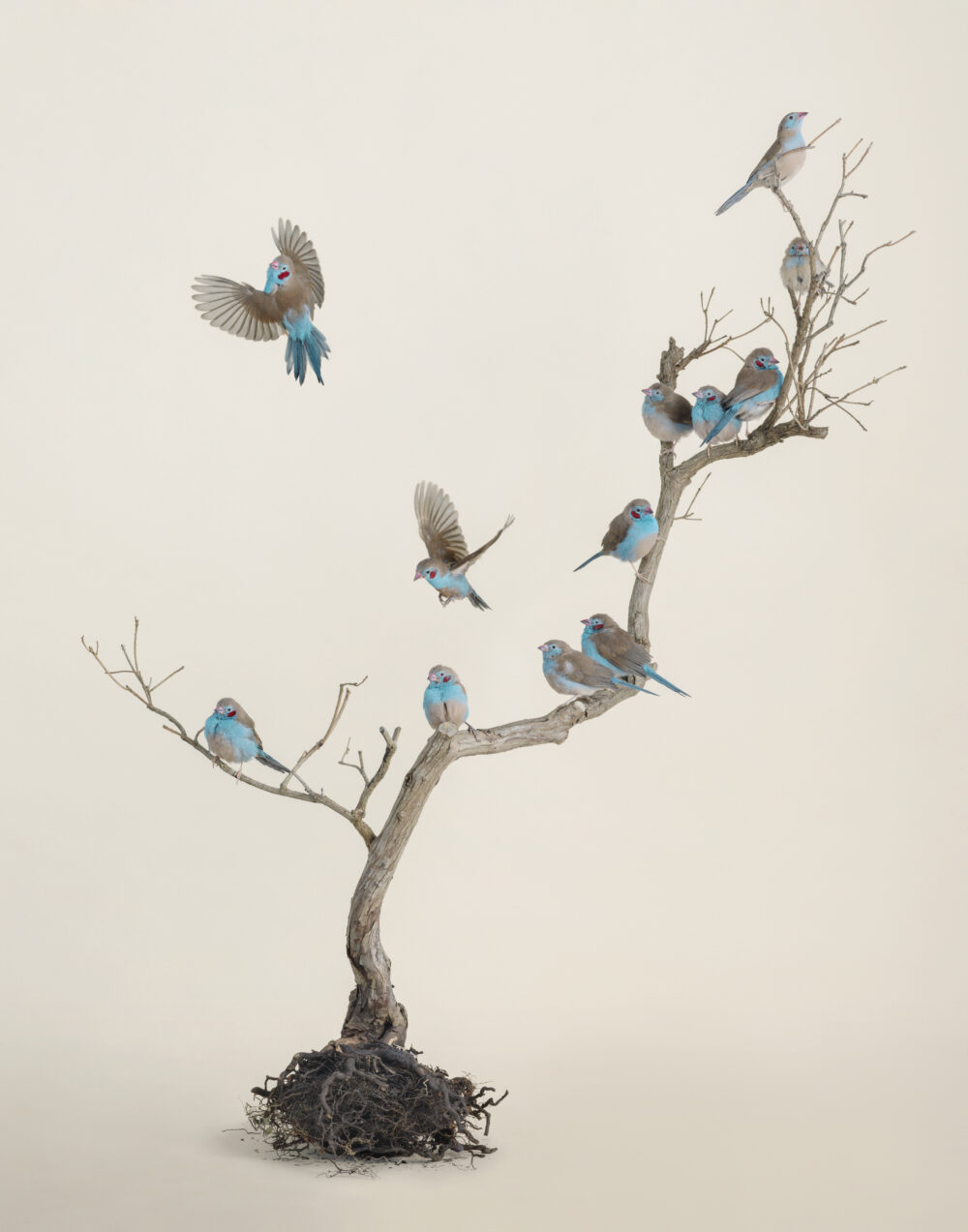
I came up with an exhibition I called High Society. It began when I noticed that a flock of parrots perched in a tree looked like the shape of the leaves. When I looked more closely, I could see individuals, couples and families within the flock, an entire society.
I wanted to capture that in a studio, and it took about five years to work out how. We eventually built a ten-metre aviary inside the studio and worked with more than 300 tame budgerigars. The logistics were enormous. We had to make sure the studio didn’t overheat from the lights, so we brought in a mister that fed through the air-conditioning system. I picked fresh foliage each morning to keep the birds happy, and went through about 40 kilos of birdseed. The sound was incredible.
Creatively, it allowed me to explore collective behaviour and the fascinating way a flock can move and respond almost as a single organism. There is vocal communication, but also something unseen happening between them that I find fascinating. I also loved being able to create works that connected the birds more closely to their environment.
Behind the scenes of the making of High Society, 2019.
“I try to get into an almost meditative state where I can communicate non-verbally with the bird and respond to what they are giving me”
LEILA JEFFREYS
___
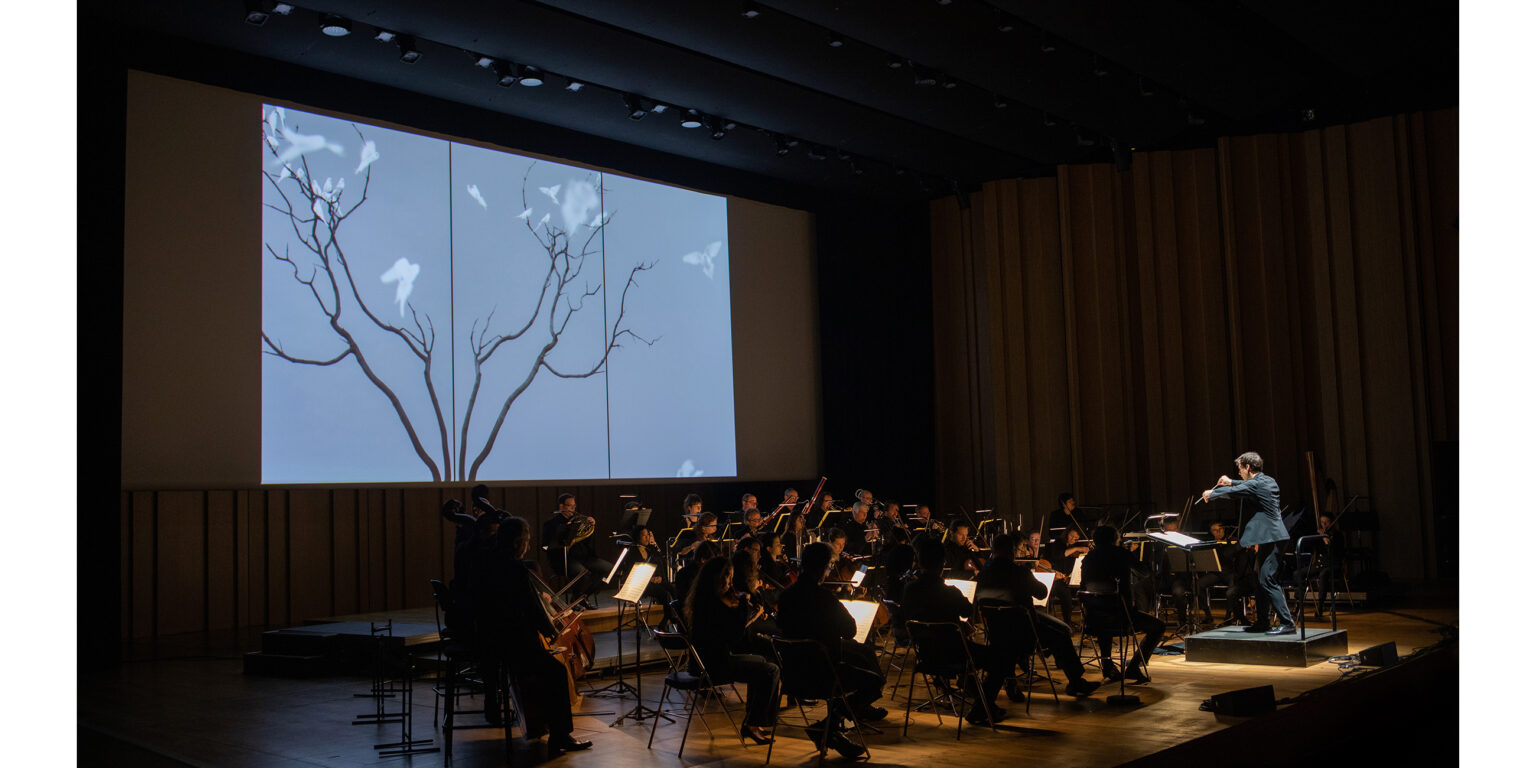
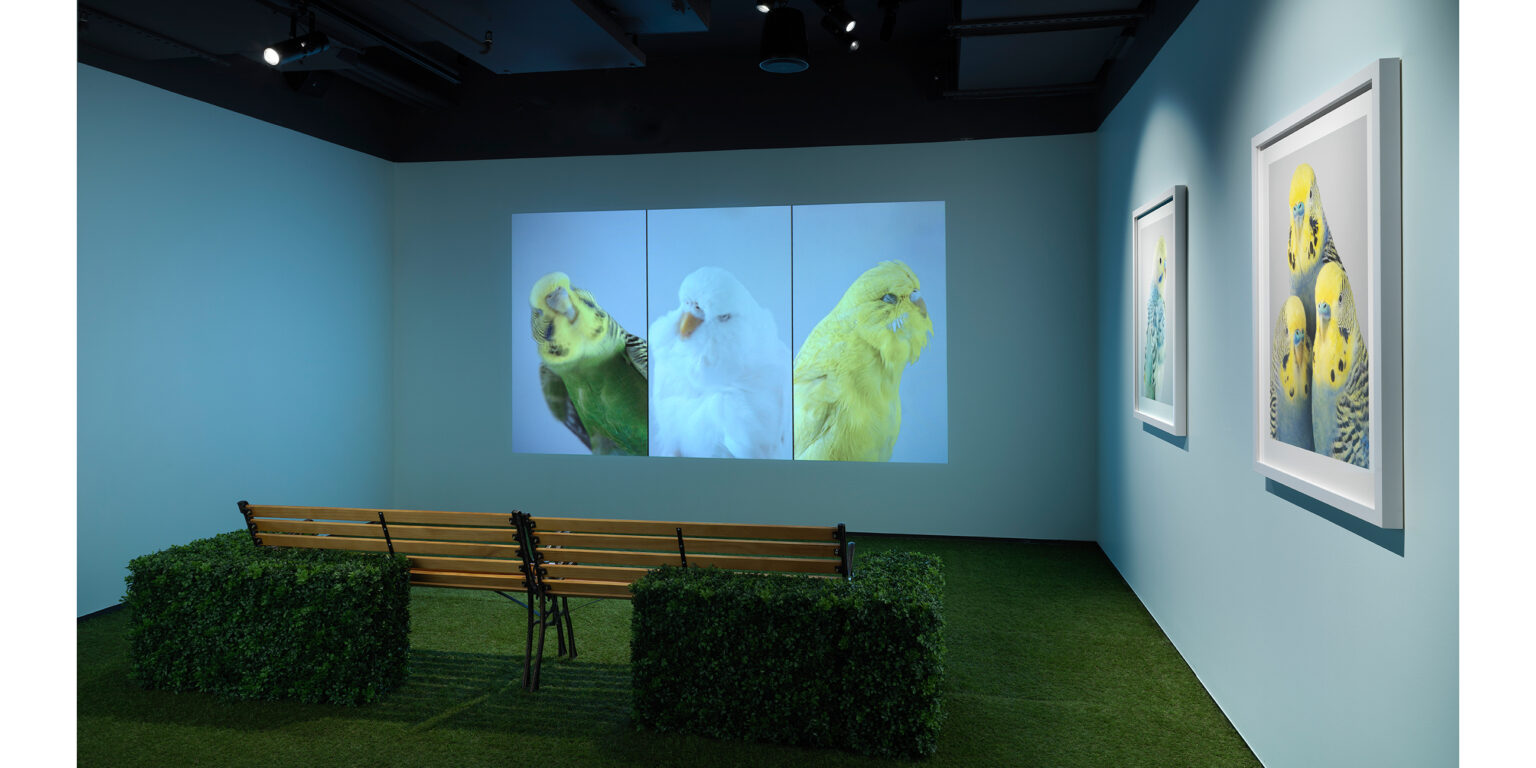
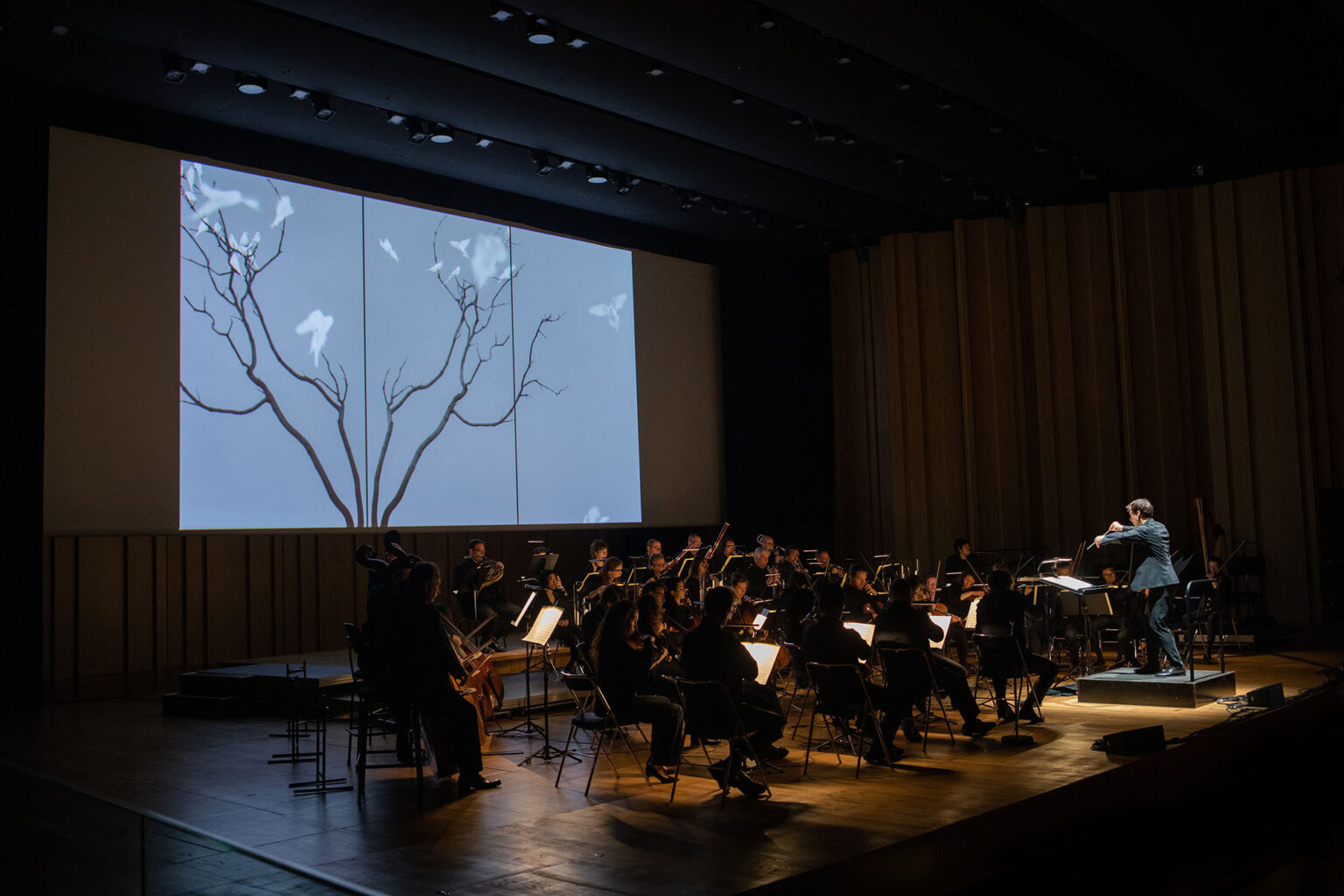
Pictured, from top: Orchestre National de Bretagne, France (photograph by Laurent Guizard). Best in Show at Fotografiska, New York, 2023–2024 (photograph by Dario Lasagni).
Could you tell us about your move into video and moving-image work?
Moving-image work grew naturally from photography and my interest in noticing birds in ways we don’t normally get to see them.
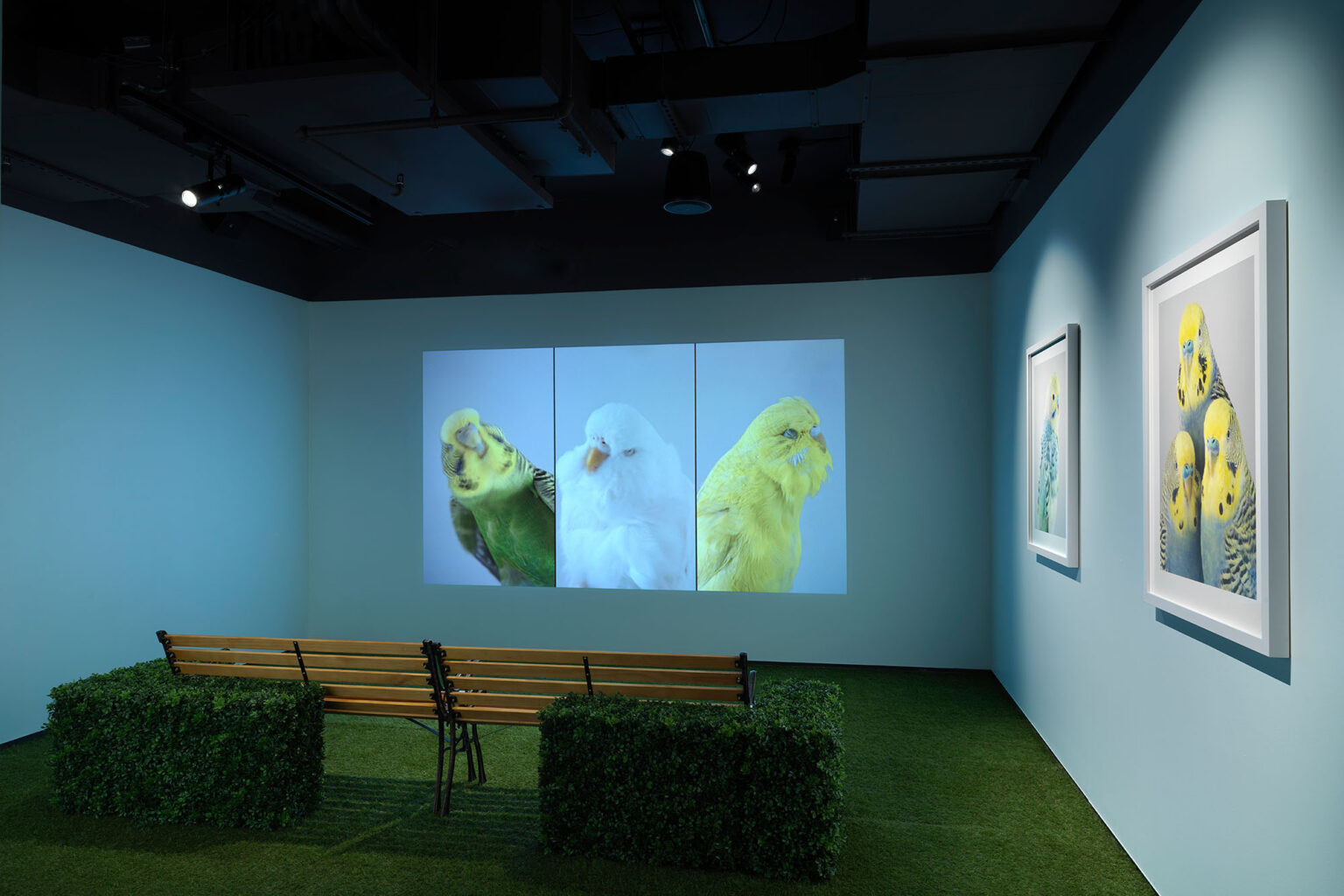
Nature Is Not A Place To Visit. It Is Home was my second moving-image work, but the first time I worked with a Phantom Flex camera, filming in 4K at up to 1,000 frames per second. It is a highly specialised camera, so I work as the director alongside a specialist camera operator. At that speed, a single second of real movement can unfold over around 40 seconds on screen. Watching a bird shake water or fly through the air becomes extraordinary. You begin to see how birds physically engage with the air.
I could also work with sound and multiple screens, including triptychs. It became an important expansion of my practice and led to increasingly ambitious and immersive works such as TEMPLE and NEST, created in collaboration with my artistic partner Melvin J. Montalban.
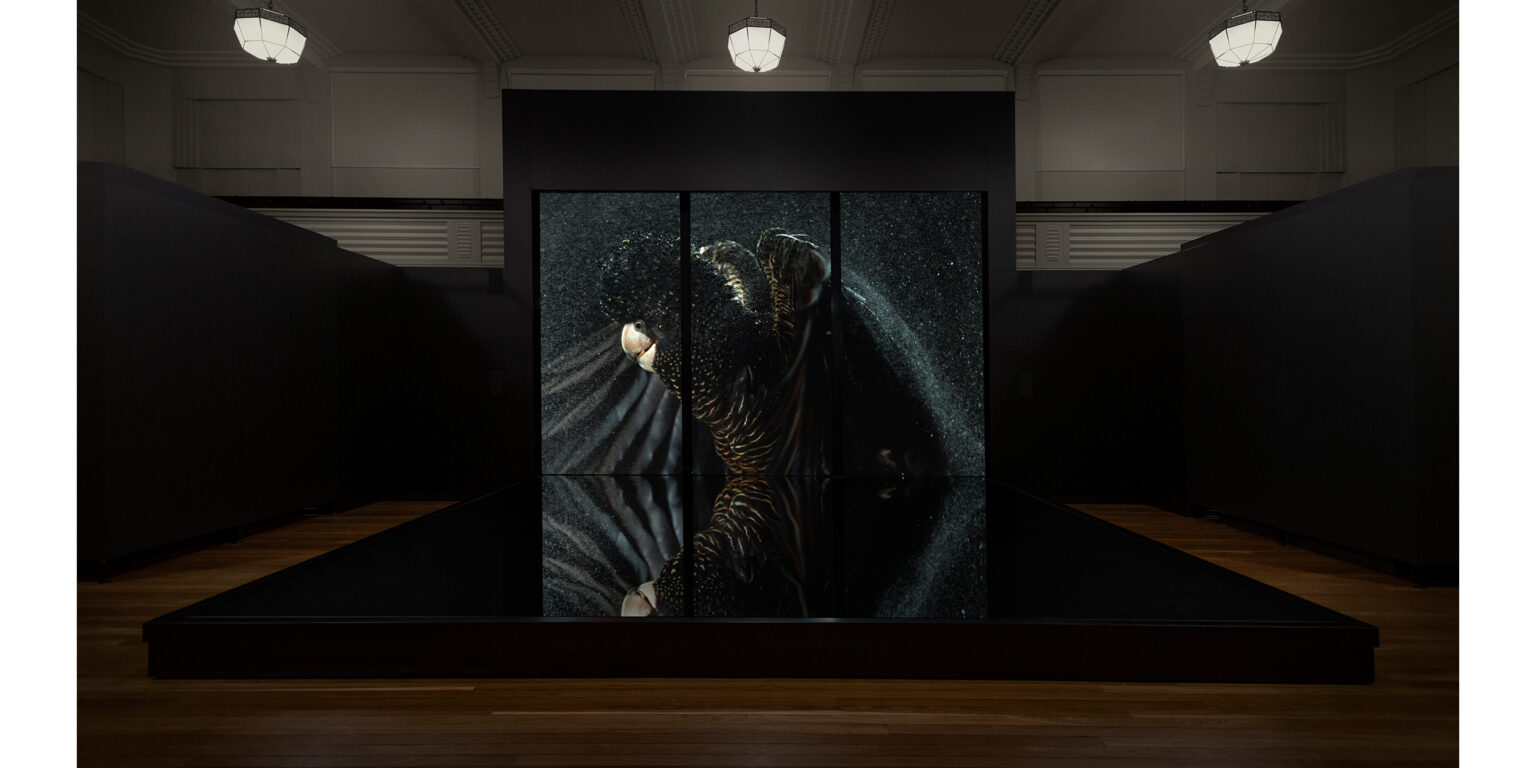
Pictured, from top: Commissioned for Vivid Sydney 2024, NEST by Leila Jeffreys x Melvin J. Montalban on the Stargazer Lawn in Barangaroo, Sydney. TEMPLE by Leila Jeffreys x Melvin J. Montalban, exhibited at the National Film and Sound Archive in Canberra, 2024 (photograph by Grace Costa).
Could you tell us about TEMPLE? What were the seeds for this project, how did you approach it differently from your previous work and how did you hope viewers would experience it?
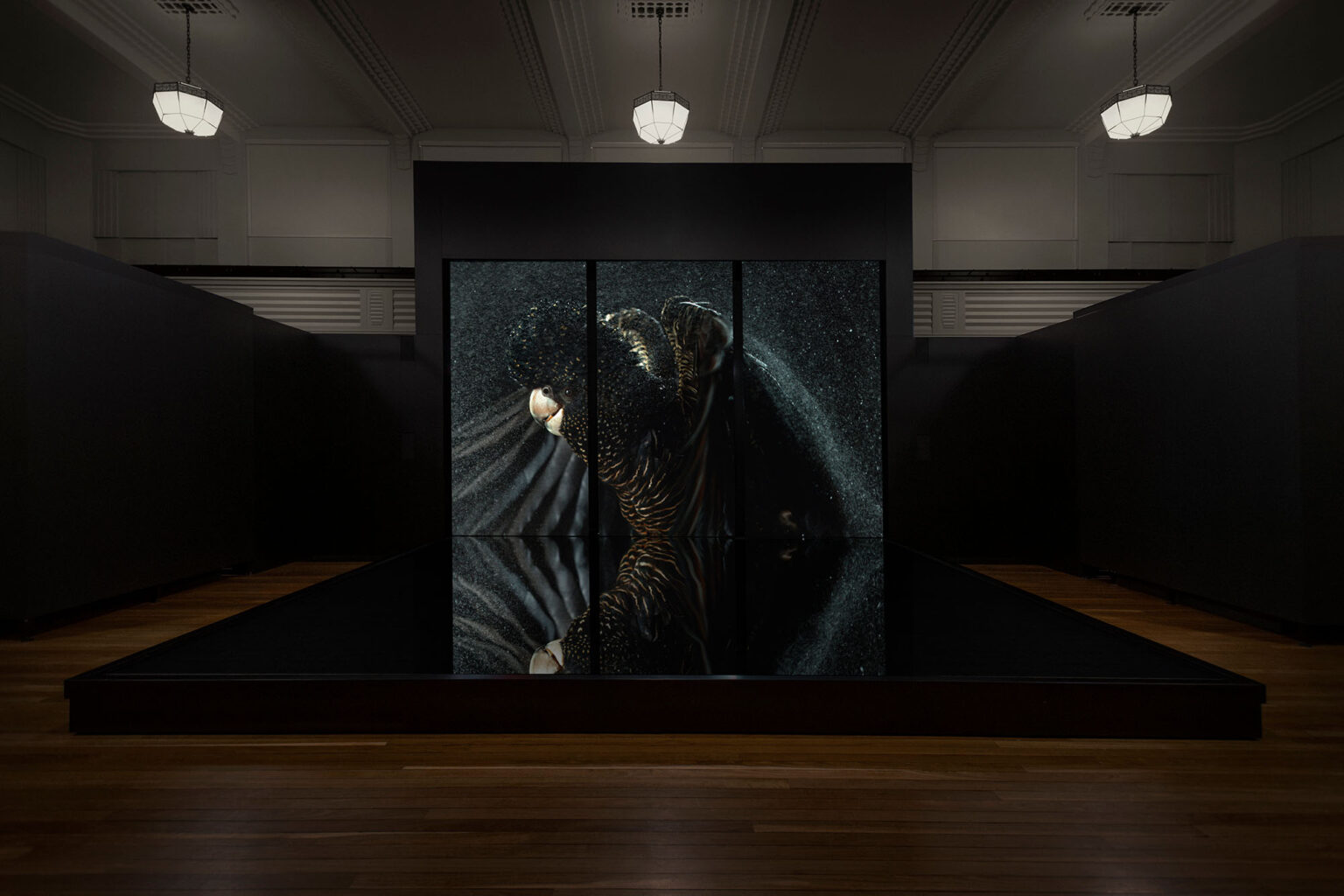
TEMPLE was a crazy ambitious, big dream artwork that my artistic partner Melvin and I first talked about one afternoon sitting on the pier at Manly. The title came from the idea of creating an installation that was a temple to nature. Throughout history, people have made pilgrimages to temples to find tranquil stillness and connect to something larger than themselves. We wanted to create an installation that could bring people into that same state of stillness and heightened awareness.
Water was central to that. We built a large reflection pool beneath a triptych of towering screens so the birds were reflected in it. There is something about water that naturally creates stillness and contemplation.
TEMPLE by Leila Jeffreys x Melvin J. Montalban at the National Film and Sound Archive in Canberra, 2024.
We worked again with the Phantom Flex camera and brought in cinematographer Chris Bryan, but the production was much more ambitious. We spent a year collaborating with Ravi Wasan and the team at Feathered Friends bird sanctuary, working with rescued cockatoos. There were months of preparation and training so the birds were happy bathing and flying on set.
This was the kind of work Melvin and I dreamt of making. We were interested in creating art at a scale where hundreds or even thousands of people could experience it together.
That ambition then led to NEST, which took everything to another level. It was an even larger and more technically complex work to realise. It allowed us to think beyond the screen and explore how moving image could inhabit a sculptural form in a public space.
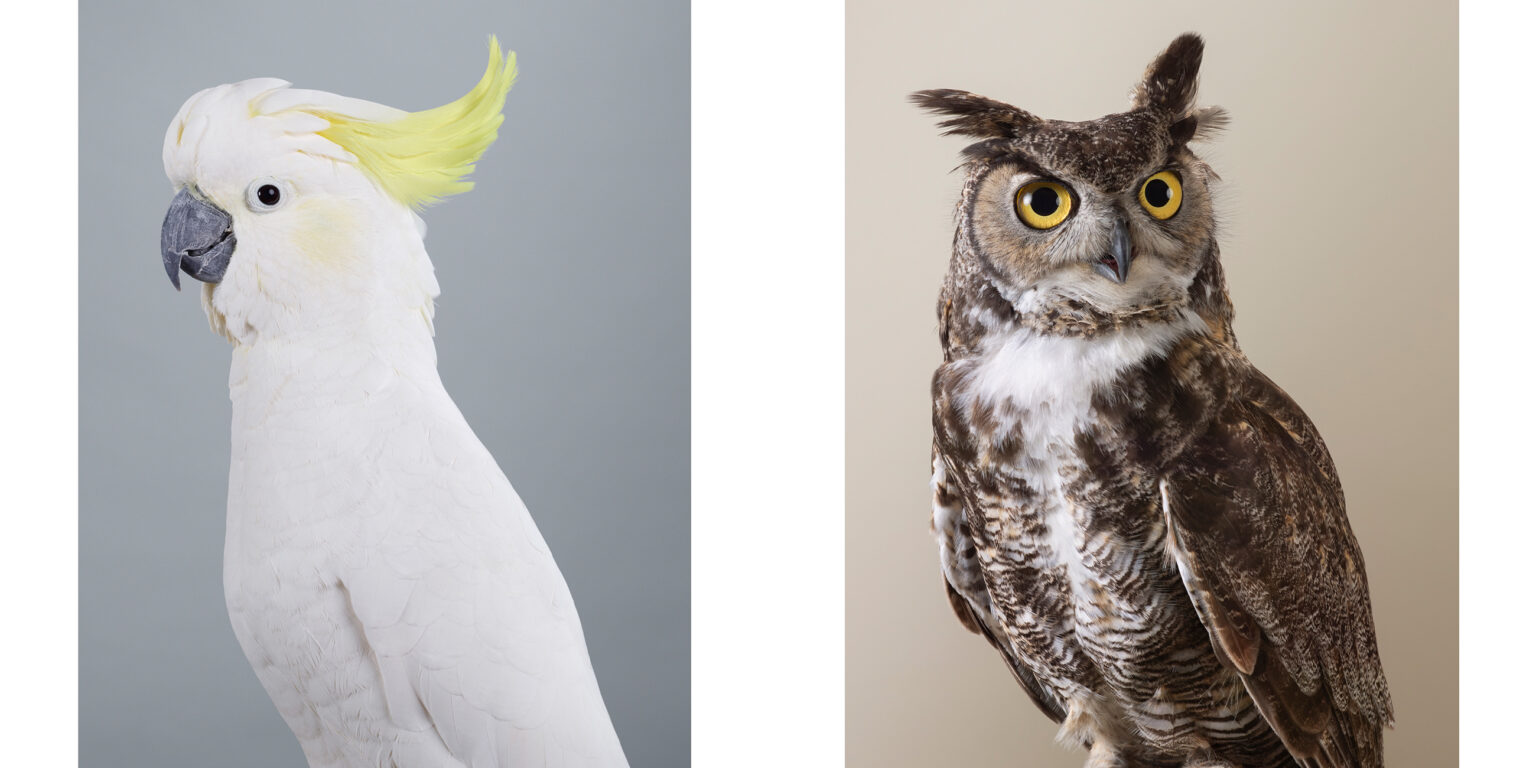
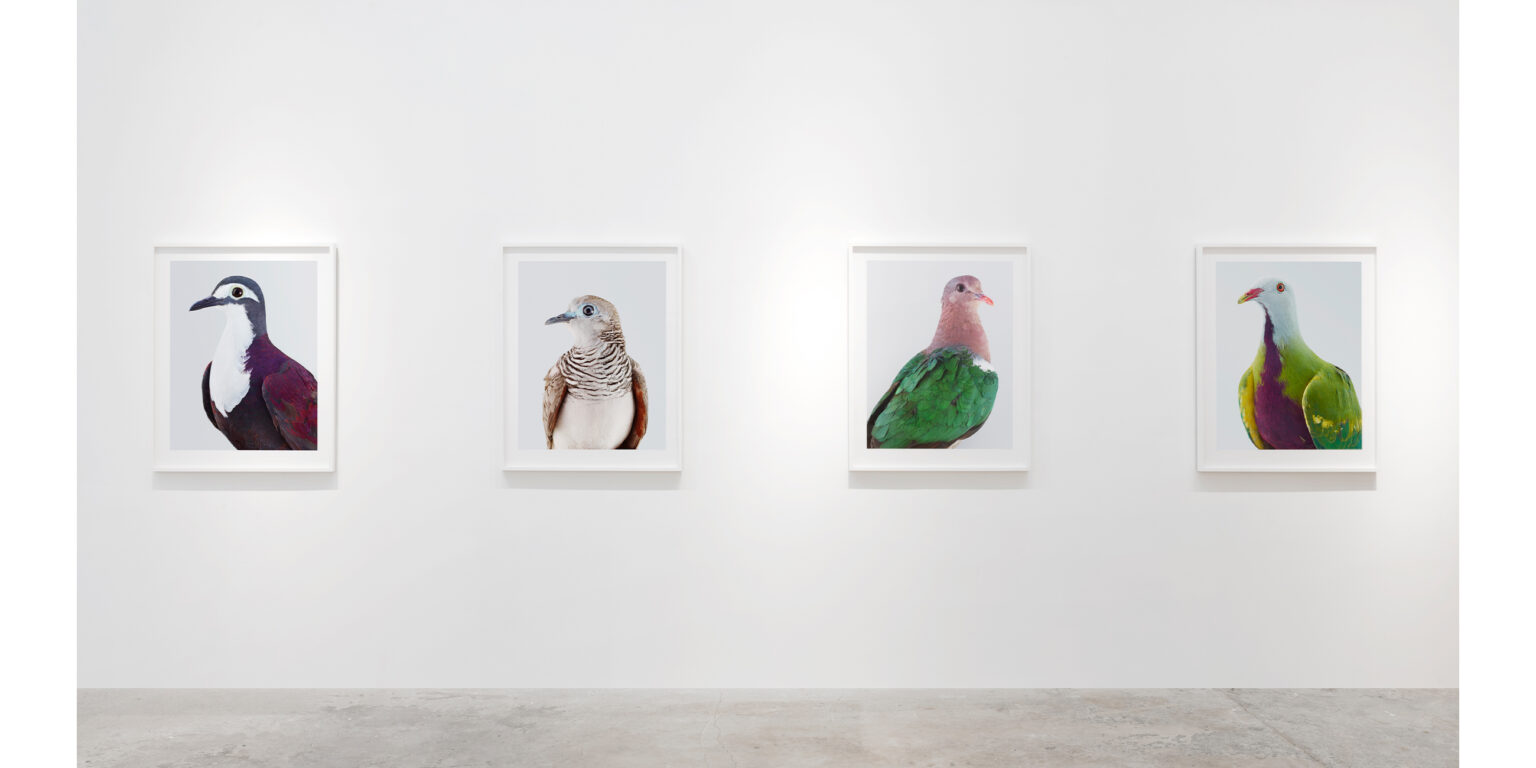
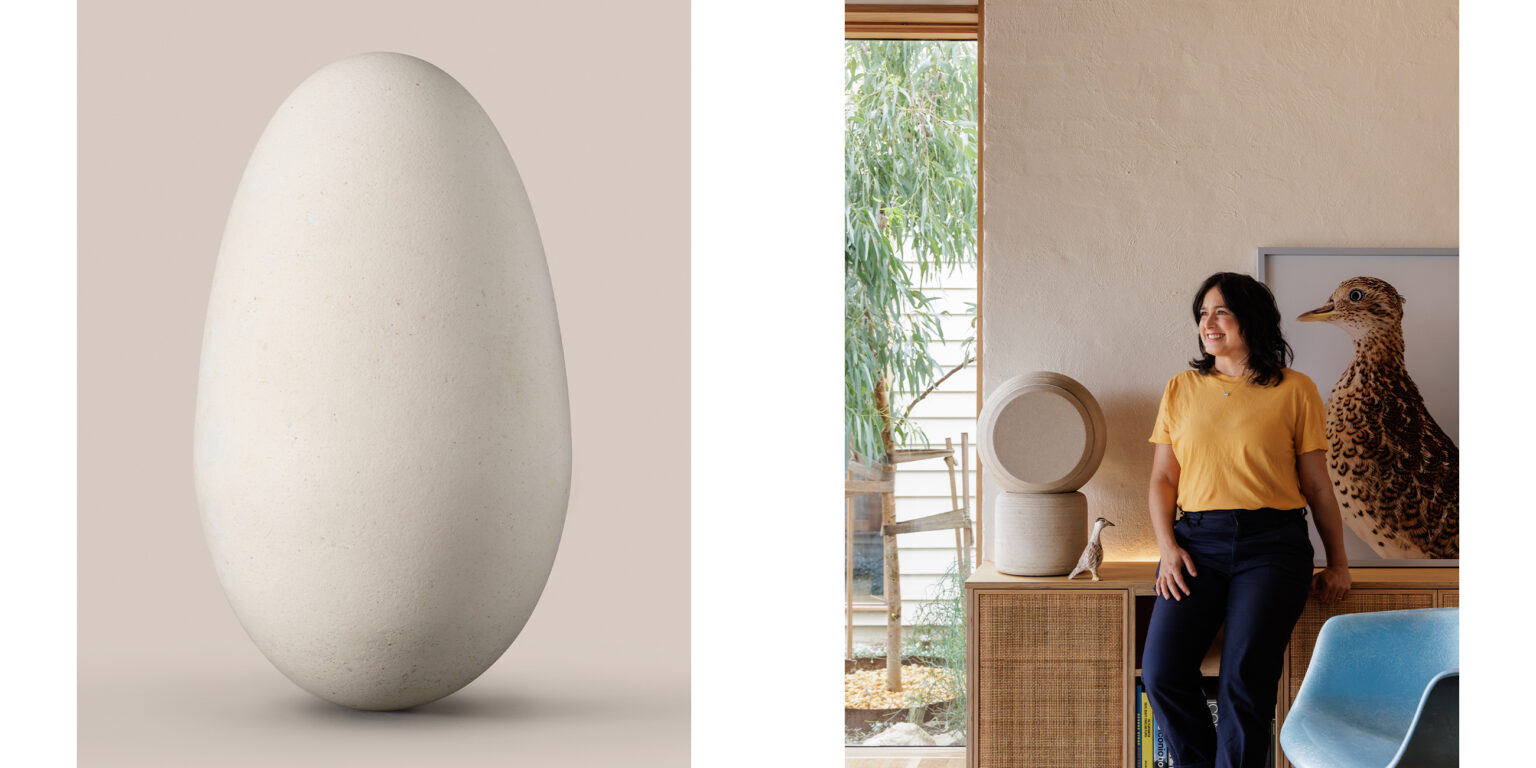
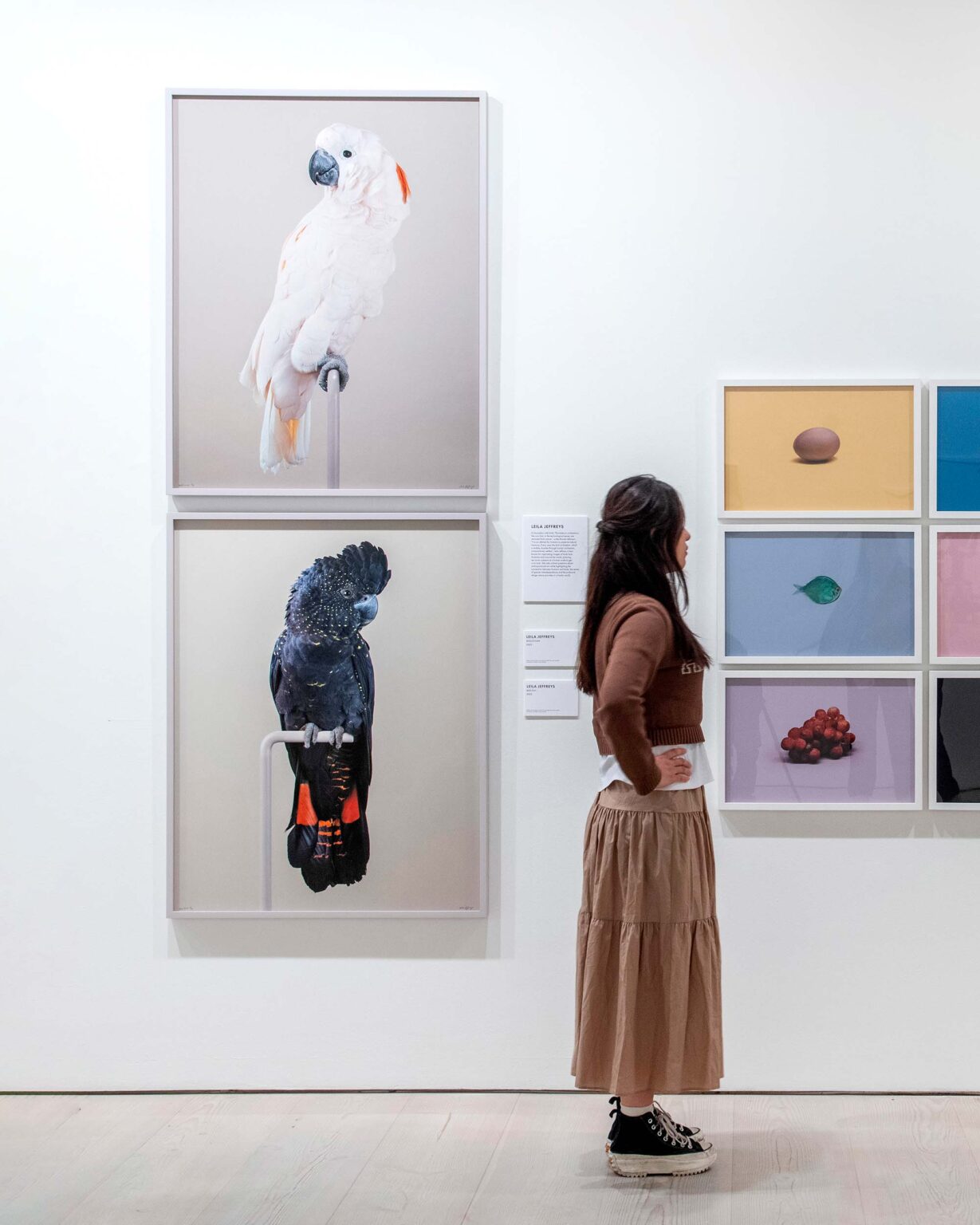
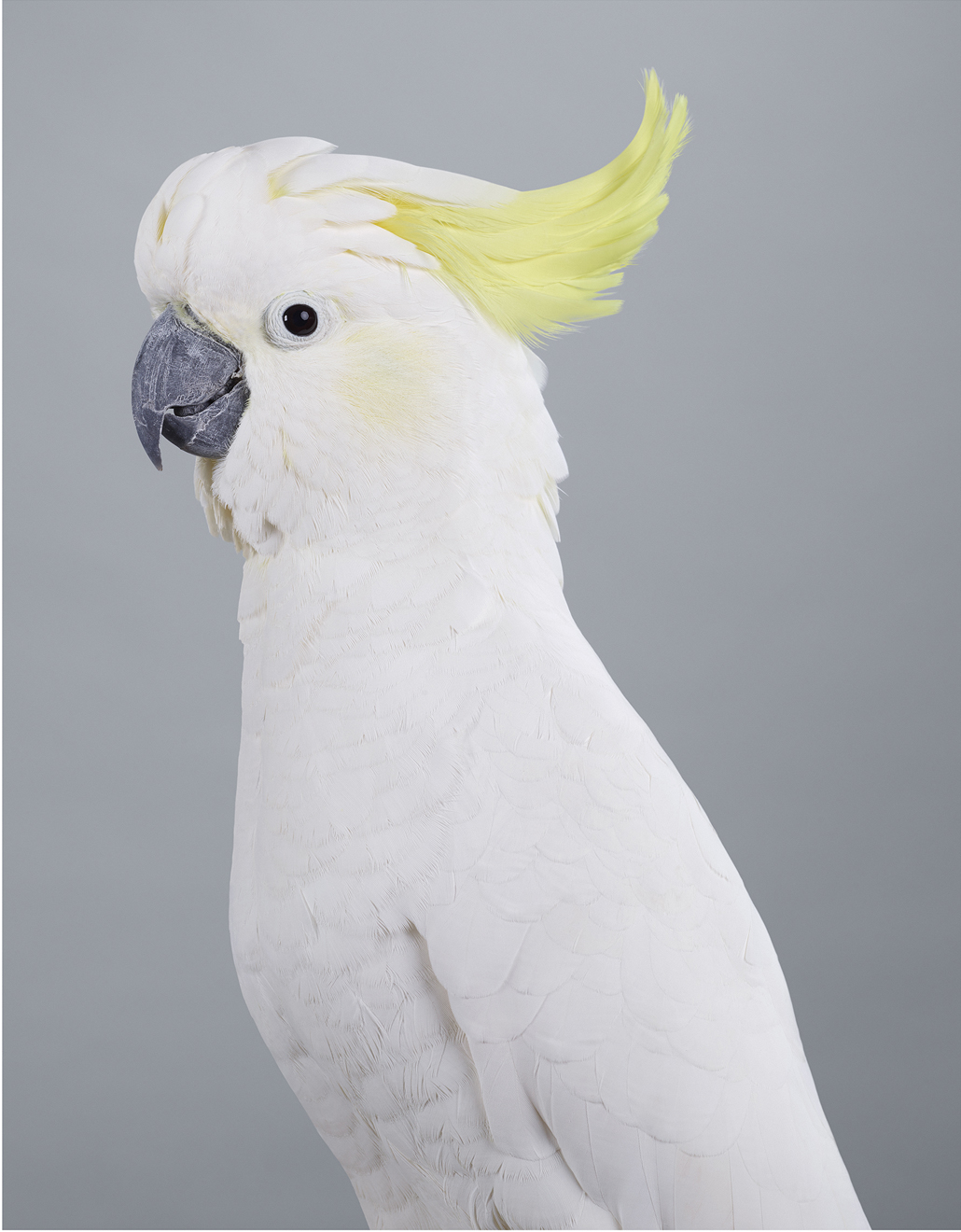
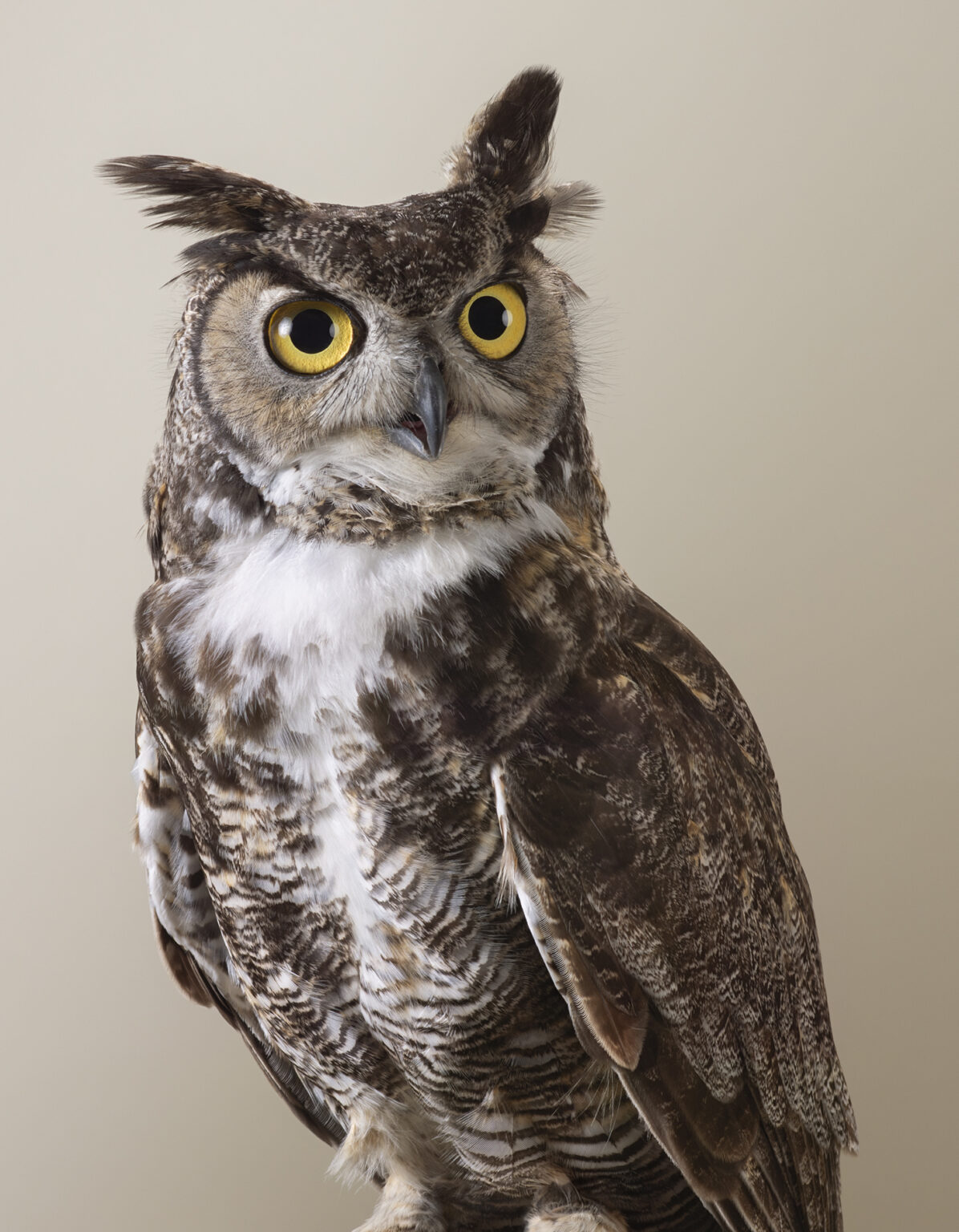
Pictured, clockwise from top left: ‘Scratch’ Sulphur crested cockatoo from the series Ornithurae, 2017. ‘Newton’ Great horned owl from the series Songs of Innocence, 2026. Installation view of Ornithurae, New York, 2017. Leila Jeffreys at home, pictured beside ‘Clay’ Plains Wanderer, 2026. Wandering Albatross egg, 2024.
How did your Stillness series come about and develop?
Stillness is when I first started working with birds’ eggs. I love them because they are objects of profound beauty and symbolism. They embody not just the possibility of rebirth and transformation, but also the fragility of life. I wanted to explore this duality, capturing their perfection and wonder while offering a meditation on the extraordinary diversity and complexity of the non-human world.
The series developed through working with the Australian Museum collection, where I discovered eggs from an extraordinary range of species. I wanted to photograph them with as little distraction as possible, so each egg could be contemplated as an artwork in itself.
I also collaborated with poet and writer James Bradley, creating small inscriptions at the base of each egg that require the viewer to lean in closely to read them.