




Curiosities
- Sid Pattni
- 3 Jul—1 Aug 2026
- Berlin
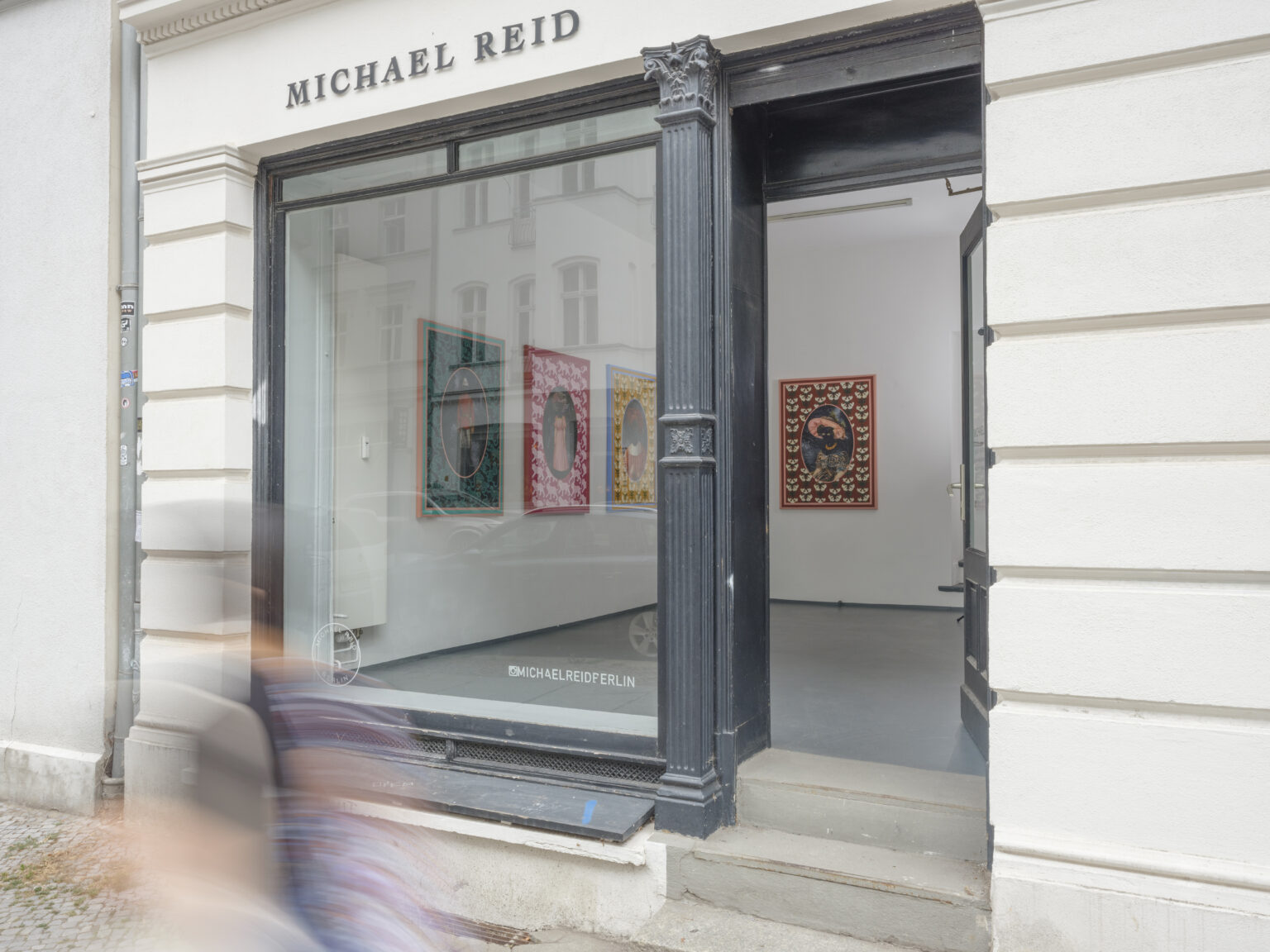
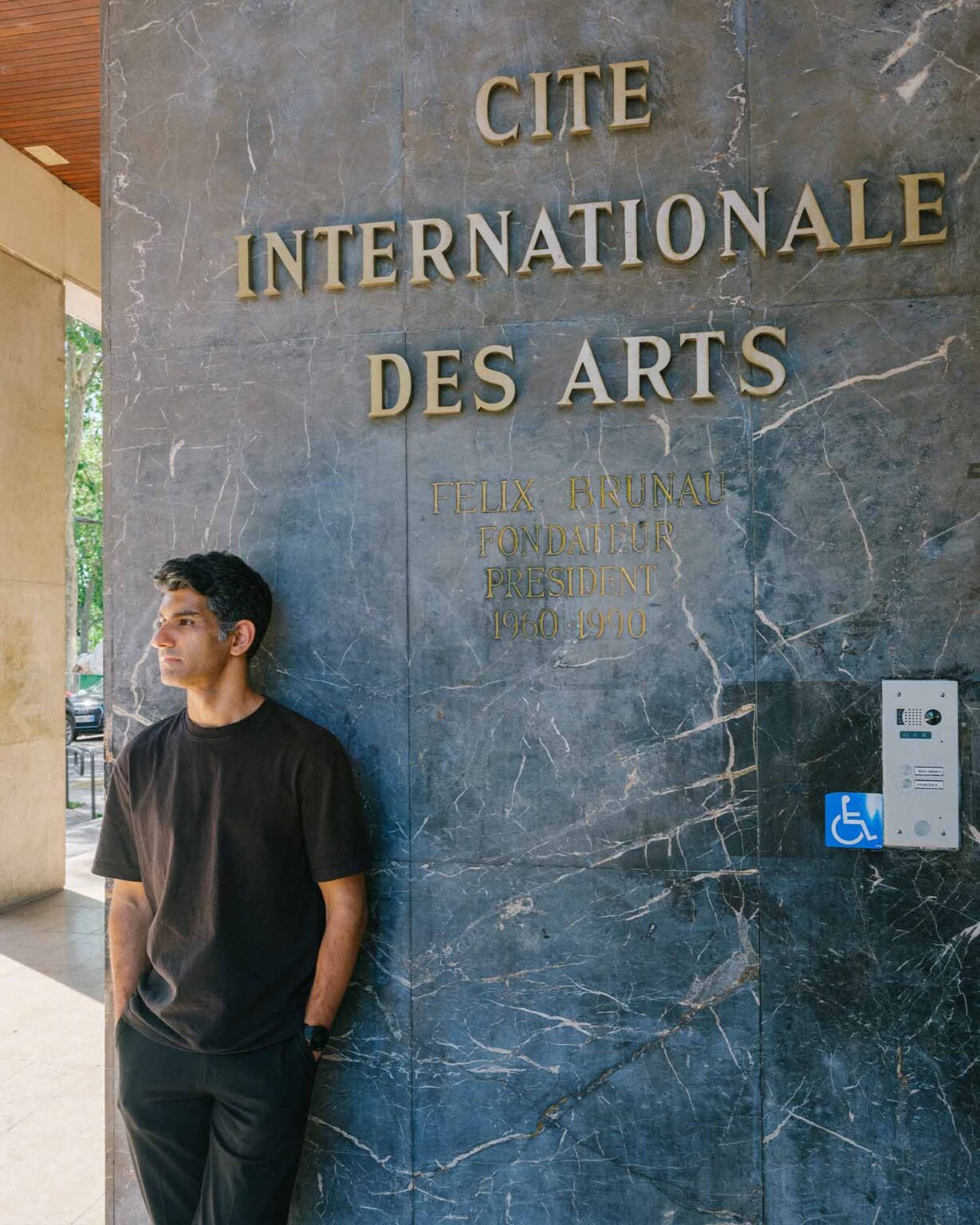
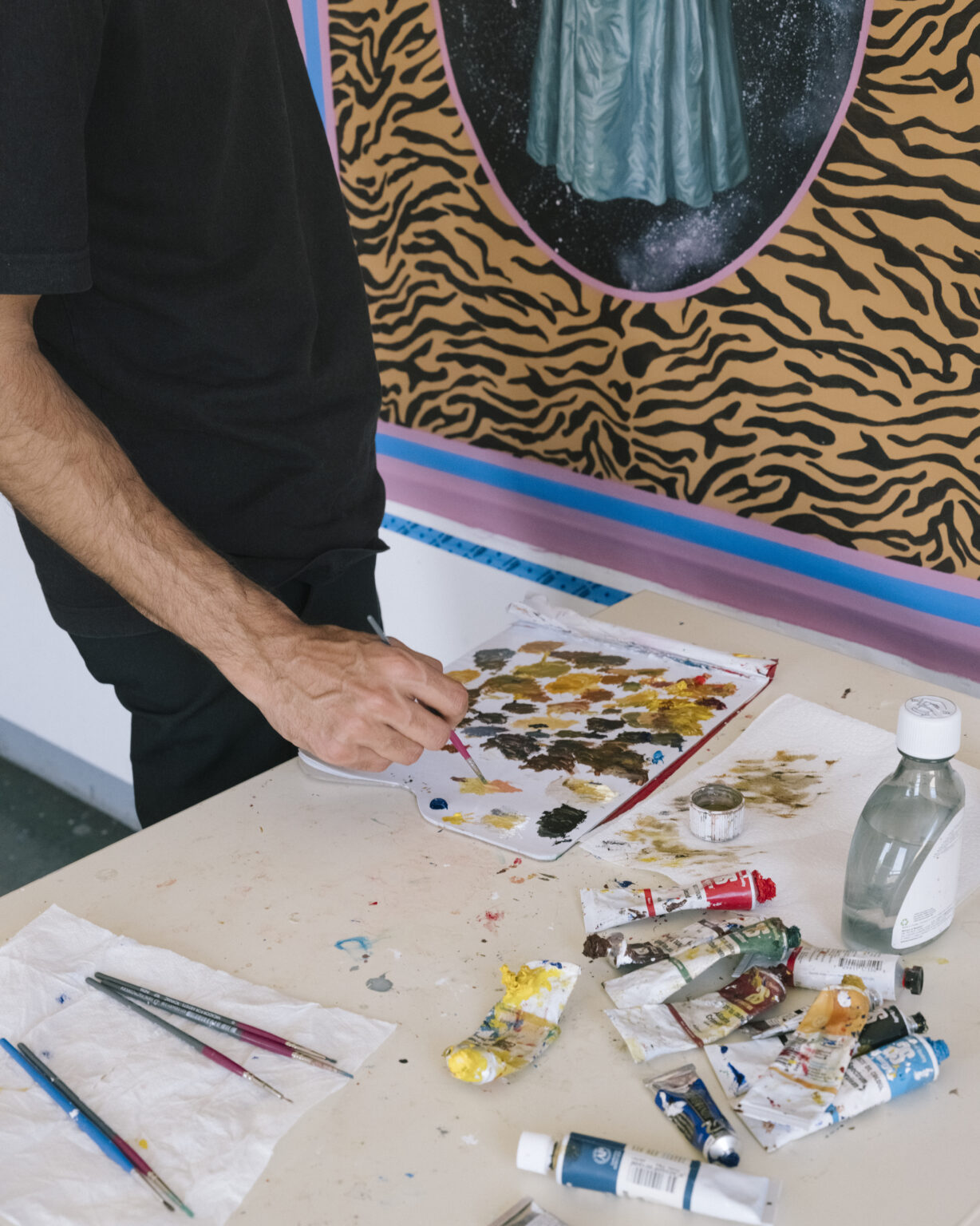
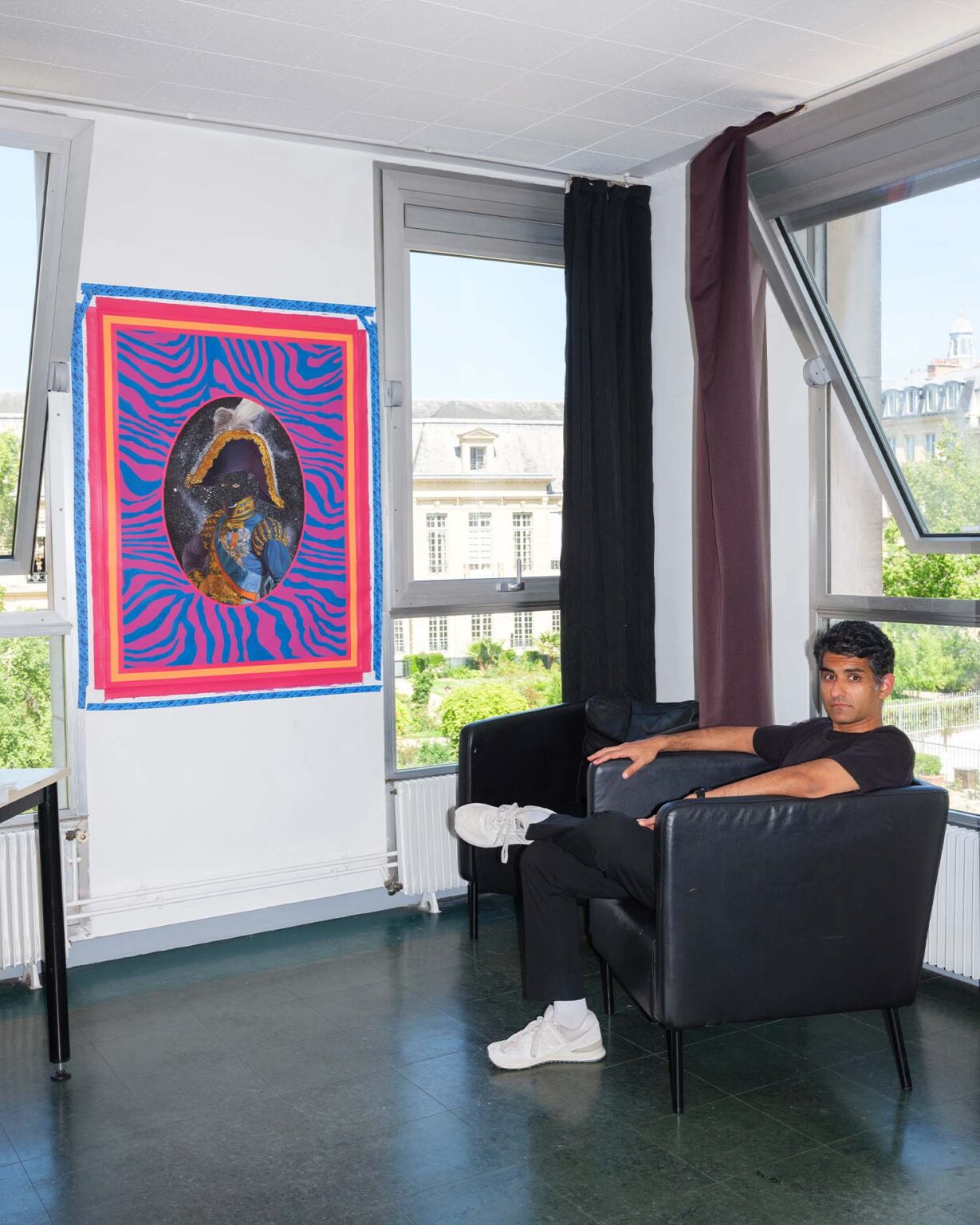
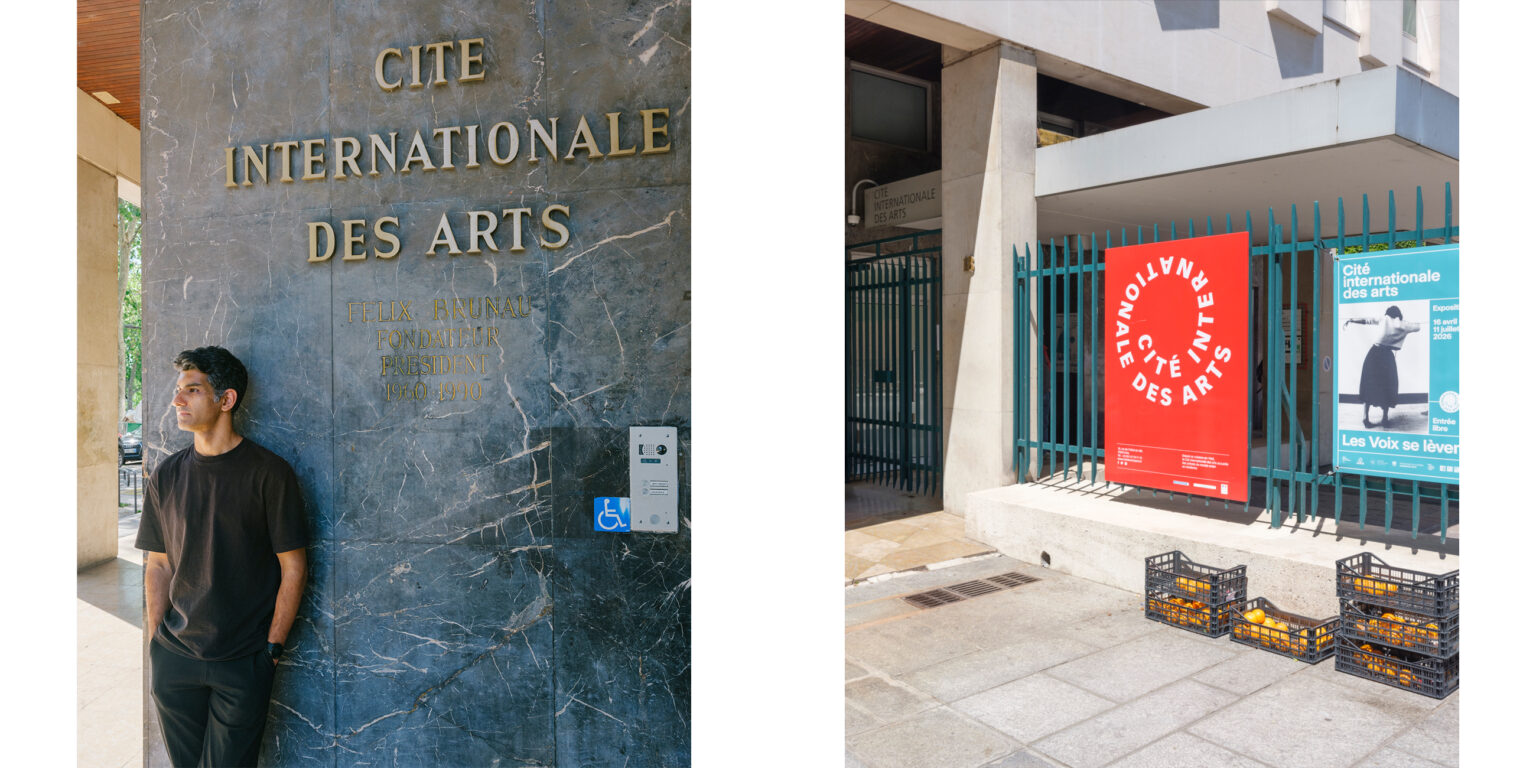
Michael Reid Berlin is pleased to present our first exhibition by Naarm/Melbourne-based artist Sid Pattni. His new series, Curiosities, was developed during the prestigious Cité Internationale des Arts residency in Paris, awarded by the Art Gallery of New South Wales following his selection as a finalist in the 2025 Archibald Prize. The residency has expanded Pattni’s ongoing investigation into the afterlife of empire, opening new avenues within his broader artistic practice.
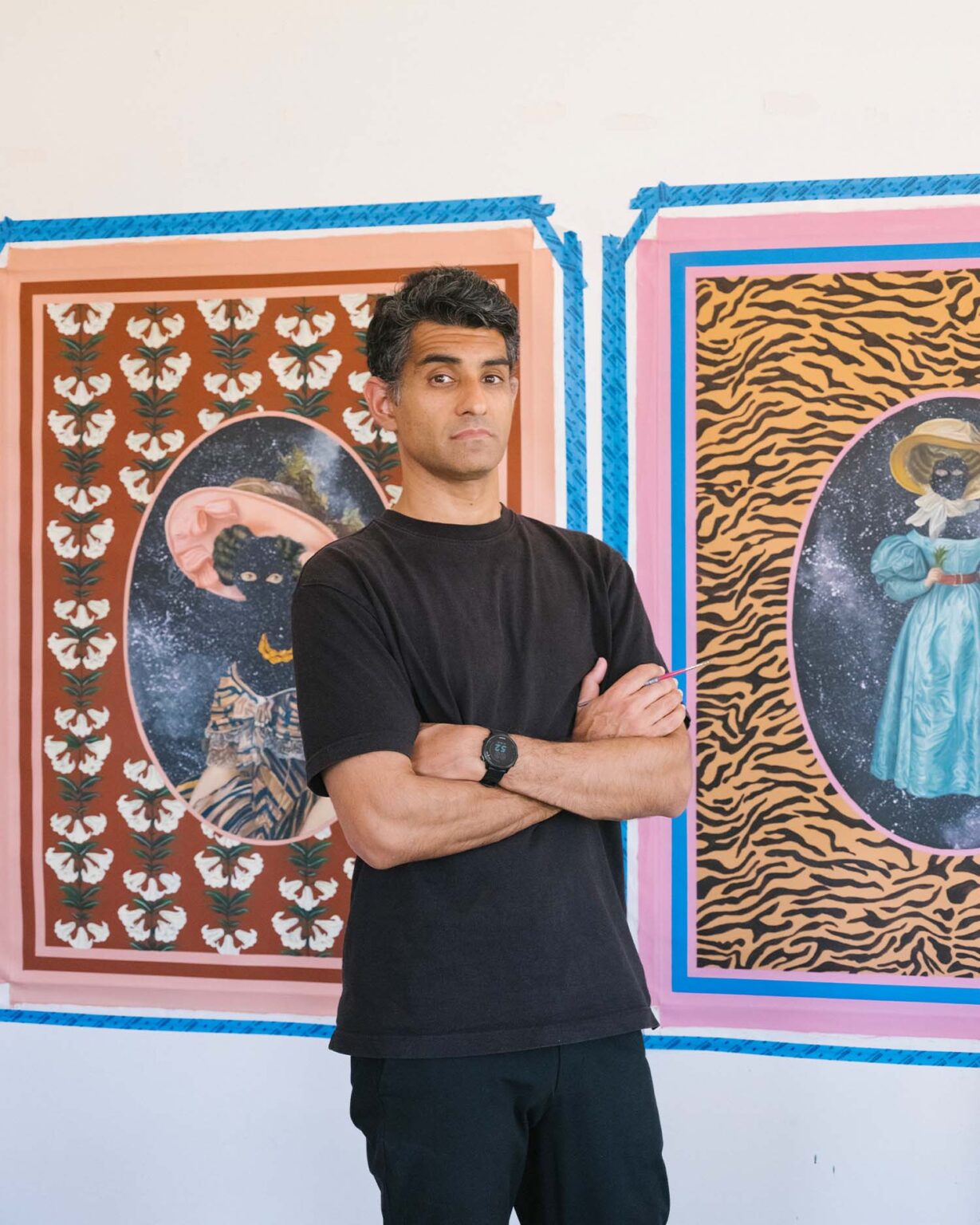
An Australian artist of Indian descent, Pattni examines the complexities of identity, culture and belonging through a postcolonial lens. Born in London, raised in Kenya and now based in Naarm/Melbourne, his practice contributes to ongoing conversations about the role of art in articulating the layered realities of diasporic identity.
“This exhibition feels like the beginning of a larger line of inquiry,” says Pattni. “Rather than treating British and French histories as separate narratives, the work considers how they intersected within a broader European project of imagining and representing India.”
During his time in Paris, Pattni immersed himself in the city’s museums and decorative arts collections. “I was interested in the relationship between Indian chintz textiles and the development of Toile de Jouy,” he explains in a wide-ranging conversation available on our website. “I was fascinated by how motifs that carried specific cultural meanings within India were transformed into European luxury objects. In that process, India shifted from being a lived reality into something ornamental, imagined, consumed and aestheticised.”
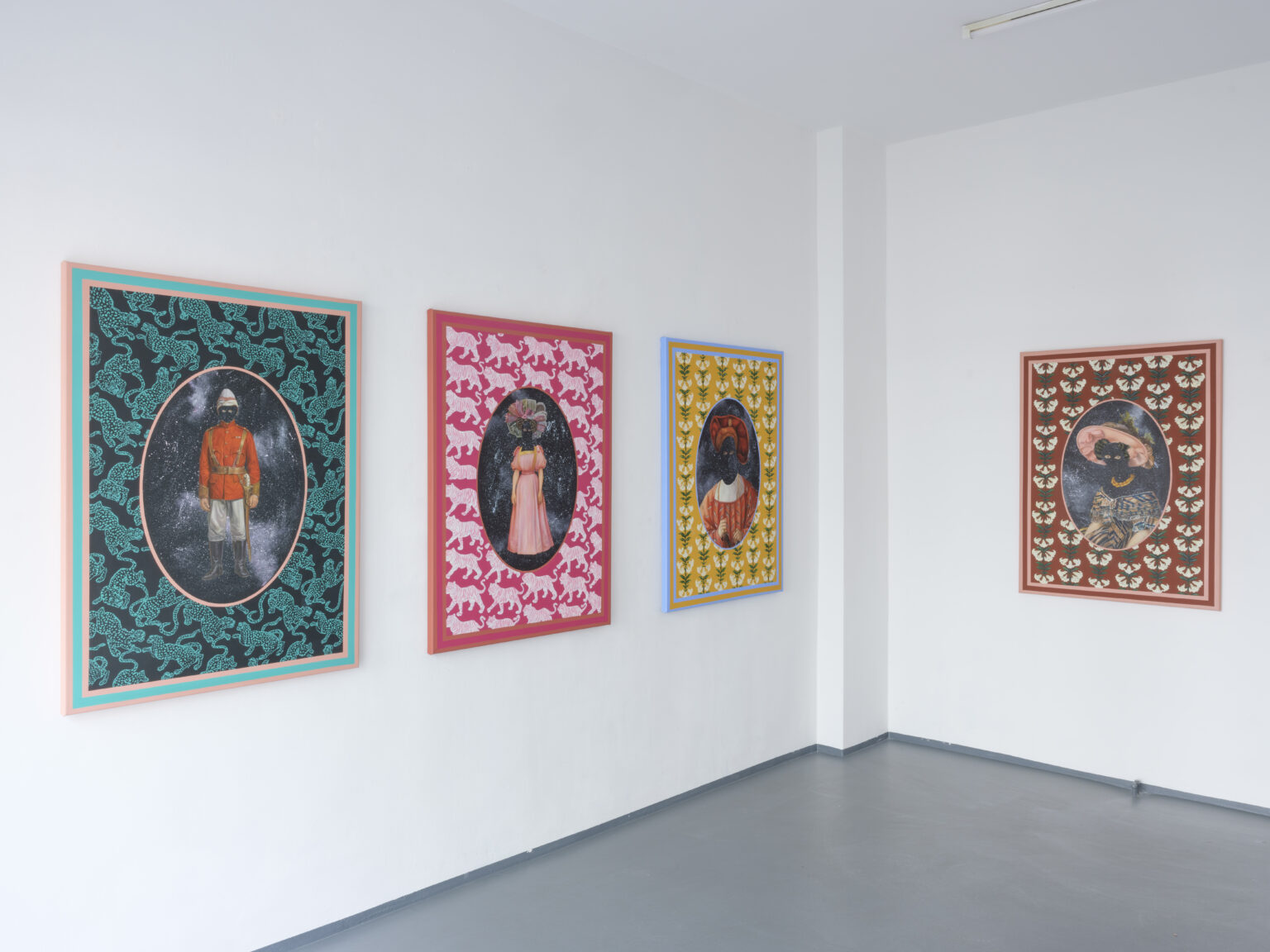
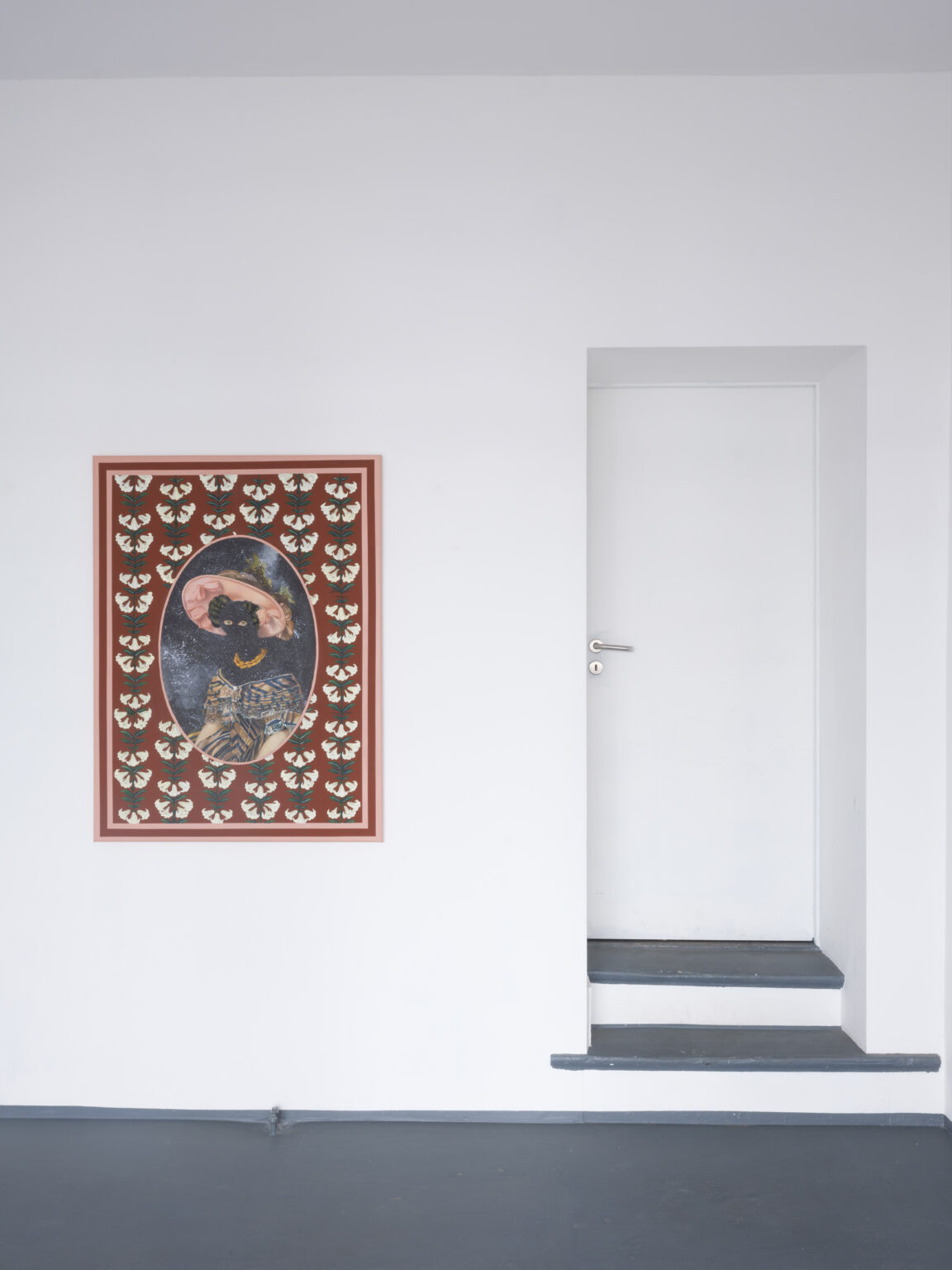
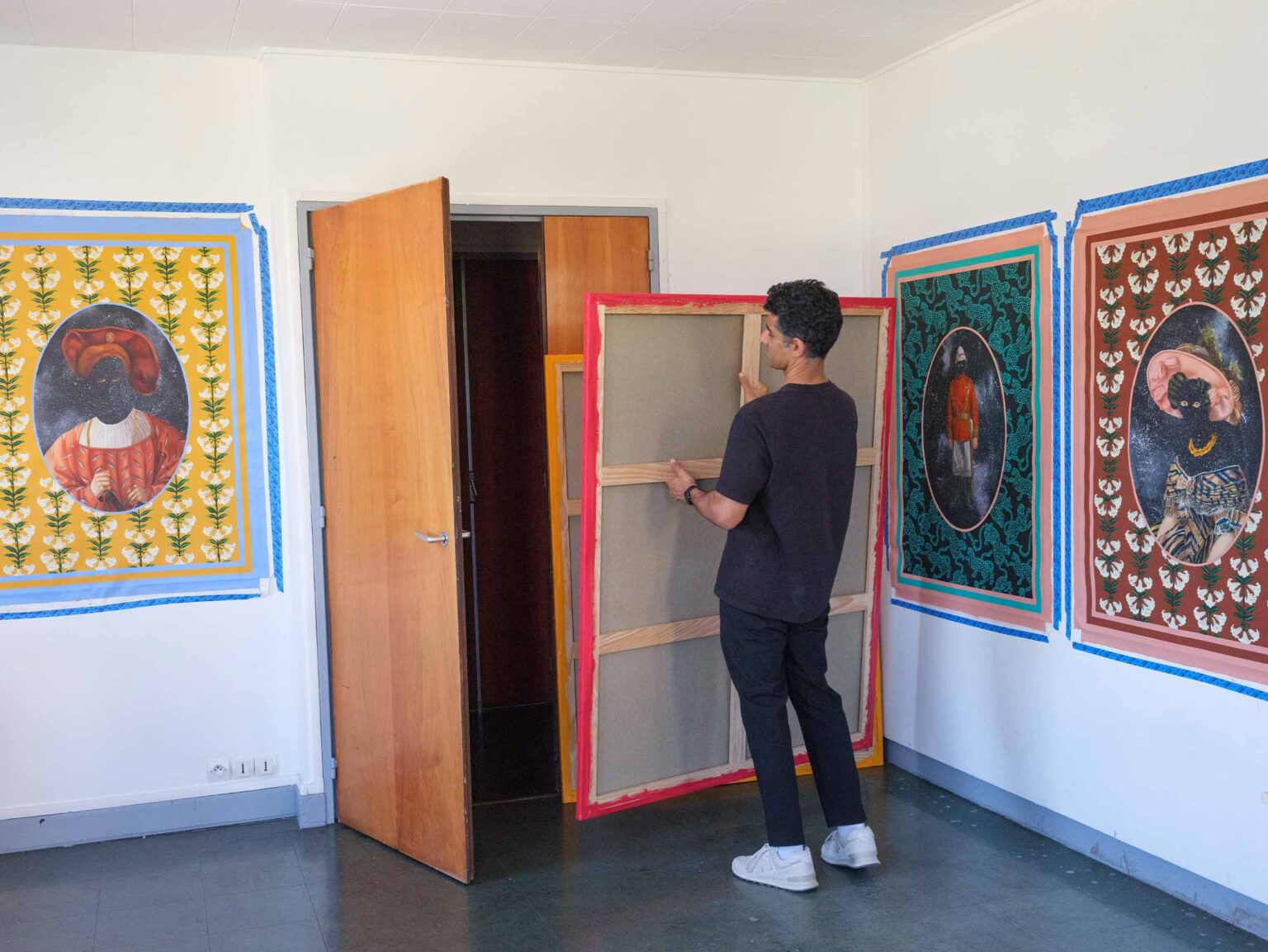
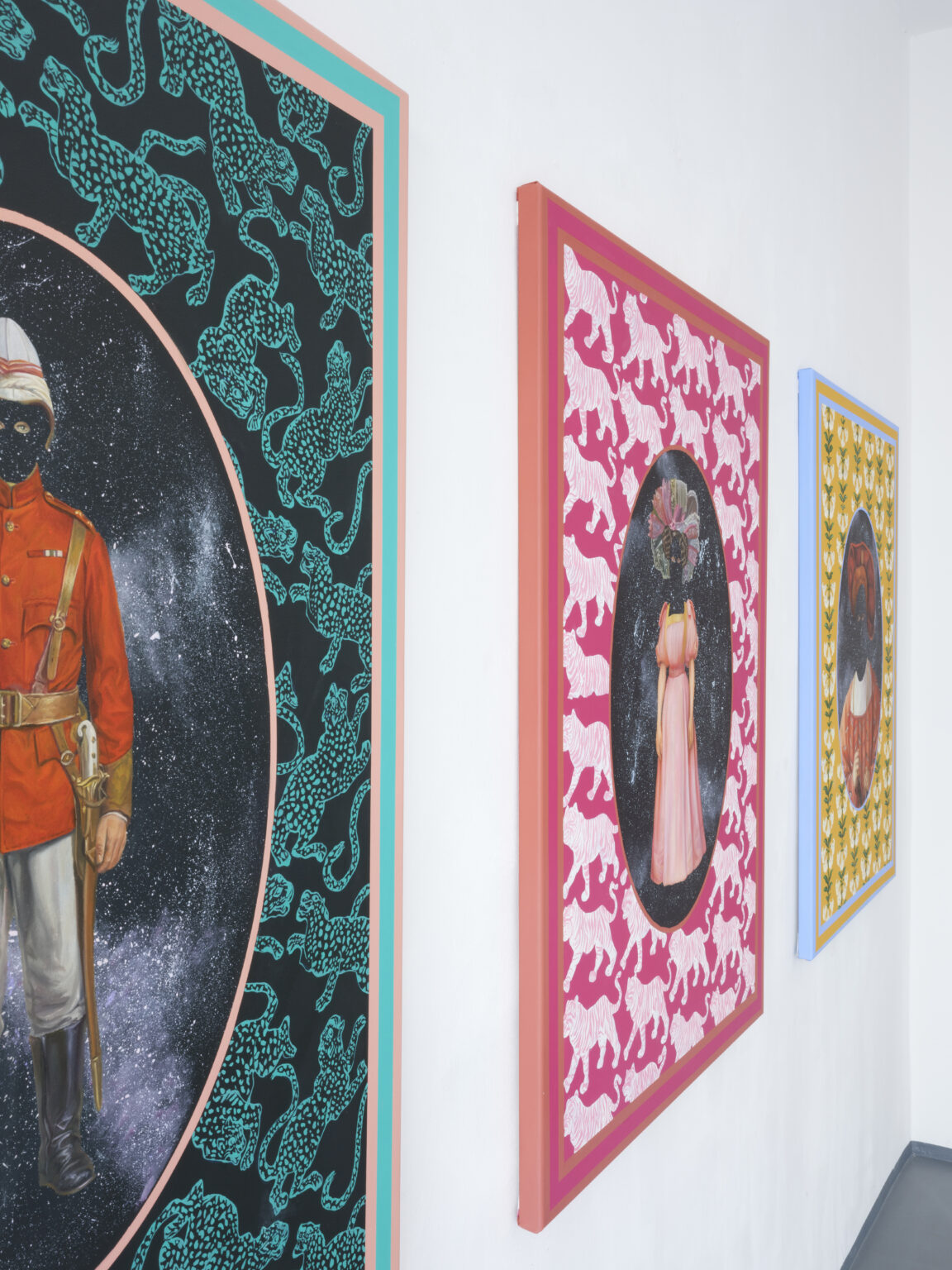
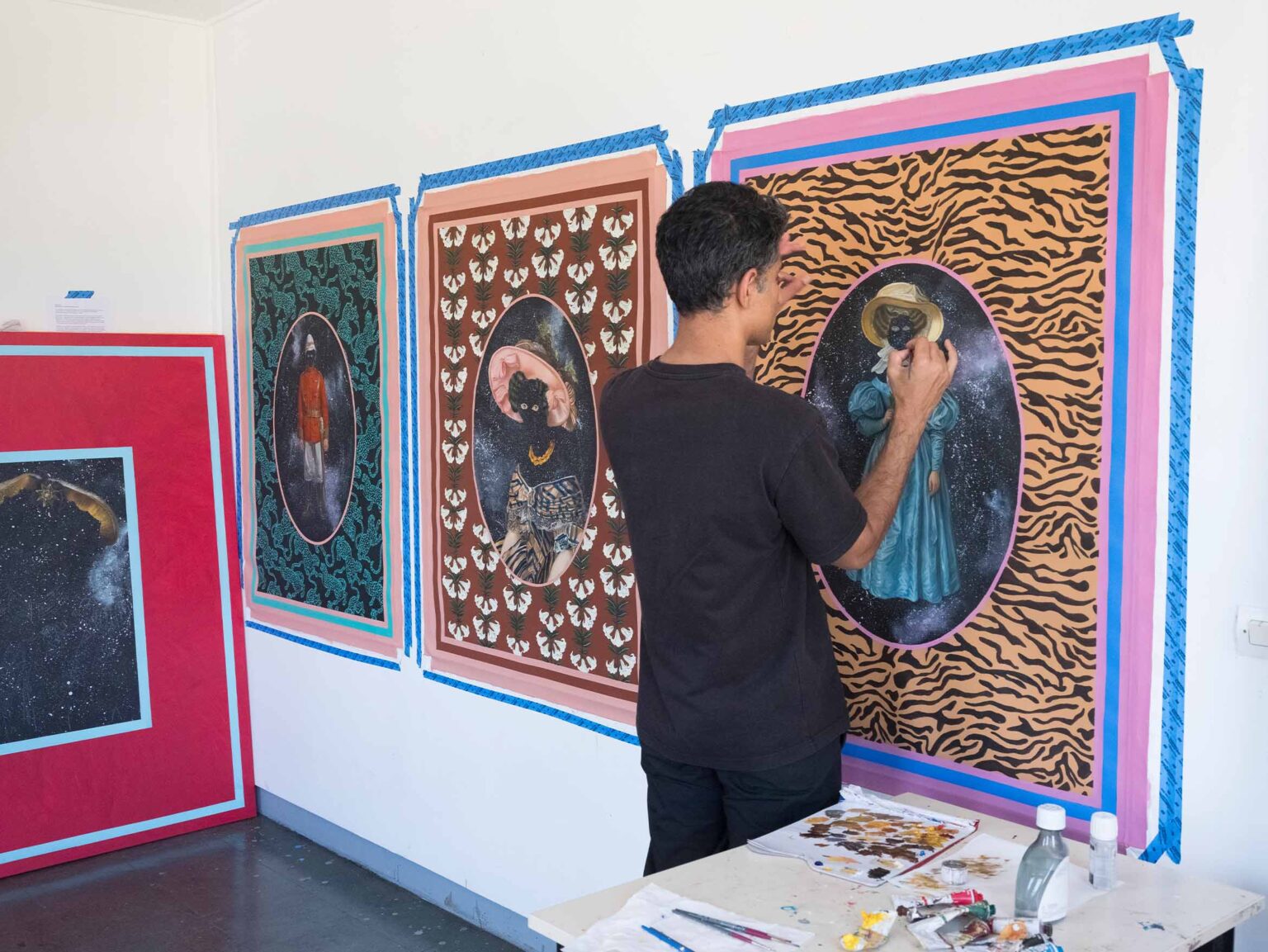
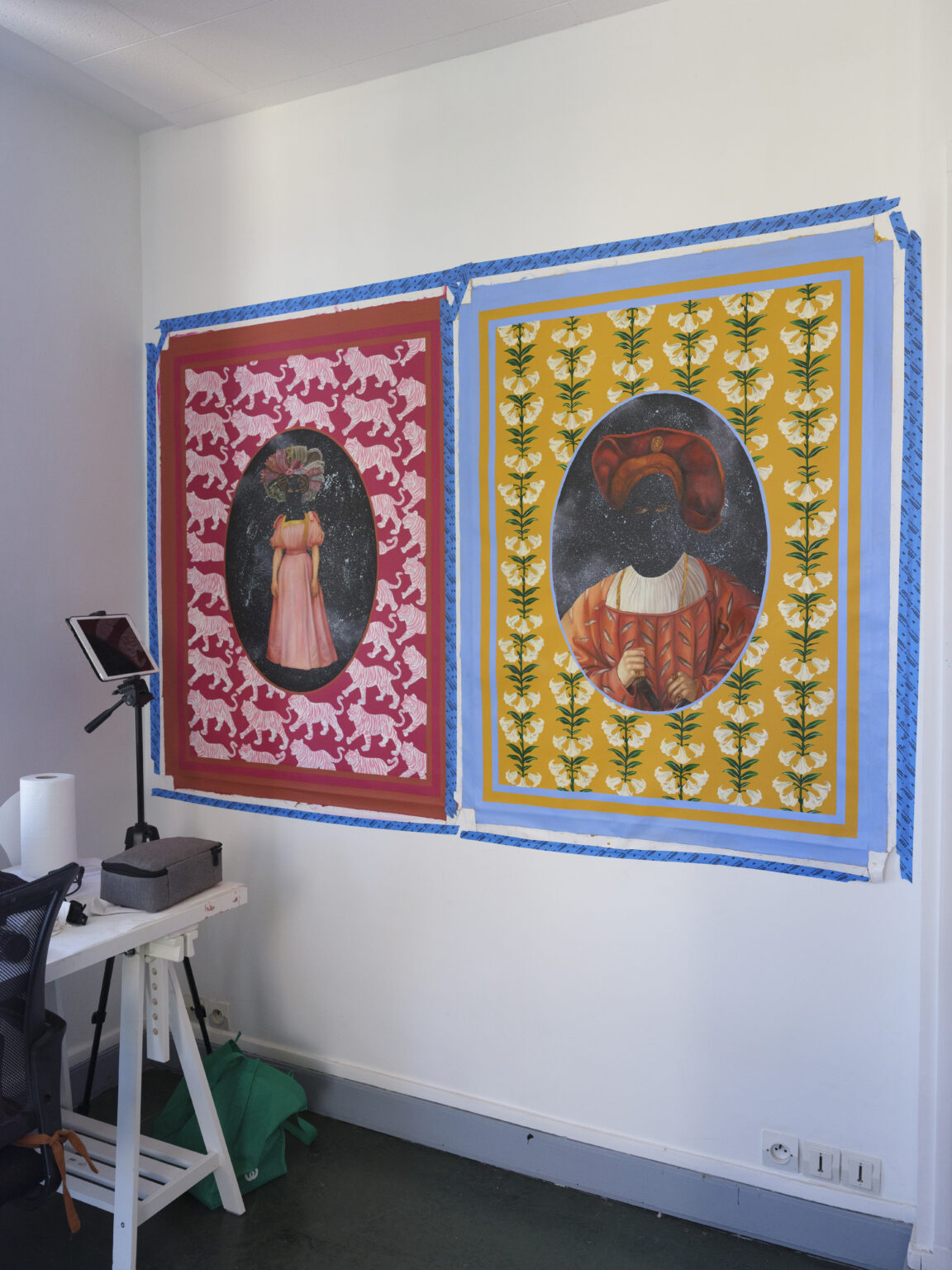
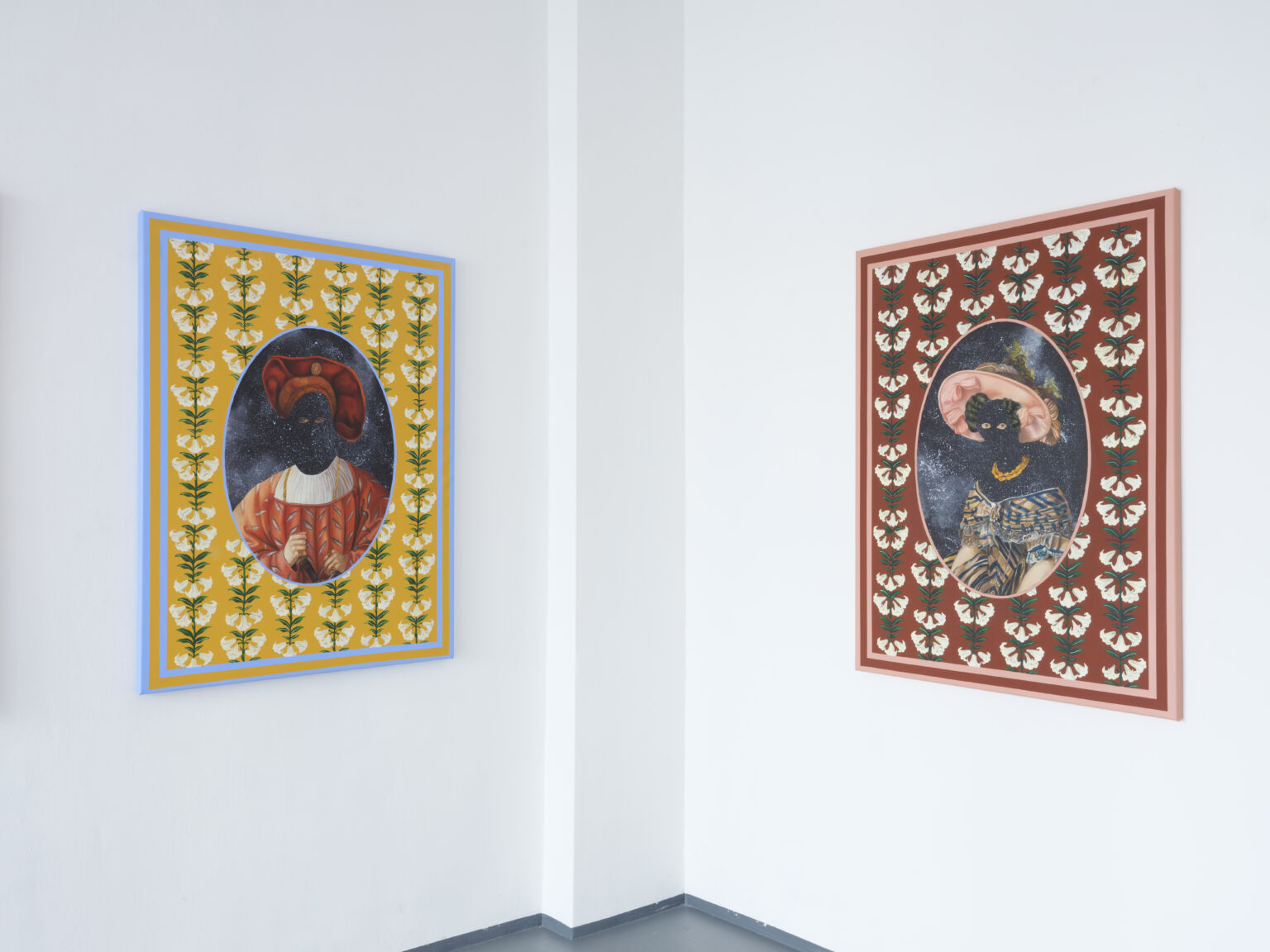
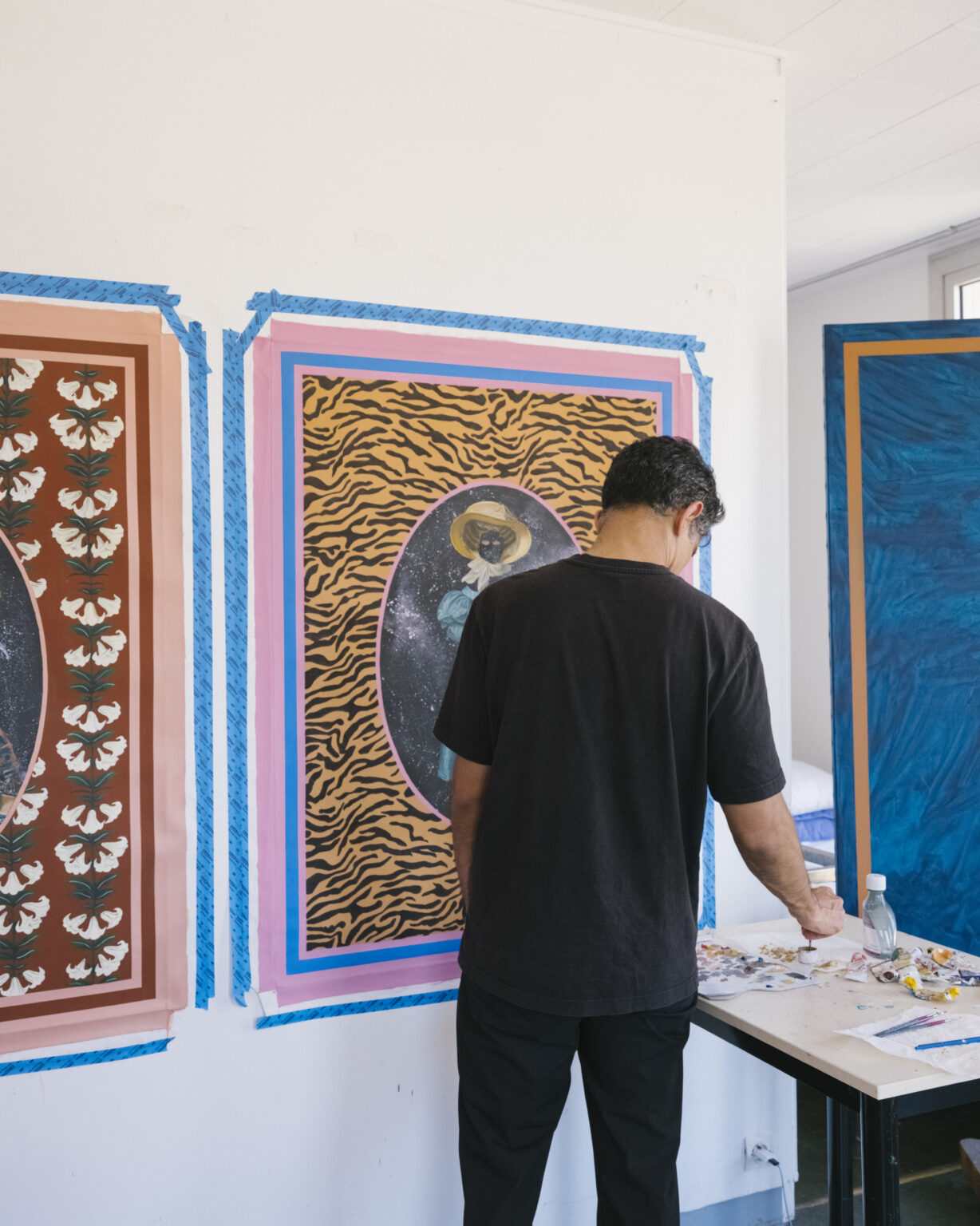
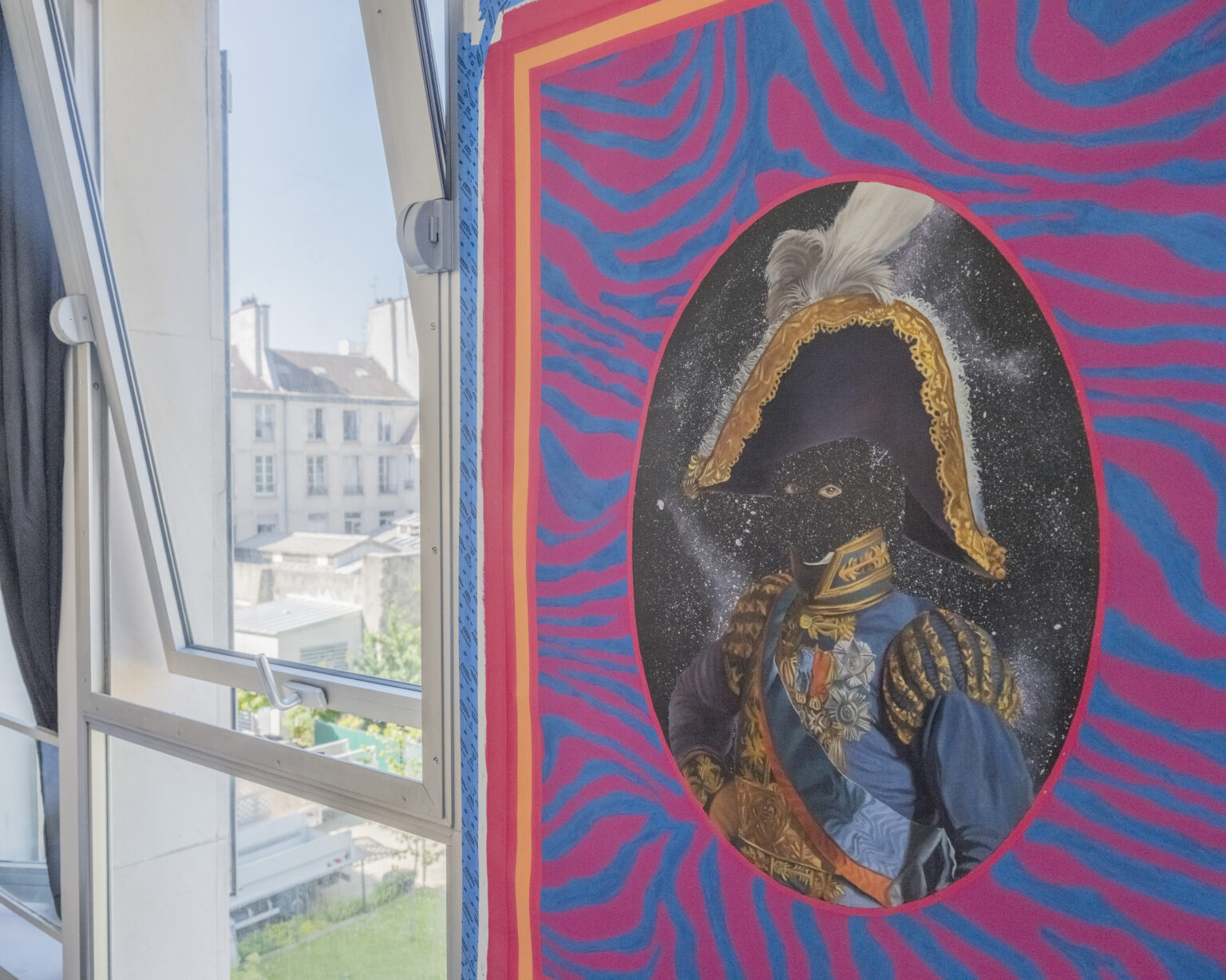
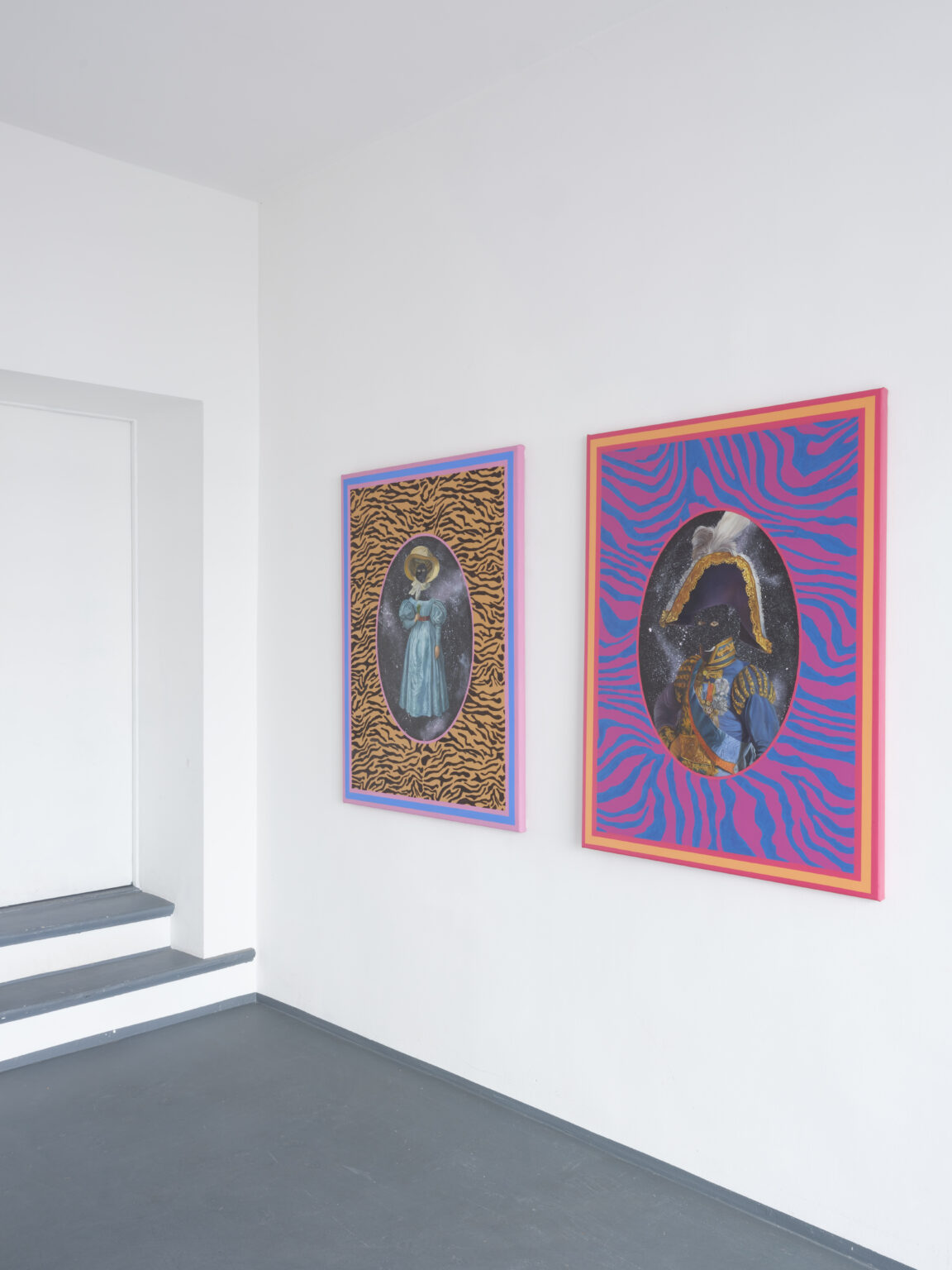
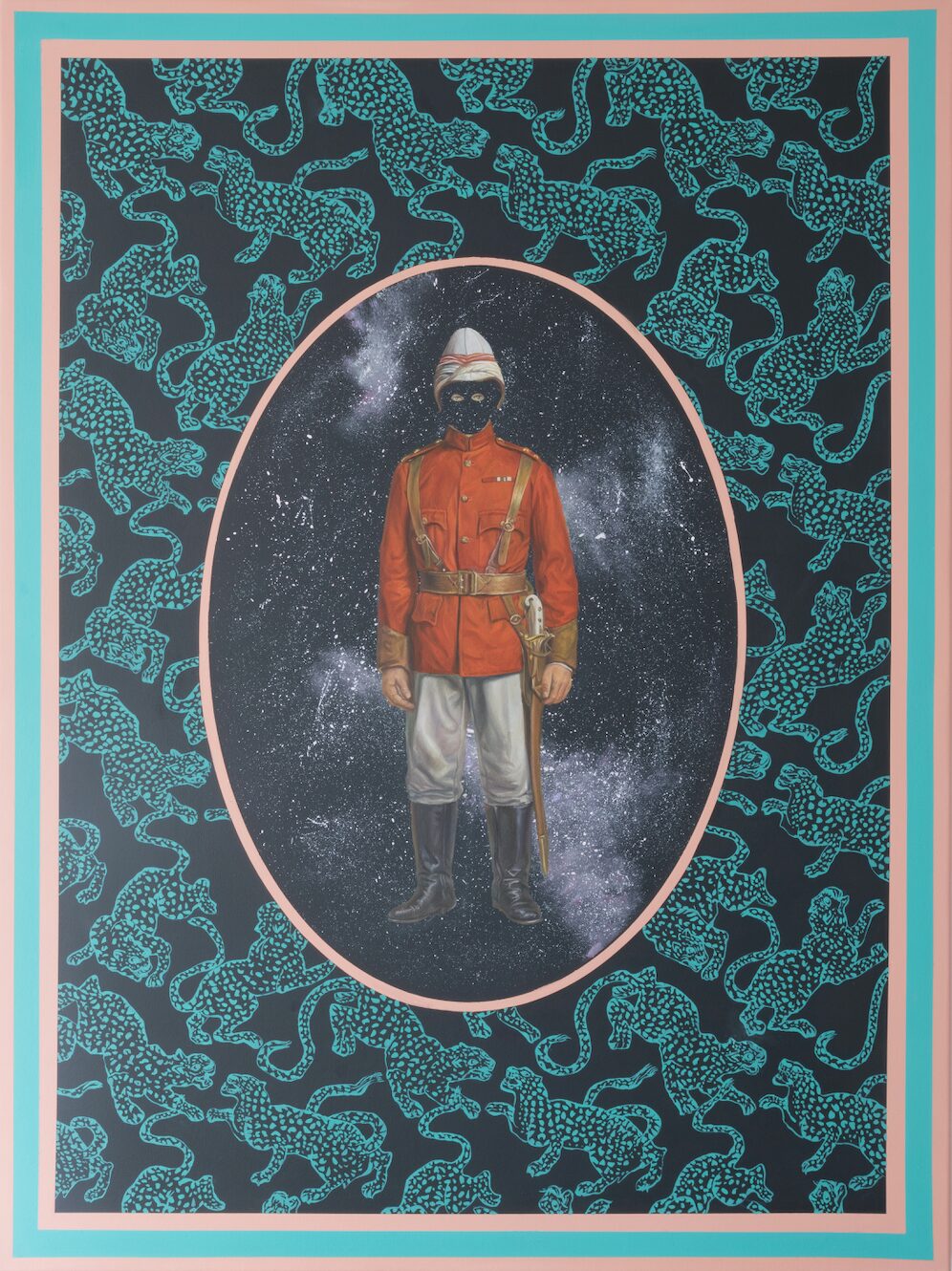
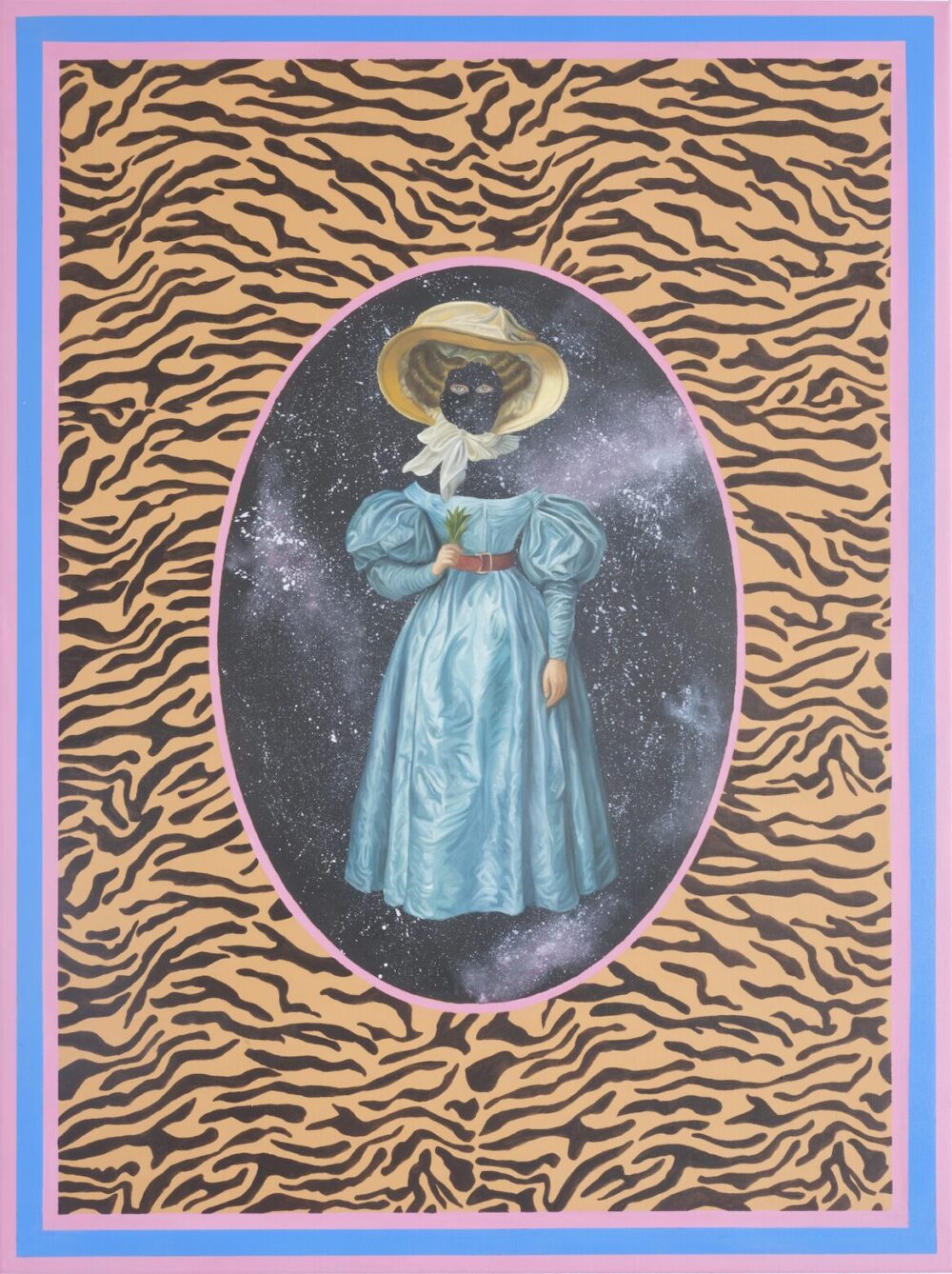
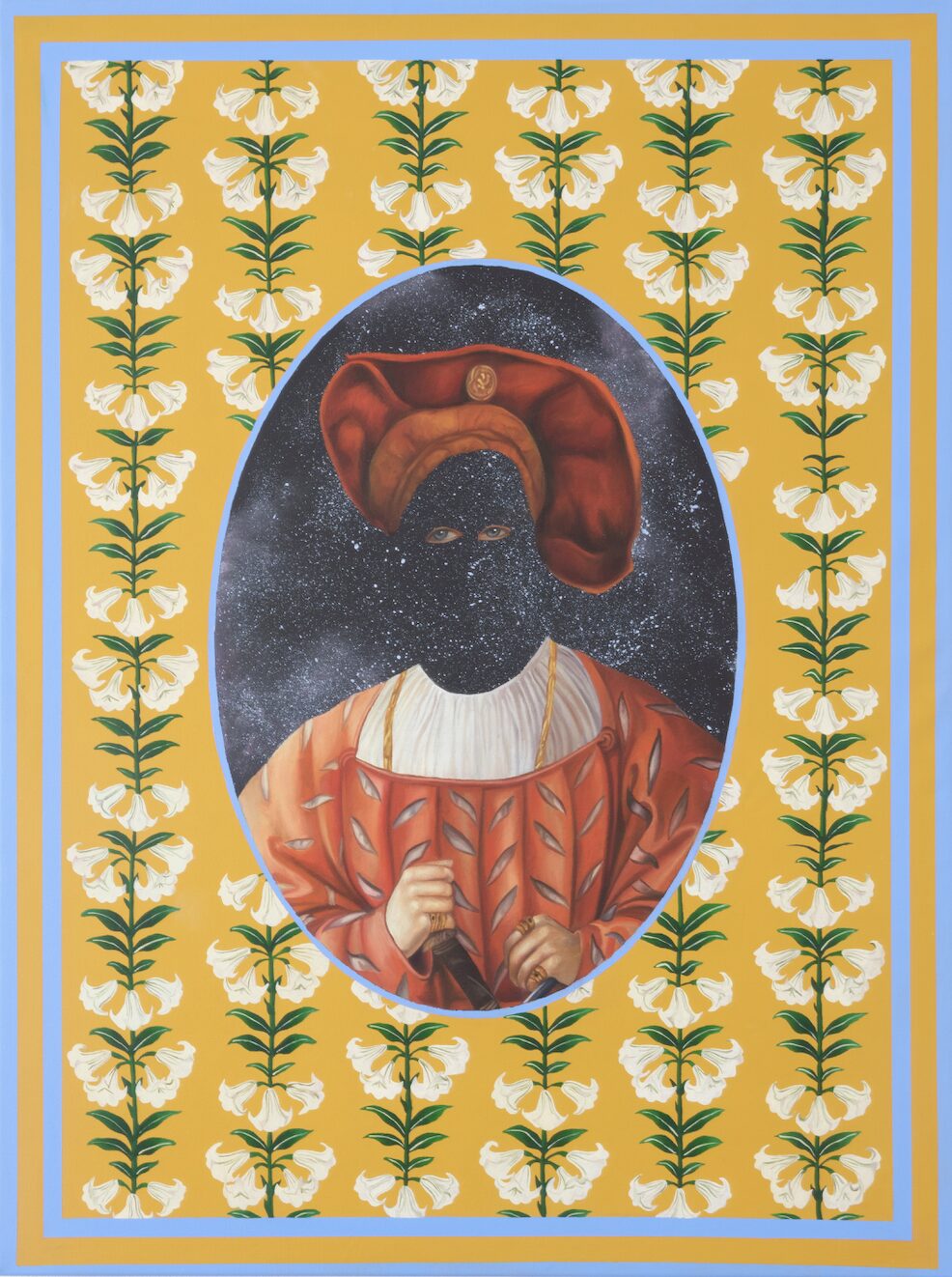
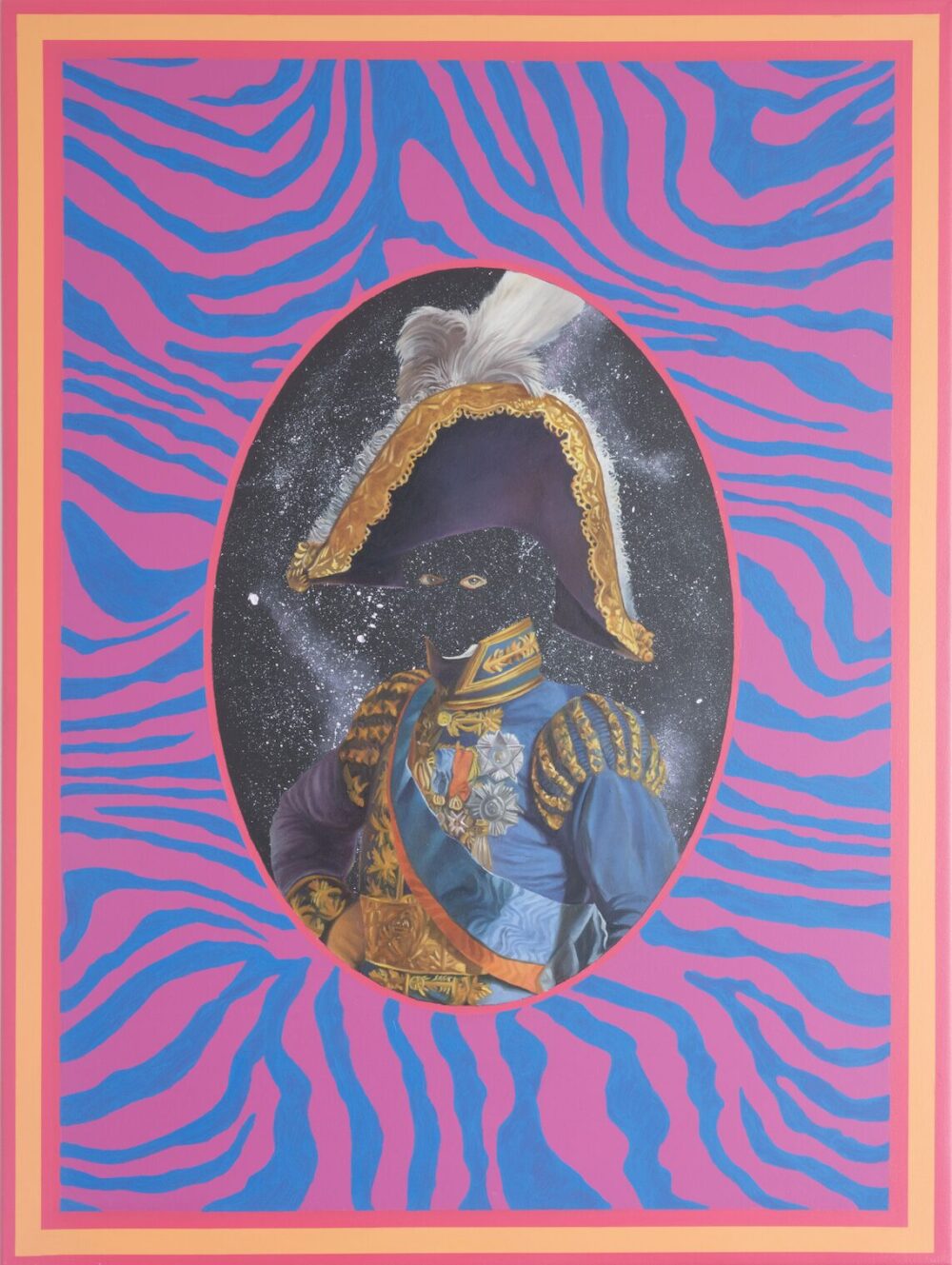
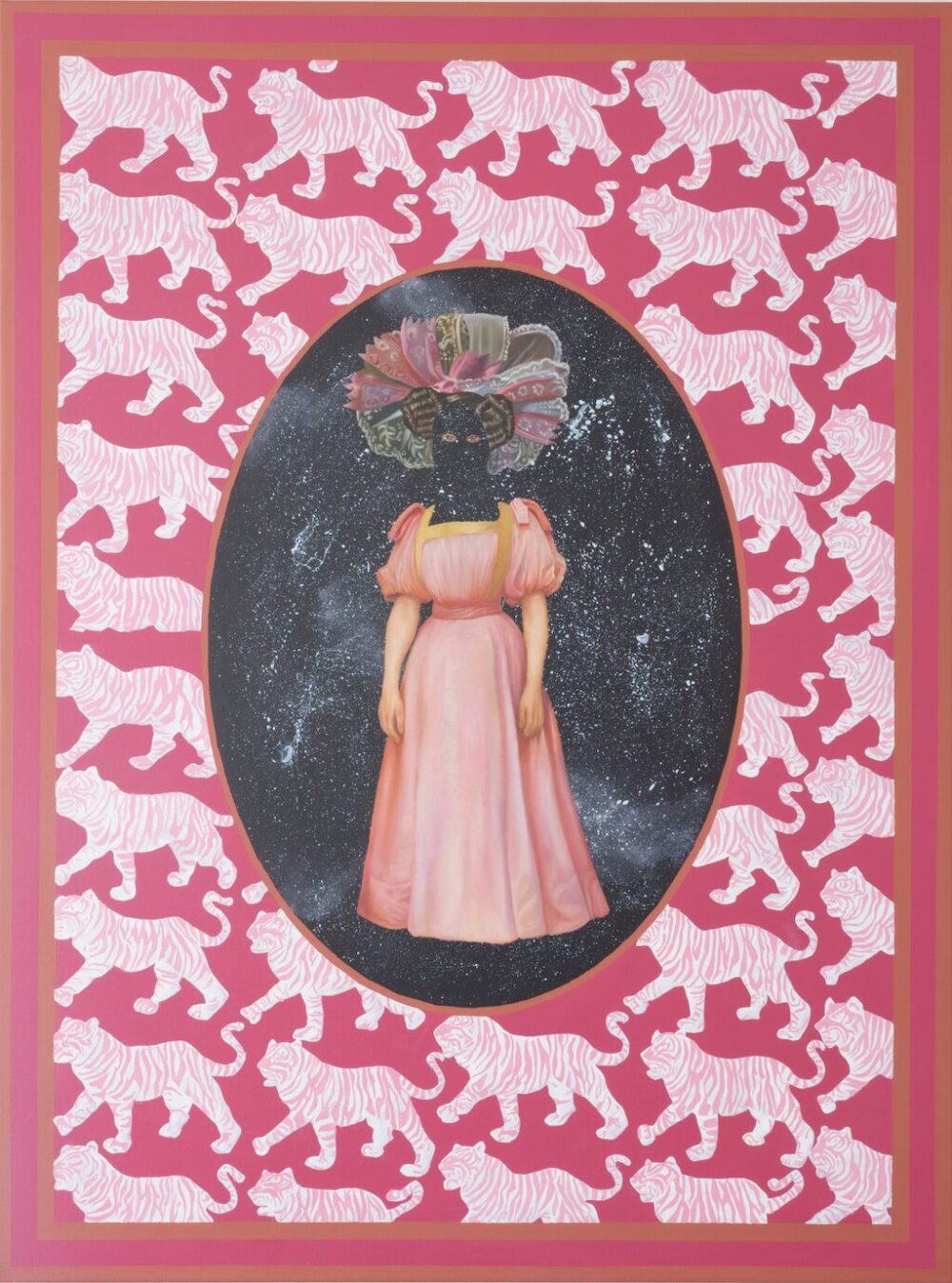
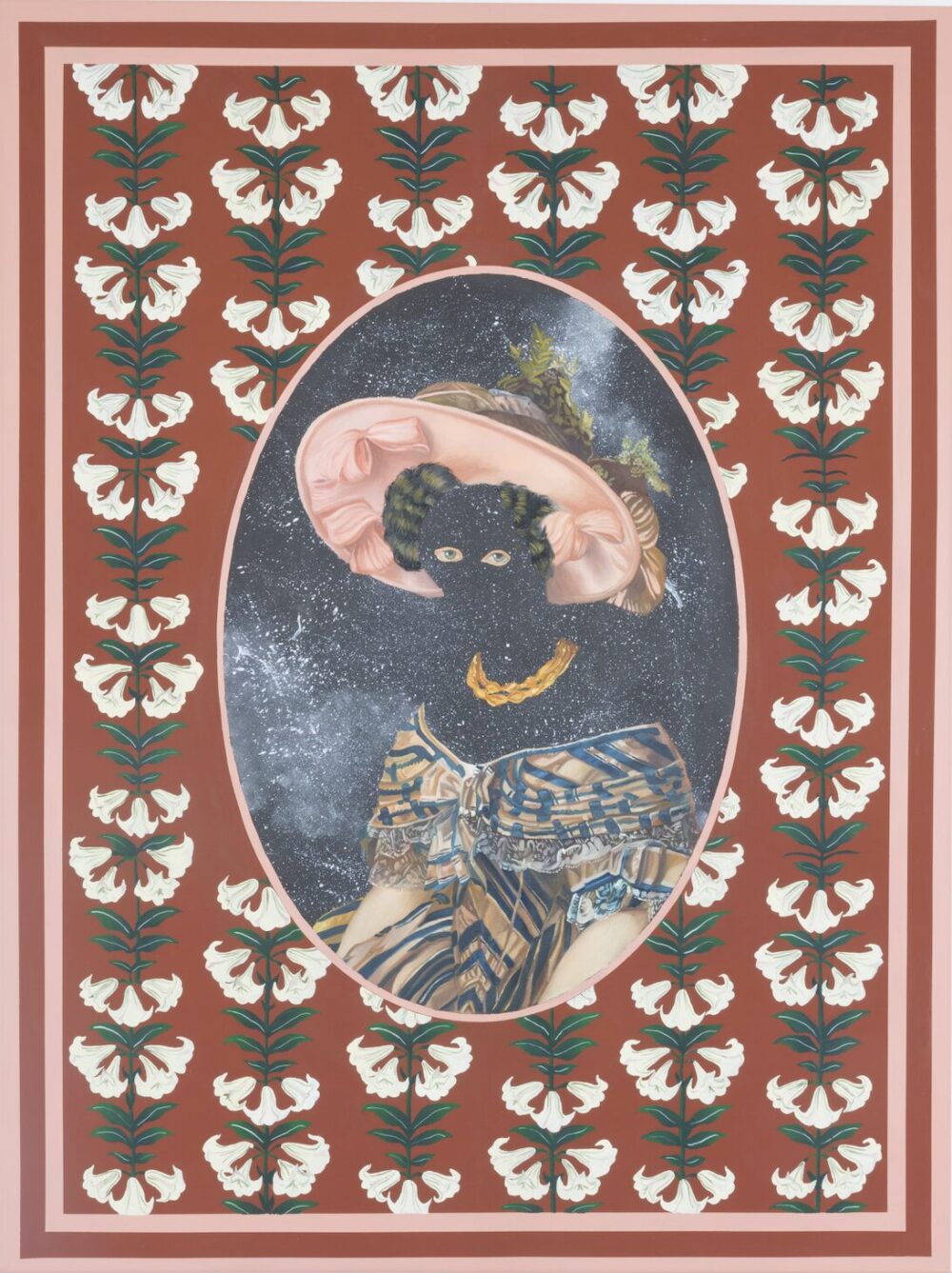
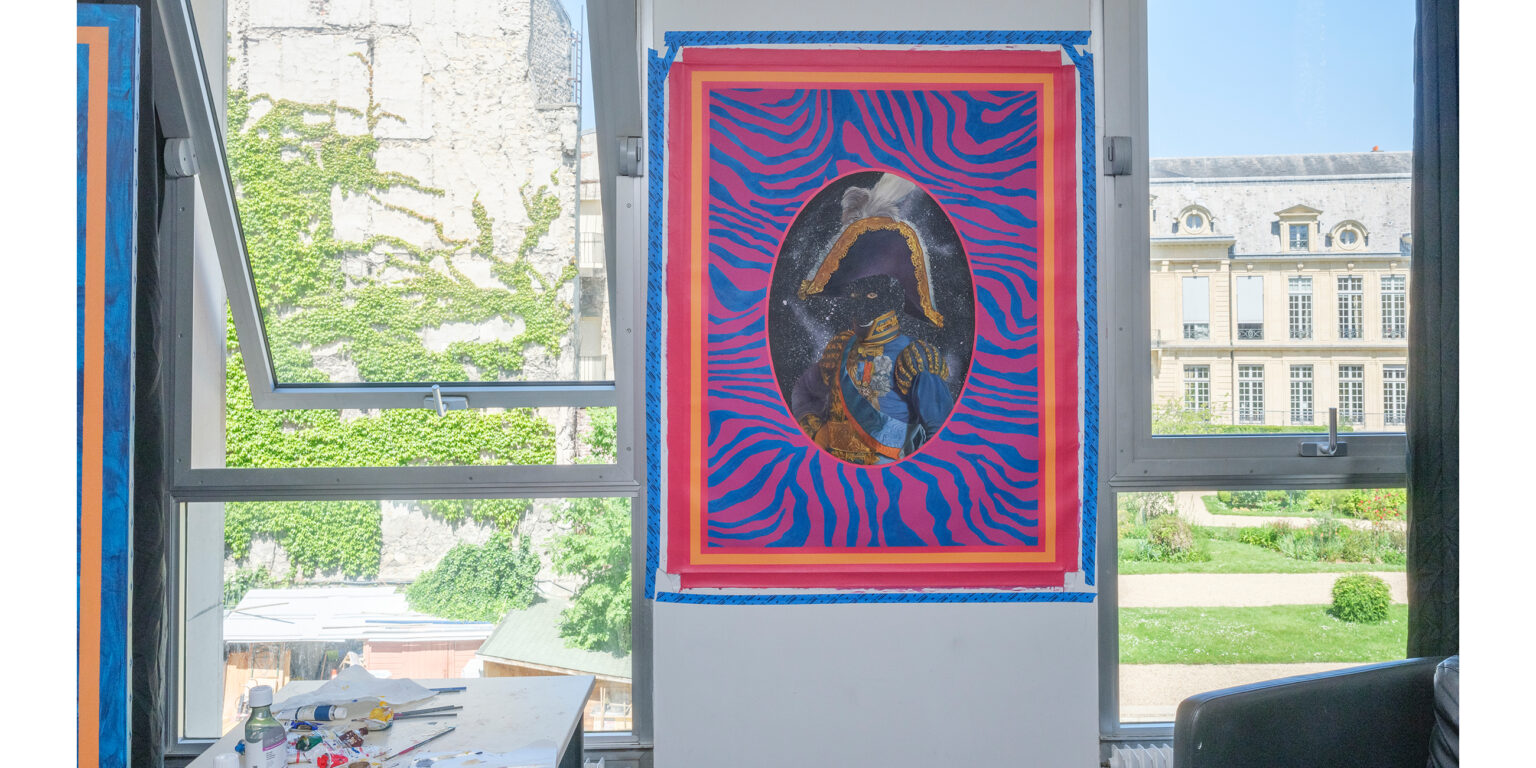
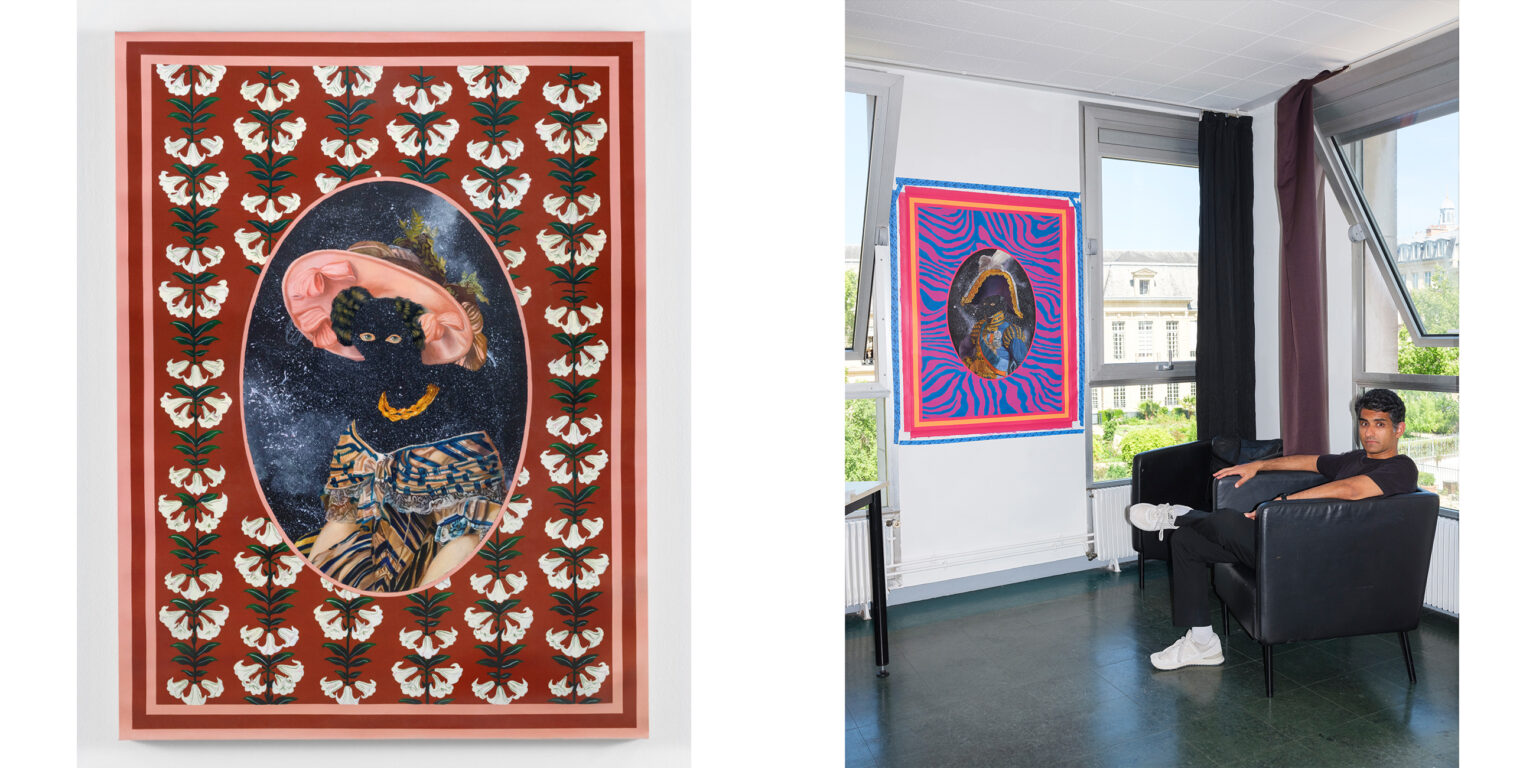
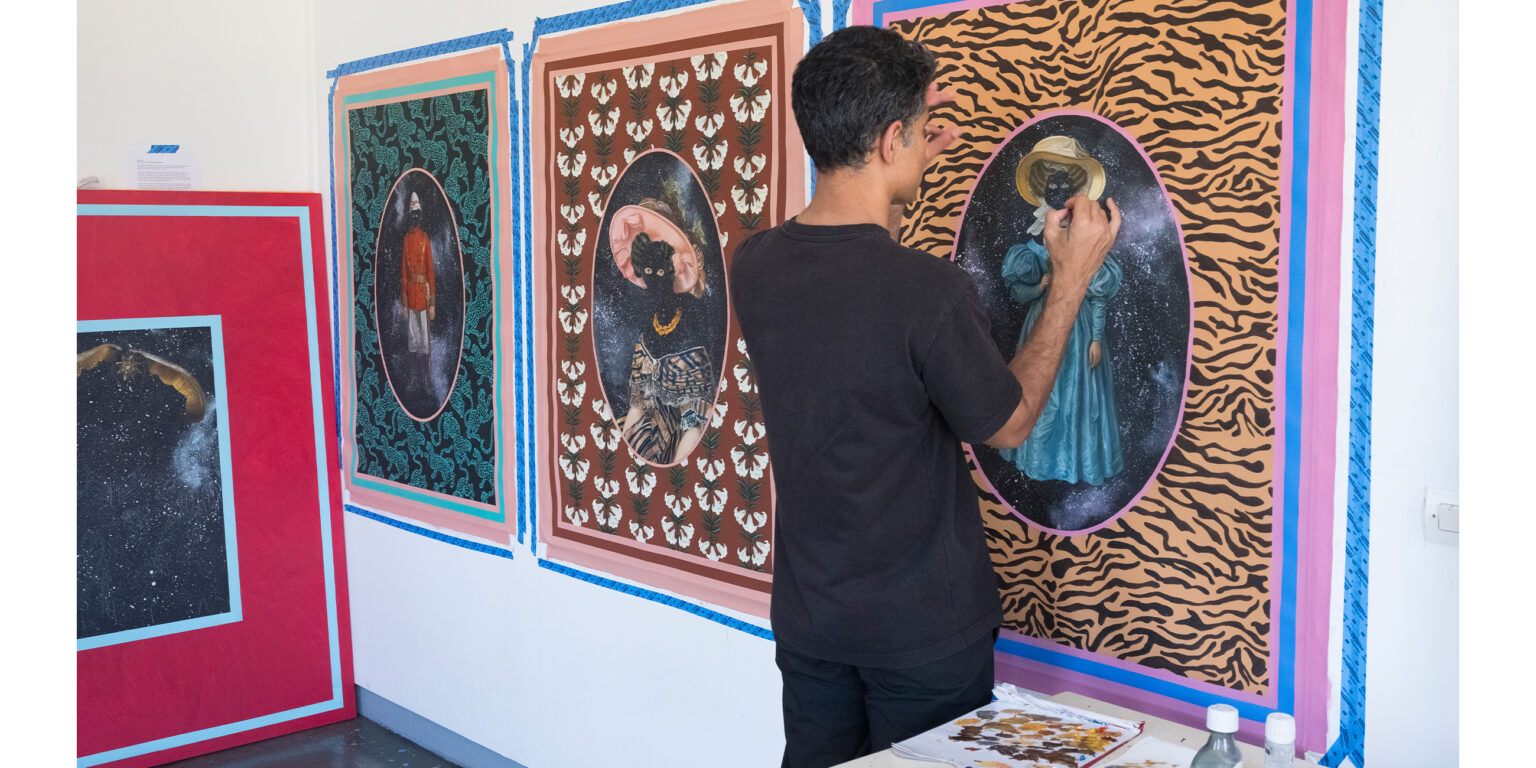
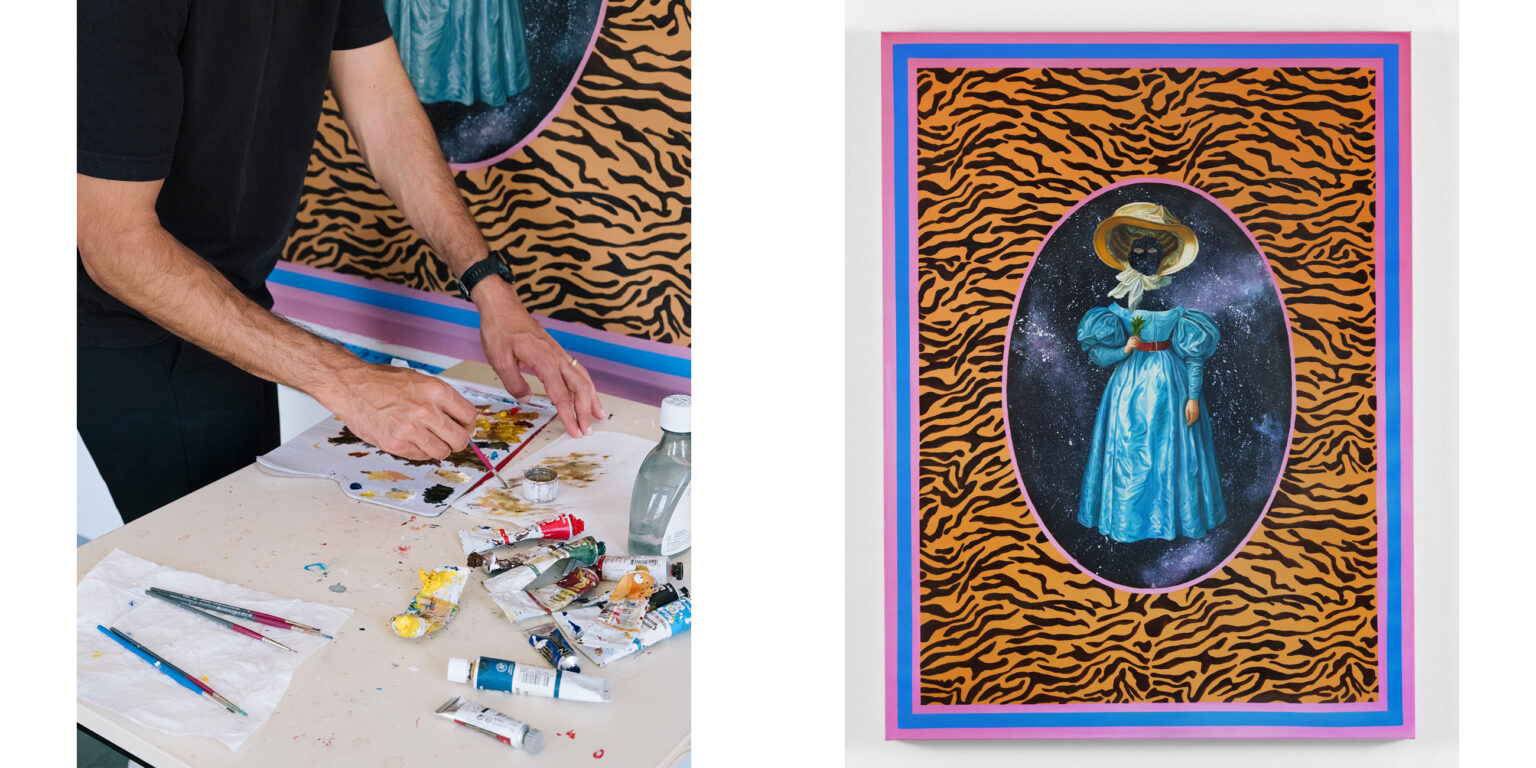
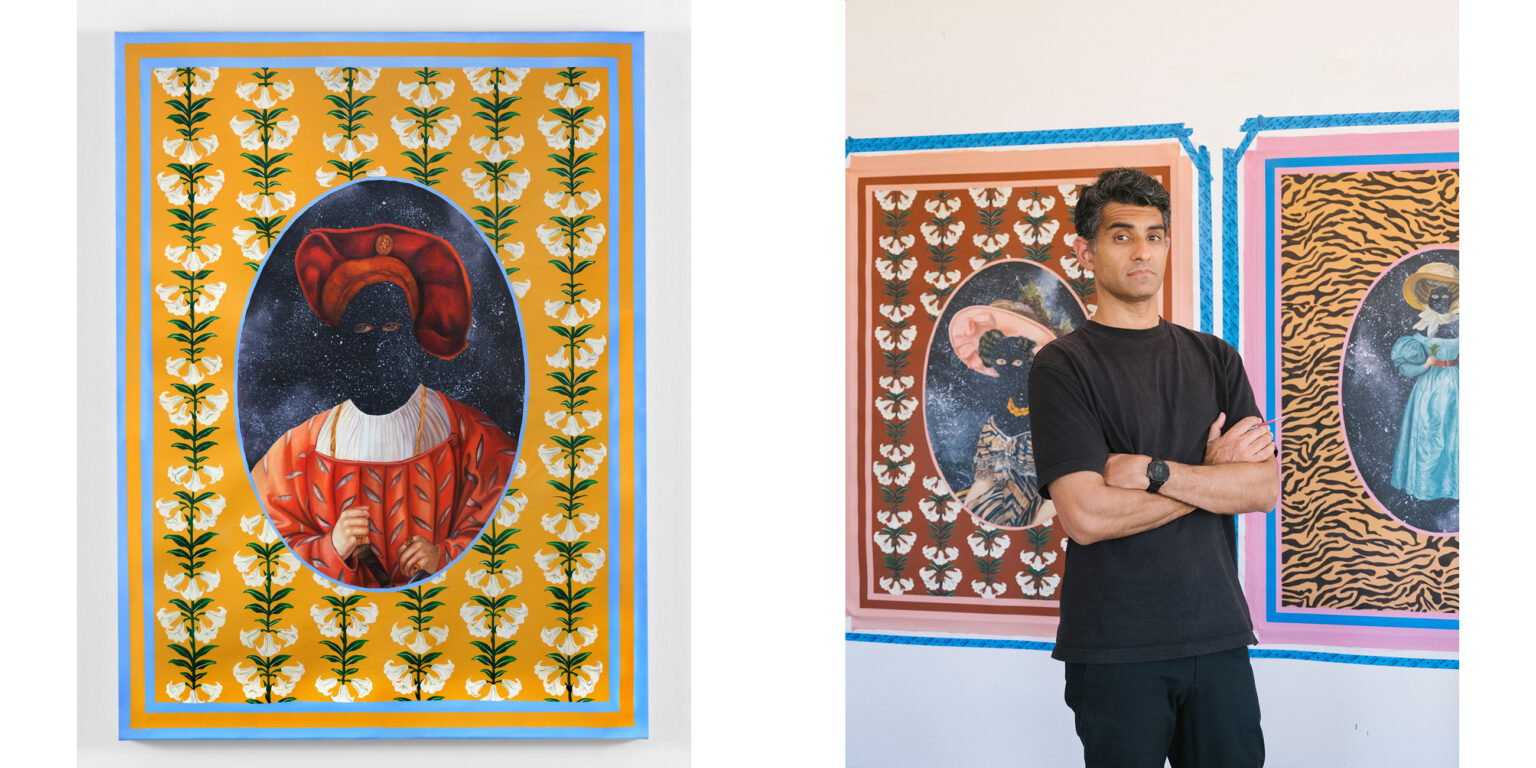
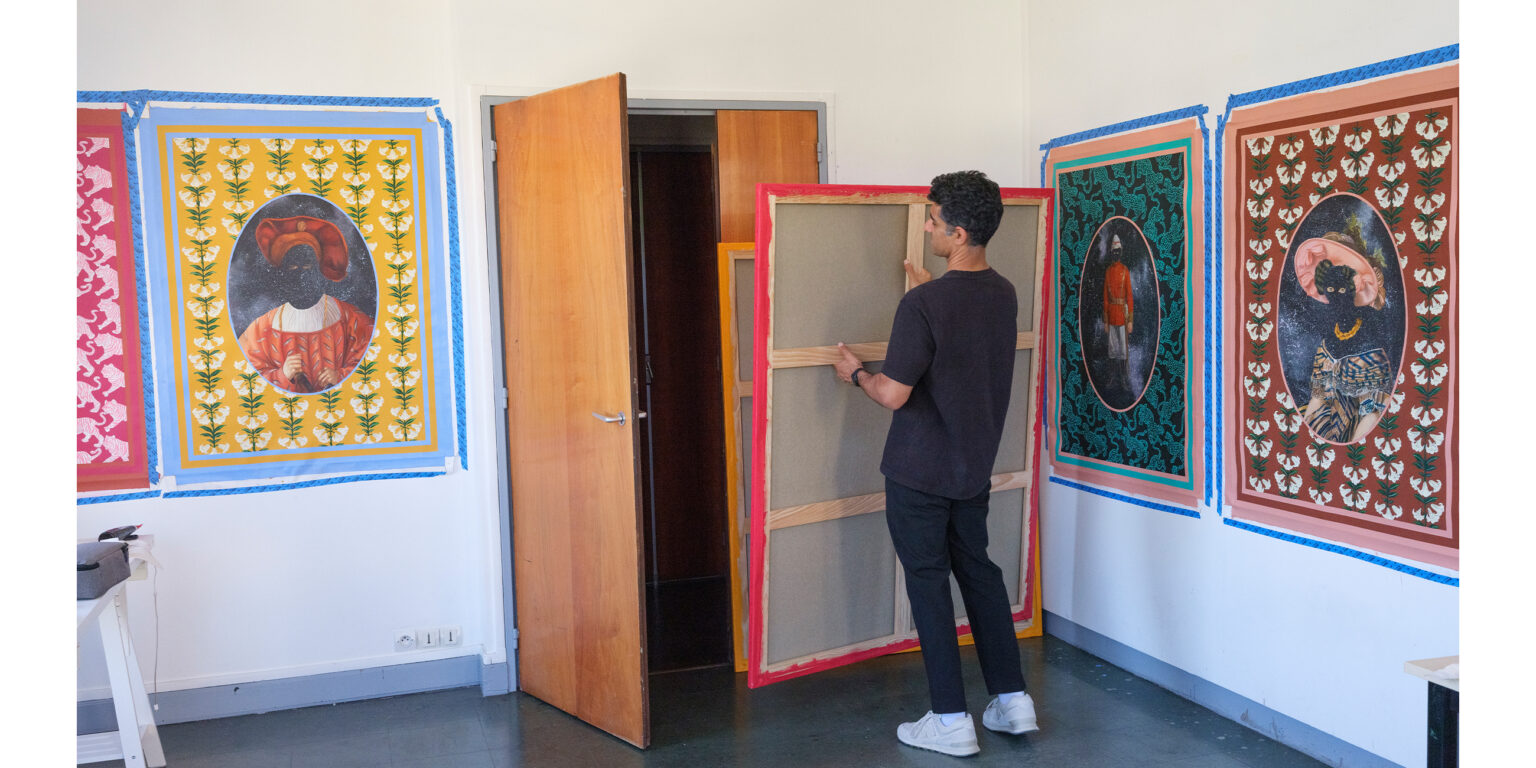
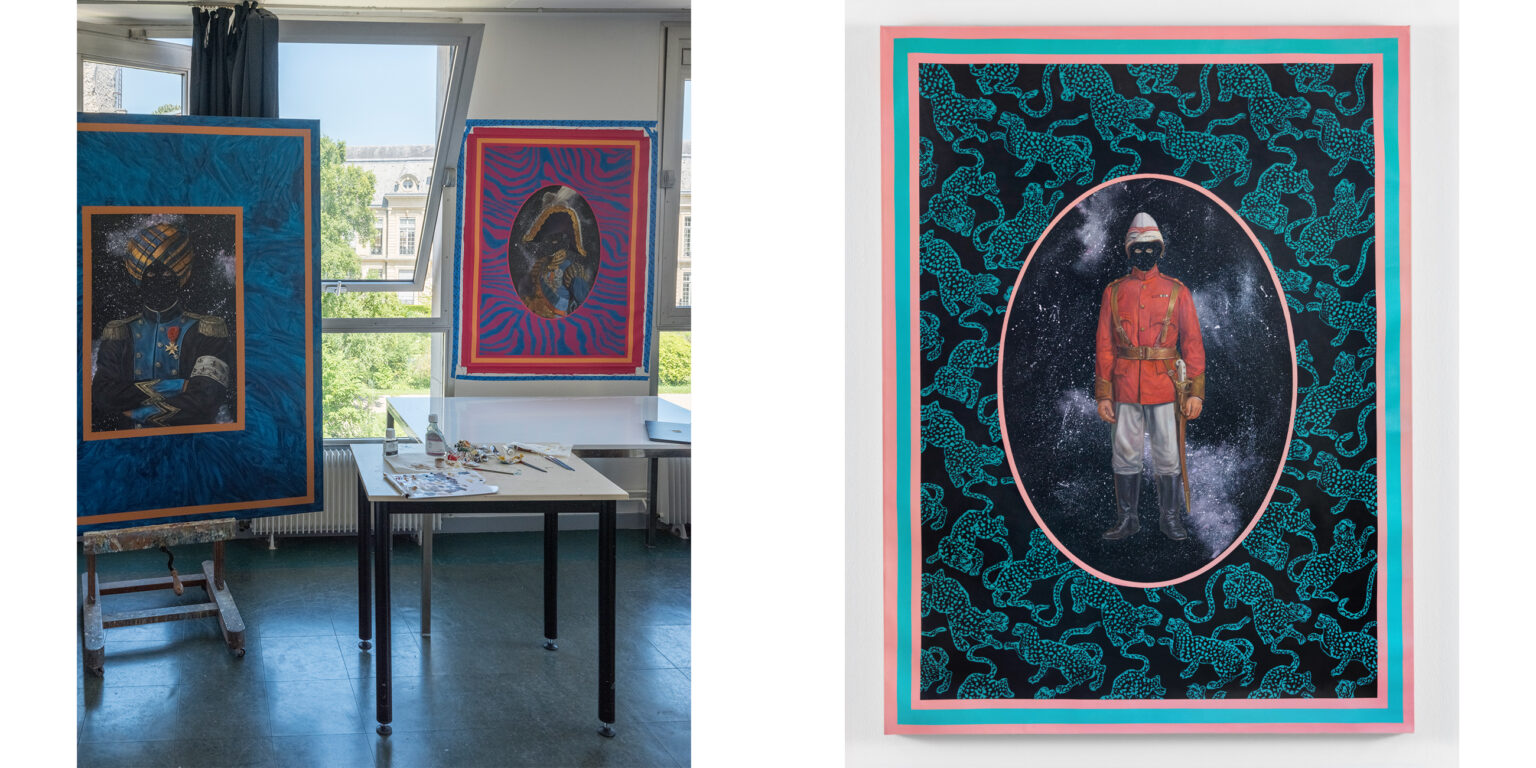
Following his acclaimed exhibition in Eora/Sydney earlier this year, Pattni returns with a new body of portraits in which faceless figures emerge within richly embellished borders, drawing attention to the ways ornament can both reveal and obscure histories of power. “I hope viewers are initially drawn in by the richness of the imagery and the decorative qualities of the paintings, but then begin to question where those visual languages come from and what histories they might contain,” he says. “I’m interested in that tension between attraction and critique.”
What was the starting point for Curiosities?
A desire to expand my research beyond the British colonial project and examine how France also participated in shaping European perceptions of India. Much of my practice has focused on how colonial image-making influenced both Western understandings of India and the ways diasporic communities come to understand themselves. Paris presented an opportunity to investigate that history through a different lens.
I was particularly interested in the relationship between Indian chintz textiles and the development of Toile de Jouy. What fascinated me was how motifs that originally carried specific cultural, symbolic and artistic meanings within India were gradually transformed into decorative European luxury objects. In that process, India shifted from being a lived reality into something ornamental, imagined, consumed and aestheticised.
How did your time in Paris inform the work?
I spent time looking at material related to Toile de Jouy and the decorative arts, visiting many museums. I noticed how often South Asia appeared within French decorative culture, but usually as an abstraction rather than a place. It was present through floral motifs, ornament, textiles and decorative objects, yet largely absent as a complex culture with its own agency and history.
Are there paintings in the exhibition that you feel particularly connected to?
The motifs in the decorative borders are particularly important. Many of them are composite flora or fauna assembled from fragments of Indian botanical imagery and European decorative motifs. They became a way of visualising the process of cultural transformation that sits at the centre of the project. Much like diasporic identities, these forms are built from multiple histories, influences and inheritances that have become intertwined over time. The paintings are rooted in historical research, but they’re equally informed by questions I’ve carried throughout my life about belonging, inheritance and self-understanding.
How do you hope visitors will experience the work when they encounter it in your first solo exhibition at Michael Reid Berlin?
Much of the work is concerned with the idea that images are never neutral. I hope viewers are initially drawn in by the richness of the imagery and the decorative qualities of the paintings, but then begin to question where those visual languages come from and what histories they might contain. The motifs, decorative borders and historical references may appear beautiful, but they also carry traces of trade, empire, cultural exchange and appropriation. I’m interested in that tension between attraction and critique.
How do you see this exhibition sitting within the broader evolution of your practice?
The residency encouraged me to think more transnationally about colonial visual culture. Rather than treating British and French histories as separate narratives, the work considers how they intersected within a broader European project of imagining and representing India. That shift feels significant because it opens up new questions about how colonial ideologies travelled across borders and continue to shape contemporary understandings of culture and identity. In many ways, this exhibition feels like the beginning of a larger line of inquiry.