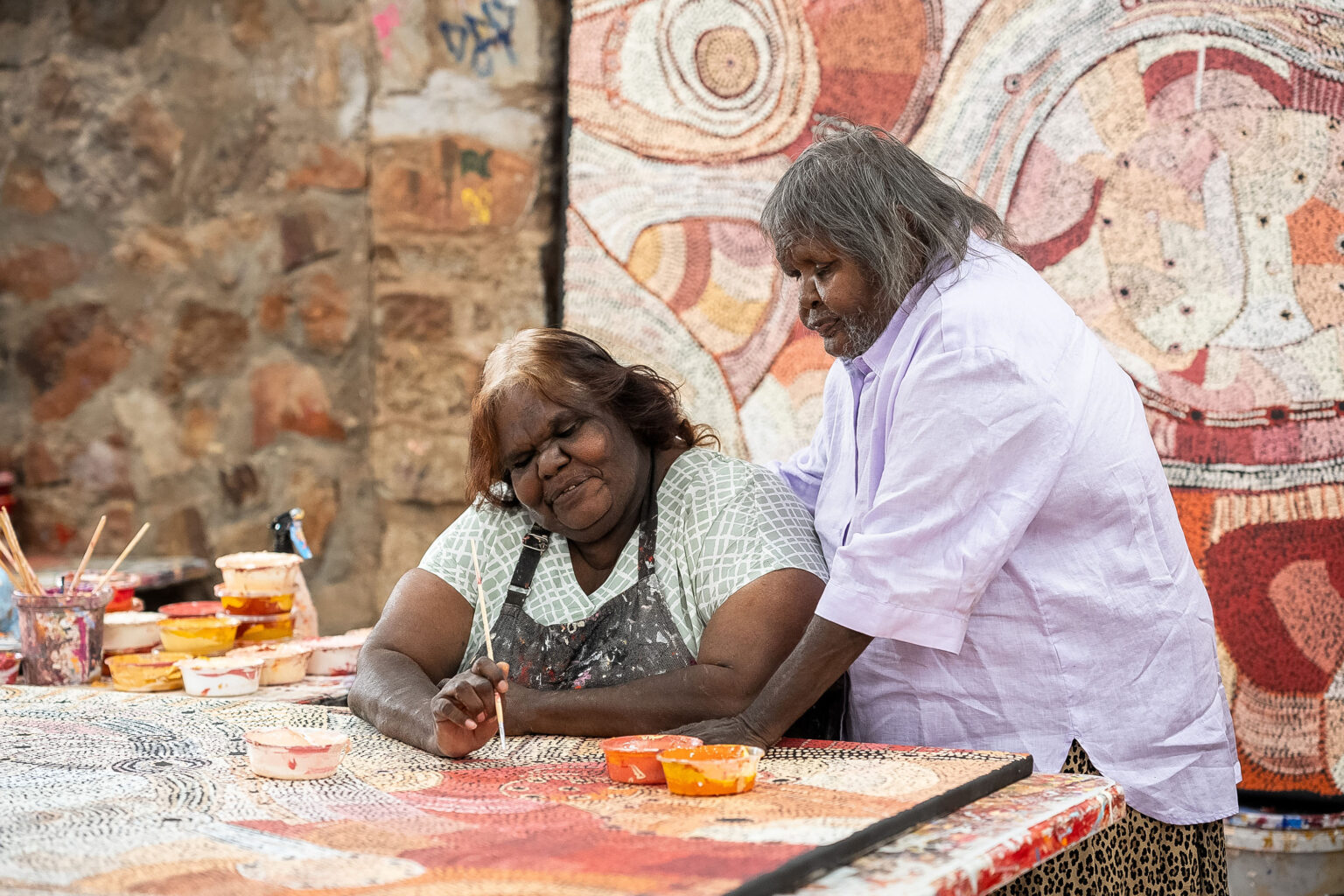
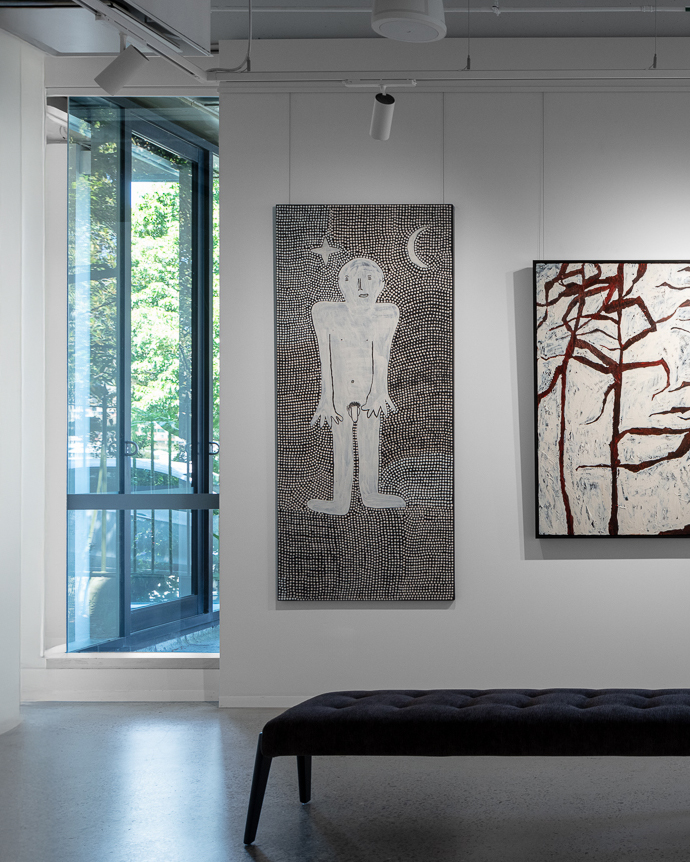
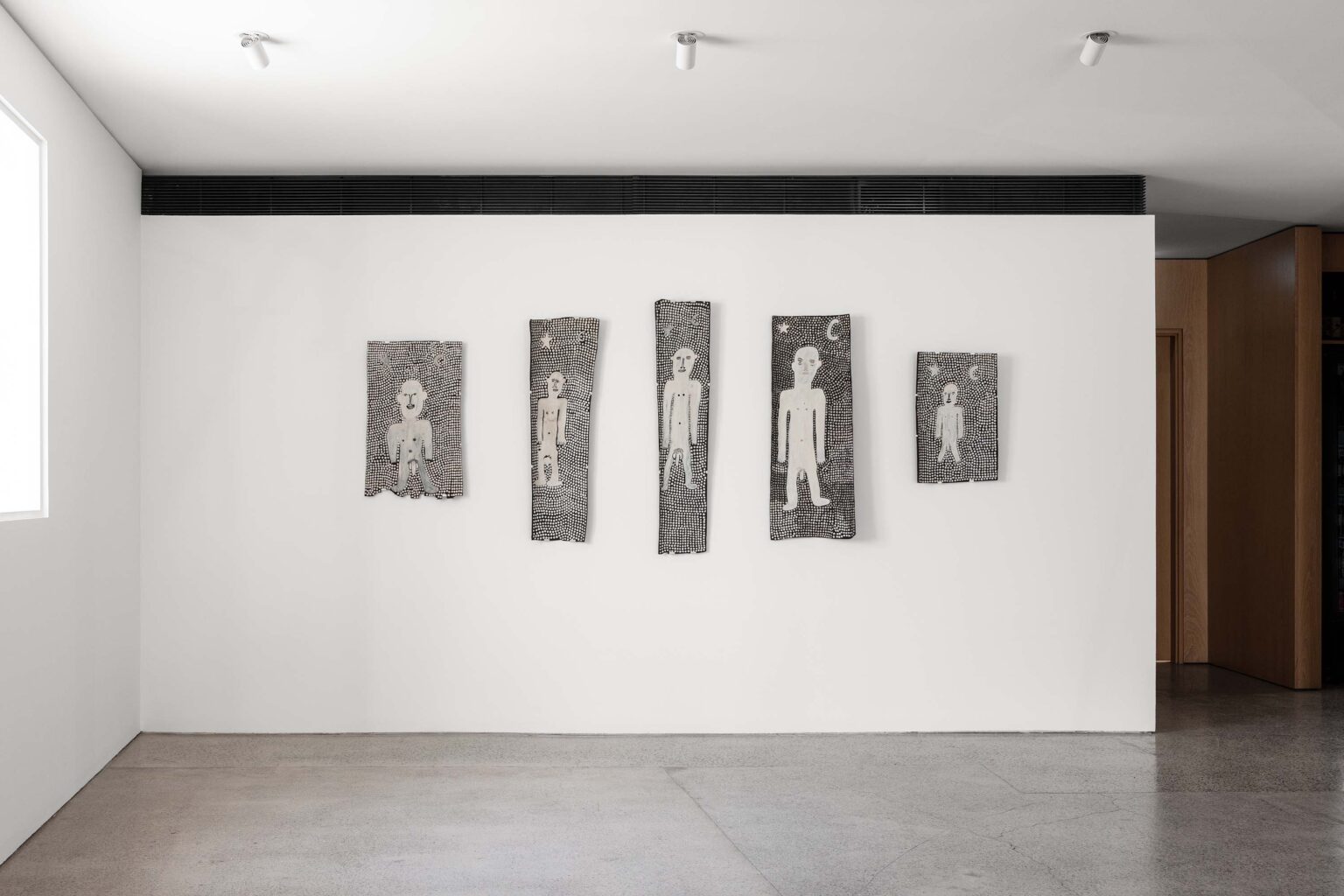
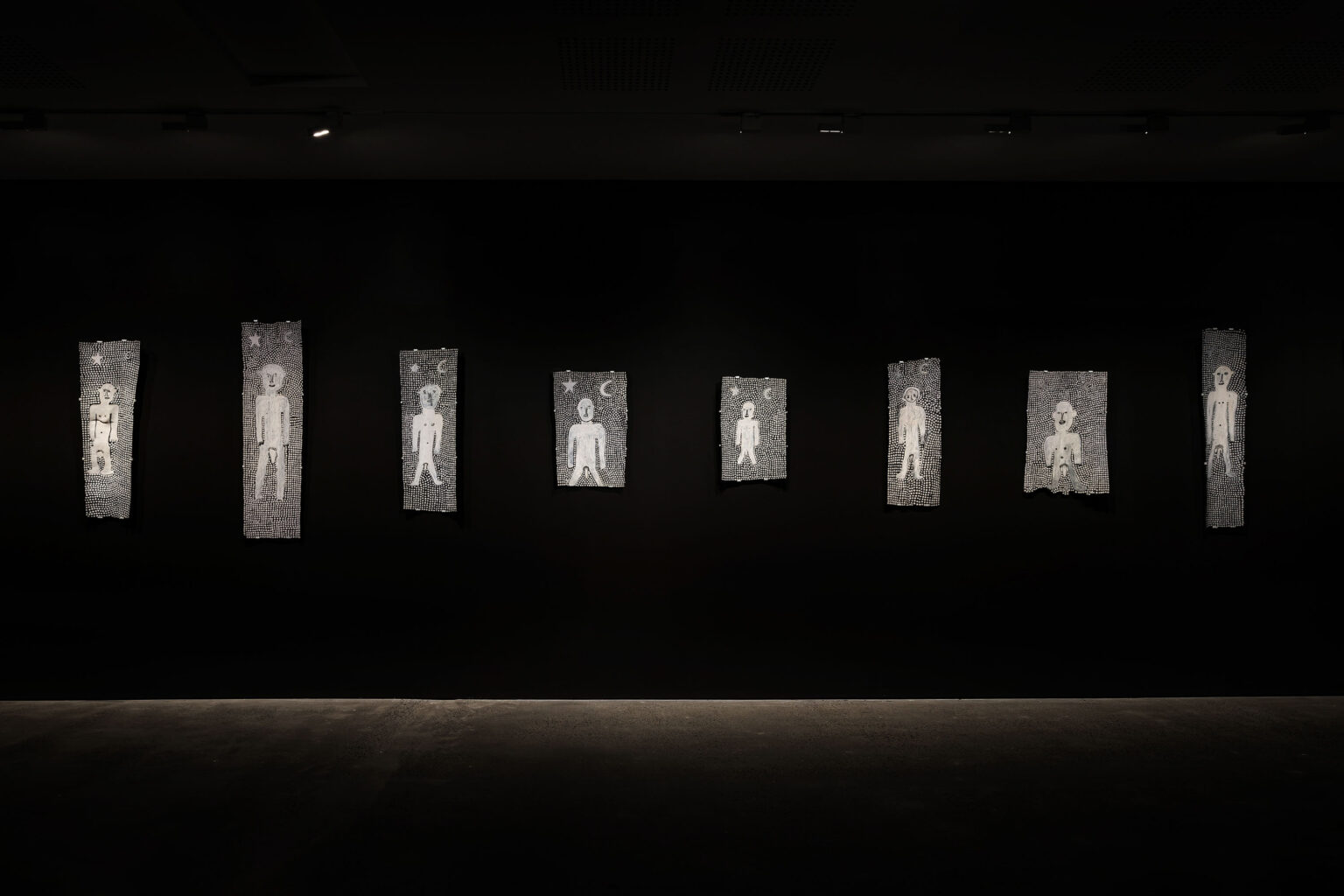
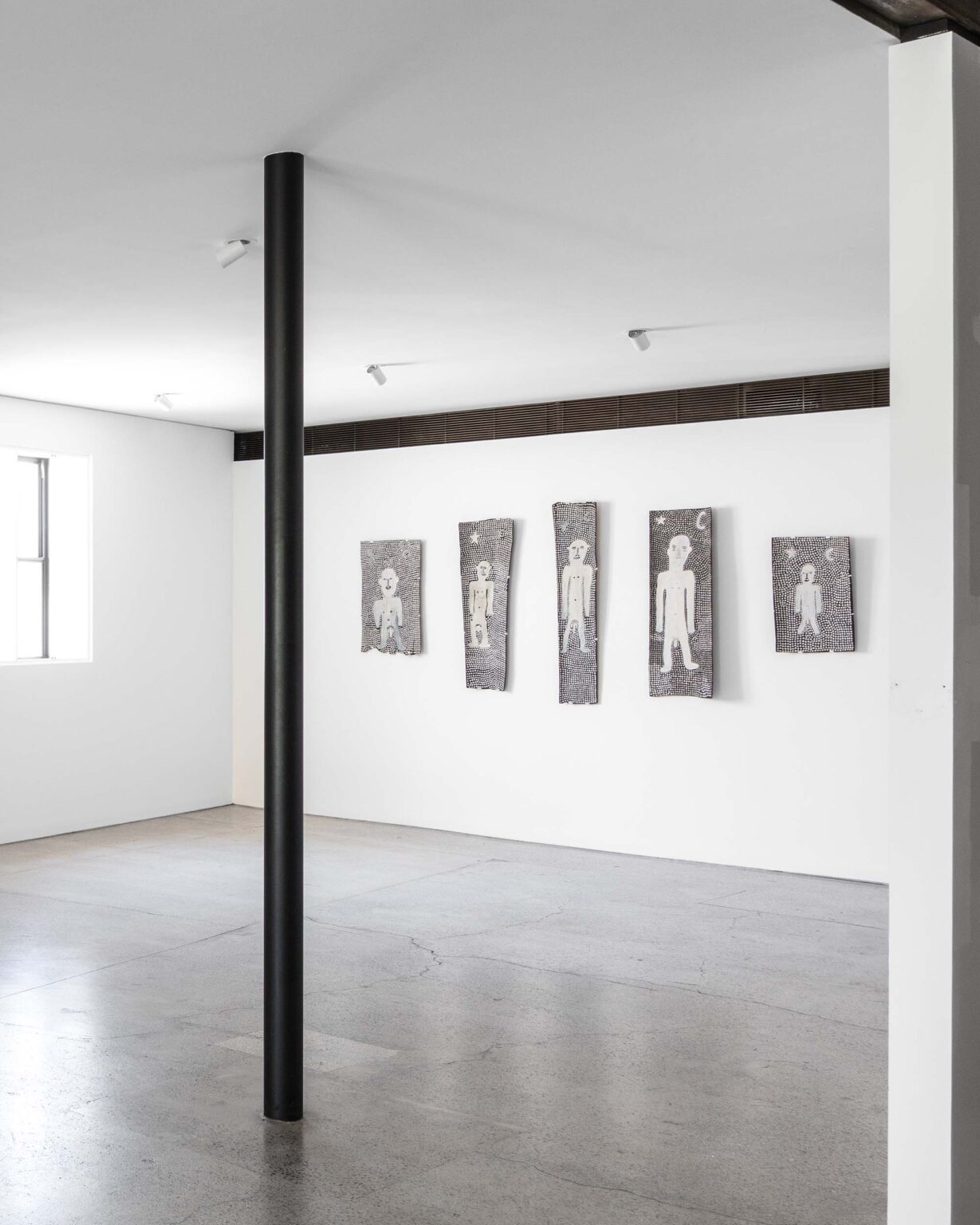
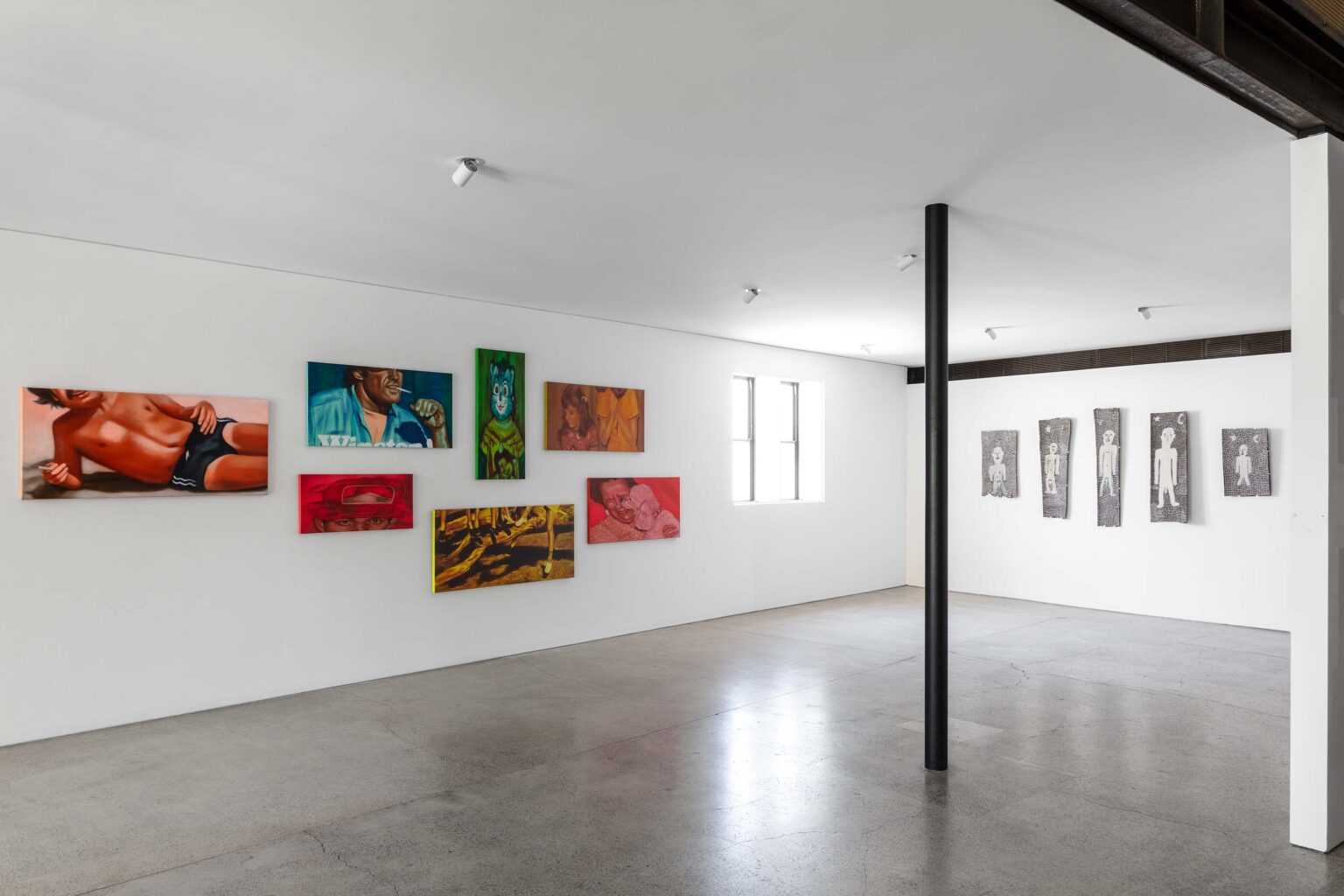
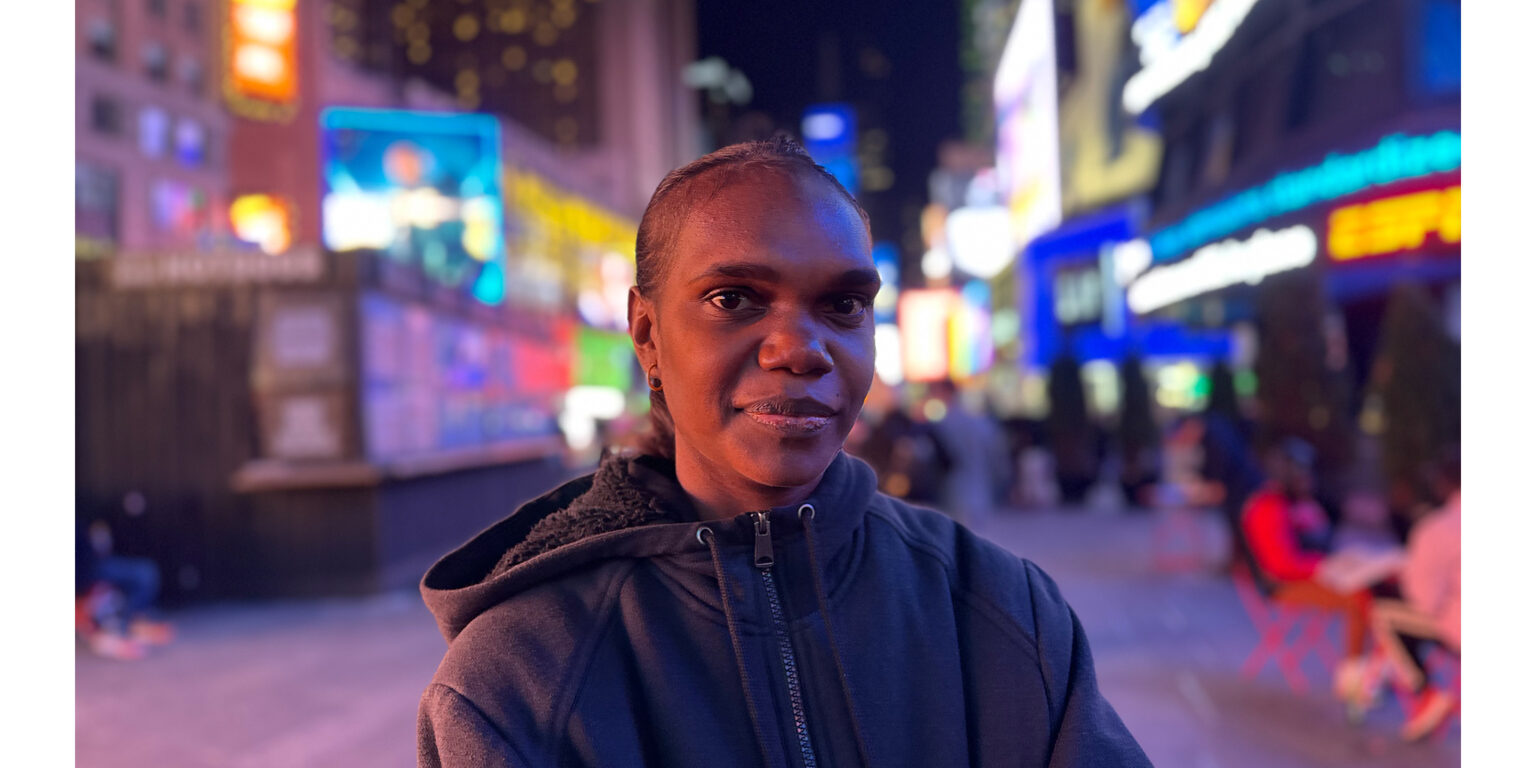
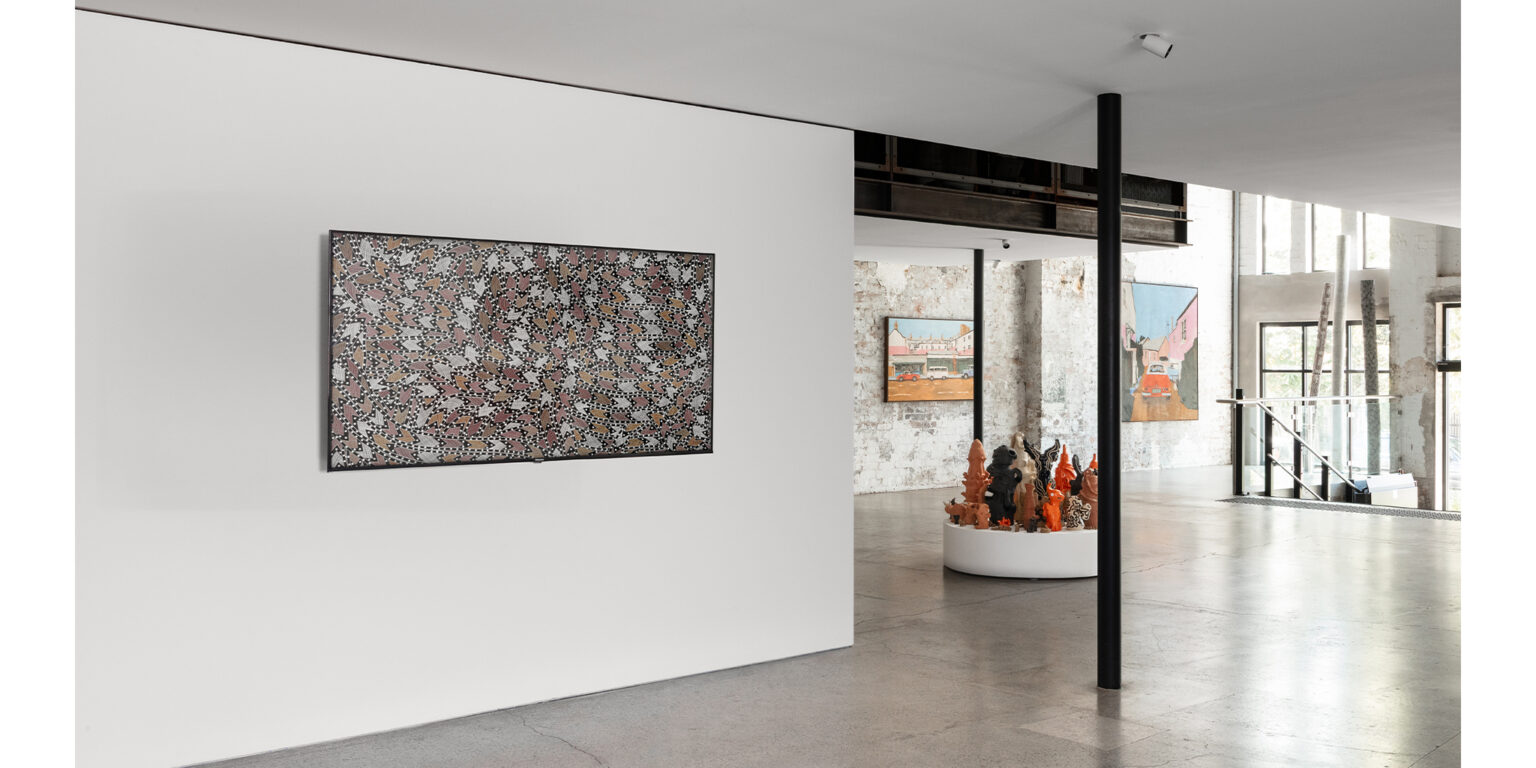
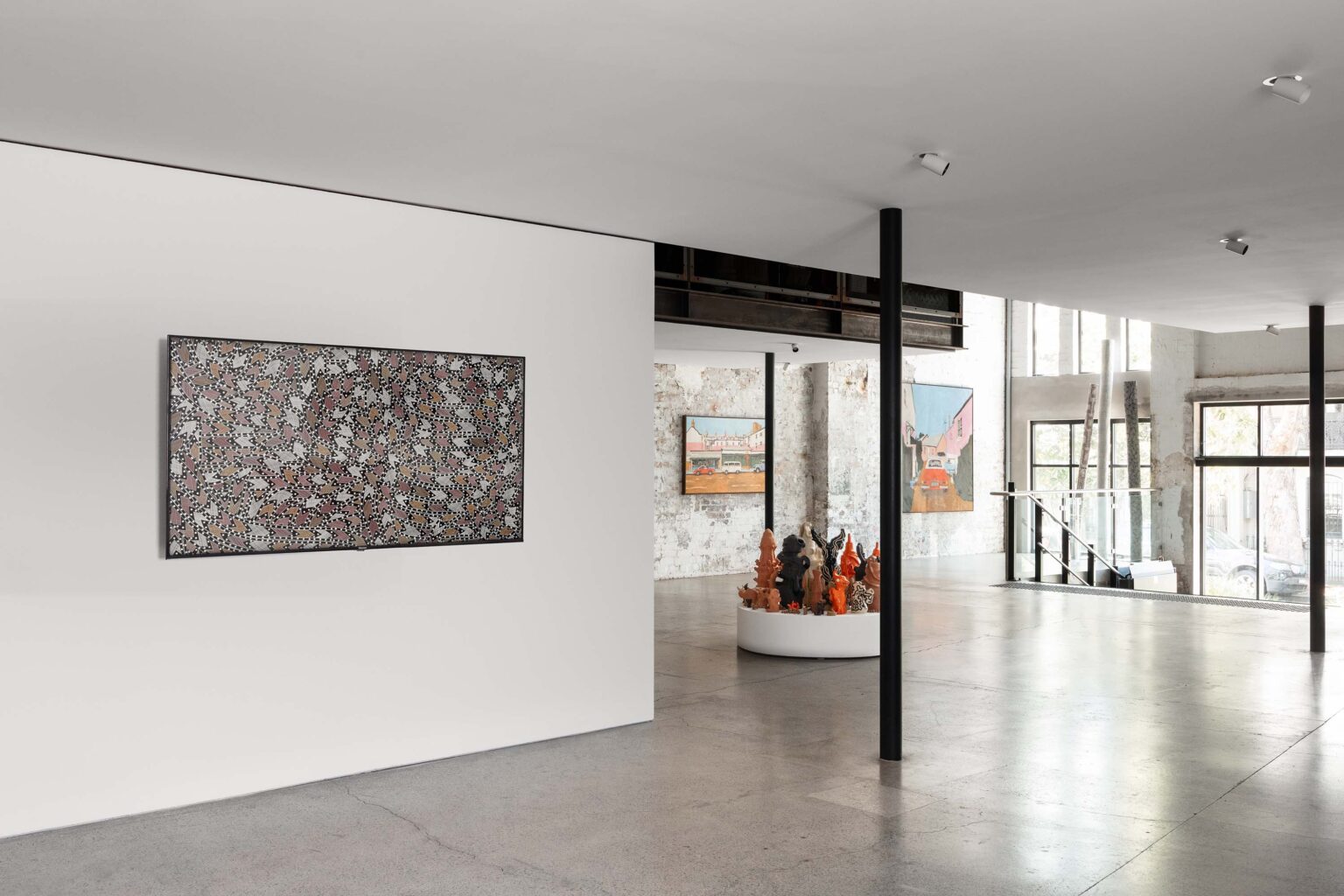
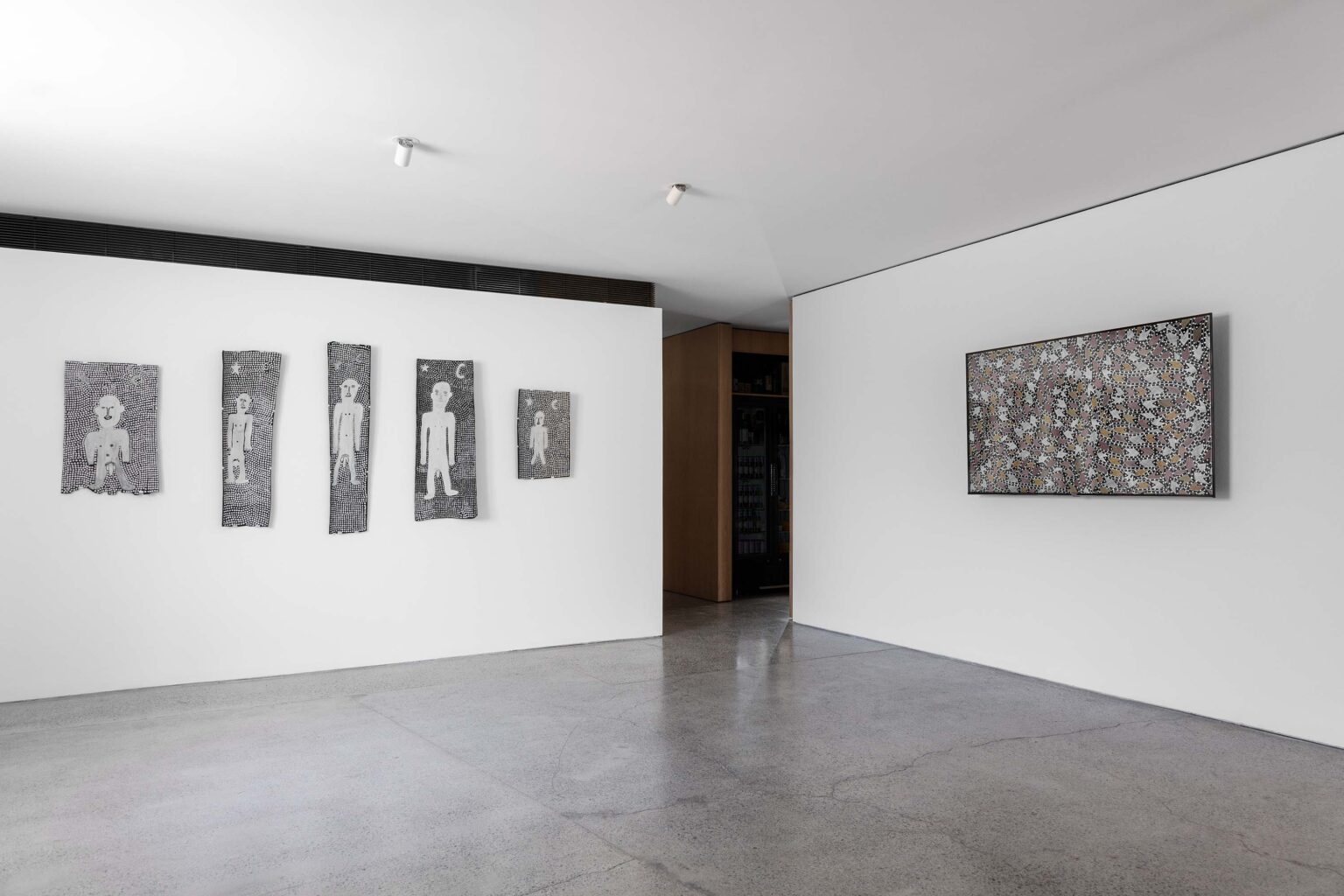
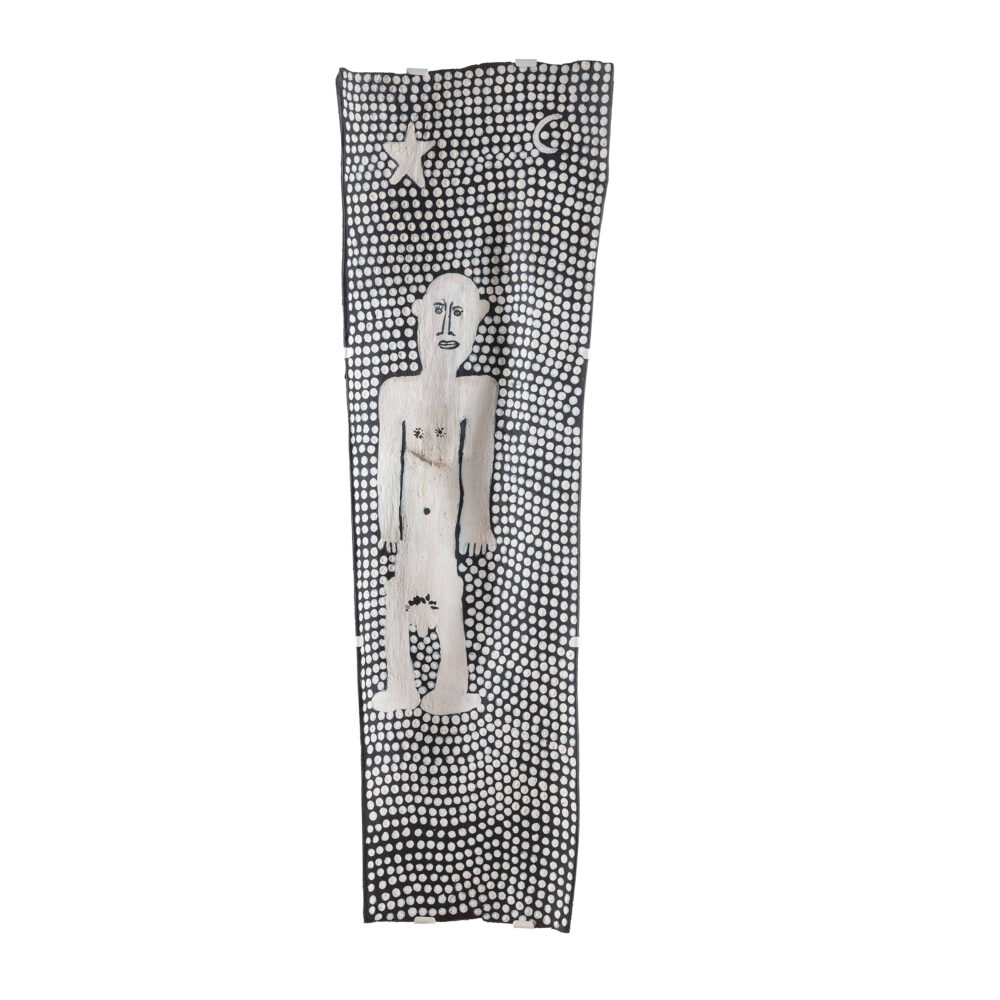
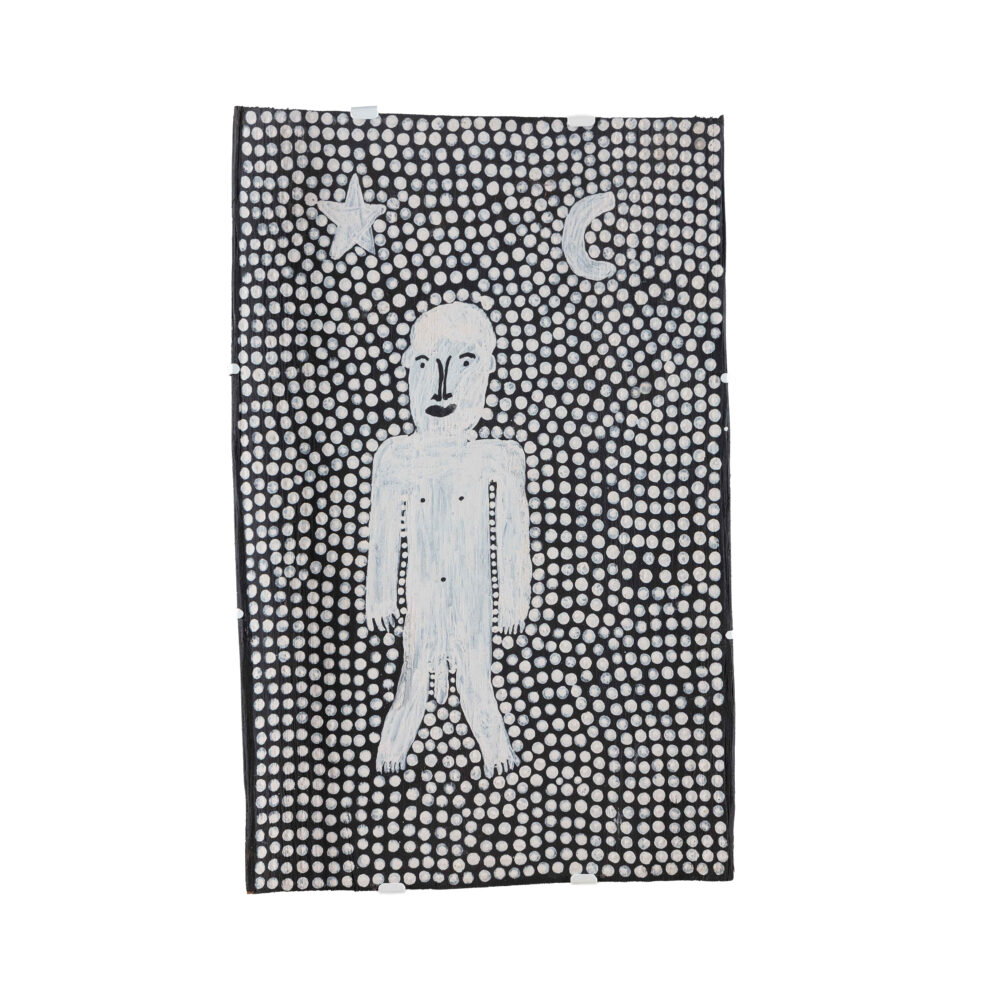
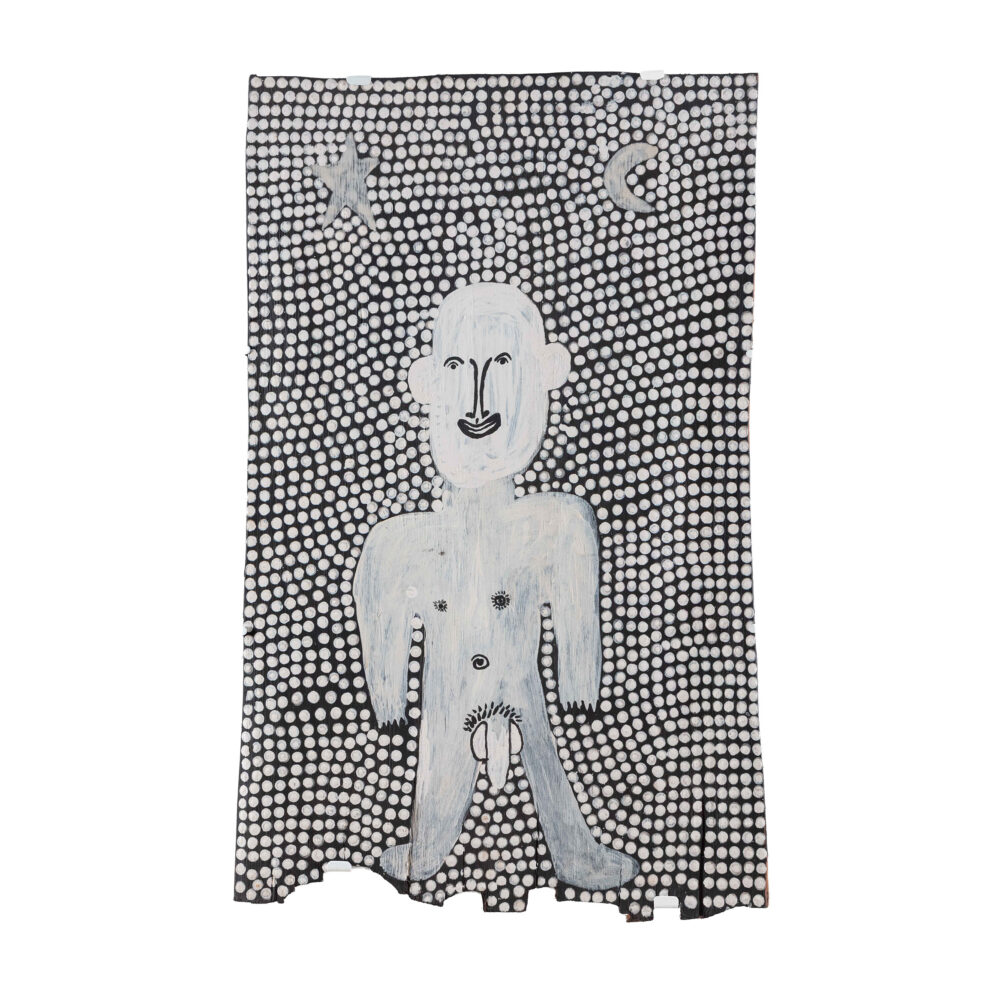
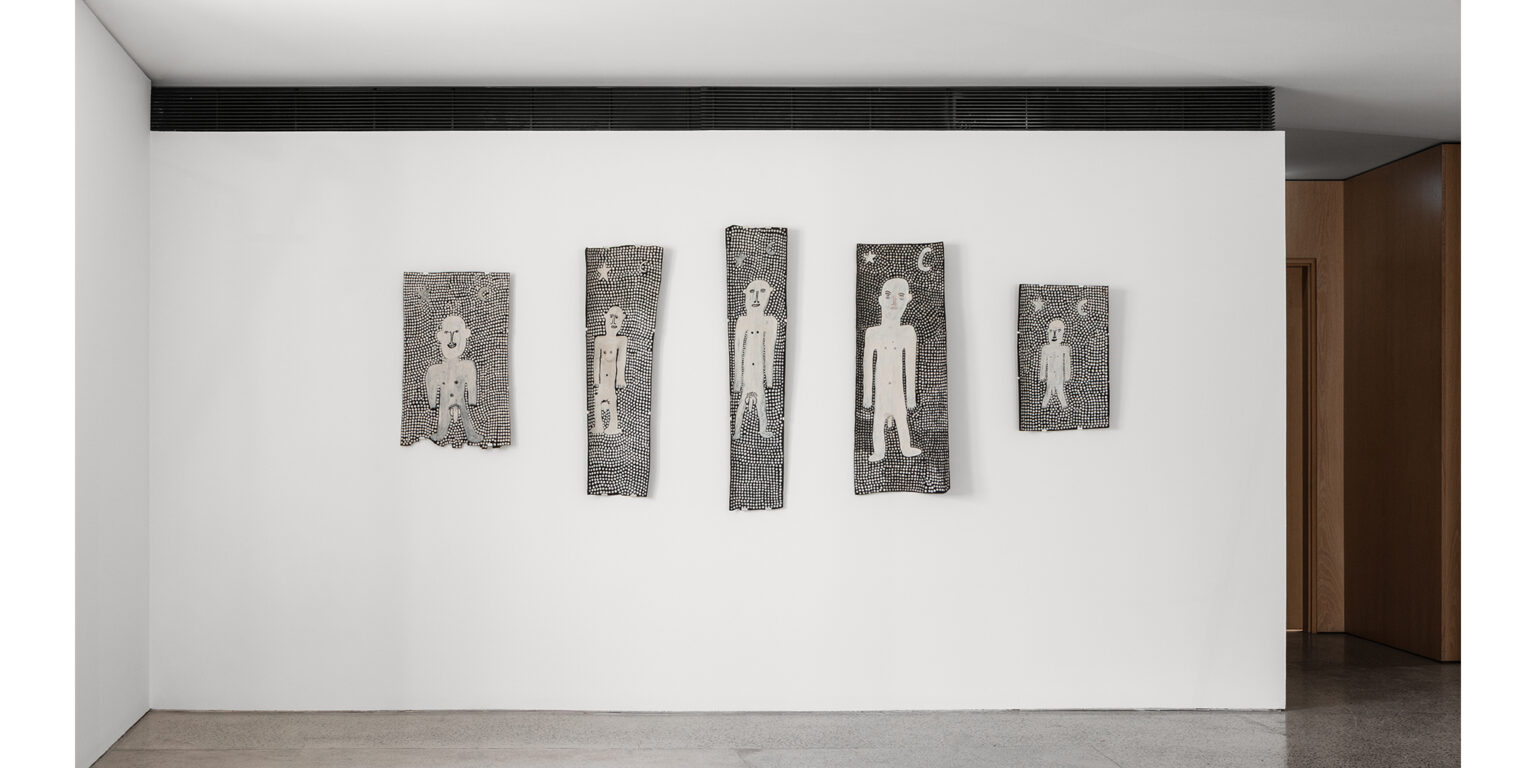
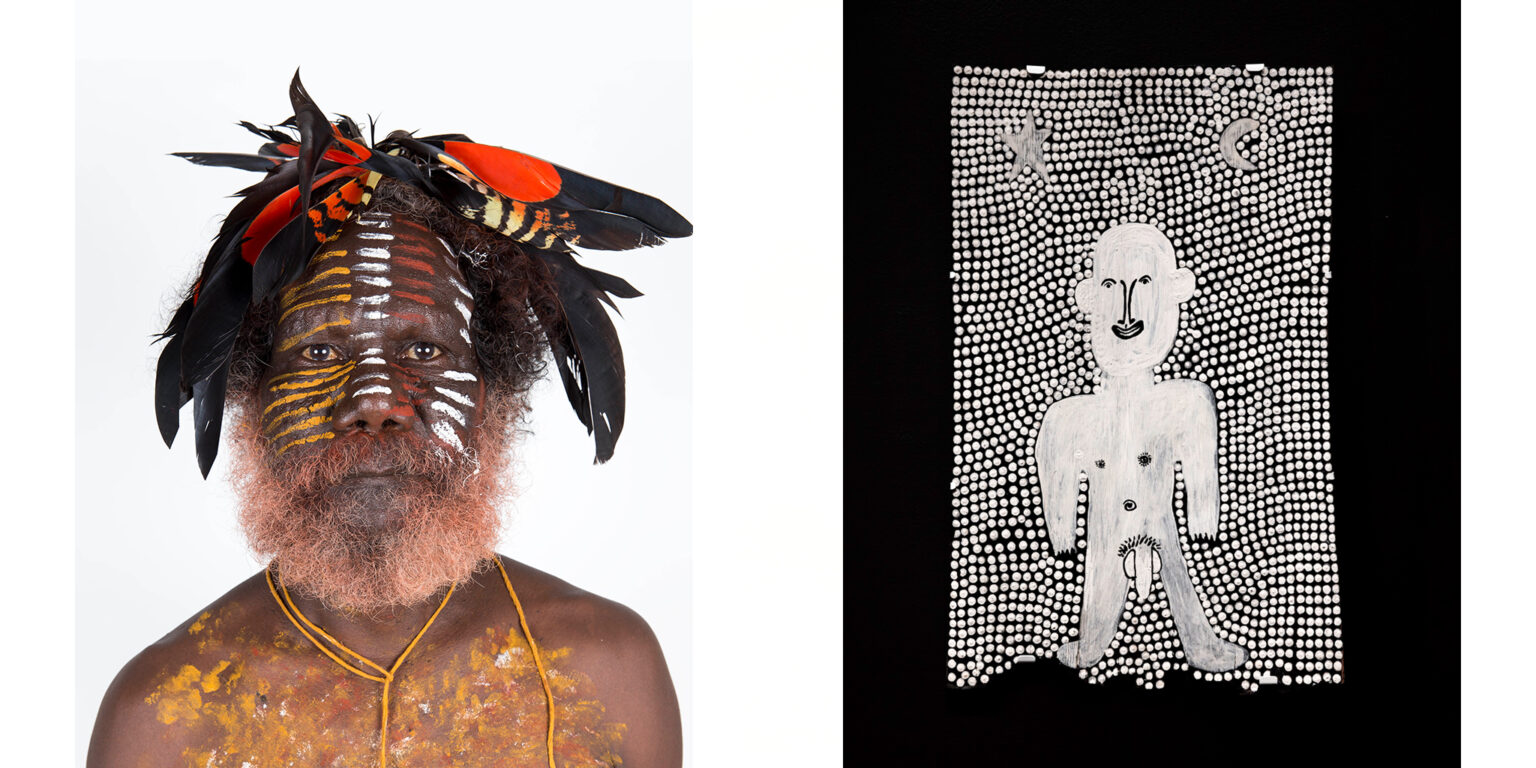
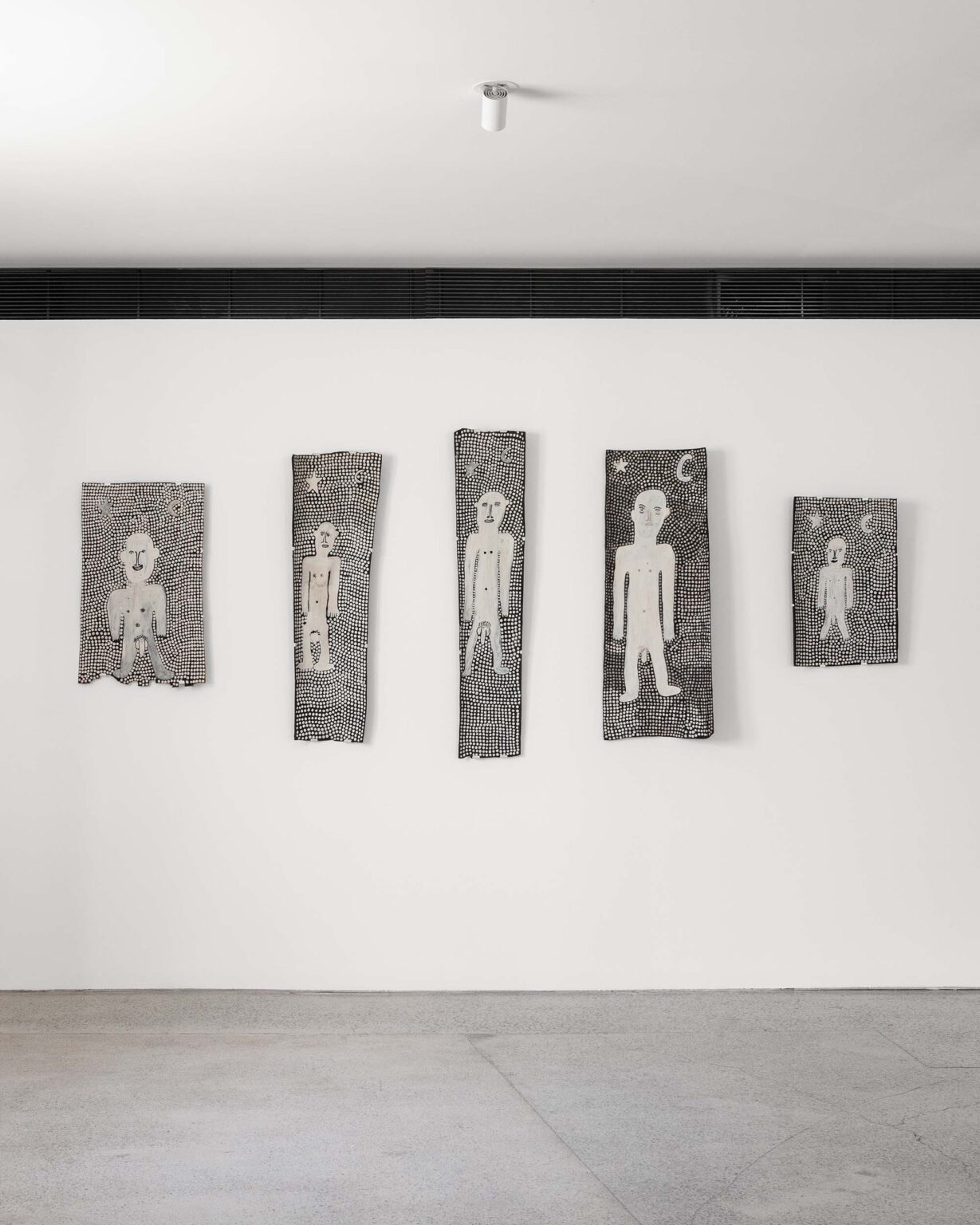
A major highlight of the official artistic program at the 2026 Sydney Gay & Lesbian Mardi Gras festival, Japarra (The Moonman) by Columbiere Tipungwuti opens in February at Michael Reid Sydney and marks the Tiwi Islands artist and dancer’s first large-scale solo exhibition since his star turn in our annual survey Painting Now.
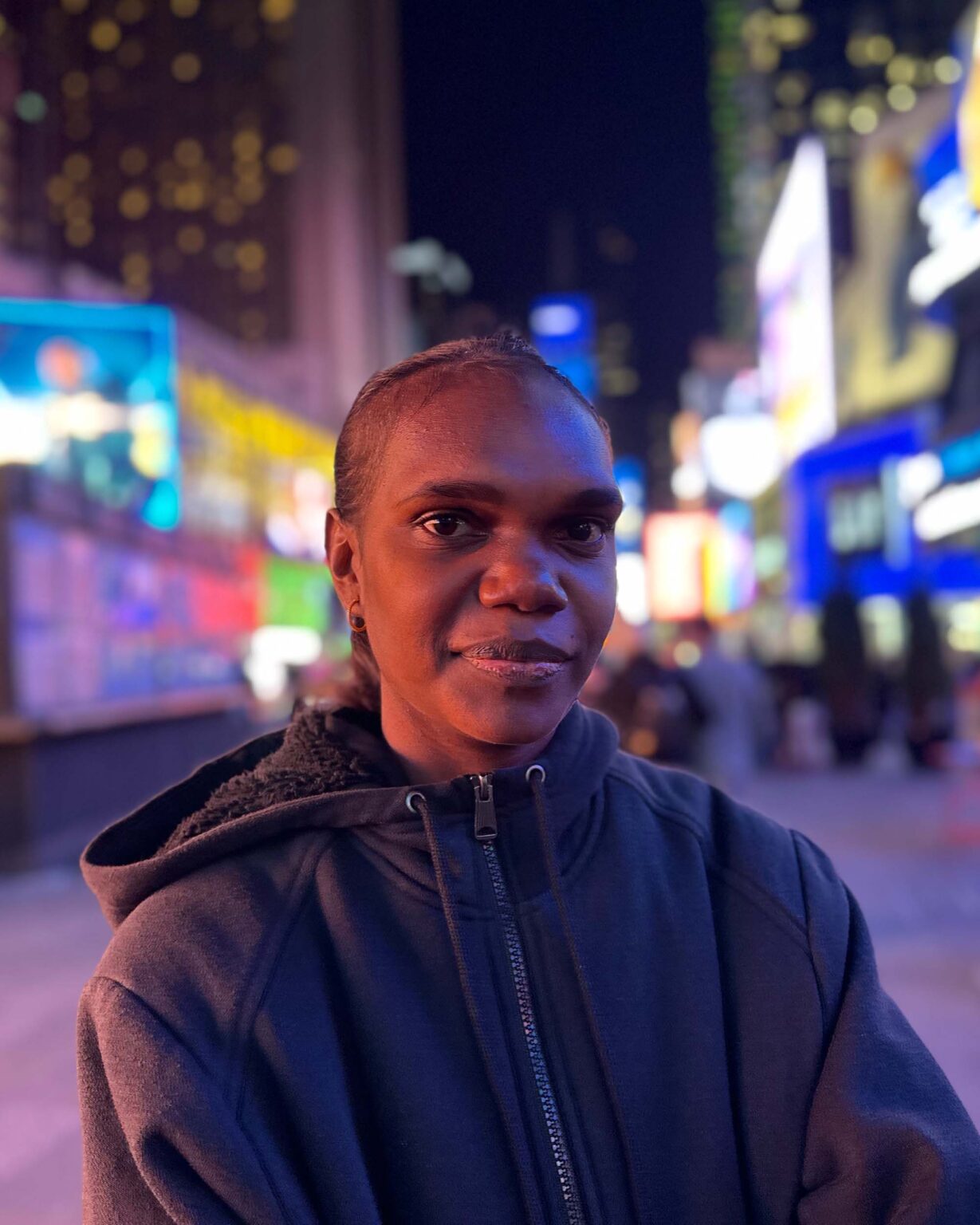
Set to walk alongside the Sistagirls in the 2026 Mardi Gras Parade, Tipungwuti is a significant presence within the Tiwi Islands community and an artist whose highly distinctive painting practice continues to draw strong institutional and collector interest across Australia and abroad.
Tipungwuti’s Murrakupupuni (Country) is Wurankuwu, a homeland inherited through his father’s family, while his tribe, Wulinjuwula (Mosquito), comes from his matrilineal line. Having performed ballet in Eora/Sydney in the 1980s, he is also an accomplished dancer. “My father danced Jarranga (buffalo) and my mother danced Ampiji (rainbow),” says Tipungwuti, who continues to perform at ceremony and events where there is yoyi (dance). “My totem is buffalo, but when some of those women who are related through my mother’s side dance Ampiji, I join in, too.”
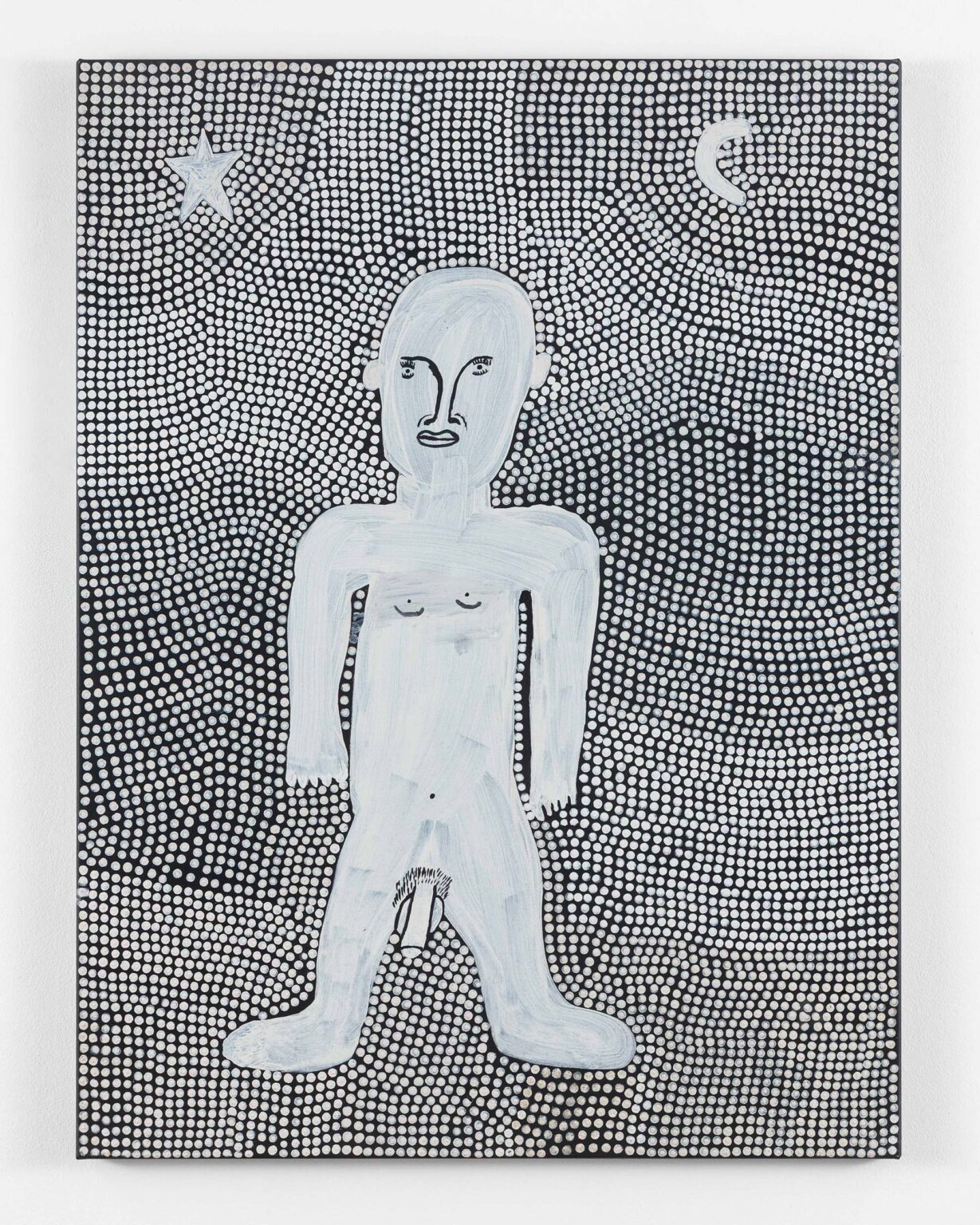
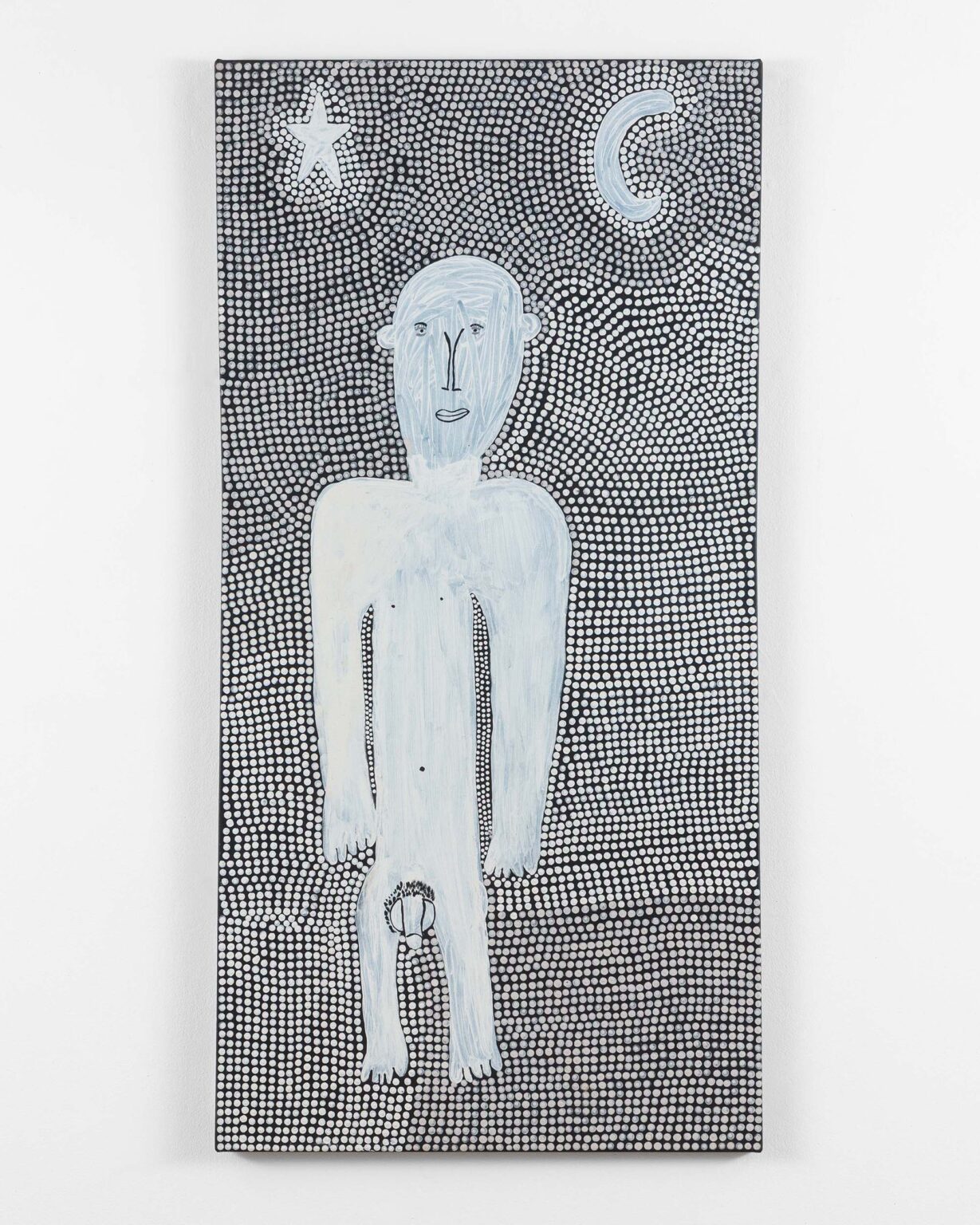
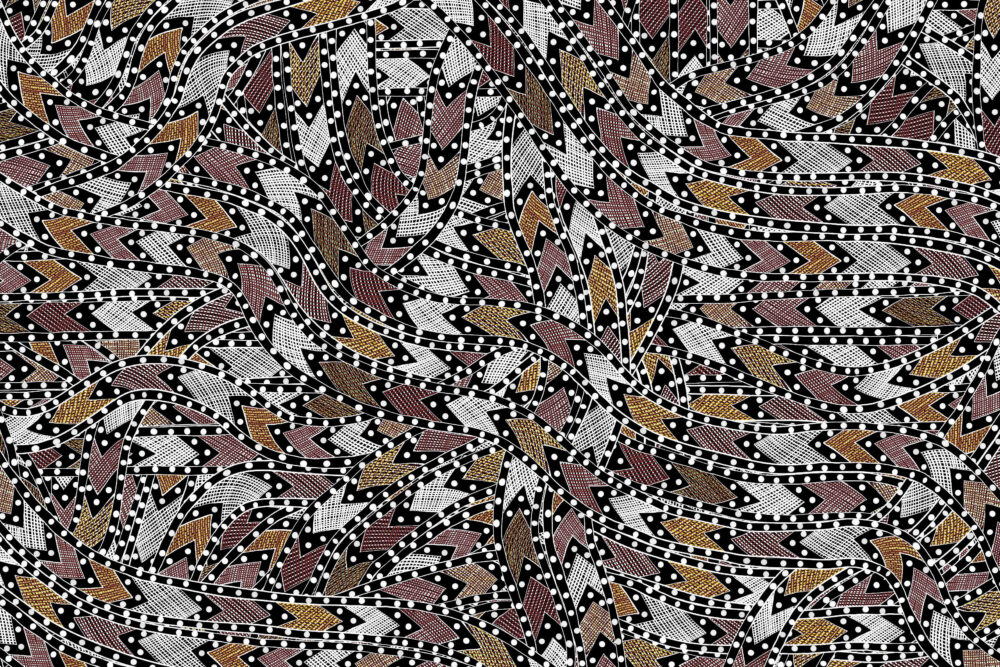
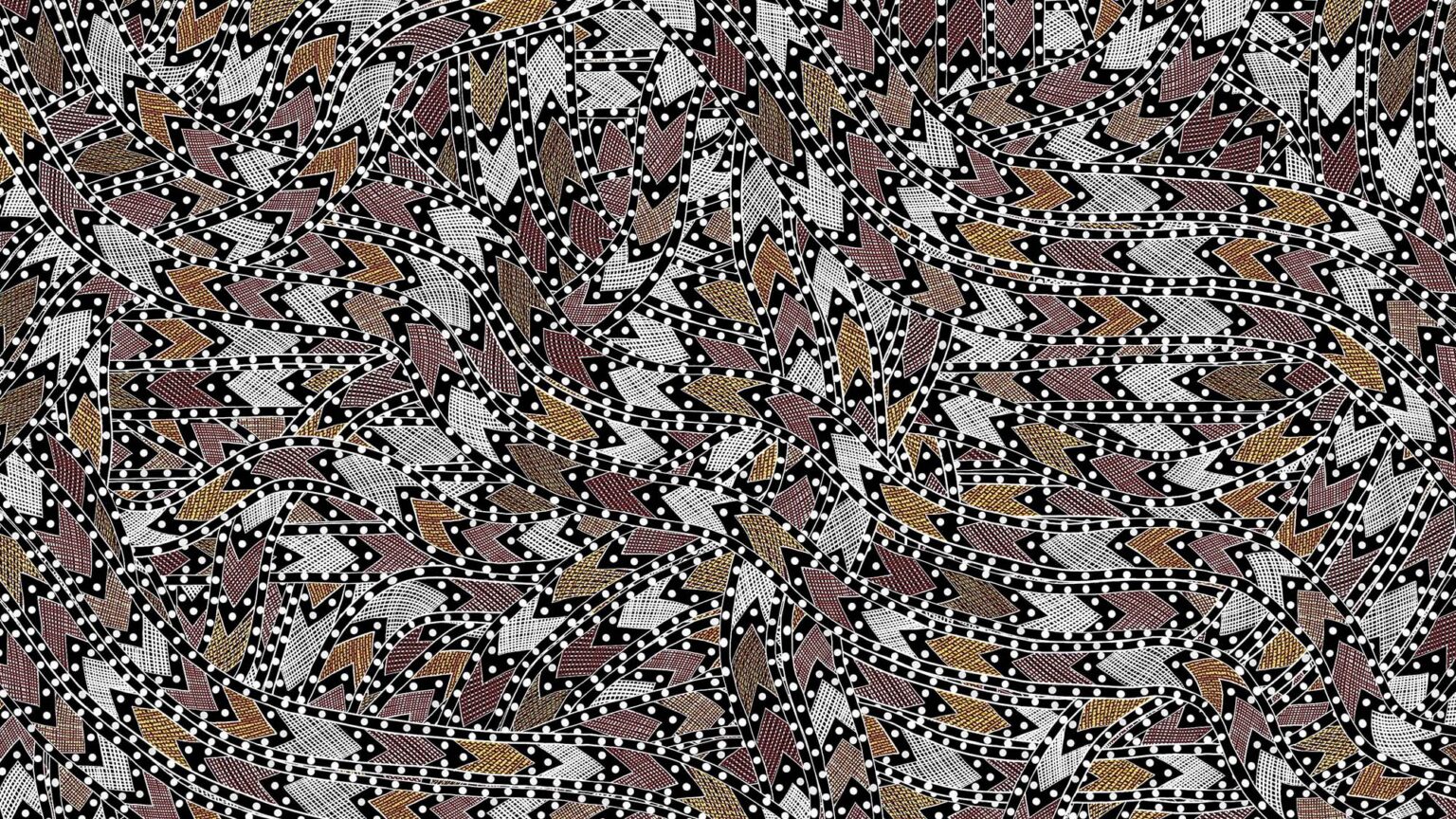
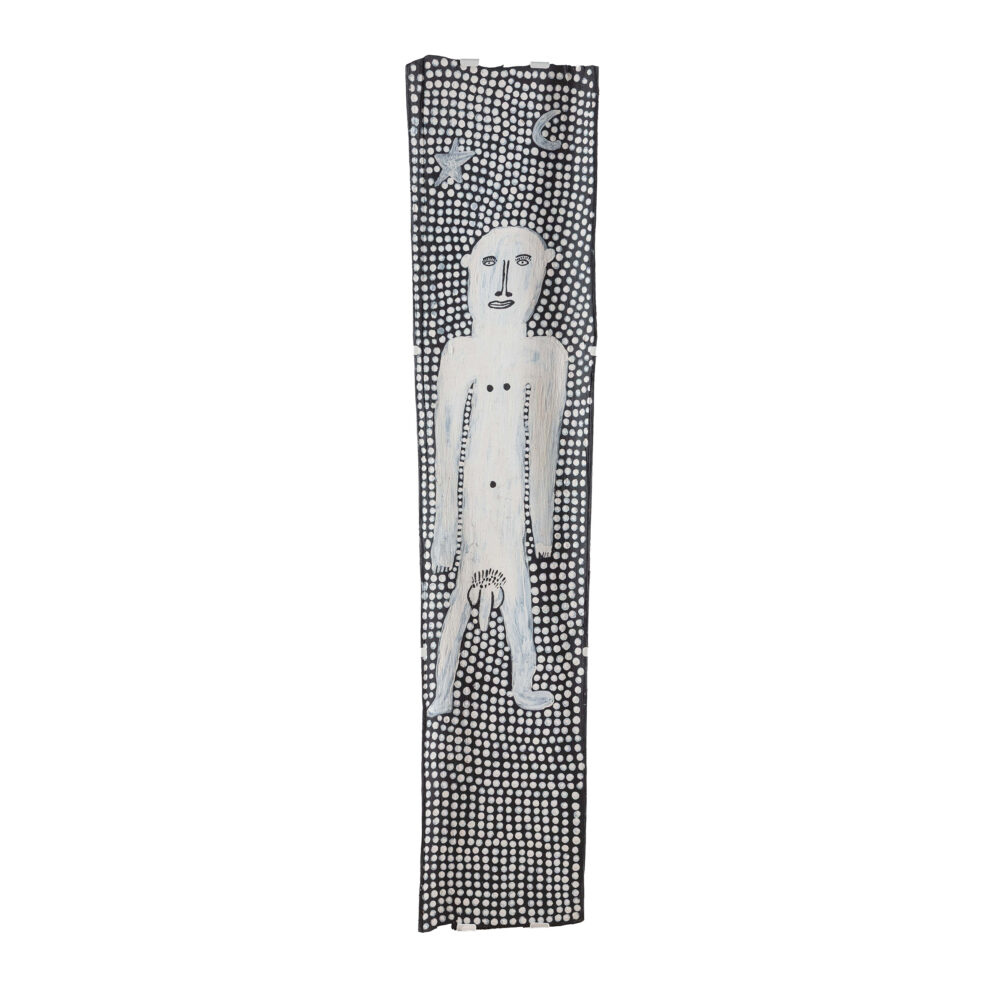
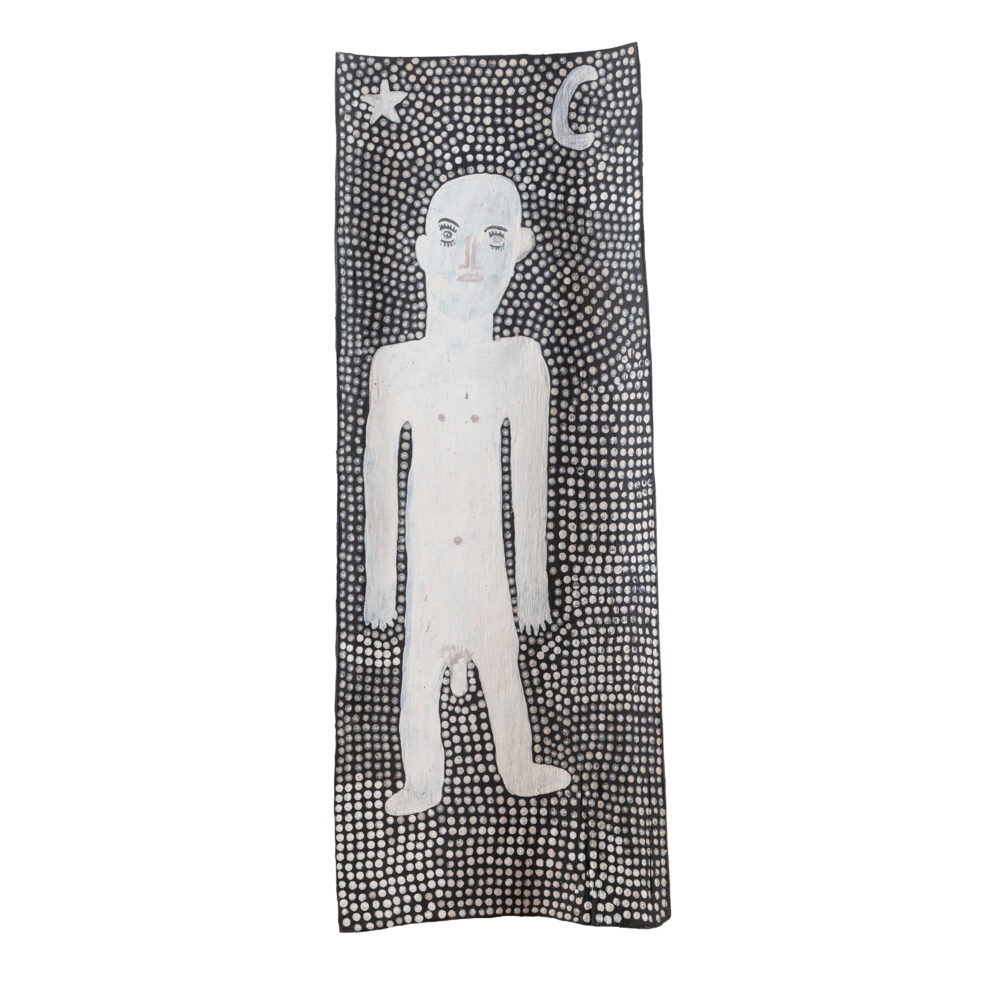
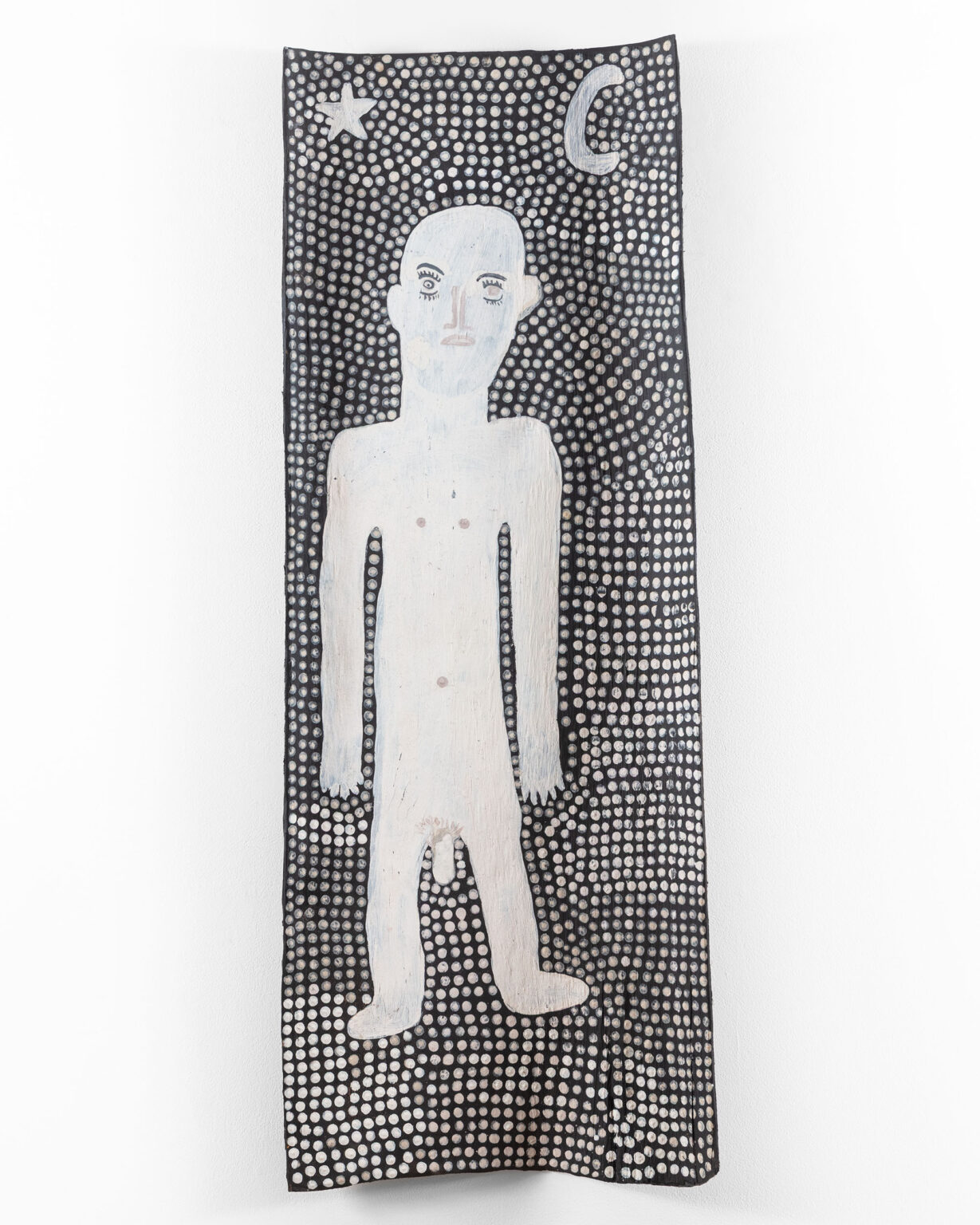
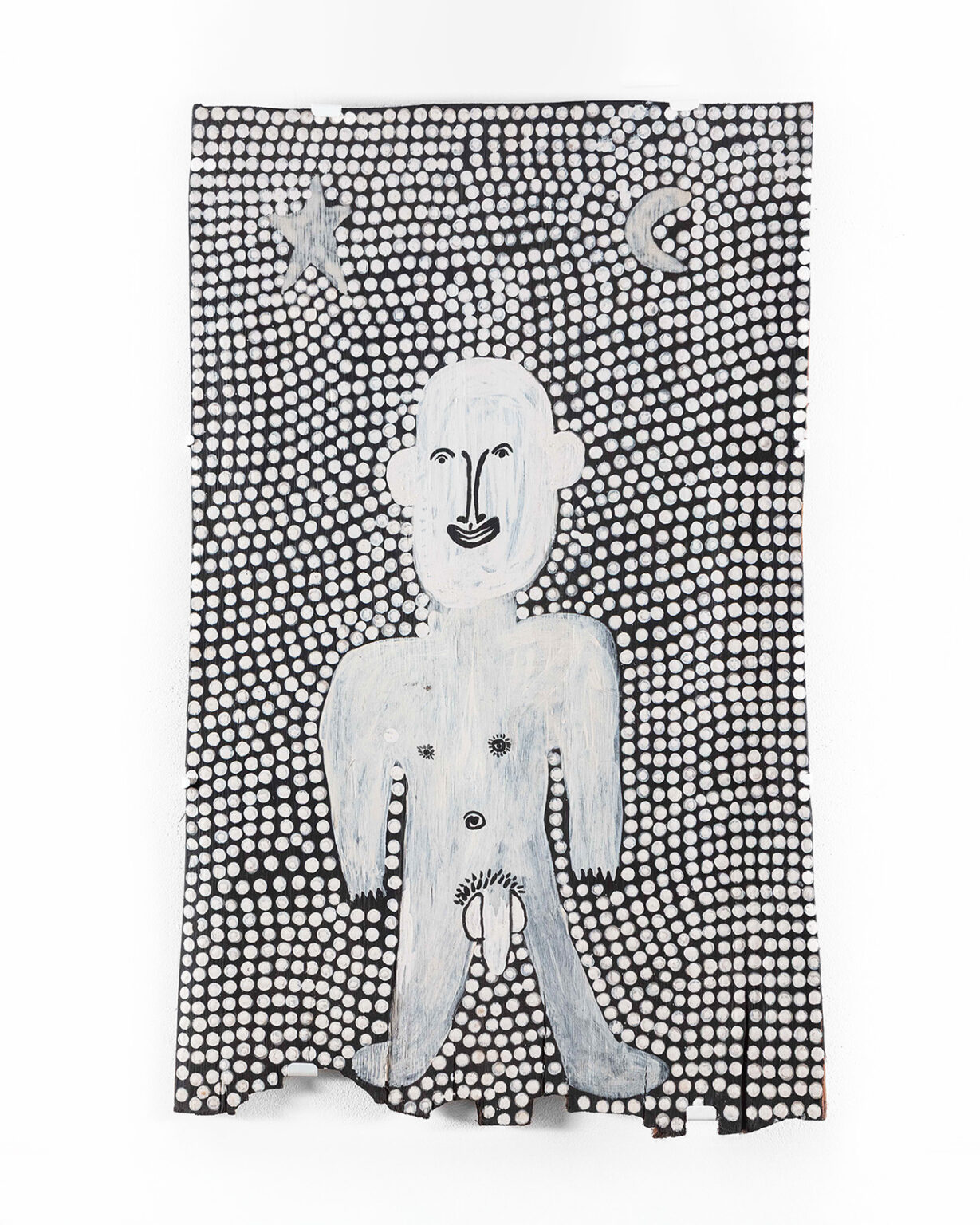
Across his striking monochrome works on bark and canvas, Tipungwuti depicts the celestial figures at the heart of Tiwi ceremonial culture: Japarra, the moon-man who brought mortality into the world, and japalinga, the stars whose ochred forms adorn dancers during ceremony and yoyi. “I paint Japarra because I want to tell that story from long ago – what he did on earth and keep that story going,” says the artist. The story recounts Japarra’s encounter with Purukuparli and Wai-ai, the death of their child, and his ascent to the sky, where his white light reminds the Tiwi people of the cycle of life and death.
“In parlingarri – old time – Japarra saw the family out bush; the baby died from the sun, and Japarra wanted to take him up for three days and bring him back alive. But the father said, ‘Karlu’ – ‘no’. After fighting, Japarra flew up and stayed in the sky to become the moon and look down on the whole world. Now everyone around the world can’t come back; they must follow that father and his son and die when it is their time.”
Rendered in stark black and white, the ancestral moon-man appears, by turns, solemn, playful and elemental; his face endlessly compelling. “Japarra is white – the moon-man has a white body. All the stars are white and the moon is white too,” Tipungwuti explains of his palette, made from white ochre collected on Country at Wurankuwu. “I want to share my story and the story of my painting with people from all over the world.”
A finalist in the 2024 National Emerging Art Prize, Tipungwuti’s work was shown to great acclaim in 2025 at UNSW Galleries in Parlingarri Amintiya Ningani Awungarra: Old and New, curated by José Da Silva with Jilamara Arts.
“In years gone by, there was a strong Tiwi tradition of producing nude figurative ironwood carvings that tell [Japarra’s] story,” writes cultural critic and researcher Tristen Harwood. “Tipungwuti’s paintings draw on these important cultural influences to create innovative works grounded in his knowledge of the old stories and connection to longstanding practices of storytelling.”
Works from Japarra (The Moonman) by Columbiere Tipungwuti will be available to preview and acquire in the lead-up to the show’s opening in February as part of the Sydney Gay & Lesbian Mardi Gras festival. For enquiries, please email dean@michaelreid.com.au