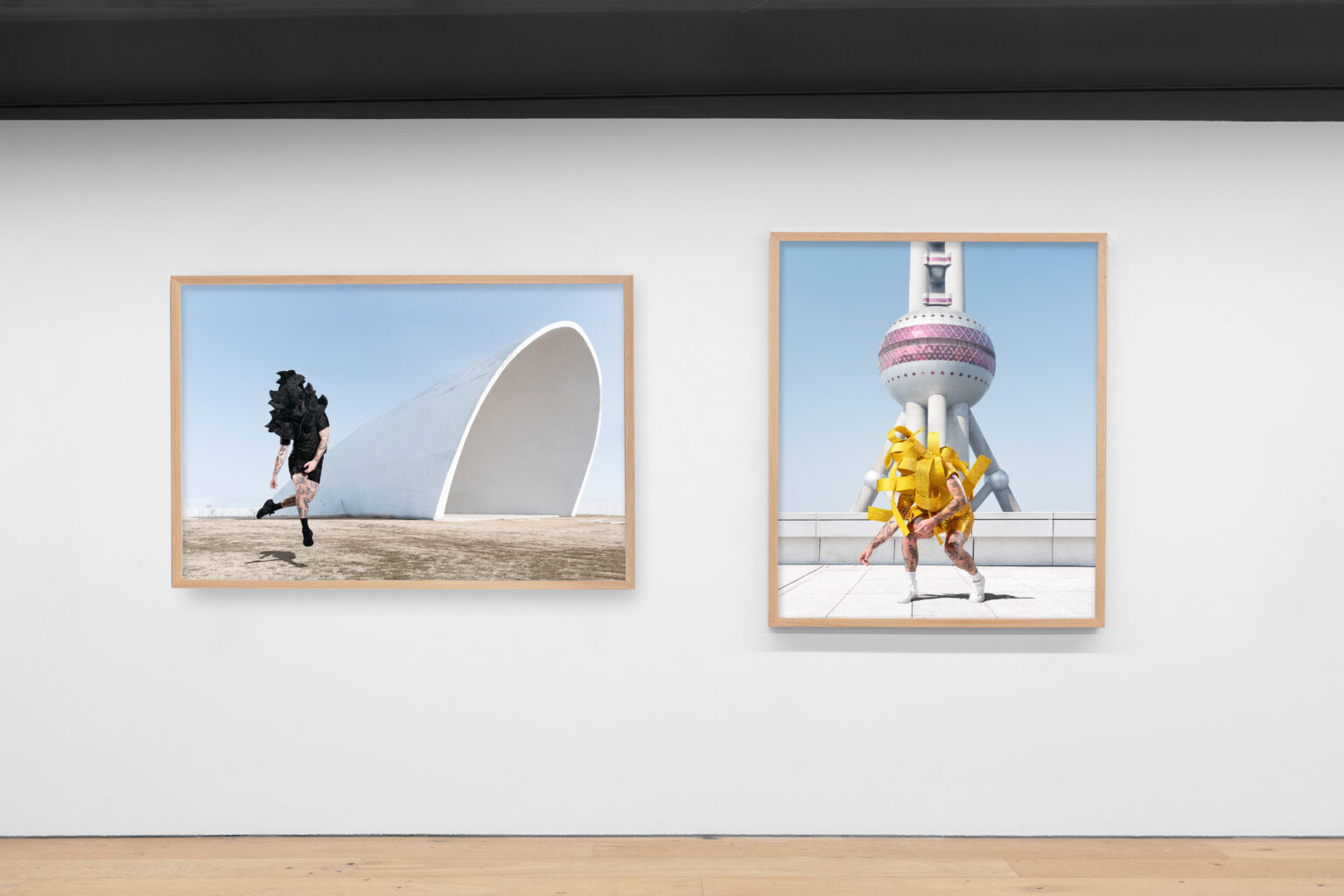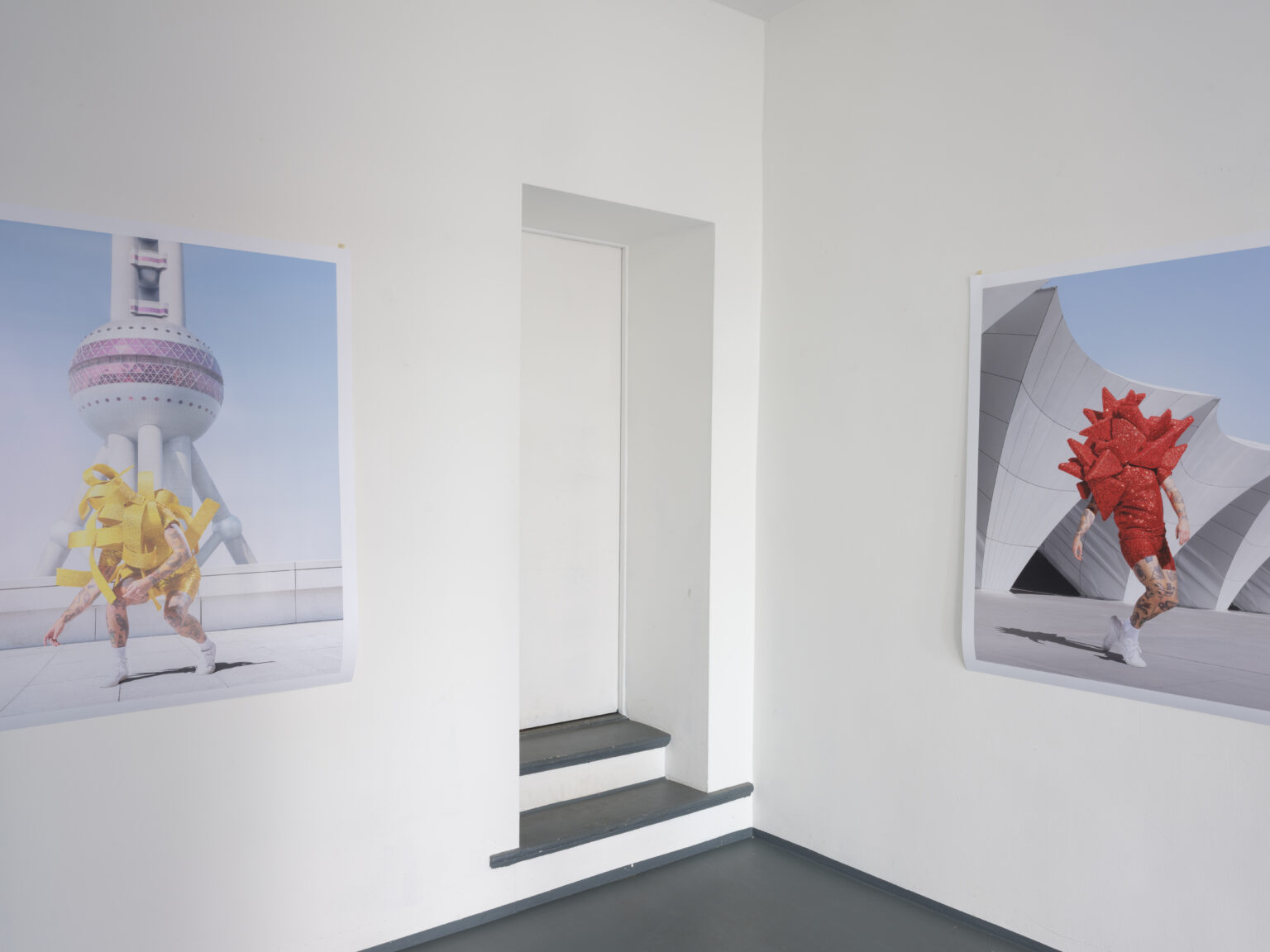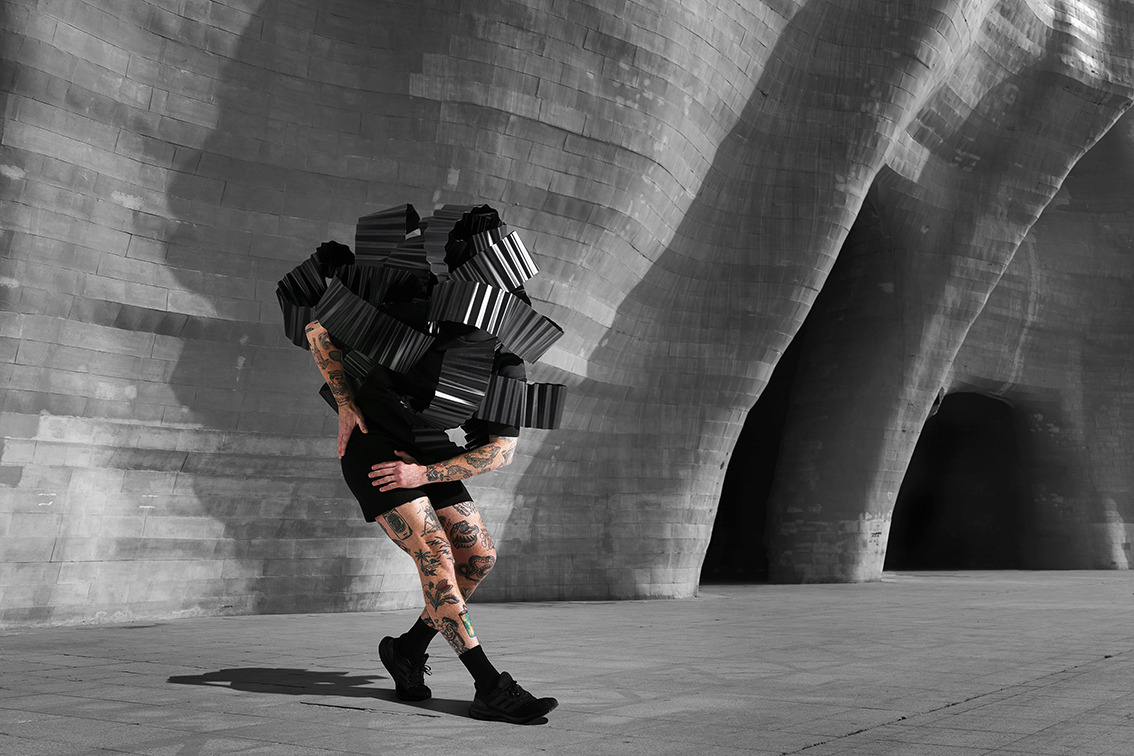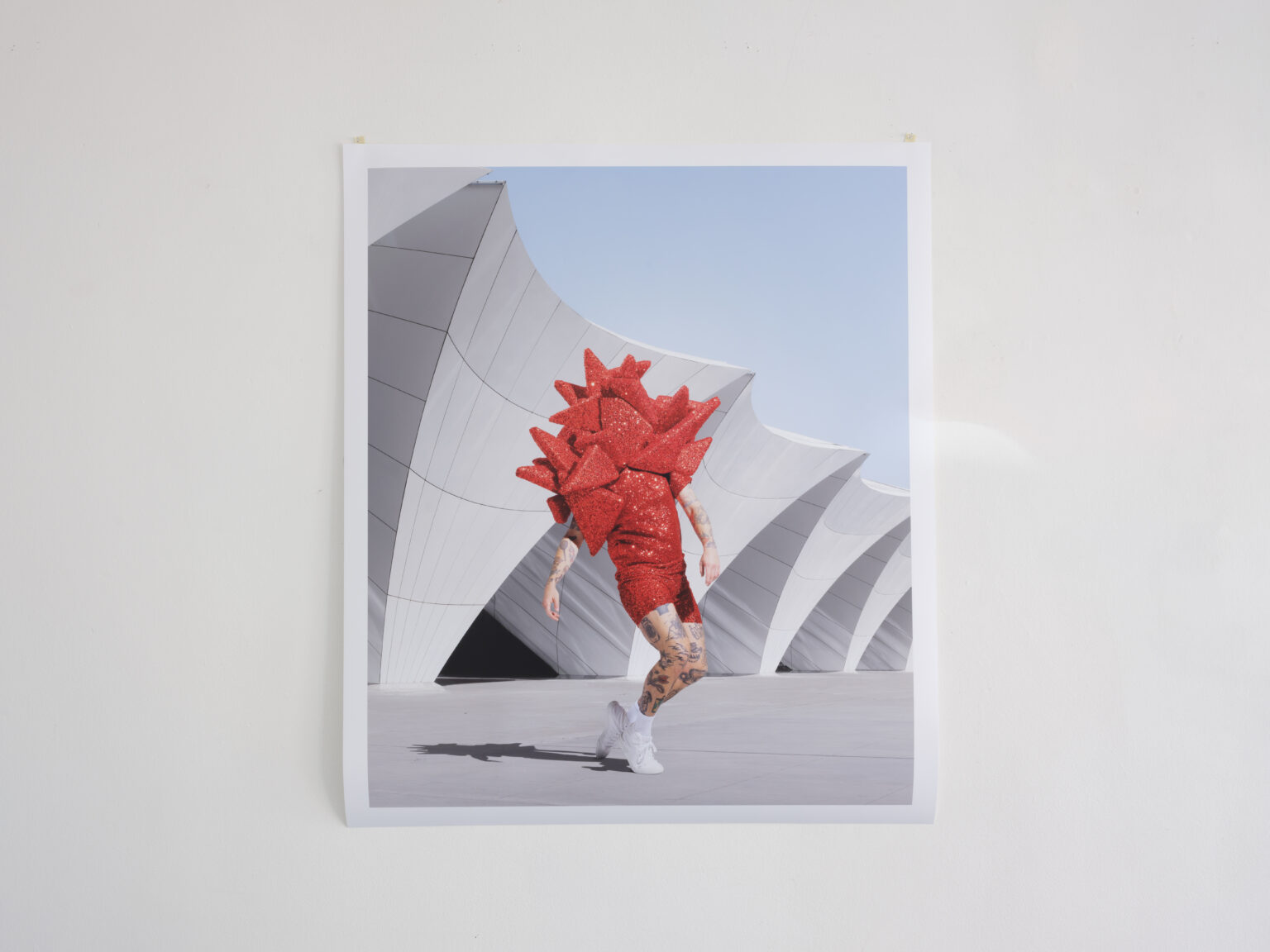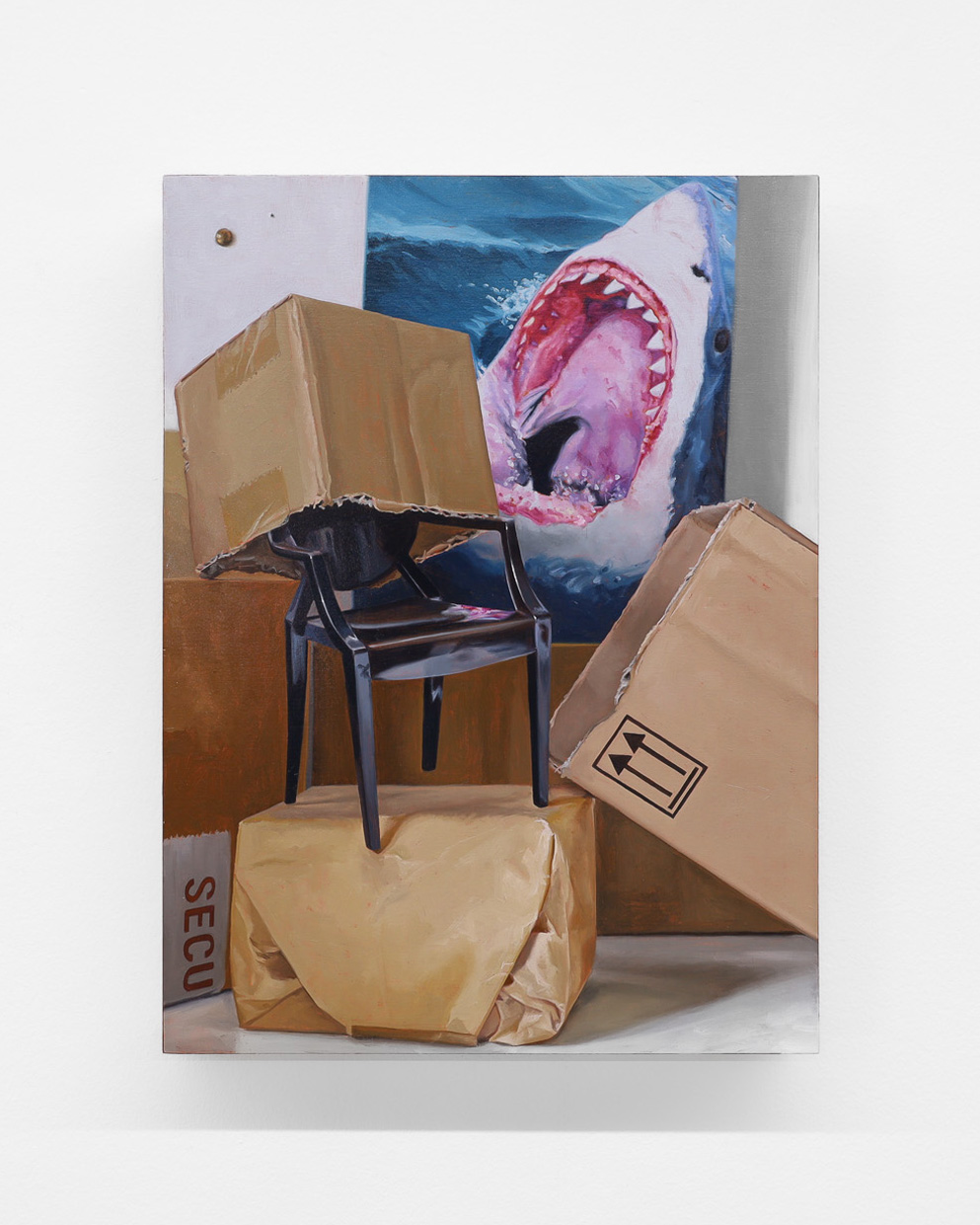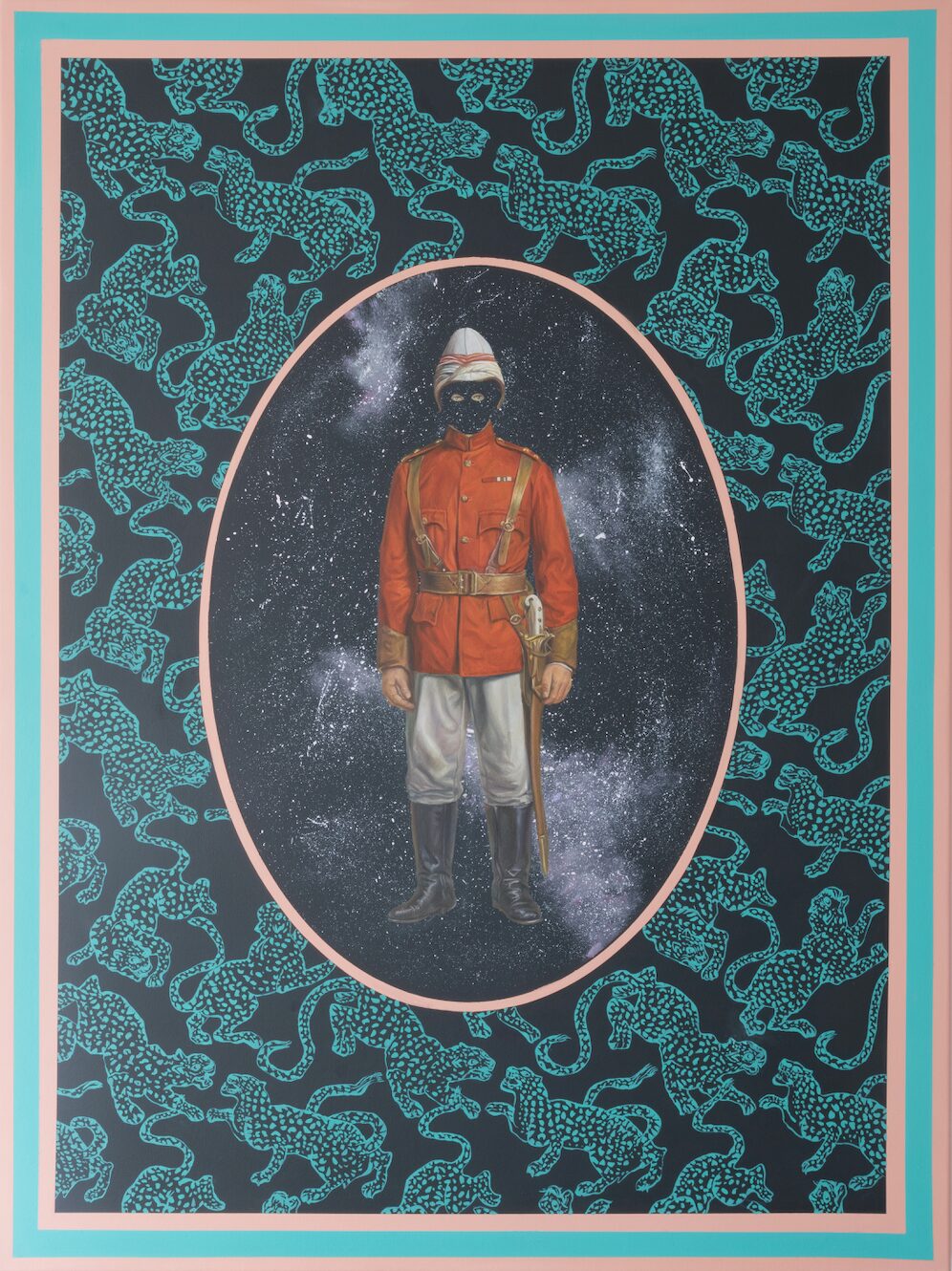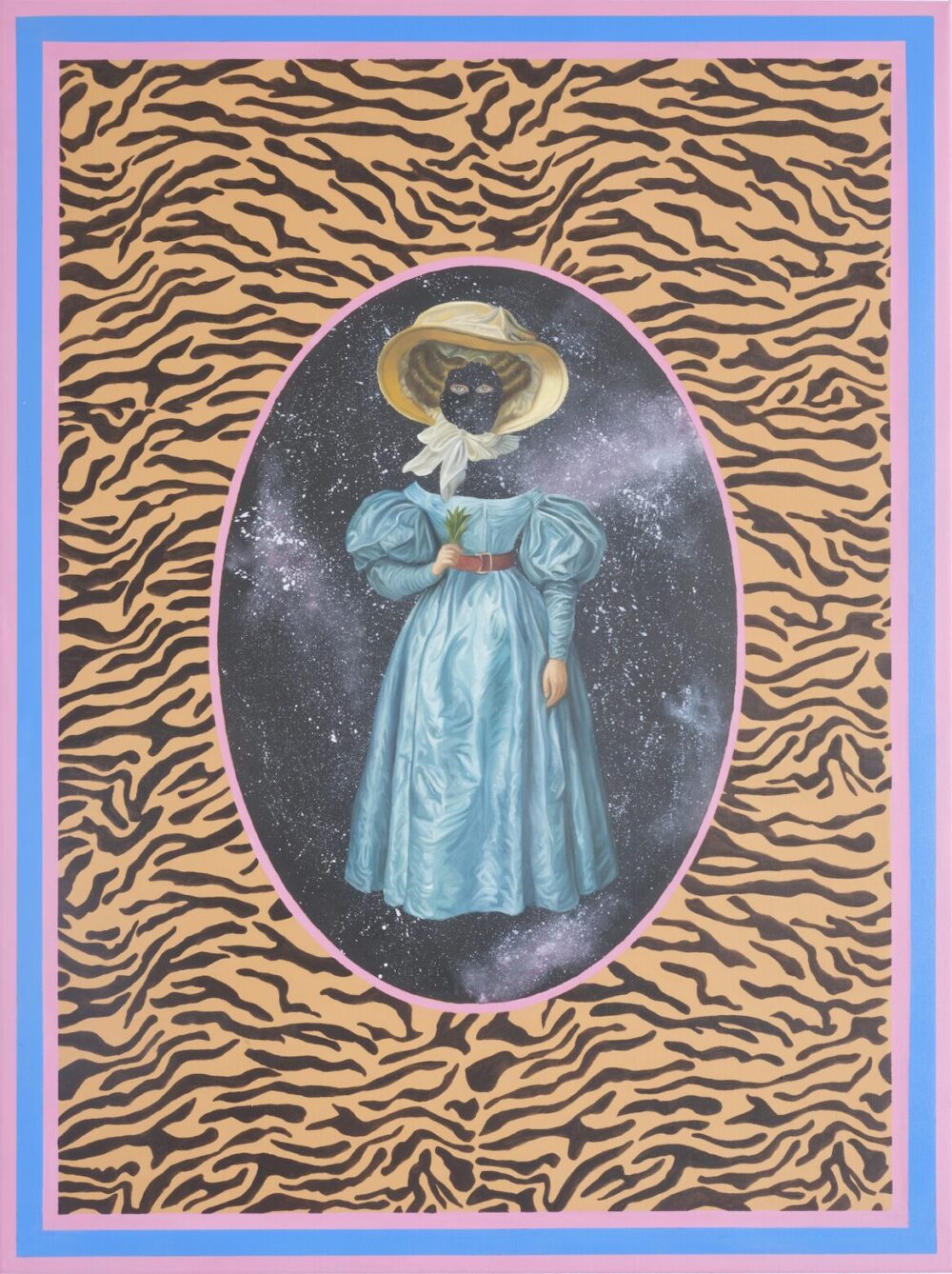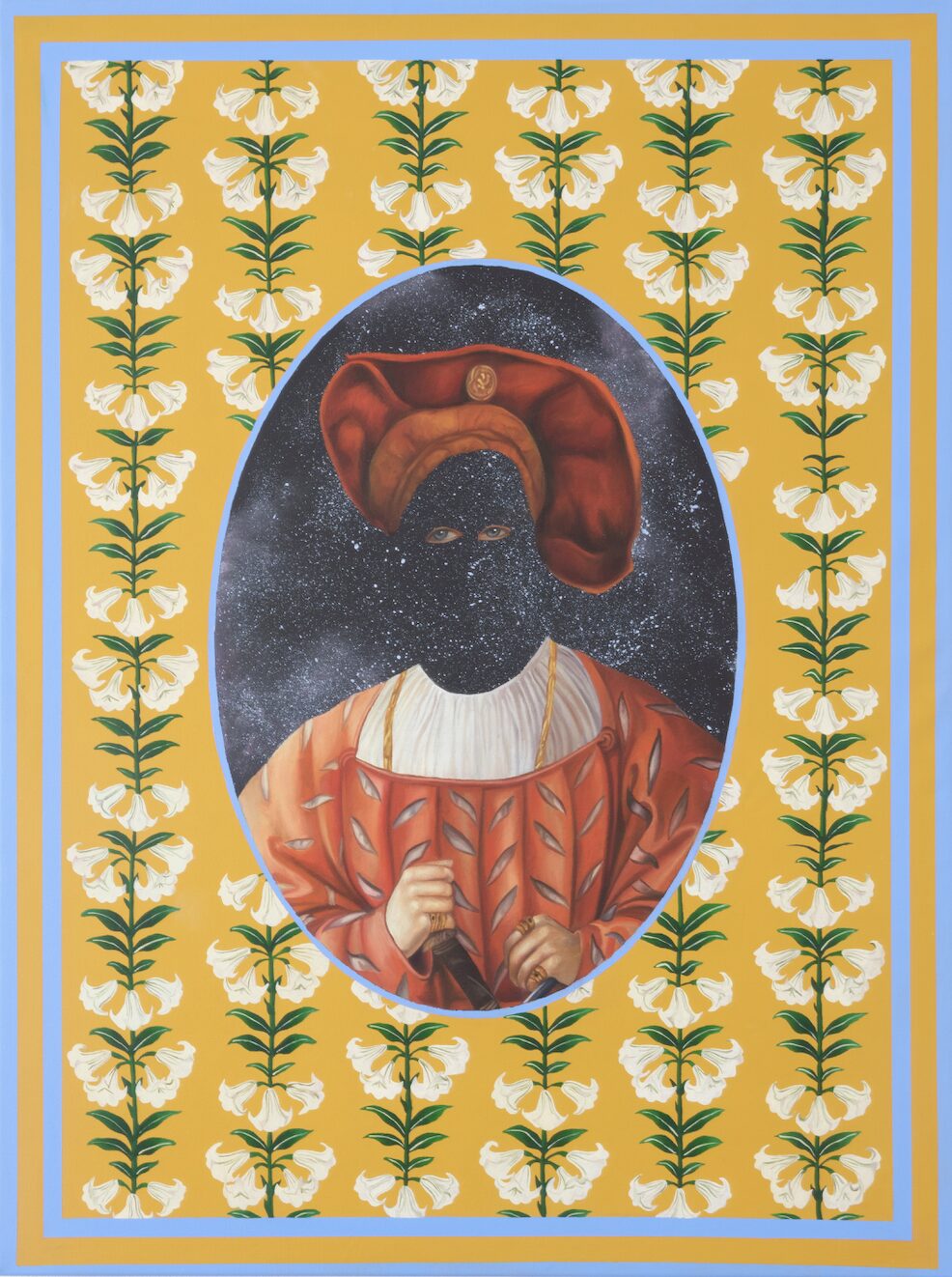

Kristin Schnell: Aotearoa Art Fair 2026

Posted by

Kristin Schnell: Aotearoa Art Fair 2026

  • Artist
  • Dates
    30 Apr—3 May 2026

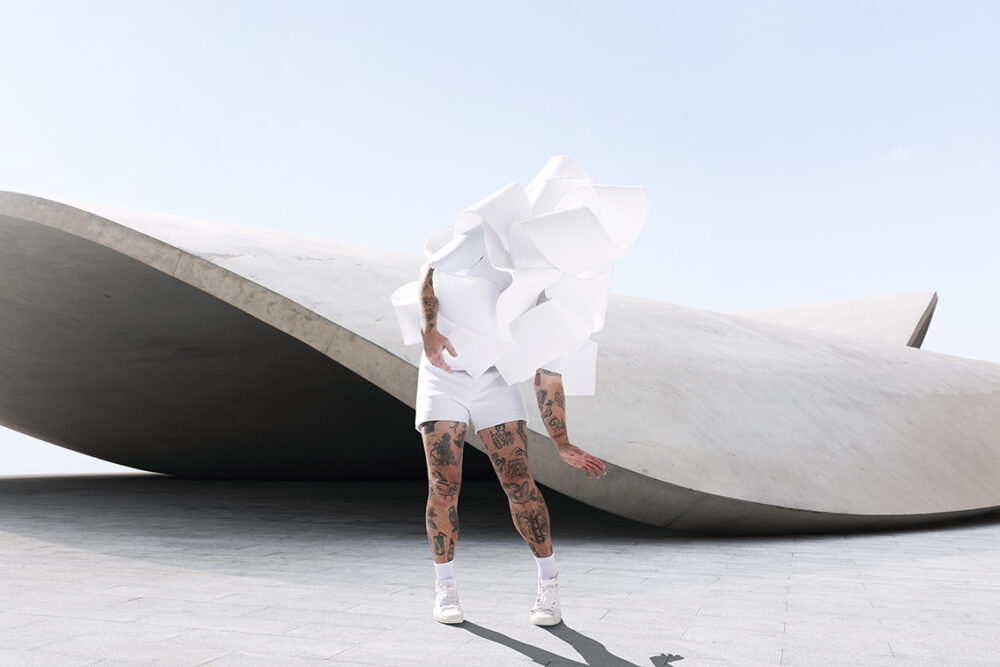
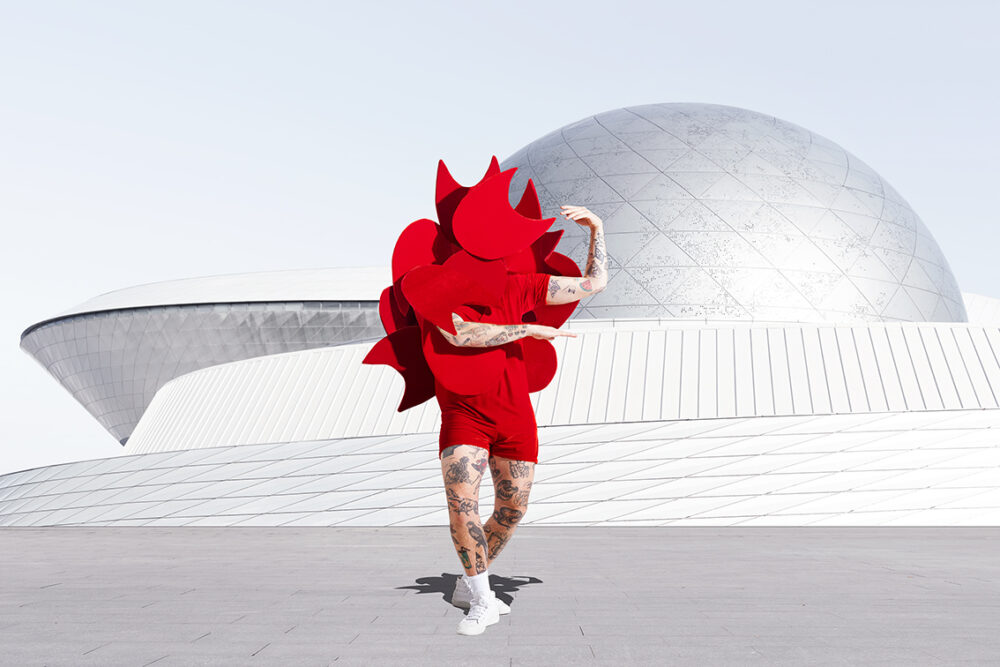
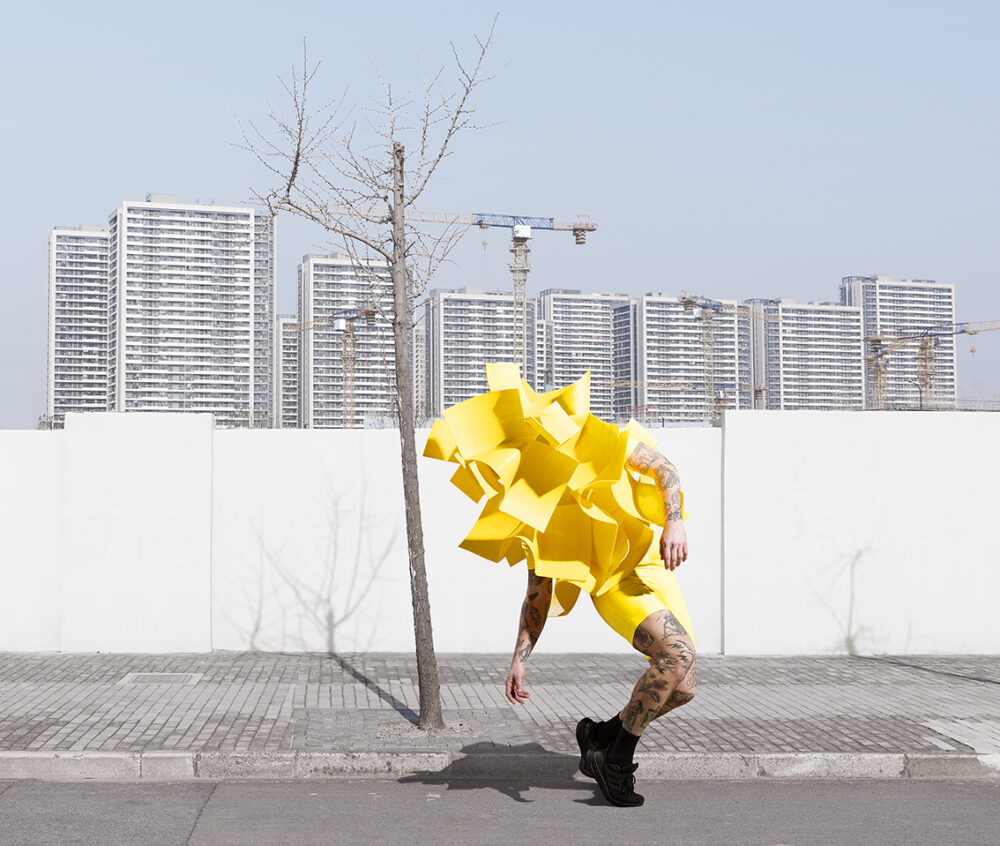
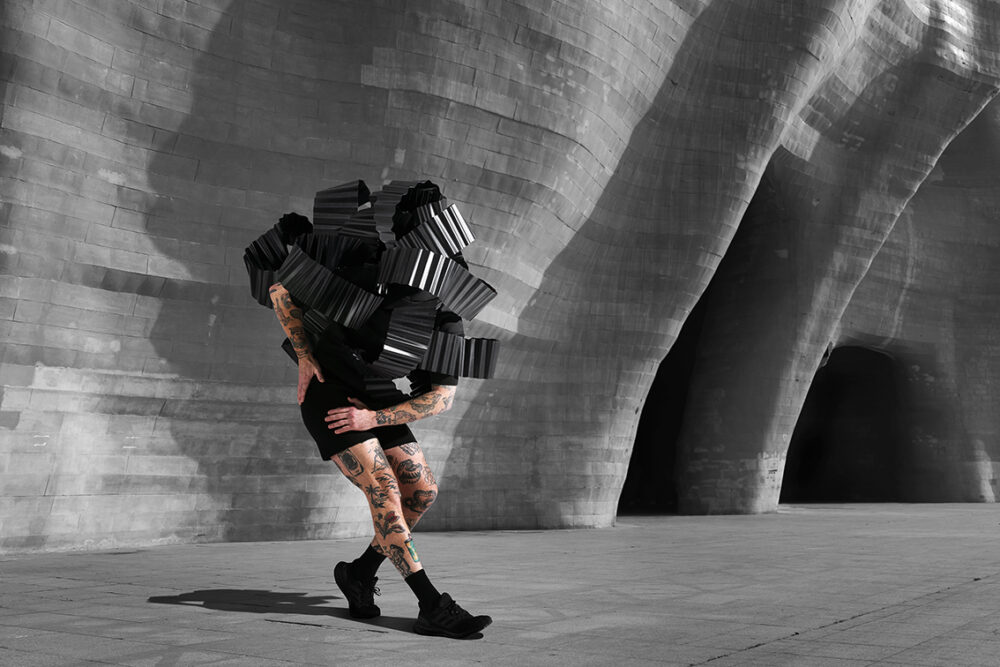
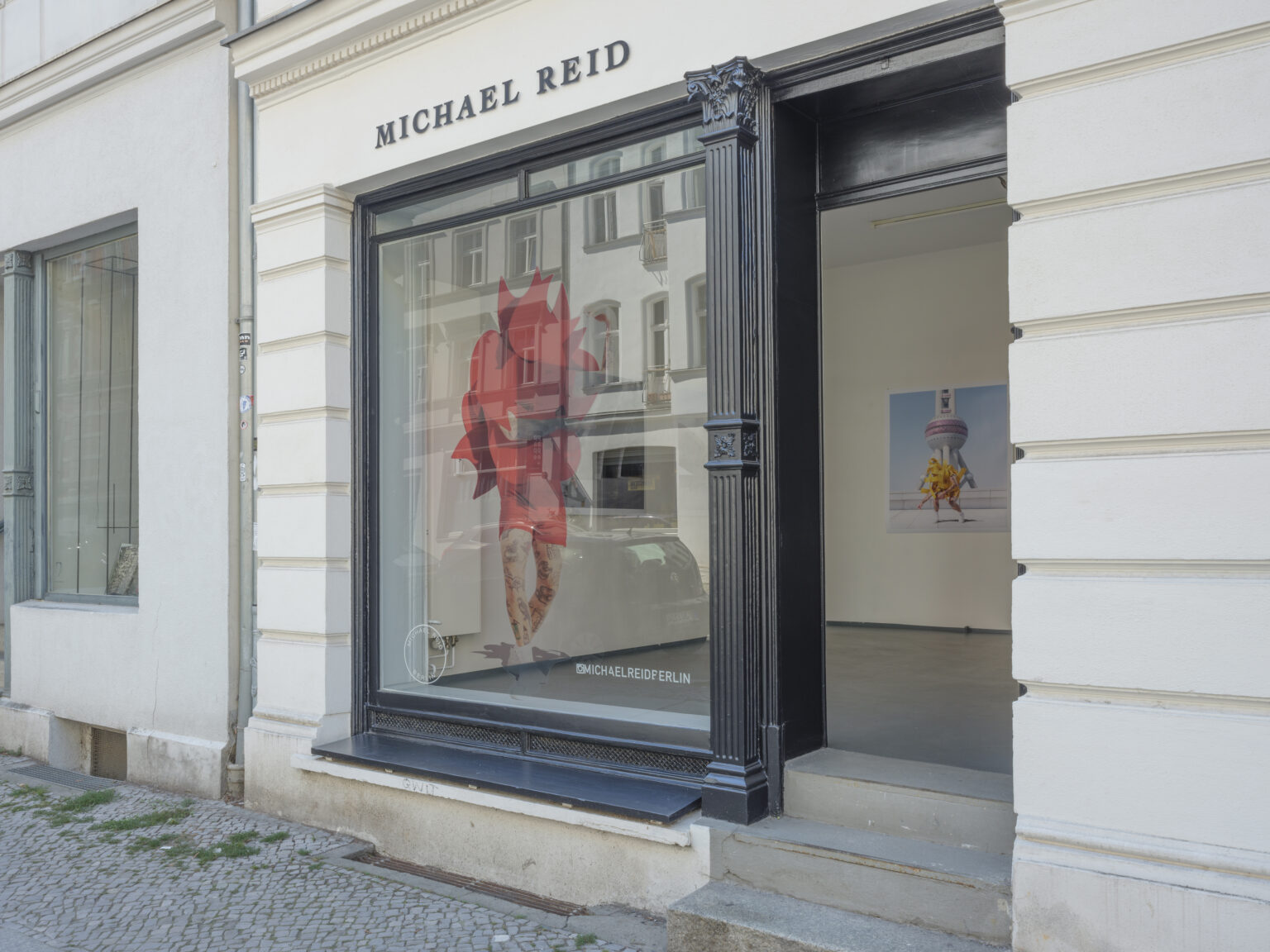
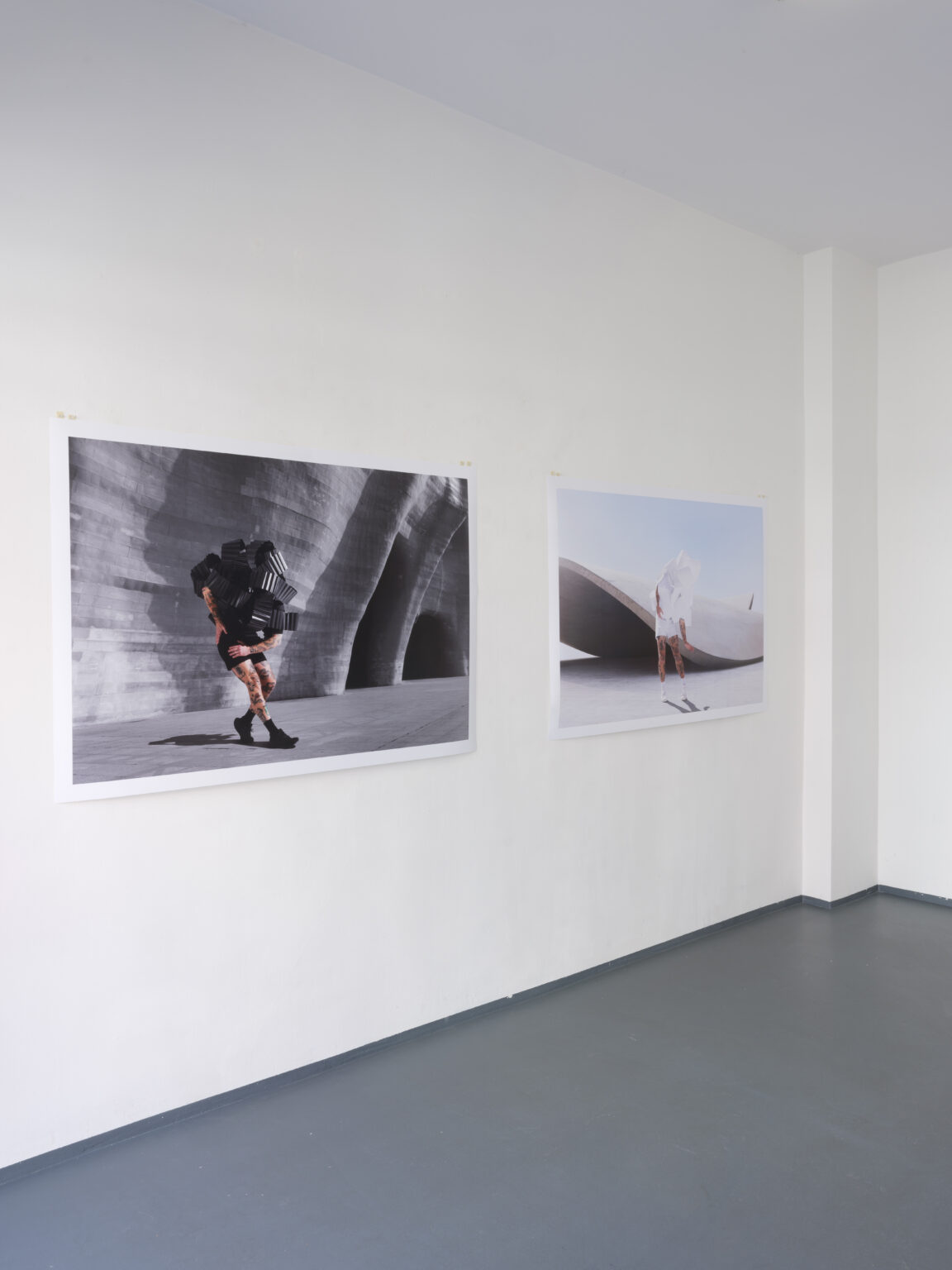
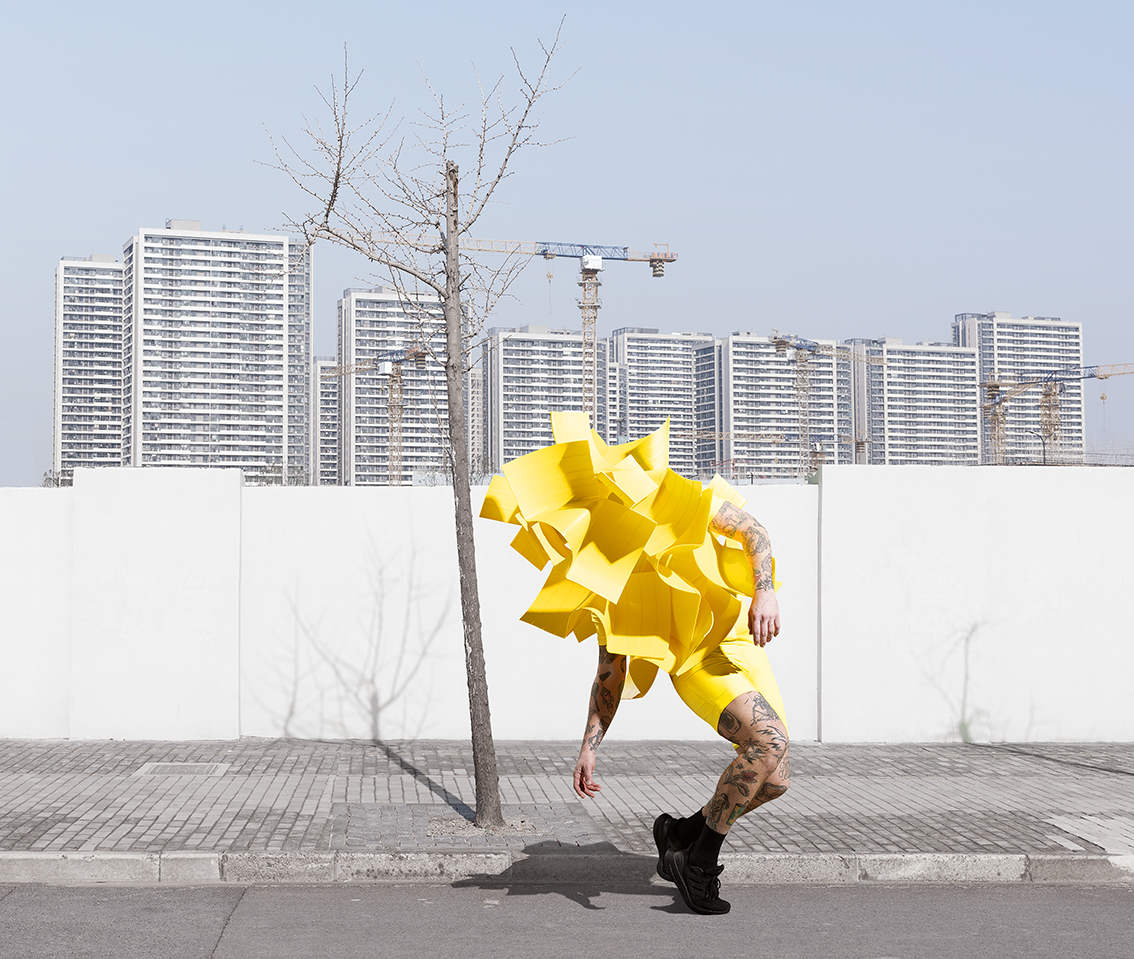
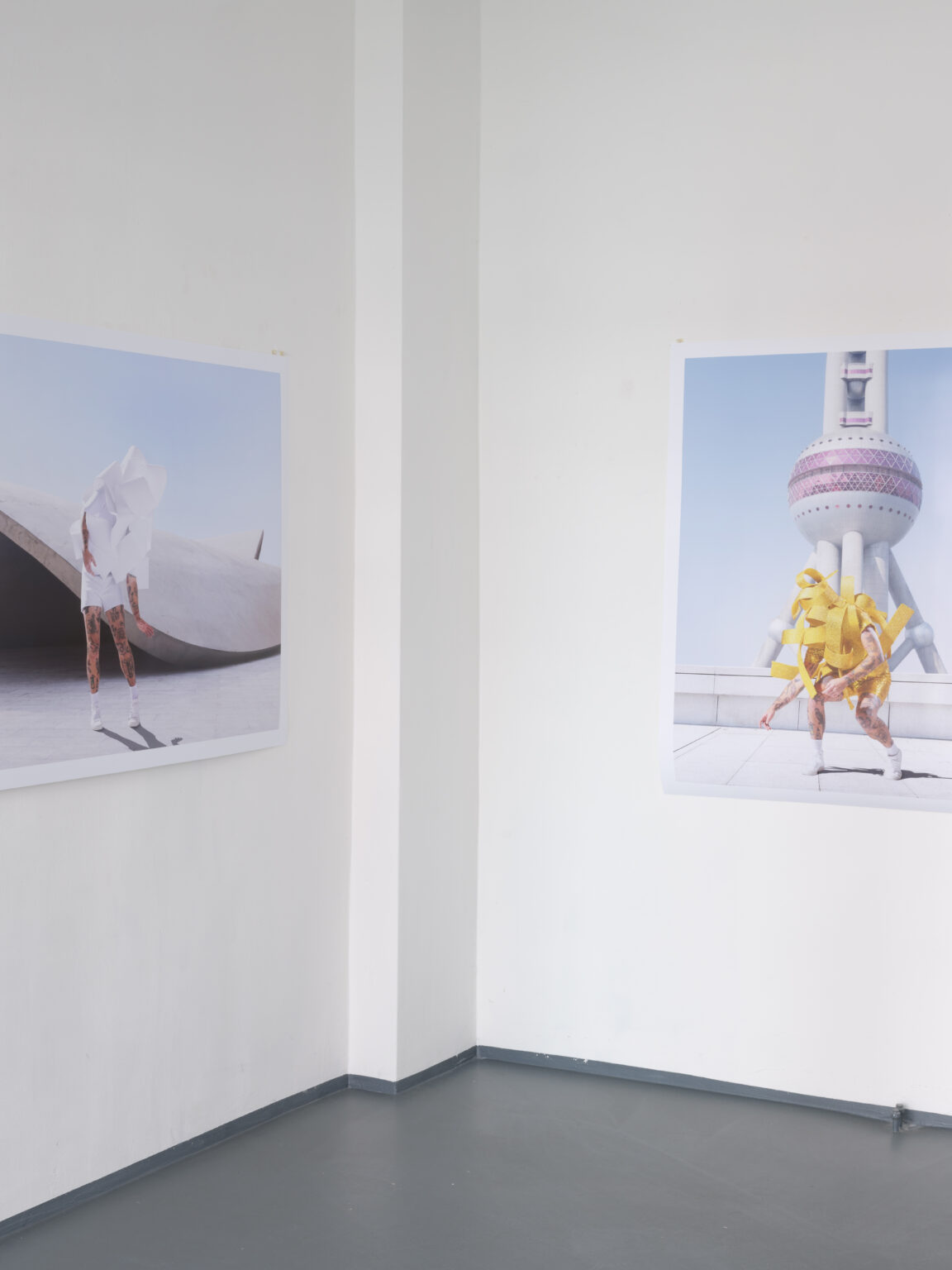
Following her celebrated solo exhibition at Michael Reid Berlin, German-born, Baltic Sea-based contemporary photographer Kristin Schnell will exhibit two works in Auckland from her acclaimed Farewell series. This showing extends a growing engagement with Antipodean collectors that feels tied to her choice of subjects; an affinity for our region’s native birdlife has been a touchstone for Schnell’s flights of photographic fancy, as evidenced by the work that saw her shortlisted for the 2025 Head On Photo Awards. “My bird models are originally from Australia. Colonial trade carried their ancestors to Europe,” says Schnell. “With the Head On Festival, they return home – at least visually – and that makes me very happy.”

In the sumptuous, moody photographs of Farewell – awash with a sense of romantic, old-world painterly lushness – the vibrant plumage of Schnell’s birds appears frozen in motion as it dissolves into cascading flowers and a velvety blackness beyond. While the prevailing atmosphere of Farewell is one of luxuriant beauty, Schnell brings conceptual depth into the frame. As her subjects refuse the camera-facing conventions of classical portraiture, appearing in flux and resisting our gaze as they disappear into a floral plane, we are invited to consider their bidding farewell as a parting gesture at a time of ecological collapse.

For acquisition enquiries please contact danielsoma@michaelreid.com.au

William Yang: Aotearoa Art Fair 2026

Posted by

William Yang: Aotearoa Art Fair 2026

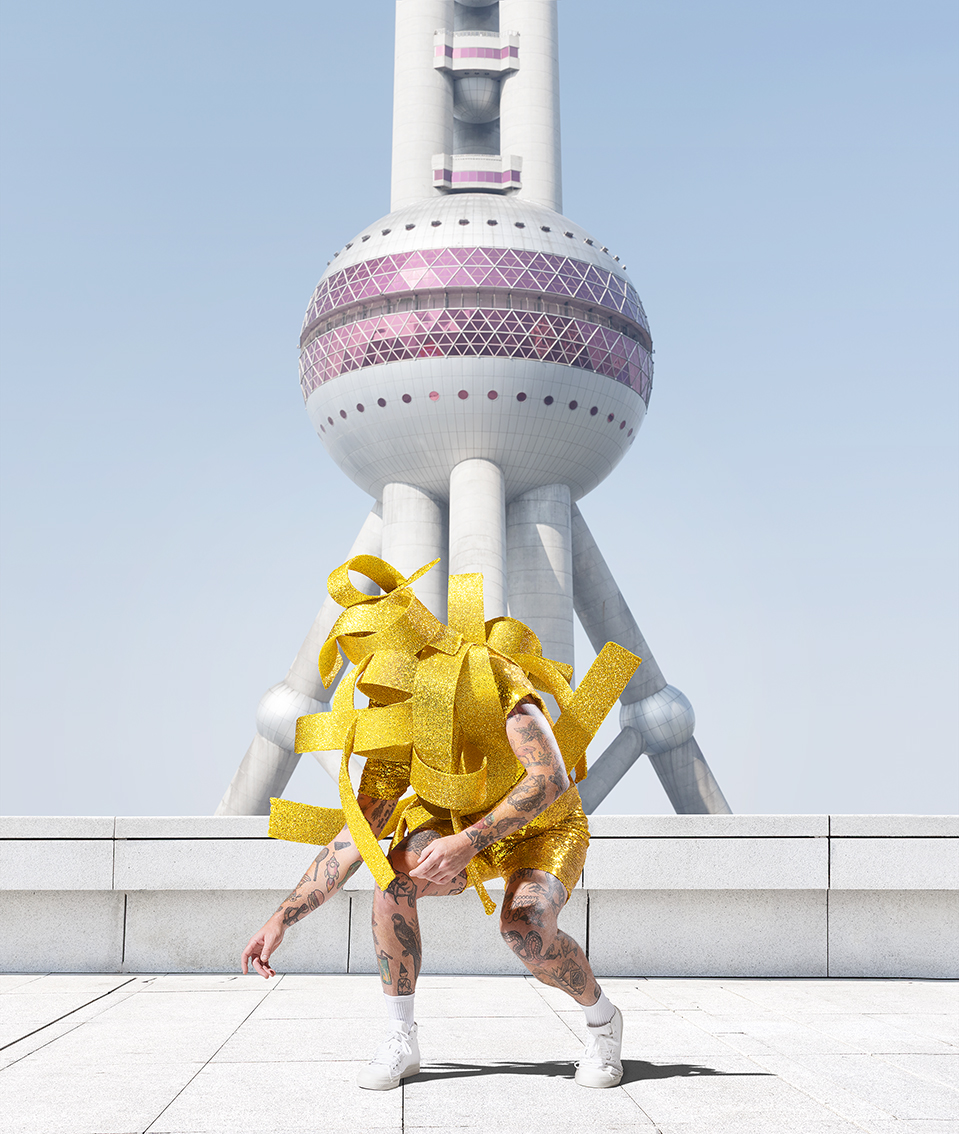
Michael Reid Sydney + Berlin is proud to bring to Auckland select works from the decades-spanning archive of Queensland-born, Eora/Sydney-based photographer, performance artist and cultural pioneer William Yang. Awarded the Legacy Prize at this year’s Asia Pacific Arts Awards, Yang has been among the most important and prolific chroniclers of Australian life for more than 50 years, capturing with empathy, candour and clarity the celebrated and the marginalised, the public and the personal. From his works of social documentary – lensed at the front lines of the parties, protests and performances through which Australian LGBTQIA+ identity, autonomy and community were expressed and defined – to his intimate, diaristic portraits of family, friends and lovers, often set amid the ravages of the AIDS era, Yang has built an extraordinary body of work that now stands among the most significant social archives of the past half-century.

For acquisition enquiries please contact colinesoria@michaelreid.com.au

William Yang (Berlin)
Blocked Moon gate, 2005
26 x 40 cm
$3,850
William Yang (Berlin)
Rush Hour, 1981
61 x 99 cm
$9,900
William Yang (Berlin)
Self Portrait No.5, 2008
43 x 65 cm
$5,500
William Yang (Berlin)
Copy of Hand-Coloured Publicity Photo for ‘The North’. Large Photo of William by Sandy Edwards, 1996
24 x 30 cm
$3,300
William Yang (Berlin)
Dennis Altman and Craig Johnston at Demonstration, 1981
27 x 40 cm
$2,750
William Yang (Berlin)
The Morning After, 1976
40 x 60 cm
$4,400
William Yang (Berlin)
Fairy, 1983
40 x 27 cm
$2,750
William Yang (Berlin)
Self Portrait With Stars, 2007
46 x 70 cm
$5,500
William Yang (Berlin)
Alter Ego, 2001
55 x 70 cm
$5,500
William Yang (Berlin)
Dawn, Central Australia, 1996
110 x 200 cm
$19,800
William Yang (Berlin)
Fighting Boys, 1975
27 x 40 cm
$4,400
William Yang (Berlin)
Darrin and Linden, part 3, 1991
27 x 40 cm
$5,500
William Yang (Berlin)
Climbing Huang Shan, 2005
41 x 48cm
$4,400
William Yang (Berlin)
The Fall of Icarus, 1976
40 x 27 cm
$3,300
William Yang (Berlin)
Tamarama Lifesavers, 1981
39 x 70 cm
William Yang (Berlin)
The Story of Joe, 1979-2020
27 x 40 cm
$4,490
William Yang (Berlin)
Alpha, c.1965-1969
27 x 40 cm
$4,400
William Yang (Berlin)
John’s Bedroom, 1980
27 x 40 cm
$2,200
William Yang (Berlin)
To Friendship, 1999
27 x 40 cm
$3,300
William Yang (Berlin)
Jenny Kee & Linda Jackson, 1975
27 x 40 cm
$3,300
William Yang (Berlin)
Untitled #1, 1977
27 x 40 cm
$4,400
William Yang (Berlin)
Cate Blanchett, Catherine McLements, Gillian Jones. The Blind Giant is Dancing, Belvoir, 1995
27 x 40 cm
$3,300
William Yang (Berlin)
Whiteley Party, 1982
40 x 60 cm
$4,400
William Yang (Berlin)
Brett Whiteley, 1975
45 x 128 cm
$6,600
William Yang (Berlin)
Portarit of Pina Bausch #4, 1982
29 x 62 cm
$3,300
William Yang (Berlin)
The Country Around Dimbulah #6, 1990
54 x 70 cm
$6,730
William Yang (Berlin)
William in Scholar’s Costume, 1984-2009
79 x 52 cm
$7,700
William Yang (Berlin)
William in Cane Fields, 2008
59 x 91 cm

Petrina Hicks: Aotearoa Art Fair 2026

Posted by

Petrina Hicks: Aotearoa Art Fair 2026

  • Artist
  • Dates
    30 Apr—3 May 2026

This year’s Aotearoa Art Fair will see the debut of a luminous new work by globally lauded Australian photographer Petrina Hicks. Over more than two decades, Hicks has honed her singular style and cemented her place at the forefront of her field. The subject of several institutional surveys – including her 2018 NGV retrospective and, in late 2024, Snakes and Mirrors at the Museum of Australian Photography – her ultra-refined images are rendered with hyperreal precision, subverting the coolly seductive language of advertising while drawing motifs from classical myth and folklore. Projecting a beguiling equipoise against crisp, ambiguous backdrops, the outward polish and quietude of her subjects is undercut by tension, eroticism or disquiet – qualities dialled up to a spellbinding degree in her new work, Fate Spinner. Arriving after record auction results for her historical works, editions of Fate Spinner can now be acquired by request.

Please contact dean@michaelreid.com.au for acquisition enquiries.

Tamara Dean: Aotearoa Art Fair 2026

Posted by

Tamara Dean: Aotearoa Art Fair 2026

The Aotearoa Art Fair will mark the first public showing for the latest project from acclaimed Australian contemporary photographer Tamara Dean, one of the defining image-makers, visual storytellers and photographic innovators of her generation. Dean is set to debut two new works from her forthcoming series, The Garden, in which lithe, colourfully clad subjects are gracefully transformed into hybrid flower-human figures. The Garden has already garnered significant acclaim, with select photographs shortlisted for the 2026 Blake Prize and the 10th-anniversary edition of the Ravenswood Australian Women’s Art Prize. Following the news of these dual awards shortlistings, Michael Reid Sydney + Berlin is pleased to host the inaugural outing for this already lauded project and invites collectors to register for priority access.

Working between her custom-built underwater photo studio and the wild floral abundance of the natural world, Dean describes The Garden as a series created through two distinct formats and approaches, connected through colour, flora and an ongoing exploration of our place within natural ecosystems. “Flowers, plants and fabrics are carefully selected and composed to create visual relationships between images,” says the artist, whose Blake and Ravenswood Prize nods add to an extraordinary run of recent accolades, including her triumphs at the 2025 Hornsby Art Prize and Naked & Nude Art Prize. “Materials used in the underwater works echo the colours of the flowers found in the garden photographs, allowing the two approaches to remain aesthetically and conceptually connected despite their different environments.”

For acquisition enquiries, please contact tobymeagher@michaelreid.com.au


Scott Perkins: Aotearoa Art Fair 2026

Posted by

Scott Perkins: Aotearoa Art Fair 2026

Our Aotearoa Art Fair presentation will take visitors into the atmospheric worlds of Auckland-born, Eora/Sydney-based contemporary photographer Scott Perkins with the debut of a significant new body of work – his first since the widely acclaimed Uncertain Truths at Michael Reid Sydney in early 2025. With remarkable clarity, precision and technical bravura, Perkins captures natural environments that suggest a space beyond the purely visible. “There is more than one kind of alchemy at work, as we, the viewers, are drawn inexorably into the very essence of each frame,” writes Mary Kisler MNZM – author, art historian and longtime Senior Curator at Auckland Art Gallery Toi o Tāmaki – in the essay accompanying Perkins’s fair-bound series.

“Paradoxically, while we see the land, sea and sky through Perkins’ eye, they also become landscapes of the mind,” writes Kisler. “We lose sight of the quotidian ephemera that surrounds us, to seemingly stand alone in the presence of an ineffable, primordial beauty.” The otherworldly aura of Perkins’s nature scenes is heightened by the experience of accessing them via portal-like frames and softly glowing light-boxes that pull the viewer into a world of brooding romanticism and quietude. These works operate as much as sculptural objects as photographs, transforming the spaces they inhabit through considered lighting and fine materials, including handmade Japanese washi and metallic Hahnemühle papers.

For acquisition information prior to the art fair please contact hughholm@michaelreid.com.au
En Plein Air: Works on Paper

Posted by

En Plein Air: Works on Paper

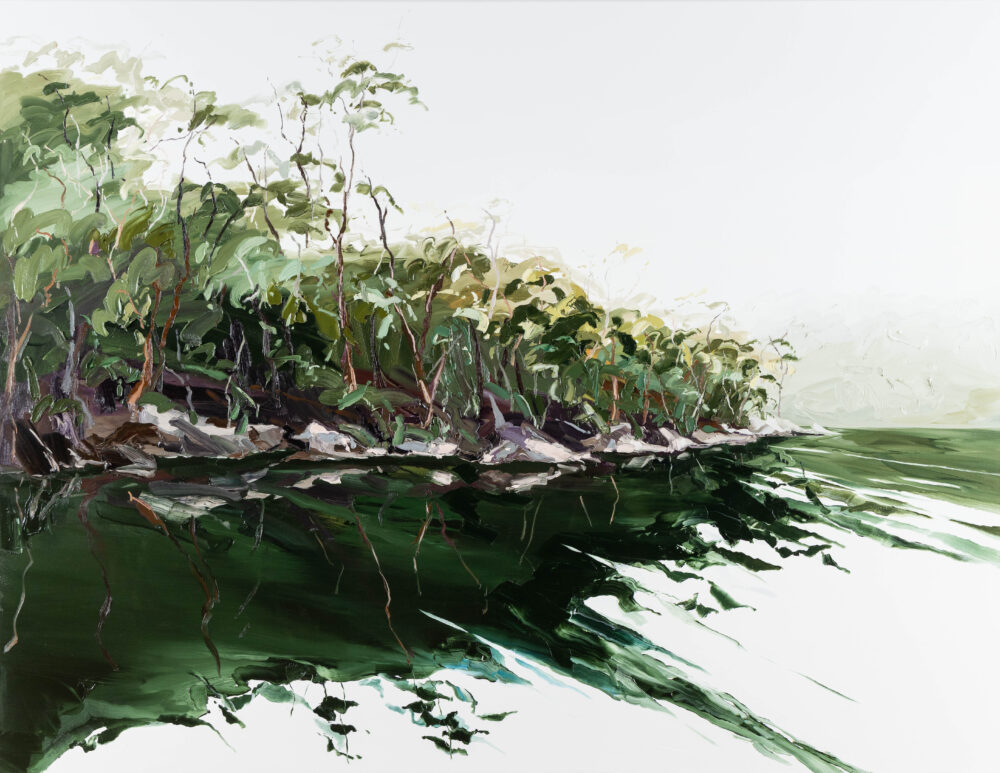
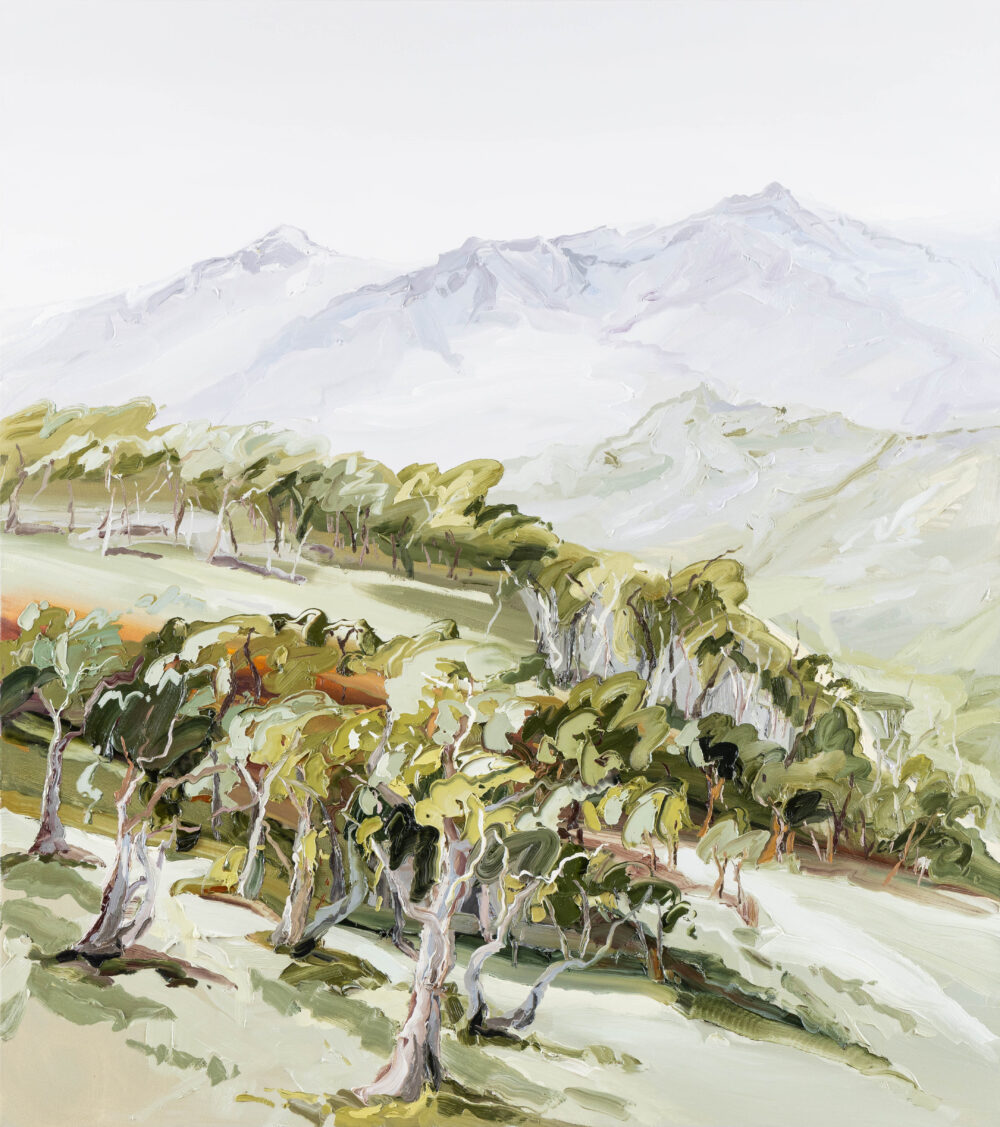
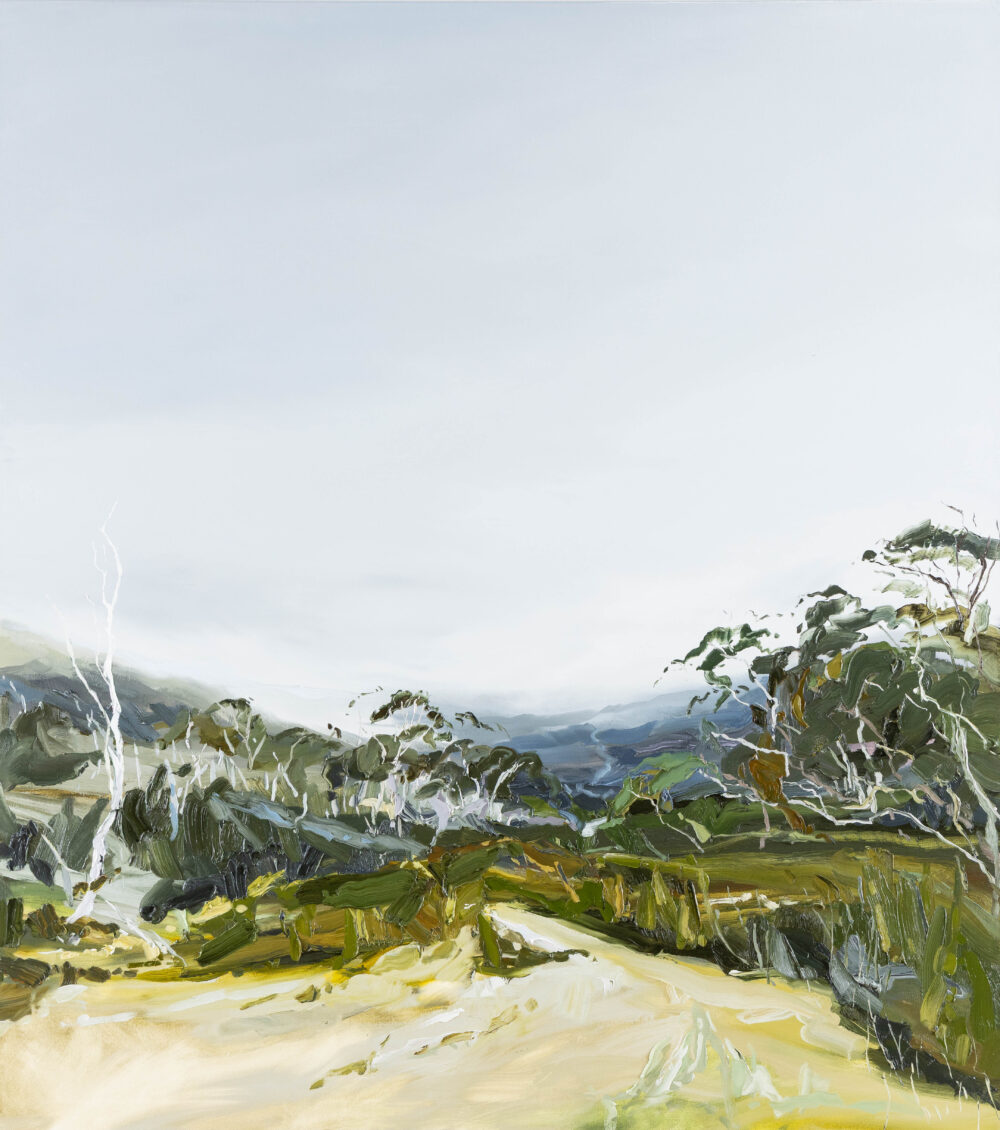
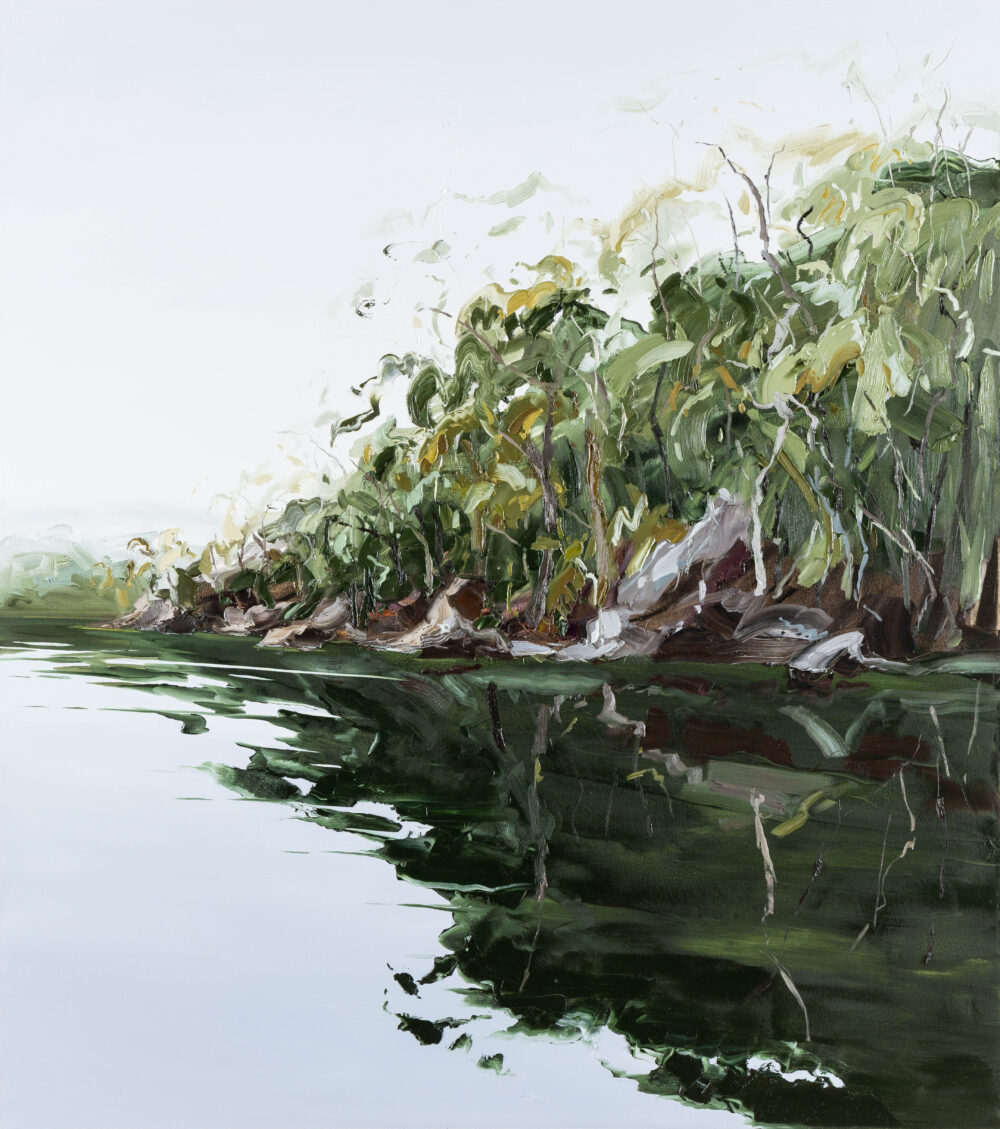
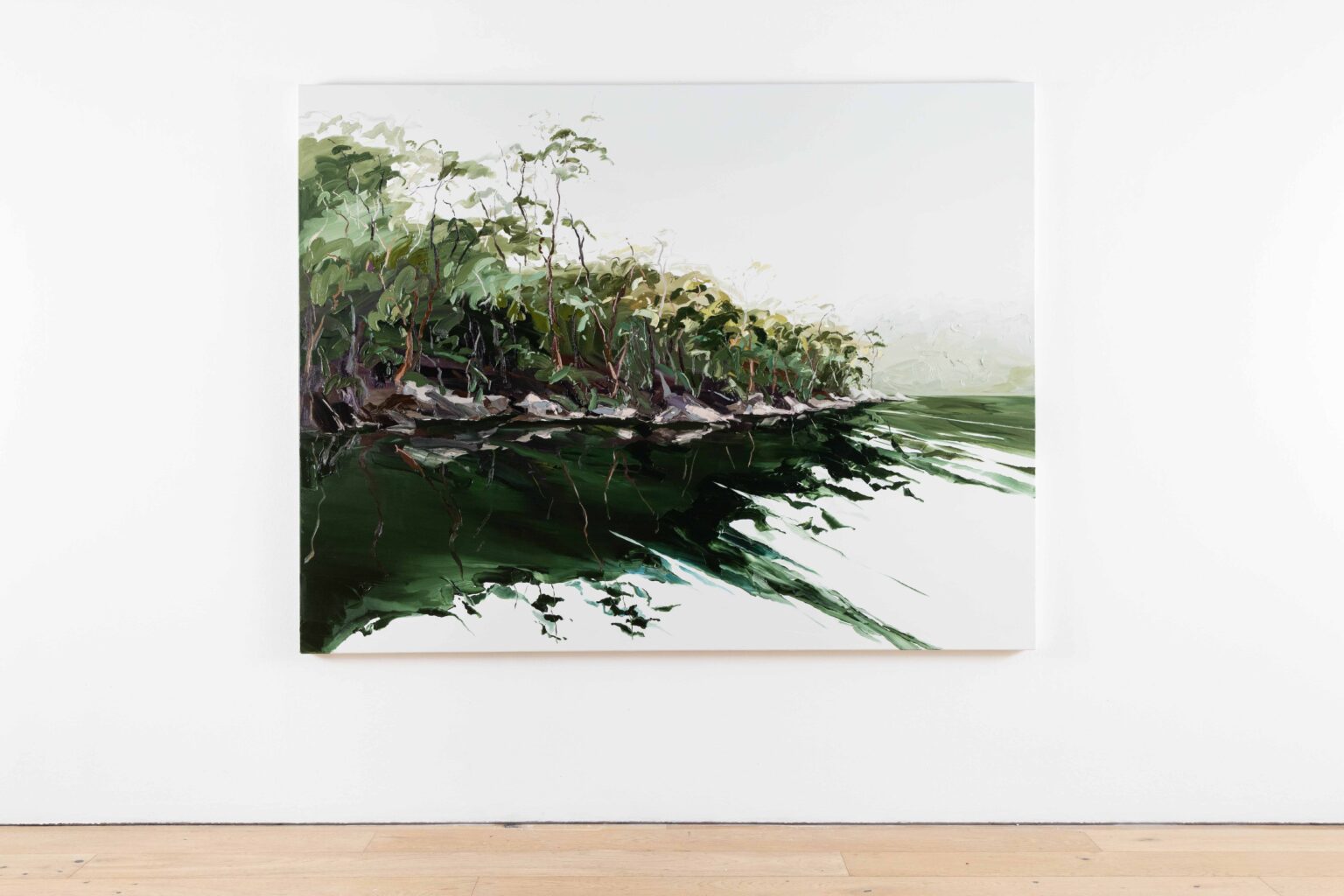
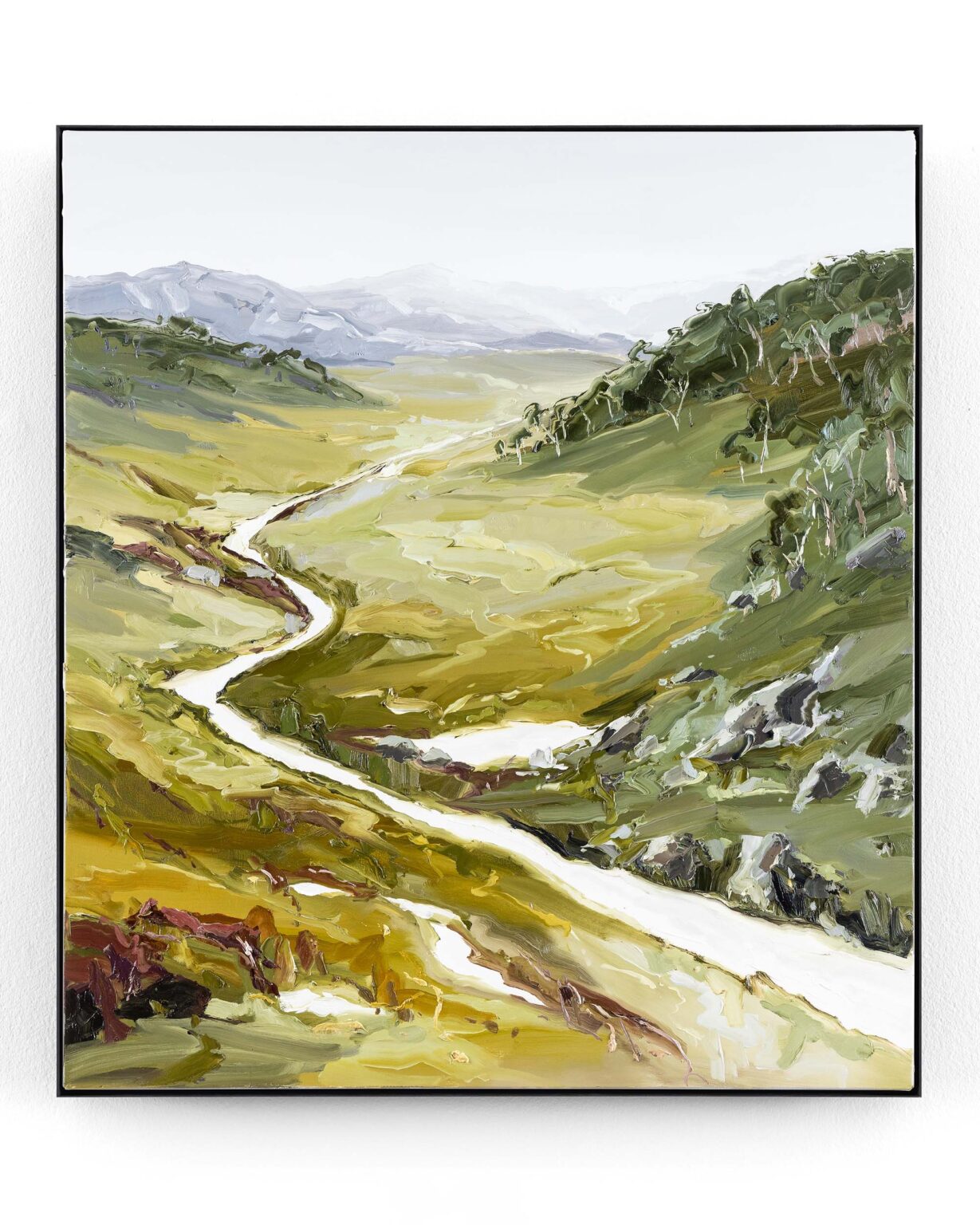
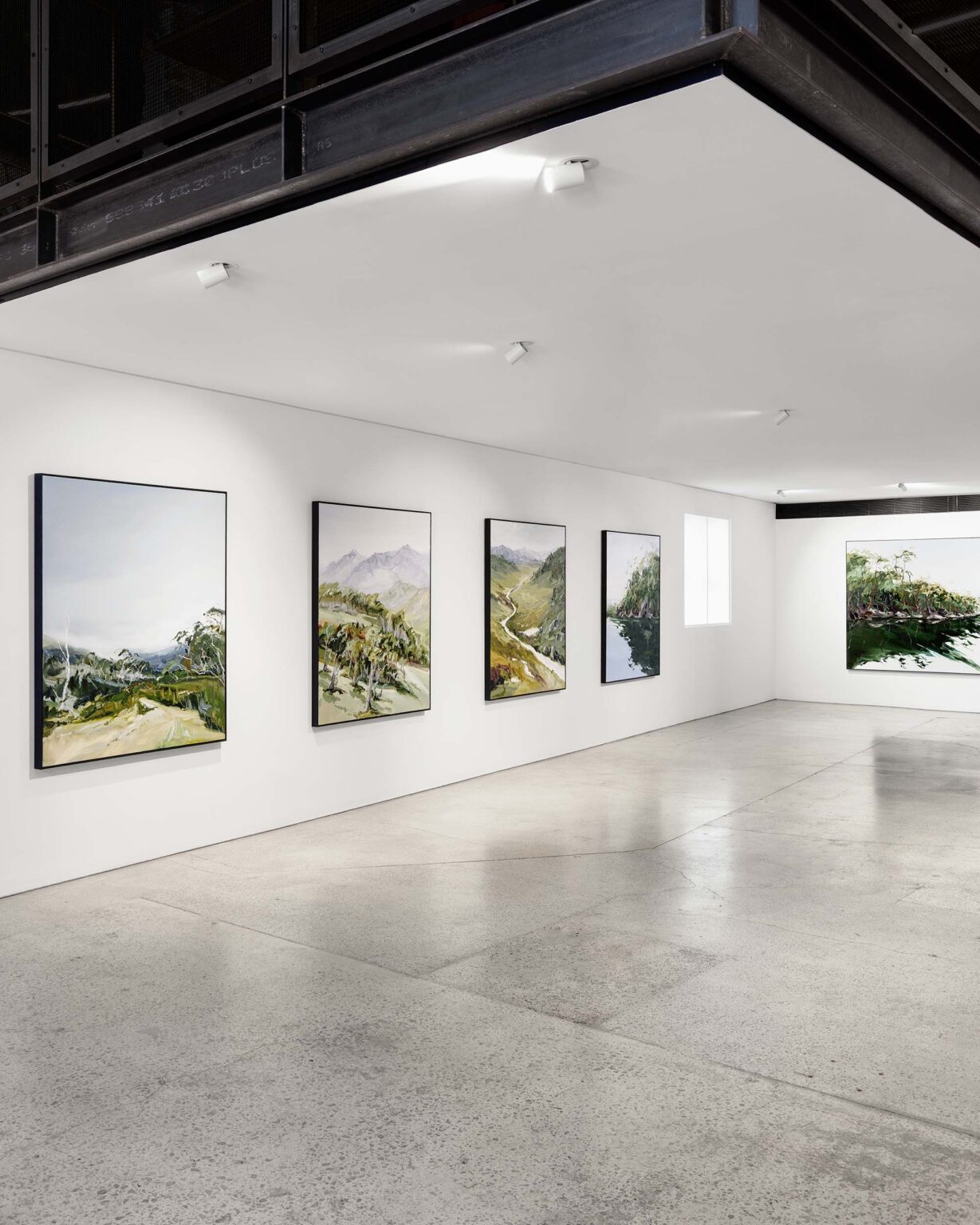
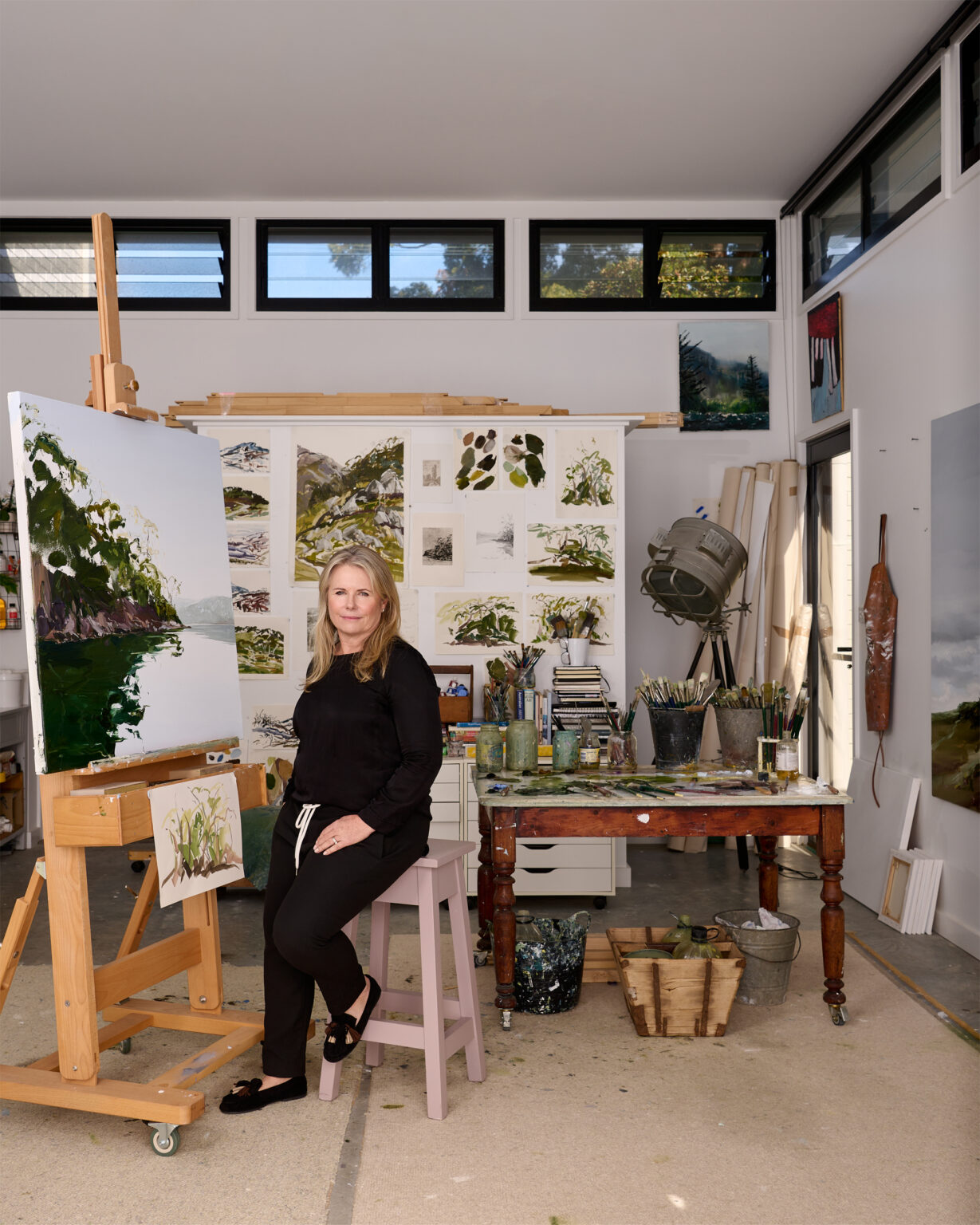
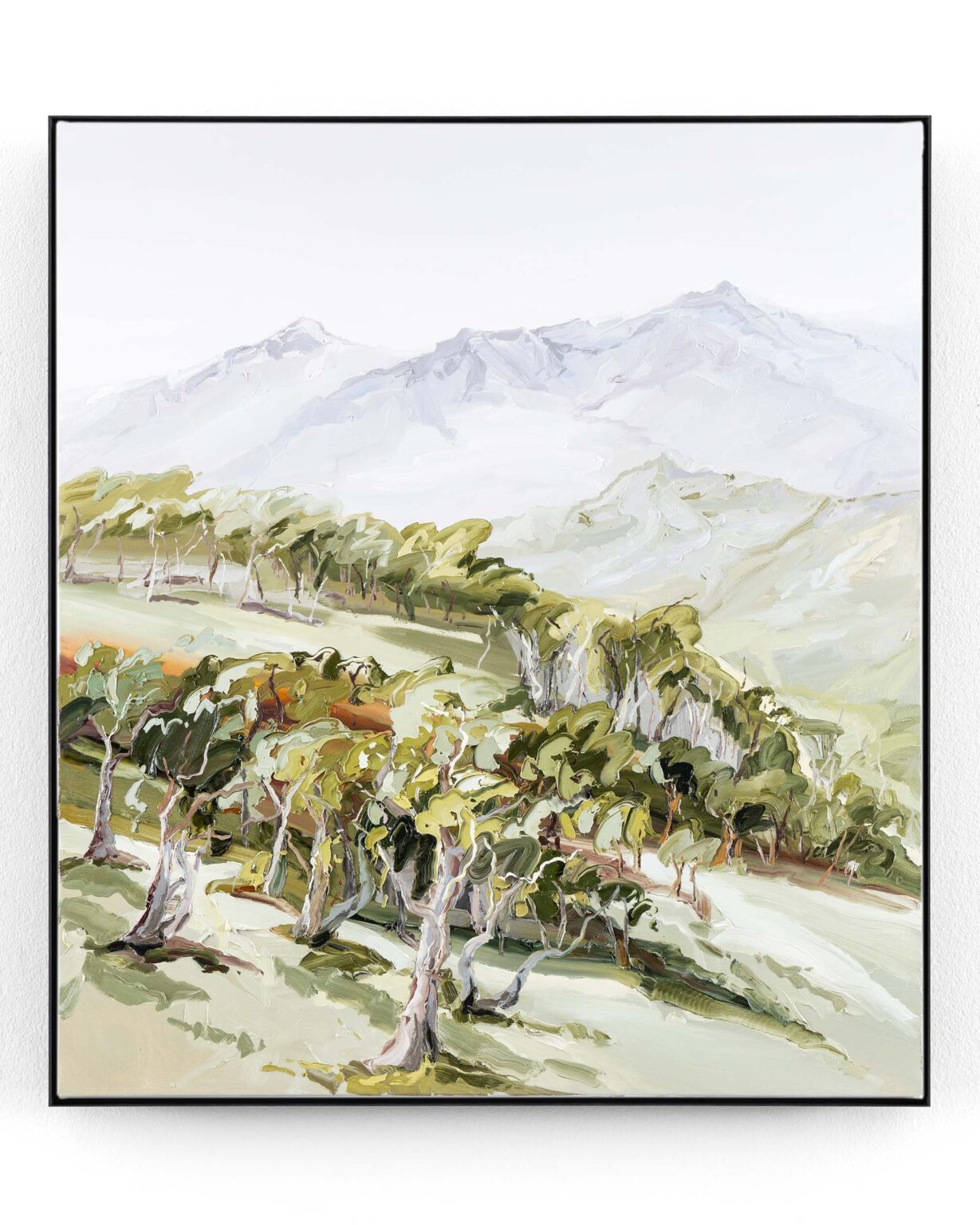
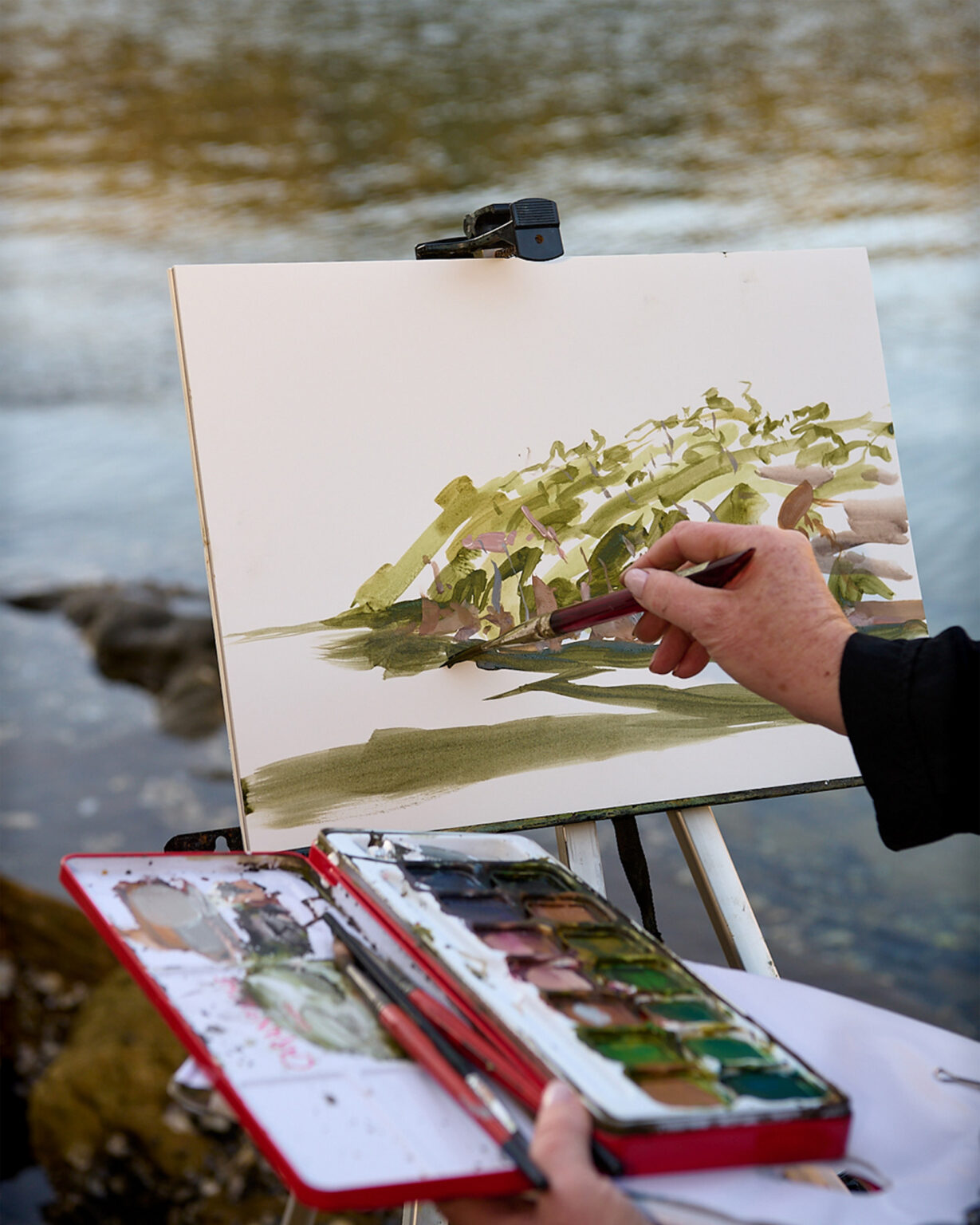
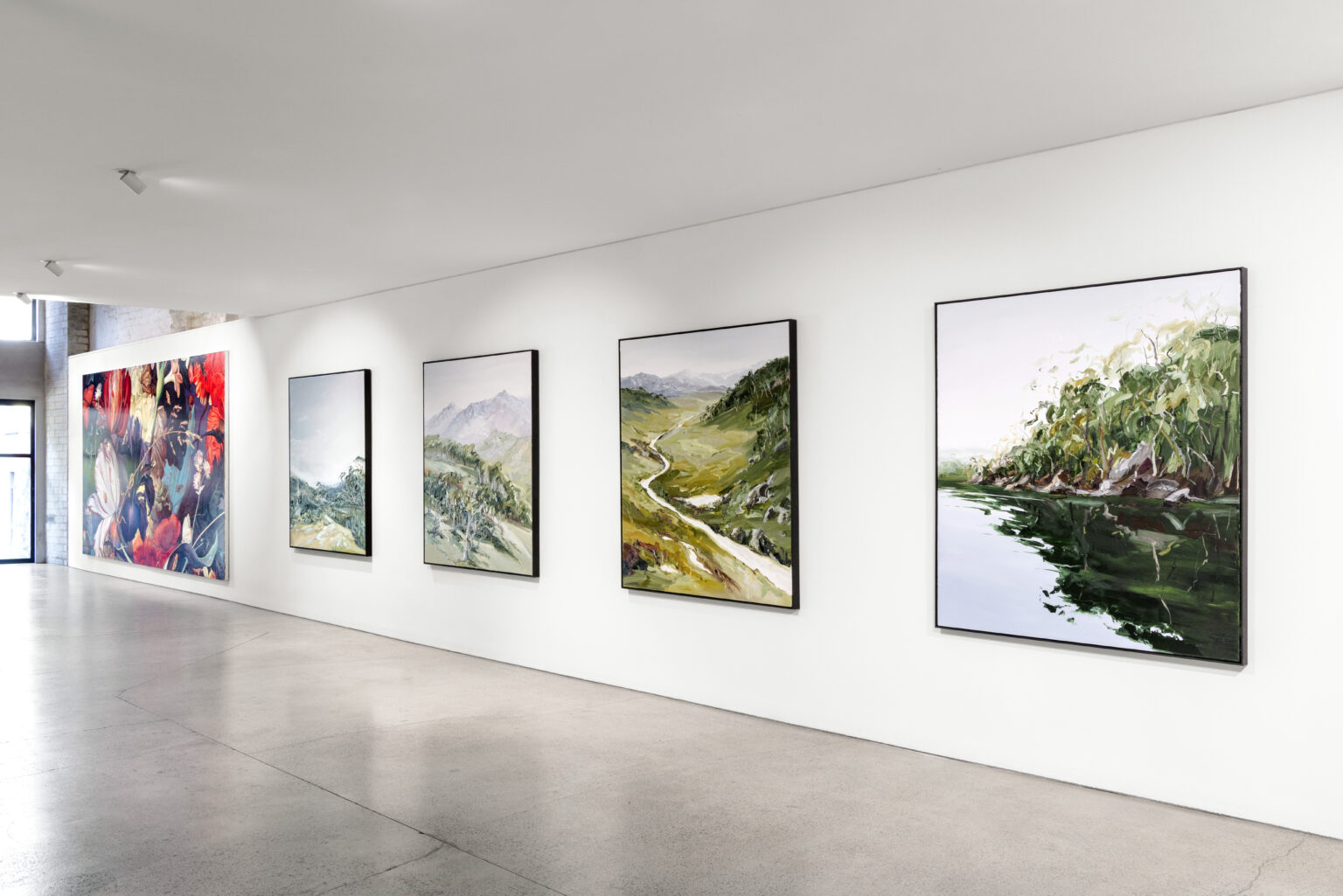
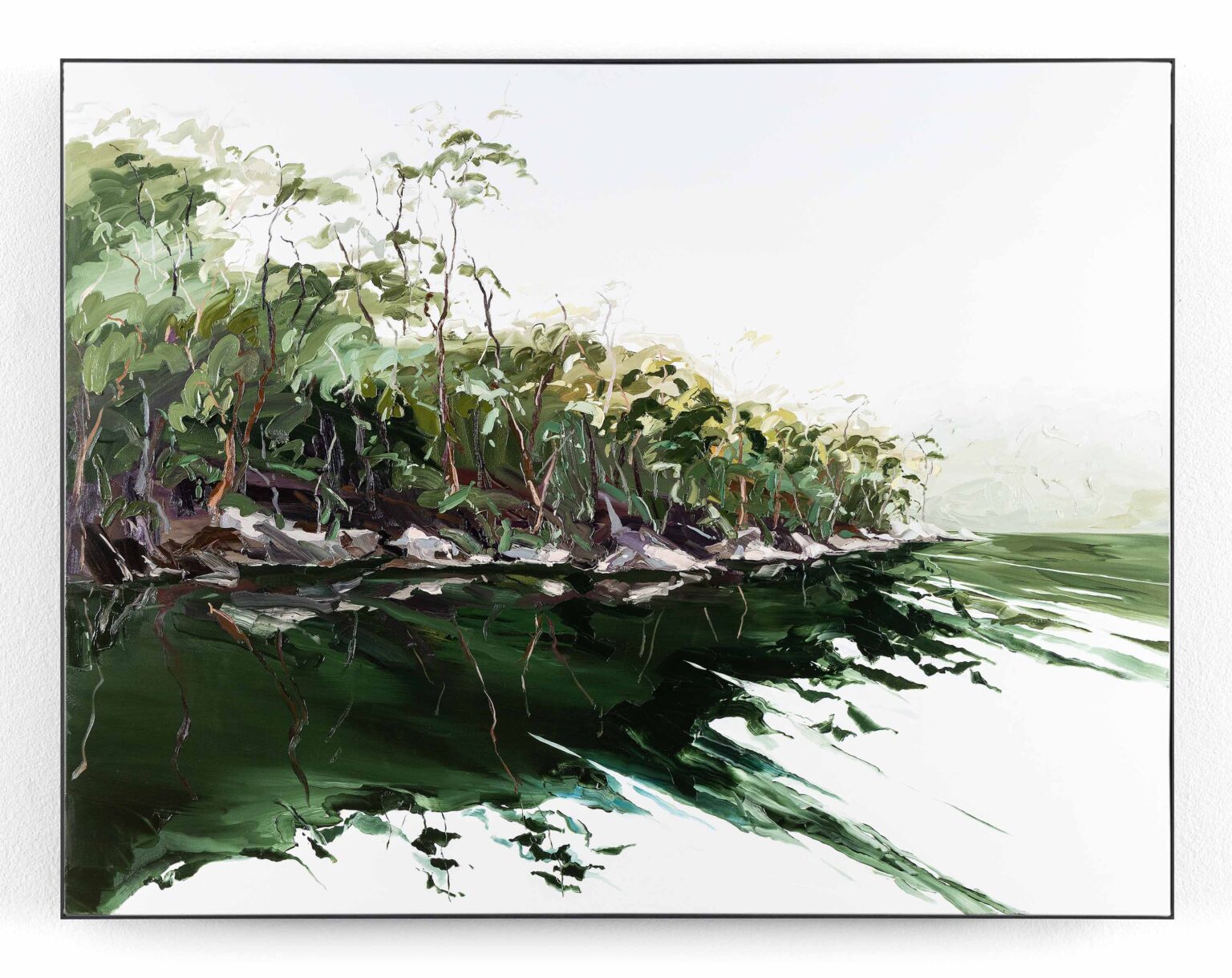
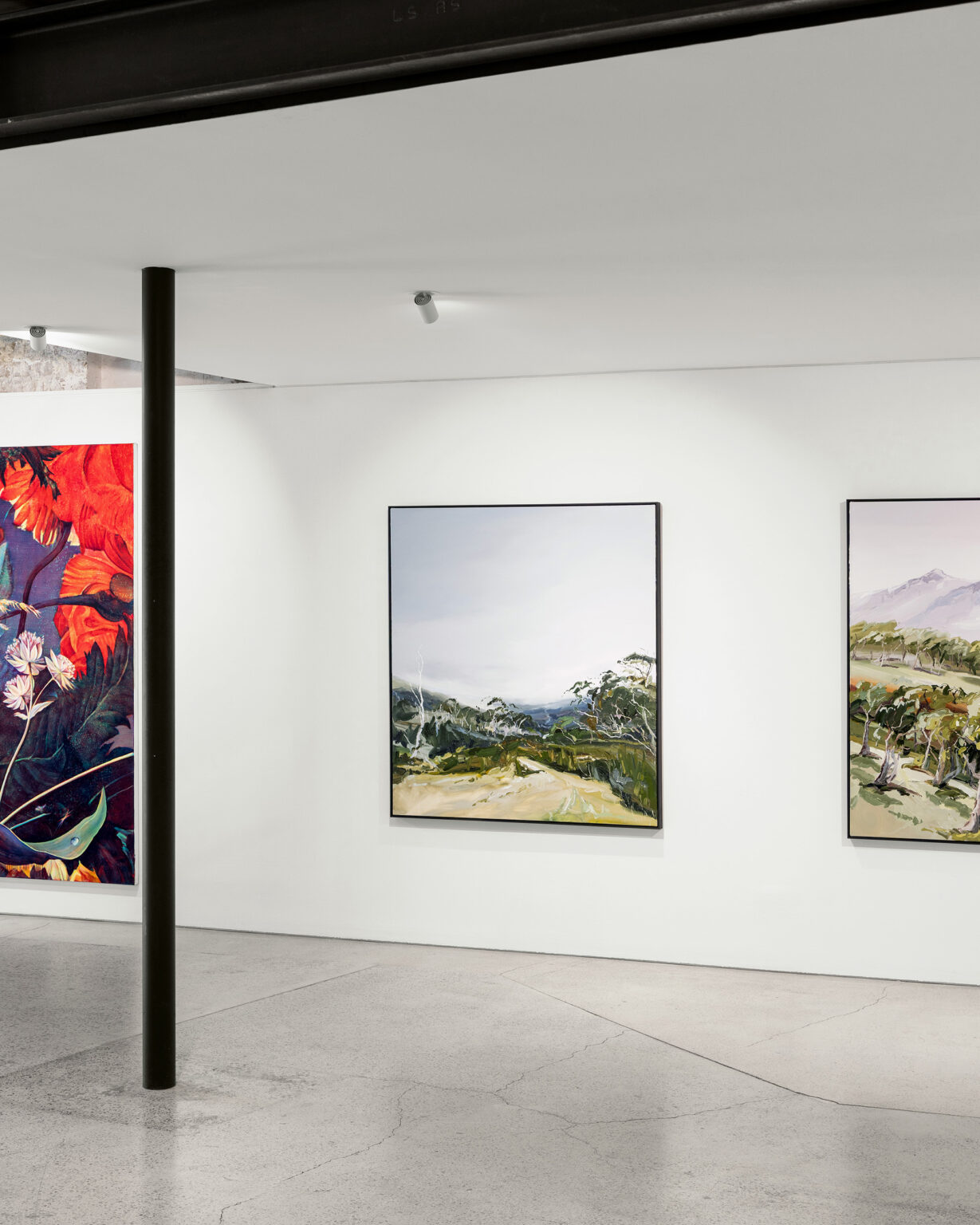
Acclaimed West Australian painter Carly Le Cerf presents En Plein Air, a spectacular constellation of works on paper created at the coalface of the untamed landscapes that shape her practice.

Showing exclusively at Michael Reid Berlin, En Plein Air offers collectors a rare opportunity to experience and acquire original, accessible works by an artist firmly at the forefront of Australian landscape painting and one of the most sought-after names within our broader gallery network.

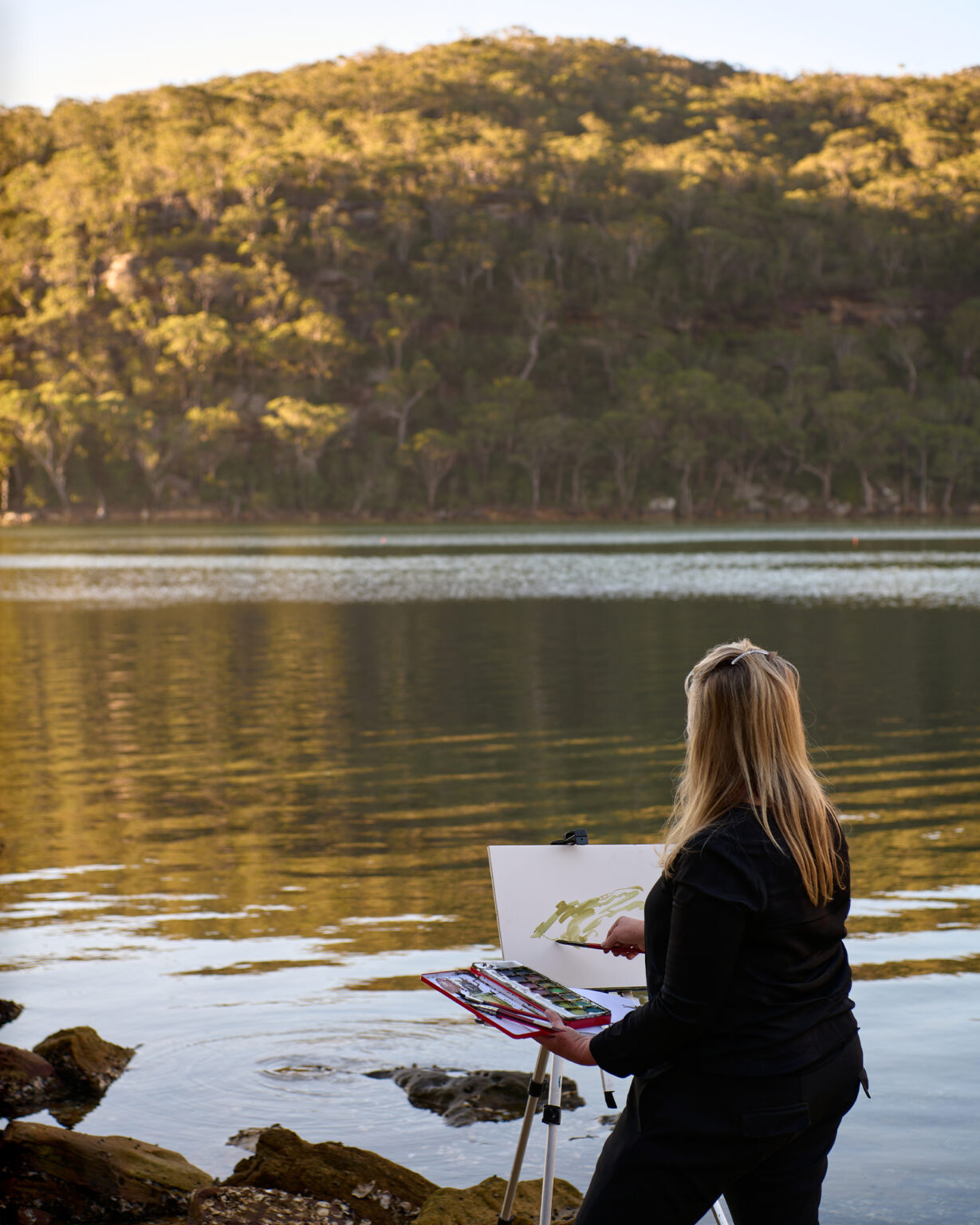
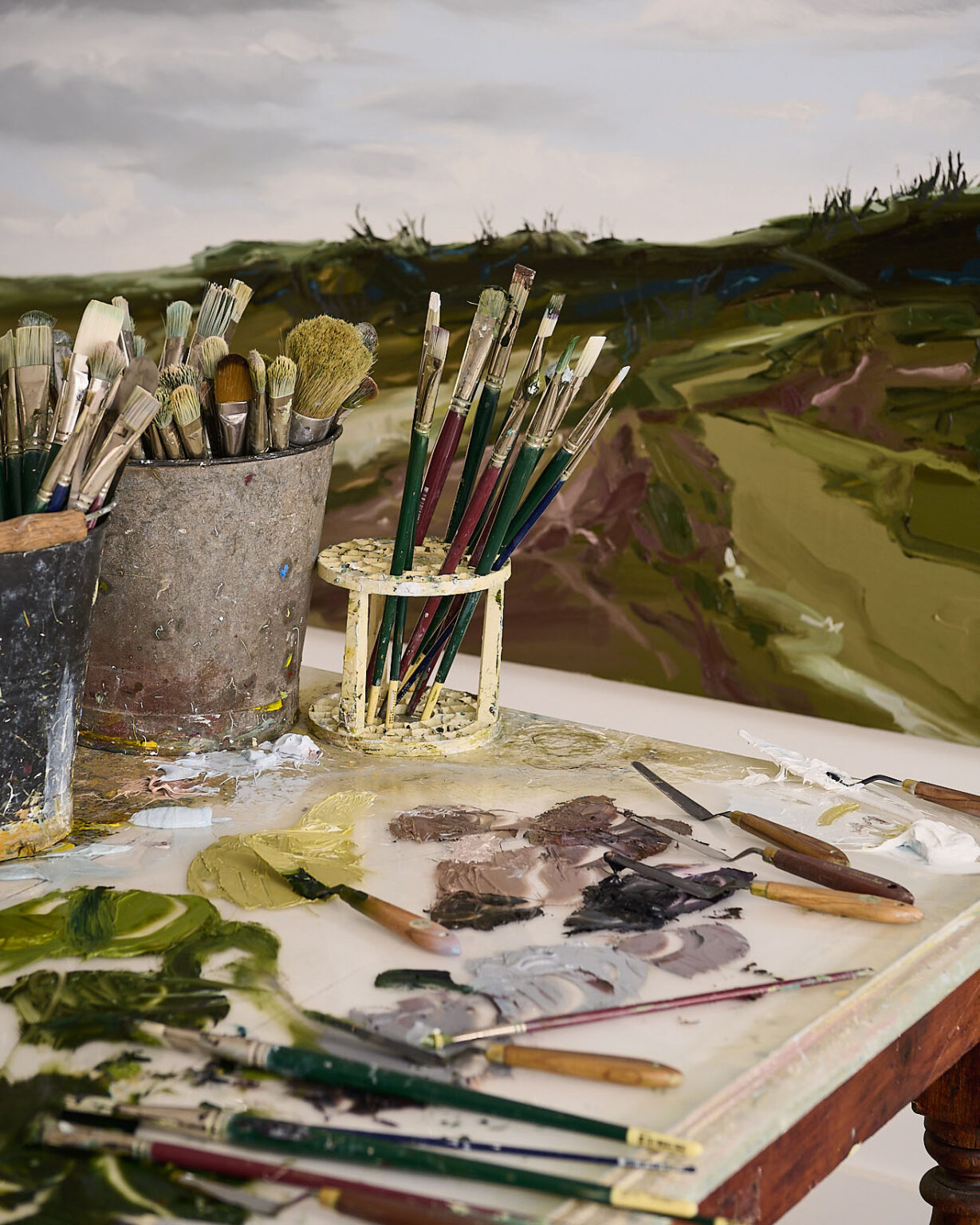
Bringing together a significant suite of gouache and watercolour sketches, drawings and annotated field studies, En Plein Air offers a direct and immediate connection between the landscapes in which Le Cerf immerses herself and the richly textured, large-scale encaustic paintings they ultimately give rise to. Together, her works on paper trace an evolving response to place across several immersive forays undertaken during a period of remarkable creative efflorescence and rising acclaim.

As her practice pushes towards ever more expansive and heroic terrain, Le Cerf’s work remains grounded in prolonged encounters with the land. “My creative process comes into being through immersing myself in the landscape and absorbing what the essence of that landscape is to me,” she says. This philosophy sees her walking, sketching and recording colours and sensations over long stretches before returning to the studio to translate those experiences into works of formidable emotional heft.

As writer Sarah Hetherington observes, Le Cerf’s paintings strive to express awe – “that universal human emotion… of reverence, admiration, even fear, in response to that which is grand, sublime and powerful.”

En Plein Air brings viewers closer to Le Cerf’s process, offering glimpses of the attentive looking, intuitive mark-making and physical presence underpinning her lauded practice.

For more information about the material on view and for acquisition enquiries, please email danielsoma@michaelreid.com.au (Sydney) or colinesoria@michaelreid.com.au (Berlin).

Light Years

Posted by

Light Years

Michael Reid Sydney is delighted to present Light Years – the first solo exhibition by Tim Maguire since the announcement of his representation by the gallery, and a landmark entry in the decades-spanning career of one of the most important and original voices in Australian contemporary art. Across an expansive constellation of new paintings, subjects that have loomed large in Maguire’s visual universe are revisited, reimagined and realised anew by an artist at the height of his powers. Light Years draws together the strands that have defined his multifaceted practice to date and positions light itself as the central, animating force in his ongoing exploration of the shifting tensions between surface and depth, abstraction and illusion.

Working between Sydney and Mondenard in southern France, Maguire is globally celebrated for his cinematic, large-scale paintings that pull the viewer into a heightened field of looking. Through a singular approach that applies the tricolour separation of printmaking to the lush materiality of oil on linen, the artist constructs his images from discrete, translucent, solvent-splashed layers that allow the whiteness of the ground to illuminate the surface from within, offering a painterly approximation of an ambient screen image – at once starkly contemporary in its glitchy distortions and steeped in sensual classicism.

This effulgence of colour might dissipate at close range into pure sensation, optically charged abstraction or flickers of celestial matter, only to resolve at a distance into impossible landscapes or hyper-floral tableaux. Beauty, though often the work’s most immediately arresting quality, is less an end than a means – holding the gaze long enough for the image to do its work of unmaking and remaking itself. “There’s a play between the illusion of the image and the physicality of the paint,” says Maguire. “The ideal painting for me is one where, up close, you see nothing but paint and process and layers, and then, from far enough away, the whole thing resolves into a convincing illusion.”

Drawing on found and fragmented source material – from distorted digital photographs and blown-up details of Old Master paintings to hybrid or half-remembered landscapes that hover between real and abstract – Maguire’s subjects serve as shifting proxies for his interest in process, its porousness to chance and the illusory alchemy through which images resolve and paint becomes a conduit for luminosity. In Light Years, motifs that have surfaced at distant moments across a roving creative life are reimagined through the colour-separation techniques that have defined his mature practice.

“The notion behind the show was to gather the threads that led to the recent works and to look back at their antecedents,” says Maguire, whose exhibition reveals affinities and unexpected recurrences across temporal distance. Here, water lilies dissolve into pixelated planes, paired cypress pines graze star-dusted skies, and prismatic snowflakes cascade against wintry, indigo trees. Maguire’s twinned water tanks with slivers of light between them – a piece of personal iconography harking back to the 1980s, when he first sought out landscapes that could double as reductionist, hard-edge abstractions – find curious echoes in the columns of reflected luminosity that slice through his more recent moon over water works, as well as paintings developed from his Dice Abstracts print series, in which compositions were determined by a game of chance.

“Often an exciting new idea turns out to be a cul de sac. Conversely, a simple idea that seems to lead nowhere can keep popping up,” says Maguire. “Case in point: I’ve been making paintings of two cypress trees at the bottom of our garden in France – a young skinny one and an older, thicker one. We bought the property 15 years ago and over the last few years I’ve been photographing the trees, with a vague idea that they could be the basis of a painting. It was only when I started some small acrylic works last year that I was reminded of a print I’d made, entirely from my imagination, of two very similar trees – in 1987.”

While reaching back to Maguire’s personal iconography, Light Years eschews the logic of a retrospective – its imposition of a linear progression from one discrete period to the next – in favour of something more fluid, recursive, cumulative and alive: a collapsing of time that hews closer to the plurality, simultaneity and multidirectional flow of ideas at play in the studio, where an artist’s roving curiosity and restless, rigorous experimentation see subjects surface, recede, overlap and reconfigure. “If there’s a common quality beyond this notion of flatness versus depth, abstraction versus illusion, then it’s a preoccupation with light,” says Maguire. “Hence the show title.”

For enquiries, please phone (02) 8353 3500 or email danielsoma@michaelreid.com.au or hughholm@michaelreid.com.au
Artist Profile – Murray Fredericks

Posted by

On the eve of the announcement that acclaimed Australian contemporary photographer Murray Fredericks will be represented by Michael Reid Sydney + Berlin, the gallery team met the artist at his Eora/Sydney home and workspace to discuss the creative influences, conceptual inquiries, and intrepid engagements with elemental extremes that have underpinned his singular practice.

“Rather than treating landscape as scenery, I understood it as a field in which perception unfolds, where light, space and duration become the true subject,” says Fredericks in our interview, in which he reflects on several pivotal projects within his celebrated career, from his seminal, decades-spanning Salt series to more recent bodies of work such as Blaze (2023). “The landscape functions as the medium through which emotional and psychological states are registered, particularly those that emerge through prolonged solitude and complete immersion over weeks or months at a time.”

Read our conversation with Murray Fredericks below alongside a selection of photographs from the foundational bodies of work he discusses in our interview – Salt, Hector, Vanity, Icesheet (Greenland), Array and Blaze. Works from these series are newly available to acquire from Michael Reid Sydney. For enquiries, please contact dean@michaelreid.com.au
“The landscape functions as the medium through which emotional and psychological states are registered, particularly those that emerge through prolonged solitude and complete immersion over weeks or months at a time.”

MURRAY FREDERICKS
___

Could you tell us about some of the earlier creative influences and the experiences that propelled you towards your photographic practice?

From as young as I can remember, I noticed that I became a different person when I was in the natural landscape. In open environments I experienced a kind of psychological freedom that I couldn’t access elsewhere. I sought those spaces out constantly, and that impulse has remained central to my life and work.

My earliest engagement with landscape photography was personal and almost naïve. I learned the methods of Ansel Adams and began working with black-and-white film, eventually moving into large-format cameras during extended periods of solitary trekking – six months crossing the Himalayas from east to west, long stretches in Patagonia, and five summers and a winter living and walking in South West Tasmania. I lived with the camera in isolation for as long as I could. Those years were formative not only technically, but experientially. They established a relationship between solitude, duration and perception that continues to underpin my practice.

While in South America, I encountered a salt lake for the first time. One evening I walked alone out into the darkness. The flatness and the vastness produced a profound sense of release. I remember thinking, very simply, that there was a project in this, that emptiness itself could become the subject.

At art school I encountered the work of Bernd and Hilla Becher, whose industrial typologies demonstrated how seriality and repetition could transform the apparently mundane into something rigorous and compelling. Around the same time, I began looking more closely at the history of landscape photography from the mid-19th-century American tradition through to Australian photographers such as Peter Dombrovskis and Olegas Truchanas, and recognised that landscape photography could no longer rely on the “shock of the new.” In the digital age, novelty had diminished as a strategy.

The writer Edward Said described landscape not as a subject, but as a medium – a vehicle for carrying meaning. That idea clarified something I had already been intuitively pursuing. When I first encountered phenomenology, it was a philosophy that explained the underpinnings of the methods I had naturally lived and adopted. Rather than treating landscape as scenery, I understood it as a field in which perception unfolds, where light, space and duration become the true subject. The landscape functions as the medium through which emotional and psychological states are registered, particularly those that emerge through prolonged solitude and complete immersion over weeks or months at a time.

How did you first approach the landscape photographically, and how has your relationship to it shifted throughout your career?

I first approached the landscape in a relatively traditional manner. My early work was grounded in black-and-white film and informed by the formal clarity of the landscape tradition of the American West.

Over time, I became less interested in describing landscape and more interested in understanding how perception develops through duration. I began to notice that certain moments only became recognisable after extended time spent inhabiting a place, and that recognition itself was shaped by immersion. The decisive shift came when I chose to embrace space itself as the subject of inquiry. Working on salt lakes allowed the landscape to be reduced to an almost blank field, and the work moved away from topography toward perception itself. Light, tonality and scale became the primary elements. Landscape was no longer a subject to depict, but a space through which to explore duration, emptiness and the psychological states that emerge through immersion.

As the projects developed, my understanding of landscape broadened. I became increasingly aware that landscape is a human construct, and that it is never neutral. Even when appearing empty, it carries traces of memory and human presence. Rather than presenting landscape as untouched or exotic, I began to approach it as a complex field, one that shapes experience and is shaped by it.

You have had an ongoing relationship with Lake Eyre. What draws you back to it?

Lake Eyre has remained central to my practice because it offers a condition of reduction. Its vast flatness removes distraction and allows light, space and duration to become primary elements.

I initially thought I would visit only a few times. However, once a body of work was completed, a new question would emerge – a further “what if” that required returning. Each return gave rise to a distinct cycle within the broader project. The relationship became iterative rather than finite.

All the landscapes I work in offer the possibility of reduction, seriality and duration. This has shaped works such as Hector, the Greenland Icesheet project, and, in a different register, Blaze. The work develops through sustained attention rather than singular encounters.

Could you tell us about the interventions within the landscape that recur in your work – fire, mirrors, smoke – and how they connect with your broader themes?

The interventions are intentional disruptions that alter how space is perceived. In Blaze, fire reorganises the field. The sites were chosen specifically because they were ephemeral landscapes – temporary bodies of water that exist only under particular conditions. Ephemeral waterways and lakes are a defining feature of the Australian inland. The flame operates in the same way: both are transient states that briefly permit a landscape to exist before vanishing.

The mirror works operate through geometry and light. By inserting reflective planes into the landscape, I introduced a surface that absorbs and redirects the existing field. In the final image, the mirror ceases to read as an object and instead functions as a plane of abstraction. Horizon, sky and ground fold into one another, expanding the way the landscape can be read.

Time-lapse films are a part of your artistic practice, but there is clearly a temporal dimension to your still photography as well. What role do time and the durational aspects of your process play in your work?

Time is foundational to the work, whether in moving image or still photography. I have always been drawn to using the medium to make visible realities that sit just beyond ordinary perception. Time-lapse and long exposure reveal what is present but not immediately seen – shifts in light, weather and atmosphere, and the gradual movement of space itself. Time operates as a condition of immersion. Recognition does not arrive instantly; it emerges through duration. Time is not simply a subject of the work; it is the medium through which the landscape is understood.

Your body of work Salt unfolded over a 22-year period. Could you tell us about the development of that particular series and how do you look back at it as a project that spanned such a significant period of time?

I look back at Salt as the body of work that defined my process and methodology. It was never conceived as a long-term project. I initially imagined one or two visits; it grew into 31 visits over 22 years. It was three years and five trips in before the first exhibition works were made. During that period I was establishing a framework, a set of rules for how to work within that environment.

In the early years I camped at the edge of the lake and walked out each day, which was physically exhausting and consumed valuable time. Eventually I moved into the centre of the lake itself, transporting water and equipment by bike and trailer and camping for up to ten days at a time. That shift changed the work. The immersion became total.

At art school, my supervisor suggested I document the process on video. That material evolved into Salt, a 30-minute documentary commissioned by the ABC, which went on to receive international recognition, including Best Cinematography at Camerimage and an Academy Award shortlist. The moving image became an unexpected but integral extension of the project.

Technically, the series evolved alongside changing technologies. The early works were made on an 8×10-inch film camera, a formal, deliberate approach that established the project’s aesthetic. As digital systems matured, I began producing stitched panoramas to extend the field of view, and later night works that were not previously possible. The mirror works followed, then multiple mirrors, and eventually the merging of Salt and Blaze, where flame rose from the water’s surface. Each shift formed a discreet cycle within the larger project.

The lake itself imposed continual challenges. The most compelling conditions often occurred when rainwater lay in vast shallow pools across the salt. I would transport a picnic table on a trolley to create a stable platform. The salt, far more corrosive than seawater, required constant protection of equipment; mirrors demanded continual cleaning and polishing. Water sometimes had to be hauled across distances of up to 35 kilometres. Yet living alone on the lake was, paradoxically, peaceful and sustaining.

All of the physical and technical challenges were subordinate to the inquiry. The vision always came first. The duration of Salt was not strategic; it was the result of returning to unresolved questions. Each visit extended the framework, testing new conditions within a landscape that, despite its apparent emptiness, proved inexhaustible.

What were the starting points for your Hector, Icesheet (Greenland) and Blaze series, what were the challenges and ideas at play, and how do they each build upon the ongoing themes of your practice?

Hector emerged from the challenge of bringing a fixed, minimal frame to an unstable phenomenon, the large thunderstorm system that forms over the Tiwi Islands during the wet season. The starting point was a simple constraint: a repeated horizon line through which the storm would be observed. I established a jungle camp opposite the formation point and returned over multiple seasons, observing the daily life cycle of the storms. Duration and repetition were central. What interested me was not the surface drama of lightning, but the gradual accumulation of atmosphere, staying long enough for recognition of essential forms to emerge. The repetition of the horizon became a way of measuring instability, holding a volatile subject within a restrained compositional framework.

Icesheet (Greenland) was, in many ways, an extension of the Salt process. It pushed reduction further. Where Salt worked with crust, water and horizon, Greenland offered an almost total field of snow and ice. Atmosphere dominated the experience. Ice crystals suspended in the air bent and refracted light, creating subtle optical phenomena that became subjects in themselves. The landscape was defined even less by form than Lake Eyre, and more by the behaviour of light within it.

At the same time, the abandoned Cold War missile detection stations DYE-2 and DYE-3 introduced a contrasting condition. The radome structures and traces of mundane habitation sat within what felt like a void inside a larger void. These architectural remnants became the basis for both large-format still works and a three-channel video installation, created in conjunction with composer Tom Schutzinger, who worked at the station in isolation with me over the course of a month. The project was logistically difficult; weather frequently prevented work from commencing. On one visit, a journey across the ice sheet was undertaken by dogsled with a team of local Inuit, later forming the basis of the feature documentary Nothing on Earth, commissioned by the ABC.

Blaze marked a shift from observing unstable conditions to introducing a controlled intervention. The work was situated within ephemeral and fragile inland river systems. These were temporary landscapes that appear briefly under specific conditions before receding again. The flame was generated through concealed, flexible gas lines wired along the backs of the trees in a sculptural line that outlined their form. The intervention was carefully managed and non-destructive, designed to exist only for the duration of the image. Like the waterways themselves, the fire was temporary. Both were transient states that briefly defined the landscape before disappearing.

The starting point was to test how a volatile element might reorganise a reduced field. Fire altered scale and horizon, creating a momentary alignment within an otherwise minimal environment. In this sense, it shared a logic with Hector, working with a volatile subject within a restrained frame, but here the instability was introduced rather than observed.

How does your work in film and commercial photography influence aspects of your fine-art practice?

I was an artist first. The commercial and film work evolved out of the ideas and methods established in the fine-art practice, rather than the reverse.
The long-term art projects required making images from subtle gradations of light and colour, often realised at large scale. That demanded technical precision and the use of large-format systems. Technical capacities, including time-lapse and complex exposure techniques, were developed in response to artistic questions and later translated naturally into film and commissioned work.

Are there landscapes you’re yet to visit that would be interesting for you? What other projects are you looking forward to?

There are many landscapes that are conceptually and visually compelling. At this stage, I am focused on testing ideas, including ways of working with multiples and layered durations. The direction is still forming, but it continues the same inquiry into scale, perception and time.

Artist Profile – Tim Maguire

Posted by

In the lead-up to the announcement of Tim Maguire’s representation by Michael Reid Sydney + Berlin, the gallery team sat down with the artist for a wide-ranging conversation exploring the ideas, processes and optical tensions that have shaped his internationally acclaimed practice across a career spanning close to four decades.

“No matter how naturalistic a painting appears, it’s still just a physical accumulation of paint on a surface – and yet we bring so much to it as viewers,” says Maguire. “I was always trying to make paintings where that tension becomes evident: where you think, ‘This really is just a whole lot of gloopy paint,’ and at the same time, from across the room, it looks like a photograph.”

Read the full conversation below alongside a curated selection of recent paintings by the artist, newly available through Michael Reid Sydney + Berlin.

For enquiries, please contact dean@michaelreid.com.au
“There’s a play between the illusion of the image and the physicality of the paint. The ideal painting for me is one where, up close, you see nothing but paint and process and layers, and then, from far enough away, the whole thing resolves into a convincing illusion.”
TIM MAGUIRE

___

Your practice has encompassed various mediums across your career. How do you approach these distinct facets of your practice – painting, printmaking and photo-based work – and how has moving between different fields become embedded within your painting process and shaped your broader thinking about image-making?
I’m primarily known as a painter, but I see printmaking as being of equal importance in my practice. That’s not necessarily represented in the way my work is seen, because there aren’t necessarily the same opportunities to show the prints. But I do make a lot of prints, so it’s an ongoing practice.

It started in 1987, probably. I’d already started exhibiting – my first solo show was in 84 – but it was a breakthrough moment. I found myself working with a master printer who explained that you could build up colour through discreet layers of primary colour – yellow, red, blue, black – and that you could get all the colours through those three or four colours. The idea of working with transparent inks on white paper, and allowing the whiteness of the paper to illuminate the image and create this sense of luminosity, was also a revelation. I made a few prints with the Australian Print Workshop, but I also took those printmaking ideas back into the studio.

I was thinking, can I make paintings in the same way? That’s when I started working with transparent colour – not so much in layers, but certainly using transparent colour and the whiteness of the canvas to illuminate. Thin glazes and transparent pigments came out of printmaking. I had this idea that if you could get everything in the right position and the right level of transparency and intensity, you could create an image that way.

It was only some years later, when I stumbled across a process of splashing solvent into the colour layers to remove parts of each layer in a fairly random dot pattern, that I realised I could emulate the quality of pure points of colour sitting side by side. So that led to my colour separation paintings – which, of course, is a printmaking term.

Could you tell us about the colour-separation process – how has it developed across different bodies of work?

When I got to the point where I realised I could actually do it, the splashing of the solvent was a key component and quite random. I wanted each layer of colour to remain visible as an independent entity – to reveal the process itself. It was about the idea that you could make an image by pulling it apart and putting it back together again.

To do that, I needed to work quickly. It might be a four- or five-hour painting session, then splashing the solvent while the paint was still wet enough to react, but dry enough not to collapse into a mess. Timing was everything. I liked the idea that the image was brought together through a mechanical process largely determined by chance – how much solvent comes off the brush, how dry the paint is. The image comes together almost magically, which, for me, was one of the great attractions of printmaking.

Later I realised – particularly after a series of massive paintings in 2000 – that this approach had limits. Those works were about two-and-a-half metres by six metres, and I ended up needing serious physiotherapy. So I slowed down. It wasn’t essential to do everything in one session, and that allowed for more control. There’s a desire to master the challenges you set for yourself, and eventually you do.

In this process, any colour might be a combination of yellow, magenta and cyan. Gauging that while applying it is almost impossible. Often it’s only when you apply the third colour that you realise you’ve gone wrong with the first two. Those pitfalls are what keep it interesting. I’ve got to the point now where I’m pretty good at navigating them, so maybe it’s time to do something else.  The last two shows I did were very ambitious, large diptychs. I could never have done those 25 years ago. It felt like the end of something.

You spoke about holding the image in a state of becoming – the work being less about representation and more about ‘imageness’ in a slightly dispassionate way.

For sure. It was coming out of postmodernism, and the idea that images were floating around – you could grab one from here, one from there – like slides on a screen, which is how we learned about art back then.

I was trying to make paintings that looked like that. They were flat, transparent, with no tactile physicality. The paint was a very thin veil – almost like a luminous projected image, closer to a cinema screen than a physical object. The images could be anything. The weirder the colour combinations, the better. I moved between representational and abstract things, and the common denominator was process.

There is a physicality to the way your paintings are experienced – both in their monumental scale and in the way a picture might cohere at a distance or dissolve into abstraction up close. How do you consider scale in the making of a work?

That transformation is really important. I always thought the great thing about large-scale works was that you could be incredibly loose at the coalface, and yet, if the viewer stepped back far enough, the image could come together.

There’s this play between the illusion of the image and the physicality of the paint. The ideal painting for me is one where, up close, you can’t see anything but paint and process and layers, and then from far enough away the whole thing resolves into a convincing illusion of something.

Ideally, the viewer is pulled towards the surface and back to the whole image – they’re moved back and forth, and you get that tension between the two states as extreme as possible. Like pulling on a rubber band. For me, that’s the magic of painting. No matter how naturalistic or detailed a painting is, it’s just a physical accumulation of paint on a surface. And yet we have this capacity as viewers to read things into it.

So I was always trying to make paintings where that became evident. Where you think, “Oh, this really is just a whole lot of gloopy paint,” and at the same time, from across the room, it looks like a photograph.

That sense of scale – of cropping and extrapolating source imagery into something cinematic – also transforms the subject. How do you think about beauty in your work, particularly when it’s pushed to extremes?

It’s tricky, because even to say your own paintings are beautiful sounds vain or arrogant. And for a long time there was an idea that aspiring to beauty was philosophically flawed – and it smacked of elitism or privilege. So it’s hard not to have an ambivalent relationship with it.

But if I look across my work, the aesthetic quality has always been a strong driver. The challenge is to create an image that holds your gaze, invites you in, and encourages you to look long enough for the image to start working on you. You begin to see it differently.

We’ve all had that experience where you hear a song for the first time and it sounds like nothing, and by the fiftieth time you love it. That’s hard to achieve with painting; we’re less and less trained to spend time with an image now. So making something beautiful can be a way of slowing down the viewing process. It’s not the end goal, but there’s something that holds my attention – often something I can’t quite articulate. A particular colour combination, a tonal shift, or an awkwardness that keeps you oscillating between irreconcilable positions.

Flowers were annoying in that sense, because everyone assumes flowers are beautiful. It made it harder. I wasn’t that interested in prettiness. What interested me was the tradition – the philosophy behind Dutch still lifes, mortality, fleetingness. Another attraction was that you could zoom into a flower and find forms that were almost abstract – curves and dramas you couldn’t find in a portrait or a landscape. They had no top or bottom. They had the vigour and thrust of something like a Delacroix – movement, writhing energy. That’s what I was finding in those early works. Yes, they were flowers, but that wasn’t really the point.

I don’t really think about beauty per se. I see something in the world and think, I’d like to photograph that. Then I see something in the photograph that makes me think I could paint that. Often what you get is nothing. Sometimes you get something vaguely like what you expected and it’s not interesting. Sometimes you get something completely unexpected because something else happened along the way. That can set up a whole new series.

One of the big things in my work is the relationship between the abstract and the illusionistic. Monet’s water lilies are a good example. They’re almost abstract expressionist, but there’s a sense of space that’s both perspectival and flat. The water surface is frontal, but the space recedes. You never see the horizon.

That contradiction is what painting is. You look at a painting of a landscape and read it as space, but it’s flat in front of you. That’s titillating for the brain – two contradictory things at once. It’s like life. There’s no logic to it.

Your career has unfolded alongside a broader shift from analogue to digital. How has that transition influenced your thinking about images and surfaces?

Even early on, if I was taking a detail from a Dutch still life, it was already an image that had passed through multiple stages. By the time I found it, the painting was 300 years old. It had been photographed, reproduced in a book, sat around for decades, then scanned – and from that fragment I was making this huge painting.

The idea of moving from analogue to digital and back to analogue – the oil painting – felt very comfortable. The same applied to photographing, manipulating images digitally, printing them out, then using them as the basis for paintings or lightboxes.

If I used the same image three times and painted it three times as colour separations, they would all end up looking different. No matter how good I got, I could do it for 100 years and be unable to make two the same. So this idea that everything is full of possibilities, everything is changing, there are no constants – that’s probably one of the themes behind the work.

Around that time, digital photography was emerging. I went to New York and came back with a Kodak digital camera. Because it was digital, I could take a thousand photos and find something later, put it on the screen, and it was incredibly luminescent – unlike images in books.

Early digital images had strange effects – weird colour fringes around forms – which I found fascinating. Everything was super low-grade, with weird glitches and strange colours. I saw the painterly potential in that. The question became how to do that in painting. That’s where colour separation came in.

It creates a glowing quality. With opaque paint, light bounces off the surface. With transparent pigment, light passes through, hits the white canvas, and comes back out – like stained glass. Everything becomes more glowy, more otherworldly.

So it might look like a painting of a flower, but really it’s a painting of a photograph of a flower. There was always a distance between me and the so-called subject.

With recent series such as Small Worlds and Lost and Found, you returned to Dutch floral still lifes as source material. What prompted that return?

That was partly about accessibility. In the early 1990s, I was working from postcards or the occasional book. Now museums have incredibly high-resolution images you can zoom into endlessly. Suddenly there was all this material available, and I had the technical capacity to deal with it.

It rekindled my interest in the subject matter. Earlier, I liked the fuzzy old postcard because it was often unclear what I was actually painting. I didn’t know if it was a leaf or background, and I liked not knowing. It freed me up. It was just shapes and marks. Now it’s very clear what it is, and I’m interested in it. I really enjoyed painting the little bugs and strange minute details that had been scrupulously recorded 400 years ago.

These series seem to involve a more explicit engagement with the symbolic or allegorical aspects of Dutch still-life tradition. Do you feel there was a shift? And what felt newly available to you in drawing out those narrative layers?

I don’t know if it’s maturity, but I stopped denying the source. For a long time I talked about the work as being about process. Now the process is a given.

There had been terrible bushfires just prior, and that was all happening around the time of COVID; this idea that tiny viral agents could turn everything on its head. Bushfires have been a theme in my work for a long time. They’re illustrations of the fleeting, unreliable nature of existence.

Beauty is subject to those forces. Nothing is timeless or universal. There’s a resonance between those ideas and what underpinned Dutch still lifes originally. So I was happy to re-dock my boat there, with more attention.

This openness to narrative feels especially present in bodies of work such as Old World, New World and Regeneration, which responded to the Kinglake bushfires. How did those works take shape?

Bushfires had been part of my thinking since art school. I grew up in the Blue Mountains – they were an ever-present danger. You felt safe, but the wilderness was always there. I made early works about that contrast – everyday life set against an underlying threat. A barbecue in an empty space, sausages frying, bushfire smoke on the horizon.

After the Kinglake fires, I took panoramas of the burnt landscape. The twisted branches looked almost nuclear, but in the foreground there was vivid green regrowth. That energy of renewal after such ferocity was incredibly striking. That became the source material for the Kinglake works images – mainly large prints and light boxes, though I’ve also made some paintings from it.

The Kinglake works introduce elements such as falling ash, which, like the cascading snow in your wintry paintings, bring another optical layer to the image. How do these motifs operate for you?

It was an extension of my fascination with the luminous quality of the digital screen. I was making images on screen, printing them large, but there’s always some loss. Printing onto backlit screens maximised that luminosity.

More recently, I revisited canvases of falling snow. I superimposed imagery from the Kinglake photographs – trees and branches – in a way that integrated the snowflakes into the space. The juxtaposition of burnt bush and snow gave the works a strange quality. In paintings where I’d used colour separation, the red, green, and blue snowflakes looked like flying embers or spirits – something ghostly or magical. They refract light, almost like prisms, and can act like little lenses that reveal the forms behind them.

There are certain elements that recur in your work – falling snow, water lilies, berries – what draws you back to these motifs and what do they allow you to explore pictorially?

I was interested in how the water lilies could be three-dimensional and very flat at the same time. With falling snow, it’s the fleeting beauty, the randomness of distribution. Which snowflakes do you include, which do you leave out? I never put anything in that wasn’t there, so it’s a question of what you exclude. It’s a bit like automatic writing.

More recently, some very early imagery has reappeared – tanks with strips of light between them. Before tanks, I was painting columns – symbols of rationalisation. Then those dissolved into strips of light. Putting illusion back in: light, form, space. The horizon appears, too – very reductive, barely a space, but recognisable. There are lots of references to abstract painting – readable both as abstraction and as something seen in the world. I’ve gone back to some of that imagery in recent prints: the horizon, the square, the openings.

You divide your time between rural France and Australia. How does that movement shape the work?

People in Australia say my work feels European, and people in Europe say it feels Australian. So I’m somewhere in between. I might work on a painting in one studio and finish it in the other, and it looks completely different. The light does have an effect – you see things differently. You adjust, you accommodate.

But I’ve never really consciously thought, “That’s a European thing, that’s an Australian thing.” The gestation period is so long that when I’m in France, I’m probably working on ideas that I came up with in Australia, or even on the previous trip to Australia, and vice versa. Everything gets mixed together.

Images float around on my computer for years, get recycled, accumulate. They’re just ingredients. They become disassociated from their origins. With the Dutch still-life material, people ask, “What painting is that from?” I have absolutely no idea.

In addition returning to historical source material, you have also revisited and reworked your own earlier paintings. How do you approach that and what does it unlock for you?

It’s partly age. Things come around again. When I was younger, I moved fast, trying to get somewhere. Interesting ideas get set aside, not fully explored. So I’ve given myself permission to go back and dig around. Why not? There might be more there. You also accumulate unfinished works. You ask: Is it finished? Do I sign it? Do I throw it away? Or can I do something else with it? That’s been happening – adding trees to falling snow, for instance – and it’s meshing nicely with what I’m doing now.

Could you tell us about what you’re working on and what feels most generative in the studio at the moment?

I’m still working with colour separation, but the very large figurative Dutch master imagery has become less central. There’s a body of work that began with digital prints. I used dice to determine which drawing was used for which colour, orientation, positive or negative. With those works, it’s about randomness – letting go of control.

It takes me back to printmaking, back to the press, back to ink. You try to make one image and end up with twenty variations. The variations become the interesting thing.
I’m also working on very simple little landscapes. Change the amount of yellow, change the sky – you could make a thousand and they’d all be different. The base forms feel universal. Like Sugimoto’s horizons – images we feel we’ve always known.
I enjoy that fulcrum between abstraction and representation – between chance and recognition. I don’t quite know how it works, but it does.

Join our mailing list
Interests(Required)
REGISTER YOUR INTEREST: Holly O’Meehan
This field is hidden when viewing the form
Artist
This field is hidden when viewing the form
Centres
This field is hidden when viewing the form
Interests